Walking through Dresden for the first time, you’re immediately struck by something ineffable—a city that calls itself the Florence on the Elbe carries the weight of history with remarkable grace. The capital of Saxony stands as one of Eastern Germany’s most captivating destinations, where Baroque buildings rise like dreams made stone, their architecture whispered into existence centuries ago. But there’s more to it than the aesthetics. The museums here pulse with life, each one a repository of stories that demand to be heard, while the turbulent past casts long shadows that somehow make everything feel more vivid, more real.
What happened here defies easy comprehension. The 2nd World War didn’t just visit Dresden—it obliterated it. Air raids reduced a cultural fairy-tale city to rubble in what felt like a single breath. Yet standing here now, brick by brick, you witness something extraordinary: the city hasn’t merely recovered; it has transformed into a thriving cultural center that honors its devastating history while embracing an exuberant present. The reconstruction remains ongoing, a patient testament to resilience that few cities can match.
Beyond the historical gravitas, Dresden offers unexpected delights. Hipster bars nestle comfortably alongside historic landmarks, quirky art installations dot the streets, and unique local experiences unfold around every corner. Four days here, five if you can spare them, reveals layers most tourists miss. The local delicacies tell stories of Saxon tradition, the historic architecture speaks in different tongues depending on where you stand, and there’s a palpable sense that you’re exploring a place actively rewriting its own narrative with every restored facade.
Frauenkirche (Church of Our Lady)
Table of Contents
ToggleThe Church of Our Lady occupies Neumarkt like a guardian who has seen too much yet refuses to despair. Situated here since before Gothic gave way to Baroque sensibilities, this Lutheran church represents one of Europe’s most poignant architectural resurrections. The original structure, dating back to the 11th century, underwent a profound transformation in the 18th century when George Bähr’s vision—a dome that took 17 years to complete—crowned it with one of the continent’s tallest domes. The masterpiece was unlike anything the city had witnessed before.
Then 1945 arrived. The Dresden bombings, with their firestorm ferocity, didn’t merely damage the Frauenkirche; they obliterated it. The church collapsed into ruins, and for decades it sat there, a bleak monument to destruction. What happened next, though, matters more. The 1990s brought renewal. Restoration work resumed, and by 2005, the building emerged reborn using the original plans from George Bähr’s blueprints. Walk around it now and you’ll notice something deliberately jarring—blackened stones from the original structure sit alongside lighter stones, this visual reminder deliberately preserved to ensure visitors understand the journey from ruin to resurrection.
Inside, the interior wraps you in pastel hues and intricate Baroque details. What appears to be marble across the walls? It’s actually painted with such precision that your eye accepts the illusion completely. The most rewarding part comes when you climb the church tower—steep doesn’t begin to describe it—but when you reach the top, those spectacular views make every breathless step worthwhile. Stepping outside, you can wander freely; the church welcomes visitors without charging admission. The rhythm of opening hours follows: Monday through Friday, 10:00-11:30 and 13:00-17:30, with weekends operating on different schedules. The salvaged stones, incorporated throughout, whisper the story of a city that refused to stay destroyed. Entirely rebuilt using medieval salvage work, this incorporation of past into present creates something no new construction could replicate.
Zwinger Palace
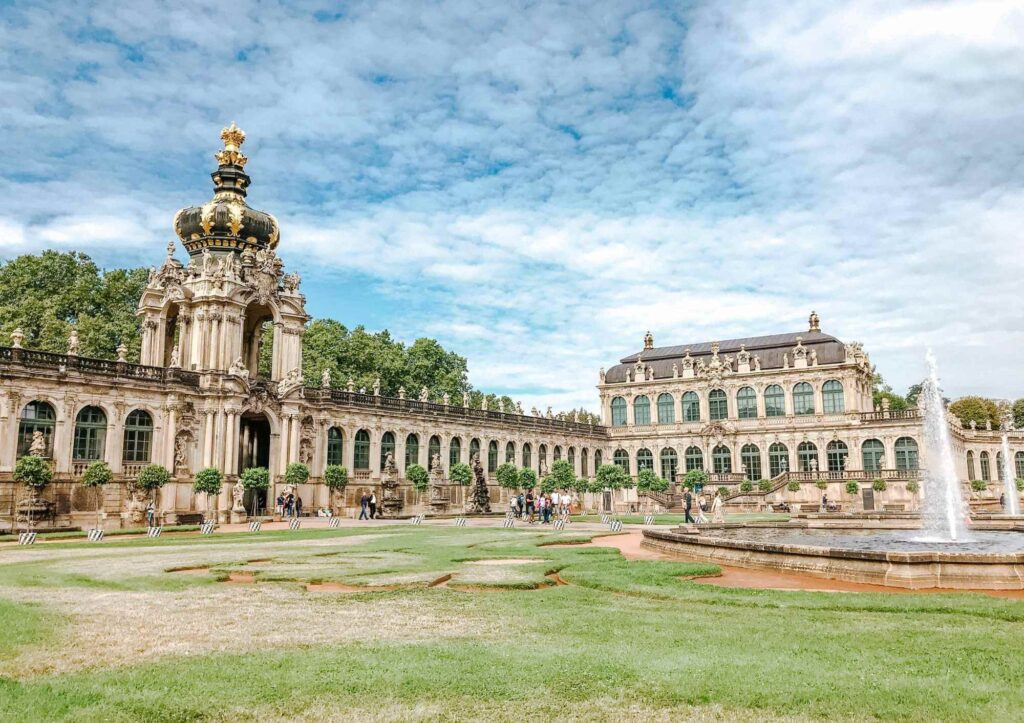
Few palatial complexes capture the essence of Baroque architecture quite like the Zwinger does. This early 18th century marvel originated as a venue for nobility—a stage where events and tournaments unfolded with pageantry and precision. Today it stands as one of the most popular things to do in Dresden, a masterpiece that somehow survived World War II’s ravages even as so much around it perished.
The palace now functions as a cultural institution, housing museums that anchor the Dresden State Art Collections. The Old Masters Picture Gallery nestles within its walls, the Porcelain Collection brings collectors to their knees, and the Royal Cabinet of Mathematical and Physical Instruments satisfies those curious about scientific history. The gardens sprawl across the landscape—orange trees, manicured lawns that would make any perfectionist weep, and the celebrated Bath of Nymphs fountain that demands your camera’s attention.
Destruction came, of course, as it did everywhere. World War II left its mark, but the contents—meticulously stored away—survived. The mid-20th century witnessed reconstruction efforts that eventually led to the palace reopening to the public. Walk here Monday through Friday from 6:00AM to 8:00PM, weekends offering the same generous hours. The upper walkway beckoning you to overlook the grounds provides one of the most beautiful vantage points in the city. This spectacular palace, with its huge gardens and fountains, hosts cultural galleries including Gemäldegalerie Alte Meister and Dresdener Porzellansammlung. Standing here, you understand why people call it beautiful without hesitation.
Pfunds Molkerei
There’s something almost impossible about Pfunds Molkerei. A 19th century shop, officially recognized by the Guinness Book Records as the world’s most beautiful dairy, it transcends the category of mere commercial establishment to become an experience. Located in Neustadt, this cheese shop and café commands attention through sheer visual impact.
The interior is completely covered in hand-painted tiles—not just any tiles, but exquisite Villeroy & Boch tiles rendered in ornate details that make you forget this is, at its heart, a place to purchase milk and cheese. The blue and white tiles create a harmony that seems to sing when you stand within them. The milk fountain—where people once filled bottles and glasses directly from the Gebrüder Pfund dairy—anchors the space with functionality married to beauty.
Visit here and you’ll inevitably share space with coach tours, photography-obsessed tourists snapping pictures and leaving, but if you take time—if you actually pause—there’s magic available. The wine and cheese tasting experience elevates it from curiosity to genuine culinary encounter. A glass of Saxony wine paired with a tasty platter of cheeses transforms the visit into something memorable. The formal restaurant upstairs offers dairy-focused dishes, while the café on the main floor provides more casual sustenance. Walk across to the Meissen Porcelain Museum and you’ll see how the artistry here connects to something larger. The tiles, the porcelain, the entire aesthetic speaks to a regional tradition of beauty embedded in everyday objects. Unique cafes exist everywhere, but this one somehow captured lightning in a bottle—delicious offerings that extend far beyond what you’d expect from any dairy shop, no matter how beautiful its surroundings.
Neustadt (New Town)
Crossing the Elbe River from the Old Town deposits you in a completely different Dresden—one that feels less crushed by history, more alive with contemporary possibility. Neustadt preserved its historic buildings and streets far better than Old Town because the bombings, while devastating elsewhere, left this neighborhood relatively intact. This accident of wartime geography created something unexpected.
What you find here defies easy categorization. It’s hip without trying too hard, cool without sneering. The restaurant scene thrives with genuine creativity, not just tourist-focused mediocrity. Nightlife pulses through these streets, drawing a younger crowd that finds Old Town’s crowds exhausting. Less-touristy than its counterpart across the river, Neustadt has become the place to be for those who understand that real culture doesn’t announce itself through souvenir shops.
The arty district unfolds around you—street art covers walls with murals that range from breathtaking to deliberately provocative. Workspace-come-coffee-shops encourage locals to linger over laptops. Craft beer flows freely in spots like Hopfenkult, where a popular spot means actually knowing you’ve discovered something real. The youthful vibe shifts noticeably from afternoon to early evening, when the area transitions from quiet contemplation to seriously busy social hub. Look for Elbsalon if you want café recommendations that locals genuinely use. The area around Alaunstrasse showcases painted murals and indie hangouts, including Katy’s Garage. Kunsthofpassage arrives as an arty, cobbled area with outdoor seatings where seriously cool art covers the buildings. Different atmosphere, different energy—walk here and you realize Dresden isn’t monolithic; it’s a city in conversation with itself, past and present negotiating how to coexist.
Old Masters Picture Gallery (Gemäldegalerie Alte Meister)
Stepping into the Old Masters Gallery means confronting centuries of European genius compressed into one space. The incredible collection spans the 15th to 18th centuries, representing artworks that museums dream of acquiring. Augustus the Strong established this collection in the mid-18th century, and his son Augustus III expanded it with an eye toward exceptional acquisition rather than mere accumulation.
The gallery’s renowned for its masterpieces—Raphael’s Sistine Madonna draws people from around the world, an iconic work that justifies the pilgrimage alone. But look beyond the famous piece and you’ll discover masterpieces by Rubens, Rembrandt, Titian, and Van Eyck. Each canvas represents a moment when European paintings achieved something transcendent, capturing either Renaissance brilliance or the baroque period’s dramatic intensity. The exceptional collection represents European paintings at their peak artistic moment.
Hours run daily from 10:00AM to 5:00PM, though Mondays remain closed. Tickets can be purchased online through the official website or upon arrival. The mid-18th century establishment speaks to Augustus’s hunger for cultural capital—his accumulation of these works made Dresden a destination for art lovers centuries before tourism became industrialized. Standing before a Raphael or a Rembrandt, you’re not just viewing pigment on canvas; you’re experiencing the moment when individual genius created something that defied time itself.
Dresden Porcelain Collection (Porzellansammlung)
The story of porcelain in Europe begins with obsession—Augustus the Strong’s obsession specifically. Over 20,000 pieces crowd the Dresden Porcelain Collection, a treasury that includes Chinese porcelain, Japanese ceramics, and Meissen creations that sparked an entire manufacturing revolution. The breadth of this impressive collections speaks to someone who understood that some obsessions transcend personal indulgence to become historical documentation.
East Asian porcelain captured Augustus like few things could. His hunger for these treasures drove him toward an audacious goal: establishing the first European porcelain factory in Meissen, Germany, in the early 18th century. The results transformed manufacturing history. Walk through this museum and you’ll encounter the best place to examine first pieces produced from Meissen—from humble plates to large vessels that demanded skill and patience to create. Every year, new exhibitions feature porcelain from Asia and other parts of Europe, ensuring the collection maintains scholarly relevance alongside aesthetic power.
Daily hours stretch from 11:00AM to 5:00PM, with Mondays off. Tickets can be purchased online at the official website or simply upon arrival. The museum itself represents what happens when a collection transcends being mere accumulation to become a statement about culture, tradition, and the human drive to capture beauty in clay and glaze. Standing here, you understand why porcelain mattered—why it still matters.
River Elbe
Sometimes the best things about a city reveal themselves in moments not scheduled or formally documented. Wandering along the River Elbe as the sun positions itself toward the horizon offers exactly this kind of serendipity. One evening, the sky turned a vivid pink shade—the kind of jackpot moment where you feel like you’ve hit something precious without even trying.
The promenade stretches invitingly, and scattered along it sit bars and restaurants positioned for maximum water-viewing pleasure. A drink with a view transforms an ordinary evening into something memorable. The lovely stretches of riverside walking create intimate moments where the city releases you from its grip momentarily. Overlooking water from a comfortable vantage point somehow clarifies thoughts you didn’t know you were struggling with. Spectacular spots exist throughout, but the ones that catch sunset offer something photography cannot fully capture—the feeling of a day concluding with grace.
Altmarkt (Old Market)
The Altmarkt occupies the center of Old Town with the authority of age—dating back to the 13th century, this represents one of the city’s oldest squares. Severely damaged during World War II, it was rebuilt into a modern, bustling hub where locals and visitors intersect naturally. Around the square stands the Kreuzkirche, the Church of Holy Cross, known for impressive baroque architecture that somehow survived better than surrounding structures. Next to it, a modern shopping complex creates an intentional juxtaposition—a reminder of Dresden before the war and the thriving city it has become post-war.
Throughout the year, events transform this space into something beyond ordinary plaza functionality. The annual Dresden Christmas Market, the Striezelmarkt, arrives as a magical, festive occurrence with booths selling traditional crafts and foods that connect you to Saxon history through sensory experience. Early September brought the Herbsmarkt—the Autumn Market—where stalls overflowed with baked fall goods, drinks, and activities clearly designed for kids. These events aren’t optional experiences; they represent the local culture in active form. Keep your eye out for them, for they offer participation in something authentic.
The seasonal events in 2025 offer structure: Frühjahrsmarkt (Spring Market) runs April 25 through May 18, the Herbsmarkt (Autumn Market) occupies September 18 through October 5, and Striezelmarkt (Christmas Market) dominates November 27 through December 24. Each one transforms the physical space into something different, each one carries its own personality. Standing in this square during these events, you understand that traditions persist not through museum preservation but through repeated, genuine participation.
Neumarkt (New Market)
History haunts Neumarkt in ways both devastating and strangely beautiful. This historical square carries significance that weighs visibly—a stark reminder of the city’s turbulent past during World War II. February 1945 saw the U.S. and British Air Forces deliver bombing raids across consecutive days, creating a fast-spreading fire that decimated Dresden’s Old Town. The buildings surrounding Neumarkt, including the Frauenkirche, were largely destroyed in these bombing raids.
Restoration began in the late 20th century as the city found resources and will to rebuild. The square has been restored to its former glory now, though visiting it carries emotional complexity. Walking here feels simultaneously heavy and hopeful. You can almost feel the sorrow that inhabitants must have experienced when witnessing their city reduced to rubble, yet seeing it come back to life offers something approaching inspiration. The destroyed city seemed incomprehensible then; its resurrection seems impossible now, yet here it stands.
Today’s Neumarkt stands as a testament to Dresden’s resilience and its commitment to preserving history while embracing modernity. The square doesn’t hide what happened; instead, it displays it as context for transformation. Building here came stone by stone, not rapidly but deliberately, with each reconstruction decision mattering. The city chose to remember rather than erase, to honor rather than forget. This commitment—this insistence on historical truth embedded within contemporary function—elevates Neumarkt beyond ordinary plaza to become something approaching sacred ground.
Brühls Terrace
Perched high above the River Elbe at Old Town’s edge, Brühls Terrace earns its alternate name—the Balcony of Europe—through perspective and positioning. This terrace sits atop the city’s old fortress, offering one of the most picturesque views available. Stand here and the city arranges itself below you in ways that photographers never quite capture; the reality exceeds the image.
A popular food cart called Imbiss, Thüringer Rostbratwurst, sits near the terrace entrance. Purchasing a Bratwurst from this spot, then walking upward to consume it while gazing across the landscape, encapsulates a certain type of Dresden experience—quick, cheap, delicious, and somehow perfect. The views from this vantage transform lunch into something approaching meditation. The lunch ritual, performed from this height, elevates ordinary food into something that satisfies beyond mere hunger.
Theaterplatz
Approaching Theaterplatz means preparing to enter Old Town through its most formal entrance. This grand square functions as the portal to Dresden’s cultural heart, with several main attractions surrounding it like courtiers around royalty. The Zwinger Palace anchors one side, Hofkirche rises authoritatively, Semperoper stands with operatic grandeur, and Residenzschloss completes the quadrant. From here, visitors naturally flow toward the Zwinger Palace to start visiting the city’s significant sights. The square itself functions less as a destination and more as a necessary waypoint—a threshold between outside and inside, between casual visitor and engaged explorer.
Glockenspiel
Inside the Zwinger Palace courtyard’s center sits a unique instrument—the Glockenspiel, composed of 40 porcelain bells. Originally constructed in the 1930s with 24 bells, it was replaced after World War II with an expanded version. Every 15 minutes, the bells chime and play a variety of melodies. Walking up close to observe the bells in action as they produce their song transforms a mechanical process into something approaching performance art. The visual component—watching porcelain bells respond to automation—complements the auditory experience, creating a moment that exceeds simple clockwork function.
Royal Cabinet of Mathematical and Physical Instruments (Mathematisch-Physikalischer Salon)
Housed within Zwinger Palace since the early 18th century, the Royal Cabinet represents a fascinating museum dedicated to historical scientific instruments. The collection traces its lineage back to the 16th century when Augustus of Saxony began accumulating scientific devices with the enthusiasm of a true collector. Over centuries, this extraordinary variety grew to include instruments spanning astronomical, geographical, and physical measurements.
Globes, telescopes, clocks, and countless other curiosities populate the space. What strikes visitors isn’t just the quantity but the craftsmanship embedded in each piece. These instruments represented humanity’s drive to understand and measure the world, to translate observation into knowledge. Daily hours run from 11:00AM to 5:00PM, closed Mondays. Tickets can be purchased online at the official website or upon arrival. Standing among these instruments, you’re witnessing the material history of human curiosity—the moment before electricity, before industrial production, when precision required hand-craftsmanship and patience.
Semperoper (Opera House)
Few cultural institutions carry the weight of history quite like the Semperoper. Named after its architect, Gottfried Semper, this magnificent building first opened in 1841, introducing the world to operatic splendor wrapped in architectural excellence. The original structure, however, fell victim to fire in 1869, which necessitated rebuilding in a different style by Semper himself. Yet this wasn’t the final trauma. World War II brought destruction yet again, but restoration efforts eventually returned it to former glory, reopening in 1985 with renewed purpose.
The Semperoper’s reputation rests on dual foundations: stunning Baroque architecture featuring elaborate interiors and a grand facade that commands attention, combined with a rich musical history that witnessed composers like Richard Wagner and Richard Strauss premiere major works here. These weren’t premiere performances occurring in random venues; they were statements of artistic intention occurring in spaces that elevated the work. Today, you can attend ballet or opera performances in this historical building, experiencing art where centuries of artists before you created their own moments. Alternatively, book a tour to explore the interiors without paying for performance admission. Either way, stepping inside this building means entering a space where architecture and art have been negotiating their relationship since the 19th century.
Hofkirche (Dresden Cathedral)
The Cathedral of the Holy Trinity—known formally as Hofkirche—represents an important catholic church within the city. Commissioned by Augustus III, Elector of Saxony and King Poland, and completed in 1751, this building was designed by Italian architect Gaetano Chiaveri to be nothing short of a masterpiece. The Baroque architecture manifests in an 85-meter-high bell tower that dominates the Dresden skyline, making it impossible to ignore. The tower accomplishes what towers should: it makes the sacred visible from everywhere in the city.
Notably, King Augustus the Strong’s heart was buried here, along with other members of the royal family of Saxony. The building thus holds literal historical weight—royal remains rest within these walls, a fact that transforms mere visitation into something approaching pilgrimage. The structure welcomes visitors without charging admission, its doors remaining open to those seeking either spiritual contemplation or architectural appreciation.
Residenzschloss (Dresden Royal Palace)
The Residenzschloss—the Dresden Royal Palace or Dresden Castle—served as the seat of power for many electors and kings across Saxony for centuries. The palace underwent various renovations over the years, transitioning between Baroque and Renaissance styles, becoming one of the oldest buildings in the city. Destruction arrived in 1945 during bombing, yet restoration efforts claimed the building’s future. Recent works continued into the 21st century, representing a long-term commitment to preservation.
Today, the palace houses multiple museums that anchor the city’s cultural institutions. The Historic Green Vault and New Green Vault display treasures that seem incomprehensible in their richness, while the Cabinet of Prints, Drawings and Photographs preserves works on paper, the Armoury displays military heritage, the Turkish Chamber holds exotic acquisitions, and the Coin Cabinet chronicles monetary history. In 2019, the State Apartments of Augustus the Strong were opened public, featuring ornately decorated rooms and items from his porcelain collection that make you understand why he became legendary for acquisition and taste.
Daily hours run 10:00AM to 5:00pm, except Tuesdays remain closed. Tickets can be purchased online at the official website or upon arrival. Walking through these chambers, you’re not just observing objects; you’re reading the autobiography of a man who believed that collection was a form of self-expression.
Grünes Gewölbe (Green Vault)
Located inside Residenzschloss, the historic Green Vault ranks among the most popular attractions in Dresden. Set within an opulent 18th century Baroque room, this represents the treasury of Augustus the Strong. The collection itself was meticulously crafted and artistically arranged by its collector—this wasn’t random accumulation but considered curation. Objects within include ivories, bronzes, gold and silver treasures, gemstones, and intricately carved amber and coral pieces that represent the height of human craftsmanship across multiple materials.
The highlight—the breathtaking Dresden Green Diamond—steals focus upon sight. This 41-karat green diamond, originally from India, commands attention through its sheer audacious beauty. Gazing upon it, you understand how precious materials captured imaginations across cultures. Daily hours mirror the Royal Palace: 10:00AM to 5:00pm, except Tuesdays. Tickets available online at the official website or upon arrival. The craftsmanship on display, whether in the diamond’s cut or the amber carvings, reveals a period when human skill could still astonish through patient labor rather than industrial efficiency.
Fürstenzug
One of the most extraordinary things to do in Dresden is witnessing the Fürstenzug—a 102-meter-long porcelain mural located on the outer wall of the Dresden Royal Palace. The Procession of Princes, as it’s known, stands renowned as the largest porcelain artwork in this world. This grand mural depicts the procession of rulers across Saxony, showcasing a lineage that spans nearly eight centuries of governance and power.
Originally painted by Wilhelm Walther between 1872 and 1872, the mural was transferred onto 23,000 porcelain tiles in the early 20th century to help preserve the artwork from weathering. The mathematics of this preservation effort—determining exact positioning of each tile fragment—staggers the imagination. Remarkably, this masterpiece survived allied bombing in 1945, suffering only minimal damage despite surrounding destruction. The mural thus represents both artistic accomplishment and physical persistence—a work that endured what surrounding buildings could not.
Grand Garden of Dresden (Großer Garten Dresden)
Exploring the Grand Garden counts among the favorite things to do in Dresden—a 20-minute walk from Neumarkt deposits you in a space that feels removed from urban density. The Summer Palace sits here, alongside the Dresden Zoo and Dresden Botanical Garden, creating a complex that serves multiple purposes. On nice days, spending a couple of hours wandering through this beautiful garden rewards you with landscaped lawns, flower beds, and tree-lined pathways that feel deliberately designed to calm. The gardens refuse to feel overwhelming; instead, they invite the kind of aimless walking that usually requires significant intentional effort elsewhere.
Courtyard of Elements
Navigate to Kunsthofpassage in the Neustadt district and you’ll discover a small alleyway transformed into an outdoor art gallery. Murals and other art installations line the passage, but the real showstopper is the Courtyard of Elements. This wall of drainpipes transforms rainwater into a musical performance—an installation that makes weather itself artistic. This remains the place to visit on a rainy day in Dresden, turning precipitation from annoyance into anticipation. The rain creates music here, turning architectural function into artistic expression. When we visited, unfortunately conditions remained dry, but witnessing the installation’s potential, its neat design, communicated the artist’s intention clearly enough.
Albertinum
Located in the Altstadt, the Albertinum functions as an art museum showcasing work from the Romantic period—the 1800s—through the present day. Inside, you’ll encounter a fantastic sculpture collection featuring artists including Degas and Rodin. The museum hosts exhibitions yearly featuring contemporary artists, ensuring the collection speaks to current moments rather than simply preserving historical artifacts. Daily hours run from 11:00AM to 5:00PM, closed Mondays, with tickets available upon arrival.
Pillnitz Palace
Situated on the banks of the River Elbe near Dresden, Pillnitz Palace presents a stunning blend of Baroque and Chinoiserie architecture—a fusion reflecting 18th century fascination with Eastern aesthetics. The palace dates back to the 14th century, but Augustus the Strong utilized it during the 18th century to host events, festivals, and weddings that cemented his reputation as cultural patron. Today, visitors can experience Pillnitz Palace and its beautiful gardens, including a 250-year-old Camelia plant that apparently was brought back from Japan in the 18th century. If accurate, it would rank among Europe’s oldest Camellia trees—though no one knows for certain, which somehow adds to its romance.
Reaching Pillnitz requires either driving (25 minutes) or taking tram and bus from the city center. Public transport means planning a 1-hour journey from Dresden’s center. Daily hours stretch from 6:00AM to 3:00PM, with tickets available upon arrival. Note: museums close during winter, so confirm opening times before visiting. The palace rewards the effort—it feels removed from the city proper, a retreat that Augustus recognized centuries ago.
Dresden River Cruise
Taking a Dresden river cruise offers a fantastic way to explore the Elbe River while enjoying beautiful views of the city from the water.
Several options exist.
- The Dresden to Pillnitz Palace cruise takes 3 hours along the Elbe River to Pillnitz Palace, though the boat stops for only 20 minutes—meaning more time here requires visiting separately.
- The Dresden River Cruise option runs 1.5 hours along the Elbe, showcasing several different palaces.
- For commitment, the Dresden to Meissen full-day trip takes you along the Saxon wine route to the town of Meissen, allowing 3 hours to explore the city before the boat returns you to Dresden.
Day Trips from Dresden
Dresden’s central location within Saxony makes day trips not just possible but encouraged. Meissen represents a fantastic idea for exploring charming towns in the Saxony region. From Albrechtsburg castle to the Meissen Porcelain Factory, plenty of things to do fill a complete day. The local train reaches it in under 1 hour. Moritzburg deserves half-day attention—see the castle and town using either steam train or bus. Saxon Switzerland National Park offers a wonderful idea for those seeking nature break from the city. Located on the border between Germany and Czech Republic, this national park features wonderful hiking trails and unique sights, including the Bastei Bridge—a full-day experience ideal for outdoor-focused visitors.
Getting Around Dresden
Dresden ranks as a very walkable city—once within the Old Town, you can walk to main sites easily. From New Town, a tram to the Old City becomes attractive despite being technically doable on foot but requiring significant time. The tram system proves convenient to use, with stops positioned throughout the city. Purchase tickets at any tram stop or buy a single-day pass online. Save time by understanding this trade-off: staying in Old Town minimizes transportation needs; staying in New Town requires transit planning. The tram stops conveniently positioned around the city solve this equation elegantly.
Dresden Welcome Card
Dresden offers several discount cards making it cheaper and more convenient to get around during your stay. Different city cards exist online with varied offerings—one includes free transportation, another offers discounted museum tickets. Learning more about these different options requires investigating what suits your travel plans. Note that this does not include free entrance to main museums. The major perk involves transportation inclusion; however, you may not need this if staying in Old Town. The card provides value primarily for those using public transit regularly throughout their visit.
How to Get to Dresden
Located in Eastern Germany near the borders of Poland and Czech Republic, Dresden remains easy to access by train, bus, or plane. An international airport exists here with access to many European countries, though Berlin’s airport ranks as the closest major airport. Nearby cities including Berlin, Leipzig, and Prague offer convenient connections.
Berlin to Dresden requires taking the high-speed train approximately 2 hours each way—the fast train comes highly suggested. Prague to Dresden means boarding the direct train for approximately 2.5 hours, making Dresden an easy day trip destination or weekend trip from Czech territory. Leipzig to Dresden takes the train 1.5 to 2 hours each way. These timeframes create flexibility for regional travel across Central Europe.
How Much Time in Dresden
Planning a visit requires understanding time allocation. The minimum stays at 2 days for visiting main attractions. If you want to take day trips—one or two—you should allocate 4 days total. Our experience suggested 5 days worked perfectly: 2 days exploring the city itself, 3 days taking day trips to Meissen, Moritzburg, and Saxon Switzerland National Park. This breakdown allowed thorough exploration without feeling rushed while maintaining energy and engagement. The perfect amount of time, however, varies by individual—some thrive on longer stays, others prefer concentrated visits.
Best Time to Visit Dresden
Dresden welcomes visitors throughout all year seasons. November and December bring the Dresden Christmas markets—wonderful ways to celebrate holiday months and engage with winter atmosphere uniquely. Fun fact: the Striezelmarkt actually ranks as Germany’s oldest Christmas market, dating back to the 15th century. Summer months provide the best weather but attract more crowds and higher prices consequently. The shoulder seasons—April to May and September to October—offer the best times for pleasant weather and less tourists simultaneously. September particularly rewards visitors with ideal conditions and manageable crowds. We visited then and highly recommend this timing.
Where to Stay in Dresden
Accommodation choices span multiple price points and aesthetic preferences. The Luxury hotel category includes Hotel Taschenbergpalais Kempinski, a stunning 5-star hotel located in the heart of Old Town with well-decorated rooms and modern amenities including a pool. For boutique experiences, Hotel Suitess offers 5-star positioning near the Frauenkirche in Old Town, featuring comfortable rooms and personality. The mid-range option, Steigenberger Hotel de Saxe, sits beautifully positioned at Neumarkt with modern rooms and great views. Budget travelers should consider Hotel Indigo Dresden, located within walking distance to all main attractions and offering affordable prices.
Vienna House QF Dresden brings incredible location straight to Neumarkt’s heart, moments from Dresden Frauenkirche and a short walk from River Elbe and Zwinger. It’s a super smart hotel with business feel and great breakfast buffet. INNSIDE By Melia Dresden, located in the old city part, presents itself as modern smart hotel with all modern conveniences. There’s a highly-rated restaurant and a bar on the 6th floor offering spectacular views of the Frauenkirche dome. Art’otel Dresden By Park Plaza stands as another stylish design hotel approximately ten minutes walk from main attractions in the old town. It features art within the lobby, curved rooms, and a sauna on the top floor with wonderful city views.
Kunsthofpassage Dresden
Kunsthofpassage in Neustadt represents an arty, cobbled area with outdoor seatings where seriously cool art covers buildings. This spot where Hopfenkult operates—a popular spot serving craft beer—creates the exact atmosphere younger travelers seek. The space deliberately avoids polish; instead it celebrates authenticity and creative expression through graffiti, murals, and installations.
e-VITRUM
Different doesn’t quite capture the experience of enjoying lunch inside a genuine VW car manufacturing factory. e-VITRUM produces high-quality, seasonal dishes, a fact that sends you directly toward asparagus with hollandaise when asparagus season arrives. The season remains short, but anticipation builds yearly for this particular preparation. The intrigue comes from sitting eating lunch while watching parts of cars move along a production line, with robotic equipment adding to their structures. There’s an interactive exhibition available for those wanting to understand more about the process—manufacturing transformed into transparent, educational spectacle.
Dresden 1900
This traditional restaurant offers an experience of Dresden from the turn of the century—a living museum of how the city existed before devastation. In the heart of the action at Neumarkt, the restaurant commands spectacular views of the church. It’s positioned perfectly to sample regional Saxon delicacies including Kartoffelsuppe (potato soup with sausage slices) and Sächsischer Sauerbraten (Dresden braised beef in vinegar with red cabbage and dumplings). The interactive kitchen experience—heading into kitchen to make own desserts—stands apart. Learning how to make traditional Quarkkeulchen, a type of potato pancake rolled in sugar and served with apple compote, transforms dining into participation. The fun involved in this learning process, the engagement required, makes eating here feel less like consumption and more like cultural participation.
FAQs
How Many Days Should I Spend in Dresden?
The minimum recommendation sits at 2 days if you’re prioritizing main attractions and museums. However, this rushed approach means missing the city’s deeper character. If you can allocate 4 days, you’ll comfortably cover the major sites while taking one or two day trips into the surrounding Saxony region. Five days emerges as the sweet spot—allowing 2 full days exploring the city itself, with 3 days dedicated to day trips like Meissen, Moritzburg, and Saxon Switzerland National Park. This breakdown prevents fatigue while maintaining engagement and discovery. Your experience, though, depends on travel pace and interests; some visitors thrive on longer stays, others prefer concentrated visits that maximize impact through focus.
What’s the Best Time to Visit Dresden?
Dresden welcomes visitors throughout all year, but seasons carry different character and consequences. November and December bring the Dresden Christmas markets—particularly the Striezelmarkt, Germany’s oldest Christmas market dating back to the 15th century. These holiday months create unique atmospheric conditions, though crowds intensify significantly. Summer months provide the best weather but attract visitors en masse with correspondingly higher prices. The shoulder seasons—April to May and September to October—balance weather pleasantness with manageable crowds, emerging as the best times overall. September particularly rewards visitors with pleasant weather, less tourists, and the local culture displaying itself without tourist-season distortion. We visited during September and highly recommend this timing for optimal experience.
How Do I Get Around Dresden?
Dresden ranks as exceptionally walkable—once you’re positioned in the Old Town, reaching main sites requires only pedestrian effort. The difficulty emerges when staying in New Town, where walking remains possible but time-consuming compared to public transit. The tram system provides convenient navigation with stops positioned throughout the city. Purchase single tickets at tram stops or buy a single-day pass online for better value if making multiple journeys. The real choice becomes strategic: stay in Old Town and minimize transit needs, or stay in New Town and embrace tram travel as part of your daily rhythm. Both approaches work; each carries different implications for how you experience the city. The tram stops, conveniently scattered throughout, solve most transportation equations elegantly.
What Are the Main Attractions I Shouldn’t Miss?
The unmissable experiences cluster around certain anchors. The Frauenkirche—with its pastel interior, blackened historical stones, and church tower views—demands visitation for both spiritual and architectural reasons. The Zwinger Palace, with gardens and multiple galleries, occupies an entire morning or afternoon easily. The Old Masters Picture Gallery contains Raphael’s Sistine Madonna and masterpieces that justify museum hours alone. The Green Vault within Residenzschloss displays treasures including the Dresden Green Diamond that captures imagination. The Fürstenzug porcelain mural—largest in the world—provides exterior spectacle without museum entry fees. Dresden’s unique character also emerges through neighborhood exploration: Neustadt’s street art and restaurants, the Kunsthofpassage’s rainwater-musical-performance courtyard, and riverside evening walks. Skip none of these; each contributes irreplaceably to understanding the city.
Is Dresden Safe for Tourists?
Dresden ranks among Germany’s safer cities, particularly in the main tourist areas of Old Town and Neustadt. Standard urban caution applies: avoid displaying expensive items ostentatiously, stay aware of surroundings, and use common sense regarding nighttime solitude in unfamiliar neighborhoods. The nightlife scene in Neustadt operates within normal European city parameters—vibrant, populated, generally secure. Local police maintain visible presence in tourist zones. Most visitors navigate Dresden without incident, finding the atmosphere welcoming rather than threatening. The city’s transformation into a cultural center brought with it investment in infrastructure and safety measures. Your primary concern should be enjoyment rather than anxiety; the city infrastructure and local attitude toward tourism supports this perspective.
How Much Does It Cost to Visit Dresden?
Budget flexibility ranges considerably depending on accommodation and activity choices. Museum entries typically cost 10-15 euros per person, though combined tickets offer savings. The Frauenkirche and Hofkirche welcome visitors freely. Meals span from budget-conscious café food around 8-12 euros to upscale dining exceeding 40 euros. The Pfunds Molkerei cheese tasting runs approximately 15-20 euros and becomes a memorable experience rather than mere sustenance. Accommodation ranges from budget hotels near 60 euros nightly to luxury establishments exceeding 250 euros. The Dresden Welcome Card provides transportation inclusion and museum discounts but requires calculation to determine value against your itinerary. A moderate daily budget (excluding flights) might run 80-120 euros incorporating accommodation, food, and attractions. Spending varies dramatically based on choices; the city accommodates both budget-conscious and luxury-oriented travelers successfully.
Can I Visit Multiple Attractions in One Day?
Absolutely, though strategic planning maximizes efficiency. The Theaterplatz area concentrates multiple major sites—Zwinger Palace, Hofkirche, Semperoper, and Residenzschloss cluster within walkable proximity. Dedicating one full day here allows visiting the Zwinger’s gardens and museums, seeing the Hofkirche interior, viewing Fürstenzug from outside, and potentially touring Residenzschloss interiors. A second day might focus on Neustadt’s neighborhoods, the Kunsthofpassage courtyard, and Pfunds Molkerei, punctuated by riverside walks. The Grand Garden works as a half-day experience, taking 20 minutes to reach from Neumarkt. Pillnitz Palace requires dedication (1-hour journey each way) and works better as a specific day trip. The organization depends less on what’s possible and more on what you actually want to experience deeply. Rushing through everything means remembering nothing vividly; pacing allows genuine encounter.
What’s Special About the Porcelain Collections?
Two distinct museums serve porcelain enthusiasts differently. The Dresden Porcelain Collection within Zwinger Palace houses over 20,000 pieces—Chinese, Japanese, and importantly, Meissen creations. Meissen porcelain holds particular significance because Augustus the Strong’s obsession with East Asian ceramics drove him to establish Europe’s first porcelain factory here in the early 18th century. This collection displays first pieces produced from that revolutionary factory, spanning plates to massive vessels. The museum hosts yearly exhibitions featuring porcelain from Asia and other European regions, ensuring contemporary relevance alongside historical preservation. Separately, Pfunds Molkerei showcases hand-painted Villeroy & Boch tiles—a different but equally impressive ceramic tradition. If porcelain fascinates you, these two venues complement each other perfectly, one focusing on collection history, the other on decorative domestic application.
Is the Frauenkirche Worth Climbing?
Yes, emphatically. The church tower climb—steep and demanding—deposits you at views that transform your understanding of Dresden’s geography and architecture. From this vantage, you see how the city arranges itself, how neighborhoods relate spatially, how the Elbe River curves through the landscape. The pastel interior of the church itself deserves appreciation, the blackened stones mixed with lighter replacements telling the resurrection story visually. Climbing the tower completes the experience—physical exertion rewarded with perspective. The free admission removes financial hesitation. For those with mobility limitations, the interior alone provides profound experience; the tower becomes optional rather than mandatory. Most visitors report the effort justified entirely by the views and sense of accomplishment.
What Are Day Trip Options from Dresden?
Three major day trips from the city’s central location deserve serious consideration. Meissen, reachable by local train in under 1 hour, offers the Albrechtsburg castle and the Meissen Porcelain Factory—plenty of activities filling a complete day while connecting porcelain museum learning to its manufacturing origin. Moritzburg requires only a half-day, accessible via steam train or bus, focusing on the castle itself and the small town’s charm. Saxon Switzerland National Park demands full-day commitment and rewards it with wonderful hiking trails, unique sights like the Bastei Bridge, and nature that contrasts sharply with urban Dresden. This national park spans the border between Germany and Czech Republic, adding geographical interest. Each trip offers completely different experiences; selecting depends on your interests and energy levels.
Where Should I Stay Based on My Preferences?
Old Town positioning places you within walking distance of major attractions, minimizing transit needs and maximizing convenience. This appeals to time-conscious visitors but means navigating significant tourist crowds and higher accommodation costs. Neustadt offers younger energy, legitimate restaurants, and authentic neighborhood feeling—less touristy, more residential experience. However, reaching Old Town requires tram travel, adding time to daily routines. Budget travelers gravitate toward Hotel Indigo Dresden for its proximity and affordability. Mid-range visitors often choose Steigenberger Hotel de Saxe for Neumarkt positioning with great views. Luxury seekers appreciate Hotel Taschenbergpalais Kempinski’s pool and amenities. Vienna House QF Dresden combines excellent location with business-class comfort and breakfast quality. INNSIDE By Melia offers sixth-floor bar views of Frauenkirche dome—a specific amenity worth considering. Art’otel appeals to design-conscious travelers. The choice depends on whether you prioritize convenience, authenticity, luxury, or value.
What Food Should I Try in Dresden?
Saxon cuisine emphasizes hearty preparation, comfort-forward approach to eating. Kartoffelsuppe—potato soup with sausage slices—provides warming sustenance reflecting regional agriculture. Sächsischer Sauerbraten, Dresden braised beef prepared in vinegar with red cabbage and dumplings, represents the region’s approach to meat preparation: patient braising creating tender results. Quarkkeulchen, potato pancakes rolled in sugar and served with apple compote, bridges savory and sweet realms. The Pfunds Molkerei cheese tasting pairs Saxony wine with carefully selected cheeses—an elevated experience elevating simple ingredients through thoughtful pairing. Thüringer Rostbratwurst from street carts provides quick, satisfying sustenance at minimal cost. Try these dishes at Dresden 1900, where the kitchen experience transforms meal into participation. The regional approach emphasizes tradition and quality ingredients over innovation; eating here means connecting to Saxon history through contemporary practice.
Are There Free Attractions in Dresden?
Several significant attractions welcome visitors without charging admission. The Frauenkirche offers free entry, though climbing the tower reportedly costs extra (confirm current pricing before visiting). The Hofkirche, the cathedral itself, welcomes visitors freely. The Fürstenzug porcelain mural can be viewed from outside without entry fees—simply approach the outer wall of the Dresden Royal Palace and observe the 102-meter-long artwork. Riverside walks along the Elbe River cost nothing and reward wandering with spectacular spots and evening sunsets. Neustadt’s neighborhoods—street art, the Kunsthofpassage courtyard, indie hangouts—involve no entrance fees. The Altmarkt and Neumarkt squares function as public spaces free to explore. The Grand Garden exterior remains free, though interior museums charge admission. Dresden Welcome Card discounts can offset museum costs for frequent visitors. Budget travelers can experience substantial portions of Dresden’s character without museum entries, though the galleries genuinely enhance understanding.
How Should I Plan My First Visit to Dresden?
Start by anchoring around Theaterplatz—this concentration of major sites (Zwinger, Hofkirche, Semperoper, Residenzschloss) makes geographic sense for first-time visitors. Dedicate your first full day to this zone, experiencing the Zwinger gardens and galleries while observing surrounding architecture. The second day, venture into Neustadt for neighborhood flavor and restaurant scenes—this counterbalances museum hours with authentic living city. Incorporate River Elbe walks as breathing room between structured activities; the riverside offers perspective and manages fatigue. If you have three days, add either Pillnitz Palace or a day trip—Meissen works particularly well for porcelain-interested visitors. Evening walks through Old Town after tourist crowds diminish reveal architectural details illuminated beautifully. Arrive with curiosity rather than rigid itineraries; the city rewards exploration. The turbulent history context helps: understanding World War II’s impact transforms casual observation into meaningful encounter with resilience.