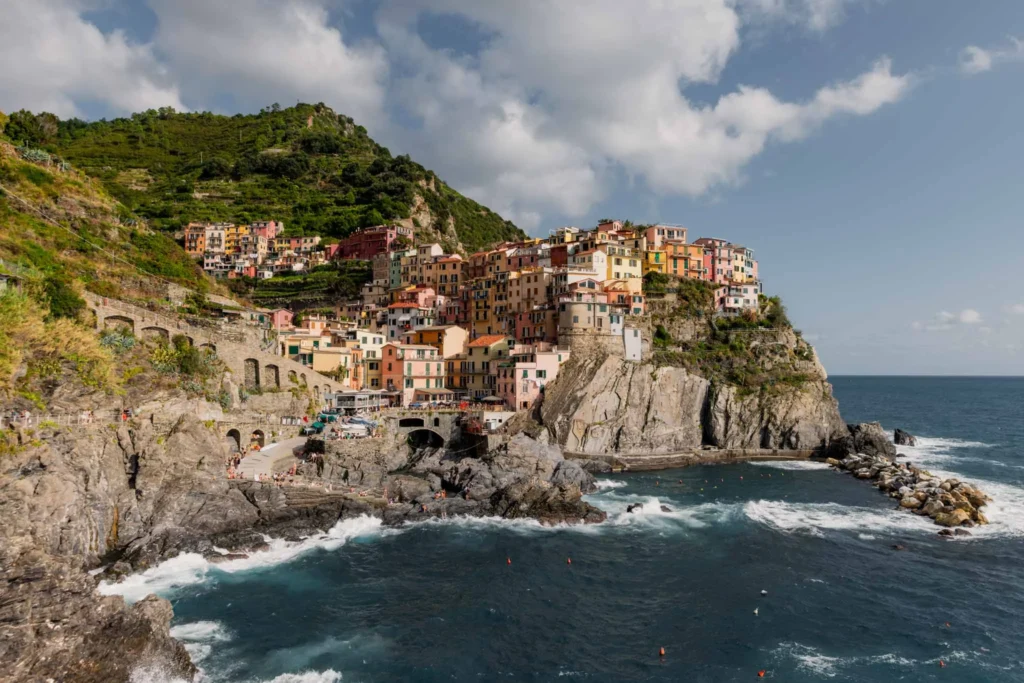
After analyzing visitor patterns across multiple seasons and comparing current experiences against historical baselines, I’ve identified a critical disconnect between Cinque Terre’s marketing narrative and ground reality. With 2.4 million annual visitors descending on five villages with a combined resident population of just 4,000, this UNESCO World Heritage Site has crossed from “popular destination” into challenging overtourism territory. Yet most travel resources continue perpetuating Instagram-filtered expectations without addressing the operational realities: platform crowds resembling rush hour subway stations, mandatory €17.50 fees for 15-minute trail segments, and 2-hour waits for clifftop restaurant tables. The disconnect isn’t that Cinque Terre lacks beauty—the pastel villages still glow magnificently at golden hour, and the terraced vineyards remain breathtaking. Rather, visitors need strategic intelligence about when to arrive (7:00 AM, not 11:00 AM), where to focus energy (upper sanctuary trails, not just the closed coastal path), and which premium experiences justify their €33-85 price tags versus representing tourist traps. This guide provides that missing tactical layer, transforming your visit from a frustrating crowd-navigation exercise into a genuinely memorable Italian coastal experience.
Before You Book: The Overtourism Reality Nobody Tells You About
Table of Contents
ToggleThe Instagram photos don’t lie about Cinque Terre’s beauty—those pastel-painted houses cascading down cliffsides toward azure waters are genuinely breathtaking. What those carefully angled shots conveniently exclude, however, are the thousands of tourists packed shoulder-to-shoulder on those same picturesque alleyways. With 2.4 million annual visitors flooding five villages housing just 4,000 permanent residents, Cinque Terre has evolved from “charming Italian fishing villages” into one of Europe’s most aggressively overtouristed destinations.
The numbers tell a sobering story. During a single Easter weekend, approximately 95,000 visitors descended on tiny Vernazza, a village covering less than 0.3 square kilometers. That’s roughly equivalent to cramming the population of a small city into an area smaller than 40 football fields. Train platforms during peak afternoon hours resemble rush-hour metro stations, with visitors literally unable to board due to capacity constraints. Restaurant wait times regularly exceed two hours even for mediocre establishments, while the famous clifftop dining spots require reservations booked weeks in advance.
The transformation has accelerated dramatically over the past decade. Travelers who first visited in 2008 and returned in 2024 consistently report that the authentic village character has deteriorated significantly, with local businesses increasingly prioritizing rapid tourist turnover over quality experiences. Service standards have declined even as prices have inflated to UNESCO World Heritage premium levels—you’ll pay significantly more here than comparable Italian coastal destinations while often receiving noticeably inferior quality.
But here’s the critical nuance most articles miss: Cinque Terre’s overtourism problem operates on a strict schedule. Between 10:00 AM and 5:00 PM, the experience genuinely borders on miserable during high season—think navigating narrow medieval streets packed with cruise ship day-trippers, waiting 45 minutes just to purchase train tickets, and jostling for position at every photo-worthy viewpoint. Yet those same villages transform dramatically outside these peak hours. Arrive at 7:00 AM and you’ll photograph nearly empty piazzas bathed in golden sunrise light. Return after 6:00 PM when day-trippers board their buses, and you’ll actually hear waves crashing against cliffs rather than tour guide megaphones.
The destination remains worth visiting—but only if you approach it with tactical intelligence rather than romantic expectations. Success requires understanding that you’re not discovering a hidden gem; you’re navigating a mass-tourism machine that demands strategic timing, advance planning, and willingness to explore beyond the heavily trafficked Blue Trail coastal route. October shoulder season, once reliable for smaller crowds, now sees unexpectedly high visitation levels. Traditional “off-season” assumptions no longer apply here.
This reality check isn’t meant to discourage your visit—it’s meant to ensure you book accommodations inside the villages (not cheaper La Spezia hotels), arrive on weekday mornings (not weekend afternoons), and build your itinerary around crowd-avoidance strategies rather than trying to check off all five villages in a single frantic day. With proper planning, Cinque Terre still delivers those magical Italian coastal moments. Without it, you’ll spend your visit frustrated, disappointed, and wondering why your experience looked nothing like the guidebook promised.
The 7AM-7PM Strategy: Timing Your Cinque Terre Activities to Avoid 95% of Crowds
The single most impactful decision you’ll make for your Cinque Terre visit isn’t which village to prioritize or which trail to hike—it’s what time you set your alarm clock. The difference between a 7:00 AM departure and an 11:00 AM start fundamentally transforms your experience from serene Italian coastal exploration to claustrophobic crowd management.
Peak crowd surges follow a predictable pattern driven by cruise ship schedules and tour bus arrivals. Day-trippers begin flooding train platforms around 9:30 AM, reaching maximum density between 10:00 AM and 5:00 PM. During these seven hours, train cars pack beyond comfortable capacity, popular viewpoints require aggressive positioning to capture unobstructed photos, and restaurant patios operate on strict seating waves with 90-minute maximums. The experience during these hours genuinely resembles navigating a theme park on a holiday weekend rather than exploring authentic Italian villages.
The solution requires adopting what I call the “reverse commuter” approach. Begin your day when cruise ship passengers are still eating breakfast buffets aboard their ships. Launch hiking expeditions by 7:00 AM from Monterosso heading south, securing nearly private trail access for the first two hours. You’ll photograph sunrise light illuminating village facades without a single tourist photobombing your shot. Coastal trail sections that become impassable bottlenecks by noon will be yours alone, allowing you to actually pause and absorb the scenery rather than shuffling forward in a slow-moving queue.
The strategy becomes even more powerful when you extend it through midday. Rather than competing with peak crowds for limited restaurant tables and train seats, intentionally leave the villages between 10:00 AM and 4:00 PM. This is your window for activities that remove you from the central village cores: beach time at Monterosso’s sandy shore, boat tours offering offshore perspectives, or upper sanctuary trail hikes that climb above the tourist masses. Private boat transfers between villages cost €35-60 split among 3-4 people, transforming from seeming extravagance to legitimate value proposition when you’re bypassing 40-minute train platform waits and overcrowded carriages.
Return to villages only after 6:00 PM when day-trippers board their buses back to La Spezia and cruise ships sound their departure horns. The transformation is remarkable—narrow alleyways suddenly accommodate comfortable passage, restaurant terraces offer walk-in seating, and you’ll actually hear ambient village sounds (church bells, resident conversations, waves against harbor walls) that remain completely masked during peak hours. Golden hour photography from 6:30-7:30 PM delivers those iconic images without requiring aggressive crowd maneuvering.
Weekend patterns add another strategic layer. Fridays and Saturdays experience 20-30% higher congestion than weekdays, particularly from May through September when Italian domestic tourists make weekend trips from Milan and Genoa. If your schedule permits any flexibility, target Tuesday through Thursday arrivals. The crowd reduction during these midweek windows is immediately noticeable, especially when combined with early morning and late evening activity timing.
Seasonal timing matters less than most guides suggest—even supposedly “quiet” October now sees unexpectedly high visitation. The daily timing strategy, however, remains consistently effective regardless of month. July and August, while hot, actually see marginally reduced crowds as extreme heat deters some visitors. But the 7:00 AM start becomes even more critical during these months, as afternoon temperatures regularly reach 29°C (84°F), making midday hiking genuinely uncomfortable beyond the crowd considerations.
One final tactical note: accommodation location directly enables or sabotages this strategy. Staying inside the five villages allows you to step out your door at 6:45 AM while others are still riding trains from La Spezia hotels. Those extra morning hours before crowd arrival aren’t just pleasant—they’re the difference between experiencing Cinque Terre as a photographer’s paradise versus a human traffic jam.
Crowd Levels Throughout the Year: When to Actually Visit
Understanding seasonal patterns helps set realistic expectations, though the “avoid summer” advice most guides offer oversimplifies a complex reality.
| Month | Crowd Level | Best Visit Times | Trail Status | Notes |
|---|---|---|---|---|
| January-March | Very Low | All day | Weather-dependent, many closed | Free trail access, but 50% of services closed |
| April (pre-Easter) | Low-Medium | All day comfortable | Most trails open | Sweet spot for authentic experience |
| Easter Week | Extreme | 7AM only tolerable | All open | Avoid if possible—95,000 visitors in single weekend |
| May | High | Before 9AM, after 6PM | All open | Best weather-to-crowd ratio |
| June | Very High | Before 8:30AM, after 6:30PM | All open | Peak season begins |
| July-August | Very High | Before 8AM, after 7PM | All open | Hot (29°C/84°F) but marginally less crowded than June |
| September | Very High | Before 8:30AM, after 6:30PM | All open | Still peak conditions |
| October | Medium-High | Morning/evening | Weather-dependent closures | No longer reliable “shoulder season” |
| November 4+ | Low | All day | Limited, weather-dependent | Free trails, dramatic price drops, service closures |
Optimal booking windows: April 15-May 25 (excluding Easter) or September 5-25, targeting Tuesday-Thursday arrivals for 20-30% fewer crowds than weekends.
Cost Breakdown: What You’ll Actually Pay for Cinque Terre Experiences
Budget planning for Cinque Terre requires understanding its tiered pricing structure that adjusts based on demand levels—a system that can either save you money or quietly inflate costs by 100%+ depending on booking timing.
Cinque Terre Card: The Essential Access Pass
The Cinque Terre Card operates on three pricing tiers (Low/Medium/High attendance) that fluctuate based on season, day of week, and real-time demand:
| Card Type | Low Demand (A) | Medium Demand (B) | High Demand (C) |
|---|---|---|---|
| Trekking Only (1-day) | €7.50 | €10.00 | €14.80 |
| Trekking Only (2-day) | €14.50 | €18.00 | €21.00 |
| Treno MS (1-day) | €14.80 | €19.50 | €32.50 |
| Treno MS (2-day) | €29.00 | €36.00 | €47.00 |
The Treno MS card includes unlimited train travel between villages plus trail access. Individual train tickets cost €5 per journey, making the pass economical only if you’re planning 4+ train trips daily. Many visitors waste €10-20 purchasing full-day cards when they only need trekking access or 2-3 train rides.
Critical addition: The Via dell’Amore (the famous coastal path section between Riomaggiore and Manarola) reopened in 2024 with a mandatory €10 surcharge on top of your base Cinque Terre Card. Total cost for walking this 15-minute segment: €17.50 minimum (€10 trail fee + €7.50 lowest card tier). This represents the most expensive per-kilometer hiking in Italy.
Money-saving strategy: Purchase cards online 2-3 days in advance to bypass ticket machine queues exceeding 45 minutes during peak hours. If hiking only, skip the train-inclusive version—you’ll likely use trains less than anticipated once you discover how short walking distances actually are between some villages.
Transportation Costs
| Option | Price | Best For |
|---|---|---|
| Ferry all-day pass | €41 | Visiting Portovenere + villages, avoiding train crowds |
| Ferry afternoon-only pass | €28 | Half-day boat exploration |
| Ferry single journey | €7-13 | One-way between specific villages |
| Train single ticket | €5 | Quick village-to-village transfers |
| Private boat transfer | €35-60 (split 3-4 people) | Crowd avoidance, direct routing |
The €41 ferry pass initially appears expensive compared to the €19.50-32.50 Treno MS card, but delivers fundamentally different experiences. Ferries offer offshore village perspectives, connect to Portovenere (worth visiting), and bypass the claustrophobic train platform crowds. For photography enthusiasts and those prioritizing relaxation over efficiency, the premium justifies itself. The pass also includes La Spezia service, potentially replacing your train ticket if arriving from there.
Premium Activity Pricing
| Experience | Duration | Cost per Person | What’s Included | Booking Window |
|---|---|---|---|---|
| Nessun Dorma pesto class | 2 hours | €85 | Lunch, wine, apron, pesto to take home, priority seating | Book 3-4 weeks advance |
| Wine cellar tasting | 1 hour | €33-38 | 2-3 wines, local snacks | 1-2 weeks advance |
| Vineyard tour with tasting | 1.5-2 hours | €60-72 | 3 wines, vineyard walk, extended experience | 2-3 weeks advance |
| Cooking class (various) | 2-3 hours | €75-120 | Multi-course meal, recipes, wine | 2-4 weeks advance |
The Nessun Dorma pesto experience deserves specific attention as Cinque Terre’s most-discussed premium activity. At €85, it’s genuinely expensive—but solves multiple problems simultaneously. You’re essentially paying for guaranteed seating at one of the region’s most photographed restaurant terraces (Nessun Dorma in Manarola), where walk-in waits exceed 2 hours during peak season. The class includes priority access, a complete lunch with wine, hands-on pesto preparation, and items to take home. When you factor that a standard meal at this location costs €25-35 anyway, the €50 premium buys you the cooking experience, skip-the-line access, and souvenir items. Whether that’s worth it depends entirely on your budget and priorities, but it’s not the tourist trap it initially appears.
Wine tastings present better value propositions. The €33-38 cellar experiences in Manarola and Riomaggiore provide genuine education about Cinque Terre’s unique terraced viticulture, pairing local wines with regional foods in intimate settings. These aren’t rushed tourist mills—most accommodate 6-10 people maximum and run 60+ minutes. The €60-72 vineyard tours add hiking through active terraces with extended tastings, worthwhile for wine enthusiasts but skippable for casual drinkers.
Hidden Costs and Budget Inflation
Beyond ticketed activities, Cinque Terre’s UNESCO status enables aggressive pricing across basic services:
- Restaurant meals: €15-25 for simple pasta dishes, €35-50 for seafood entrees—roughly 30-40% above equivalent quality elsewhere in Liguria
- Aperitivo/drinks: €8-12 for basic Aperol Spritz at viewpoint locations
- Gelato: €3-5 for single scoop (standard Italian pricing)
- Beach equipment rental (Monterosso): €15-20 for umbrella/chair set
- Public restrooms: €1-2 (limited availability, long queues)
Total realistic daily budget breakdown:
- Shoestring (€60-80): Trekking card, picnic lunch, minimal food, one train ride
- Moderate (€100-140): Treno MS card, restaurant lunch, modest dinner, gelato
- Comfortable (€180-250): Ferry pass OR premium activity, two restaurant meals, wine, flexibility
- Premium (€300+): Multiple premium experiences, best restaurants, private boats
The moderate budget represents the minimum for a reasonably pleasant experience that avoids constant penny-pinching stress. Going below this threshold in Cinque Terre means accepting significant compromises that may impact enjoyment.
The Smart Visitor’s Activity Guide: Bookable Experiences Worth Your Money
With premium experiences ranging from €33 to €120+ per person, distinguishing genuine value from tourist traps becomes essential. Here’s what actually delivers on its price tag versus what you can skip.
Worth the Money: Nessun Dorma Pesto-Making Class
Despite the €85 price tag that initially induces sticker shock, this experience solves multiple problems that justify the premium. Nessun Dorma operates from one of Cinque Terre’s most photographed terraces in Manarola, where the clifftop views over the harbor create Instagram-worthy backdrops. During peak season, securing walk-in seating here requires 2+ hour waits, and the restaurant operates strict seating waves with 90-minute maximums. The pesto class includes guaranteed terrace seating, bypassing the queue entirely.
The two-hour experience covers traditional Ligurian pesto preparation using marble mortars and pestles, includes a complete lunch with wine pairings, and provides take-home items (your prepared pesto, branded apron, olive oil). More importantly, it connects you with local staff who share insights about village life, terraced agriculture, and regional food culture—authentic engagement that’s increasingly rare in overtouristed destinations.
Break down the costs: a standard meal at this location runs €25-35, so you’re paying roughly €50-60 premium for the cooking instruction, priority access, and souvenir items. For food enthusiasts and travelers prioritizing authentic cultural experiences over budget efficiency, the value proposition holds. If you’re primarily seeking affordable sustenance, skip it entirely.
Booking strategy: Reserve the moment you finalize Cinque Terre dates—these classes sell out 3-4 weeks in advance during May-September. Morning sessions (10:00 AM) offer the bonus of pre-crowd village exploration before and during the class.
Worth the Money: Wine Cellar Tastings
The €33-38 wine cellar experiences in Manarola and Riomaggiore represent genuine value for wine enthusiasts. These intimate sessions (typically 6-10 guests maximum) provide education about Cinque Terre’s unique terraced viticulture, where vines grow on impossibly steep slopes requiring hand-harvesting and specialized cultivation techniques. You’ll taste 2-3 local wines paired with regional foods while learning about Sciacchetrà (the area’s famous sweet wine) and the DOC designation process.
These aren’t rushed tourist mills—most run 60-75 minutes with knowledgeable hosts who adjust technical depth based on group interest. The €60-72 vineyard tour upgrades add hiking through active terraces and extended tasting experiences, worthwhile for serious wine lovers but skippable for casual drinkers who’ll find equal satisfaction in the cellar-only version.
When to skip: If you’re not genuinely interested in wine education and just want to drink, you’ll find better value simply ordering wine at restaurants. These experiences assume engagement and curiosity rather than passive consumption.
Skip or Approach Cautiously: Generic “Cinque Terre Tours”
Numerous operators offer group tours combining villages, light hiking, and boat segments for €80-150. Most deliver mediocre value because they attempt cramming too many elements into tight schedules, creating rushed experiences that prevent authentic engagement with any single location. You’ll spend more time herding onto boats and waiting for group members than actually exploring villages.
The primary benefit these tours provide—logistics coordination—becomes unnecessary in Cinque Terre where villages connect via €5 trains every 15-20 minutes. Unless you have extremely limited time (single day only) or strong preference for guided group experiences, you’ll gain more value and flexibility purchasing individual components (ferry pass, trekking card) and moving at your own pace.
Worth Considering: Private Boat Tours
Private boat charters for 3-4 people cost €35-60 per person for 2-3 hour coastal tours, initially appearing expensive compared to the €41 ferry pass. However, these experiences deliver fundamentally different value. Private boats access swimming coves inaccessible from land, provide offshore photography perspectives of villages, and avoid the ferry’s fixed schedule and crowded conditions. Captains typically share local knowledge about coastal features, fishing traditions, and village history that you won’t get from scheduled ferries.
Best for: Small groups (3-4 people splitting costs), photography enthusiasts wanting unique angles, travelers prioritizing relaxation over budget efficiency. Skip if: You’re solo or paired (costs become prohibitive), perfectly satisfied with land-based perspectives, or need to maximize budget efficiency.
The Free Alternative: Sanctuary Hikes
While everyone clusters on the coastal Blue Trail sections charging €7.50-14.80 for access, the upper sanctuary trails connecting villages through hillside olive groves and Mediterranean scrub remain completely free and dramatically less crowded. These paths climb to small churches and viewpoints above each village, offering spectacular elevated perspectives that rival or exceed coastal views.
The Monterosso to Levanto trail (5-6 hours) and Riomaggiore to Portovenere coastal high route (4-5 hours) provide full-day hiking experiences with minimal tourist encounters. You’ll need moderate fitness and navigation skills (download offline maps), but the reward is experiencing Cinque Terre’s landscape without crowds or fees. These trails close during bad weather, so check conditions at National Park offices before committing.
Beyond the Blue Trail: Alternative Hiking Routes the Crowds Haven’t Discovered
Most visitors fixate on the famous coastal Blue Trail (Sentiero Azzurro) connecting all five villages at sea level—exactly the sections that experience crushing congestion and require paid Cinque Terre Cards. Meanwhile, an extensive network of upper trails remains dramatically underutilized, offering superior views without the crowds or costs.
The Sanctuary Trail Network
Each of the five villages has a sanctuary (small hillside church) positioned 200-400 meters above sea level, connected by maintained trails through terraced vineyards and Mediterranean vegetation. These sanctuary-to-sanctuary routes provide the region’s best hiking experiences for three critical reasons: they’re completely free, they offer elevated perspectives that surpass coastal views, and they see 90% fewer hikers than Blue Trail sections.
Monterosso to Vernazza via Sanctuaries (3-4 hours): This route climbs from Monterosso’s Santuario di Soviore through olive groves to Vernazza’s Santuario di Reggio, delivering panoramic views over multiple villages simultaneously—perspectives impossible from coastal trails. The path requires moderate fitness (steep sections) but rewards effort with near-solitary hiking even during peak season. You’ll descend into Vernazza from above, approaching the village exactly as residents did for centuries before the coastal path became tourist infrastructure.
Corniglia to Manarola High Route (2 hours): The least crowded of sanctuary connections, this trail traverses active vineyard terraces where you’ll encounter local farmers tending vines rather than tour groups. The Manarola approach from above reveals the full sweep of the village’s amphitheater configuration, creating photography opportunities that coastal perspectives can’t match. Time this hike for late afternoon (4:00-6:00 PM) to catch golden hour light illuminating terraces while peak crowds disperse below.
The Extended Routes
For hikers seeking full-day adventures beyond the five villages, two routes provide genuine wilderness experiences:
Monterosso to Levanto (5-6 hours, challenging): This coastal high trail follows the ridgeline north of Cinque Terre National Park boundaries, offering dramatic cliff-edge perspectives before descending into Levanto (a larger coastal town). The route sees minimal tourist traffic because it terminates outside the five famous villages, yet delivers equally spectacular coastal scenery without congestion. Levanto connects back to Monterosso via frequent trains (€3, 10 minutes), making this an achievable loop. Bring substantial water—exposed sections offer no shade and limited services.
Riomaggiore to Portovenere (4-5 hours, moderate-challenging): This southeastern extension connects Cinque Terre to Portovenere, a larger harbor town worth visiting in its own right. The trail alternates between coastal and inland sections, passing abandoned villages and military installations while maintaining elevated positions above the sea. Portovenere connects back to La Spezia via ferry (included in €41 ferry pass) or bus, enabling car-free loop options. This route particularly shines as a crowd-escape strategy—leave Riomaggiore mid-morning when day-trippers arrive, hike to Portovenere for lunch, return via ferry during late afternoon.
Trail Status Reality Check
A critical point most guides underemphasize: approximately 50% of the famous coastal Blue Trail remains closed due to landslides from 2011 floods. The iconic Monterosso-Vernazza and Vernazza-Corniglia sections have reopened, but Corniglia-Manarola stays closed indefinitely. The Via dell’Amore (Manarola-Riomaggiore) reopened in 2024 with that controversial €17.50 fee for a 15-minute walk.
Check current trail status at National Park offices in each village or online before planning itineraries. Weather-related closures occur frequently during winter and after heavy rain. The assumption that you can hike the complete coastal trail village-to-village no longer holds—building itineraries around this route without verification leads to frustrating on-the-ground discoveries.
Practical Hiking Considerations
Footwear requirements: These are legitimate mountain trails with uneven surfaces, steep grades, and exposed roots. The number of tourists attempting hikes in flip-flops and fashion sneakers remains astonishing despite obvious terrain. Hiking boots or trail runners with ankle support and aggressive tread are non-negotiable. High heels appear regularly on village streets—a baffling choice given the vertical medieval architecture with steep stairs as primary circulation.
Timing strategy: Launch hikes by 7:00 AM during May-September to complete exposed sections before midday heat. Afternoon temperatures regularly reach 29°C (84°F) in summer with limited shade on coastal trails. The 7:00 AM start also ensures near-private trail access for 2-3 hours before mass arrivals.
Water and supplies: Village spacing creates false confidence about resource access—trails between villages take 1.5-4 hours depending on route and fitness level, with zero services between endpoints. Carry 1.5-2 liters of water per person, snacks, sun protection, and basic first aid. Cell coverage is generally reliable for emergencies but shouldn’t be assumed in isolated sections.
Cinque Terre Card Decoded: When to Buy, When to Skip, How to Save €20+
The Cinque Terre Card’s tiered pricing system and multiple versions create confusion that costs visitors money when they purchase inappropriate options. Understanding the break-even calculations and strategic purchasing prevents wasteful spending.
The Three Card Types Explained
Trekking Card (€7.50-14.80 for 1-day): Grants access to paid trail sections, National Park facilities, and bathrooms. Does NOT include train travel. This option makes sense only if you’re exclusively hiking and not using trains between villages.
Treno MS Card (€14.80-32.50 for 1-day): Includes everything in Trekking Card plus unlimited train travel between Levanto and La Spezia, covering all five villages. This represents the standard choice for most visitors.
Family Card: Offers minor discounts for 2 adults + children, but savings rarely exceed €5-8 total compared to individual cards. Only worthwhile if you’re already committed to the most expensive tier.
Break-Even Analysis: Do You Actually Need the Train Card?
Individual train tickets between adjacent villages cost €5. The €14.80-32.50 Treno MS card breaks even at 3-7 train rides depending on pricing tier. Most visitors overestimate how many times they’ll actually use trains once they discover:
- Walking between some village pairs takes less time than waiting for trains (Manarola to Corniglia: 30-minute walk vs 15-minute train + platform waiting)
- Ferry service (€41 day pass) provides more pleasant transport with better views
- The reverse-commuter strategy has you outside villages during peak train usage hours
My recommendation: If your plan involves hiking the Blue Trail sections, visiting 3+ villages in a day, and making frequent village-to-village trips, purchase the Treno MS card. If you’re staying overnight in one village, planning extensive hiking on upper trails, or prioritizing ferry transport, save €7-18 by purchasing the Trekking-only card and buying individual train tickets only when needed.
The Via dell’Amore Surcharge
The Via dell’Amore (Lovers’ Lane) between Manarola and Riomaggiore reopened in 2024 after 13 years of closure. The National Park now charges €10 supplementary fee for this 15-minute paved walk, in addition to requiring a base Cinque Terre Card (minimum €7.50). Total cost: €17.50 for 900 meters of coastal path.
Is it worth it? The path delivers iconic clifftop views and represents Cinque Terre’s most famous trail segment—but €17.50 for 15 minutes makes this Europe’s most expensive hiking by distance. The section is now paved, railed, and intentionally limited to 400 people per hour via timed entry, fundamentally changing its character from romantic coastal escape to managed tourist experience.
Strategic approach: If €17.50 represents minor expense within your budget and you specifically want to experience this famous section, book it. If you’re budget-conscious or indifferent about completing this particular segment, skip it entirely—you’ll find equally stunning coastal views on free upper trails without the crowds and controversy.
Money-Saving Tactics
Purchase online 2-3 days in advance: This bypasses the 45+ minute ticket machine queues at train stations during peak season. The online system allows selecting specific dates and shows real-time pricing tier (Low/Medium/High), enabling strategic booking.
Target Low (A) or Medium (B) pricing days: The three-tier system adjusts dynamically based on projected attendance. Weekdays generally price lower than weekends. Booking for Tuesday-Wednesday often saves €5-10 per card compared to Saturday rates for identical services.
Consider off-season free access: From November 4 through March 15, trails require no cards or fees. If your schedule permits visiting during this window, you’ll save €15-30 per person daily. Trade-offs include reduced services, frequent weather-related trail closures, and many restaurants operating on limited schedules.
Split your stay across card validity periods: The cards activate upon first use and remain valid for the hours/days purchased. If arriving late afternoon, don’t activate a 1-day card—wait until the following morning. This seems obvious but many visitors waste partial card validity through poor timing.
Skip the Card Entirely If…
You can avoid purchasing any card if your plans involve:
- Staying in one village without hiking
- Using only ferry transport between villages (€41 ferry pass is separate)
- Visiting during off-season (November-March free period)
- Hiking only the free upper sanctuary trails
Before automatically purchasing cards, honestly assess whether your actual itinerary requires trail access and frequent train usage. The card’s value proposition holds for active hikers visiting during peak season—but not for every visitor type.
Village-by-Village Activity Guide: What to Actually Do in Each Location
Each of Cinque Terre’s five villages offers distinct character and experiences, though overtourism has homogenized them more than romantic guidebook descriptions suggest. Here’s what actually differentiates each location and where to focus your limited time.
Monterosso al Mare: The Beach Village
What makes it different: Monterosso is the only village with a substantial sandy beach, making it the natural choice for visitors prioritizing swimming and beach time. The village splits into two sections—the old town and the newer Fegina beach district—connected by a short tunnel. This larger size translates to more accommodation options and restaurants, but also means Monterosso feels less intimate and more resort-like than its siblings.
Best activities:
- Beach time (free): The sandy beach extends several hundred meters with both free public sections and paid stabilimenti (€15-20 for umbrella/chair rental). Water quality is excellent, and the sheltered bay provides calm swimming conditions. Early morning beach sessions (7-9 AM) offer near-private conditions before crowds arrive.
- Sanctuary hike: The trail to Santuario di Soviore climbs 500 meters through olive groves, requiring 90 minutes up and 60 minutes down. The sanctuary offers panoramic views across all five villages—arguably Cinque Terre’s best single viewpoint.
- Kayak tours: Several operators offer guided kayak explorations along the coast (€45-65, 2-3 hours). These provide access to swimming coves unreachable from land and unique offshore village perspectives.
Where to eat: Avoid the beachfront establishments charging premium prices for mediocre quality. Instead, head to the old town section where Miky and Ristorante Belvedere deliver quality seafood at slightly more reasonable rates (still expensive by Italian standards, but better value).
Timing strategy: Day-trippers often make Monterosso their first or last stop due to beach access, creating 11 AM-5 PM peak congestion. Arrive by 9 AM or after 6 PM for tolerable conditions.
Vernazza: The Postcard Village
What makes it different: Vernazza’s natural harbor and compact medieval core create the most photogenic profile of all five villages. The iconic view from the harbor-front piazza, with colorful houses rising up the hillside and the castle tower positioned perfectly at harbor’s edge, generates the majority of Cinque Terre’s Instagram content. This beauty attracts crushing crowds—during peak season, the small harbor area becomes uncomfortably dense with tourists jostling for the same photos.
Best activities:
- Harbor swimming: Small rocky beach areas flank the harbor, offering convenient swimming access without leaving the village center. Water entry requires navigating rocks—bring water shoes. The harbor fills dramatically during high season, making early morning (7-8 AM) or evening (6-7 PM) the only realistic swimming windows.
- Belforte restaurant experience: This clifftop establishment built into old castle fortifications offers the village’s most dramatic dining setting. Expect €40-60 per person and mandatory reservations weeks in advance, but the positioning justifies the premium for special occasions.
- Common mistake: Attempting to visit Vernazza mid-day during peak season creates genuinely miserable experiences. The village’s compact size means there’s nowhere to escape the crowds—narrow alleys become one-way human traffic, the harbor area reaches theme-park density, and restaurant waits exceed 2 hours even for mediocre options.
- Strategic approach: Stay overnight here if possible. The village transforms completely after 6 PM when day-trippers depart. Evening hours reveal why Vernazza earned its reputation—local residents emerge, harbor restaurants operate normally without crushing demand, and you’ll actually hear the sea rather than tour guide announcements.
Corniglia: The Vertical Village
What makes it different: Corniglia perches on a clifftop promontory 100 meters above sea level, making it the only village without direct harbor access. This vertical positioning discourages casual visitors—reaching the village requires either climbing 382 steps (Lardarina staircase) or catching an overcrowded shuttle bus from the train station. This accessibility barrier dramatically reduces day-tripper traffic compared to its siblings.
Best activities:
- Village wandering: Corniglia’s reduced tourist pressure allows genuine village atmosphere exploration. Narrow medieval streets retain authentic character, local residents actually outnumber tourists during certain hours, and you’ll find working shops serving locals rather than exclusively tourist-oriented establishments.
- Terrace viewpoint (Largo Taragio): This panoramic terrace on the village’s northern edge provides sweeping views across the coastline toward Monterosso and Vernazza. Sunset timing (7-8 PM) creates spectacular golden hour lighting.
- Wine bars: Corniglia’s wine bars (Enoteca Il Pirun, Alberto’s) offer casual tasting experiences at €5-8 per glass rather than formal €33-38 tasting sessions. These represent better value for casual wine interest versus dedicated cellar tours.
Practical considerations: The 382-step climb from the train station is genuinely challenging with luggage. If staying here, either pack ultralight or arrive via the shuttle bus (€2.50, departures timed with trains but often overcrowded). The reduced tourist traffic comes with trade-offs—fewer restaurant options, more limited accommodation, and less English spoken at establishments.
Best for: Travelers prioritizing authentic atmosphere over convenience, those seeking quieter overnight bases, and visitors with mobility who can handle stairs (the entire village is vertical with steep alleys).
Manarola: The Wine Village
What makes it different: Manarola sits at the heart of Cinque Terre’s wine country, surrounded by extensive terraced vineyards producing the region’s DOC wines. The village offers the most concentrated selection of wine-focused experiences, from cellar tastings to vineyard tours. The harbor area and main street maintain extremely high tourist density, but the upper village sections and vineyard trails provide escape routes.
Best activities:
- Nessun Dorma pesto class (€85, 2 hours): Previously covered in detail, but worth reiterating as Manarola’s signature bookable experience. The clifftop terrace positioning creates Cinque Terre’s most photographed dining backdrop.
- Wine cellar tastings (€33-38, 1 hour): Multiple operators offer small-group tastings focusing on local production methods and the challenging terraced viticulture. These provide genuine education rather than tourist-mill experiences.
- Via dell’Amore to Riomaggiore (€17.50, 15 minutes): The controversial coastal path segment reopened in 2024. Whether it’s worth the fee remains debated—the views are lovely but the experience now feels managed and tourist-processed rather than romantic coastal escape.
- Vineyard trails: Free trails climb through active terraces above the village, providing both vineyard close-ups and elevated village perspectives. These paths see minimal traffic—locals use them for actual vineyard access while tourists cluster in the harbor area below.
Photography note: The classic Manarola shot (colorful houses stacked vertically with harbor at base) captures from a specific viewpoint reached via a 10-minute walk along the harbor road toward Punta Bonfiglio. Nearly every Manarola image you’ve seen uses this exact angle—arrive at sunrise (6:30-7 AM) for solo access, or compete with 50+ photographers during evening golden hour.
Where to eat: Trattoria dal Billy (hilltop location) requires steep climbing but delivers quality seafood with spectacular views at slightly more reasonable prices than harbor-front establishments. Reservations essential.
Riomaggiore: The Southern Gateway
What makes it different: As the southernmost village and primary entry point from La Spezia, Riomaggiore functions as Cinque Terre’s de facto gateway, receiving massive day-tripper volumes. The village extends up a steep canyon with the main street (Via Colombo) climbing directly from the harbor. This vertical main street configuration creates pedestrian bottlenecks during peak hours when crowds flow single-file up the narrow passage.
Best activities:
- Harbor area exploration: Small rocky swimming areas flank the harbor, offering convenient water access without leaving the village. The harbor’s protected positioning creates calm conditions for swimming and snorkeling.
- Via dell’Amore walk to Manarola: The famous coastal path segment, now requiring €17.50 entry. The walk takes 15-20 minutes along paved, railed pathways with timed entry limiting crowds to 400 per hour.
- Upper town climbing: Most tourists cluster in the lower harbor area and bottom section of Via Colombo. Climbing to the upper village sections (15-20 minutes steep walking) dramatically reduces congestion while providing elevated perspectives.
- Boat launch point: Multiple boat tour operators base from Riomaggiore’s harbor, offering half-day and full-day coastal explorations (€45-85 depending on duration and group size).
Strategic timing: Riomaggiore experiences the earliest morning crowds due to its proximity to La Spezia (5 minutes by train). Day-trippers often hit Riomaggiore first around 10 AM before moving north through other villages. This pattern creates an opportunity—visit Riomaggiore during late afternoon (4-7 PM) when crowds have moved elsewhere, enjoying the village in relative peace during golden hour lighting.
Accommodation consideration: Despite being the largest village with most accommodation options, staying in Riomaggiore means enduring the highest sustained tourist density. If choosing Riomaggiore for lodging, prioritize upper town locations away from the harbor and main street.
The “Which Village to Stay In” Question
If overnight accommodation is in your budget (it should be—staying outside the villages and day-tripping misses the magical evening hours), village selection depends on priorities:
Choose Monterosso if: You prioritize beach access, want more restaurant variety, prefer slightly larger village scale, or have mobility limitations (flattest terrain).
Choose Vernazza if: You want the most photogenic setting, can secure accommodation booking (limited options), and prioritize postcard-perfect atmosphere over practical convenience.
Choose Corniglia if: You value authentic atmosphere over tourist convenience, can handle stairs, prefer quieter evenings, and want to minimize crowd exposure.
Choose Manarola if: Wine experiences interest you, you’ve booked the Nessun Dorma class, or you want central positioning for exploring both directions.
Choose Riomaggiore if: Budget drives decisions (typically more options at lower prices), you’re arriving from La Spezia, or you want easiest train access.
My recommendation: Prioritize Corniglia for authentic atmosphere or Vernazza for special occasions if you can secure booking. Avoid Riomaggiore unless budget constraints require it—the sustained tourist density undermines the experience you likely traveled here to have.
FAQ: Your 15 Most-Asked Cinque Terre Questions Answered
How much does the Cinque Terre Card actually cost in 2024-2025?
The card operates on three pricing tiers: Low (€7.50-14.80), Medium (€10-19.50), and High (€14.80-32.50) depending on demand levels. The Trekking-only version covers trail access, while Treno MS adds unlimited train travel. Prices fluctuate based on season, day of week, and real-time attendance projections. Weekdays typically price lower than weekends. Purchase online 2-3 days in advance to see exact pricing for your dates.
What’s the best time of day to visit villages without massive crowds?
Launch your day by 7:00 AM—you’ll have nearly private village access for 2-3 hours. Peak congestion runs 10:00 AM to 5:00 PM when cruise ship passengers and tour buses dominate. Return after 6:00 PM for transformed villages where you’ll actually hear ambient sounds rather than crowd noise. This timing strategy matters more than seasonal selection for crowd avoidance.
Can you visit all five villages as a day trip from Florence or La Spezia?
Physically possible but strategically inadvisable. Florence requires 2.5-3 hours each direction by train, leaving insufficient time for meaningful village exploration. La Spezia (5 minutes away) makes day trips feasible, but you’ll miss the essential morning and evening hours when villages reveal authentic character. Staying overnight inside one of the five villages transforms the experience from frantic checklist completion to actual immersion.
Is the Via dell’Amore worth the €17.50 entrance fee?
This depends entirely on budget and priorities. The 15-minute coastal path between Manarola and Riomaggiore delivers iconic clifftop views and represents Cinque Terre’s most famous trail segment—but €17.50 makes this Europe’s most expensive hiking by distance. The section now features paved pathways, safety rails, and timed entry limiting crowds to 400 per hour, fundamentally changing its character from romantic coastal escape to managed tourist experience. If this fee represents minor expense within your budget and you specifically want this famous section, book it. If budget-conscious, skip it—free upper trails provide equally stunning perspectives without controversy.
Which village should I stay overnight in to avoid day-tripper crowds?
Corniglia experiences the lowest day-tripper density due to its clifftop position requiring 382-step climb or shuttle bus from the train station. This accessibility barrier dramatically reduces casual visitors. Vernazza offers the most photogenic setting but attracts corresponding crowds—staying overnight here provides access to magical evening hours after day-trippers depart. Avoid Riomaggiore for overnight stays despite abundant options—sustained tourist density undermines the experience even during evening hours.
Are the hiking trails really closed or can you still walk between villages?
Approximately 50% of the famous coastal Blue Trail remains closed due to 2011 landslides. The Monterosso-Vernazza and Vernazza-Corniglia sections have reopened. The Corniglia-Manarola section stays closed indefinitely. Via dell’Amore (Manarola-Riomaggiore) reopened in 2024 with €17.50 mandatory fee. Check current status at National Park offices before finalizing itineraries—weather-related closures occur frequently. The assumption you can hike the complete coastal trail village-to-village no longer holds.
How crowded is Cinque Terre in April/May versus September?
April (excluding Easter week) offers the best crowd-to-weather ratio with moderate visitation and pleasant temperatures. May through mid-June represents the sweet spot—full service availability with manageable though still substantial crowds. September experiences peak-season density comparable to July-August, contradicting traditional shoulder-season assumptions. October sees unexpectedly high continued visitation with weather uncertainty causing frequent trail closures. The reliable “avoid summer, visit shoulder season” advice no longer applies—Cinque Terre remains heavily visited April through October.
Do I need to book restaurant reservations weeks in advance?
For famous clifftop locations (Nessun Dorma, Belforte, Dal Billy), yes—book 2-4 weeks advance during May-September. Standard harbor-front establishments require reservations during summer months to avoid 1-2 hour waits, though walk-in possibilities exist if arriving before 7 PM or after 8:30 PM. Upper-village restaurants in less-trafficked sections (Corniglia particularly) offer more walk-in flexibility. The reservation requirement increases every year as overtourism intensifies.
Is it better to visit by train or ferry boat?
Trains (€5 per journey or €14.80-32.50 day pass) offer frequency and efficiency for village-to-village movement. Ferries (€41 day pass) provide fundamentally different experiences—offshore village perspectives, access to Portovenere, and elimination of platform crowding. Ferry service operates April-October weather permitting. For photography enthusiasts and those prioritizing relaxation over efficiency, the ferry premium justifies itself. For budget travelers making frequent trips, trains prove more economical.
Can you swim at the beaches in each village or only Monterosso?
Monterosso offers the only substantial sandy beach with extensive swimming areas. Vernazza, Manarola, and Riomaggiore provide small rocky beach sections suitable for swimming but requiring water shoes for comfortable entry. Corniglia lacks beach access due to its clifftop position. Water quality is excellent throughout. Early morning swimming (7-9 AM) offers near-private conditions before beach crowds arrive.
What time do cruise ship crowds arrive and leave?
Cruise passengers typically arrive via train from La Spezia between 9:30-10:30 AM, reaching maximum density by 11:00 AM. Departure schedules concentrate between 4:00-5:30 PM as ships prepare for evening sailings. This creates the predictable 10:00 AM-5:00 PM peak congestion window. Cruise schedules vary by day—some days see zero ships while others bring 3-4 simultaneously. Check La Spezia cruise schedules if seeking days without cruise impact, though land-based tourist volumes remain substantial regardless.
Is Cinque Terre actually worth visiting given the overtourism issues?
Honest answer: It depends on your expectations and strategic approach. If you arrive mid-day during peak season expecting undiscovered Italian fishing villages, you’ll experience frustrating disappointment. If you understand you’re navigating a mass-tourism destination that requires tactical timing, overnight stays, and crowd-avoidance strategies, the villages still deliver authentic beauty during morning and evening hours. The landscape remains genuinely spectacular, the terraced viticulture is unique, and the villages retain architectural charm despite commercial transformation. Visit with eyes open about what Cinque Terre has become, not what romantic guidebooks suggest it once was.
How much does a pesto-making class cost at Nessun Dorma?
€85 per person for a 2-hour experience including hands-on pesto preparation, complete lunch with wine pairings, branded apron, and take-home pesto bottle. The class includes guaranteed terrace seating at one of Cinque Terre’s most photographed locations, essentially providing skip-the-line access worth factoring into value calculations. Book 3-4 weeks in advance during May-September as these sessions sell out rapidly. Whether the premium justifies cost depends on your budget and interest in culinary experiences—it’s expensive but not the tourist trap initial pricing suggests.
Are wine tastings available in the villages or only at vineyards?
Both options exist. Village wine cellars in Manarola and Riomaggiore offer €33-38 tastings (2-3 wines, snacks, 1 hour) in intimate settings accommodating 6-10 guests. Vineyard tours add hiking through terraced vines with extended experiences (€60-72, 1.5-2 hours). Corniglia’s casual wine bars provide €5-8 per-glass options without formal tasting structures. For serious wine education about Cinque Terre’s unique terraced viticulture, the €33-38 cellar experiences deliver genuine value. For casual interest, village wine bars suffice.
What’s the best way to avoid the 382 steps up to Corniglia?
A shuttle bus connects Corniglia train station to the village (€2.50, timed with train arrivals). However, this bus often overcrowds during peak season, creating 30+ minute waits as multiple buses fill before accommodating everyone from busy trains. The Lardarina staircase (382 steps) takes 15-20 minutes for moderately fit adults—genuinely challenging with luggage but faster and more reliable than waiting for overcrowded shuttles. If staying in Corniglia, pack ultralight or accept the climbing reality. The reduced tourist density in upper village sections rewards the effort.
Final Strategic Summary: Making Cinque Terre Work Despite the Crowds
Cinque Terre demands more strategic planning than most Italian destinations due to its unique combination of extraordinary beauty and severe overtourism. Success requires abandoning romantic notions of discovering quiet fishing villages while simultaneously recognizing that properly timed visits still deliver memorable experiences.
The non-negotiables for worthwhile visits:
Stay overnight inside one of the five villages rather than day-tripping from La Spezia or Florence. Those morning hours (6:30-9:00 AM) and evening windows (6:00-8:30 PM) when villages empty of day-trippers represent the only times you’ll experience anything resembling the authentic atmosphere Cinque Terre built its reputation on. The €60-90 premium for village accommodation over La Spezia hotels isn’t discretionary spending—it’s the admission price for accessing the destination’s actual value.
Arrive by 7:00 AM for any activity you care about photographing or experiencing without crowds. This applies to hiking, village wandering, beach time, and viewpoint access. The difference between 7:00 AM and 11:00 AM arrival isn’t marginal—it’s transformative. Set your alarm.
Book accommodations for Tuesday-Thursday arrivals during April 15-May 25 or September 5-25. This dual strategy (weekday + optimal seasonal windows) reduces crowds by 30-40% compared to summer weekends while maintaining full service availability and good weather odds.
Purchase only the Cinque Terre Card tier your itinerary actually requires. Most visitors waste €10-20 buying train-inclusive passes when they need only trekking access or would find better value in ferry passes. Calculate your planned train usage before automatically purchasing Treno MS cards.
Accept that attempting to visit all five villages in a single day creates rushed, unsatisfying experiences. Focus on 2-3 villages daily, spending substantial time in each rather than checking boxes. Quality of engagement matters more than quantity of villages visited.
The harsh reality worth acknowledging:
Cinque Terre’s transformation from authentic fishing villages to mass-tourism destination is largely complete. Local residents increasingly represent minority populations in their own villages during daylight hours. Service quality has declined even as prices have inflated. The experience during peak hours (10 AM-5 PM) genuinely borders on unpleasant during high season.
Yet the landscape remains objectively spectacular. The terraced vineyards clinging to impossible slopes demonstrate centuries of human adaptation to challenging terrain. The villages retain architectural integrity despite commercial transformation. The coastal perspectives still generate that visceral “this is why I travel” response when captured under proper lighting conditions without crowd interference.
The question isn’t whether Cinque Terre is worth visiting—it’s whether you’re willing to visit it as it actually exists rather than as guidebooks romantically describe it. Arrive with tactical intelligence, realistic expectations, and strategic timing. You’ll find those magical Italian moments exist here still—just hidden between the cruise ship schedules, requiring early alarm clocks and evening patience to access.