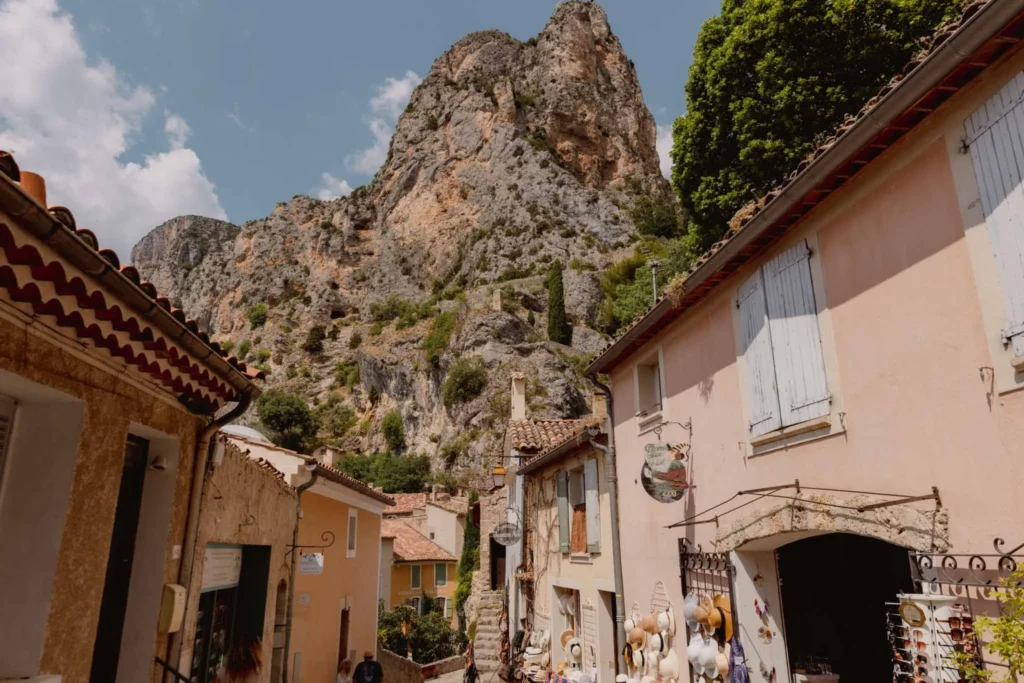
There’s something magnetic about stumbling upon a village that feels like it’s been carved directly from the landscape itself. When I first caught sight of Moustiers-Sainte-Marie nestled between those dramatic cliffs in the Natural Regional Park of Verdon, I understood why travelers consider it among the most beautiful villages in France. The remote gem sits utterly charming and unassuming, with a quiet energy that instantly makes you want to slow down and breathe.
Planning a road trip through the South of France brought me here during late June, right when peak lavender season transforms the Provençal valley into something almost otherworldly. The journey from Nice takes about two and a half hours, though you can also drive from Aix-en-Provence in roughly 90 minutes. If you’re coming from Marseille or Cannes, expect around 2 hours behind the wheel. A 90-minute drive from Aix en Provence makes it perfectly positioned for a day trip, though I’d argue that spending the night reveals the village’s true character.
The French Riviera road trip I’d planned allowed for an overnight stay, and honestly, two to three nights would be the perfect amount of time to experience everything at a leisurely pace. Most tourists rush through as part of a long day trip, but missing the slow life of the village centre means missing half the magic. Trust me on this one—you’ll want those extra hours to simply exist here without feeling rushed.
The Verdon Gorge
Table of Contents
ToggleBefore diving into the village itself, let me talk about what sits just a 10-minute drive away. The Verdon Gorge is this majestic canyon where the Verdon River has carved through limestone to create one of the most epic natural sights in all of Provence. On a sunny day, watching the water snake through in these surreal turquoise shades feels almost unreal—like someone cranked up the saturation on reality itself.
Getting there early makes all the difference. By mid-afternoon, parking becomes absolutely chaotic, and finding a last-minute boat rental turns into a competitive sport. I showed up around 11:00am on a weekend, and it was already bustling with crowds eager to get out on the water. The morning approach means cooler temperatures though, which isn’t ideal if swimming and lounging under the sun rank high on your priority list.
Renting a boat at Lac de Sainte-Croix became the highlight of my visit. You’ve got options—paddle boats, small motorized boats, electric boats, or kayaks. No boat license required, which removes that barrier for most travelers. The operators set up along the lake’s edge, particularly near the Pont du Galetas bridge on either shore. This popular launch point gives direct access to the spectacular natural spots within the gorge.
I grabbed one of the last available paddle boats without a reservation (lesson learned: book ahead), paying €35 for 2 hours. Looking back, I should’ve splurged for 3 or 4 hours because the time absolutely flies when you’re gliding through that vibrant blue river. The full-day and half-day options make more sense if you want to really explore, maybe try some rock jumping, or find those hidden swimming spots where the canyon walls rise dramatically on both sides.
Pack your lunch before heading out—I’m talking sandwiches from a local bakery kind of preparation. There aren’t many food options once you’re there, and eating on the boat while surrounded by those epic natural sights beats any restaurant experience. Plan on dedicating anywhere from 3-6 hours to the Verdon Gorge experience. The parking lot situation near Pont du Galetas can be tricky, with a dirt parking lot on the north side of the bridge. From there, it’s a short walk to a spectacular viewpoint of the mouth of the gorge, offering a sweeping panorama of both the canyon and Lac de Sainte-Croix.
If boating isn’t your thing, the region offers several hiking trails that take trekkers along and around the canyon. Walking these paths gives you a completely different perspective on how the Verdon River has shaped this landscape over millennia.
Notre Dame de Beauvoir
After spending your morning on the water, heading up to this small historic chapel perched high in the cliffs above Moustiers-Sainte-Marie makes for a perfect transition. This pilgrimage site has drawn visitors for centuries, and making the climb yourself ranks among the best things to do during your visit.
Signs around town point you toward the path, which involves conquering 260+ steps to reach the top. It’s a steep climb that took me about 20 minutes, though I’ll admit the path gets quite slippery. I was wearing tennis shoes and found myself gripping the handrail the entire way up, basically white-knuckling it to avoid sliding backward. Hiking shoes with good tread would’ve been the smarter choice. Walking sticks might help too, or just embrace taking it slow like I eventually did.
The church itself dates back to the 12 century, with evidence of even older temple remains that push the history back further. But honestly, it’s the journey and the best views of the village that make this climb worthwhile. Looking down at those colorful window shutters and doorways against the backdrop of looming cliffs creates one of the most picturesque settings imaginable. The fun climb delivers lovely views that justify every slippery step and moment of doubt about your footwear choices.
Wander the Streets/Village
Once you’ve descended from Notre Dame de Beauvoir, losing yourself in the heart of the village becomes the next natural move. Moustiers-Sainte-Marie offers legitimately one of the loveliest strolls in all of Provence. The entire village can be walked in one hour if you’re rushing, but I’d recommend giving yourself at least a couple of hours to truly peruse the shops and absorb the breathtaking beauty surrounding you.
The little creek—officially called the Ravine de Notre Dame—cascades right through town, creating this beautiful blur of sound and movement against the Provençal style structures. Stone bridges cross over at various points, each offering different viewpoints of how the small stream integrates with the architecture. The Archos Bridge Saint Mary provides particularly stunning perspectives.
Everything here feels walkable and pedestrian-friendly. The historic churches, the narrow lanes, the way doorways frame glimpses of the landscape beyond—it all creates this utterly charming atmosphere that makes you want to slow down and notice details. This is what I mean about the slow life of the village centre being worth protecting in your itinerary. You can’t rush this kind of experience without losing something essential.
Church of Our Lady of the Assumption
Right in the heart of Moustiers-Sainte-Marie sits this lovely church that deserves its own mention. The beautiful mix of architectural styles tells the story of how the building evolved—starting with its 12th century foundations, then getting a Gothic choir added in the 14th century. The main attraction is definitely the bell tower that rises above the village, with those looming cliffs serving up a dramatic backdrop that photographers dream about.
Walking through reveals layers of history in the stone and design choices. It’s one of those places where you can feel the centuries pressing in, where countless pilgrims and locals have gathered for worship and community. The building manages to be both humble and impressive, which seems fitting for a village like this.
Shop for Faïence / Faïence Pottery
Here’s where Moustiers-Sainte-Marie really distinguishes itself. The town’s history with pottery making stretches back to the 17th century, and the traditional style of tin-glazed earthenware called faïence has become synonymous with this place. Shops throughout the village let you browse and buy local pieces that range from affordable to investment-worthy.
As someone who appreciates ceramics, this became a huge highlight of my visit. Collecting pottery during travels gives you these tangible connections to places, and the craftsmanship here is legitimate. I spent considerable time at Atelier Bondil, where a local team handcrafts everything in a nearby workshop. The attention to detail and the way they maintain traditional techniques while creating contemporary designs really impressed me.
Mufraggi offered another beautiful selection worth exploring. Each shop has its own character and specialty, so it’s worth popping into several rather than committing to the first one you see. Even if you’re not buying, watching artisans work or seeing the range of what’s possible with this traditional style adds depth to your understanding of the village’s cultural identity.
Visit the Faïence Museum
For a deeper dive into this craft’s history, the Earthenware Museum displays over 500 pieces that track faïence from its beginnings through various evolutionary stages. Tickets run €5 per person, which feels reasonable given how comprehensive the collection is. The museum contextualizes what you see in the shops, showing how techniques and designs have shifted over centuries while maintaining core characteristics.
Updated opening hours and prices are available if you check ahead, though the village is small enough that you can often make decisions spontaneously based on how your day unfolds. The museum isn’t massive, so you’re not committing to hours inside, but it enriches everything else you encounter related to pottery during your stay.
Where to Stay in Moustiers / Hotels
Finding quality hotels can be challenging since options are far and few between, but Le Bastide de Moustiers stands out as the clear top pick. This 17th century farmhouse has been transformed into a boutique luxury hotel by the famed French chef Alain Ducasse. The property sits about five minutes’ drive below the village, surrounded by olive groves, lavender plants, stone walls, and ceramic pottery that reference the local traditions.
With only 15 rooms and suites, the small size contributes directly to the charm and intimacy you feel throughout your stay. The olive trees frame the grounds beautifully, and the 4-star hotel designation feels earned rather than inflated. You can also dine at the on-site Michelin-starred restaurant, which I’ll discuss more in a moment. The lovely views extend across the landscape, and the entire experience feels like being welcomed into an elevated version of Provençal life.
La Bouscatière offers another excellent option if you prefer staying right in the heart of the village. This charming boutique hotel features an infinity pool with lovely views that make it hard to leave for actual sightseeing. The location can’t be beat if you want to step directly into the village’s pedestrian-friendly streets.
For something more intimate, La Clorinde provides a unique local stay. Set on a beautiful property surrounded by olive trees, Clorinde welcomes guests into her home, offering two rooms for rent. This setup works perfectly if you want more personal interaction and insight into daily life here, rather than the more polished hotel experience.
Le Logis des Cascades 2 takes a different approach entirely with a one-bedroom apartment featuring a fully equipped kitchen and cozy living area. This option makes sense for longer stays or if you want the flexibility to cook your own meals using ingredients from local markets.
Restaurants
Food deserves serious attention in a region like this. Ferma Ste Cecile is a Michelin guide restaurant located just two minutes from the village centre, and reservations are recommended because that cozy space fills up, especially once the lovely outdoor terrace opens during warm-weather months. The menu stays seasonal, with offerings typically including fresh seafood and meats prepared with the kind of care that earns guide recognition.
Le Chardon-Marie might be the most picturesque restaurant in town, sitting over a small waterfall and creek in the heart of the village. The seasonal French menu might include seafood, risotto, soups, and meat dishes. Watching the water while you eat adds this sensory layer that purely interior dining can’t match.
Restaurant Les Tables du Cloitre occupies a gorgeous restaurant space in a former monastery, another Michelin guide restaurant where the food is fresh, the presentation is artful, and the service is wonderful. Again, reservations are recommended. The historical setting adds weight to the meal—you’re not just eating in Provence, you’re eating where monks once lived and worked.
But here’s the restaurant I’m most curious about: Le Bastide de Moustiers, the one-Michelin-star restaurant by Alain Ducasse featuring a Provençal-inspired, farm-to-table menu. Set menus start at €90 per person, though à la carte options are available if you want to customize your experience. Unfortunately, I didn’t have time to eat here during my visit, but it remains at the top of my list for next time. Everything I’ve heard suggests it delivers on the promise of refined regional cuisine using ingredients from the surrounding landscape.
Gelato Shops
Between meals, you’ll want to investigate the handful of gelato shops scattered around town. Les Delices d’Italie serves homemade ice cream on cones shaped like flowers—a whimsical touch that makes the whole thing feel more special. Flavors include cassis (which came highly recommended as a favorite), melon, citron, pistachio, Nutella, vanilla, praline, and more.
L’Etoile Givree – Artisan Glacier Fabricant represents one of the best options in the village. The flavor menu includes lavender (naturally), pistachio, vanilla, chocolate, coffee, and caramel among others. Taking a gelato break while wandering becomes almost mandatory in the afternoon heat, and these shops provide the perfect excuse to pause and people-watch.
Evening: Dinner in Moustiers or Visit the Valensole Lavender Fields
As afternoon shifts toward evening, you’ve got two options depending on your energy levels and interests. Staying in the village for dinner makes complete sense after a full day of boating, swimming, and hiking. You’re tired, satisfied, and ready to settle into that slow life the village encourages.
But if you’re visiting during peak lavender season, driving to the Valensole Plateau offers something almost spiritual. The journey takes about 45 minutes from Moustiers, positioning you perfectly to catch the lavender fields at golden hour when the light turns everything soft and golden. I headed straight there after my afternoon in the village, hopping around to a few different fields to find the best views and that perfect Instagram moment everyone’s chasing.
The lavender reaches its peak usually between mid to late June through July, though the exact timing depends on the season and weather patterns. Late June seems like the best time based on my experience—the vibrant color is fully developed but hasn’t started fading yet. I’ve also been in mid-July and found the lavender fields weren’t nearly as full or bright, with some already harvested.
Looking back, I wish I’d split things differently. Trying to do all three—the Verdon Gorge, Moustiers, and the lavender fields—in a single day felt rushed despite technically accomplishing everything. Having more time to split it over two days would’ve been ideal: one full day dedicated entirely to the Verdon Gorge and Moustiers, then another for the lavender fields and exploring another small town nearby.
Spending the night in Moustiers rather than continuing to Valensole would’ve given me that extra breathing room to really enjoy dinner without watching the clock. The two to three nights recommendation starts making perfect sense when you map out everything worth experiencing.
When to Visit Moustiers-Sainte-Marie
Timing your visit matters more than you might think. The village stays lovely to visit from spring through fall, with April, May, September, and October being less crowded if avoiding masses of tourists is important to you. These shoulder seasons offer pleasant weather without the peak season intensity.
But if you want to see the lavender fields in bloom and spend time on the Verdon Gorge under ideal conditions, June and July become non-negotiable. Based on my experience, I’d specifically recommend visiting in late June during peak lavender season—it’s the sweet spot where you can see it all at its best. The fields are vibrant, the weather is warm but not oppressive, and the whole region feels alive with that summer energy.
How to Get to Moustiers-Sainte-Marie / Getting There
The best way to reach this remote location is definitely by car. There’s really no other convenient way unless you book a tour, like the day tour from Aix-en-Provence that some operators offer. Having your own wheels gives you the freedom to explore on your own schedule, stop at unexpected viewpoints, and adjust your plans spontaneously.
Driving distances put Moustiers within reasonable reach from several major cities. From Nice, expect 2 hours (or two and a half hours depending on traffic and your exact starting point). Aix-en-Provence is about 1 hour 15 minutes away—a 90-minute drive that makes it perfect for a day trip. Marseille and Cannes both sit roughly 2 hours distant.
The closest airport is Nice, making that the most logical entry point if you’re flying in specifically for a Provence road trip. The two and a half hours from Nice to Moustiers-Sainte-Marie passes quickly with good company and a decent playlist.
Once you arrive, the town itself is completely walkable and pedestrian-friendly. You’ll explore on foot, so comfortable shoes become essential (remember my earlier warning about the slippery path to Notre Dame de Beauvoir). There’s a convenient paid parking lot on the edge of town that several sources recommend. I managed to luck into a free parking spot along Calade Tempesta leading up to the village, though those spaces fill fast.
Additional paid parking lots exist both close to town and further away if the convenient options are full. From the village, it’s a 10 to 15 minute drive to reach Pont du Galetas, the popular launch point for exploring Verdon Gorge.
Moustiers-Sainte-Marie makes the most sense as part of a road trip through the South of France rather than as an isolated destination. The proximity to places like Menton, the lavender fields, and other Provençal gems means you can create an itinerary that flows naturally from one experience to the next. Some travelers spend five years planning their perfect French itinerary—you don’t need to be that meticulous, but a little advance thought about routing and timing pays dividends.
Moustiers-Sainte-Marie Quick List
For those who like their information condensed: Stay at La Bouscatière or Le Bastide de Moustiers. Do these things—rent a boat at the Verdon Gorge, climb to Notre Dame de Beauvoir, and see the lavender fields at golden hour. Eat at Le Bastide Moustiers Restaurant if your budget allows. Shop for local faïence pottery to bring home something meaningful. This quick list covers the essentials, though obviously the details matter.