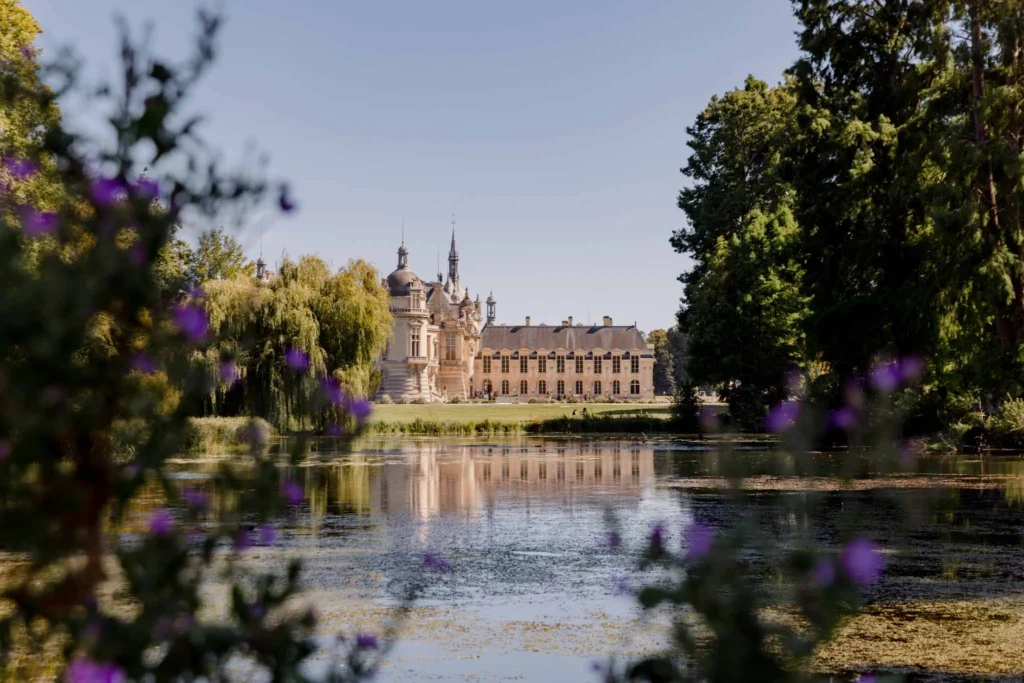
There’s something magical about escaping the bustling streets of Paris for a day, and my journey to Château de Chantilly proved exactly why daytrips beyond the city limits can transform an entire summer. The thick forests surrounding this elegant town, located 55 km north of the capital, felt worlds away from the urban chaos. What struck me most wasn’t just the historic chateau with its French Renaissance architecture, but how this place manages to weave together prestigious art collections, vast gardens designed by Le Notre, and an 18th-century stables complex that’s even bigger than the château itself.
The thatched-roof hamlet hidden within the grounds supposedly inspired Marie Antoinette to commission something similar at Versailles—though she wanted hers bigger, naturally. For film buffs, you might recognize the hippodrome backdrop from the Bond film “A View to a Kill” featuring Roger Moore, Christopher Walken, and Grace Jones. Unlike the busloads of tourists cramming into more famous destinations, Chantilly offers a wonderful alternative where you can actually appreciate the beautiful décor without jostling for human-free photos.
Both seasons have their charm here. Summer brings clear skies and mild temps perfect for wandering the enchanting gardens, while winter ensures you won’t face lines at the gatehouse ticket window. The Living Horse Museum adds another layer to this multifaceted destination, proving there’s enough here to keep anyone busy for an entire day. This isn’t just another château—it’s a complete experience that surpassed all my expectations.
Getting to Chantilly from Paris
Table of Contents
ToggleThe journey begins at Gare du Nord train station, and I’ll be honest—navigating French public transportation can feel like cracking a code. The Metro and part of the RER are run by RATP, while SNCF handles the rest of the RER and French trains, with regional authorities adding another layer of complexity. Each wants their own tickets and systems, which explains why even two Parisians I met (one who actually wrote a guidebook to Chantilly) spent 20 minutes wandering around confused before finally asking for help.
Your best bet is the direct TER train, specifically the TER Hauts-de-France train (formerly TER Picardie), which makes the trip in just 24 minutes. The ride takes you through only three stops, making it twice as fast as the one-hour car trip and significantly quicker than the alternative RER D line route that takes 45 minutes. Websites and guidebooks often mention both options—the Transilien RER D and the faster TER—but if you can choose, go for the TER every time. It’s more comfortable, makes fewer stops, and you won’t have to navigate the RER D maze in the bowels of the station.
Usually, trains are staggered so at least one is running approximately every hour, with service typically from 6am to 11pm. However, gaps in the schedule can leave you waiting with some pretty dodgy characters or, worse, stuck in Chantilly because you missed the last train. I recommend checking the schedule beforehand to plan your day properly. On weekends particularly, be ready to board as soon as the platform is announced—you’ll be competing with weekend cyclists trying to board at the same time. When I went at 11am on a Sunday, the train was so crowded we couldn’t sit together, though the 4pm return was better.
Finding the right platform is straightforward once you know the trick: trains to Chantilly-Gouvieux always depart from platforms 15, 16, or 17 in Hall 1. Look at the Departures board (Départs Grandes Lignes) for trains heading to Creil or Amiens—just make sure Chantilly is listed as one of the stops shown below the destination. The actual platform won’t display until a few minutes before boarding; before that, it just shows the hall where you should wait. When in doubt, ask someone who works there rather than wandering aimlessly.
Tickets
Here’s where things get interesting. The Chantilly-Gouvieux station sits in Picardie, exactly one station beyond the Navigo card eligibility zone, which is a bummer because it costs more to get there. Last-minute tickets run €9.50 each way, though you can get them for €5 each way if purchased a few days in advance through the SNCF Connect app or website.
But wait—there’s a much better option. The TER pack is genuinely the way to go, combining round-trip train tickets with entrance tickets to the château for €27 per adult and just €1 for children under 12. You can buy this online or in person at Paris Gare du Nord, and the train tickets are valid for any TER train to Chantilly-Gouvieux on your selected travel day, so you’re not locked into a specific time. This flexibility proved perfect when I ended up spending way more time at the château than expected.
Right in front of the train platforms at Gare du Nord, there’s a green ticket booth where you can purchase the TER pack (also called Le Pack TER Chantilly) for the same price as online. Finding the correct ticket machines requires some detective work: look for the green machines on platforms 15, 16, and 17 of the Grand Lignes (these are the trains at ground level in Hall 1—don’t go downstairs). They’ll say “Hauts-de-France” on them, and they’re normally the only green ones, though they’re old, touchy machines that require patience.
With the TER pack, you’ll need to stop by the ticket booth at the château to pick up your physical tickets. Just show the staff your PDF confirmation and they’ll print them. Hold onto these tickets because you’ll need to show them throughout the day at various checkpoints including the gardens, stables, and château interiors.
If you prefer booking everything separately, château tickets cost €18 and can be purchased online or in person on the day of your visit. The standard 1-day ticket gives you access to the château (including temporary exhibitions), grounds, and great stables (including equestrian demonstrations). A 2-day ticket runs €23 if you want to see everything including the Hamlet in the gardens. There’s also a €9 ticket just for the grounds (the French formal garden designed by Le Nôtre, Anglo-Chinese garden, and English garden), or a €12 ticket for grounds plus temporary exhibits in the Jeu de Paume. Currently, that’s the legendary 15th-century illuminated manuscript “Très Riches Heures du duc de Berry” running from June 7th to October 5th. A €32 ticket includes all of the above plus a horse show in the stables.
Note that the TER pack doesn’t allow entrance to temporary exhibitions—it’s just for the main château, park, and stables. But it saves money and gives you the flexibility to take any train throughout the day, which I found invaluable. No need to purchase tickets in advance either; you can buy the TER pack at the train station or online on the day of your trip, though booking train tickets a few days early saves money if purchasing separately.
From Chantilly Station to the Château
Once you arrive after the 24-minute train ride, you have several options for reaching the château. You can try to hail a cab, though that’s not easy in the countryside, or wait for the free shuttle that runs from the station (I’ve honestly never seen one materialize, despite following signs to the Gare Routière bus area around the corner). The shuttle supposedly takes about 10 minutes, and you should check the schedule online in advance if you’re counting on it.
My recommendation? Take advantage of the fresh air and walk. The path covers about 20-25 minutes (some say 30 to 35 minutes depending on your pace) and honestly, I really enjoyed it. You can either walk through town—basically two main streets, Avenue du Maréchal Joffre and Rue du Connétable, with the chateau at the far end—or take the shortcut through the forest and around the hippodrome and stables.
The shortcut through the forest is about 10 minutes faster and perfectly safe and scenic in its own way. You’ll need shoes that are okay for mud and gravel, but the path leads you through forest, across a grassy field, past the historic horse stables and race track, and then along a road that brings you right to the château entrance. If you need a café break or want to stop at a bakery on the way (Boulangerie du Château on Rue du Connétable sells excellent baguette sandwiches), take the town route instead. Both directions offer their own charm, and walking helps build anticipation for what awaits.
Visiting Château de Chantilly
When you arrive at the chateau, you’ll have the option to explore the château’s interior or gardens first. I opted to see the inside first and was glad I did—visiting on a late summer day, I wanted it to heat up a bit before enjoying the gardens. This medieval château was once home to the princes of Condé, and later Henri d’Orléans, the son of France’s last king, Louis-Philippe. Inside, you’ll see ornate rooms filled with art, furniture, porcelain, and books just as he left them.
The most valuable work of art in the collection is Raphael’s The Three Graces, though every room offers something remarkable. The visit takes you through the grand dining room, a painting gallery, and rooms filled with beautiful period furniture. You’ll pass through smaller spaces showcasing porcelain, portraits, and other personal collections that reveal the tastes and obsessions of former residents.
My favorite room was the library—imagine a two-story, Beauty and the Beast-style library with over 13,000 leather-bound books, a balcony, a cozy fireplace, and reading chairs positioned perfectly for losing yourself in thought. It’s the kind of space that makes you want to settle in for hours with a good book and forget the outside world exists.
If you’re interested in the 19th-century private apartments of the Duke and Duchess of Aumale, those are available only during guided tours. Check the chateau’s website for more details and scheduling, as these offer an even more intimate glimpse into aristocratic life.
Lunch, Provisions and Eating
The chateau has several on-site restaurants you can find listed on their website, and I highly recommend eating at one of them. Why? Because this is your chance to try the famous Chantilly cream—whipped cream supposedly invented here in the 17th-century castle kitchen by chef François Vatel (though some claim a version existed in Italy a century earlier). Disputed or not, trying it in this place felt essential.
I ate at La Capitainerie, located in the old castle kitchen itself. You can order à la carte or go with the set menu; I chose the set menu and enjoyed everything we had. For dessert, I ordered the cream puff filled with Chantilly cream in both vanilla and praline flavors—yum! It was delicious and lived up to the hype.
From spring through fall, another option is The Hameau restaurant, located in a quiet hamlet outside the chateau within the gardens. On warmer days, reserve a spot at this Hamlet location for open-air lunch or afternoon tea with strawberries and whipped cream (called chantilly in French because it was supposedly invested here). It’s an outdoor dining spot in a really charming part of the grounds that feels removed from everything.
Several places to dine exist in town as well, but it wouldn’t hurt to bring snacks, a thermos of coffee, or a bottle of water for the trip. Picnics are allowed at tables in the English Garden and near the playground and the Hamlet. If you’re planning to picnic but don’t want to bring supplies from Paris, Boulangerie du Château on Rue du Connétable sells baguette sandwiches perfect for eating on the lawn. I saw many families doing this around the grounds—a great activity on a nice day when the weather cooperates.
Exploring the Château Grounds
The chateau grounds are genuinely vast, covering over 285 acres (115 hectares) of gardens, canals, tree-lined paths, and woodlands to explore. I spent several hours strolling around the different gardens, and at minimum, I suggest allowing 2.5 hours, though we spent about 4 hours and took it really slow.
I started toward the Hameau, made my way around the Grand Cascade, and followed the Allée des Morfondus back toward the chateau before spending the rest of the afternoon in the English Garden. My favorite spots were the Island of Love near the English Garden and the Hameau itself—both areas where time seems to slow down and you can appreciate the landscape architecture without rushing.
You can bring your own picnic and eat on the lawn, which is what many families were doing when I visited. The grounds feel enchanting regardless of how you spend your time, whether you’re actively exploring every corner or simply finding a quiet spot to sit and absorb the atmosphere. Tree-lined paths invite wandering, canals reflect the sky, and woodlands offer cool shade on hot days. This isn’t a place to rush through; it’s a place to savor.
Great Stables
The Great Stables were built in the early 1700s for Louis-Henri de Bourbon, Prince of Condé, and this building is absolutely massive. When I first walked toward the chateau, I actually thought the stables were the chateau—that should give you an idea of the scale we’re talking about. The sheer size is impressive enough, but what happens inside makes them worth visiting.
They host equestrian demonstrations throughout the day, and I caught one that I really enjoyed. Watching the tricks the horses could do and seeing the skill of the riders made for engaging entertainment. You can also visit the Living Museum of the Horse, though I walked through it quickly and would probably skip it unless you’re a genuine horse fanatic. The museum covers horse history and the relationship between horses and humans, but it didn’t captivate me the way other parts of the property did.
The Great Stables also host full equestrian shows throughout the year beyond the regular demonstrations. These are more elaborate productions worth checking out if your timing aligns. You can see the schedule and ticket prices on the official website to plan accordingly. The backdrop of these stables against the hippodrome creates a unique setting that blends sport, history, and spectacle in ways few other places manage.
How Much Time in Chantilly?
I spent a full day in Chantilly, arriving around 10:15 AM and leaving at 7:00 PM, and honestly, I could have stayed longer. I’d read online that you need at least eight hours here, and while I was skeptical at first, it didn’t take long to see that I would easily spend that many hours exploring. Between the château interiors, gardens, stables, and just wandering the grounds, hours flew by without me noticing.
Here’s what I did: I took the 9:45 AM TER train from Paris Gare du Nord and caught the 6:57 PM back (train times are subject to change throughout the year, so verify current schedules). The TER pass gave me flexibility with train times, which proved perfect since I ended up spending way more time at the château than expected. If you’re planning to visit, make it a full-day trip—you won’t regret having the time to explore without feeling rushed.
Current opening hours vary by season, so visit the Château de Chantilly website to confirm before you go. Arriving in the morning is ideal; I recommend getting to the chateau around opening time or within the first hour so you have plenty of time to see everything. The property is large enough that trying to squeeze it into a half-day feels like cheating yourself out of the full experience.
Tips for Your Day Trip to Chantilly
Reserve lunch ahead of time if you want to eat at La Capitainerie, as this popular spot can fill up, especially on nice weather days. Get the TER pack—it’s easy, saves money, and gives you the flexibility to take any train throughout the day without worrying about specific departure times.
If you’re planning to picnic and don’t want to bring supplies from Paris, remember that Boulangerie du Château on Rue du Connétable sells baguette sandwiches and other provisions. Arrive in the morning so you have plenty of time to explore without feeling rushed. The château is charming and not too crowded compared to other destinations near Paris, making it feel like a discovery rather than a tourist obligation.
Is Chantilly Worth Visiting?
Chantilly might just be my favorite day trip from Paris—and I went in expecting just another chateau. It completely exceeded all my expectations in ways I didn’t anticipate. The gardens, interiors, food, and setting all came together to create something even better than I’d imagined. Everything from the sumptuously decorated rooms to the stunning French-style gardens to the famous Chantilly cream made this a highlight of my summer.
This place manages to feel both grand and intimate, both historical and alive. Unlike some châteaux that feel like museums where you’re simply observing the past, Chantilly invites you to experience its spaces, wander its grounds, and engage with its history in personal ways. I highly recommend it to anyone looking for an authentic escape from Paris that doesn’t involve fighting through crowds or feeling like just another tourist checking boxes.
When to Visit Chantilly
I recommend visiting on a nice weather day, especially if you want to enjoy the gardens, which are a major part of the experience. April through September is ideal when mild temps and clear skies make outdoor exploration pleasant. The walk through the forest between the train station and château remains enjoyable even on a hot day thanks to the shade, though summer certainly showcases the grounds at their most vibrant.
If you’re interested in holiday decorations, December is a festive time to go. Winter has its own lovely charm—even on a “busy” day, you won’t find lines at the gatehouse or rooms in the château so crowded that you can’t appreciate the décor. Both seasons offer enchanting experiences, just with different atmospheres. Consider what matters most to you: lush gardens and outdoor dining, or quieter interiors and potential seasonal events like Christmas markets. Either way, this elegant town surrounded by thick forests 55 km north of Paris rewards visitors year-round.