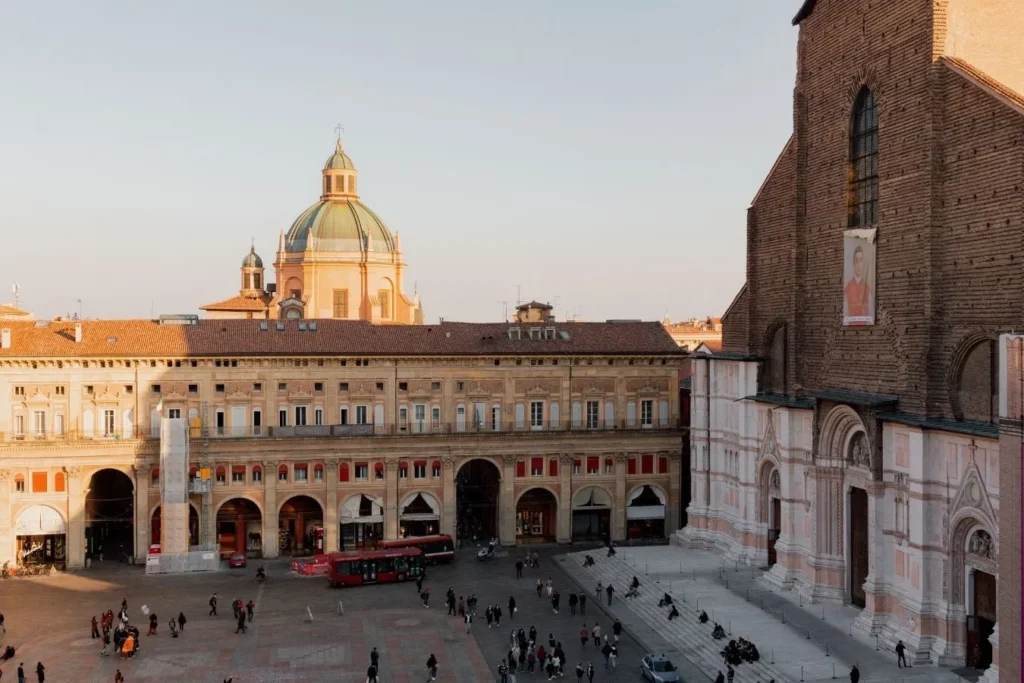
Standing beneath the terracotta rooftops of Bologna for the first time, I understood why locals call it La Rossa—the red one. This wasn’t just another Italian city checking boxes on a tourist itinerary. Bologna felt different, authentic in ways that Florence and Venice had long surrendered to crowds and commercialization. The city whispered rather than shouted, its 62 km of UNESCO-listed porticoes creating shadowed corridors where students debated politics over cheap Aperol Spritz, and elderly Bolognesi argued about the proper ratio of meat in ragù.
My journey to this Emilia Romagna capital started with a simple craving: I wanted to find Italy’s most authentic food. What I discovered was a city that refused to perform for visitors, a place where you could still feel like a local rather than a tourist, where the distinction between the two blurred over shared plates of tortellini in brodo and glasses of Lambrusco that cost less than bottled water.
Bologna sits in northern Italy as the region’s beating heart, home to close to 400,000 people who’ve mastered the art of living well without making a fuss about it. The city earned three nicknames that capture its soul perfectly: La Dotta for its status as home to the oldest university in the Western world, founded in 1088; La Rossa for those warm terracotta buildings that color the skyline; and La Grassa—the fat one—because this is Italy’s gastronomic capital, where mortadella, Parmigiano Reggiano, and balsamic vinegar were born.
I’ve returned many times since that first visit years ago, even leading a month-long foodie tour for a group of women who wanted to experience as much of Bologna as possible. Each time, the city reveals new layers—a hidden gelato shop only locals know about, a tiny church with frescoes that leave you breathless, porticoes painted with centuries-old artwork that tourists walk past without noticing.
Walk Bologna’s Endless Porticoes
Table of Contents
ToggleThe covered walkways stretching throughout Bologna create the most fascinating urban landscapes I’ve encountered anywhere. These aren’t mere architectural curiosities—they’re living spaces where the city unfolds in lights and shadows, unique angles that photographers dream about, columns topped with ornate capitals, and frescoes that have watched generations pass beneath them.
Built between the prosperous Middle Ages and early 20th century, these porticoes solved a practical problem when the University’s growth created demand for extra space. Rather than narrowing streets to extend building footprints, clever Bolognesi constructed covered walkways at heights that horses and carts could pass below, creating space for extensions above. Close to 40kms of porticoes now wind through Bologna, each section bearing its own unique style and structure.
Walking these covered passages became my favorite way to explore. Friends sit under arches sharing espresso and cigarettes. Dogs get walked regardless of weather. University students plaster walls with advertisements for the latest parties in town. The porticoes around Piazza Cavour particularly captivated me—ceilings beautifully preserved and painted with frescoes that demand you look up. The original wooden porticoes of Via Marsala transport you back centuries, while Piazza Santo Stefano’s covered walkways frame one of the city’s most photogenic squares.
Simply strolling these columns, I felt connected to Bologna’s history, one step at a time. A guided city walking tour helps understand their importance and beauty, but there’s something magical about discovering them yourself, letting the play of light guide your wandering.
Climb to the Top of Bologna
The Asinelli Tower stands 97.2 meters tall, and climbing its 498 narrow wooden steps ranks among the most daunting yet rewarding things you can do in Bologna. The tower leans a noticeable 1.3° off-centre, which adds a certain thrill as you ascend. But watching sunset high above the red city from the summit makes every step worth the effort.
These twin towers, known as Le Due Torri, serve as Bologna’s most recognized symbols. Commenced in the 11th century, the prominent Asinelli and Garisenda families constructed them as defensive fortifications and status symbols, strategically placed at the ancient Via Emilia’s entry point to warn off potential invaders. They weren’t alone—close to 180 towers once dotted Bologna’s skyline like a medieval Manhattan. Only twenty survived fires, wars, and lightning strikes.
The panoramic views from the top stretch in every direction. To the west, the marvellous Piazza Maggiore and Basilica of San Luca. Southwest, the ancient Roman road of via Emilia. South, green rolling hills of the Emilia Romagna region. If you’re feeling brave, lean over the railing to look down upon the shorter, leaning Garisenda Tower and Piazza de Porta Ravegana below.
Booking ahead matters—limited numbers get allowed per viewing session, and time slots fill quickly. Entry costs €5 per person. Visit early in the day or grab the last admission time for the most comfortable experience. The best lighting for photos happens in evening hours.
The 2024 and 2025 updates note the Asinelli Tower closed for safety measures and maintenance work. As an alternative, the Clock Tower offers sweeping views over Piazza Maggiore. This ancient city landmark has stood since 1250, originally a tower house built by jurist and professor Accursio di Bagnolo. The municipality eventually mandated it become a clock tower in 1444, and since then it’s been marking the passing of time for Bolognesi.
Your ticket includes access to the historical municipal halls featuring paintings, textiles, and porcelain exhibits from the Middle Ages to present day, including the ancient mechanism powering the clock tower’s hands—super cool to see. Visit late in the day for the best photo opportunities and to avoid bustling midday crowds. The entrance fee of €8 or €10 per person (depending on what you include) grants access to both the clock tower and Municipal Art Collections inside Palazzo d’Accursio, which has housed local government since the 14th century. The duel view platforms provide the city’s best panorama of Bologna’s famous cityscape and ornate, hand-painted rooms. Opening hours run Tuesday through Sunday from 10:00am to 6:00pm or 6:20pm.
Sample Italy’s Best Gelato
With over 100 gelato shops scattered throughout Bologna, the city became my personal gelato university. I’ve searched all over Italy for the best, and time and again, Bologna tops my list. Taking yourself on a gelato tour ranks among the essential things to do—if you only try one place, make it Cremeria Santo Stefano.
This consistently top gelato shop never disappointed across more than ten visits. The ingredients taste fresh, the flavor hits just right, and the texture melts in your mouth with perfect creaminess. Caffe Bianco and Crema Libanese became my go-to flavors, though every option delivers.
When a Bolognesi local named Alice recommended Cremeria Cavour as the best gelato in town, I knew I had to investigate. Located in the heart of Bologna at Piazza Cavour, brothers Alessandro and Stefano set up shop in 2008 with a simple aim: use the best ingredients and traditional Bolognesi passion and love to produce the finest artisanal gelato. The result? The best gelato I’ve ever eaten. Ever.
I sampled The Giant, a pine nut ice cream that shouldn’t work but absolutely does, along with Fior di Panna, Chocolate that made me say OMG YUM out loud, and Pistachio that tasted like actual nuts rather than artificial flavoring. The quality ingredients were noticeable—the flavours came across as fresh as I’ve ever tasted. Add incredibly knowledgeable and friendly staff with the ability to taste before you buy, and Cremeria Cavour wins every time. Their incredible flavor combos and heavenly chocolate cone deserve special mention. The 50 Special and Cioccolato e Rhum (chocolate and rum) flavors hit differently. Between €2 and €4 gets you happiness in a cup or cone.
La Sorbetteria Castiglione offers another excellent option. You can’t go wrong with their gelato, particularly the Crema Michelangelo made with caramelized almonds, amaretti, and cacao. If you prefer classic nut flavors, they do pistachio and almond gelato very well. Crema Elixir provides another stellar choice.
Gelatauro, a small gelato shop specializing in artisanal gelato with high quality seasonal ingredients, produces creamy, fresh flavors with a punch. Cioccolato all’Arancia (chocolate and orange) and Regno delle Due Sicilie (Sicilian flavors) stand out.
Cremeria la Vecchia Stalla on via Santo Stefano rounds out the must-try list. There’s nothing I like more than gelato, and these shops prove why Bologna deserves its reputation.
Eat Bologna’s Best Dishes and Taste the Local Cuisine
Food provides reason enough to visit Bologna. If you only have a couple of days here, make sure to eat, eat, and eat some more. During my week in Bologna, I may or may not have added a few kg’s to my waistline sampling the city’s many culinary delights, and I’m not sorry about it at all. The city earned the nickname La Grassa—the fat one—for good reason, an epithet I made sure to live by.
Quite simply, eating ranks among the best things to do in Bologna. In a country famed for its cuisine, this city reigns supreme as Italy’s gastronomic capital. Bologna is the birthplace of bolognese, or tagliatelle al ragù as locals call it. The region of Emilia Romagna serves as home to glorious Parmigiano Reggiano (parmesan), tortellini, tortelloni, mortadella, Parma ham, balsamic vinegar, and many other delicacies. Consuming all this incredible food won’t break the bank either.
Tagliatelle al Ragù stands as Bologna’s signature dish, made with fresh egg pasta and a rich, slow-cooked meat sauce that’s hearty, savory, and perfectly balanced. Oltre serves an exceptional version. This isn’t the heavy meat sauce Americans call “bolognese”—it’s more refined, with meat cooked down until it melts into the sauce.
Tortellini in Brodo delivers comfort food at its finest. Small hat-shaped pasta stuffed with pork gets traditionally served in warm meat broth with a sprinkle of parmesan. All’Osteria Bottega does this dish justice—hands down one of the best Bologna restaurants that I return to every time. Every dish arrives heavenly, but if you want something unique (and delicious), try the roasted baby pigeon. The tortellini in creamy Parmigiano Reggiano sauce will haunt your dreams, and the tagliatelle holds up alongside any in the city.
Tortelloni, a larger version of tortellini, comes filled with ricotta and spinach or seasonal pumpkin, served with butter and sage. Sfoglia Rina executes this beautifully. The pumpkin tortelloni hit different in autumn when orange squashes pile high in market stalls.
Lasagne Verde represents the Bolognese version of lasagna using green spinach pasta layered with ragù and béchamel sauce. It ranks among my top three Italian dishes of all time. Golosità di Nonna Aurora nails this preparation.
Cured meats—mortadella, prosciutto, culatello, and more—each get cured to perfection here. Mo Mortadella Lab serves the best mortadella sandwich in the city. Salumeria Simoni offers tasting platters that showcase the region’s charcuterie mastery.
Crescentina consists of fried rounds of dough that emerge fluffy inside and crisp outside. Best served with a plate of cured meats and cheese, or even with coffee. Trattoria Da Me does crescentina right, along with local specialties like friggione.
Sparkling wines deserve mention—Lambrusco (sparkling red) and Pignoletto (sparkling white) serve as the region’s go-to wines. Light and fizzy, they’re perfect for cutting through rich dishes. Osteria del Sole, a 15th century wine bar, pours both. This atmospheric spot only serves wine—no food—but you can bring your own meats and cheeses from nearby Quadrilatero.
For traditional Bolognesi cuisine, the street of via della Moline offers a large variety of traditional restaurants with large terrace areas perfect for summer dining. Trattoria del Rosso served the most impressive tortelloni I had in Bologna. Da Cesari provides a good place to try different pasta varieties—the tagliatelle with porcini mushrooms in fall hits the spot.
If you’re after a more hip, modern approach to Bologna’s famous cuisine, the streets off Mercato delle Erbe overflow with uber-cool Italian trattoria serving seriously good food. Ahimé, owned by three young hipsters, pushes the envelope with their ethos of “opening the door between the garden and the city.” Their seasonal produce comes from the local area, yet the dishes emerge modern, simple, and delicious. Honestly, this was my favourite meal in Bologna, so book well in advance before visiting.
Nearby, Oltre represents another modern restaurant combining fine dining with hipster elements. The food stays simple while pushing the envelope between modern and traditional in a way rarely experienced in the city. Another must visit.
For vegetarians, Botanica Lab gets my recommendation—they serve ridiculously good vegetarian meals in the coolest space in Bologna.
The student quarter of Bologna near Piazza Guiseppe Verdi became one of my favourite areas for lively bars, cafes, and street food markets. Each evening, bars in the area vie for students’ attention by offering stuzzichini, a complimentary buffet of tapas-style nibbles, as long as you enjoy a few alcoholic beverages. We consumed copious amounts of Aperol Spritz—hey, they were cheap! The food comes surprisingly good, with both vegetarian and meat dishes offered.
For a more market vibe, check out the streets and laneways of Quadrilatero just off Piazza Maggiore. Primi cost €6-€10, Secondi run €10-€15, and Dolci range €3-€5 euro. Tipping isn’t expected, but if you enjoyed your meal or service, a small tip around 10-15% shows appreciation. Most restaurants charge a coperto, a cover fee per person covering bread, table linens, and service, usually listed on the menu between €2-€5.
Menus typically divide into appetizers, first courses (primi), second courses (secondi), and desserts. Pasta gets served as a first course, meat or fish as second—you don’t need to order both. Reservations are highly recommended, especially at popular places. Many restaurants take bookings by phone, so try asking if they speak English or use Google Translate. If you didn’t make a reservation, try arriving right when the restaurant opens. Many places hold a few tables for walk-ins, especially for two people—I’ve had good luck with this approach.
Explore Market Streets and Bologna’s Best Market Halls
To the east of Piazza Maggiore lies the bustling, colourful streets of Quadrilatero, one of my favourite parts of Bologna. This trendy, beating gourmet heart pulses with life. The somewhat odorous alleyways (fish, anyone?!) fill with greengrocers and fishmongers shouting the day’s specials, while the warm scent of fresh-baked bread wafts from local artisanal bakers. Quaint cafes churn out morning espressos for their regulars while tourists slowly wander through taking in all the sights and sounds.
Quadrilatero delivers a sensory overload in the best possible way. Set on the site of ancient Bologna, this area served as home to many markets and food stalls during the Middle Ages. It’s now the commercial heart of the old town and the place in Bologna to find incredible local produce, including freshly made pasta, local balsamico, aged cheeses, delicious charcuterie, and terrific inexpensive wine. A number of restaurants and bars dot the area, perfect for lunch or afternoon antipasti.
Mercato delle Erbe stands as my favourite of Bologna’s market halls, the largest covered market in the historic centre. Formally the San Gervasio barracks, it converted into an indoor market in 1910 and has since become the market of choice for young and old Bolognesi alike. After the 2014 renovation, the market combines traditional stalls and shops with super cool restaurants and hip wine bars.
Set across a single floor, the centre of the hall fills with market stalls selling fresh produce from throughout the region. On the outer walls, vendors sell cheeses, meats, fish, and other Italian products including freshly made pasta. Two adjacent wings house restaurants and wine bars in a convivial open space—it’s uber cool and a hidden gem in the city.
Stop by Mozzabella for Neapolitan-style pizza—get a slice of their square pizza, one of my favorites in the city. Vini E Sapuri serves small plates and wine (think antipasto/cicchetti). Banco 32 delivers delicious seafood. Vineria alle Erbe pours local wines. Formaggeria Barbieri 1968 displays the best range of cheese you’ll ever lay eyes on. If you’re after a quick lunch or snack, try the piadina’s at Sfarina. If you’re feeling adventurous, try the horse meat from Macelleria Equina, a regional specialty, though not for everyone (myself included).
Mercato di Mezzo, located in the bustling market quarter of Quadrilatero, houses a range of local food and wine under the roof of one of Bologna’s medieval markets. Similar, albeit smaller than Mercato Centrale in Florence, vendors serve typical Emilia Romagna fare, including fresh local pasta, pizza, wine, and antipasto that can be eaten at communal tables. It feels a little commercialized, so I’d recommend exploring the surrounding laneways for lunch or dinner. However, if you’re after a quick snack, Mercato di Mezzo works. Grab fresh pasta, meats, and seafood upstairs, or head to the basement bar, Baladin Bologna, for a drink and burger.
Mercato Ritrovato operates on the border of the historic quarter at the Cineteca di Bologna precinct. This open-air farmers market showcases the best produce from Bologna’s countryside. Their ethos centers on local, seasonal, and zero km sourcing, which I absolutely love. The producers and artisans here represent the best of the best, so you’ll find something special no matter what.
On sale: fruits and vegetables, bread and biscuits, yogurt and milk, eggs and meat, cheese and cured meats, wine and craft beer, honey and marmalades, flowers and fresh pasta, plus fish from the nearby Adriatic Sea. The market also features street food vendors, cooking classes, concerts, and pop-up events. It’s basically hipster paradise and I’m totally here for it. Unfortunately, it only runs once a week—in summer every Monday between 5:30-9:30 p.m.
People Watch in the Centre at Piazza Maggiore
One of the largest and oldest squares in Italy, Piazza Maggiore serves as the epicentre of political and social life in Bologna and the starting point for everything to do in the city. Surrounded by some of Bologna’s grandest buildings—the Basilica di San Petronio, Palazzo dei Notai, Palazzo d’Accursio, Palazzo del Podestà, Palazzo dei Bianchi, and the fountain of Neptune—Piazza Maggiore ranks as the most beautiful European square I’ve laid eyes on.
The beauty of Piazza Maggiore lies beyond its attractive facade. For centuries, locals have embraced and enjoyed this space as the true definition of a public square. Piazza Maggiore served as home to one of Europe’s biggest open-air markets until the mid-1800s, with products coming from all over the world, which explains how it grew into the meeting spot for locals.
I spent many afternoons in Piazza Maggiore doing something I love: people watching. Sitting on the stairs of San Petronio, I watched cyclists swerve through crowds of rowdy students, tourists pose for selfies in front of timeless architecture, locals enjoy espresso and cigarettes at shaded cafes, and buskers fill the square with musical delights.
As the sun went down, I watched Piazza Maggiore and its beautiful buildings illuminate as noise from crowds reverberated throughout the whole square. It creates a slightly surreal but seriously alluring experience.
Built in the 1200s, the square features a couple of key sights worth noting. The Basilica of San Petronio saw construction begin in 1390, though the façade remains unfinished. It’s the largest church in Bologna and houses a 17th-century meridian line created by astronomer Cassini. At noon, a beam of sunlight hits the line, showing the sun’s exact position throughout the year. Entry to the main church is free, with a small fee to access the chapels and museum.
The Fountain of Neptune, commissioned by Pope Pius IV in the 16th century, was Bologna’s first public fountain. Designed by Tommaso Laureti and sculpted by Giambologna, the fountain features a striking bronze Neptune symbolizing papal power. Fun fact: Neptune’s trident inspired the Maserati logo.
Also located on the square: the Fountain of Neptune (Fontana di Nettuno), one of Bologna’s icons. Completed in 1566 in late Renaissance style, the fountain depicts the god Neptune with four ‘angels’ placed at his feet, each standing for the Ganges, Nile, Amazon, and Danube—the rivers of the four continents known at the time. The sheer size and realistic nature of the sculpture and fountain leave you in awe.
Piazza Maggiore also houses the Bologna Welcome visitor information centre, where you’ll find everything to do with the city. A guided city walking tour commencing from here helps understand Bologna’s major cultural attractions and history.
Admire the Unfinished Beauty of Basilica of San Petronio
Smack bang in the middle of Bologna, just off Piazza Maggiore, lies one of the city’s most important and imposing structures. Named in honour of Bologna’s patron, Saint Petronius, construction of the basilica started in 1390. Although never completed due to a rivalry with Rome (just look at the half marble, half brick facade on the exterior for proof), the church evolved through the middle ages to become the structure standing today.
Inside, the church possesses many distinctive qualities making it one of the most unique I’ve visited—a definite stop for any Bologna itinerary.
The Meridian line stretches as the longest in the world at 67m, created in 1656 by Gian Domenico Cassini. It corresponds to 1/600,000 of Earth’s circumference and to this day marks the passing of days and seasons. The sun ray enters from a hole positioned in the vault 27 meters above ground, hitting precisely the time of year on the line.
Ancient Organs make San Petronius home to the oldest functioning organ in the world, built in 1470 by Lorenzo da Prato. It’s also home to another 400-year-old organ.
The Frescoes throughout San Petronius feature several impressive works, including Giovanni da Modena’s scenes of the Last Judgement and Maometto’s ‘In Inferno Canto 28.’
Side chapels number 22 in the basilica. Cappella Bolognini houses an original depiction of Heaven and Hell inspired by Dante’s Divine Comedy.
Fortunately, entering the basilica is free, however taking photos costs €2. Open daily from 07:45am to 14:00pm and 15:00pm to 18:00pm. Cover your shoulders and knees, and remove any hats.
Walk to the Sanctuary of the Madonna di San Luca
“When I see San Luca, I know I’m home,” muttered my guide Alice, referring to Bologna’s imposing hilltop church, the Sanctuary of the Madonna di San Luca, which stands out when entering the city. Along with le Due Torri, San Luca ranks as one of Bologna’s icons.
Unfortunately, I missed visiting this symbol on my first trip to the city, so it sat atop my itinerary for the second visit. On a cold, misty autumn Sunday morning, I joined what felt like each and every Bolognesi starting the long walk through the fabled Portico di San Luca to the sanctuary.
Commencing in Piazza Maggiore, the UNESCO World Heritage-listed portico covers 3.8kms, snaking its way up to Colle della Guardia via ornate, intricate, beautiful, seemingly endless arches—666 to be precise, which hold icons or chapels erected by patron families.
The Portico di San Luca holds the title as the longest portico in the world, stretching 3.8 km uphill from Porta Saragozza to the Sanctuary of the Madonna di San Luca. Built between the 17th and 18th centuries, the portico’s 666 arches offer a scenic, mostly uphill walk taking about 1.5 hours. Starting early in summer helps avoid heat and crowds.
The final half of the walk consists mostly of stairs—many of them—however the views over Bologna as you ascend prove breathtaking. The hour-long climb concludes at the foot of the Sanctuary of the Madonna di San Luca church, which houses the icon of the Virgin. The Basilica was completed in 1723, although a church or chapel existed on this site for over 1,000 years. It’s worth looking inside, especially to see artwork and frescoes from famous Italian painters and sculptors: Creti, Reni, Pestrini, Mazza, and Bigari.
Unfortunately, the fog hadn’t disappeared by the time I started my descent, but on a clear day, the views from San Luca over Bologna appear incredible and definitely worth the hike.
If you prefer not to walk, hop on the San Luca Express tourist train from Piazza Maggiore. It takes around 30 minutes each way. I’ve done this hike several times, and one of the best ways if you’re short on time involves taking the train up then walking down. Booking in advance matters, especially in summer.
Once at the top, step inside the sanctuary or climb to the top of the dome for panoramic views of Bologna and surrounding hills. Entry to the church is free, and the dome climb (San Luca Sky Experience) costs a small fee of €5. The basilica opens everyday from 7:00am to 7:00pm. In summer, hours run 7:00am-19:00pm; winter 7:00am-18:00pm. The train plus guide costs €10, climbing the 100 stairs to the top adds €5.
Visit the University of Bologna and Anatomical Theatre
Bologna has always been a liberal-minded and progressive city, so learning it hosts the oldest university in the western world, founded in 1088, didn’t entirely surprise. There’s something intriguing and awe-inspiring about traipsing the halls of an old university. All those centuries of learning, debate, and intelligent reflection seem almost within reach, as though they’ve seeped into the very foundations of the buildings to whisper gently to curious folk passing through.
This intrigue led me to the Anatomical Theatre of the Archiginnasio, a 17th-century anatomical lecture hall at the old medical school. Intricately carved entirely out of spruce wood, with an elaborate teacher’s chair and canopy held by two famous spellati statues (carved ‘skinless’ men), plus statues of famous doctors and beautiful ceiling motifs full of astrological symbols, this ranks as probably the most stunning and elegant place I could ever think of for cutting open a dead body.
Founded in 1088, the University of Bologna stands as the oldest university in the Western world—a must-visit when in the city. Its historic home, the Archiginnasio Palace, sits just off Piazza Maggiore. Built in 1563 to bring all academic faculties under one roof, the palace became the seat of learning for centuries.
Inside, don’t miss the Anatomical Theater, a beautifully restored 17th-century lecture hall used for anatomy classes. Look for the marble dissection table and the famous “Skinned Men” statues carved by Ercole Lelli. In the centre of the room lies a marble table (a copy of the original) where fresh cadavers were once dissected by medical students and teachers. Unfortunately, the building was heavily bombed during World War II but got rebuilt to its former glory using its original pieces.
Take a look inside Stabat Mater Hall, once used for law lectures. You’ll get a glimpse of the Municipal Library through a side doorway—though it’s closed to the public, it’s still neat to see (you can peek through the door at the seemingly endless library, locked to outsiders).
Walk along the main corridor and admire the palace’s decorated walls, filled with centuries-old student coats of arms.
Buy your tickets online at the official website. You can also purchase your ticket from the ticket booth on the second level of the palace; however, I recommend buying tickets in advance during peak season (June to September). Opening hours run Monday through Saturday from 10:00am to 6:00pm, or Mon-Fri 09:00am-19:00pm with Saturday 09:00am-14:00pm, Closed Sundays. Ticket prices: €3 per person. Address: Piazza Galvani, 1, 40124 Bologna BO, Italy.
The Teatro Anatomico, along with the seemingly endless library, proves absolutely interesting enough to make it onto any list of things to do in Bologna.
Discover the Seven Churches of Santo Stefano
From the outside, the Seven Churches of Santo Stefano looks like any other church, but step inside and you’ll quickly realize it’s something special. Dating back to the 5th century, this religious complex comprises several interconnected churches built across different time periods. The oldest, the Church of the Holy Sepulcher, includes a replica of the tomb of Christ in Jerusalem.
As you explore, you’ll see ancient frescoes, tombs, and artifacts that speak to the long and layered history of the site. Entry is free and the complex opens daily. Plan to spend around 20 minutes wandering through. Opening hours: Tuesday through Sunday from 9:30am to 12:30pm and 2:30pm to 7:00pm. Monday 6:00pm to 7:30pm (only the basilica opens this day). Address: Complesso di Santo Stefano, Via Santo Stefano, 24, 40125.
Explore Bologna’s Best Museums
Bologna houses an exceptional array of museums, including Renaissance-era galleries, modern art collections, and vast museums focused on the city’s strong industrial past. Short answer: there’s something for everyone in the city. If you have time, visit one of Bologna’s museums. I’d choose MAMbo if picking just one.
The National Art Gallery of Bologna (Pinacoteca Nazionale) sits in a 17th-century former Jesuit novitiate of St Ignatius. I’m not going to lie—nothing quite compares to the Renaissance masterpieces dotted through Florence and its many galleries. But Bologna isn’t Florence, and that’s kind of the appeal of the city. At the National Art Gallery of Bologna, this difference becomes obvious—it’s quieter and an altogether more enjoyable experience than the Disneyland crowds of the Uffizi.
The gallery houses a superb collection of 13th-18th century paintings and fundamental works by artists in some way related to Bologna and Emilia, most resulting from the suppression of churches and Napoleon during the Middle Ages and beyond. Most art is religious in nature from the Renaissance, Mannerism, and Baroque periods, which can get a little tedious at times, especially for atheists among us. However, it’s easy to appreciate the extraordinary skill of these Italian masters.
Museo Civico Archeologico (Archaeological Museum), located near Piazza Maggiore in a 15th-century palace, has been around since 1881. Inside, you’ll find a fascinating collection of ancient artifacts, from Egyptian relics to Roman and Greek art.
Some recommended pieces include Raphael’s Ecstasy of St. Cecilia, The Visitation by Tintoretto, and Madonna di Santa Margherita by Parmigianino. Overall, the collection can be seen in about 2 hours, and information gets provided in both Italian and English. Entrance costs €6, however it’s free with the Bologna Welcome card. Opening hours: Tuesday and Wednesday 9am-2pm, Thursday through Sunday and public holidays 10am to 7pm (last admission 30 mins before closing time). Closed Monday.
The Museum of Modern Art (MAMbo) occupies a former bread bakery and now serves as a centre for creativity and experimentation. A little bit tired of all the historical sites of Bologna, I decided to spend an afternoon checking out something a little more modern. MAMbo features permanent and loaned collections set out over 9,500sqm of modern, architecturally fluid floorspace. The permanent collection gets organised into nine separate themes spanning from the 20th century to present.
My favourite exhibition featured Italy’s famous still life painter and Bologna native, Giorgio Morandi. The exhibition showcases some of his most famous and significant works and analyses the motifs and periods that characterized Morandi’s work. A highlight is the collection of still lifes by local artist Giorgio Morandi. The museum also hosts rotating exhibitions and a strong lineup of contemporary works. Cost: €6.00 to permanent collections. Opening hours: 10:00am-18:30pm Tuesday, Wednesday, Friday through Sunday (and holidays); Thursday 10:00am-22:00pm. Closed Mondays.
The MAST Museum of Technology might sound, dare I say it, boring, but it’s not—trust me. In a city of such historic grandeur, a modernist museum showcasing industry and technology seems a little random. However, in Bologna, it fits. The city, and indeed Emilia Romagna, operates as a global manufacturing powerhouse. Some of the world’s pre-eminent companies base themselves in the region, including the Coesia Group, producing industrial and packaging solutions for global brands.
Coesia, looking to build a bridge between industry and the city (and its people), created the MAST foundation, an international cultural and philanthropic institution focused on art, technology, and innovation. The modernist MAST Gallery comprises two large galleries and exhibitions. The super interactive Innovation Gallery showcases industry and work through exhibits and art, perfect for both kids and adults alike.
My favourite section, though, was the Photo Gallery that hosts temporary photography exhibitions on industry and life. The Ando Gilardi exhibition on show during my visit proved exceptional in its simplicity of composition and depth of subjects. The best part of all? It’s 100% free. The exhibits are super interactive and provide a deep understanding of the relationship between industry and society. Also, the building itself deserves a visit—a glass and cement modernist behemoth featuring aesthetic angles and shadows. Opening hours: Tuesday through Sunday, 10am to 7pm. Getting there: Take bus #19 from the centre of Bologna and disembark at Centro Vittoria.
The Museo della Storia di Bologna (Bologna History Museum) helps you learn about the city’s history from its Etruscan roots to modern times. The museum uses interactive displays, projections, and immersive tech to bring Bologna’s story to life—a great option for families.
Church of Santa Maria della Vita
The Church of Santa Maria della Vita houses one of the most important works of Renaissance art, the “Lamentation over the Dead Christ.” This terracotta sculpture, created by Niccolò dell’Arca in the late 15th century, captures the raw emotion of grief. It depicts the Virgin Mary, Mary Magdalene, and others mourning over the lifeless body of Jesus.
I was in complete awe when I walked up to it. The way he sculpted the expression of fear and sadness on the women’s faces almost transports you to that very moment. It’s definitely worth a visit if you have time. Opening hours: Tuesday to Sunday from 10:00am to 18:30pm (last entry at 18:00). Ticket prices: €5 to visit the Lamentation of Niccolò Dell’Arca, €9 to visit both the Lamentation and Oratorio dei Battuti. Address: Via Clavature, 8/10, 40124 Bologna BO, Italy.
Find Bologna’s Hidden Canals
A little known fact: Bologna maintains a 60km network of canals dating back to the Middle Ages. Used largely as a way to provide power to Bologna’s industry, the majority of canals now get obscured by the ever-expanding city. However, a few locations offer a sneaky glimpse at part of the city’s heritage.
Bologna once had a network of canals from the 12th century, most of which now run underground. One of the few visible spots is the Finestrella di Via Piella, a tiny window that looks out onto a hidden canal. Thanks to social media, it’s become a popular photo stop, so expect a short line. It’s a fun stop if you’re nearby, but not something to prioritize if you’re short on time. Go early in the morning to avoid crowds.
Note: During the summer months, the canals are sometimes dry, so don’t be surprised if you peek through the window and find no water.
If you’ve got an afternoon to spare, I recommend going in search of Bologna’s colourful hidden canals. You can find the best Bologna canal viewpoints at the following locations:
The little window on via Piella offers a charming and colourful view of Reno canal through a restored ‘window’—it’s kinda cute. Via Capo di Lucca shows where the Moline canal runs partially uncovered between buildings. If you look closely, there are still some Renaissance age millers’ houses on the right. From the bridge in via Malcontenti, on via Malcontenti, sits the only remaining watering place, used for washing carts and watering animals.
Go on a Bologna Food Tour
One of the best ways to dive into Bologna’s regional cuisine involves joining a food tour. You’ll get to sample a variety of local dishes—I tried multiple pastas, gelato, meats, and cheeses—and learn a bit about the city’s history along the way. The Classic Bologna Food tour is my favorite food tour in Bologna (I’ve done it twice!). A food tasting tour that includes a visit to the Towers makes another excellent option.
Join a Cooking Class
I try to take a cooking class whenever I travel, and Bologna ranks as one of the best places to do it. I’ve taken three classes in Emilia-Romagna and still use the recipes. They’re always a hit with friends and family. I highly recommend signing up for a class in Bologna to learn how to make local favorites like tagliatelle al ragù and tortellini. A highly-rated pasta cooking class where you’ll learn to make traditional Emilia Romagna dishes in a local’s home provides an authentic experience.
Take a Foodie Day Trip
A day trip to Modena or Parma serves as a must if you’re here for the food. These towns sit less than an hour away and offer a deeper look into Emilia Romagna’s culinary traditions.
In Modena, I recommend a balsamic vinegar tour where you can learn how traditional balsamic gets made and enjoy tastings straight from the source. Or join a Modena food tour to sample a variety of regional specialties, including balsamic vinegar.
In Parma, take a small group tour to visit a Parmigiano Reggiano factory and a Parma ham producer. For the ultimate Emilia Romagna food experience, I recommend a full-day food tour that includes a wine tasting, a visit to a Parmigiano Reggiano factory, an Acetaia, and to a Parma ham producer.
Visit a Nearby Winery
If you’re a wine lover, visiting a local winery provides a great way to explore the countryside around Bologna. Emilia Romagna is famous for its sparkling wines, especially Lambrusco and Pignoletto. Lambrusco is a red sparkling wine that pairs well with rich, meaty dishes, while Pignoletto is a crisp white with fruity, floral notes that complement pasta and lighter fare.
Several wineries within an hour of Bologna are worth visiting. Opera 02 lets you enjoy a tasting of their organic wines and lunch on the terrace with wine pairing and an incredible view. Umberto Cesari, set atop rolling hills, is a gorgeous estate offering wine tasting experiences throughout the week. Manaresi, located just a 25-minute drive from Bologna, is a family-run wine estate specializing in Pignoletto varietals. You can sign up for a wine tour and tastings on their website.
Sample the Exceptional Local Wines
When one thinks of Italy, one invariably thinks of wine. Good wine. In fact, some of the best wine you’re ever likely to try. While Tuscany might get all the plaudits, Emilia Romagna is home to some of the most desirable wines in Europe, if not the world.
Winegrowing has been a part of life in Emilia Romagna since the Etruscan era around 750 BC. It’s in Bologna’s surrounding hills and plains that varietals such as Lambrusco, Sangiovese, Pignatello, and Albana were born, so it’s no surprise to find Enoteca’s (wine stores) in just about every corner of Bologna.
While I would suggest just strolling the ochre-coloured streets until you find an Enoteca that fits your desire (the best of which can be found in the historic centre), I also highly recommend visiting Osteria del Sole (bring your own food, drink all the wine!), Enoteca Italiana, Saràvino, Enoteca Zampa Di Barbieri Dario, L’Emporio, Medulla Vini, and the historic Enoteca Faccioli.
Alternatively, if you’d like to discover Bologna’s best wine bars through the eyes of a local, join a wonderful wine tasting tour. I highly recommend trying Lambrusco, a local sparkling red that’s perfect for summer afternoons, the silky Sangiovese di Romagna, the Romagna Albana (delicious white wine from the surrounding hills), and the Passito, an Italian sweet dessert wine made from dried grapes. Expect to pay between €4-€7 per glass.
Fortunately, most wine bars also serve exceptional antipasto, or even proper meals, so your wine sampling session also becomes a chance to sample the much-celebrated local cuisine. Alternatively, if you’re after sampling wines from the region directly from the wineries, I highly recommend taking a wine tasting day tour from Bologna.
Learn How to Make Gelato the Old Fashioned Way
Visiting Carpigiani Gelato University is a treat for any gelato lover. Just outside the city center, this premier institution founded in 2003 has trained thousands in the art of gelato, sorbet, and pastry making. If you’re inspired to try your hand, there are week-long or month-long courses available, but they also offer single-day courses for those of us that aren’t necessarily looking to open a gelato shop.
Book your masterclass experience at the Carpigiani Gelato Museum. The price is €50 per person for a 2.5 hour experience. How to get to Carpigiani from Bologna: Take the #87 bus and get off at the “Anzola E. Magli” stop. The building is right across the street from this stop. Purchase your tickets on the bus or in advance from a tobacco shop.
Have a Picnic in Parks
Giardini Margherita is the city’s largest public park and a lovely spot for a picnic. I also love the restaurant at Le Serre dei Giardini, located inside the park—grab a bite to eat in the greenhouse or a drink in the gardens.
For a quiet break from the city, head to San Pellegrino Park, just below the Sanctuary of the Madonna di San Luca. Bring a picnic, walk along the trails, and enjoy the scenic views over the hills. To get there, follow Via di Casaglia past Villa Spada. It’s about a 3.5 km walk from Piazza Maggiore.
Visit Certosa Cemetery
The Certosa Cemetery, just outside Bologna’s city center, feels more like an open-air museum than a typical cemetery. With its elaborate tombs, sculptures, and centuries-old monuments, it’s one of the oldest and most beautiful cemeteries I’ve visited. Many notable Italians, artists, writers, and politicians are buried here, and I spent a couple of quiet hours wandering through its peaceful paths. It’s about a 45-minute walk from Piazza Maggiore or a 20-25-minute ride by local bus. Entry is free.
Take Day Trips from Bologna
If you’re calling Bologna home for a few days, it’s a great launchpad for day trips around the region. Modena and Parma are musts, but a few more places are worth spending a day in.
Ravenna sits only one hour and a half by train from Bologna. This city is famed for its Byzantine mosaics, all packed into a walkable historic center. Make sure to try a piadina sandwich, a local flatbread stuffed with cheese and meats, while you’re at it.
Ferrara is only 30 minutes from Bologna by train. Ferrara is a wonderful Medieval city that can be seen in a half-day. Wander the streets, explore the majestic Estense Castle, and admire the unique diamond-patterned façade of the Palazzo dei Diamanti.
Dozza is known for its charming mural-covered buildings. Dozza is best visited by car (bus is also an option) and makes a colorful addition to a more art-focused day trip.
Ferrari Museum in Modena’s outskirts is a must for car lovers. Visit the museum in Modena and the Ferrari factory in Maranello. You can either book a group day trip from Bologna or rent a car and drive yourself.
Rimini: Craving sun and sand? Head to Rimini for a beach day and a dose of Roman history. Its golden beaches and ancient charm make it a perfect seaside escape from the city.
Explore the Hipster District of Ghetto Ebraico
First things first: Bologna is one of the coolest places I’ve ever visited. Due to its liberal, progressive inhabitants and world-class university, the city brims with people way cooler than I’ll ever be. And the home of Bologna’s uber-cool is Ghetto Ebraico.
This former 16th century Jewish Ghetto has now transformed into an area brimming with some of the city’s most hipster shopping, bars, and restaurants. The atmosphere created by narrow streets, tiny windows, and curious corners makes it a great place to explore. Indeed, I spent many an afternoon meandering around its colourful streets, enjoying the heady mix of boutiques, vintage stores, bars, and street art.
After an afternoon exploring the colourful district, I stumbled upon Camera a Sud, enticed by the hipster-vintage surrounds and the prospect of cheap Aperol Spritz. And after spending every afternoon there for the next three days, I’m happy I did. Not only was the Spritz cheap, it ended up being the perfect place to chill out after a long day of walking.
This hidden gem fills with uni students and Bologna’s uber cool, who sip spritz and smoke while no doubt discussing the horrid state of Italian politics. Rain, hail, or shine, it’s the perfect place to sit, chill, and chat. Where: Camera a Sud, Via Valdonica 5, Ghetto Ebraico. Cost: glass of wine €4.50, large beer €4.50, Negroni €6, Spritz €6. Opening hours: Sun-Mon 12:00pm-12:00am, Tue-Sat 12:00pm-01:00am.
Explore Le Serre Cultural Centre
I love a good social enterprise when I see one, and Le Serre Cultural Centre, located on the fringes of Bologna’s historic centre, is one such place. Here, you’ll find an oasis of gardens, food and drinks, concerts, readings, and cinema nights in oh-so-hipster Bologna style.
Formally a set of dilapidated greenhouses on the edge of Bologna’s largest park, Giardini Margherita, the site has been transformed into a living, breathing enterprise, helping to solve one of the main challenges of this generation: climate change and the depletion of natural resources. Essentially, it’s where industry and innovation meets liberally-minded creativity, and the result is a welcoming space that feels hipster, upmarket, and futuristic at the same time.
On the site is the excellent Vetro bar and restaurant, featuring some exceptional vegetarian food and probably the best outdoor garden and bar I’ve come across in Europe (think Berlin hipster mixed with Italian aesthetics). Here, music and events are held throughout the summer (the programme is called Kilowatt Summer), as well as modern art projects focused on regeneration and sustainability.
There’s also the greenhouse spaces and cultivated gardens where produce gets on-sold to businesses and the public. These spaces are also functional—pull up a chair, sit in the sun, and enjoy a gin and tonic surrounded by bees. There’s also an aquaponics system on site, which showcases how food can be cultivated sustainably using freshwater fish in a closed loop—it’s kind of ingenious and something I feel like represents the future of small scale farming. Alongside is the vast tabled area with free wi-fi, where people of all backgrounds come to sit, work, or simply catch up on news.
Honestly, I couldn’t get enough of Le Serre, and highly recommend a visit here during the long summer evenings. Kilowatt Summer runs from June to September, 10am-12am, however the Le Serre site and Vetro restaurant open every day. Where: Le Serre, Giardini Margherita. Cost: Free.
Take a Day Trip to Mesmerising Dozza
Dozza is different. Surprising even. A fact I discovered on a recent late autumn visit. Located amongst the rolling hills and endless vineyards outside of Bologna, Dozza has a pretty little secret which makes it a must-see for anyone visiting Bologna, Imola, and even Florence.
You see, Dozza is home to the Biennale del Muro Dipinto (Biennial of the Painted Wall), a festival of contemporary art that uses the ancient facades of Dozza as the canvas. Houses, arches, churches, porticoes, streets, and squares are home to over 100 contemporary art pieces. For this reason, it’s been named one of the most beautiful towns in Italy. The result is a mesmerising open-air art gallery that will leave you in awe.
Of course, it wouldn’t be a typical Italian village without its fair share of other attractions, including: Biennale del Muro Dipinto murals throughout the town, Rocca Sforzesca di Dozza medieval fortress, the Enoteca Regionale dell Emilia Romagna (one of Emilia Romagna’s best Enoteca’s), and the Dozza wine path, a 6.5km hike taking in the best local vineyards and wineries.
But really, it’s the murals that shine colourfully in Dozza and should be reason enough to visit this hidden gem. Unless you have a car, Dozza isn’t the easiest town to visit. Public transport can take over 1.5 hours and includes multiple stops—however it is possible—but trust me, it’s worth it. Where: Dozza is located in the Province of Bologna, about 45 minutes from the Emilia Romagna capital. How to get there: I highly recommend renting a car to visit Dozza and visiting Imola and the surrounding wineries.
Join the Passeggiata on Sunday
Every Sunday afternoon in Bologna, just before dinner time around 4 to 7 pm, the streets come alive with La Passeggiata, an Italian tradition where locals take a leisurely stroll through the city. It’s a time to catch up with friends, enjoy the fresh air, and people-watch in the city’s lively piazzas. If you’re wondering why it’s so busy in Italian cities on Sunday evenings, this is why!
Watch a Movie at Cineteca di Bologna
If you’re into film or just want a unique way to spend an evening in Bologna, check out the Cineteca di Bologna. This historic cinema specializes in restoring classic and rare films, giving you the chance to see beautifully preserved movies on the big screen. It’s a cool way to experience Bologna’s cultural scene from a different angle.
Is Bologna Worth Visiting?
Yes, Bologna is definitely worth visiting! I fell in love with it on my first visit and have already returned three times. It’s a place that keeps calling me back.
When is the Best Time to Visit Bologna?
Late spring through early fall is ideal, especially May and October when the weather’s perfect and the crowds are lighter. I’m particularly fond of October, when fall colors fill the hills and the food scene is bursting with seasonal treats like mushroom pastas and pumpkin-stuffed tortelloni.
Like most European cities, Bologna comes alive during the warmer months from May through October, when the temperatures are warm and there’s barely any rain. The average temperatures during July and August hover around 30 degrees, which might be a little too warm to enjoy exploring the city. Therefore, the best time to visit Bologna is during June or September, when the days are long, warm but not stifling!
How Many Days Do You Need in Bologna?
Plan for at least 3 days in Bologna. That gives you two days to explore the city and a third for a regional day trip.
How Do You Get Around Bologna?
Walking is the best way to see the city—most sights are within a 15-20 minute walk. For destinations outside the center, public buses are handy. Single-use tickets are cheap and available from tobacco shops or on the bus with tap and pay.
Is English Widely Spoken in Bologna?
Yes! Most people in shops, restaurants, and tourist sites know at least some English, so communication isn’t a problem. Still, learning a few basic phrases like buongiorno, grazie, and ciao goes a long way and will come in handy.
Where is Bologna?
Bologna is the capital city of the Emilia Romagna region of Italy, located in northern Italy. With a population close to 400,000, it’s Italy’s 7th largest city.