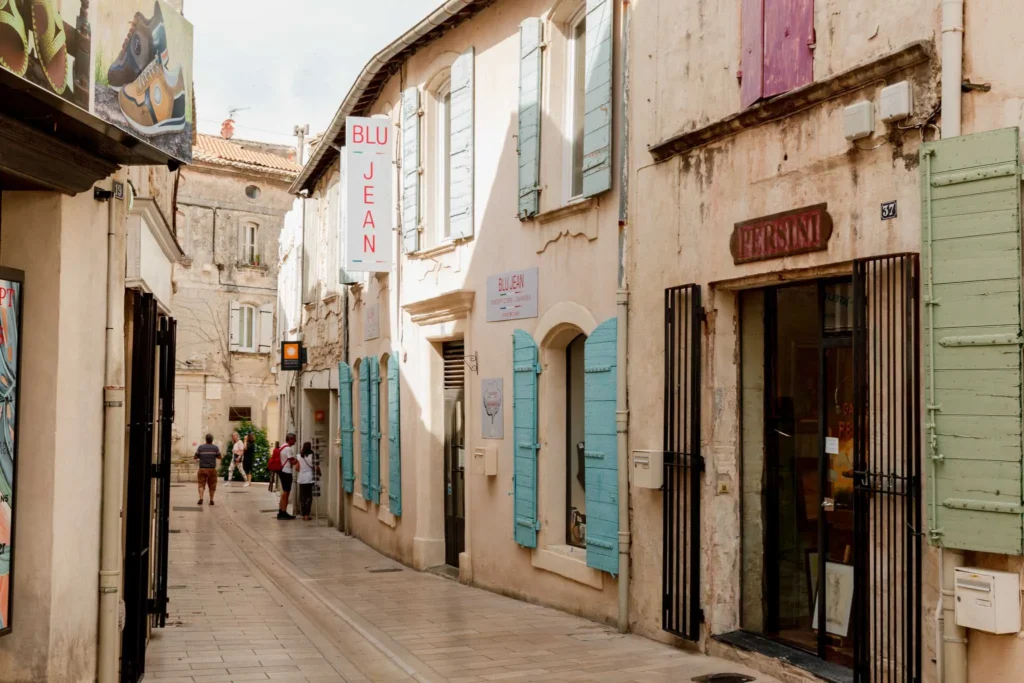
There’s something profoundly magnetic about discovering a place that feels like it exists outside the ordinary rhythm of time. When I first arrived in this corner of Southern France, the morning light was filtering through pastel shutters in shades of muted lavender, pink, and blue—a palette so perfectly balanced against the blonde stone façades that it felt almost orchestrated by nature itself. Saint-Rémy-de-Provence isn’t just another pretty village near Aix-en-Provence; it’s a living canvas where history dating back to the 7th century B.C. breathes through every cobbled rue and perfectly-maintained paving stone.
The Celts were among the earliest to recognize the strategic beauty of this location, making it one of the oldest towns in the country. Fast forward through centuries of cultural transformation, and you’ll find that Saint-Rémy has become renowned as the birthplace of Nostradamus, the famous physician and astrologer whose legacy still whispers through the historic centre. But perhaps more viscerally, this is where Vincent Van Gogh found his most prolific muse—the backdrop for his beloved paintings that continue to draw tourists from every corner of the globe, especially during the summer months when the Mediterranean sun bathes everything in that golden glow he captured so brilliantly.
My first impression? The pristine stones and render create an understated French aesthetic that speaks to anyone with even a passing appreciation for beauty and atmosphere. It’s remarkably civilised, surprisingly quiet in the backstreets, and offers that perfect marriage of calm and simplicity with just enough gorgeous boutiques, shops, bistros, and cafes to keep things interesting. The styling and presentation of the village centre demonstrates why this region has long inspired artists and creatives—there’s a predominant design aesthetic here, a divine range of chalky shades working deliciously against acres of carefully-maintained surfaces. Picture-postcard perfection isn’t hyperbole; it’s just sublime reality.
The Wednesday Morning Ritual That Defines Provincial Life
Table of Contents
ToggleIf you’re planning a full day visit to Saint-Rémy, let me be direct: arrive on a Wednesday morning. The vibrant market that transforms these streets from 7am to 1pm (some say 8:00 AM, but arriving first thing means better parking) is genuinely one of the finest and most popular outdoor markets in Provence. This isn’t tourism theatre—it’s the real deal, a haven where local foods, seasonal produce, and artisinal goods from vendors across the region create mountains of savory olives, scented soaps, and woven basket bags that you’ll actually use for everyday grocery shopping long after you’ve returned home.
Bringing cash is essential because resisting the temptation to shop is nearly impossible. Freshly picked offerings sit alongside local cheeses, and French soaps make must-have souvenirs that capture the essence of Provencal goods far better than any mass-produced alternative. During my visits, I’ve watched the square fill and empty with that beautiful rhythm that defines bistrot en France culture—plentiful tables under the trees where lucky enough locals settle down to relax into the ambience with a speciality of the region: rosé wine avec pamplemousse.
Even if you’re not a fan of grapefruit initially, the finely-sectioned wedges perfectly balance the sweetness of the chilled rosé in a way that one stalwart disbeliever in our party admitted tasted so good after trying it. Make sure it has the genuine pamplemousse though, not the syrup that’s sadly becoming increasingly popular. The afternoon becomes increasingly delightful as the square grows quieter, most people having left while those staying in St-Rémy-de-Provence linger. Another? Oh yes, please.
For lunch during market day, assemble everything you need for a traditional French picnic—cheese, cured meats, fresh fruit, tomatoes, wine, and of course, a baguette. This quaint town transforms into something special on Wednesdays, particularly busy during the summer season from June to early September. To avoid parking hassles, there’s no dedicated parking lot for the market itself, so you’ll need to look for spots in one of the smaller lots near the center or along the street. Be prepared to park well away from the centre if you’re travelling by car, or better yet, arrive very early and leave your vehicle for the day to avoid the hassle of having to find parking again.
Following in the Footsteps of a Troubled Genius
The deep connection between this lovely village and the legendary artist Vincent Van Gogh adds an extra layer of interest that elevates Saint-Remy-de-Provence into must-visit destination territory for art enthusiasts seeking to immerse themselves in the very essence of creative genius. The picturesque landscapes that once captivated the Provençal charm still serve as a wellspring of inspiration—you can literally walk the same paths, witness the same scenes that fuelled Van Gogh’s creative spirit during his turbulent yet prolific time here from May 1889 to May 1890.
Starting from the center of town, make your way towards Av. Pasteur and continue along this road for approximately 1km until you reach the Saint-Paul de Mausole Monastery. The walk takes roughly 20 minutes, and along the route you’ll encounter 19 panels with photos of paintings Van Gogh created during his stay. A signpost will guide your steps on this free walking tour through the places that inspired Vincent van Gogh’s symbolic paintings. If you prefer, you can drive to the monastery, but I loved learning more about his journey along the route—it’s a wonderful way to see the landscapes through Van Gogh’s eyes and bring the paintings to life before you even arrive at the psychiatric hospital itself.
The Estrine Museum in that stunning 18th-century mansion serves as both a modern and contemporary art museum and a Van Gogh Interpretation Center, offering a detailed tribute that provides insights into his life and art through interactive experiences, including a display of his letters. The permanent collection includes works by French cubist painter Albert Gleizes, with temporary and permanent exhibitions held throughout the year. Full price tickets cost €9-12 per person, and the museum is open everyday except Mondays, though hours vary throughout the year so checking the official website for opening times is advisable.
The Asylum Where Masterpieces Were Born
Saint-Paul de Mausole, the psychiatric hospital established in the early 1800s by Doctor Mercurin, is famously associated with Van Gogh’s most celebrated works—The Starry Night, Almond Blossom, and Field with Poppies among many others were created during his year-long stay. Set within a picturesque monastery that dates back to the year 1,000, you can explore the hospital grounds and interior, walk around the Romanesque cloister, see a reconstruction of Van Gogh’s room, and wander through the monastery’s lavender field while enjoying the serene olive groves on the property.
Around the monastery, panels display replicas of Van Gogh’s paintings at the precise locations where he originally painted them. The lush gardens and tranquil courtyards invite you to imagine the sights that once inspired masterpieces like Starry Night and Irises—it’s so beautiful here, honestly. The venture along this Van Gogh Trail becomes a journey that leads you to understand why the asylum stands as a testament to the artist’s ability to find solace and inspiration even in his darkest moments.
I thoroughly enjoyed my visit and highly recommend spending at least an hour here, particularly if you admire Van Gogh’s artwork. Practical information: tickets cost €8 per person, open April through September from 9:30 am to 7:00pm, and October 1 through March 31 from 10:15 am to 5:15 pm. Note that it’s closed between December 23 and February 2, so plan accordingly.
Ancient Stones and Roman Ambitions
Just a short walk from the monastery, across the road, you’ll find Les Antiques—an archaeological site featuring remarkable Roman monuments that once marked the entrance to the ancient city of Glanum. The first monument you’ll encounter is the impressive Arch of Triumph, constructed in 20 AD, a grand arch designed to make a lasting impression on visitors entering the city, symbolizing power and victory in that unmistakable Roman fashion. Just beyond the arch stands the Mausoleum of the Julii, dating back to 30 BC, erected by a prosperous family from Glanum. Both of these monuments are free to visit, which makes them an easy addition to any itinerary.
Across the street from Les Antiques lies the entrance to Glanum proper, strategically located at the base of the Alpilles mountains along what was once a popular trade route. This ancient city was founded by a Gallic Celtic tribe in the 7th century B.C.—predating even Saint-Rémy itself—though some sources cite the 3rd century BC for the archaeological site’s official establishment. Over the centuries, Glanum experienced significant cultural transformation, first being Hellenized and later becoming a Roman city around 27 BC, created from both Greek and Roman influences that left behind a temple, marketplace, and several other ruins.
The once-prosperous city met its demise in 270 AD and was lost until its rediscovery in 1921, which is relatively recent when you consider the thousands of years this site represents. Start your visit at the on-site museum for an overview of Glanum’s history—pick up an English guide from the museum to help guide you through the remarkable ruins. As you wander through the site, you’ll see an array of ancient structures: the forum, temples, Roman baths, houses, and a basilica that was once located at the very crossroads of major routes in the region.
Keep in mind that Provence can become quite hot during the summer months. If you plan to visit during mid-day, dress appropriately as there isn’t much shade around the ruins. Practical information: tickets cost €9 per person, open April 1 through September 30 from 9:30am to 6:00pm, and October 1 through March 31 from 10:00am to 5:00pm (closed Mondays during this time period). Parking is available for €4, which is reasonable considering the site’s significance as a popular tourist attraction.
Charming Streets and Hidden Treasures
Take some time to explore the charming streets of Saint-Rémy-de-Provence beyond the main attractions. The town is small and compact, making it easy to explore on foot—you can easily walk through its winding streets in an hour or less, though I’d argue that’s rushing things. My idea of an utterly relaxing and uplifting experience is just walking around these beautiful cobbled rues early before the tourists arrive, then sauntering late into the afternoon to catch the beautiful dusk light. Perfect for photography, and there’s so much to love about how beautifully clean this village maintains itself.
I’ll admit to being a bit of a clean freak, and whilst I adore discovering the hidden parts of even the oldest villages in France, I particularly love the pristine places. 10/10 for this town. Yay! I don’t know if it’s the layout or if I was just lucky, but walking around was remarkably civilised and not-too-busy except on market day, bien sûr. However, it is becoming busier every year, so I always recommend trying to visit out of season when you can truly appreciate the elegant, understated atmosphere.
Key sites include the Fountain of Nostradamus, located in the heart of Saint-Rémy, and you shouldn’t miss the Maison Natale de Nostradamus—the house where the renowned physician and astrologer was born in 1503. You can’t go inside the house; you’ll just see a plaque on the outside of the building, but it’s worth acknowledging this connection to history. Be sure to visit the Place Favier, the Place de la République, and the Place Mireille for their distinct character.
The Collégiale St Martin is worth a visit as well—this early 19th-century neo-classical church boasts a stunning organ and an impressive dome. If you’re interested in learning more about the history of the Alpilles region, you can visit the city’s ethnographic museum, the Musée des Alpilles, though I’d recommend skipping this if you only have a day in Saint-Rémy and want to maximize your experience of the town’s primary attractions.
What strikes me most is the cafe culture here—it’s just lovely in a way that feels authentically French rather than tourist-oriented. French coffee still has a bit of a way to go before it catches up with the very fussy Australian palate, but the café scene in St Rémy is fabulous as you would expect with any bistrot en France. Give me an outdoor table and chairs in Saint-Rémy-de-Provence and I’m genuinely in heaven.
Rocky Outcrops and Medieval Fortresses
Perched atop the Les Alpilles mountains less than 20 minutes’ drive (or a 15-minute drive depending on your route) from Saint-Rémy sits Les Baux-de-Provence, recognized as one of the Most Beautiful Villages in France. This ancient village dates back over 8,000 years to around 6,000 B.C., situated on a rocky outcrop with rich architectural, cultural, and historical heritage, beautifully crowned with a ruined castle overlooking the plains of Provence.
Start your visit at the Chateau des Baux, a fortress located at the top of the village with beautiful views overlooking the valley below. On a clear day you can see Aix-en-Provence, Arles, and Mont Saint-Victoire in the distance. The castle, dating back to the 10th century, served as the residence of the influential Les Baux family during the Middle Ages. Purchase a ticket to explore the majestic ruins and enjoy a comprehensive audioguide available in English that brings the stone structures back to life through historical context.
After your visit to the castle, meander down the hill, stopping to visit some of the village’s main attractions including St. Vincent Church, the Chapel of Penitents, and the Yves Brayer Museum. Beautiful shops and galleries line the streets, offering stunning views alongside ancient cathedral ruins and spectacular vistas that are well worth experiencing. Plus, it’s just next to the Carrières des Lumières, making it easy to combine both experiences.
Getting to Les Baux de Provence requires some planning. Parking is available along the main road, but spots are limited and the area can get quite busy, especially in the mid-afternoon. If you’re feeling adventurous, I suggest renting an e-bike from Saint-Rémy for the afternoon from Sun-E-Bike. I opted for a self-guided half-day tour by e-bike to Les Baux and around the region and absolutely loved it. The ride takes about 30 minutes by e-bike, and in total the half-day tour took around 3-4 hours—perfect pacing for experiencing the landscape at a more intimate scale.
Practical information: €8 for full price tickets to the Chateau. Opening hours vary seasonally: November through February 10am-5pm, March and October 9:30am-6:30pm, April, May, June, and September 9am-7pm, and July and August 9am-7:30pm.
Light, Stone, and Sensory Immersion
Just a short 15-minute walk from Les Baux you’ll find the Carrières de Lumières, an utterly unique experience that is completely special. Hosted inside an old stone quarry—a former limestone quarry to be precise—this spectacular light show is nothing short of a must-see. The location makes all the difference; although the show has come to Paris, the lightshow here in these cavernous spaces lends itself particularly well to the visuals and sound presentation of whatever the current show happens to be.
Enjoy a 40-minute sensory journey inside these expansive quarry “caves” where artwork and images are projected onto the vast walls in a way that’s moments away from overwhelming in the best possible sense. Different light show exhibitions are held throughout the year, featuring themes ranging from famous Impressionist artists to ancient Egypt—first-class visual entertainment that makes you reconsider what an art exhibition can be.
Make sure to look ahead of time on the official website to check the times of each specific show, as they can vary. Practical information: full price tickets cost €15.50, but you can purchase a combined ticket with the Chateau des Baux for €19, which is definitely worth it if you plan to visit both. The Carrières de Lumières is open every day throughout the year with the following opening hours: November through January 10:00 AM to 5:00 PM, March and October 9:30 AM to 6:30 PM, April, May, June, and September 9:00 AM to 7:00 PM, and July and August 9:00 AM to 7:30 PM. Make a day of it. Recommended without reservation.
Practical Navigation and Transportation
The best way to get to Saint-Rémy is by car, hands down. Several parking lots are available outside of the center, and you can also park along the streets unless there’s a sign saying otherwise. The village is accessible by major roads, and having a car allows flexibility to explore the surrounding areas at your own pace. My favourite way to travel around regional France is en voiture—on this particular adventure, my ride was a Fiat Bambini (oh, so cute!) which proved relatively inexpensive and remarkably roomy for 2 adults with luggage.
However, you can also take the bus from Avignon and Arles, which takes about 1 hour each way. There are also buses from Aix-en-Provence to St-Rémy-de-Provence, though I haven’t tried one personally—I certainly would if needed since it’s not far. From Avignon specifically, take bus 707 directly to Saint-Rémy from Avignon’s Gare Routière (the bus station located near the central train station). The bus departs every 30 minutes and the journey takes around 1 hour each way, though you should check Google Maps for updated times.
By car, the drive from Avignon to Saint-Rémy takes about 30 minutes each way—convenient for a half-day or full-day experience. From Arles, take bus 704 directly to Saint-Rémy from the center of Arles. The journey takes 1 hour each way depending on traffic, so double check the local schedule for updated times. By car from Arles, the drive takes 35 minutes each way. From Marseille, follow along the A7 to get to Saint-Rémy, with the drive taking between 1-1.5 hours each way.
If you’re flying in, fly into Marseille Provence Airport (MRS) or Avignon Provence Airport (AVN), both of which are relatively close to Saint-Rémy-de-Provence. You can arrange for a shuttle or taxi service from the airport. By train, take a train to the Avignon TGV station or the Avignon Centre station, then either take a bus to Saint-Rémy-de-Provence directly or hire a taxi and use local transportation services.
For intercity buses that connect major cities to Saint-Rémy-de-Provence, check bus schedules and routes that include this destination. You can also arrange for a taxi or use a ride-sharing service for a convenient and direct transportation option. If you’re an adventurous traveler, consider cycling to Saint-Rémy-de-Provence, enjoying the scenic landscapes along the way. For those who love hiking, explore walking paths or trails leading to Saint-Rémy-de-Provence, though this option is more suitable for nearby locations.
St Rémy is a lovely place to visit if you enjoy easy walking and accessible sights. The main rue in St Rémy runs entirely around the old village centre, so it’s easy to park on or near this ring road, then make your way into the heart of the town via level, carefully-maintained streets. On busy market days, it’s best to park your car and leave it for the day to avoid having to search for spots repeatedly.
Where to Rest Your Head
When it comes to accommodation, St Rémy offers many different accommodation options suited to a variety of tastes and budgets. Lovely accommodation ranges from nice hotels to a lovely range of Airbnb’s and delightful luxury options—take your pick based on what kind of experience you’re after.
At the luxury end, Hotel Château Des Alpilles represents the most elegant 5-star hotel in Saint-Rémy, located just a 5-minute drive from the town center. Enjoy this incredible property with its iconic driveway lined with gorgeous trees, fantastic restaurant, and classic interiors that feel appropriately grand without being stuffy. Hôtel de Tourrel, located in the heart of Saint-Rémy-de-Provence, transformed a beautiful 17th-century mansion into a modern hotel. The hotel features a Michelin star restaurant, rooftop pool, and simplistic design that appeals to contemporary sensibilities while honoring historical architecture.
For a bed & breakfast experience, La Maison de Line offers a tranquil escape in the center of town, featuring an outdoor pool, lush garden, and country-style rooms that ensure an enjoyable and peaceful stay. Among boutique hotels, Hôtel Gounod sits in a beautiful 18th-century stone building and offers a charming stay in the heart of Saint Rémy, complete with swimming pool, garden, and spa facilities. La Maison du Village provides another lovely option with comfortable rooms and a beautiful garden setting that captures that Provencal aesthetic perfectly.
Dining Like a Local
Restaurant de Tourrel, the 1-star Michelin restaurant located inside the Hotel de Tourrel, accommodates only 16 guests per service, offering an intimate dining experience with a seasonal menu that changes based on what’s available from local producers. L’Auberge de Saint-Rémy brings another gourmet Michelin star restaurant option with fresh and seasonal farm-to-table dishes that showcase the region’s agricultural excellence.
For something more affordable, Chapeau de Paille serves typical Provencal cuisine at an affordable price point in a lovely French bistro setting. Bar-Tabac des Alpilles is where you come for the classics—no pretension, just solid regional dishes. Le Bistrot de Saint Rémy delivers fresh, regional dishes in an inviting environment that feels welcoming to both locals and visitors. If you’re looking for something a little different, La Rose des Sables offers a Mediterranean option that’s a great choice when you want to expand beyond strictly French fare.
Expanding Your Horizons Beyond Town Limits
If you’re spending time in Saint-Rémy, it’s well worth taking a short detour to nearby Eygalières, just 15 minutes away. This peaceful village is surrounded by olive groves, vineyards, and the soft silhouette of the Alpilles, with weathered stone chapels, sweeping views, and a quiet elegance that has long inspired artists and creatives. Eygalières has a gentle rhythm all its own that provides a nice contrast to even Saint-Rémy’s relatively relaxed pace.
About half an hour away lies Avignon, the City of the Popes. Tour the Palais des Papes, one of the largest and most important medieval Gothic buildings in Europe. The Palais is actually two buildings joined together—the old Palais of Benedict XII and the new Palais of Clement VI (the most extravagant of the Avignon Popes). Combined, they form the largest Gothic building of the Middle Ages. Explore its grand halls, Gothic architecture, and the opulence of the papal residence with its rich history, intriguing stories, and stunning views of Avignon. It’s impressive indeed and a must-see for history and architecture enthusiasts alike.
Take a walk in the countryside and visit the Pont du Gard, an ancient Roman aqueduct bridge built in the first century AD to carry water over 50 km (31 mi) to the Roman colony of Nîmes. The Pont du Gard is the tallest of all Roman aqueduct bridges as well as one of the best preserved. Because of its unparalleled preservation, historical significance, and architectural ingenuity, it was added to UNESCO’s list of World Heritage sites in 1985. It’s located about 40 km from Saint-Rémy.
You may recognise the village of Gordes as featured in the movie A Good Year and shared widely on social media. It’s very picturesque, so try to get there early. Be prepared for some serious shopping if that’s your thing, along with very sweet streetscapes and spectacular views of the Luberon Valley. It’s about a 45 minute drive from Saint-Rémy.
Don’t miss out on Roussillon, the stunning ochre village in the Luberon. Roussillon is situated in one of the largest ochre deposits in the world and is officially recognized as one of The Most Beautiful Villages in France. It’s justly famous for its memorable cliffs and quarries in magnificent sunset colours. Its spectacular hilltop location overlooks the Provençal countryside for miles around, and lovely walks can be taken through the colourful cliffs and along the Ochre Trail.
Additional Pursuits for the Curious
Take a wine tour through the region—France is famous for its wine, and this region is no exception. Several wineries in and around St Rémy de Provence offer tours and tastings that provide insight into local viticulture. Enjoy a cooking class if you’re interested in the culinary arts; the Provence region is known for its delicious cuisine, and several cooking schools in St Rémy de Provence offer classes on how to prepare local dishes using seasonal ingredients and traditional techniques.
Hike in the Alpilles mountains, as St Rémy de Provence is surrounded by beautiful mountains with several hiking trails that offer stunning views of the countryside. The landscape changes character depending on the season, with different wildflowers and light conditions creating varied experiences throughout the year. Take a drive down to Arles to discover the incredible Roman ruins in that city—Arles is one of the loveliest cities I’ve ever encountered and is well worth either a day trip or a few days’ visit to fully appreciate its historical layers.
Planning Your Day
Saint-Rémy can easily be visited in half a day if you only plan to visit the town, the market, St-Paul de Mausole, and Glanum. However, I highly recommend combining your trip to Saint-Rémy with a visit to Les Baux-de-Provence for a full-day experience that captures multiple facets of the region.
For a complete one-day itinerary, begin your morning at the Saint-Rémy Market (if it’s Wednesday), then wander the streets of Saint-Rémy at a leisurely pace before walking to Saint-Paul de Mausole. Follow this with exploring Glanum and Les Antiques while you’re in that area. In the early afternoon, you might visit Musée Estrine if it’s optional to your interests, then eat lunch in Saint-Rémy at one of the restaurants mentioned earlier. During the late afternoon, drive or bike to Les Baux-de-Provence, explore Les Baux plus the Chateau des Baux, and finish with a visit to the Carrières de Lumières as the day winds down.
The Verdict from Personal Experience
Absolutely, Saint-Rémy is one of my favorite small towns in the Provence region. It epitomizes Provencal charm with its idyllic setting at the foot of the Alpilles mountains and wonderful outdoor market culture. The proximity to Avignon and the Mediterranean Sea makes Saint-Rémy an easy day trip location or an excellent base if you’re looking to explore the western side of Provence more thoroughly.
I highly recommend planning your visit for a Wednesday morning to coincide with market day. This is when the town truly comes alive, and it’s genuinely one of the best markets in southern France. The loads of boutiques, shops, and beautiful local businesses create a shopping paradise even for those who prefer to travel light. It’s a lovely place to visit if you enjoy easy walking and accessible sights without the overwhelming crowds that plague more famous destinations.
I would highly recommend visiting St Remy if you are in the region, or even making a special trip specifically for this town. You won’t regret it. I’ve been back multiple times and will definitely go again—that’s perhaps the highest endorsement I can offer. Enjoy your time in this elegant, understated corner of France that somehow manages to feel both extraordinarily beautiful and comfortably unpretentious. It’s heaven for anyone who appreciates the finer details of French village life without the tourist circus that accompanies more famous locations.