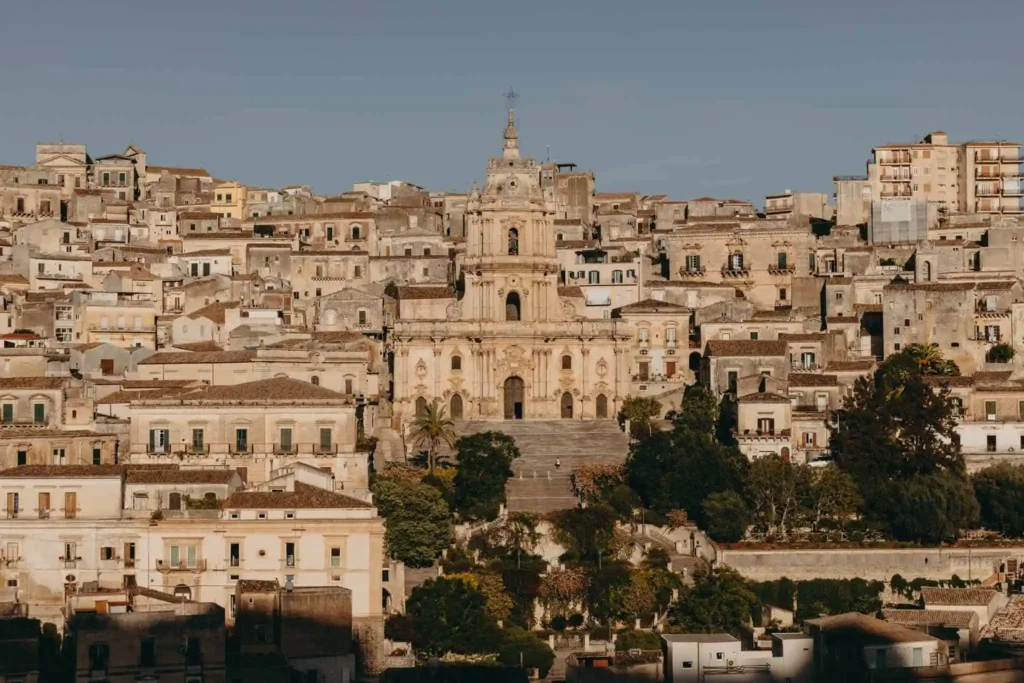
Nestled within a valley shaped by four distinct hills, roughly 40 minutes from both Ragusa and Noto, Modica emerges as one of Sicily’s most captivating destinations. This remarkable town belongs to the eight UNESCO Heritage sites scattered across the Val di Noto in south-eastern Sicily, where the devastating earthquake of 1693 forever transformed the architectural landscape. What once existed as a medieval settlement carved directly into rock has evolved into a stunning showcase of baroque facades, extravagant churches, and beautiful palaces, all interconnected through a maze of narrow streets and staircases that seem to defy gravity itself.
The geography here presents itself as genuinely unique—think of it as two cities merged into one spectacular whole. During my two and a half week road trip through Sicily, stretching from Taormina on the East coast all the way to Erice on the West, I dedicated the last five days to exploring these beautiful Baroque towns. We split our time between Modica and Noto, staying two nights in each, which felt like the perfect amount of time to truly absorb the atmosphere without feeling rushed.
Understanding Modica Alta and Modica Bassa
Table of Contents
ToggleThe town’s layout can take a little while to get your head around, trust me on this one. Deep within a gorge between the Iblei Mountains, two rivers—Ianni Mauro and Pozzo dei Prun—once flowed down what is now Corso Umberto. Picture early settlers facing a flood-prone valley, with little choice but to seek shelter in hill top caves. The original town was literally carved into stone, creating a warren of winding alleys and grey rock formations that became known as Modica Alta, or Upper Modica.
As the town grew over centuries, authorities made the decision to cover these problematic rivers entirely. This gave birth to Modica Bassa—Lower Modica—which tumbles down the steep slopes into the valley below. The honey-colored buildings seem to cascade downward, connected by long staircases that were originally built solely for residents at the highest heights to access water below. Many of these old staircases still exist today, forever connecting the ‘two cities’ while offering visitors spectacular views during their journey up or down.
I won’t sugarcoat it: the steep climb up to Modica Alta proved pretty challenging, even for someone who considers themselves reasonably fit. In the high heat, we struggled more than we’d anticipated. Be prepared for plenty of walking and a lot of steps if you plan to explore beyond Modica Bassa. Set dramatically in this steep canyon, the town is divided in half by Corso Umberto I, its main street where most of the action unfolds.
Until relatively recently, there was a bus departing from Corso Umberto 1, next to the intercity bus stop opposite ‘Barycentro’, charging €1.10 per person for a single fare, or €1.80 for a day pass. However, we can’t currently find a trace of this service anymore. What definitely exists for those who’d rather skip some of the uphill climbing is the Trenino Barocco—a small tourist train that travels in a loop from Modica Bassa to Modica Alta whilst providing details of the city’s history along the way.
This tourist train operates on a wait-to-fill-up basis rather than a fixed schedule, departing from a bus stop on Corso Umberto I. The entire journey up and down takes around 40 minutes, with tickets costing €5 per person. You can either choose to get out at the top, have a wander around and then walk back down at your own pace, or stay on for the duration and just enjoy the views—though note that it’s not a hop-on, hop-off service. It’s particularly popular with families who understandably want to conserve energy for actual sightseeing rather than exhausting climbs.
Discovering Modica’s Legendary Chocolate Culture
What drew me here in the first place? Chocolate, plain and simple. Discovering that Sicily had its own famous chocolate town was all the excuse I needed to add Modica to our itinerary. I’ll travel just about anywhere for good chocolate, and this place didn’t disappoint in terms of uniqueness, even if my personal taste buds had some reservations.
For many years, Sicily fell under Spanish Kingdom rule. When the Conquistadors ‘discovered’ cocoa during their voyages to Latin America, the island became one of the first to receive this new bounty, along with the ancient Aztec methods of chocolate making that came with it. Fast forward 400 years later, and Modica remains the custodian of this age-old practice, making it the very best place to enjoy authentic Sicilian chocolate.
Here’s what makes Modica chocolate different from anything you’ve probably tasted: it’s made with a cold process using only cacao and sugar—absolutely no added fats whatsoever. This method, brought to Sicily by the Spanish in the 16th century, gives the chocolate a distinctly gritty texture and slightly bitter flavor since the sugar crystals don’t melt during processing. The sugar remains granulous, meaning that the chocolate crumbles more so than melts in your mouth—quite different from the sweet, milky stuff produced in the rest of Europe that most of us have grown accustomed to.
Antica Dolceria Bonajuto, which has been making Modica-style chocolate since 1880, is the oldest chocolate shop in Sicily and an absolute must-visit. They offer flavors like cardamom, cinnamon, orange, lemon, and even some flavoured with chilli, vanilla, or the local red wine called ‘Nero d’Avalo’. We walked out with at least six bars between the two of us, unable to resist the variety.
Once it’s your turn at the counter, you can ask to taste any flavor before buying, which is amazing—though be warned, it also means a long wait since everyone (myself included) wants to sample as many as possible. There are plenty of samples available and a wide variety to buy. A word of warning to vegetarians: avoid the Mpanatigghi, a traditional Modican biscuit that contains a meaty surprise alongside honey, almonds and chocolate.
My honest verdict? The grainy texture wasn’t my favorite. I personally prefer chocolate that’s a bit smoother and creamier. Still, it’s absolutely worth trying while you’re here—it’s an absolute must try for even those who tend to prefer savoury treats over sweets. The experience itself is fascinating, connecting you to centuries of tradition.
If you’d like to discover more about the history of chocolate making in the region, or take a look at the rather bizarre collection of cocoa sculptures, don’t miss the small Museo del Cioccolato di Modica. Entry costs €3 per person and the museum is quite small, making it more of a quick stop than a time-consuming activity. For die-hard chocolate lovers, it’s worth keeping an eye on announcements for the annual chocolate festival, which varies each year but in 2023 was held in December, in case it coincides with your visit to Sicily. Alternatively, make time for a chocolate making class during your time in Modica—there are several highly-rated options available.
Exploring the City of a Hundred Churches
Modica is known as the ‘city of a hundred bells and a hundred churches’, so it should come as little surprise that churches are going to factor in pretty highly into any suggestions on things to do in the city. Being the “town of 100 churches,” you have more than enough churches to visit. Whilst we’re not suggesting that you visit them all, there are definitely a handful that you should make time for.
The Duomo di San Giorgio stands as Modica’s main landmark and is absolutely worth the 250-step climb to see it. Located in Modica Alta, this church was rebuilt after the 1693 earthquake and is considered one of the finest examples of Sicilian Baroque architecture—indeed, one of Sicily’s most impressive baroque churches and Rosario Gagliardi’s great masterpiece. Inside, you’ll find opulent gold gilding and a 19th-century organ that’s still played today. Famed for its 250 steps connecting upper and lower Modica, it provides outstanding views over the city that make the ascent worthwhile.
If you’re in Modica in the late afternoon, head to a specific viewpoint to see the Duomo all lit up—it’s genuinely breathtaking when illuminated against the evening sky.
You can buy a cumulative ticket for €6 to visit four churches, or pay €2.50 each if you prefer to be selective. The Duomo di San Pietro Apostolo, located on Modica’s main thoroughfare along Corso Umberto, is considered by many to be the most important historical building in Modica Bassa. This Baroque church features a grand staircase lined with statues—specifically, life-sized structures of the Apostles added in 1876. The building has been almost entirely reconstructed, with the addition of this vast staircase creating a beautifully detailed interior worth exploring.
Chiesa di Santa Maria di Betlem ranks as one of the oldest churches in Modica, notable for its hand-painted wooden ceiling and a 19th-century nativity scene that draws visitors throughout the year. Meanwhile, the Chiesa di Santa Maria del Carmelo represents something different—a 15th-century church and one of the few Gothic-style churches in the city, offering architectural contrast to the dominant Baroque aesthetic.
The Chiesa di San Giovanni Evangelista sits as a beautiful church at the top of Modica Alta—in fact, at the very highest point in the city. While it’s a beautiful baroque church in its own right, the reason we consider it a must visit is due to its location, with a nearby viewing platform offering breathtaking views of the old town and the surrounding countryside. For a small fee, you can climb the bell tower for sweeping views that justify every step of the journey up.
San Nicolo Inferiore stands as the most unique place of worship on this list. This 12th-century church, carved into rock, is Modica’s oldest and remained undiscovered until 1987. It costs €2.50 to enter this atmospheric space that predates the baroque transformation. As ever in Italy, please note that many churches and cathedrals remain active places of worship; you need to act and dress appropriately when visiting.
If you’d like to gain a greater understanding of Modica’s fascinating history and visit a few of the city’s most impressive churches, consider joining a highly-rated walking tour with a local expert guide who can bring the stories behind these facades to life.
Wandering Corso Umberto and Cultural Stops
Whether you’re in Modica for a day trip or a longer sojourn, I’d recommend every visitor begins their explorations along Corso Umberto, the main street which passes through Modica Alta. With a bounty of boutique stores, historic churches and beautiful squares, it’s the perfect spot for people watching, especially in the late afternoon when locals emerge and the golden light transforms the stone facades.
Just off of Corso Umberto lies the beautiful town mansion of the De Leva family at Palazzo De Leva, now used for art exhibitions and cultural events. It’s worth popping in if something’s on during your visit. Teatro Garibaldi, an elegant 19th century theatre, still plays host to ballet, opera and more contemporary offerings. You can check performance schedules and buy tickets via their website if you’re interested in catching an evening performance.
Located in Palazzo della Cultura—worth a stop on its own—the Museo Civico is where those wanting to understand a little more about the city’s history should head. The exhibits provide context for what you’re seeing around you, making the baroque facades and reconstructed churches come alive with historical narrative.
Technically a few streets off of Corso Umberto, but more than worth making a detour for, the Museo Casa natale Salvatore Quasimodo chronicles the life and works of the famous Nobel Prize winning poet Salvatore Quasimodo, who was born in Modica in this very house. It costs €2.50 per person which includes a 30 minute guided tour that offers intimate insights into the poet’s early life and creative development.
Many scenes from the super popular Sicilian detective show Inspector Montalbano were filmed here, and fans may recognise several of Modica’s most famous sites, such as the Church of San Giorgio and the facade of Palazzo Polara. We can find no specific tours that meet in Modica itself, but if you’re staying in nearby Noto or Syracuse, certain tours visit many of the filming locations not just in Modica, but in the Val di Noto region more generally—a good option if you’re a devoted fan of the series.
Medieval Heights at Castello dei Conti
Perched atop a rocky outcrop high above the town sits the Castello dei Conti, a relic of medieval Modica dating back to at least the 13th century. This 14th-century fortress was built by the Peralta family and completed by the Chiaramonte family, later hosting royal visitors like King Martin I and Emperor Charles V. Painstakingly restored—at least partially, anyway—over the last 10 years, a visit here provides a glimpse into the town’s history before the earth shook.
You can spot the castle from town by looking for the Torre dell’Orologio, the distinctive clock tower built in 1725 after an earthquake destroyed the original tower. The castle is open every day from 9am to 1pm and then again at 3.30 pm to 7.30 pm, and is accessible on foot from the centre of Modica—though prepare for a climb. Entry is free according to some sources, while others list it at €3, so this may vary or depend on specific sections you wish to access.
Near the walls of the castle you’ll find this early 18th century clock tower built upon the remains of a 17th-century lookout tower destroyed by the earthquake of 1693. The location offers commanding views over the entire valley, helping you understand why this strategic position was so important throughout Modica’s medieval period.
Viewpoints That Take Your Breath Away
From our hotel across the ravine, we walked down to Modica Bassa, strolled along Corso Umberto, and then made the steep trek back up to Modica Alta on the other side. It started raining halfway up, our feet were slipping on the wet stone, and we got lost more than once thanks to spotty Google Maps that struggled with the town’s vertical geography. Eventually, we made it to Belvedere Pizzo, and wow—the view was worth every soggy step.
From up here, the city stretches out like a sea of stone buildings packed tightly into the valley below. This is hands down the best viewpoint in town, offering a panoramic perspective that helps you comprehend the full scope of Modica’s dramatic topography. The way buildings seem to tumble down toward the valley floor, with church spires punctuating the roofline, creates a scene that’s genuinely unforgettable—even if you arrive drenched and exhausted like we did.
Sicily’s Beloved Frozen Treat
Granita ranks as one of Sicily’s most beloved desserts—soft shaved ice flavored with almond, pistachio, coffee, and seasonal fruits. The key is to top it off with an essential spoonful of whipped cream, which adds richness and helps balance the intense flavors. Almond and pistachio are always my favorites, though seasonal options can surprise you with their intensity and freshness.
We tried two granita spots in Modica that we loved. Café Adamo is said to be the best gelato in town—we didn’t have time to try anywhere else to confirm, but if you only have time for one of these, go here. We had the seasonal mulberry flavor and it was amazing, capturing the essence of Sicilian summer in frozen form. Their pistachio offerings are famous, but we found the chocolate gelato to be pretty good too, though incredibly decadent. It’s a stop here for a sweet treat that’s absolutely a must.
Latteria – Caffè Storico served up almond granita that I particularly loved, with just the right balance of sweetness and nutty richness. Both spots demonstrated why this frozen dessert has remained a Sicilian staple for generations—it’s refreshing without being overly sugary, substantial enough to serve as a light meal, and deeply connected to local agricultural traditions.
Where to Satisfy Your Appetite
We only had time to try a couple of restaurants in Modica, all recommended by our lovely hotel host who gave us a long list of spots to check out. Here are a few places to eat in Modica that stand out.
If you’re in town on a short holiday and feeling fancy, Accursio—an intimate Michelin-star restaurant—is a fantastic option, and the tasting menu comes very highly recommended. You can find further details on their website. For something more affordable, consider Accursio Radicci, the cheaper sister restaurant located just a few doors down that maintains quality while offering more accessible pricing. We loved the attention to detail and creative presentations that elevated traditional Sicilian ingredients.
Radici, Il Cappero, and Pizza Niria round out the restaurant options, each bringing something different to the table. It’s fair to say that it’s a convenient coincidence that a city with so many steep staircases also has a number of outstanding restaurants, local delicacies and foodie hotspots—you’ll work up quite an appetite climbing those steps.
As vegetarians—with Andrew eating the odd bit of fish—we never struggled in Sicily. Whilst looking for a lunch spot, our research led us to Singola Organic Restaurant, which focuses on organic vegetarian and vegan food with Sicilian flare. It’s a little out of town and set within a lovely garden, but if you’re based here and craving something plant-based, the reviews are wonderful. Those who love to experience a new place through their stomach will find these are some options you can’t miss.
For an alternative thing to do in Modica, consider joining one of several cooking classes or private dining experiences on offer in the city. These hands-on experiences let you dive deeper into Sicilian culinary traditions while creating meals you can recreate at home.
Finding Your Perfect Base
We stayed two nights at Casa Talia, owned by an architect from Milan, and it’s genuinely one of my top three hotels in Sicily. Our room featured a huge balcony with a panoramic view over the entire town—we loved spending the evenings out there, watching the city light up after sunset. Breakfast was unforgettable and served in their garden with a full spread that showcased local products and homemade specialties.
Given the geography we referred to earlier, we’d recommend considering how much walking you’re prepared to do up and down stairs before picking your accommodation, especially if you’re planning to use Modica as a base from which to explore eastern Sicily. Modica Alta will mean breathtaking views from your balcony, but also a damn good butt workout on the way up every time you return from exploring.
The B&B Il Giardino Dei Mandarini operates as a small-ish B&B run by a local family, full of original features like solid wooden furniture, original stone walls and beautiful floors. It also has a lovely little garden for guests to enjoy their breakfast—reviewers rave about the quality—or sip a glass of wine in the evening. Doubles start from £50 a night, making it excellent value.
Edel Modica presents itself as a beautiful boutique residence with just the right mix of modernity and tradition. Large rooms retain original features while incorporating rooftop hot tubs and terraces from which to enjoy the views. It’s a very highly rated hotel that justifies its premium positioning. L’Orangerie, set within a stunning period property, offers this hotel with a quirky edge—good sized rooms, spectacular views from a large terrace, and super helpful staff. Doubles start from less than £80 a night.
Chicchi Di Melograno is a really quaint, elegantly refurbished B&B run by a lovely local lady who’s keen to help guests make the best of their time. It’s centrally located and even has parking available outside—a genuine rarity in Modica where street parking can be nightmarish. Doubles go for £55 a night. Candelieri19 is a contemporary hotel within a restored historic building, with a small number of good quality rooms and great reviews across booking platforms.
Casa Sipione Papa and Le Stanze del Cioccolato offer additional hotel options worth considering based on availability and your specific needs.
We’ve done all the hard work to find the best Airbnbs in Modica for your stay—you just have to find your own favourite from the compiled list. Our absolute favourites include Palazzo degli Olivi, a hidden gem in the heart of Modica, and a charming house with an amazing view that captures everything special about staying in this vertical town.
For large groups, there’s a spacious home in old town Modica and Sipario Su Modica, both offering enough room for families or friend groups traveling together. Best views can be found at Monserrato 108 and Mimma Holiday House, where you’ll wake up to those postcard-perfect panoramas every morning.
Under £50 a night options include Casa San Paolo, Casa l’Amuri, Al Vicoletto Remigia Modica, and Caleidoscopio @ Bianco—proving you don’t need to spend a fortune for an authentic experience. Worth a splurge are the garden house in the heart of Modica and Le Terrazze di Ciarìa, offering that little bit extra in terms of amenities and location.
Getting There and Moving Around
While it can feel a bit daunting at first, driving is the best way to get around Sicily. I drove us around for two and a half weeks, nervous at first, but it ended up being totally manageable. You’ll quickly learn that Sicilian drivers don’t always follow the usual road rules, but you get the hang of it fast enough. The journey from Noto to Modica takes 40 minutes, from Siracusa to Modica is 1 hour, and from Catania to Modica is approximately 1.5 hours by car.
If you’re traveling around Sicily by train, you can conveniently reach Modica this way as well. The train station can be found around a 10 to 15 minute walk from the historic centre. There are regular direct trains from Noto, but visitors from Catania will require a change in Siracusa. By train, Noto to Modica takes 1 hour 10 minutes, Siracusa to Modica is 1 hour 40 minutes, and Catania to Modica extends to 3.5 hours. You can check train times and book tickets through the official Trenitalia website.
If you don’t have your own vehicle, don’t want to rely on the train, or prefer to have your transport arranged for you, consider joining a highly rated full day tour from Catania which takes in Modica, Ragusa and Noto. It’s a good option if you’re short on time but dream of seeing Sicily’s beautiful Baroque towns without the stress of navigation.
Getting around Modica itself takes some effort once you arrive. You’re almost always walking uphill or climbing steps to get anywhere, unless you stick strictly to Modica Bassa and the main street. If you’d rather skip some of the uphill climbing during your explorations, then book a ticket on the Trenino Barocco—the small tourist train mentioned earlier that takes you to the main sights around town. You can book tickets at their stand on Corso Umberto I, though as noted, it operates on a fill-and-go basis rather than scheduled departures.
Parking Realities
Parking in Modica can be tricky, so plan ahead. If you’re staying at a hotel, make sure to ask if they have parking arrangements. Our hotel, Casa Talia, had available spots nearby, which saved us considerable stress. Here are a couple of public parking lots near town, though specific details vary by season and local regulations.
Like all Italian historical centres, unless you live there, it’s really not advisable to drive into the centro storico itself. Parking is at a premium, you may get caught unawares in a ZTL zone (limited traffic zone with hefty fines for violations), and for drivers of big cars especially, negotiating one way systems along tiny little roads can be a little nerve wracking, to put it mildly.
Instead, do as we did and park in the new town, but within easy walking distance to the centro storico. There are several paid options you can choose from, but we plucked for free parking at a specific lot when visiting from Noto. If staying in Modica or other historic towns and cities in Sicily, then we highly recommend contacting your accommodation in advance to confirm the parking situation and find out where they recommend parking nearby.
If you’re planning on a road trip around the island, make sure you read comprehensive guides on driving in Sicily, particularly the 15 Essential Things To Know Before Driving in Sicily. We rarely go direct when hiring our road trip vehicles, instead preferring to use two popular rental aggregators to compare costs and find the best deal. The two companies we rely on are AutoEurope and RentalCars, both of which we’ve had excellent experiences with, both inside and outside of Europe.
Timing Your Visit
Modica is small and you only need about half a day to see the main highlights if you’re efficient and selective. However, staying overnight lets you experience the town’s transformation as evening falls and day-trippers depart, leaving the streets quieter and more atmospheric.
We visited at the end of September and conditions were perfect—warm and sunny without the oppressive summer crowds that can overwhelm these popular destinations. October, November, and spring are also great times to come, offering comfortable temperatures for all that stair-climbing and generally better availability for accommodations. Summer brings intense heat that makes those steep climbs genuinely challenging, while winter can be surprisingly quiet though some attractions may have reduced hours.
Essential Travel Resources
We’ve rented a car in Italy many times, and it’s definitely the most convenient way to get around the countryside beyond major train routes. We rented our car through Discover Cars, our go-to rental agency, which helps you find the best rates no matter where you are traveling by comparing multiple providers.
We always get travel insurance before all of our trips for peace of mind—unexpected situations happen, and coverage for medical emergencies, trip cancellations, or lost belongings is worth every penny. Check out Travel Insurance Master to find the best plan for your specific needs and destination.
If your phone plan does not offer free coverage in Italy, then we suggest getting an eSIM rather than dealing with physical SIM cards or exorbitant roaming charges. We used Airalo during our trip to Italy and had fantastic coverage the entire time. It’s easy to download, you can even top up via the app if needed, and activation happens instantly without hunting for phone shops upon arrival.
Wondering where to book your accommodations for Italy? We’ve been reserving all of our hotels through Booking for years. Their messaging tool makes it easy to communicate with the hotels directly, they offer endless options to choose from across all budget ranges, and the flexible cancellation policies on many properties provide valuable peace of mind when plans might change.
Beyond Modica’s Boundaries
The Val di Noto region deserves extended exploration if your schedule permits. Syracuse with its island district of Ortigia combines Greek history with baroque beauty. Noto itself serves as the baroque capital, its main corso lined with golden-stone palaces and churches that glow in afternoon light. Catania offers urban energy and proximity to Mount Etna, while Ragusa presents another stunning hill town divided into upper and lower sections.
Sicily’s best beaches scatter along the coastline, from the white sands of San Vito Lo Capo in the west to the nature reserves near Vendicari in the southeast. Taormina remains worth a day or more despite tourist crowds, its ancient Greek theatre overlooking the sea creating one of Italy’s most photographed views. Western Sicily road trip itineraries can incorporate Erice, Segesta, Selinunte, and the Egadi Islands for those with time to explore beyond the eastern baroque circuit.
Visiting and hiking Mount Etna represents a completely different Sicilian experience—Europe’s most active volcano offers lunar landscapes and the chance to witness ongoing geological processes. The coastal treasures of Aci Castello and Aci Trezza near Catania provide fishing village charm and the dramatic rock formations of the Cyclops legend. These 13 wonderful things to do across Sicily merely scratch the surface of what this complex, layered island offers visitors willing to dig beneath the obvious highlights.