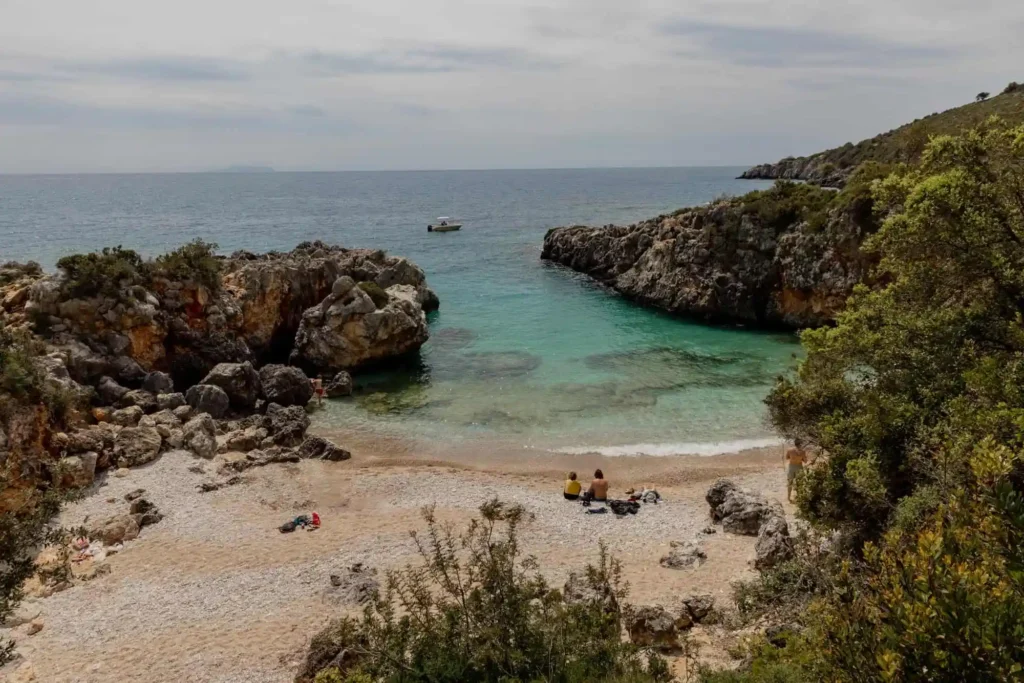
There’s something magical about discovering a stretch of Mediterranean coastline that hasn’t been completely overrun by mass tourism. During my time exploring the Albanian Riviera, I found myself repeatedly drawn back to Himare—a town where pristine waters meet dramatic mountain backdrops, and where you can still find secluded coves that feel like your own private paradise.
The beaches near this coastal gem offer everything from bustling promenades lined with fantastic restaurants to hidden bays accessible only by boat or hiking trails. Whether you’re after crystal clear waters for snorkeling, calm shallow spots perfect for families, or simply a beautiful place to work on your tan, the area around Himare delivers in ways that surprised even my well-traveled expectations.
Livadhi Beach
Table of Contents
ToggleLocated approximately 2.5 miles (4km) north from Himare city center, Livadhi beach stands out as one of the longest sections of coastline in the entire area, stretching an impressive 1.5km between two rocky headlands. The white sand here transitions to something a bit pebbly as you approach the water, so bringing sandals or water shoes makes walking along the shore much more comfortable.
What really sets this spot apart is the epic backdrop—huge mountains rise dramatically behind the beach, with Himare’s old town sitting perched on a large hill, creating views that are nothing short of stunning. Pine trees dot the landscape at each corner where the rocky headland meets the turquoise waters, adding to the Mediterranean paradise atmosphere.
During summer months, the beach gets split into public and private sections, with signs displaying which parts remain public. Whether you want to enjoy the luxuries of a lively beach club or simply find your own spot to lie on your beach towel, Livadhi Beach offers great choice. The only negative thing I could say is that lying on a beach towel directly on the shore proved more uncomfortable here than at other beaches due to the larger pebbles, though this didn’t stop us from thoroughly enjoying this epic spot.
Behind the beach, you’ll find plenty of amenities—mini markets, campgrounds, cafes, ATMs, and hotel developments. I wouldn’t be surprised if more come up soon, so watch this space. The only thing we couldn’t find were public toilets, which was a minor inconvenience.
One recommendation I have to make is Tonea’s All Day Brunch and Cafe—if you want a nice coffee or something for lunch, this is where to go. Beyond the beach itself, I also enjoyed the coastal walk around the headland toward Himare, which took around 45 minutes and starts from the steps at the northern end of Spile Beach. This walk means you don’t need a car to get between these two beautiful spots.
The 45-minute walk from Himare serves as a wonderful way to experience the coastline. Along the way, you can stop at Kico Meniko, a wonderful restaurant that overlooks the water. I highly recommend downloading Maps.me, an offline map app that clearly shows the trail between Himare and Livadhi beach. Many restaurants serve Mediterranean cuisine and fresh fish, with plenty of bars and cafes if you’re looking to pick up a drink or quick snack.
Gjipe Beach
One of the best beaches near Himare, Gjipe beach quickly became another one of my favorites during my Albanian adventure. This wide beach sits at the end of an impressive canyon, and thanks to its unique location, it never feels overcrowded despite being absolutely stunning in terms of scenery.
The beach is equal parts picture-perfect and purely epic in its setting. No wonder Gjipe Beach has gained a reputation as being one of the most beautiful beaches in Albania. Backed by the impressive Gjipe Canyon that snakes inland for around 800 metres, the beach sits at the point where the canyon opens up and meets the waves of the Ionian Sea.
You can only reach Gjipe beach on foot or by boat. Getting there by car involves about a 45-minute drive north from Himare, where you’ll need to park in a parking lot and pay a small fee. We paid 300 lek ($3) for a full day of parking during the shoulder season, though the fee may cost more during high season. Once you’ve parked, it’s about a 25-30 minute walk down to the beach along a dirt trail.
I’d suggest bringing walking shoes because the first part of the trail proves very rocky and would be difficult to walk in flip flops. The water can be a bit choppy but remains manageable for any experienced swimmer. Make sure to pack your own food, drinks, and towels as there aren’t many amenities on site.
Like Grama Bay, the attraction of Gjipe Beach isn’t only its appearance but also the effort required to get there. Your first option is to drive north towards Dhermi and turn left when you see the sign for Plaza I Gjipe. Keep following the signs, and after 2.5km you’ll find Gjipe Beach Parking. From this car park, you can follow the 1.5km track down to the beach, which takes 20-30 minutes.
If you don’t have a car, I wouldn’t suggest visiting by bus as you’d have to walk the full 4km from the main road. Instead, I recommend joining one of the boat tours that include a stop to enjoy Gjipe Beach. Just note that some tours only pass Gjipe en route to Grama Bay. If you’d like to have time to actually enjoy Gjipe beach, make sure to check that your tour includes a proper stop there.
For those wanting a camping experience, you should check out Gjipe Eco Campground. The campground is located right behind the beach, and we met a couple of guys who had spent a couple of nights there and said they absolutely loved it. You can book boat tours with local companies like Himare Seas The Day, which offers both private and group trips.
Gjiri i Akuariumit (Aquarium Beach)
Gjiri i Akuariumit became my favorite beach in Himare, and for good reason. This beautiful beach features white pebbly sand and crystal blue water, and it’s located in a completely secluded spot that feels like an exclusive Mediterranean paradise.
Aquarium beach is only accessible on foot or by 4×4 from either Jale beach or Lavadhi beach. I suggest bringing your own food, water, and beach towels as there aren’t facilities or cafes on site—though there is another beach just down the road (though it’s pretty rocky and not as nice as Aquarium beach).
This tiny, stunning pebble cove is one of the best beaches I found in Himare and is definitely a must-visit. If you’re visiting during high season (July through September), make sure to arrive early to get a prime spot, as the beach is small and can fill up fast.
From Livadhi beach, we had to take a different route as the main road was closed. We had to follow a small dirt trail to get there along the coast, and the views were incredible the entire way. To get on the trail, walk up past the Blue Bay restaurant and follow the dirt trail behind the restaurant. From here, follow the red and white striped markers along the trail until you get to the beach. It took us 30 minutes total from Livadhi beach.
If you continue on the coastal trail north from Livadhi Beach, you’ll come to Aquarium Beach after about 20 minutes. From Jale beach, the walk to Aquarium beach takes only 20 minutes along a dirt road. Put the directions in Google Maps to make sure you’re in the right place.
If you don’t fancy the walk, you can also drive, though I recommend taking the road from the north side of Jale Beach, with parking available just before Guma Beach, making for a short walk from there. This is because the road down to Aquarium Beach from the southern end was in pretty bad condition when we were there and looked like 4×4 territory.
There’s a small campsite just up from the beach and also a small restaurant that opens during summer. Even though Aquarium is a free beach, you can also expect sun beds and umbrellas to be squeezed in during high season. Even in this tiny bay, you can’t escape commercialisation. This once was a place where you could escape the crowds of surrounding beaches, but word is out now.
If you want to get to Aquarium Beach earlier in the day to grab a great spot, make that your priority. Oh, and pack a snorkel if you have one—it’s a great spot for snorkelling in Himare.
Jale Beach (Plazhi I Jalës)
Situated about 4.3 miles (7km) north of Himare, Jale Beach ranks as one of the most popular and busiest beaches in the Himare area. The water here displays a stunning turquoise color, and the beach remains very clean despite being one of the more crowded spots.
I actually saw this beach in a different light during my visit in late September, when most beach clubs and restaurants had already closed for the season. On one hand, this was great—there was hardly anyone to share the large pebble bay with, and the atmosphere felt more chilled than the lively summer vibe. On the other hand, the beach clubs that hadn’t fully cleaned up felt somewhat hastily abandoned.
Saying that though, the beach still offered a beautiful setting with crystal-clear water that looked just as inviting as any other time. I’d love to see how it’s all set up during the height of summer. The paved promenade behind the beach comes alive then, and I can just imagine the beach holiday atmosphere.
There are a lot of beach bars here, which makes it a popular spot for young tourists. If you aren’t a fan of loud music, this may not be the beach for you, as there’s usually loud music playing from all the bars. You can rent an umbrella and set of chairs for 1,000-1,500 Lek ($10-$15) per day, depending on the place you rent from. Otherwise, you can bring your own towel and access the beach for free.
While most of the beach is made up of private sections during summer, there’s also a signposted public area. Although note that the beach further round to the north is now part of a private resort—we were stopped at the entrance from exploring further.
The best and quickest way to get to Jale beach is to drive, which takes about 20 minutes from the center of Himare. Parking is available and costs 500 Lek ($5) per day. If you’re visiting without a car, it becomes a full-day adventure. I’d suggest walking to Jale beach from Livadhi beach—the walk takes about an hour total, and you can stop at Aquarium beach along the way. Just follow the same path to get to Aquarium beach and continue on the road until you reach Jale beach.
This is the last stop on the coastal hike north of Himare. If you like to hike along the coast from Himare, it will take around two hours, depending on how long you stop at other picture-perfect beaches along the way. Alternatively, you can drive, though I recommend taking the main road and turning off near Vuno. The road between Jale and Livadhi Beach is not in good condition.
Grama Bay
Grama bay is the most unspoiled beach on the Albanian Riviera. This small bay is surrounded by tall mountains and features a white pebble beach with the clearest water you’ll ever see. This gorgeous beach can only be accessed by boat, which makes it feel completely secluded and untouched.
Grama Bay is one of the most picturesque bays I’ve ever seen in my life and was one of the top highlights of my time in Himare. While I usually love to visit places independently, some quick research told me that Grama Bay is by far not the easiest to reach, with the only overland option being a hike of more than 10km from Palase. Therefore, the best way to get there is by joining one of the boat tours that head there from Himare.
These tours generally last around five hours and make multiple stops en route. They can be booked online or with one of the tour companies set up next to the jetty in town. In my opinion, the tour is well worth the money. As soon as your boat enters the bay, which is enclosed by huge cliffs, I’m sure you’ll be thinking the same.
There’s not too much in terms of facilities, which is actually great as it gives you a glimpse of the Albanian Riviera’s untouched beauty—something that’s rare these days with so much development everywhere else. However, there is a small restaurant behind the beach that opens during summer, and there are also sun beds and umbrellas to rent in summer.
This is all the more reason to try to visit during the shoulder months of May or October when it really feels untouched. There are some shady spots on the right-hand side of the beach, though the shade gradually disappears as the sun moves around the cliffs. If you’re up for a hike, there’s also a trail behind the beach that takes around 15 minutes to get to the top, offering impressive views of the bay below.
Make sure to pack food, drinks, and a towel, as these are usually not provided on the boat tour. The only way to access this beach is by boat, so I suggest booking the 5-hour Grama Bay boat tour with Himara Seas The Day. You can either book a private tour or join a group tour to save some money.
Spile Beach / Himare Beach (Plazhi I Himarës)
Spile Beach stands as one of the most popular beaches in Himare, and understandably so. Located right in the center of the city, this accessible beach is perfect if you’re staying in the area and want sandy beaches within easy reach. It’s a great place to grab your towel and relax for the day.
The bay offers water that’s calm and shallow, making it ideal for families. One of the best perks of this beach is its proximity to fantastic restaurants along the beach promenade. There are several Greek restaurants here, and my favorite restaurant in the area is To Steki sti Gonia, where they serve excellent Greek salads and gyros at a reasonable price—we got $3 gyros twice and absolutely loved them.
You can rent a kayak here and paddle over to Filikuri Bay for some fun exploration. Kayak rentals in Albania typically cost around 1,000 Lek ($10) per hour. There are also boat tour companies nearby if you want to take a day trip to beaches that can only be accessed by boat, like Grama Bay.
This is the largest of the three beaches at the front of the promenade in the centre of town (you’ll find it as Plazhi I Himarës on Google Maps). These are all understandably popular choices for a beach day if you want to work on your tan right on your doorstep, with all the cafes and conveniences of the town centre nearby.
The beach is completely public and free to enjoy. A couple of wide, gently-sloped steps lead down to the sand, which transitions to fine pebbles near the water and larger pebbles at the shoreline. The seabed remains shallow for quite a while before a steep drop, making this blissful bay perfect for cooling off.
There’s next to no natural shade, so you’ll want to rent an umbrella if you plan to relax here for long. Be prepared for loud music from the beach bars. There are three outdoor shower blocks for washing off, and a jetty at one end offers a great view back toward town.
If you’re feeling adventurous, I recommend renting a kayak or paddleboard, as the sea is usually calm and it’s a perfect place to paddle around. At the last narrow strip of sand adjacent to the northern end, the beach is split by a pier. This is my least favourite section as it’s usually quieter, but it’s still a fantastic choice if you want to be right in the centre.
The beach features the same sandy beach and pebble seabed throughout, with paddle boards and kayaks available to rent. There are sets of access steps where you can relax with a drink while overlooking the beach. Along the promenade, Manolo Beach Bar sits right behind the beach and is a popular spot.
Dhermi Beach
Dhermi beach is a wonderful gem surrounded by beautiful mountains and the blue Ionian sea—a true slice of Albanian paradise. The breathtaking scenery really sets this beach apart from others in the region.
The beach area feels like a small resort town, with busy beach bars and restaurants making it quite a hot spot for the younger crowd. Do expect a lot of loud music and noise, which unfortunately isn’t uncommon in Albania. The sand is pebbly, like many of the other Himare beaches, but the water displays that stunning crystal blue color that makes the Albanian Riviera so special.
You can rent beach chairs and umbrellas for the day for between 1,000 and 2,000 Lek, depending on which beach bar you rent from. You can also bring your own towel without having to pay anything.
Free parking isn’t easy to find here, so plan on paying 300-500 Lek ($3-5) for a parking spot for the day. The best way to get to Dhermi Beach from Himare is to drive. Located 11 miles (18km) north of Himare, it takes about 30 minutes to get there by car.
Borsh Beach
Borsh beach is the longest beach on the Albanian Riviera, stretching an impressive 7km long. This hidden gem remains an underrated spot that features a pristine coastline, crystal clear waters, and epic views all around.
The water here is calm and shallow, making it an ideal swimming spot for families. You can rent a couple of beach chairs and an umbrella for 500 lek ($5) for the day. Of course, you can also bring your own towel and enjoy the beach for free.
Make sure to bring sandals or water shoes, because there are a lot of small pebbles here. The beach is pretty rugged and underdeveloped, which actually adds to its charm. Still, there are plenty of beach bars and restaurants where you can eat.
If you have time, I suggest stopping at Borsh Castle. This ancient castle has ruins scattered around and offers panoramic views that are truly incredible. Entry is free, making it a perfect addition to your beach day.
The best way to get to Borsh beach from Himare is by car. Located 19km south of Himare, it takes around 30 minutes to drive there.
Porto Palermo Beach
Porto Palermo beach is a secret spot near Himare that not many tourists know about. Located just a 4-minute drive south of the Castle of Porto Palermo (a popular site to visit in the area), I suggest combining the beach and castle into a day trip from Himare.
This tiny pebble cove is absolutely magical. If you’re looking for tranquility and a calm beach experience, this is your spot. Since not many tourists know about it, the beach remains quiet and does not have loud music from beach bars to worry about. Make sure to bring your own food, water, towels, and beach chairs, as there aren’t restaurants immediately nearby.
We decided to make a short trip south to Porto Palermo without thinking too much about the beach at first. Rather, we were going to check out the epic Porto Palermo Castle. However, we decided to add on a visit to Porto Palermo Beach, and boy, we’re glad we did. It felt like we were uncovering gem after gem as we explored Himare’s beaches, and to find this on our final day made it definitely one of the best.
The beach is located a further 15 minute walk south of the village of Porto Palermo and is surrounded only by rocky coastline, the main coastal road, and large hills. There’s also a small beach bar behind the beach, which means there are food, drinks, and toilet facilities available. The beach itself is public and free to enjoy.
We didn’t have a car, so getting to Porto Palermo Beach took a bit more effort. Even though walking the 9km was possible, we didn’t fancy it. Instead, we caught one of the buses heading south towards Saranda, got off at Porto Palermo Castle, and walked along from there. We caught the bus back the same way—just check the return times with the driver first.
If you have a car, there’s some parking available at both the Castle and Porto Palermo Beach. The only way to get here is by car, and it’s located about 10km south of Himare, which takes about 15 minutes to drive.
Prinos Beach
Located in the southern end of Himare town, Prinos beach is just a couple of beaches away and only a short 10-15 minute walk from the centre. It’s actually just a 10-minute walk from Spile beach in Himare, which makes it incredibly convenient.
Considering its location in the center of Himare, it’s surprisingly a quiet beach that feels more local and isn’t overrun by tourists. There’s no loud music here either, which really sets this beach apart from others in the area.
One of my favourite features is the calm waters—you won’t find many waves in this bay, which makes it a lovely spot for swimming and enjoying the water. One of my favorite restaurants in Himare, Taverna Pirosia, is just a 5-minute walk up the road from the beach. I highly recommend stopping there for lunch and sampling their salads, byreks (local pies), and other traditional dishes.
This is a long, open, wide pebble bay. The beach is backed by restaurants, hotels, mini markets, bars, and ATMs, with a road that runs parallel to the shore. There are also a couple of coffee and food trucks here. We visited in late September, and while most beach clubs had already closed, these were still open.
I really enjoyed wandering along the beach, though this could be influenced by when we were there—our visits were in May and late September. During these times, most of the beach is public with only a couple of beach clubs open, which is nice and relaxed.
However, I’ve read reports of there being no public space during peak summer months, as well as the beach being on the overcrowded and noisy side. Depending on your beach day style, it may or may not be the best choice during high season.
If you’re staying in the center of Himare, it’s best to walk to Prinos beach. You can find parking nearby if you drive, but walking is more convenient and helps you avoid having issues finding a spot.
Potami Beach
Potami beach is another beach located in the center of Himare, and it’s the best spot to go for a sunset swim or simply enjoy the sunset. It’s about a 5-minute walk from Prinos beach.
With stunning Ionian sea waters and great views all around, this is a great spot to settle in for the day if you’re staying near Himare. There are plenty of delicious restaurants nearby—I recommend checking out Soren, which is right behind Potami beach. We each got a seafood pasta dish there and it was fantastic.
You can rent sun beds and umbrellas here, or you can bring your own towel if you prefer. I suggest walking to the beach from Himare to avoid having issues finding parking. However, you should be able to find some parking on the street nearby if you drive.
Potami Beach boasts some of the clearest turquoise water in Himare. Buoys mark an enclosed swimming area, though to be honest, I don’t think it’ll be long until you’re diving in for a swim anyway.
My favourite part of Potami Beach is at the southernmost point, where the water is calm and you have the best view of Himare and the surrounding mountain range. This is also where you can enjoy the beach for free.
During summer, there are also various beach clubs that section off parts of the beach. In summer, you’ll have the option to enjoy a comfortable lounger with music if that’s more your style. Even when most were closed towards the end of the season, Varka Beach Bar was still open and had loungers to rent.
Even though it’s on the southern edge of Himare town, it only took us 15 minutes to walk to Potami Beach from the centre, so it’s still a convenient place to spend the day. There are also various restaurants and mini markets nearby, adding to the convenience.
Filikuri Bay / Filikuri Beach
Filikuri Bay features a secluded beach located between Potami beach and Llamani beach. The beach is small and does not have beach facilities, so it’s best to bring your own food, water, and beach equipment.
This is a beach I didn’t know about until my most recent visit to Himare, and thank goodness I did find out about it—it’s easily one of the most stunning beaches in Himare. However, it does take a bit of effort to get there, and the rather sketchy descent is something I wouldn’t undertake with family.
The only way to access this beach is by kayak or on foot. You can rent kayaks from Spile beach (the main beach in Himare) where they charge around 1,000 Lek ($10) per hour. It takes about 45 minutes to an hour to reach Filikuri Bay from Himare.
If you plan on walking to the beach, follow the road up behind Potami beach until you reach a path that allows you to climb down to the beach. It’s pretty steep, with only a rope to help you down the rocky ledge. Many people have said it’s quite scary climbing down the rocks, so for your own safety, kayaking may be a better choice.
Located about 2km south of Himare town, the trail starts at the end of Potami Beach. If you have a car, there’s parking available. You can follow the trail up, which eventually leads out to the edge of a cliff where you can see the beach below.
This is where it gets difficult. From here, there’s a steep dirt track descent with ropes to help you get down. The path isn’t marked but is clearly worn, so you can see where to go. It’s nothing too crazy if you’re careful, but as I mentioned, I wouldn’t come this way with family.
Alternatively, you can get there by kayaking around from Himare Beach, taking a taxi boat, or joining some of the boat tours that head south and make a stop here.
However you get there, you’ll be rewarded with a strip of pebble beach and clear, turquoise water that sits at the foot of a sharp cliff face behind it. There are no facilities here, so make sure to bring water, food, sun cream, a beach towel, and anything else you need to enjoy this slice of pure paradise.
Llamani Beach
Llamani beach is just a 10-minute drive south of Himare. This small beach is nestled in a little cove with beautiful scenery and turquoise waters, making it a great place to spend an afternoon relaxing and swimming.
There’s a cafe on the beach that serves drinks and snacks. You’ll also find restrooms and showers here as well. Prices at the cafe can be a little expensive, so if you’re on a budget, I suggest packing your own lunch and drinks.
Sun bed rentals cost around 1,000 Lek ($10) for the day, and parking is free if you rent sun beds. The only way to access this beach is by car. Technically, you can walk there, but it takes an hour from Himare along a busy highway, which isn’t ideal or safe.
Pigeon Cave Beach
Another beach that can only be accessed by boat is Pigeon Cave Beach. Backed by a cliff face, there’s literally no way at all to get there overland.
Usually, a 30 minute stop at Pigeon Cave will be included in the same tours that go to Grama Bay, so joining a boat tour is a great way to see both places that you otherwise wouldn’t be able to visit.
There are no facilities at all here, but plenty of shade can be found in the large cave, which offers some respite on hot summer days, especially if this is your last stop on the tour.
The sea can be a little choppy if the wind picks up, but once you’re in the water, it’s perfect. There’s also some fun to be had with people jumping off the rocks on the right-hand side of the bay—though I reluctantly admit we weren’t feeling brave enough to try it ourselves.
Guma Beach
Just around the corner from the wonderful Aquarium Beach, you’ll find another picturesque little bay called Guma Beach. With its wild, rustic vibe, large white pebbles, and rocky corners, Guma Beach is a wonderful find if you’re hiking from Jale Beach.
There’s a small beach bar here, though it had already closed when we visited in late September. There are no other facilities to speak of. Personally, I preferred Aquarium Beach to Guma, but this is a great alternative if Aquarium is too busy.
As I mentioned, we discovered this bay during a coastal hike that takes about an hour to complete from Himare. You can also drive and park in a small car park at the northern end of the beach. I’d also recommend driving from Jale Beach this way, as the road is in much better condition.
There’s only enough parking for several cars, so I can imagine it filling up very quickly in summer. This parking area is also used for accessing Aquarium Beach.
Kico Beach
Less a beach and more a platform built into the rocky coastline overlooking the clear water, Kico Beach is quite a unique spot in Himare. Located on the headland north of town, you can walk there in around 20 minutes by following the trail that starts at the stairs close to Spile Beach.
Alternatively, you can park at Himare Stadium and walk down from there—though I wouldn’t drive any further down the road, as it wasn’t in great condition when we visited.
There’s no sand here, only a platform with steps leading down to the water. There’s also a restaurant opposite that opens during the summer season. However, the standout feature is the grand-looking stone balconies on the opposite rock-face next to the restaurant. They’re quite worn and rustic now, but you can imagine how classy they would have once been.
Unfortunately, Kico Beach had already closed for the season when we visited in late September. When it’s open, there’s also a walkway installed that connects the sunbathing platform to the opposite side.
The unique, rustic charm really drew us in—the unfinished concrete gives it a completely different feel from the pristine beach clubs elsewhere. If you’re looking for a more luxurious beach day, this probably isn’t the place. But for something different and authentic, it’s worth the short walk.
Sfageio Beach
Sfageio Beach is a short, wide section of beach adjacent to Himare Beach. The two are split by a raised part of the promenade, though a ramp leads down to the beach and you can walk between the two close to the shoreline.
Like the adjacent Himare Beach, Sfageio is sandy at the back and pebbly near the shoreline, with a steep drop into the water. It’s also another perfect sunbathing spot right in the centre of town, close to all the cafes and restaurants.
One thing that makes Sfageio Beach ideal for late afternoon visits is that it has sun for the longest of all three central beaches. I enjoyed many late afternoon macchiatos on this beach as the day started to unwind—such a simple, wonderful pleasure.
Best Time To Visit the Beaches In Himare
The best and most popular time to visit the Himare beaches is between late June and September. During these months, the climate reaches its peak with warm temperatures and plenty of sunshine. Average temperatures hover between 87-95 degrees Fahrenheit (30-35 Celsius), making it the perfect time of year for swimming and relaxing on the beach.
If you want to avoid the crowds, I suggest you visit during the shoulder season in late May or early June. The weather is usually warm enough to relax on the beach, and you’ll basically get the beach all to yourself. The only downside to visiting outside of peak season is that some of the restaurants may not be open, and you could potentially experience rainy weather.
We visited Himare in early May, and a lot of the restaurants and beach bars were still closed, so we didn’t get the full experience. If you want the best of everything, visit during summer.
I’m a big fan of visiting places during shoulder seasons, and Himare is no different. In my opinion, the best time to hit the beaches in Himare is June or September. You get the best balance between great beach weather and fewer crowds, with all hotels, restaurants, and tours still being open and operating.
There’s no doubt that July and August are the most popular months, but they’re also incredibly busy and more expensive for hotels and sun beds. It’s also arguably too hot at times, with temperatures even going above 35 degrees Celsius—not the most relaxing times to sunbathe.
The beaches are definitely at their most relaxing in May or October. During these months, it’s still mostly sunbathing weather with much fewer tourists around and most beach clubs closed. However, just bear in mind that many hotels and restaurants also close, making things more limited in these regards.
Quick Tips for Visiting the Himare Beaches
While it’s pretty straightforward visiting the Himare beaches, I learned a few things I wish I would have known before my visit. Here are some tips to help you prepare beforehand.
Bring cash. Most beaches charge a fee to park your car or rent sun beds and umbrellas. While there are ATMs in Himare, there aren’t any at the smaller beaches. I suggest bringing enough cash to pay for parking your car and any food you may purchase. Parking is usually around 200-500 Lek, sun bed rentals are 1,000-2,000 Lek, and food can be anywhere from 500 Lek to 3,000 Lek for a meal.
Rent a car for the most flexibility. Public transportation to Himare beaches isn’t widespread. Most of the beaches can only be accessed if you have a car or pay for a boat tour. I highly recommend renting a car to make the most out of your time. We rented our car through Discover Cars for our month in Albania and wouldn’t have wanted to do it any other way.
Beach food is pricey. To save some money, pack your own lunch and drinks. Food at the beach is often much more expensive than at restaurants in town and not nearly as good quality.
Expect loud music. Since the beaches are packed with beach bars, there’s a lot of loud music playing at many of the beaches in Albania. I was pretty surprised and also annoyed by this. Unfortunately, there’s nothing you can do about it. If you want to read or listen to your own music, bring your own headphones to block it out.
How to Get to Himare’s Best Beaches
We walked to every beach on this list apart from Porto Palermo Beach (which we took a bus to) and Grama Bay and Pigeon Cave Beach (which we visited as part of a boat tour).
However, some of those further away, such as Jale, Guma, and Aquarium Beaches, are quite far. If you’re not up for the hike, especially during peak summer heat, hiring a car or taking a taxi would be more convenient options for reaching these stunning spots.
How to Get to Himare, Albania
The most convenient way to get to Himare is by car. You can also get there by bus. I’m breaking down the two options below.
Renting A Car
Getting a car rental is by far the easiest and most convenient way to get around Albania. We rented our car at Tirana International Airport through Discover Cars for our month-long trip in Albania, and we wouldn’t have wanted to do it any other way. By having a car, we were able to visit many not-so-touristy places and could see things at our own pace.
If you’re arriving from Corfu to Albania, you can also pick up a car rental near the Saranda port, which gives you immediate access to explore the southern coastal region.
Taking the Bus to Himare
Buses in Albania can be a bit disorganized, but luckily there are a couple of direct routes to Himare from the main cities. To get an idea of pricing and timetables, check out Gjirafa Travel, a website that displays all the bus journeys in Albania. From what I hear, it’s pretty accurate.
Bus from Tirana to Himare: There are a couple of direct buses that go from Tirana to Himare. The bus ride takes around 4 hours and costs 1,000 Lek ($10). Check their website for current pricing and timetables.
Bus from Saranda to Himare: There are several direct buses that go from Saranda to Himare per day. The ride takes 1.5 hours and costs around 600 Lek ($6). Again, check for the latest pricing and timetables online.
Where to Stay in Himare
In Himare, you can either stay in the city center where you can easily access the closest beaches and restaurants, or you can opt to stay in the hills surrounding the city, which offer panoramic views of the sea and a more relaxed experience.
We opted to stay in the city center during our time there, but next time I’d prefer to stay up in the hills at a boutique hotel. Here are a few suggestions across different budgets:
Hostel: Himara Hostel is located just an 8-minute walk from the beach. This hostel is highly rated for its cleanliness and amenities, making it perfect for budget travelers who still want comfort and convenience.
Boutique Hotel: ELÉA Guesthouse is a beautiful, family owned guesthouse with wonderful views overlooking the ocean and Himare. The food here is exceptional and the rooms are clean. We got a private tour of the hotel from the family and enjoyed one of the best meals in the region. Highly recommended if you want that personal touch and authentic experience.
Luxury Hotel: ARXONTIKO is located just 100 meters from Spile beach, the main beach in Himare. The hotel offers rooms with beautiful sea views and breakfast is included, making it ideal for those who want to wake up steps from the water.
Where is the Albanian Riviera?
The Albanian Rivieria is a long stretch of coastline that spans from Vlore in the north all the way down to Ksamil in the south. This part of Albania features some of the most stunning natural beauty and beaches in the country, if not the entire Balkans.
The dramatic combination of mountains meeting the sea, hidden coves, and crystal-clear waters makes this region truly special. It’s a destination that rivals more famous Mediterranean spots but without the overwhelming crowds and inflated prices.
Which is Better: Dhermi or Himare?
Whether you choose to visit Dhermi or Himare is up to what you like. I prefer Himare as a quieter town with fantastic restaurants, calm waters, and incredible beaches. It tends to be on the more family-friendly side.
Dhermi is very charming and a bit more upscale. Dhermi beach has more of a party vibe with livelier beach clubs and a younger crowd. Both are beautiful destinations, and where you visit really depends on what you want out of your trip.
If you’re looking for a relaxed base with easy access to numerous beaches and authentic local restaurants, Himare wins. If you want a more energetic atmosphere with upscale beach clubs and nightlife, Dhermi might be your spot.
Which Part of Albania Has the Best Beaches?
In my experience, the Albanian Riviera has the best beaches in Albania. Specifically, the beaches near Himare, Vlore, and Dhermi have more natural beauty compared to the more southern beaches around Ksamil and Saranda.
While Ksamil is undeniably beautiful with its white sand and island views, the beaches around Himare offer something more dramatic—the combination of pebble beaches, mountain backdrops, hidden coves, and that incredible turquoise water creates a more diverse and striking landscape.
The fact that many beaches around Himare require some effort to reach—whether by hiking, kayaking, or boat—also means they’ve retained more of their natural character and feel less commercialized than some of the easier-to-access spots further south.