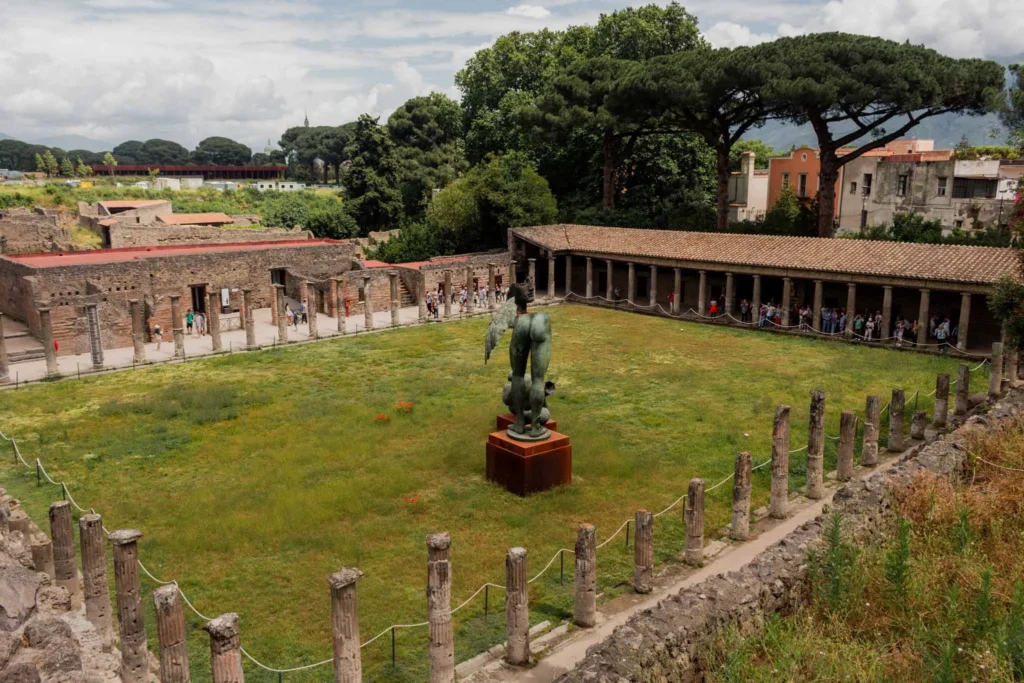
Standing at Roma Termini on a crisp morning, coffee in hand, I watched the high-speed train pull into the platform and felt that familiar rush of anticipation. The journey from Rome to Pompeii isn’t just about ticking off another UNESCO site—it’s about stepping back nearly 2,000 years to walk streets frozen in time by Mount Vesuvius’s catastrophic eruption in 79AD.
Planning Your Journey: Trains, Tickets, and Transit Time
Table of Contents
ToggleThe logistics might seem overwhelming at first glance, but once you break down the route, it’s remarkably straightforward. Your travel time from Roma Termini to the archaeological site runs approximately 2 hours each way, though wait times between connections in Naples can stretch this to 2-3 hours depending on your timing.
Here’s where advance planning pays off significantly. The frecciarossa trains departing from Roma Termini to Napoli Centrale run 2-3 times per hour throughout the day, making this 70-minute direct journey the backbone of your trip. Booking through Trenitalia.com at least 3 weeks in advance drops your fare from €39.90 down to €18.90 each way—a significant amount when you’re budgeting for a full-day adventure. Same day travel tickets hover around €90 return, while purchased advance tickets average €50 per adult for the round trip.
The morning departure is crucial. Catching the 7:00 AM train puts you among the first to enter Pompeii, beating both the afternoon heat and the cruise ship crowds that pour in from the port. If 7:00 AM feels too ambitious, an 8:00 AM departure still gives you ample time, though you’ll sacrifice some of that magical early morning tranquility when the site feels almost private.
Naples presents your transfer point. Downstairs from Napoli Centrale lies Napoli Porta Garibaldi station, home to the Circumvesuviana Naples-Sorrento local railway. This is where the journey shifts character entirely. The Circumvesuviana line operates as a local metro system train—no air conditioning, often crowded, and notorious among seasoned travelers for pickpockets. Keep your belongings safe and close.
Tickets cost €3.20 (some sources cite €3.60 or €3.10) each way from the office next to the platform. There’s no need to reserve these in advance—just buy them upon arrival. Trains start running at 06:10 am with departures every half hour or so, taking approximately 35-38 minutes to reach your destination. The confusing part? Several Pompeii stations exist along the line. You need the Pompei Scavi – Villa Dei Misteri stop specifically. The main entrance to the archaeological area sits just a short walk across the road from this station.
A limited service launched in August 2023 offers a direct route from Rome Termini to Pompeii, but it runs only on Sundays with one return trip available. The bus leaves in the morning and returns 9 hours later—we recommend including a side trip to Naples or Sorrento as 9 hours proves a bit much for even the most enthusiastic Pompeii visitor.
If you don’t want to bother with train transfers and ticketing, a shuttle bus service from Rome operates daily. The bus departs at 07:30 am from a departure point close to Rome Termini station. Please note this is simply a shuttle and not a tour, so expect minimal to no commentary during transit.
For those traveling with luggage, there’s a luggage drop at the Pompei Scavi station costing €8 per bag—invaluable if you’re continuing south to the Amalfi Coast afterward.
Getting Back: Returning to Rome from Pompeii
When it’s time to return, the Circumvesuviana train from Pompeii Scavi – Villa Dei Misteri stop takes you back to Napoli Porta Garibaldi. Head upstairs to the intercity train station where services to Rome from Napoli Centrale depart regularly until around 20:15 pm. The last fast train to Rome leaves at 20:30 pm.
If you’re unsure how long you’ll spend exploring or want to leave room for Naples afterward, wait to purchase your high-speed train tickets back to Rome. The Trenitalia App lets you buy them on the go, or simply grab them at one of the kiosks at the Naples train station. Yes, purchasing last minute means paying the full train fare instead of those advance booking discounts, but the flexibility often justifies the cost. Alternatively, book your return ticket in advance for a scheduled time later in the evening around 7:00PM—this balances cost savings with breathing room in your itinerary.
Guided Tours: Let Experts Handle the Logistics
Honestly, after doing this trip independently twice, I understand completely why many travelers opt for guided tours starting around €129 per person. The easiest way to experience Pompeii from Rome involves joining a full-day guided tour where you relax during transit while your guide explains the history and significance of the site before you even arrive.
The best Pompeii tours from Rome offer an additional stop, making the trip down worthwhile in ways that would prove harder to manage independently in a single day. And crucially, you don’t worry about logistics getting back to Rome because that’s all taken care of.
A highly-rated tour that’s become my top pick includes a guided visit to Pompeii with an archaeologist, a stop at a local winery, lunch, round-trip tickets on the high-speed train, and an air-conditioned shuttle between Naples and the site. Wine and lunch transform this from mere sightseeing into a proper Italian experience.
The Pompeii and Amalfi Coast tour through Walks of Italy works beautifully if your itinerary just couldn’t stretch to spending several days in the south of Italy but you desperately want to see both Pompeii and Positano. This 13 hour tour departs at 07:15 am, includes a guided experience with an archaeologist who has in-depth knowledge of the excavations, then takes a scenic drive along the coast to picturesque Positano. You’ll have time for lunch and exploring before returning to Rome. From November to March, this tour visits Sorrento in place of Positano where many shops and restaurants close for the season. Many travelers use this as a transfer service—simply make a note on your booking if that suits your plans.
For those craving that additional stop in Sorrento, a small group tour via mini coach includes a full guided tour of Pompeii by an archaeologist followed by free time in Sorrento where you can enjoy the relaxing seaside vibes and views. This well-designed, genuinely fun tour runs 12 hours departing at 07:00am with daily departures on Mon, Wed, and Sat. Passionate guides bring the stories and history to life in ways that make the experience memorable beyond just seeing ruins.
CityWonders (formerly Dark Rome) operates a tour available on GetYourGuide that lets you not only explore Pompeii but climb Mount Vesuvius in summer months. This highly regarded tour operator with expert guides takes groups of 24 people or less by air-conditioned coach to Pompeii where your guide walks you through the main sights, explaining the events of that fateful day. After a 30 minute hike on Vesuvius, you’ll enjoy views of Pompeii, Naples and the bay before the journey back to Rome. After mid-November when hiking trails close, the tour continues in Naples with a panoramic drive instead. This full day (12 hour) tour departs at 07:30 am, running daily in summer with a reduced schedule during winter months.
There’s nothing quite like getting perspectives from both nature and humanity to fully appreciate the force of Vesuvius. Seeing the preserved city then getting up close with its destroyer creates unique experiences you cannot have anywhere else in the world.
Understanding Pompeii: Opening Hours and Entry
The Pompeii Archaeological Park opens daily except for 1 January, 1 May, and 25 December. Always double check opening hours and dates at the official site before planning your trip—exhibit and closure information occasionally changes.
From 1st April through 31st October, the site operates from 09:00 to 19:00 with last entry at 17:30. During the cooler months from 1st November to 31st March, hours shift to 09:00 to 17:00 with last entry at 15:30. This seasonal adjustment matters significantly when planning your day trip itinerary.
Like most major attractions in Italy, long lines for entry can develop, particularly when cruise ships dock in port at Naples. While Pompeii doesn’t reach the congestion levels of the Vatican Museums or Colosseum, you can still wait a considerable amount of time for tickets during peak season from May to October.
Purchasing tickets upon arrival remains an option, but buying online in advance through TicketOne (the official Pompeii ticketing site) or authorized partners like GetYourGuide lets you skip the line entirely. With advance purchase, you go directly to the entrance without waiting in that long line—worth every euro of the booking fee that applies.
Adult ticket prices start from €18 for the Pompeii Express which includes only the archaeological area—a good option if you’re limited to 2-3 hours for your visit. The Pompeii Plus ticket at €22 includes entry to 3 ancient villas and proves worth it if you have at least 4 hours. Two of the villas sit only a 10-minute walk from the entrance, while the third one requires a 30-minute walk.
The site is free to enter for children of all nationalities under the age of 18—you will need to show passport or ID for this. Other discounts and offers apply for EU nationals; check the Pompeii website for details.
Making the Most of Your Visit: Tours, Time, and Tips
A tour is genuinely a good idea at Pompeii. The various buildings and highlights remain poorly marked and described, so without a tour you’re basically wandering around not knowing what you’re looking at and likely missing the most important and interesting aspects of this massive site.
You will be offered tours when you arrive, but you really have no way of knowing if they’re any good. If you choose this option, be mindful to look for a tour guide with a badge issued by the Region of Campania, or book at the information desk at Porta Marina or Piazza Esedra. Note that these are private tours—the site itself does not offer tours.
I recommend booking your tours in advance and meeting the guide when you get to Pompeii. That way you can read reviews and find one that suits you and your plans for the day. A 2 hour walking tour departs at various intervals from 9.30 am through the afternoon until 3.00 pm, so you don’t need to be up too early in Rome. Prices start from €43 per person. An archaeologist-led tour runs from 9:00 am into the afternoon until 3.30 pm, giving you time to explore Naples before returning to Rome.
Small group tours of the Pompeii ruins, running at various times from 9.30 am through to 3.30 pm, are guided by professional archaeologists with no more than 20 people. Prices start from €53, with Spanish, German, and French tours also available. This represents the best way to understand and learn about the rich history and significance of this incredible archaeological site.
Another option involves downloading an audio guide. Rick Steves’ audio tour of Pompeii comes highly recommended (more info available on his site), though you can also rent an audioguide when you get there if you prefer deciding on arrival.
Time Investment: How Long Should You Stay?
The minimum amount of time to spend at the site is 2 hours—enough to quickly see the highlights but not much more. Remember that Pompeii was a city home to over 17,000 people and the site itself covers 64 to 67 hectares (170 acres). You can easily spend 4-5 hours here if you’re a history buff. Plan on spending a minimum of 3 hours to truly appreciate what you’re seeing without feeling rushed.
When to arrive matters as much as how long to stay. The morning hours let you avoid visiting during the heat of the afternoon, particularly during summer when there’s little to no shade. It can get extremely hot walking around—the exposed site offers very limited cover. Check the weather before you go and make sure you’re prepared.
Essential Items: What to Bring and Wear
In summer you should take a hat, sunscreen, and wear light, loose clothing. When it’s cooler, bring a rain coat and umbrella. No matter the season, you will need sturdy shoes suitable for walking on ancient cobblestones, plenty of water, and snacks. Minimal facilities exist at the site to purchase food and drinks.
One cafe inside serves food and drinks, but options are limited. Plenty of vendors and shops are located outside the site near the Porta Marina entrance. You can also pack your own food and drinks and eat inside the site—something I always do to maximize exploration time rather than hunting for lunch.
Please note that bags, backpacks, luggage, or cases with dimensions exceeding 30x30x15cm are not allowed. You can leave large bags (but not your luggage) at the cloakroom services provided at the entrances.
Must-See Highlights Within Pompeii
The amphitheatre stands as one of the oldest surviving Roman amphitheatres in the world. The Villa of the Mysteries lets you see one of Pompeii’s famous wall paintings—vibrant frescoes that have survived millennia. The Stabian Baths showcase a richly decorated Roman bathing house with intricate details still visible. The Temple of Isis represents an incredibly well-preserved temple dedicated to the Egyptian goddess, demonstrating the multicultural nature of ancient Pompeii.
The House of the Small Fountain features gorgeous frescoes and paintings that illustrate the wealth and artistic sophistication of Pompeii’s residents. I really enjoyed the reconstructed vineyard which actually produces wine—a living connection to the agricultural practices that sustained this city before Vesuvius buried it.
Bringing Children to Pompeii
Yes, the site is suitable for children. I’ve seen families with 4 year old twins enjoying their time there—the site is great for exploring and safe for little ones as there are no cars. Spring weather proves perfect for this. I’d probably reconsider with little ones during summer when it gets very hot, but with proper preparation (hats, water, breaks), even summer visits work.
You can bring your stroller, and there are specially marked routes suitable for prams as well as three baby change facilities at Via dell’Abbondanza, Via di Nola, and at the corner of Via Stabiana and Via della Fortuna.
Older children will no doubt be fascinated by the history of the volcano and city. If you think you need some help firing their imaginations, you could join a family-friendly tour of Pompeii with guides who know just how to bring the site to life for little minds.
Beyond Pompeii: Extending Your Day Trip
If you depart Rome early in the morning by 7:00 AM, you’ll have a few hours in the afternoon to explore more before heading back. The options range from cultural to natural to purely gastronomic.
Herculaneum offers another archaeological site preserved by the eruption of Mount Vesuvius. Located just 20 minutes up the road from Pompeii via the Circumvesuviana train, you can explore Herculaneum in a couple hours. Either book a guided tour or explore on your own with the provided pamphlet or audio guide. To get here, hop back on the Circumvesuviana train towards Naples and get off at Ercolano Scavi. The entrance to the site is a 5-10 minute walk from the station. Tickets cost €16 if bought in person, or you can reserve online in advance.
Standing at 4,200 feet tall, Mount Vesuvius remains mainland Europe’s only active volcano. From the park entrance, it’s a short hike to the crater—a doable add-on to your day trip that provides powerful context to what you’ve just witnessed in Pompeii below.
From Pompeii, you can either take the public bus, private shuttle, or hire a taxi to Vesuvius. For the easiest experience, booking a shuttle like Busvia del Vesuvio from Pompeii Scavi station works well. You could also book with another shuttle company when you arrive at the station in the morning. Buses run every hour from 08:00 am to 15:00pm, taking about 55 minutes to reach the Vesuvius ticket office at a cost of €3.10 or €3.80 each way depending on the service. You can buy tickets from the bus driver.
The cheapest option involves taking the public EAV bus, though you have to plan everything on your own and check the schedule and stops carefully. Finally, you can hire a taxi from Pompeii to Vesuvius and the driver will wait for you—more expensive than the shuttle but a good option if you prefer a more private experience.
Once you reach the ticket office, it’s a 30 minute hike to the crater. There is an entrance fee of €10 to access the park which includes a guided tour. Make sure to bring sturdy shoes, a hat, and a jacket in the cooler months as winds can make it quite cold at the crater. The last bus departs Vesuvius for Pompeii at 17:40 pm. Book your tickets for Mount Vesuvius online in advance when possible.
Naples may appear rough around the edges, but at its core, it’s filled with a lively and vibrant culture. Take the rest of your afternoon to wander around the streets and most importantly, eat pizza. Naples is known as the home of pizza, and you can’t leave without trying one.
Take the Circumvesuviana train back to Piazza Garibaldi, then head straight for Antica Pizzeria da Michele at Via Cesare Sersale, 1, where your Margherita pizza is made to perfection by the Condurro family—5th generation pizza makers. L’Antica Pizzera Da Michele (the most famous place) and Gino Sorbillo also rank among the best.
After a delicious lunch, you can explore Naples on foot before returning to Rome. Don’t miss the grand sweeping Piazza del Plebiscito, the National Archaeological Museum, Palazzo Reale, and the Duomo (Cathedral). Luckily, if you need another slice before you go, your lunch stop sits right near the train station.
Continue along the Circumvesuviana line from Pompeii to Sorrento if time permits. The journey takes around 30 minutes. In Sorrento, you can wander the town and enjoy views of the Bay of Naples with Vesuvius rising above Pompeii in the distance. Or if you’re hungry, take the elevator down to Marina Grande and enjoy a seafood feast by the sea.
Famous for the delicious liqueur limoncello, Sorrento offers opportunities to visit a secluded lemon grove where you can try and buy some to take back with you to Rome—a perfect edible souvenir.
Sample Itinerary: Timing Your Perfect Day
An example itinerary for your day trip to Pompeii might look like this, though please note times may vary depending on train delays, wait times, and your own pace:
At 7:00 AM, take the train from Roma Termini to Napoli Centrale. By 8:15 AM, you’ll arrive in Napoli Centrale. Between 8:45 and 9:30 AM, catch one of the Circumvesuviana trains to Pompei Scavi. You should arrive at Pompeii Archaeological Park between 10:00 and 10:30 AM. From 10:00 AM to 2:00 PM, explore Pompeii thoroughly.
At 2:00 PM, you face a choice: head back to Naples, climb Mount Vesuvius, or explore Herculaneum (Hercalaneum). Between 6:00 PM and 9:00 PM, take the train back to Rome, arriving tired but enriched by your journey through time.
Can You Combine the Amalfi Coast and Pompeii?
Technically, you can visit both, especially if you book a bus tour. However, I do not recommend squeezing both into a single day. You’ll spend most of your time in transit, and the Amalfi Coast deserves at least 3-4 days to fully appreciate its beauty and charm. The scenic coastal drive, the time in Positano for lunch, shopping, or swimming—these experiences feel rushed when sandwiched around a Pompeii visit. Better to choose one focus for your day trip or extend your Italy itinerary.
Practical Travel Resources
Italy Travel Insurance should be considered for peace of mind before all trips. Travel Insurance Master helps find the best plan for your needs. For getting around the countryside beyond this day trip, rental cars through Discover Cars (a reliable go-to rental agency) help find the best rates no matter where you’re traveling.
If your phone plan does not offer free coverage in Italy, getting an eSIM proves invaluable. Airalo provided fantastic coverage during my entire time in Italy—easy to download and you can even top up via the app if needed. For accommodations, booking hotels through platforms like Booking offers a messaging tool that makes it easy to communicate with hotels, with endless options to choose from.
Walking those ancient streets where Romans once conducted their daily business, where they ate, loved, worked, and died—Pompeii offers more than history. It’s a preserved moment, a city frozen when Vesuvius erupted and covered everything under thick ash. The excavations that began in the 1700s after Pompeii wasn’t discovered again until the mid-16th century continue to reveal new insights.
Whether you choose the DIY approach with trains and independent exploration or opt for guided tours from Rome with all logistics taken care of, this day trip from Rome ranks among the most worthwhile experiences Italy offers. The combination of natural destruction and human preservation creates something you’ll remember long after you’ve returned home.