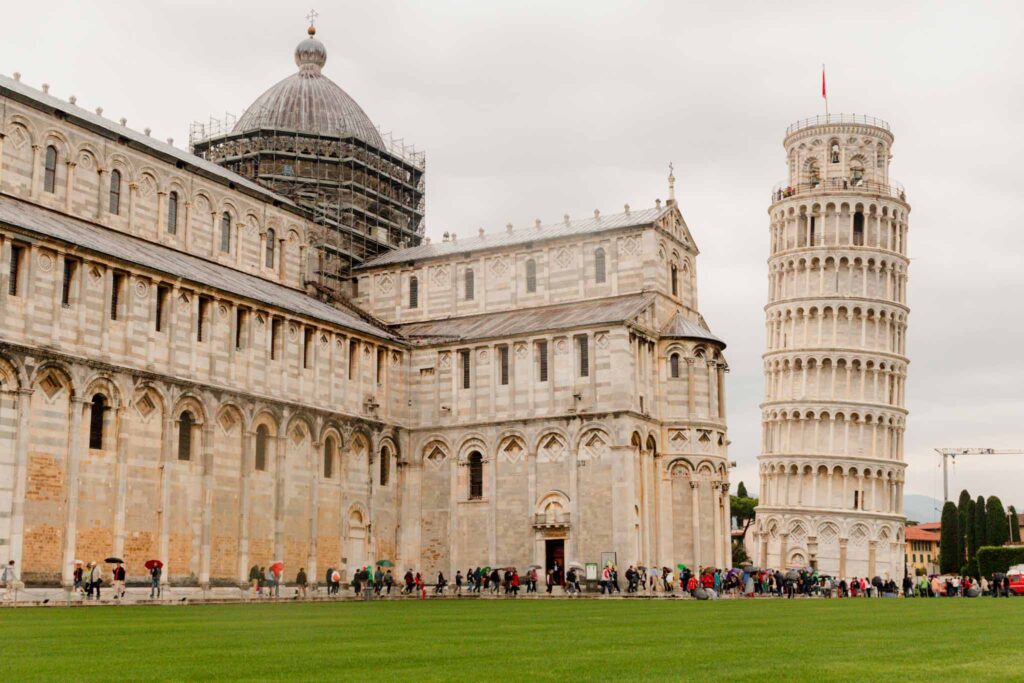
Pisa, located in Italy, is often seen as a city built around its iconic Leaning Tower. This world famous landmark is what draws most visitors, making it nearly impossible to think of Pisa without it. However, there’s more to this charming city than meets the eye. While the Leaning Tower of Pisa may steal the spotlight, the city offers much beyond just a famous photo opportunity. As a short stop on your trip, it’s an inviting place with plenty to explore, from historic city walls to peaceful piazzas.
For those road-tripping around Europe, Pisa presents a chance to step off the main tourist path. It’s a place where culture enthusiasts can admire beautiful landmarks like the Pisa Cathedral and Santa Maria Della Spina. But don’t think this city is just for tourists looking to take a quick snap. Whether you’re traveling by campervan or just passing through, the upbeat evening scene with its cafés, aperitivo, and shopping makes Pisa feel like more than a tourist trap. While it’s certainly worth visiting, it’s not somewhere you’d spend your entire trip—yet it’s a place that will leave you wanting to stay a little longer.
Is Pisa Worth Visiting?
Table of Contents
ToggleWhen people think of Pisa, the first thing that comes to mind is usually the famous Leaning Tower of Pisa, an iconic landmark and a must-see attraction. But while the tower draws all the attention, there’s so much more to explore in this great city. If you’re looking for a perfect day trip from Florence or Lucca, Pisa makes for a great destination. In fact, just one day in Pisa is usually sufficient to see many of the city’s highlights. Beyond the famous tower, the central, more local areas of the city are full of charm and offer lots of fun for visitors.
While the Tower of Pisa might be the main reason people visit, it’s worth going beyond the famous landmark. If you take the time to explore the city’s hidden gems, you’ll be rewarded with a much richer experience. Pisa is a beautiful, little city with a relaxed vibe, making it a perfect stop on your Italian adventure. It may be small, but it’s definitely worth visiting, especially if you’re after a quick, enriching break during your travels.
The Famous Tower of Pisa
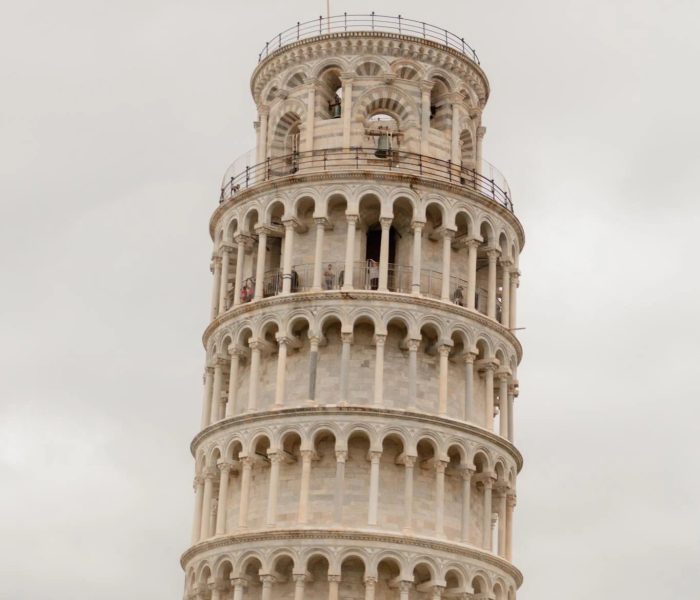
The Leaning Tower of Pisa is one of the most iconic landmarks in Italy and is globally recognized as a symbol of the country. Its unique tilt, caused by an uneven setting of the foundation, makes it an incredible sight to see. Whether you’re visiting for a perfect photo op or just to marvel at its strange angle, it’s a must-see. Most people rush to the exterior to snap a few photos but there’s more to the experience. You can actually climb the tower, which involves a tight, winding spiral staircase with 251 steps—not a strenuous climb, but it can make you feel a bit dizzy due to the incline. If you plan to go up, be sure to set aside at least 30 minutes.
The Tower of Pisa is part of the cathedral complex, which also includes the Pisa baptistery and Duomo di Pisa. To visit, you’ll need a multi-pass ticket. Since tower visits are timed, it’s important to book tickets in advance, especially during the high season. If you don’t have a ticket, you’re likely to miss out, as entry is strictly controlled. The climb offers 360-degree views of the city of Pisa and the mountains in the distance. It’s truly an unforgettable experience, even though the price of €20 may seem a bit steep for some. But for those looking for a fun time, trying to get the perfect picture while holding the tower is definitely worth it.
Book your tickets online at the official website.
Aperitivo along the Arno River
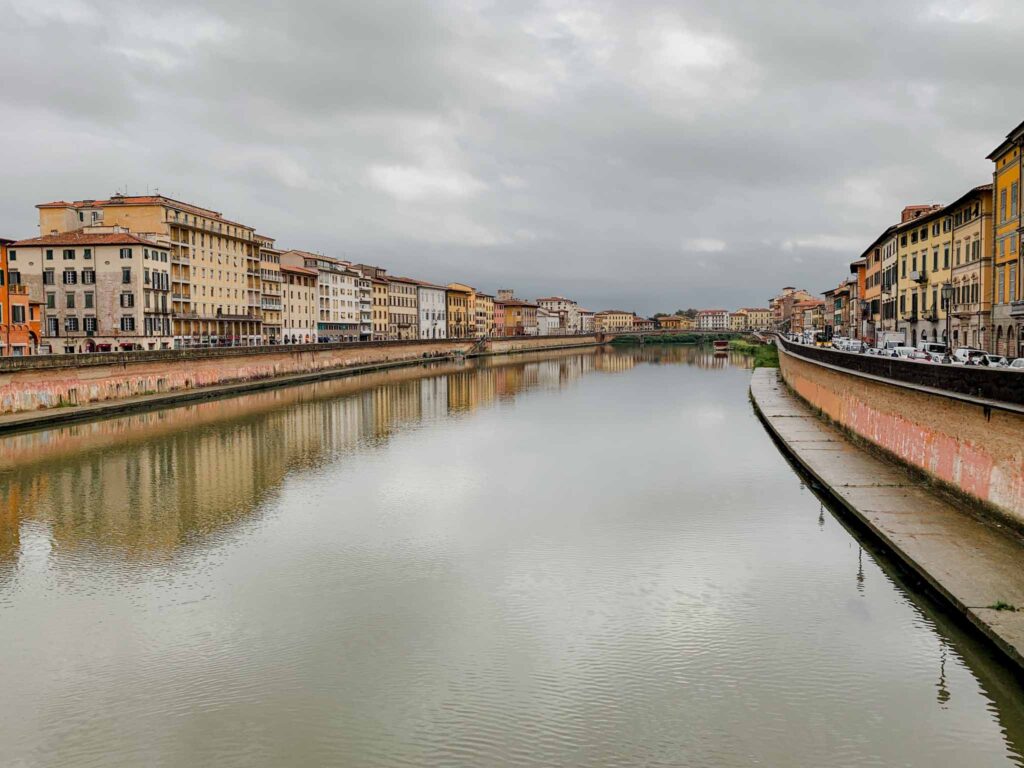
One of the best ways to experience the early evening in Pisa is by indulging in a traditional aperitivo. It’s a must when visiting Italy, and the perfect place to enjoy it is at one of the many bars lining the Arno River. For an authentic experience, I recommend ordering a classic aperol spritz with a bowl of chips—though feel free to skip the rules and order whatever you prefer! During the summer, bonus bars open along the river’s banks, offering outdoor and waterfront seating. Argini Margini is a great spot to soak in the views.
Exploring Pisa on foot or by bicycle allows you to enjoy the colorful buildings and scenic surroundings. As you walk along Lungarni di Pisa, the promenade will lead you to historical sites such as Torre Guelfa, the Museo delle Navi Antiche di Pisa, and Chiesa di Santa Maria della Spina. With roads and sidewalks on both sides of the river, bridges connect you to the city, offering wide views of the beautiful houses and the surrounding park, Giardino Scotto. It’s a lovely spot to sit and reflect, giving you the perfect mix of history and relaxation.
Fantastic Day Trips
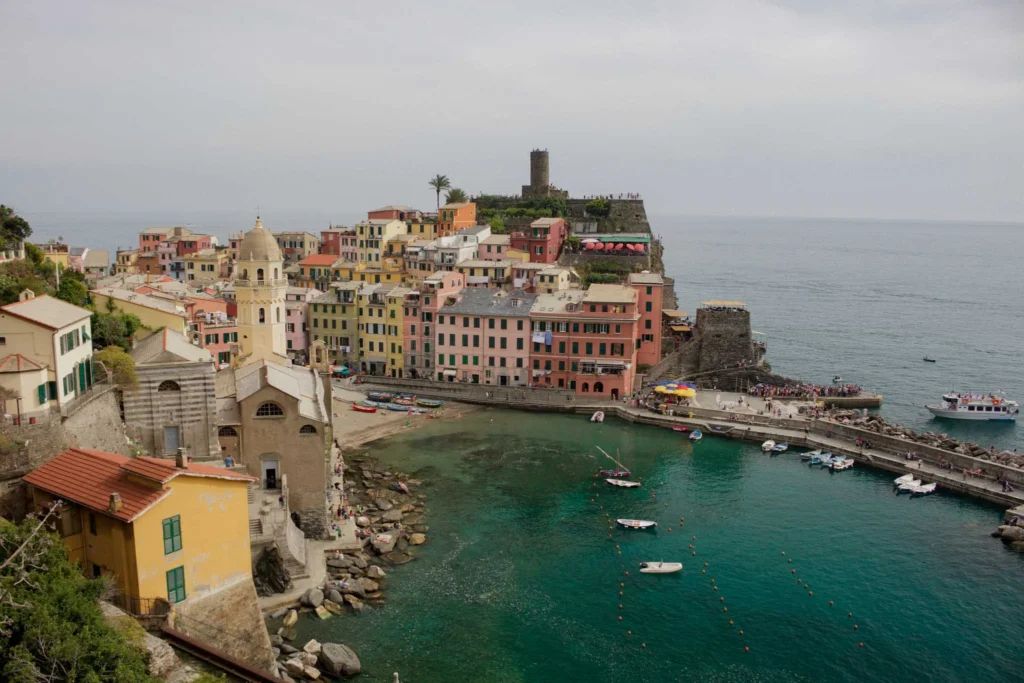
Pisa is not only an amazing city to visit, but it also serves as a great place to base yourself for day trips around Italy. The city is conveniently located on the southwest coast, and within just a short train ride, you can reach many nearby destinations. For instance, the small walled city of Lucca is only about 30 minutes away, and if you’re in the mood for art and history, a quick hour ride takes you to the Renaissance capital of Italy, Florence.
If you’re looking to explore more natural beauty, the Cinque Terre is also a close day trip that offers breathtaking coastal views, all within another hour of travel. For those who enjoy wine, the Chianti wine region to the east of Pisa is a must-visit. And that’s just the start—there are so many more places to explore, like San Gimignano and Montecatini, making Pisa the perfect launch point for unforgettable excursions around the region.
Walk the city walls
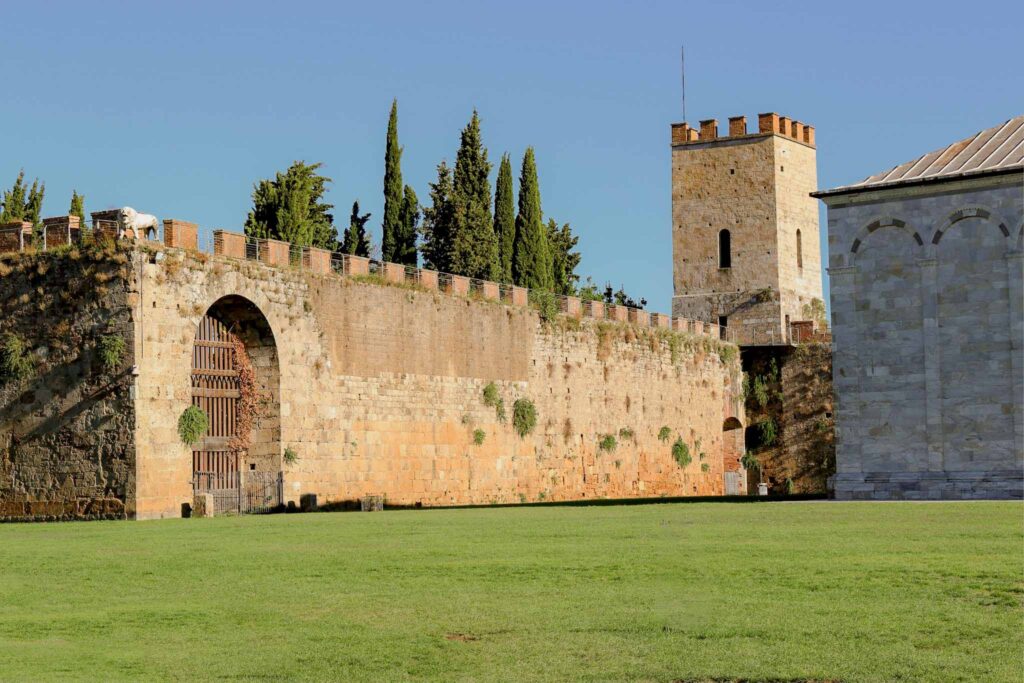
Walking along Pisa’s city walls is a unique way to experience the city from a different perspective. Construction began in the 12th century as a layer of protection for the city, and today they stand as one of the oldest and most intact walls in Italy. The sections that have been renovated now allow you to walk for about three kilometers. It’s a peaceful walk with stunning views across the city, making it a must-do activity when visiting.
You can enter the walls at several points, such as near the Santa Maria Tower in Piazza Duomo or Piazza delle Gondole. Keep in mind that tickets are timed, costing €5, and they can be purchased online at the official website. The walls are open during daytime hours, but the exact timing may vary depending on the season.
Purchase your tickets online at the official website.
Piazza dei Miracoli and the Cattedrale di Pisa
The Piazza dei Miracoli, also known as the Piazza del Duomo, is one of the most iconic squares in Pisa. This UNESCO World Heritage Site is home to several remarkable buildings, including the Leaning Tower, the Cattedrale di Pisa, and various museums. The Cattedrale di Pisa, built between 1063 to 1092, is a stunning example of Romanesque architecture, with a rich history dating back to the middle ages. Visitors can walk around the 22-acre complex and explore the grounds, where you’ll find the baptistry and the tower. If you’re interested in seeing the Tower of Pisa from the ground, you can do so without a ticket, but you’ll need a pass for the cathedral. Tickets for the other buildings in the complex can be bought at the main ticket office, though it can get quite crowded during the high season.
Apart from the Piazza dei Miracoli, you can visit the nearby Piazza dei Cavalieri, which has strong ties to the University and boasts beautiful architecture. Piazza XX Settembre is another charming spot near the river, with its arched building and Logge di Banchi. Whether you want to enjoy the view of the Leaning Tower or explore the history of the area, this is definitely one of the must-see squares in Pisa.
Please note: A dress code is required to enter the Cathedral. Men and women are not allowed to wear shorts or tank tops. Shoulders and legs must be covered, so it’s a good idea to bring a scarf if the weather is hot.
Hidden Italian Gems
Pisa is home to many hidden gems that are often overlooked. One of the most fascinating spots is the University of Pisa, where you can explore the oldest university botanic garden in the world, which has been around since the 16th century. As you stroll through the garden, you’ll find a peaceful bamboo forest, stunning water lilies, and even a fan tree that has been growing there since 1783. Another must-see is the Keith Haring House, where the famous American artist transformed his home with vibrant doodles, creating a brightly colored mural on the exterior.
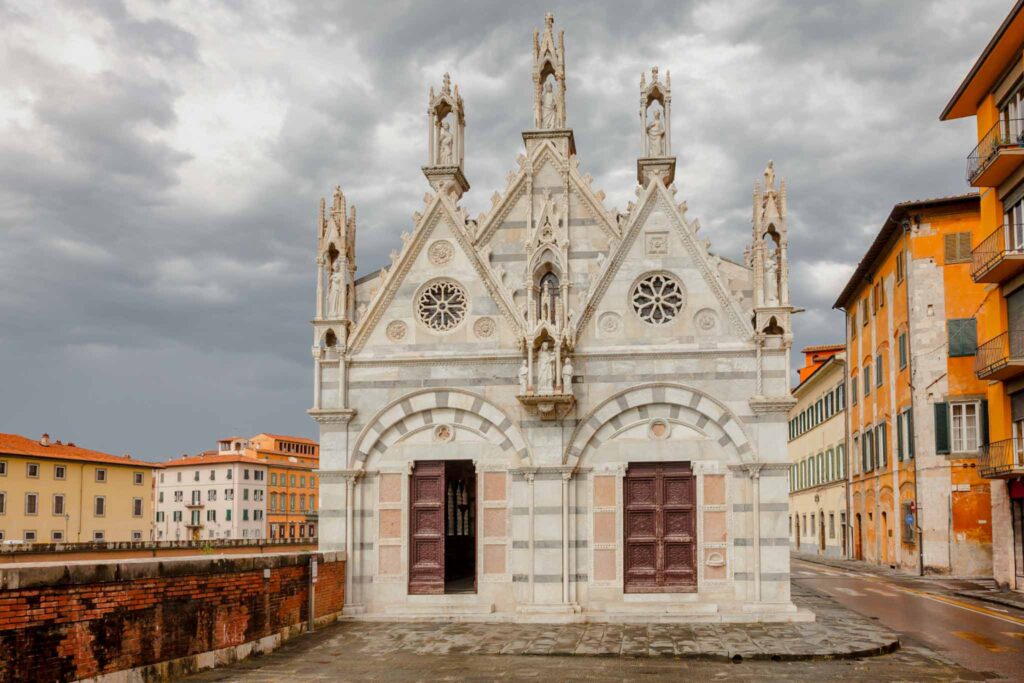
If you follow the Arno River, you’ll also come across Palazzo Blu, or Blue Palace, which houses an incredible art gallery filled with artwork and furniture from the 14th to 20th centuries. For a quiet retreat, visit the Church of San Francesco, a 13th century church with a beautiful marble facade and a mix of Romanesque and Italian Gothic architectural styles that are sure to captivate anyone with an appreciation for history.
Birthplace of Galileo
Pisa is not just famous for the Leaning Tower, but also as the birthplace of Galileo Galilei, born on 15 February 1564. The building where he was born is marked with a plaque on Via Giuseppe Giusti, offering visitors a chance to reflect on the life of the Father of Modern Science. Galileo made groundbreaking discoveries such as observing mountains on the moon, the rings of Saturn, and studying gravity, free fall, speed, and velocity. He is also known for proving that the Earth rotates around the sun, a theory that was controversial at the time and went against the Catholic Church.
Galileo’s legacy continues to be honored in Pisa and beyond. His early education took place at the University of Pisa, where he was initially expected to study medicine, but he instead found his passion for mathematics and science. His work led to a lifelong struggle with finances, but also to major inventions. For a deeper dive into his life, head to the Museo Galileo in Florence, which houses his scientific instruments and features a family-friendly interactive space. Don’t miss the beautiful street art by Brazilian street artist Kobra, which depicts Galileo using the Tower of Pisa as a telescope. You can find this mural on Via Silvio Pellico, near the Keith Haring mural.
Prestigious College Town
Pisa is not just about history and sightseeing; it’s also a lively college town with some of the most prestigious institutions in the world. The University of Pisa is one of the oldest and most famous schools globally, renowned for its focus on math and science. It has produced brilliant minds like Leonardo Fibonacci and Galileo Galilei, although Galileo’s early career in Pisa was financially challenging, leading him to take a more lucrative teaching job in Padua.
The charm of Pisa is enhanced by the presence of the Scuola Normale Superiore, founded by Napoleon, situated in the picturesque Piazza dei Cavalieri (Knight’s Square). This square, often bustling with students, offers a great place to relax and absorb the lively atmosphere. With a blend of academic heritage and a youthful vibe, Pisa’s universities make it a perfect stop for those looking to experience both history and modern student life.
Borgo Stretto and Corso Italia
If you want to experience the local culture of Pisa, take a leisurely stroll down Borgo Stretto and Corso Italia. These charming streets are full of shops selling fashion items, souvenirs, and more. You’ll also find cozy restaurants, quaint cafes, and delicious bakeries and bars that capture the essence of this lively town. Starting from the Piazza del Duomo, it’s just a 10-minute walk to Borgo Stretto, where you can explore hidden gems. As you walk, you’ll pass through Piazza dei Cavalieri, where you can see the statue of Cosimo I de Medici, the Grand Duke of Tuscany. The walk also brings you to Piazza Garibaldi and the picturesque Ponte di Mezzo, which crosses the Arno River. Make sure to stop at Logge dei Banchi, where there’s a weekend market, and wander down Corso Italia, which takes you straight into the city center, near Pisa Central.
Sinopie Museum
The Sinopie Museum in Pisa is a treasure for art lovers and history buffs alike. It houses an incredible collection of drawings that were made as the first step before painting frescoes. These sketches were originally drawn on plaster and served as the groundwork for the grand frescoes in the Camposanto. When these frescoes were damaged, the drawings beneath were uncovered during restoration work. These early sketches are rare and highly precious, as few drawings from the Middle Ages survive on paper or parchment. The museum is home to some of the most important works of the 14th Century and 15th Century, making it a must-see for anyone interested in art and history.
If you love exploring the layers of art history, this museum offers a unique glimpse into the creation of these masterpieces. It’s not just a visit to see beautiful art, but a chance to understand the delicate restoration process that revealed these hidden drawings. The Sinopie Museum stands as a testament to the long and storied tradition of art in Pisa, preserving these vital pieces of history for future generations.
Opera del Duomo Museum
The Opera del Duomo Museum, opened in 1986, is a must-see if you’re exploring Pisa. This museum offers a varied collection of historical and artistic treasures, including scale models of the tower and baptistery. You can also admire the original doors of the Cathedral and sculptural busts that once decorated the niches of the Baptistry. A unique highlight is the collection of artifacts from the tomb of Henry VII of Luxembourg, who passed away in 1313. In 2014, researchers carefully opened his tomb located in Pisa Cathedral. They uncovered precious items, such as a crown, scepter, and orb, as well as a remarkable 10-foot-long piece of silk cloth.
This museum provides a glimpse into the rich history and art that surrounds Pisa, showcasing not only religious artifacts but also offering insight into the life of historical figures like King Henry VII. Whether you’re an art lover or history enthusiast, this museum gives visitors a deeper understanding of Pisa’s past and cultural significance.
5 Things You Should Know Before Visiting Pisa: Helpful Travel Tips
The Leaning Tower is very busy
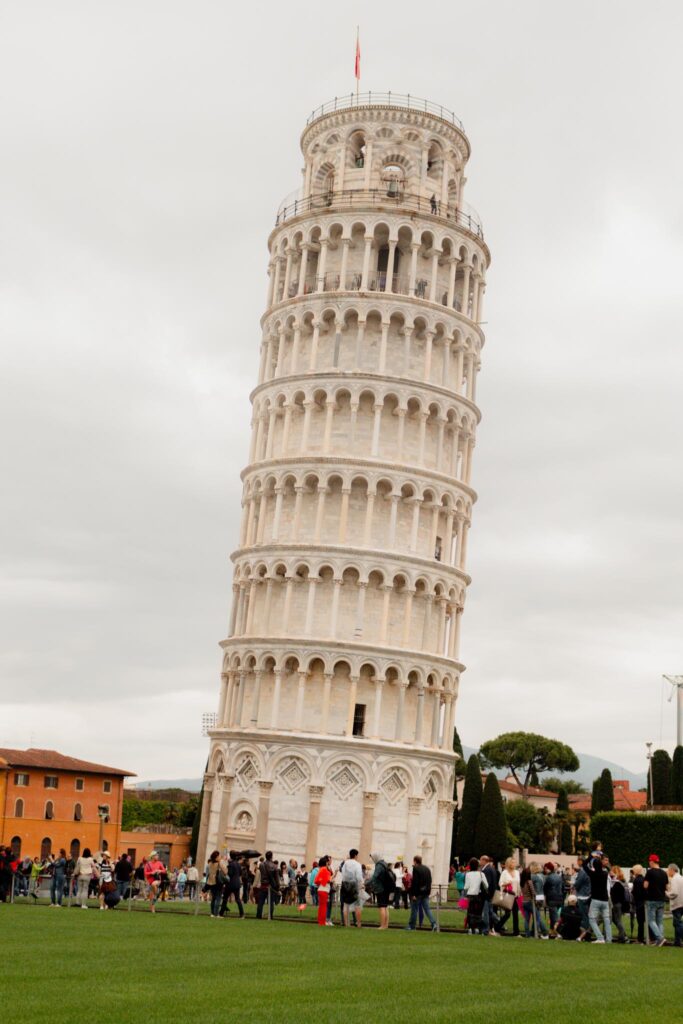
The Leaning Tower of Pisa is undoubtedly one of Italy’s most iconic landmarks, and it attracts touristy chaos year-round. People travel from all over to capture the perfect photo with this famous structure. If you plan to visit, be ready for a crowd, especially during peak seasons when day trips bring in many tourists. To avoid the busiest times, try to arrive early in the morning or just before closing. The opening hours vary depending on the season, so it’s always best to check the website before you go. Remember, while you can admire the exterior of the tower at any time, access to the inside for climbing requires timed reservations. Be sure to buy your tickets in advance if you want to climb.
The Walk to the Tower: It’s a Longer Stroll Than You Think!

If you’re planning to visit the Leaning Tower of Pisa, be ready for a bit of a walk. The Pisa train station and the tower are located on opposite sides of the river, so it takes about 25 – 30 minutes to walk from one to the other. While the stroll is pleasant and offers a chance to experience the town, it can feel longer than expected, especially if you’re in a hurry to see the tower.
If walking isn’t ideal, there are other options. A taxi ride will get you there in about 8 – 9 minutes for around €9 – 10. Alternatively, a bus can bring you closer, but you’ll still need to walk about five more minutes to reach the tower’s base. Regardless of the mode of transport, the journey offers a glimpse of Pisa beyond the famous landmark, adding to your overall experience.
Avoid Tourist Traps
When you visit the Leaning Tower of Pisa, it’s easy to get caught up in the touristy area around it, where restaurants and shops often become tourist traps. Instead, take a few minutes to wander away from the main area to find a much more authentic atmosphere. The food and overall experience will be far better when you head toward the city center, just a short walk from the tower. Spending time in this less crowded part of the city allows you to truly enjoy the local vibe, rather than just the typical surrounding area that draws in most visitors. Visit the less explored parts of the city and you’ll find the experience much better and more rewarding.
Best Time to Visit Pisa?
The best time to visit Pisa is during the shoulder seasons, which include spring (April and May) and autumn (September and October). During these months, you’ll experience pleasant weather and much fewer crowds. We’ve visited in both April, May, and September, and while the days were sometimes a little gloomy, the atmosphere was much more relaxed than in peak tourist season.
On the other hand, the summer months can be overwhelming, with crowded streets and long lines at the most popular attractions. You may have to push through throngs of people, but on the upside, you’ll also find sunny days perfect for exploring the city. If you prefer a quieter experience, winter offers minimal crowds, although cold days and some rain may not make it the most comfortable option.
Book this small group tour with an expert guide of Pisa’s main attractions.
How many days in Pisa is enough?
If you’re planning to visit Pisa, 1 full day should be enough to see the Leaning Tower and explore the rest of the city. However, if you’d like to take advantage of affordable rates in Pisa, you might consider staying for two to four days and using it as a base for day trips to nearby spots like Lucca, Cinque Terre, or the Chianti region. This would give you a more relaxed experience and allow you to explore more of the surrounding areas. Adjust your itinerary accordingly based on how much time you’d like to spend in Pisa and beyond.
FAQs
1. Is Pisa or Florence Nicer?
Pisa and Florence offer very different experiences. Pisa is a smaller, more laid-back city, ideal for a short visit, while Florence is a bustling cultural hub full of iconic historical sights. If your itinerary allows, we recommend visiting both, as they complement each other beautifully. However, Florence deserves more of your time due to its wealth of museums, art galleries, and architectural landmarks. Pisa is best enjoyed as a half-day or full-day trip from Florence.
2. Is It Worth It to Go Up the Leaning Tower of Pisa?
Yes, climbing the Leaning Tower of Pisa is absolutely worth it! The ascent might be a bit of a workout, as there’s no elevator, but the experience of climbing one of the world’s most famous landmarks and enjoying the panoramic views from the top makes it unforgettable. Be sure to book your tickets in advance to avoid long lines, especially during peak travel seasons.
3, Why Is Pisa So Popular?
Pisa is best known for its iconic Leaning Tower, which attracts millions of visitors each year. Beyond the tower, Pisa has a rich Roman and medieval history, visible in its architecture and monuments. The Piazza dei Miracoli, which houses the Leaning Tower, Cathedral, Baptistery, and Camposanto, is a UNESCO World Heritage Site that adds to the city’s allure.
Is Pisa a Walkable City?
Yes, Pisa is incredibly walkable, especially within the historic center. The main attractions, like the Leaning Tower and Piazza dei Miracoli, are located close to each other, making it easy to explore the city on foot. Strolling along the Arno River or through charming streets lined with cafes and shops is a delightful way to spend your time.
Which City Is Better for Art Lovers: Pisa or Florence?
Florence is undoubtedly the better choice for art lovers. The city is home to world-class museums like the Uffizi Gallery and the Accademia Gallery, which house masterpieces by Michelangelo, Botticelli, and da Vinci. Pisa has its artistic highlights, particularly within the Cathedral and Baptistery, but Florence is a mecca for art enthusiasts.
How Far Is Pisa from Florence, and How Can I Travel Between Them?
Pisa is approximately 85 kilometers (53 miles) from Florence, and the journey takes about an hour by train. Regular trains run between the two cities, making it easy and affordable to travel. You can also drive or take a guided tour if you prefer more flexibility.
What Else Is There to See in Pisa Besides the Leaning Tower?
While the Leaning Tower is the star attraction, Pisa has plenty of other sights to explore:
Pisa Cathedral (Duomo): A stunning example of Romanesque architecture.
Baptistery: Known for its unique acoustics and elegant design.
Camposanto Monumentale: A historic cemetery with remarkable frescoes.
Arno River Walk: A scenic stroll along the river, offering a different perspective of the city.
Museo delle Sinopie: A museum showcasing the preparatory drawings for the Camposanto frescoes.
How Much Time Should I Spend in Pisa?
A half-day is sufficient to see Pisa’s major attractions, particularly if your focus is on the Piazza dei Miracoli. However, if you want to explore the city more thoroughly, including its museums and riverside areas, consider staying for a full day
What Are the Best Times to Visit Pisa and Florence?
The best times to visit both Pisa and Florence are during the spring (April to June) and fall (September to October). The weather is pleasant, and the crowds are more manageable compared to the summer months. If you’re visiting during peak season, plan your visits to major attractions early in the morning or late in the afternoon to avoid large crowds.
Are There Any Hidden Gems in Pisa?
Yes, Pisa has several hidden gems that many visitors overlook, such as:
San Matteo National Museum: A lesser-known museum with an impressive collection of medieval art.
Keith Haring Mural – Tuttomondo: A colorful and vibrant mural created by the famous artist in 1989.
Palazzo Blu: A riverside palace hosting temporary art exhibitions and cultural events.
Which City Is Better for Food: Pisa or Florence?
Both cities offer exceptional food, but Florence has a more diverse culinary scene, with options ranging from traditional Tuscan trattorias to Michelin-starred restaurants. Pisa specializes in local delicacies like cecina (a chickpea flatbread) and torta co’ bischeri (a traditional sweet tart). Be sure to try regional wines and olive oils in both cities.
Can I See Both Pisa and Florence in One Day?
While it’s possible to see both cities in a single day, it’s not ideal if you want to fully experience their highlights. A better approach would be to dedicate a day to each city or use Florence as your base and take a half-day trip to Pisa. This way, you can explore without feeling rushed.