There’s something magical about standing at Pisa Centrale station early in the morning, clutching your train tickets while the sun barely peeks over the Tuscan horizon. I remember my first journey to Cinque Terre—the anticipation mixed with that peculiar travel anxiety about whether one day would truly suffice. Having made this trip twice now, once solo and another time navigating the adventure with kids in tow, I’ve learned that planning makes all the difference between a frantic rush and a memorable experience.
The Italian Riviera beckons with its promise of colored houses perched impossibly on steep mountains, where panoramic views stretch endlessly across the Mediterranean Sea. These five iconic towns—Monterosso, Vernazza, Corniglia, Manarola, and Riomaggiore—form what UNESCO recognizes as a World Heritage Site, and honestly, the recognition feels deserved when you witness those vibrant buildings cascading down cliffs toward turquoise waters.
What to Know About Cinque Terre
Table of Contents
ToggleBefore diving into logistics and itineraries, understanding what makes Cinque Terre special helps frame realistic expectations. This isn’t just another coastal destination—it’s a national park where fishing villages have maintained their authentic charm despite receiving millions of visitors per year. The coastline, surrounded by hillsides dotted with vineyards and olive groves, creates absolutely breathtaking scenery that somehow manages to exceed even the most optimistic postcard expectations.
Each village possesses its own personality. Monterosso sprawls as the largest, offering that only sandy beach across all five towns. Vernazza captures hearts with its medieval Doria Castle and narrow streets that wind toward a picture-perfect harbor. Corniglia, perched high and unique as the only village not directly on the sea, rewards those 382 steps up the Lardarina staircase with breathtaking panoramic views and exceptional local wine called Sciacchetrà. Manarola, the oldest village, presents that iconic postcard image everyone seeks—colorful houses stacked on cliffs with fishing heritage still palpable in every corner. Finally, Riomaggiore, the southernmost village, welcomes visitors with steep terraced vineyards, vibrant nightlife, and the famous Lover’s Lane hiking trail.
Is One Day Enough for Cinque Terre?
This question haunted me during planning, and I’ll be honest—there’s no perfect answer. Yes, one day is definitely enough time to experience all five towns and even squeeze in some hiking. I’ve managed it twice on separate day trips, and both times felt like I had plenty of time to see everything that mattered most. However, calling it the “best way” would be stretching truth.
Here’s my realistic take: not everyone possesses the budget or schedule flexibility for spending multiple days in this expensive coastal region. While it won’t qualify as slow travel, and you’ll certainly feel some pressure moving between villages, it’s still absolutely possible to make the best of your day whether you choose to see just a few villages or attempt all five. The experience feels rushed at moments, especially when trains get crowded or you’re debating between that third gelato and catching your next connection.
If circumstances allow spending two days instead, that second day transforms everything. You could dedicate the first day to hiking trails and exploring towns, then use day two for relaxing at the beach, booking a boat ride along the coast, or visiting nearby Porto Venere. But for those of us working with limited vacation time, one well-planned day from Pisa delivers genuine value, creating memories that justify the early wake-up call and sore feet.
How to Get from Pisa to Cinque Terre
The journey from Pisa to these coastal villages is surprisingly straightforward, though navigating Italian train systems can feel intimidating initially. Located 100km north along the Italian Riviera, Cinque Terre becomes accessible primarily through La Spezia, which serves as the gateway requiring one simple transfer.
From Pisa Centrale, trains to La Spezia depart regularly throughout the day, running approximately every 30-60 minutes. The journey takes between 48 minutes to 1 hour 30 minutes one-way depending on which route you book and how many stops your selected train makes. I highly recommend downloading the Trenitalia app before your trip—it’s become my most convenient way of booking train tickets across Italy, allowing you to purchase everything online and avoid those automated ticket machines that seem designed to confuse tourists.
Tickets cost between €8 and €15 each way, with faster trains usually carrying more expensive fares. Once you arrive at La Spezia Centrale, you’ll switch to the Cinque Terre Express train system, a completely different network requiring separate train tickets specifically for accessing these coastal towns. The journey between La Spezia and the villages runs frequently, with trains departing every few minutes and taking only 10 minutes to reach even the farthest destinations.
When booking through ItaliaRail or the Trenitalia website, I experienced zero complaints—both platforms displayed clear time slots and made the process intuitive even for someone whose Italian extends barely beyond ordering espresso. The app particularly shines when adjusting plans spontaneously, which happened during my second visit when an accident delayed our train for more than 30 minutes.
Driving presents another option, though I’d recommend against it unless you’re traveling with kids and need that extra flexibility with schedules. Parking in Cinque Terre proves challenging and expensive—similar to the situation in Venice where you park far away and take public transportation to actually reach your destination. Why add that stress and energy drain when trains offer such efficient connectivity the whole time?
If you’re determined to drive, perhaps because you’ve got family circumstances like I did on my September trip with two small kids, here’s what works: arrive at La Spezia around 7:30 or 8:00 a.m. to secure parking quickly. We chose to park directly underneath La Spezia Centrale train station, the most convenient option allowing easy access to trains for traveling between villages. However, even arriving around 10:00 AM, we had to stay in queue at the ParkiParking for about 15 minutes because it was already full. Critical tip: do not leave valuables—wallets, camera gear, anything precious—visible in your car.
For those wanting to maximize their day trip without worrying about transportation, itinerary planning, or parking logistics, booking a guided tour from Pisa to Cinque Terre handles all those details. These tours include transportation, ferry or train tickets, and guide you through the best spots. It’s an excellent option for a hassle-free experience, though you sacrifice some spontaneity and flexibility that independent travel provides.
Pisa Airport to Cinque Terre
Arriving from the Pisa airport and wanting to go directly to Cinque Terre? You’ll need to take the airport shuttle called Pisa Mover, which takes you directly from the airport to Pisa Centrale train station. The cost is €5 euros one-way, and it only takes 5 minutes to get from the airport terminal to the station. This shuttle operates from 6am to midnight every day, so timing works out for most flight schedules.
Once you arrive at Pisa Centrale, you can immediately board a train to La Spezia without leaving the station. If you have luggage you need to store for your day trip to Cinque Terre, drop it off at the luggage storage facility in the Pisa train station. It costs only a few euros and is 100% worth it—I’ve done this before, and it’s a safe, secure way to not have to worry about your luggage all day.
Do not take suitcases with you to Cinque Terre, as you will not have anywhere to leave them once you’re hopping between villages. Take only a backpack with the essentials—water bottle, sunscreen, hat, camera, maybe a light jacket since Mediterranean weather can surprise you.
My tip: try to catch an earlier train and arrive before 9am to beat the crowds that descend upon these villages by mid-morning. The difference in atmosphere between 8:30 and 11:00 is dramatic. Also, DO NOT drive to Cinque Terre for your day trip—it’s much faster and more convenient to take the train, and you’ll actually enjoy the journey watching Tuscan villages roll past your window.
The Cinque Terre Card
When planning your day trip from Pisa to Cinque Terre, I highly recommend getting the Cinque Terre Card, which serves as your all-access pass to trains and hiking paths around the area, making everything so much easier for getting around. There are two types of passes available, and choosing the right one depends on your planned activities.
The Cinque Terre Train Card provides full access to trains for the entire day plus the hiking trails, costing €19.50 per day for adults. The Cinque Terre Trekking Card offers access to hiking trails only, priced at €7.50 per day for adults. I recommend buying the first option, the train card, so you have access to both the hiking trails and unlimited train rides throughout your day.
You can either book the train card online in advance or purchase it in-person at the La Spezia train station when you arrive. I strongly suggest booking your Cinque Terre card online in order to avoid the long lines at the train station. Trust me on this—it gets really busy during the high season, and you’ll be grateful when you can just hop on trains without having to wait in line for tickets every single time you want to move between villages.
Trains run a few times every hour in each town, so you’ll have plenty of opportunities to catch trains throughout the day. The journey time between each of the towns is only about 4-6 minutes since they’re all very close to each other. You can check the timetable for 2025 Cinque Terre Express trains online before your trip to plan your rough schedule.
One critical warning from my past trips: during high season, trains can get very crowded. I’ve had to wait anywhere from 30 minutes up to an hour just to get on a train because they were too packed with tourists and locals. Make sure to add extra time to wait for trains if you’re visiting during the warmer months between May and September. This crowding situation has gotten worse as Cinque Terre’s popularity has exploded, unfortunately becoming extremely over-crowded during peak summer months.
Itinerary for Your Pisa to Cinque Terre Day Trip
The five charming fishing villages that make up Cinque Terre each deserve attention, but logistics require making strategic choices about how you’ll spend your limited hours. My itinerary includes a little bit of everything—hiking, site-seeing, and even swimming if you’re up for it. I prefer to start in Monterosso al Mare, the furthest town from La Spezia, then make my way back town by town to end in Riomaggiore. You can choose to start and end wherever you want, but I think this route makes the most sense for maximizing daylight and energy levels.
How you spend your day really depends on what you like to do and your physical fitness level. If you want to skip the hiking portions, I’d recommend spending more time in Monterosso al Mare to relax at that beautiful beach for an hour or two, or plan to go swimming in the harbor at Manarola where locals jump off rocks into crystal-clear water. If you don’t want to go swimming or hiking at all, spend more time wandering the streets of each village and make time for a long lunch or dinner at a restaurant with a view—there’s plenty to do in Cinque Terre either way.
When I traveled with two small kids during that super hot day in mid-September, we realized that while seeing all five villages in one day remained technically possible, it wasn’t a realistic option for our family situation. We prioritized seeing Riomaggiore and Manarola to ensure we had enough time for exploring at a reasonable pace, enjoying lunch without rushing, and commuting back to Pisa before the kids’ patience evaporated completely.
For photographers or those adding Pisa into the mix, you’ll need to make calculated sacrifices. I felt obligated during one trip to make a quick stop at the Leaning Tower of Pisa since we were so close—it’s literally on the way. But I quickly realized that factoring in a stop at Pisa meant giving up some villages at Cinque Terre. While squeezing in all 5 villages into one day is possible with military precision, adding Pisa with all 5 villages? Not possible in a day trip unless you enjoy sprinting through train stations and never sitting down.
I ultimately decided on Manarola and Vernazza as my must-sees because these villages offered my favorite photography viewpoints. After all, my main goal was to photograph those iconic, postcard-perfect pictures that had drawn me to Cinque Terre in the first place.
Monterosso al Mare
Once you arrive in La Spezia, hop on the Cinque Terre Express train to Monterosso al Mare, the northernmost town of the five villages. It takes about 25 minutes to get there from La Spezia, and you’ll emerge from the tunnel into this split town with two distinct sections—the old town and the new town connected by a tunnel.
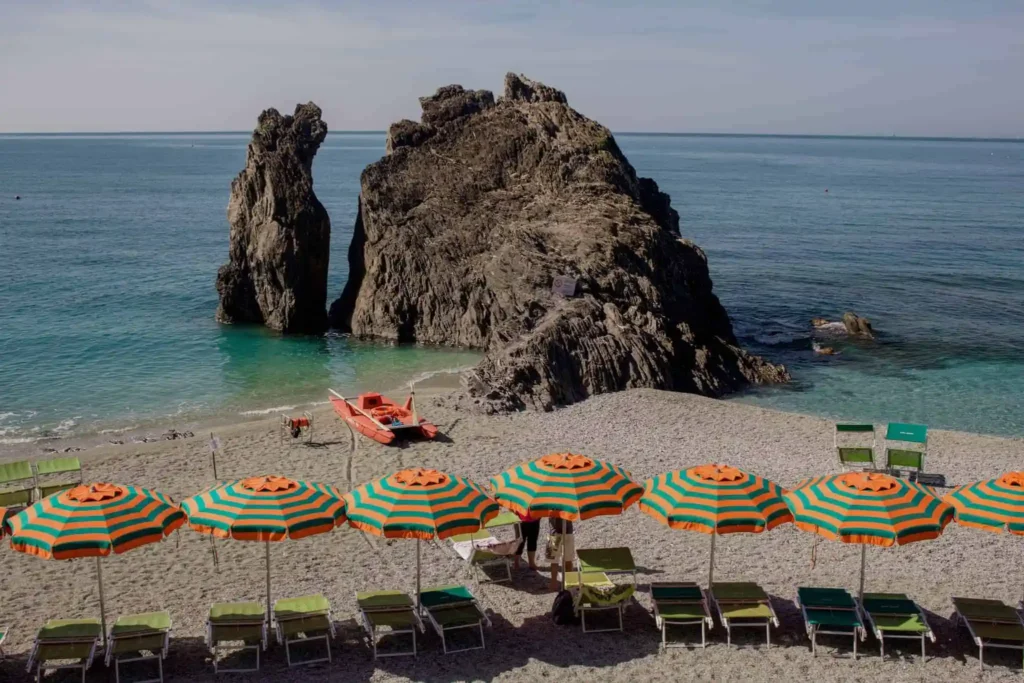
The train station sits in the new town, positioning you perfectly to walk to the only sandy beach in all of Cinque Terre. It’s a stunning beach with those classic Italian striped umbrellas in iconic teal and orange, offering endless views of the Mediterranean stretching toward the horizon. If you have time in your schedule, this is the perfect spot to relax for an hour and go for a little swim, especially during the warmer months when the water temperature makes it irresistible.
Make your way to the old town via the tunnel to visit the Aurora tower, discover the ancient castle ruins, and walk through the small streets that retain authentic character despite tourist presence. The charming old town features colorful buildings climbing hillsides, the historic Church of San Giovanni Battista with its distinctive striped facade, and that impressive statue of Neptune that watches over the waterfront.
From here, you face a choice: either hike to Vernazza along the coastal trail or walk back to the train station and take the train. The hike covers 3.3km and takes around 1.5 hours to complete, winding through terraced vineyards and offering spectacular viewpoints. Make sure to have your Cinque Terre Card on hand, as you’ll need to show your pass to use the trail at the checkpoint.
For food, stop at Il Frantoio for their famous focaccia—perfect as a beach snack or early afternoon lunch that fuels you without weighing you down. I’d set aside 1-2 hours for Monterosso if you’re planning relaxation under those umbrellas, less if you’re treating it as a quick photo stop before moving onward.
Vernazza
Vernazza is by far one of the most beautiful towns in Cinque Terre, and that’s not hyperbole—the small harbor surrounded by vibrant colored buildings with endless sea views creates exactly the Cinque Terre you see in all those postcard-worthy photos that convince people to book flights to Italy.
The best views of Vernazza require effort, located up the hill on the trail that leads from or to Monterosso. If you hike to Vernazza, you’ll naturally encounter these stunning views along the trail as your reward for the climb. If you take the train instead, it’s definitely worth it to hike up the hills after arriving for those panoramic views. Just google “Vernazza viewpoint trail” and walk up to the starting point for the best photo spots—you’ll know you’ve found it when you can frame the entire village with the harbor in your shot.
Take your time to walk around the quaint streets and explore this town, which remains one of my favorite places to wander in Cinque Terre. Many visitors consider Vernazza the most picturesque village, and the medieval Doria Castle plus the Church of Santa Margherita di Antiochia, which offers beautiful sea views from its position, reinforce that reputation. The charming, narrow streets invite exploration, revealing hidden corners and local shops that feel authentic rather than tourist-trap commercial.
You might start feeling hungry around this point in your itinerary. I recommend stopping at Batti Batti’ Foccaceria for a slice of delicious focaccia pizza—you’ll need that fuel for the hike from Vernazza to Corniglia if you’re continuing on foot. Other excellent dining options include Trattoria da Sandro, a charming eatery that focuses on seafood and local specialties and is known for friendly service that makes you feel like a regular even on your first visit. Il Pirata delle Cinque Terre offers a variety of seafood dishes and is well-loved for its vibrant atmosphere. Ristorante Belforte, located on the cliffs, serves stunning views alongside a menu of fresh seafood.
One of the popular hiking trails is the Blue Trail connecting Vernazza to Monterosso, stretching about two miles long and taking around one hour and 50 minutes to hike at a moderate pace. During my December visit, we arrived in Vernazza around 11:20am and spent roughly 3 hours exploring. Even in winter months, you’ll have a great time—we got lucky with blue skies, warmer weather, and fewer crowds since traveling in the off-season is always a smart idea.
Our first activity involved hiking up to a viewpoint that produced beautiful scenery. Afterwards, we grabbed delicious lunch at La Botega del Fritto—if you enjoy fish and chips, this is the place to go. We ate down by the harbor and sat against that red building visible in the middle of classic Vernazza photos. After lunch, we hiked up to our second and final viewpoint. The incline wasn’t too bad, but having such breathtaking scenery all around certainly helped motivate tired legs.
Quick tip: there’s a public tap in the main square near the beach where you can fill up your water bottle. Make sure to have a full water bottle before starting the hike to Corniglia, as it gets really hot during summer months with little shade. All taps that say “Aqua Potabile” offer potable water safe for drinking.
Corniglia
The hike from Vernazza to Corniglia ranks among my favorite parts of any day trip from Pisa to Cinque Terre. The path winds through vineyards and olive groves while offering endless views of the Mediterranean Sea that make you stop walking just to stare. You can even stop at a little shop along the way to get lemon and orange granita—hot tip: it’s delicious and refreshing, exactly what you need midway through the trek.
The trail covers 3.5km and takes about 1.5 hours to complete from Vernazza to Corniglia, though you could definitely do it faster if you’re in good shape and not stopping for photos every thirty seconds like I do. We like to take our time to enjoy the views rather than treating it like a race.
Before heading out on the trail, make sure to fill up your water bottle or restock at a shop in Vernazza. Summer months bring intense heat with minimal shade along portions of the trail. If you decide to take the train from Vernazza to Corniglia instead of hiking, be prepared: you’ll have to climb up over 300 steps from the station to actually reach the village since it’s perched on a hill and not easily accessible from sea level. This is why I think it’s actually best to hike there instead—you’re climbing either way, so you might as well enjoy the scenic trail rather than just stairs.
Corniglia stands unique as the only village not directly on the sea, perched on a cliff and surrounded by vineyards that produce exceptional wine. The village features narrow streets, the Church of San Pietro, and that scenic Lardarina staircase with its 382 steps leading down to the train station. It’s known for local wine called Sciacchetrà, which you should absolutely savor while enjoying the panoramic vistas from the village center.
This is the smallest of the five towns, worth a quick walk around before heading to the next destination unless you’re a wine enthusiast who wants to spend more time at tasting rooms. Where to eat in Corniglia: Ristorante Il Gabbiano offers a mix of traditional Ligurian cuisine and fresh seafood with beautiful sea views. Alberto Gelateria serves as the perfect gelato shop for a sweet treat with a variety of flavors—an excellent stop after a meal or hike. Trattoria da Billy is known for homemade pasta and seafood, offering a cozy atmosphere with outdoor seating that captures afternoon breezes.
Manarola
Manarola possesses one of the best spots for photos in all of Cinque Terre—head to the Punta Bonfiglio viewpoint for the most iconic view you’ve seen plastered across Instagram and travel magazines. This is where you’ll want to position yourself to watch the sunset as well, assuming your schedule allows staying that late.
After taking in the view from above, make your way down to the water for some people watching or swimming. During summer months, there are always people swimming in the sea and jumping off rocks here—it’s become a great spot for that particular brand of adventure. For dinner, I recommend Trattoria da Billy for delicious food paired with beautiful sea views that justify the slightly higher prices.
This oldest village of Cinque Terre delivers stunning sunsets and picturesque scenery characterized by colorful houses perched on cliffs above the water. The village is famous for scenic walking trails, including Lover’s Lane that connects it to Riomaggiore, though this trail has been closed for repairs during various periods—check current status before counting on it. Manarola is also known for its fishing heritage, still evident in the boats moored in the small harbor and the seafood-focused restaurants.
When I realized how simple and effortless it was to reach that famous viewpoint, adding Manarola to my itinerary became a no-brainer. Watching the sunset provided the perfect end to our memorable day—literally, we sat and watched for almost 2 hours, which sounds excessive but felt so peaceful and relaxing in the moment. From a photography perspective, I loved this because I got to photograph Manarola during the day, during sunset, and at night during blue hour, capturing three completely different moods of the same scene.
During my family trip, we initially planned to hike from Riomaggiore to Manarola since these two villages sit closest to each other. But it was such a hot day that we decided to take the train instead, which turned out to be the right call given the kids’ energy levels. Alternatively, you can book ferry rides (weather-dependent) in Cinque Terre that connect every village—I’ve heard it’s an even more scenic experience than the train, offering perspectives from the water you can’t get any other way.
Manarola was on my bucket list for years before finally visiting. It delivers perfect views worthy of framing, and it’s a great place to grab something to eat while soaking in the atmosphere. As the day passed during our visit, we grew ready for lunch and went to try getting a table at Nessun Dorma, which has fantastic reviews for its pasta-making classes and bruschettas. Unfortunately, they were still closed when we arrived, and the kids started to act restless, so we went to the nearest best option to grab food instead.
We still ended up being in a queue for 15 minutes, which proved manageable with snacks for the kids. The menu offers many seafood options—I had my first (yes, genuinely my first) seafood pasta here in Manarola. I cannot compare it to other places since I lacked reference points, but it tasted great to this novice. I also tried Aperol Spritz here, which was terrific and became my drink of choice for the rest of the Italy trip.
After lunch, we stopped by the 5 Terre Gelateria for delicious refreshments on that hot day. I did not know what to expect from the place, but this gelato undoubtedly exceeded my expectations—creamy, intensely flavored, and worth the small splurge.
Other dining recommendations: Nessun Dorma (if you can get in) is famous for stunning views and excellent seafood, perfect for a casual meal or glass of wine at sunset. Pizzeria da Antonio serves as an excellent spot for pizza lovers, serving a variety of delicious pizzas in a casual setting that doesn’t require reservations.
The hiking experience around Manarola deserves special mention. Cinque Terre is connected by both train and walking trails that weave throughout the towns high above the sea. While we didn’t intend to spend lots of time hiking during one trip, we didn’t mind the cardio workout that would lead us to where the best photos could be taken. The entrance to trails wasn’t particularly well-marked—we found one almost by accident as we walked up a street that looked like it might turn into a dead end at any point.
Instead, the road gave way to a beautiful path lined with big trees and, at times, steep staircases that proved a little challenging under the hot sun. The uphill climb stayed pretty constant, so with a couple of breaks to “take pictures” (read: catch our breath), it only took about fifteen minutes before we were walking single file toward a gorgeous spot that provided the exact image I had in my mind when I pictured Cinque Terre before arriving.
In addition to the famous rainbow of houses and shining sea surrounding them, we marveled at the many grape vines planted into the steep hillside—perfect for irrigation, we learned later in our trip, though slightly precarious when you look down at them from elevated stopping points. Even higher above us, we saw how the path would wind through the highest parts of the hills, and we wished we had allocated more time so we could have made that complete climb to the top.
Manarola has lots of great paths to explore beyond the main viewpoint. We spent a good amount of time walking many of them, wandering by shops and restaurants, past a small park area, down beautiful streets lined with cheerfully painted homes, eventually winding up at another lovely viewing point where we joined dozens of other travelers taking photos of the same scene from slightly different angles.
We stopped at Nessun Dorma (finally getting in on our second attempt), a restaurant where we thought we might have just a quick drink before heading back to the train station. That single drink quickly escalated to a pitcher of some of the best sangria we’ve ever had—we were on vacation after all, and what’s the point of traveling if you can’t indulge occasionally?
The trips we take are often hectic, meticulously planned, and packed to the brim with things to do because we have a limited amount of time each year to explore the world. We don’t mind filling every waking moment with new experiences and sights. Our afternoon in Manarola represented a bit of departure from our usual approach to days on the road. We sat for almost two hours sipping our sangria, gazing at the beautiful coast, listening to waves lap against the rocks below us. We acknowledged that we weren’t sure when we’d make it back to this exact spot, which made us appreciate how nice it was to just live in that particular moment without worrying about the next destination.
We felt a bit wistful when we finally paid our bill and headed off to the train station, wishing we had a little while longer to enjoy that beautiful place. As it turned out, we did have some more time—there was an accident that delayed our train for more than 30 minutes, which actually gave us extra time to enjoy the view of the Ligurian Sea from the crowded train platform. That didn’t really bother us much—we could have been sitting in front of our laptops back home instead.
Riomaggiore
Riomaggiore serves as the fifth and final stop on your day trip to Cinque Terre, positioned as the southernmost village. This is one of the larger towns, so take your time to wander through the streets for a while and visit some of the local shops that sell everything from limoncello to hand-painted ceramics.
For the best view of the city, make your way down to the harbor and walk along the rocks until you secure a nice full view of Riomaggiore. Take some time to enjoy the breathtaking views of the city all lit up during sunset—the golden light hitting those vibrant buildings creates magic that cameras struggle to fully capture.
There are plenty of restaurants here if you want to stop somewhere for dinner. I heard from a friend that the Michelin-recommended restaurant Rio Bistrot is excellent and also has picture-perfect views of the harbor. Just make sure to call and reserve in advance, ideally a couple of days ahead, as they book up quickly during peak season.
During our family visit, we spent about one hour enjoying the beautiful sight of the colorful landscape and the harbor. Arriving in the still-early morning meant the crowd was not as heavy as it would be later that day, which made a big difference in our ability to move around freely and find good photo angles. We wandered through the charming streets of Riomaggiore for that hour, and as a little snack, grabbed some fried seafood cones since we got slightly hungry between breakfast and lunch. These are very popular in Riomaggiore, and you’ll notice many storefronts displaying them prominently to tempt passing tourists.
After our snack, we returned to the train station for our next stop. If you have more time than we did, consider taking the scenic, roughly 20-minute hiking trail to Manarola, known as the Path of Love or Via dell’Amore. This trail has been closed for safety repairs periodically, so check its current status before planning your route around it.
The village features steep terraced vineyards and vibrant buildings cascading down to the sea in layers that photographers dream about. The village showcases a charming harbor, the Church of San Giovanni Battista with its Gothic-style entrance, and scenic trails leading to other villages. It’s an excellent spot for both hiking and enjoying the local cuisine that emphasizes fresh seafood and pesto made from local basil.
Riomaggiore is also known for vibrant nightlife compared to some of the quieter villages, with bars staying open later for those who want to extend their day beyond sunset. Where to eat: A’Pie’ de Ma’ is a charming restaurant with a rustic vibe, known for fresh seafood and local wines served in a cozy atmosphere. Il Pescato Cucinato specializes in fresh seafood dishes, offering various options from the local catch that changes based on what fishermen bring in that morning. La Lampara serves as a cozy eatery known for traditional Ligurian dishes and seafood, with a lovely harbor view that makes every meal feel special.
Getting Back to Pisa from Cinque Terre
Take the Cinque Terre Express train back to La Spezia and switch trains to head back to Pisa—it’s the same route in reverse that you took in the morning. I like to wait to book my return tickets on the Trenitalia app until the end of the day when I actually know what time we’ll be finished with our day trip. This approach gives you more flexibility if you want to spend more or less time in Cinque Terre than originally planned, adapting to energy levels, weather, or discovering that one village captivates you more than expected.
The last train from La Spezia back to Pisa typically departs around 6 PM, though you should check schedules for your specific day of travel just to be sure nothing has changed. When returning to Florence instead of Pisa, you have two options depending on timing: you can leave Manarola, get off at La Spezia Centrale, and take a train directly back to Florence, or you may need to route through Pisa again using the path Manarola to La Spezia Centrale to Pisa Centrale to Firenze Santa Maria Novella.
Visiting the Leaning Tower of Pisa
For those incorporating Pisa into their Cinque Terre day trip, timing and expectations management become critical. From Florence’s Santa Maria Novella Station, the departure at 7:00am gets you to Pisa Centrale Station by arrival at 7:49am—early enough to beat crowds but not so early that you’re stumbling around in darkness.
Once you arrive in the city of Pisa, the easiest and quickest way to reach the Leaning Tower is by taxi. From Pisa Centrale, it’s a 7-8 minute scenic drive costing only 10 euros, which represents great value when you’re working on a tight schedule like we were. Since we arrived so early, we were able to witness the Leaning Tower at sunrise, which felt genuinely magical in that soft morning light.
The tower is actually located in a public square called the Field of Miracles (Piazza dei Miracoli), and it’s free to walk around the area and view the tower from all angles. Which means yes, taking those touristy photos where you pretend to hold up the tower costs exactly zero euros. You have to pay if you want to climb up the tower itself, but we didn’t care to do that anyway—the exterior experience satisfied our bucket-list requirements.
We had about 2 hours total to enjoy Pisa before catching our train toward Cinque Terre. After adding up taxi rides and train tickets (plus walking around the tower area, which was free), the total cost for two people to visit Pisa on the way to Cinque Terre came to about $40 USD. Not too bad for checking off a world-famous landmark.
Pisa represents a quick trip from Florence—just about an hour depending on which train you select and the number of stops it makes, but finding a direct train proves very easy with multiple options throughout the morning. We didn’t pre-book our tickets since that isn’t necessary for regional trains. We simply walked into the station, purchased tickets at a kiosk, found our desired train at its assigned track, picked seats, and sat back for the journey through Tuscan countryside.
I put Pisa on our itinerary for one reason, the main reason it winds up in so many travelers’ plans: I wanted to see that famous leaning tower. It has always been on my bucket list honestly, just because it’s famous and iconic. Everyone has seen it in photos. Everyone has that requisite photo where they look like they’re propping it up with their hands. I felt like a bad world traveler when I would shake my head and admit I had never been. Like the Eiffel Tower, Big Ben, or the Statue of Liberty, it just felt like something I should see in my lifetime.
When our train pulled into Pisa Centrale, we followed the winding streets in what we figured was the right direction. It’s about a 20-minute walk from the station to the tower, and the streets aren’t marked particularly well—granted, I was hoping for signs with tilted tower icons and arrows pointing the way. If you can read Italian, I’m sure it’s much easier to navigate since you can look for signs directing toward Piazza dei Miracoli. After crossing the Arno River and continuing onward, we finally paused to consult Google Maps on our phone.
As I tried to find a wifi signal, my travel companion pointed to the left and asked, “I’m guessing that might be it?” A large tower tilted noticeably to the left rose in the distance above other buildings. “As long as only one tower leans in this town, I think we’re okay without the map,” I replied. A few short blocks later, we were standing in front of one of the most famous landmarks in the world.
The Leaning Tower of Pisa is genuinely beautiful and impressive when you’re standing beneath it, craning your neck to take in the full tilt. Over the course of thirty minutes, we took lots of photos from just about every angle possible, then hung back to observe the scene unfolding. The tourists were arriving in full force even at that relatively early hour. We watched as people posed in all sorts of uncomfortable positions to secure the ultimate souvenir: that photo appearing to hold up the Leaning Tower of Pisa Lines were forming for a chance to climb the tower, growing longer with each passing minute. We smiled at each other and decided it was time to move on to our next stop for the day. Seeing the Leaning Tower of Pisa was without a doubt wonderful to cross off our bucket list, but somehow we didn’t need to spend more than an hour there. We had seen what we wanted to see, captured the photos we came for, and that felt like enough.
Interestingly, when talking with friends who had visited the tower before us, many shared that they also limited their time there to similar durations. In retrospect, there is much more to do in Pisa than just see the leaning tower, and we didn’t explore any of it during that rushed morning. With more free time available that day, we would have explored the town more thoroughly and visited the other beautiful, historic buildings that share the Piazza dei Miracoli—the cathedral, baptistery, and cemetery all deserve attention.
Many people make a full or half day out of their visit to Pisa, and given another opportunity, we would likely do the same to experience the city beyond its most famous resident. That being said, we arrived fairly early in the day—it was around 9 in the morning when we got to Pisa Centrale and just after 9:15 when we arrived at the tower itself. It was easy for us to enjoy the sights and get some photos before we were overwhelmed by the throngs of other tourists that arrived by 10am.
Also helpful: there were very few vendors peddling their wares or open shops at that early time, which made for a less hectic experience when we first arrived. If you’re thinking of visiting, seriously consider the early part of the day to avoid some of the crowds and commercial pressure. By 11:00am, we were already on another train, and after a one-hour ride plus a quick transfer at La Spezia, we found ourselves in Manarola, ready to begin the main event of our day exploring beautiful Cinque Terre.
Tips for Your Day Trip from Pisa to Cinque Terre
Make extra time for the trains, especially during high season when they get really busy and packed to uncomfortable levels. I know this from firsthand experience that still makes me slightly claustrophobic to recall. Unfortunately, Cinque Terre has become extremely over-crowded from May through September, so expect train delays and plan on extra time for getting between towns. I had a few experiences where we weren’t able to board a train because it was literally too packed with bodies, forcing us to wait for the next one, which was also crowded though marginally more accessible.
Visit during the shoulder season or low season if you want a more calm experience during your day trip to Cinque Terre. I recommend visiting sometime in between April and May or late September through October. The weather remains pleasant enough for hiking and swimming during these months, but the crushing crowds thin considerably. My December visit proved especially peaceful, though obviously swimming wasn’t an option and some restaurants operated on reduced schedules.
Be prepared with essential gear: bring a hat, sunscreen, and a water bottle you can refill at those Aqua Potabile taps scattered throughout the villages. The days get hot and the sun is harsh, especially on exposed trails without shade. You’ll be happy to have these things with you rather than paying inflated tourist prices at village shops or suffering through dehydration headaches that ruin your experience.
Bring comfortable shoes—this cannot be emphasized enough if you’re planning to hike the trails. The trails are rocky and uneven, and it’s genuinely helpful to have comfortable, supportive shoes for the day. If you want to hike in sandals, you can wear Birkenstocks or similar shoes with decent foot support. I hiked with someone wearing Chacos who did fine, though they admitted their feet felt sore by evening.
Buy your Cinque Terre card in advance to avoid the lines that snake through La Spezia station during busy periods. Buy it online so you can make the most out of your day trip from Pisa to Cinque Terre without wasting any precious time standing in queues when you could be hiking or eating gelato.
Bring a swimsuit if you’re visiting during the warmer months and want to go for a swim in the Mediterranean Sea. With the sandy beach in Monterosso and swimming opportunities in Manarola where you can jump off rocks, you should definitely take advantage and enjoy the water. There’s something deeply satisfying about cooling off in the sea between hiking segments.
Leave early—try to take the train from Pisa to La Spezia early in the morning, ideally around 7am or 8am at the latest, to beat the crowds that arrive mid-morning via tour buses. You’ll also have more time during the day and won’t feel as rushed with this extra cushion, allowing for spontaneous decisions like extending your time in a village that captivates you.
Make lunch and dinner reservations in advance if you plan to eat either meal at a proper sit-down restaurant in Cinque Terre. Do your research ahead of time and book in advance, at least a day or two before your visit. There are plenty of options to grab and go—pizza, sandwiches, focaccia, seafood cones—but for a proper dine-in experience with table service and multiple courses, you’ll need to make a reservation by calling ahead. Many of the best restaurants with views book up days in advance during peak season.
Start your day as early as possible to maximize your time exploring Cinque Terre in a day. You will avoid long parking queues if you’re driving, and you’ll dodge the worst of the crowded trains that become standing-room-only by late morning. Use the train as the most efficient way to travel between the villages—purchase that Cinque Terre Card that allows unlimited train rides between the towns for the entire day. This card can be bought at the train station in La Spezia or at stations in the villages themselves, though again, buying online in advance saves time.
Choose which villages you will visit before you arrive, especially if you’re trying to squeeze in Pisa as well. While there are five villages—Monterosso al Mare, Vernazza, Corniglia, Manarola, and Riomaggiore—realistically focus on two or three that interest you the most based on what you want to experience. If the timing allows and you’re feeling energetic, you can also visit the rest, but don’t beat yourself up if you can’t see everything.
Plan your hiking carefully if you’re up for it. Hiking between the villages is a great way to see the stunning landscapes that you simply miss when traveling by train through tunnels. The hike from Monterosso to Vernazza takes about two hours at a moderate pace with photo stops. From Vernazza to Corniglia takes about 1.5 hours through those gorgeous vineyards. Make sure to wear comfortable shoes and bring water to hydrate, especially during summer months when temperatures climb and shade becomes scarce.
Explore local cuisine without hesitation, trying local specialties such as pesto (this region invented it), fresh seafood caught that morning, and focaccia that puts American versions to shame. Each village has its charm and culinary offerings, so enjoy a meal or grab snacks in one of the towns rather than bringing packed lunches that prevent you from experiencing authentic flavors.
Check train schedules and be mindful of time throughout your day. Check those schedules multiple times to avoid long waits at platforms, though understand that trains run frequently during daylight hours. You must know the timetable to optimize your time since you have limited hours available. Schedule your time in each village with rough estimates—this helps you not miss out on your must-see spots while maintaining flexibility for spontaneous discoveries.
Which City Are You Traveling From?
The concept of a “day trip” means that you’re staying in one place but taking one day to venture to another destination and returning that same evening. The major city that you’ll be traveling from plays a big role in how easy this day trip to Cinque Terre will be, especially if you plan on adding in that fun stop at Pisa along the way.
The closest major cities include Milan, Florence, Genoa, Pisa itself, and Lucca. Each of these places sits between 1-3 hours away from Cinque Terre via train or car, making them ideal launching points for a day trip that doesn’t require waking up at an absurd hour. Turin and Siena are also nearby at about 3.5 hours away—still manageable but requiring earlier starts and later returns.
Other major places like Rome or Venice sit at least 4+ hours away from Cinque Terre. You would be spending most of the day in a train or car just for transportation rather than actually experiencing the villages. If you’re traveling from those cities, I genuinely suggest spending a night or two in Cinque Terre or at least basing yourself in La Spezia to make the long distance worth your travel time and effort.
Skip the Tour of Cinque Terre and Pisa
I knew as soon as I added Florence to our itinerary that I wanted to see both the Leaning Tower of Pisa and Manarola, one of five coastal towns that make up Cinque Terre. We even went so far as to research and find a couple of tours that would take us to both destinations in one organized day. In this case, though, I would recommend against using a tour company based on our analysis and subsequent independent experience.
The tours we considered would have cost more than $100 USD per person and primarily included transportation via bus and some brief guided commentary. We spent just $35 USD per person doing it independently, which represented a huge savings that we redirected toward better meals and extra gelato. That financial difference alone justified the small additional planning effort.
Taking the planning into our own hands also allowed us to set our schedule for the day according to our preferences and energy levels. Most tours from Florence provided exactly two hours in Pisa and two or three hours in Cinque Terre on a fixed schedule. We only took one hour in Pisa since that satisfied our purposes, but spent way more time than tours allowed in Manarola. We enjoyed our time much more knowing we didn’t have to keep checking our watches to avoid missing our tour group at a designated meeting point.
Our relaxing sangria by the water, those unhurried photos at golden hour, the spontaneous decision to try one more restaurant—all of this was made possible because we set off on our day trip on our own terms. Tours serve their purpose for people who want zero planning stress, but the trade-off in flexibility and cost didn’t make sense for our situation.
Where We Stayed
Hotel Cosimo de’ Medici served as our Florence base for the day exploring Pisa and Cinque Terre. We stayed at the Cosimo de Medici specifically because the hotel is in a terrific location, just a three-minute walk from Firenze SMN, the main train station that serves as your launching point for day trips throughout Tuscany.
The train access was a big reason why we selected this hotel, and it proved very convenient for our day trip to Pisa and Cinque Terre, eliminating the need for early-morning taxi scrambles or figuring out bus routes. It’s also a quick walk to many tourist attractions in Florence—the Duomo, Uffizi Gallery, Ponte Vecchio, and the Mercato Centrale are all within comfortable walking distance.
The rooms offered nothing fancy but provided clean, comfortable accommodation with decent wifi and air conditioning that worked well during our hot September stay. Breakfast was included and featured typical Italian continental options—fresh pastries, coffee, cold cuts, cheese—adequate for fueling morning adventures without being memorable.
Pisa to Cinque Terre Day Trip Summary
If you’re staying in Pisa or just passing by while visiting Cinque Terre but do not have enough time or budget to linger longer than a day, a day trip is absolutely possible, and Pisa functions as a very convenient base for this adventure. You must start your journey early by taking a train—or driving if circumstances require it—from Pisa Centrale to La Spezia, the gateway to Cinque Terre that handles the bulk of tourist traffic.
From La Spezia, you can easily hop on regional trains that connect the five picturesque villages of Monterosso al Mare, Vernazza, Corniglia, Manarola, and Riomaggiore with frequent service throughout daylight hours. Prioritize which villages you want to see if attempting all five feels overwhelming given your timeframe and energy levels.
Spend your day exploring the colorful streets that make these villages famous, indulging in local cuisine that emphasizes fresh seafood and pesto, and enjoying scenic hikes between villages if your fitness level permits. Keep track of your train schedule throughout the day to avoid getting stranded in a village as services become less frequent in late afternoon.
With its stunning landscapes and rich culture rooted in fishing traditions and agricultural terraces, a day trip from Pisa to Cinque Terre offers a perfect way to experience this beautiful coastal part of Italy without requiring multi-day accommodation bookings in the expensive villages themselves.
Final Thoughts
If you have multiple days to explore Cinque Terre or Pisa, then obviously your itinerary will look a bit different, and you will absolutely love seeing everything at a very casual pace without constantly checking your watch. If you’re like me and only had one day to see these sites, it can definitely be done successfully. You could either see all 5 villages in one ambitious day, or see a few villages with a stop at Pisa’s famous tower included in your route.
Is it a busy day with lots of trains and transitions? Definitely, and I won’t pretend otherwise. If you space out the train times enough to enjoy the sites without sprinting between stations, you’ll have a great time overall despite some rushed moments. Otherwise, you can always book a private tour that handles logistics for you—check out the available options before deciding which approach suits your travel style.
The key insight I’ve gained from doing this trip multiple ways: perfection isn’t the goal. The goal is experiencing these extraordinary places within the constraints of real life—limited vacation days, budget considerations, travel companions with varying interests and energy levels. One well-planned day from Pisa to Cinque Terre delivers more value and creates better memories than never going at all because the timing isn’t “perfect.”