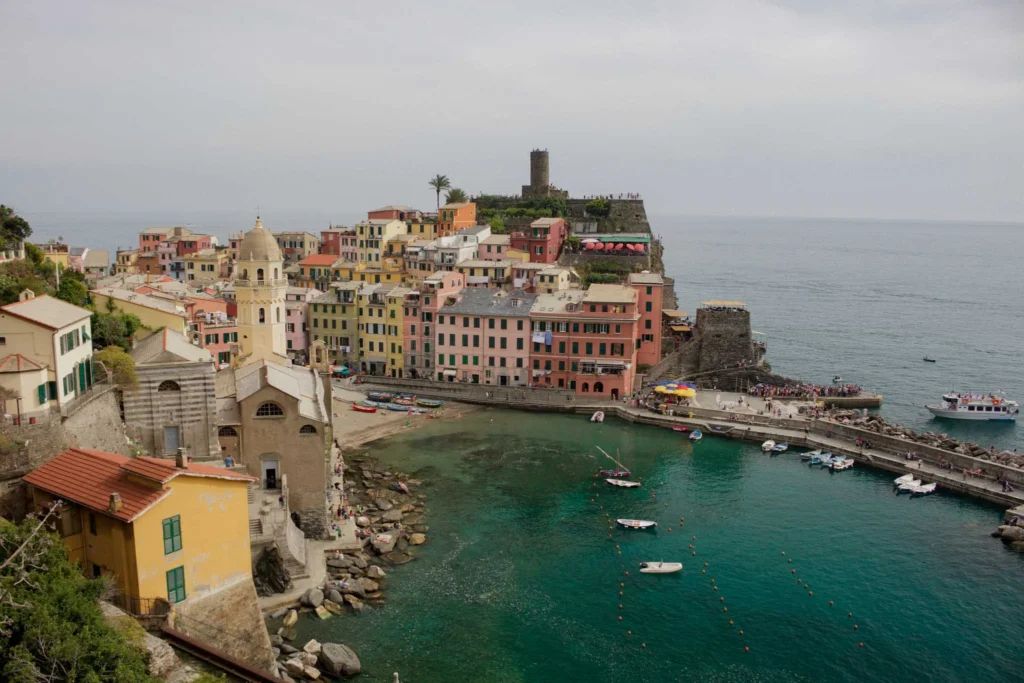
Let me start with a number that tells you everything: 4 million tourists visit Cinque Terre every year. Sounds impressive until you learn that fewer than 4,000 residents remain in these five villages. That’s 1,000 tourists for every single local.
I’m writing this because every traveler faces the same dilemma. You’ve seen those stunning Instagram photos—pastel houses cascading down cliffsides, turquoise waters, picture-perfect harbors. But you’ve also heard whispers: “overcrowded,” “overpriced,” “overrated.” So which is it?
After analyzing over 200 firsthand reviews from 2023-2025, digging through Reddit threads from disappointed visitors and delighted fans alike, and compiling the latest data on costs, crowds, and trail closures, I’m going to give you something most travel blogs won’t: an honest breakdown that helps you decide if Cinque Terre is worth YOUR time and money.
Because here’s the truth: Cinque Terre can be absolutely magical or utterly disappointing. The difference? Knowing exactly what you’re getting into and when to visit.
The Honest Answer: Is Cinque Terre Worth It?
Table of Contents
ToggleThe short answer: Yes, but only if you visit during shoulder season (April or September-October), stay overnight rather than day-tripping, and set realistic expectations about crowds, costs, and what “authentic Italy” looks like in 2025.
The brutally honest answer: For many travelers, the answer is actually no—and the alternatives might serve you better.
Quick Decision Guide
Cinque Terre IS Worth It If:
✅ You can visit in April, early May, or September/October when crowds thin by 40-50%
✅ You’re willing to stay 2-3 nights in one village to experience the magical early mornings and evenings when day-trippers leave
✅ You understand you’ll pay €150-250 per day for a mid-range experience and accept the tourist pricing
✅ You’re an active hiker excited about the trails (when they’re open) and can handle steep terrain with endless stairs
✅ This is a bucket list destination you’ve dreamed about—sometimes the heart wants what it wants, crowds or not
Cinque Terre Is NOT Worth It If:
❌ You’re visiting in July-August or during peak Italian holidays (you’ll spend more time in crowds than enjoying views)
❌ You want pristine sandy beaches—only Monterosso has a small sand beach; the rest are rocky or pebble
❌ You have mobility issues—these villages are built vertically with hundreds of stairs and no elevators
❌ You’re seeking authentic, undiscovered Italy—locals openly say they don’t visit anymore due to overtourism
❌ You’re on a tight budget—between accommodation (€100-200/night), the Cinque Terre train card (€15-33/day), and inflated meal prices, this isn’t backpacker-friendly territory
❌ You’re planning a day trip—you’ll arrive with the crowds, see the villages at their worst, and leave wondering what the fuss was about
The Nuanced Truth
Here’s what separates the travelers who call Cinque Terre “the most beautiful place in Italy” from those who label it “the most overrated tourist trap in Europe”: timing, expectations, and strategy.
When It’s Absolutely Worth It:
The magic happens when you wake up at 6:30am in Manarola, step outside your small apartment, and have the harbor to yourself. The morning light paints the pastel houses in warm gold. A local nonno walks his dog. The smell of fresh focaccia drifts from the bakery. For 90 precious minutes before the first train arrives at 8:30am, you glimpse what Cinque Terre was before 4 million annual visitors discovered it.
This experience is real, achievable, and worth every euro—if you stay overnight and commit to early mornings.
Similarly, the hike from Monterosso to Vernazza at 7am offers genuinely spectacular coastal views without the shoulder-to-shoulder crowds that plague the trail by 10am. Watching sunset from Corniglia’s terrace while sipping local Sciacchetrà wine as day-trippers board their last trains? That’s the Cinque Terre that lives up to the hype.
When It’s Definitely Not Worth It:
The same villages at 2pm on a Saturday in July? One visitor described it perfectly: “essentially swarming with 50-60 year olds dressed like they’re about to attempt Everest.” You can’t walk without bumping into selfie sticks. Restaurants have hour-long waits. The narrow paths between villages become frustrating bottlenecks. Train platforms become stress-inducing mosh pits.
During one Easter in Vernazza, over 95,000 tourists descended on this tiny village. To put that in perspective, Vernazza has roughly 900 residents. That’s 105 tourists for every local resident—on a single day.
Who Will Love It vs. Who Will Be Disappointed
You’ll likely love Cinque Terre if you:
- Prioritize hiking and dramatic coastal scenery over beach time
- Enjoy planning and strategic travel (timing, reservations, beating crowds)
- Can afford mid-range to luxury pricing without stress
- Find joy in sunrise photo opportunities and “earning” your experiences through early wake-ups
- Accept that popular destinations require compromise and patience
You’ll likely be disappointed if you:
- Imagine yourself lounging on pristine beaches (they’re small, rocky, and packed)
- Expect to stumble upon hidden local trattorias (they exist but require serious searching)
- Thought those Instagram photos represented the typical experience (they represent the 6am or 8pm experience)
- Value authentic cultural experiences over scenic beauty
- Assumed “Italian coastal village” meant affordable and laid-back
The Data That Matters
Let me give you specific numbers that cut through the promotional fluff:
Current costs for a solo traveler (2024-2025 data):
- Cinque Terre Train Card (unlimited trains between villages): €14.80-€32.50 per day depending on season
- Via dell’Amore trail access: €10 extra (requires timed booking, limited to 100 people per 15-minute slot)
- Accommodation inside villages: €100-200/night for basic to mid-range
- Simple lunch: €15-25 per person
- Dinner at harbor restaurant: €30-60 per person
- Coffee/aperitivo: €5-8
Daily budget reality:
- Budget conscious (staying outside, strategic eating): €80-120/day
- Mid-range (staying in village, normal dining): €150-250/day
- Comfortable (better accommodation, dining freely): €300-500/day
Compare this to staying in nearby La Spezia (10-minute train ride away) where accommodation runs €50-80/night, meals cost 30-40% less, and you can still visit all five villages. You’ll sacrifice the magic of early morning solitude but save €70-100 per day.
Crowd reality by season:
- April: Manageable crowds, cooler temperatures (55-65°F), occasional rain
- May-June: Building crowds, warm weather (70-75°F), high prices
- July-August: Peak chaos, temperatures hit 80-85°F, highest prices, longest waits
- September-October: Sweet spot—still warm (65-75°F), reduced crowds, better prices than summer
- November-February: Minimal crowds but many businesses closed, reduced train schedules, frequent trail closures due to rain
The bottom line? If you’re reading this trying to decide whether to book Cinque Terre or explore alternatives, ask yourself this: “Am I willing to pay premium prices, battle crowds, and make strategic compromises for undeniably beautiful (but heavily photographed) coastal scenery?”
If the answer is yes—and you can visit during shoulder season while staying overnight—then Cinque Terre absolutely delivers. If you hesitated on any of those conditions, keep reading. I’ll show you exactly what you’re getting into and some alternatives that might surprise you.
What Makes Cinque Terre Special (And What Doesn’t)
Let’s separate the Instagram fantasy from the reality you’ll actually experience. Because Cinque Terre genuinely offers some spectacular moments—but it also disappoints in specific ways that travel influencers conveniently crop out of their photos.
What Actually Lives Up to the Hype
The Dramatic Coastal Views
This is where Cinque Terre truly delivers. The five villages clinging to steep cliffs above the Mediterranean create genuinely breathtaking vistas that photographs, somehow, actually undersell. When you round a bend on the trail between Monterosso and Vernazza and see the entire village spilling down the hillside to its tiny harbor, framed by rugged coastline in both directions—that moment is real, powerful, and worth the journey.
The terraced vineyards climbing impossibly steep slopes, some dating back to the 11th century, create a landscape unlike anywhere else in Italy. These aren’t maintained for tourists; they’re working vineyards producing the local white wine and sweet Sciacchetrà dessert wine.
The Colorful Villages (From Certain Angles)
Those iconic pastel houses—peach, yellow, pink, terracotta—stacked vertically create the postcard views you’ve seen everywhere. From the harbor in Vernazza, from the main overlook in Manarola, from the cemetery terrace in Corniglia, these views genuinely deliver. The architecture is authentic, not recreated for tourism, which gives the villages a lived-in patina that Disney couldn’t replicate.
The Hiking Trails Between Villages (When Open)
The Sentiero Azzurro (Blue Trail) connecting the five villages offers some of Italy’s most spectacular coastal hiking. The section from Monterosso to Vernazza, when you’re not stuck behind a slow-moving group, provides continuous jaw-dropping Mediterranean views. The approximately 2-hour hike climbs through olive groves, passes by tiny family vineyards, and offers endless photo opportunities of the coastline.
The lesser-known sanctuary trails climbing the hills above each village offer even better experiences—genuine solitude, panoramic views encompassing multiple villages, and encounters with local farmers tending their terraces.
Sunset Views from Specific Spots
Watching the sun set over the Mediterranean from Manarola’s harbor area, particularly near the small boat launch, provides one of those travel moments you’ll remember for years. The warm light reflecting off the colored houses, the gradual deepening of the sky from gold to purple to deep blue, the way the village lights begin to twinkle as darkness falls—this experience genuinely justifies the journey.
Similarly, the sunset view from Corniglia’s terrace, perched high above the sea with a glass of local wine, offers a more intimate, less crowded alternative.
Fresh Seafood and Local Wine
Despite the tourist inflation, the seafood is legitimately excellent. The anchovies (acciughe) are caught locally and prepared in dozens of ways. The trofie al pesto uses basil from Ligurian hillsides (where basil tastes distinctly different due to the microclimate). The local white wine, crisp and mineral, pairs perfectly with the seafood-heavy cuisine.
Yes, you’ll pay €18-25 for a pasta dish, but the ingredients are genuinely fresh and the preparations traditional.
What Doesn’t Live Up to the Hype (The Reality Check)
The Beaches: Rocky, Tiny, and Overwhelmingly Crowded
Here’s where expectations crash hardest against reality. If “Italian coastal villages” conjured images of pristine sandy beaches in your mind, prepare for disappointment.
Only Monterosso has what most people would call a proper beach—and even that’s a relatively small stretch of sand that becomes absolutely packed by 11am during season. Arrive after 10:30am and you’ll struggle to find space for your towel. The water is beautiful, but you’re swimming alongside hundreds of other people.
The other four villages offer, at best, tiny rocky coves or narrow pebbled patches. Manarola and Riomaggiore have small concrete platforms with ladders into the water—more like jumping-off points than beaches. Vernazza’s beach is a small semicircle of mixed pebbles and stones, charming from above but uncomfortable for sunbathing and crowded to the point of claustrophobia in summer.
One visitor put it bluntly: “The beaches were horrible…just grey stones and large rocks!” If beach time is a priority for your Italian coastal vacation, Cinque Terre should not be your destination.
The Authenticity: Fading Fast
The harsh truth that locals openly acknowledge: “Locals don’t go to Cinque Terre anymore.” What was once five authentic fishing villages has transformed into what one longtime resident called “an open-air museum.”
The ratio of souvenir shops to actual useful local businesses tells the story. The number of properties operating as short-term rentals rather than housing for residents continues to climb. The restaurants catering to tourists with multilingual menus and inflated prices outnumber genuine local spots by a significant margin.
This doesn’t mean Cinque Terre is fake or Disneyfied—the bones are authentic, the architecture real, the history genuine. But the once-vibrant authenticity has, as one writer eloquently put it, been “peeling away like the paint on those postcard-perfect houses.”
You’re visiting a beautiful stage set where the play finished years ago.
The Prices: Tourist Markup on Everything
Everything costs more in Cinque Terre than in surrounding areas. A cappuccino that costs €1.50 in La Spezia runs €3-4 in Vernazza’s harbor. A simple margherita pizza priced at €8 elsewhere becomes €14-16. Accommodation costs 40-60% more than comparable rooms just a few kilometers away.
This isn’t surprising—it’s basic supply and demand—but it’s worth factoring into your budget. A long weekend that might cost €400 per person in many Italian coastal towns will run €600-800 in Cinque Terre.
The Accessibility: Stairs, Stairs, and More Stairs
These villages were built vertically on steep hillsides by people who never imagined tourists with rolling suitcases. Every village involves significant stair climbing. Corniglia sits atop a promontory requiring 382 steps from the train station (or a shuttle bus that runs infrequently). Riomaggiore and Manarola spread upward from their harbors with narrow staircases connecting different levels.
If you have mobility issues, use a wheelchair, or simply struggle with steep inclines and stairs, Cinque Terre presents genuine challenges. There are no elevators, no ramps, and no flat alternatives. Even reaching your accommodation likely means dragging luggage up multiple flights of stairs.
Monterosso is the most accessible village, being relatively flat near the beach, but even there, many accommodations sit up hillsides.
The Trail Closures: Unpredictable and Frustrating
The famous coastal trail connecting the villages suffers from chronic closure issues. The Manarola-Corniglia section has been closed for years and won’t reopen until 2028. The iconic Via dell’Amore, closed for 12 years, only reopened in August 2024—but now requires a €10 fee, timed reservation, and limits visitors to 100 people per 15-minute slot.
Even the open sections close without much warning after heavy rain, which happens frequently given the steep, unstable terrain. You might plan your entire trip around hiking only to discover the trails closed the week you arrive.
The Instagram vs. Reality Table
| What Social Media Shows You | The Actual Reality | Dealbreaker? |
|---|---|---|
| Empty, picturesque village streets bathed in golden light | Shoulder-to-shoulder crowds 9am-6pm, beautiful only at sunrise/sunset | Only if you can’t adjust schedule |
| Pristine azure waters and sandy beaches | One small sand beach, rest are rocky/pebble and extremely crowded | Yes, if beach time is a priority |
| Romantic dinner overlooking the harbor | €30-60/person at touristy restaurants, often with long waits | No, if you budget accordingly |
| Charming local trattorias with authentic Italian vibes | Mix of tourist traps and genuinely good restaurants requiring research | No, good food exists if you look |
| Peaceful scenic coastal walks | Steep, challenging hikes often crowded, sections frequently closed | Yes, if you have mobility issues |
| Authentic Italian village life and culture | Heavily commercialized tourist destination with souvenir shops | Partially—depends on expectations |
| Easy day trip from Florence or Milan | 2-3 hour journey each way, best as overnight destination | Yes, if only day-tripping |
| Budget-friendly Italian coastal escape | Premium prices 40-60% higher than nearby alternatives | Yes, if traveling on tight budget |
The key to enjoying Cinque Terre is accepting this reality rather than fighting it. Yes, it’s crowded—so visit during shoulder season and wake up early. Yes, it’s expensive—so budget accordingly or stay outside the villages. Yes, it’s touristy—so adjust your expectations about authenticity.
Those who love Cinque Terre despite its flaws tend to be strategic travelers who plan around the problems. Those who leave disappointed usually arrived expecting something Cinque Terre stopped being a decade ago.
The Money Question: What Does Cinque Terre Actually Cost?
Let’s talk numbers. Not vague “budget-friendly” or “moderate” labels, but actual 2024-2025 prices so you can make an informed decision about whether Cinque Terre fits your travel budget.
The reality is this: Cinque Terre ranks among Italy’s most expensive destinations, often matching or exceeding prices in Venice, the Amalfi Coast, and even parts of the Italian Riviera. If you’re planning a trip expecting typical Italian coastal town pricing, you’re in for an unpleasant surprise.
Daily Costs Per Person: Three Budget Scenarios
Budget Traveler: €80-120 per day
Let’s be clear—Cinque Terre isn’t truly budget-friendly, but here’s how to minimize costs:
- Accommodation outside Cinque Terre (La Spezia or Levanto): €40-60/night
- Basic hotel in La Spezia: €45-55
- Hostel bed in Levanto: €35-45
- Simple guesthouse: €50-60
- Cinque Terre Train Card: €14.80-18.20/day (buy for low-demand days)
- Single train tickets alternative: €5 each x 6 trips = €30/day
- Local trains from La Spezia: €2-3 each way
- Food costs (strategic eating): €25-35/day
- Breakfast at accommodation or cafe: €3-5
- Focacceria lunch (focaccia + drink): €8-12
- Grocery store supplies for snacks: €5-8
- Early dinner at pizzeria: €10-15
- Coffee and treats: €8-12/day
- Morning cappuccino: €3-4
- Afternoon gelato: €3-5
- Aperitivo spritz: €5-8
Reality check: Even on a strict budget, you’ll struggle to stay under €80/day once you factor in that inevitable harbourside aperitivo or the extra €10 for Via dell’Amore access. Budget €100-120/day to avoid constant penny-pinching stress.
Mid-Range Traveler: €150-250 per day
This is the sweet spot where you can actually enjoy Cinque Terre without constant budget anxiety:
- Accommodation inside a village: €100-150/night
- Basic room in Monterosso: €90-120
- Apartment in Manarola: €110-140
- Small B&B in Riomaggiore: €100-130
- Nicer option in Vernazza: €130-160
- Cinque Terre Train Card + extras: €35-45/day
- High-demand day train card: €32.50
- Via dell’Amore reservation: €10
- Boat trip between villages: €15-25
- Meals at actual restaurants: €50-70/day
- Morning cappuccino and cornetto: €5-7
- Lunch at decent trattoria: €18-28
- Dinner with wine at harbor restaurant: €35-50
- Afternoon coffee/snack: €5-8
- Wine tastings and activities: €20-35/day
- Glass of local wine at sunset: €8-12
- Bottle to enjoy at accommodation: €12-18
- Tips and incidentals: €10-15
Reality check: Most travelers end up in this range. You’re not staying at luxury hotels, but you’re also not eating sad grocery store sandwiches in your room. You can dine at harbor restaurants, enjoy local wine, and stay inside the villages for that magical early morning experience.
Luxury/Comfort Traveler: €300-500+ per day
If budget isn’t a concern and you want the full experience:
- Premium accommodation: €200-350/night
- Sea-view room in Monterosso: €220-280
- Best apartment in Vernazza: €250-320
- Boutique hotel room: €280-350
- High season premium: add €50-100
- Private experiences: €100-150/day
- Private boat tour: €80-120/person
- Wine tasting at vineyard: €40-60
- Cooking class: €80-100
- Photography tour: €100+
- Fine dining: €80-120/day
- Quality breakfast: €15-20
- Long lunch with wine: €45-60
- Multi-course dinner: €60-90
- Premium wine: €30-50/bottle
- Comfort and convenience: €50-80/day
- Luggage transport service: €15-25
- Reserved beach chairs: €20-30
- Taxis when needed: €15-30
- Last-minute reservations/tips: €20-30
Reality check: At this budget level, you’re experiencing Cinque Terre the way it was meant to be enjoyed—staying in the best locations, dining at top restaurants, and avoiding any logistical stress. You’ll still encounter crowds, but at least you can retreat to a comfortable room with a view.
The Real Cost of a 3-Day Cinque Terre Trip
Let’s calculate what most travelers actually spend for a typical 3-day, 2-night visit:
Budget Approach (Staying Outside):
- Accommodation: 2 nights x €55 = €110
- Train card: 2 days x €18 = €36
- Meals: 3 days x €30 = €90
- Coffee/treats: 3 days x €10 = €30
- Via dell’Amore: €10
- Total: €276 per person
Mid-Range Approach (Staying Inside):
- Accommodation: 2 nights x €120 = €240
- Train card: 2 days x €25 = €50
- Meals: 3 days x €60 = €180
- Activities/wine: 3 days x €25 = €75
- Extras: €30
- Total: €575 per person
Comfortable Approach:
- Accommodation: 2 nights x €250 = €500
- Experiences: €200
- Fine dining: 3 days x €90 = €270
- Transportation/convenience: €100
- Total: €1,070 per person
Is It Worth the Cost?
Here’s the brutal comparison that helps answer this question:
What else could you do in Italy for the same money?
For that mid-range €575 per person (3 days in Cinque Terre), you could instead:
- Spend 5 days in Bologna with excellent accommodation, incredible food, and zero crowds
- Enjoy 4 days in Puglia’s stunning coastal towns with better beaches and half the tourists
- Get 6 days in Sicily with world-class food, ruins, and authentic culture
- Experience 4 days in the Dolomites with spectacular hiking and Alpine villages
For the luxury €1,070 per person, you could:
- Book 5 nights at a beautiful agriturismo in Tuscany with cooking classes and wine tastings
- Spend a week in southern Italy covering multiple destinations
- Get 4 nights in a premium hotel on the Amalfi Coast with a rental car
So is Cinque Terre worth its premium pricing?
Yes, if: You’ve always dreamed of visiting, you can afford it without stress, and you understand you’re paying for iconic scenery and the bucket-list experience rather than value-for-money.
No, if: You’re stretching your budget to make it work, you could have a richer experience elsewhere in Italy, or you’re early in your Italy travel journey and haven’t yet seen less-touristy alternatives.
Where You Can Save Money Without Sacrificing the Experience
1. Stay Outside the Villages (Save €70-100/night)
The single biggest money-saver is basing yourself in La Spezia or Levanto:
- La Spezia: 10-minute train ride to Riomaggiore, trains every 15-30 minutes
- Pros: Real Italian city, excellent restaurants, half the accommodation cost, supermarkets
- Cons: Miss the early morning magic, feel like a commuter rather than a resident
- Levanto: 4-minute train ride to Monterosso, charming beach town
- Pros: Long sandy beach, less touristy, better value restaurants, easy access
- Cons: Slightly further from the three southern villages
Reality check: You save €70-100/night but lose the sunrise/sunset magic in the villages. For many travelers, especially those on tighter budgets, this trade-off makes complete sense.
2. Make Lunch Your Main Meal (Save €15-25/day)
Italian restaurants typically offer a more affordable lunch menu (pranzo) with similar quality to dinner. A pasta dish that costs €18 at lunch might be €25-28 at dinner. Plus, lunch restaurants tend to be less crowded and more focused on locals.
Strategy: Eat a substantial lunch at 1-2pm, then have light snacks, focaccia, or aperitivo for dinner.
3. Shop at Grocery Stores for Breakfast and Snacks (Save €15-20/day)
Every village has at least one small grocery store where locals actually shop:
- Fresh focaccia: €3-4
- Local cheese and salami: €8-12
- Fruit: €2-3
- Wine: €5-10/bottle
One breakfast and two snacks from the grocery store vs. cafes saves significant money over several days.
4. Skip Via dell’Amore (Save €10 + Frustration)
After 12 years of closure and €25 million in restoration, Via dell’Amore reopened with a €10 fee and mandatory timed reservation system. The reality? It’s a pleasant 20-minute flat walk with nice views, but nowhere near worth €10 when you can hike the free (and more spectacular) Monterosso-Vernazza or Vernazza-Corniglia sections.
Unless you’re curious about the famous “Lover’s Lane” for historical reasons, skip it and invest that €10 in better wine.
5. Visit During Low-Demand Days (Save €10-15/day on Train Card)
The Cinque Terre Card uses dynamic pricing with three levels: low (A), medium (B), and high (C) demand days. The train card costs €14.80 on low-demand days vs €32.50 on high-demand days.
Check the official calendar online and try to visit on A or B days—you’ll save money and encounter fewer crowds.
6. Take Trains Outside Peak Hours (Better Yet: Walk)
If you’re staying inside the villages, you can walk between them instead of constantly taking trains:
- Monterosso to Vernazza: 2 hours hiking (free)
- Vernazza to Corniglia: 1.5 hours hiking (free)
- Riomaggiore to Manarola: 20 mins Via dell’Amore (€10) OR 1 hour high route (free)
You see more, get exercise, avoid crowded platforms, and save money.
Where You Should NOT Skimp
1. Accommodation Quality/Location
If you’re staying inside the villages, don’t book the absolute cheapest option. The difference between a dark room with thin walls and a decent apartment with a view is often just €20-30/night—but the impact on your experience is enormous.
A room where you actually want to spend time, perhaps with a small terrace for morning coffee or evening wine, transforms the trip.
2. Timing Your Visit
The money you save visiting during July or August (often 10-15% cheaper than September) gets wiped out by the miserable experience of peak crowds. Pay the slight premium for shoulder season.
3. Staying at Least 2 Nights
Day-tripping to save accommodation costs means you see Cinque Terre at its absolute worst—midday crowds, rushed schedule, stressed-out vibe. The cost of 2 nights’ accommodation is worth it for the completely different experience of early morning and evening hours.
The Bottom Line on Costs
Cinque Terre is expensive. There’s no way around it. But unlike some overpriced tourist traps, you’re actually paying for something real—spectacular scenery, quality food, and an experience that, when timed right, lives up to its reputation.
The question isn’t whether you can visit Cinque Terre cheaply (you can’t, not really), but whether the experience justifies the premium pricing for your specific travel priorities and budget.
If €575 for three days feels comfortable and you’ve always dreamed of those colorful villages, absolutely book it. If you’re stretching your budget and considering cutting other parts of your Italy trip to make Cinque Terre work, pause and consider whether alternatives might give you a richer overall experience.
The Crowd Crisis: When to Visit (and When to Definitely Avoid)
Here’s the single most important factor determining whether you’ll love or hate Cinque Terre: when you visit. The difference between April and August isn’t just weather—it’s the difference between “magical coastal paradise” and “claustrophobic tourist nightmare.”
After analyzing crowd patterns, weather data, and hundreds of visitor reports across different months, here’s your definitive timing guide.
The Month-by-Month Breakdown
JANUARY – FEBRUARY: The Ghost Town Months
Crowd Level: ⭐ (Minimal) Weather: 45-52°F, frequent rain Prices: Lowest of the year Verdict: Skip unless you specifically want solitude
What to expect:
- Many hotels, restaurants, and shops completely closed
- Reduced train schedules (every 1-2 hours instead of every 15-30 minutes)
- Hiking trails frequently closed due to rain and mudslides
- Gray skies and choppy seas dominate
- Locals outnumber tourists
The brutal truth: The villages look beautiful but feel abandoned. You’ll get incredible photos without crowds, but you’re essentially visiting an outdoor museum where half the exhibits are closed. Unless you’re a photographer seeking moody, empty shots or someone who genuinely prefers solitude over amenities, this isn’t worth the trip.
One visitor described February: “Walked through Vernazza and literally counted 12 other tourists. Felt post-apocalyptic.”
MARCH: The Awakening
Crowd Level: ⭐⭐ (Light) Weather: 50-58°F, improving but unpredictable Prices: Low to moderate Verdict: Possible for budget travelers, but still risky
What to expect:
- More businesses opening mid-month
- Weather highly variable—sunny days mixed with rain
- Train schedules increasing
- Trails may still be closed after winter
- Easter can bring sudden crowds if it falls in March
March is transition month where Cinque Terre shakes off winter. Early March still feels like off-season with closures. Late March, especially if Easter falls during this time, can see surprising crowds during the holiday weekend.
The advantage? Significantly lower prices and the ability to see villages without crushing crowds. The disadvantage? Weather remains unpredictable and some trails stay closed.
APRIL: The Sweet Spot Begins
Crowd Level: ⭐⭐⭐ (Moderate) Weather: 55-65°F, increasingly pleasant Prices: Moderate Verdict: EXCELLENT—One of the best times to visit
What to expect:
- Most businesses fully open
- Trails typically reopen (check status before arriving)
- Comfortable hiking temperatures
- Wildflowers blooming on hillsides
- Manageable crowds except Easter weekend
- Occasional rain but mostly sunny days
Rick Steves specifically recommends April, and for good reason. The villages feel alive but not overwhelmed. You can actually walk the trails without constant bottlenecks. Restaurants have tables available without reservations. Train platforms aren’t mosh pits.
One April visitor reported: “Hiked Monterosso to Vernazza on a Thursday morning and passed maybe 30 people total in 2 hours. Same hike in June? Hundreds.”
The only catch: Easter weekend (which moves between March and April) brings Italian families and can feel temporarily crowded, but it’s still nothing compared to summer madness.
MAY: The Final Calm Before the Storm
Crowd Level: ⭐⭐⭐ (Moderate) in early May, ⭐⭐⭐⭐ (Busy) in late May Weather: 60-72°F, excellent Prices: Moderate to high Verdict: EXCELLENT for early May, GOOD for late May
What to expect:
- Perfect weather—warm but not hot
- Trails fully open and in excellent condition
- Increasing crowds as month progresses
- Cruise ships begin arriving regularly by mid-May
- Hotels filling up—book well in advance
May splits into two distinct experiences:
Early May (1st-15th): Still maintains that sweet shoulder-season vibe. You’ll see more tourists than April but nowhere near summer levels. This is arguably the single best time to visit Cinque Terre—excellent weather without oppressive crowds.
Late May (16th-31st): Feels like summer is arriving. Crowds increase noticeably, especially on weekends. Cruise ships bringing day-trippers become regular. Prices jump. But it’s still manageable compared to what’s coming.
Pro tip: If you can only visit in May, choose the first two weeks. The weather difference between early and late May is minimal, but the crowd difference is substantial.
JUNE: The Transition to Chaos
Crowd Level: ⭐⭐⭐⭐ (Busy) early June, ⭐⭐⭐⭐⭐ (Very Busy) late June Weather: 68-78°F, beautiful Prices: High Verdict: FAIR—Still possible with strategic planning
What to expect:
- Schools out across Europe by mid-month
- Daily cruise ship arrivals
- Trains packed during midday hours
- Popular restaurants requiring reservations
- Beaches getting crowded
- Early morning and evening still pleasant
June represents the last gasp before full summer insanity. Early June (before schools end) still offers reasonable experiences if you’re strategic about timing—wake early, avoid popular villages during midday, make restaurant reservations.
Late June? It’s essentially summer. One visitor described late June: “Couldn’t even enjoy the vibe or stroll around due to the crowds. Just shuffling in a slow-moving river of tourists.”
If June is your only option, commit to waking up at 6:30am and embracing the evening hours. The midday experience will test your patience.
JULY – AUGUST: Peak Madness (AVOID)
Crowd Level: ⭐⭐⭐⭐⭐ (Overwhelming) Weather: 75-85°F, hot and humid Prices: Highest of the year Verdict: AVOID unless you have absolutely no other option
What to expect:
- Crushing crowds from 9am-6pm daily
- Train platforms requiring aggressive positioning
- Hiking trails becoming frustrating bottlenecks
- Restaurants with 45-90 minute waits
- Beaches packed to capacity by 10am
- Aggressive souvenir hawkers
- Highest accommodation prices
- Occasional trail closures due to overcrowding
The numbers tell the story: During one Easter in Vernazza, 95,000 tourists visited. During a typical August day? Similar or worse numbers across all five villages.
One July visitor: “Via dell’Amore was essentially a conga line moving at 1mph. The 20-minute walk took 45 minutes because you literally couldn’t pass the people in front of you.”
August 15th (Ferragosto) Week: This is the single most expensive and crowded week of the entire year. Italians take their primary summer holiday during this period, joining international tourists. Prices spike 30-50% above normal summer rates. Hotels book solid 6-12 months in advance.
Unless Cinque Terre is the primary purpose of your Italy trip and you have no flexibility, skip summer entirely. The alternatives offer better experiences at lower prices with fewer hassles.
If you’re truly stuck with summer dates:
- Stay overnight (not day trip)
- Wake up before 6:30am every morning
- Plan activities for 6-9am and 7-9pm
- Accept that midday will be miserable
- Book everything months in advance
- Budget extra for premium prices
- Prepare mentally for crowds
SEPTEMBER: The Comeback
Crowd Level: ⭐⭐⭐⭐⭐ (Very Busy) early September, ⭐⭐⭐⭐ (Busy) mid-September, ⭐⭐⭐ (Moderate) late September Weather: 70-76°F early month, 65-72°F late month Prices: High early month, moderate late month Verdict: EXCELLENT for late September, GOOD for mid-September
What to expect:
- Gradual decline in crowds as month progresses
- Weather remaining excellent through month
- Schools back in session reducing family tourism
- Trails less crowded
- Restaurants more available
- Harvest season for grapes (beautiful terraced vineyards)
September reverses June’s trajectory. Early September still feels like summer with corresponding crowds. But mid-month marks a noticeable shift, and by the final week of September, you’re back in shoulder-season territory with excellent weather.
Many locals and travel experts consider late September the absolute best time to visit Cinque Terre—still warm enough for swimming, crowds have thinned considerably, prices drop, but everything remains fully open unlike November.
OCTOBER: The Golden Month
Crowd Level: ⭐⭐⭐ (Moderate) early October, ⭐⭐ (Light) late October Weather: 60-70°F early month, 55-65°F late month Prices: Moderate Verdict: EXCELLENT—Equal to April as best visiting time
What to expect:
- Comfortable temperatures perfect for hiking
- Reduced but still present crowds
- Beautiful autumn light for photography
- Grape harvest and wine production
- Fewer families, more couples and mature travelers
- Some businesses beginning to reduce hours late month
- Occasional rain increasing toward month end
October offers that perfect sweet spot where weather remains pleasant enough for all activities but crowds have dropped significantly. The villages regain some breathing room. You can show up at restaurants without reservations. Train platforms feel manageable again.
The autumn light, slightly lower angle and warmer tones, creates particularly beautiful conditions for the already-photogenic villages.
One October visitor: “Did the entire Monterosso-Vernazza hike on a Tuesday morning and could count the other hikers on two hands. Never would have believed it was the same trail based on summer photos.”
NOVEMBER: The Shuttering
Crowd Level: ⭐ (Minimal) Weather: 52-60°F, frequent rain Prices: Low Verdict: SKIP—Worst month to visit
What to expect:
- November marks the beginning of rainy season
- Many hotels, restaurants, and shops close for winter
- Train schedules reduced significantly
- Trails frequently closed due to rain and mudslides
- Dark, moody weather dominating
- Very few tourists
November essentially marks the end of the tourist season. While you’ll find incredibly cheap accommodation and virtually no crowds, the trade-offs aren’t worth it for most travelers. The rain isn’t occasional drizzle—it’s the kind of sustained, heavy rain that makes outdoor activities miserable and causes trail closures.
Unless you’re specifically seeking dramatic storm photography or enjoy traveling in dismal conditions, November should be your last choice.
DECEMBER: Post-Holiday Ghost Town
Crowd Level: ⭐ (Minimal) Weather: 45-52°F, cold and often wet Prices: Very low Verdict: SKIP unless seeking extreme solitude
Similar to January-February, December sees most businesses closed, minimal services, and weather that doesn’t invite outdoor exploration. The Christmas season might bring slight upticks around the holidays with some special events, but overall, December remains off-season and off-limits for most travelers.
Your Timing Strategy: The Decision Matrix
If your priority is:
Avoiding crowds at all costs → Late September, October, or April Best weather + manageable crowds → Late April, early May, or late September
Swimming and beach time → Late May through mid-September (accept crowds) Budget travel → November through March (accept closures and weather) Photography without people → November-March or sunrise/sunset any month Hiking the coastal trail → April-October when trails most reliably open Balanced experience → Late April or late September to early October
Time of Day Strategies: When Crowds Ebb and Flow
Even during peak season, timing your activities strategically can salvage the experience:
6:00am – 9:00am: The Golden Hours
This is when Cinque Terre reveals its magic, even in August. The first trains carrying day-trippers from La Spezia arrive around 8:30-9:00am. Before that window, the villages belong to overnight guests and locals.
Strategy:
- Wake up at 6:00am (yes, on vacation)
- Start hiking by 6:30-7:00am
- Photograph empty harbors at sunrise
- Enjoy breakfast at local cafes before tourists arrive
- Complete your main hike before 9:30am
9:00am – 12:00pm: The First Wave
Cruise ship passengers and day-trippers pour off trains. The villages transform from peaceful to packed. Harbor areas become dense with people. Popular photo spots require waiting.
Strategy:
- If you’re hiking, you should already be on the trail
- If exploring villages, move to less popular areas
- Visit Corniglia (fewer day-trippers due to stairs)
- Retreat to your accommodation or beach
- This is grocery shopping time (locals shop now too)
12:00pm – 3:00pm: Peak Chaos
Maximum crowds. Restaurants packed. Train platforms becoming stressful. Heat intensifying in summer.
Strategy:
- Have lunch at inland restaurants (away from harbors)
- Rest at your accommodation
- Swim if beaches aren’t too crowded
- Visit sanctuary trails above villages
- Accept this is downtime, not exploration time
3:00pm – 6:00pm: Slight Relief
Day-trippers beginning to leave. Crowds remain significant but slightly more manageable. Afternoon light improving for photos.
Strategy:
- Resume village exploration
- Visit popular viewpoints as crowds thin
- Enjoy aperitivo at harbor bars
- Position yourself for sunset locations
6:00pm – 9:00pm: The Evening Magic Returns
Last trains departing around 8-9pm. Day-trippers gone. Villages returning to residents and overnight guests. Restaurants settling into dinner service. The best light of the day.
Strategy:
- Photograph villages in evening light
- Enjoy leisurely dinner without rushing
- Stroll harbors without crowds
- Experience the peace that justifies overnight stays
Sunset Timing:
- May-June: Around 8:30-9:00pm
- July-August: Around 8:00-8:30pm
- September: Around 7:30pm
- April & October: Around 7:00-7:30pm
Plan dinner reservations after sunset to maximize this magical period.
Day of the Week Matters Too
Weekdays (Monday-Thursday): Fewer Italian tourists, better availability, slightly lower crowds Fridays: Italians arriving for weekends, crowds increasing
Weekends (Saturday-Sunday): Italian domestic tourists peak, everything busier Italian Holidays: Avoid at all costs—crowds multiply
Pro tip: If you can only visit during summer, choose Tuesday-Thursday over weekends. The difference won’t transform the experience, but every little bit helps.
The Bottom Line on Timing
Timing isn’t just about picking a good month—it’s about strategic planning at every level:
✅ Best months: Late April, late September, October
✅ Acceptable months: Early May, early June, early September
✅ Manageable with strategy: Mid-May, mid-June, mid-September
✅ Avoid: July, August, August 15th week, November
✅ Best times of day: Sunrise to 9am, sunset to dark
✅ Best days: Tuesday-Thursday
The single most important decision you’ll make about Cinque Terre isn’t where to stay or which villages to visit—it’s when to visit. Get the timing right, and you’ll understand why people call it one of the most beautiful places in Italy. Get it wrong, and you’ll leave wondering what the fuss was about.
The Villages: Which Ones Are Actually Worth Your Time
Here’s what most travel guides won’t tell you: you don’t need to visit all five villages. They’re beautiful, yes, but also remarkably similar once you’ve seen two or three. The real question isn’t “should I see all five?” but rather “which ones deserve my limited time and energy?”
After analyzing hundreds of visitor experiences and comparing the distinct character of each village, here’s your village-by-village breakdown to help you prioritize.
Monterosso al Mare: The Beach Town Exception
Worth it for: Beach lovers, families with kids, anyone with mobility issues, those seeking more space
Skip if: You want the most quintessential “Cinque Terre postcard” experience
Unique features: Only proper sandy beach, flattest village, most restaurants and hotels, divided into old town and new town
Time needed: 2-3 hours for village, half-day if swimming
Overnight stay value: 7/10
The Reality:
Monterosso is the largest and most accessible village, which makes it simultaneously the most practical and least charming. The old town section, with its characteristic colorful houses and medieval tower, delivers that classic Cinque Terre aesthetic. But the new town feels more like a standard Italian beach resort than a historic fishing village.
The beach—Cinque Terre’s only significant stretch of sand—extends along the bay with a mix of free and paid sections. By 11am in summer, finding space becomes challenging, but it’s still proper beach where you can actually lay out a towel without perching on uncomfortable rocks.
For families with young children, Monterosso makes the most sense. The flat terrain around the beach area means no exhausting stair climbing with strollers or tired kids. The wider streets accommodate families better than the narrow alleys of other villages.
The food scene offers both tourist traps along the beachfront and genuinely good restaurants in the old town. You’ll find the widest selection of dining options here, though not necessarily the most authentic.
Best for overnight stays if: You want beach access, need accessibility, traveling with family, or prefer more space and amenities over intimate charm.
Vernazza: The Postcard Perfect (and Most Crowded)
Worth it for: Photography, that iconic harbor view, people-watching, feeling like you’re in the “real” Cinque Terre
Skip if: Crowds make you anxious, you hate tourist-heavy destinations
Unique features: Most photographed harbor, castle ruins, tiny beach/harbor plaza, concentrated restaurant scene
Time needed: 1-2 hours (30 minutes for photos, rest for lingering)
Overnight stay value: 8/10
The Reality:
Vernazza is what most people picture when they imagine Cinque Terre. That iconic view—colorful houses wrapped around a tiny harbor with a small beach, backed by green hills and a medieval castle—is genuinely stunning and worth experiencing.
It’s also the most crowded village during peak hours. The small harbor plaza becomes absolutely packed by mid-morning. Finding a good spot for the classic photo requires patience and timing. The narrow streets leading up from the harbor feel like single-lane traffic jams.
But here’s the thing: Vernazza earns its popularity. Despite the crowds, it maintains more charm than Monterosso and offers better dining than some other villages. The castello (castle ruins) provides excellent elevated views for €2 entry. The tiny beach, while rocky, allows swimming in a scenic setting.
The restaurant scene clusters around the harbor with inevitable tourist pricing, but the quality remains decent. Expect to pay €18-28 for pasta and €12-18 for salads.
Best for overnight stays if: You want to experience the most iconic village when crowds depart, can secure good accommodation, and accept paying premium prices for the premium location.
One critical tip: If staying in Vernazza, book accommodation up the hillside rather than harbourside. You’ll climb stairs but escape street noise and enjoy better views.
Corniglia: The Quiet Outlier
Worth it for: Escaping crowds, hikers, panoramic views, experiencing a less touristy vibe
Skip if: Mobility issues, limited time, you specifically want harbor/beach access
Unique features: Only village not on the water, perched on promontory, 382 steps from train station (or infrequent shuttle), fewer tourists
Time needed: 1-2 hours
Overnight stay value: 6/10
The Reality:
Corniglia occupies a unique position—literally. Perched 100 meters above the sea on a rocky promontory, it’s the only village without direct water access. This creates both advantages and disadvantages.
The 382-step Lardarina staircase connecting the train station to the village deters day-trippers and cruise ship passengers, meaning Corniglia sees roughly half the crowds of Vernazza or Manarola during peak hours. Those who make the climb (or take the sporadic shuttle bus) discover a quieter, more residential feeling village.
The main terrace provides spectacular panoramic views encompassing both coastlines. The village itself feels more authentically Italian—you’ll see locals going about daily life, laundry hanging from windows, genuine neighborhood cafes rather than just tourist restaurants.
The downside? No beach access, very limited accommodation options, and that stair climb becomes tedious if you’re going up and down multiple times. The small size means you can see everything in under an hour unless you’re lingering at cafes.
Best for overnight stays if: You prioritize peace over convenience, are serious hikers who don’t mind the stairs, or specifically want to escape the tourist intensity of other villages.
Manarola: The Sunset Champion
Worth it for: Sunset photography, wine terraces, Via dell’Amore access, balanced charm without maximum crowds
Skip if: You’ve already seen Vernazza and have limited time
Unique features: Best sunset views, photogenic boat ramp, Via dell’Amore starting point, wine terraces climbing hillsides
Time needed: 1-2 hours (more if timing sunset)
Overnight stay value: 9/10
The Reality:
Manarola strikes the best balance between beauty and manageability. It’s stunning without being quite as overwhelmed as Vernazza. The iconic view from the boat ramp area—colorful houses cascading down to the small harbor with boats perched on the ramp—rivals Vernazza for photographic appeal.
The village built vertically up the hillside means plenty of stairs, but the main street (Via Discovolo) provides a relatively flat route through town. The harbor area offers several good restaurants with slightly less tourist-trap feel than Vernazza.
Manarola’s true magic happens at sunset. The western orientation means the evening light paints the buildings in warm gold, and the harbor area fills with photographers and couples watching the sun drop into the Mediterranean. This experience alone justifies visiting Manarola.
The surrounding wine terraces, some of the most dramatic in Cinque Terre, create stunning landscapes for hiking. The sciacchetrà dessert wine produced here is worth tasting.
Via dell’Amore, the famous lovers’ path to Riomaggiore, begins (or ends) in Manarola. Since its 2024 reopening, this adds another reason to visit, though the €10 fee and timed entry requirement diminish the romance somewhat.
Best for overnight stays if: You want beautiful surroundings without maximum crowds, prioritize sunset experiences, or plan to hike Via dell’Amore early morning before crowds.
Riomaggiore: The Underrated Gem
Worth it for: Via dell’Amore access, slightly fewer crowds than Vernazza/Manarola, vertical village architecture, good restaurant options
Skip if: You’re short on time and have already seen other villages
Unique features: Main street actually a covered-over stream, steepest village layout, boat launch swimming area, Via dell’Amore endpoint
Time needed: 1-2 hours
Overnight stay value: 7/10
The Reality:
Riomaggiore often gets overlooked because it’s similar to Manarola and less famous than Vernazza, but this works in its favor. You’ll find slightly fewer tourists, similar beauty, and the same basic experience without fighting quite so hard for it.
The village’s most distinctive feature is Via Colombo, the main street built over what was once a stream. The colored houses rise vertically on both sides, creating a dramatic canyon effect. The village feels compressed and vertical—everything involves stairs.
The small marina area provides good swimming access via concrete platforms and ladders, though it’s not a beach. Several terraced restaurants overlook the water with reasonable (by Cinque Terre standards) pricing and good quality.
Being the southernmost village makes Riomaggiore a logical starting point for northbound exploration or a final stop heading south. The train connections are frequent, making it practical as a base.
Best for overnight stays if: You want the Cinque Terre experience with marginally fewer crowds, plan to hike Via dell’Amore, or prefer being at the southern end of the five villages.
Which Village Should You Actually Stay In?
For most travelers, I recommend Manarola. Here’s why:
✅ Beautiful enough to satisfy that “Cinque Terre dream” requirement
✅ Marginally less crowded than Vernazza
✅ Excellent sunset views and photography
✅ Good restaurant selection
✅ Central location for exploring other villages
✅ Via dell’Amore access
Vernazza comes second if you want the most iconic experience and can secure good accommodation up the hillside.
Monterosso wins for families, beach lovers, and accessibility needs.
Corniglia suits those specifically seeking peace and willing to trade convenience for tranquility.
Riomaggiore works well but doesn’t excel in any particular category—it’s the “solid choice” rather than the “best choice.”
The Villages Comparison Table
| Village | Crowd Level (Summer) | Accommodation Options | Beach Access | Iconic Views | Accessibility | Restaurant Quality | Best For | Overnight Priority |
|---|---|---|---|---|---|---|---|---|
| Monterosso | High | Most options (€90-200) | ⭐⭐⭐⭐⭐ Best beach | ⭐⭐⭐ Good | ⭐⭐⭐⭐⭐ Flat | ⭐⭐⭐⭐ Wide selection | Families, beach time | 3rd choice |
| Vernazza | Highest | Limited (€130-250) | ⭐⭐ Tiny rocky beach | ⭐⭐⭐⭐⭐ Most iconic | ⭐⭐ Many stairs | ⭐⭐⭐⭐ Good options | Photography, atmosphere | 2nd choice |
| Corniglia | Lowest | Very few (€80-150) | ⭐ None (above water) | ⭐⭐⭐⭐ Panoramic | ⭐ 382 stairs from station | ⭐⭐⭐ Limited but authentic | Peace, hiking | 5th choice |
| Manarola | High | Moderate (€110-200) | ⭐⭐ Swimming platforms | ⭐⭐⭐⭐⭐ Excellent sunsets | ⭐⭐ Vertical village | ⭐⭐⭐⭐ Good variety | Balanced experience | 1st choice |
| Riomaggiore | Moderate-High | Moderate (€100-180) | ⭐⭐ Swimming platforms | ⭐⭐⭐⭐ Very good | ⭐⭐ Steep but manageable | ⭐⭐⭐⭐ Solid options | Southern base | 4th choice |
The Efficient Itinerary: You Don’t Need All Five
If you have one full day:
- Stay in Manarola
- Wake early for Monterosso → Vernazza hike (2 hours)
- Breakfast in Vernazza
- Train to Corniglia for views
- Afternoon in Manarola
- Sunset from Manarola harbor
If you have two full days:
- Day 1: Monterosso beach morning, lunch, hike to Vernazza, explore Vernazza evening
- Day 2: Early Corniglia visit, Manarola for lunch and afternoon, sunset, Via dell’Amore to Riomaggiore evening
If you have three+ days:
- You have time for all five villages plus repeat visits to favorites
- Focus on hiking all open trail sections
- Explore sanctuary trails above villages
- Take a day trip to Portovenere or Levanto
The honest truth: After seeing three villages, you’ll understand what Cinque Terre offers. The fourth and fifth villages provide diminishing returns unless you’re a completist or staying longer. Focus on quality time in 2-3 villages rather than rushing through all five.
Hiking the Trails: What’s Actually Open and Worth It
The Sentiero Azzurro (Blue Trail) connecting all five villages is Cinque Terre’s most famous feature. It’s also frustratingly complicated in 2024-2025 due to ongoing closures, fees, and restrictions. Let me cut through the confusion with current, accurate information.
The Coastal Trail Status: Section by Section
Section 1: Riomaggiore to Manarola (Via dell’Amore)
Status: OPEN (since August 9, 2024, after 12 years!)
Distance: 1 km (0.6 miles)
Time: 20-30 minutes
Difficulty: Easy—mostly flat, paved walkway
Cost: €10 per person + mandatory timed reservation
Worth it rating: 5/10
The Reality:
After €25 million in restoration and 12 years of closure, Via dell’Amore (Path of Love) finally reopened with significant restrictions. The most romantic trail in Italy now requires booking a specific 15-minute arrival window online at viadellamore.info, with only 100 visitors allowed per slot.
The €10 fee (on top of your Cinque Terre Card) feels steep for what amounts to a pleasant 20-minute stroll. Yes, the views are nice. Yes, the history is interesting. Yes, lovers have been leaving padlocks and graffiti here for decades (now discouraged). But is it worth €10 when you can hike the dramatically more spectacular Monterosso-Vernazza section for free?
For most travelers, the answer is no unless you’re specifically curious about this famous path for historical reasons. The new infrastructure—rock fall barriers, improved walkway, safety features—makes it safe but also somewhat sterile compared to the romantic reputation.
Skip it if: You’re on a budget, pressed for time, or prioritizing the most scenic hiking. The €10 is better spent on wine.
Do it if: You’ve always dreamed of walking Via dell’Amore, want to say you’ve done it, or have time and money to spare.
Section 2: Manarola to Corniglia
Status: CLOSED (until May 2028)
Distance: 2.6 km (1.6 miles) when open
Reason: Landslides and terrain instability
Alternative: High route via Volastra (adds significant distance and elevation)
The Reality:
This section has been closed for years and won’t reopen anytime soon. The terrain instability requiring extensive engineering work means this portion of the famous coastal trail remains inaccessible.
The official alternative route climbs up to the hilltop village of Volastra, then descends to Corniglia—adding substantial elevation gain and distance. While this route offers beautiful vineyard views, it’s not the coastal walk people imagine.
Most visitors simply take the train between Manarola and Corniglia rather than hiking the alternative.
Section 3: Corniglia to Vernazza
Status: OPEN
Distance: 3.5 km (2.2 miles)
Time: 1.5-2 hours
Difficulty: Moderate—significant elevation changes
Cost: Included in Cinque Terre Trekking Card
Worth it rating: 9/10
The Reality:
This is the most rewarding section of the coastal trail currently accessible. The path climbs and descends through terraced vineyards, olive groves, and Mediterranean scrubland with continuous spectacular coastal views.
The hiking involves real elevation gain and loss (around 500 meters total), so it’s more challenging than Via dell’Amore, but the effort pays off with stunning scenery and the dramatic approach to Vernazza from above.
This trail gets crowded during peak season, especially 10am-3pm, but starting early (7-8am) provides a much better experience.
Direction matters: Most people prefer hiking Monterosso → Vernazza → Corniglia (north to south) because:
- You hike the best section (Monterosso-Vernazza) first when you’re fresh
- Descending into Vernazza is more spectacular than leaving it
- The approach to Corniglia from above is beautiful
Section 4: Vernazza to Monterosso
Status: OPEN (with restrictions during peak periods)
Distance: 3.5 km (2.2 miles)
Time: 1.5-2 hours
Difficulty: Moderate—significant elevation changes
Cost: Included in Cinque Terre Trekking Card
Worth it rating: 8/10
Special note: One-way only (Monterosso → Vernazza) from 9am-2pm during peak Italian holidays
The Reality:
This is the other spectacular section, slightly less dramatic than Corniglia-Vernazza but still excellent. The trail passes through varied terrain—forested sections, open cliffsides, olive groves—with consistent Mediterranean views.
The approach to Monterosso descends toward the beach with the town spreading out below, providing a satisfying conclusion to the hike.
During certain peak days (Easter, August 15 week, etc.), one-way restrictions apply to prevent dangerous bottlenecks. Check current restrictions before planning your hike.
Alternative Trails: The Hidden Gems
The coastal Sentiero Azzurro gets all the attention, but Cinque Terre offers 38 frequently hiked trails (out of 100+ total) that provide better experiences with far fewer crowds.
Sanctuary Trails (Sentieri dei Santuari):
Each village has a sanctuary trail climbing to a church or chapel in the hills above. These range from 30 minutes to 1.5 hours of steady uphill climbing, rewarding hikers with panoramic views encompassing multiple villages.
- Madonna di Soviore (from Monterosso): 1.5 hours up, excellent views
- Sanctuary of Reggio (from Vernazza): 1 hour up, beautiful terrace
- Sanctuary of San Bernardino (from Corniglia): 45 minutes up, vineyards and views
- Sanctuary of Nostra Signora della Salute (from Volastra near Manarola): 30 minutes, spectacular position
- Madonna di Montenero (from Riomaggiore): 1 hour up, commanding views
These trails see a fraction of the coastal trail crowds while offering arguably better viewpoints. The elevation provides perspective the coastal trail lacks.
The High Route (Sentiero Rosso/Red Trail):
For serious hikers, the high route trail runs along the ridgeline above all five villages, offering continuous spectacular views and the best hiking in the region. Various access points allow you to connect this trail with village walks.
This is real hiking—proper boots, water, sun protection, and reasonable fitness required—but the experience far exceeds the crowded coastal trail.
Is Hiking Worth It If Trails Are Closed?
Short answer: Yes, but with lowered expectations.
The calculation:
With Via dell’Amore costing €10 and offering minimal value, and Manarola-Corniglia closed, you’re realistically left with:
- Corniglia to Vernazza (1.5-2 hours)
- Vernazza to Monterosso (1.5-2 hours)
That’s 3-4 hours of hiking total on the famous coastal trail—worth it if you enjoy hiking and appreciate coastal scenery, but not the extensive trail system many imagine.
If coastal hiking is your primary reason for visiting Cinque Terre and multiple sections are closed, consider:
- Visiting anyway but focusing on sanctuary trails and high routes for better hiking experiences
- Choosing alternatives like the Alta Via dei Monti Liguri for serious multi-day hiking
- Accepting the villages themselves, not the trails, as the main attraction
Trail Hiking Strategy for Maximum Enjoyment
Before You Arrive:
- Check current trail status at parconazionale5terre.it (official source)
- Buy your Cinque Terre Trekking Card online to avoid station queues
- Download offline trail maps (internet can be spotty)
- Check weather forecast—trails close quickly after rain
On Hiking Days:
- Start by 7-7:30am to beat crowds and heat
- Bring 1-1.5 liters water per person (limited refill options)
- Wear actual hiking shoes (not flip-flops, despite what you’ll see people wearing)
- Sun protection critical—limited shade on most trails
- Bring snacks—trail sections take longer than you expect
Direction Strategy:
- Most people hike south to north (Riomaggiore toward Monterosso)
- Consider going north to south to avoid the crowd flow
- If only doing one section, Corniglia-Vernazza provides best views regardless of direction
If Trails Are Crowded:
- Stop frequently to let faster hikers pass
- Wide sections allow for passing; narrow sections require patience
- Early morning (before 9am) dramatically reduces crowding
- Consider sanctuary trails as better alternatives
The Bottom Line on Hiking
The coastal trail is worth hiking if:
✅ At least one major section (Vernazza-Monterosso or Corniglia-Vernazza) is open
✅ You can start early to avoid peak crowds
✅ You have reasonable fitness for moderate trails
✅ Coastal scenery motivates you
Skip the coastal trail if:
❌ Only Via dell’Amore is open (not worth €10)
❌ You’ll be hiking midday during peak season (miserable experience)
❌ You have mobility issues or poor fitness
❌ Weather is poor (trails close for safety)
Consider sanctuary trails instead if:
✅ You want better views with fewer people
✅ You enjoy vertical hiking
✅ Coastal trail sections are closed
✅ You want to escape crowds entirely
The trails can elevate Cinque Terre from “pretty villages” to “spectacular hiking destination”—but only if the sections you care about are open and you time your hikes strategically.
Cinque Terre vs. The Alternatives: When to Choose Something Else
Here’s the question nobody asks directly but everyone wonders: “Should I skip Cinque Terre entirely and visit somewhere else instead?”
It’s a valid question. Cinque Terre has become so popular, so crowded, and so expensive that alternatives increasingly make more sense for certain travelers. Let me be brutally honest about when you should consider other options.
When Cinque Terre is Absolutely the Right Choice
Choose Cinque Terre if:
✅ It’s your dream destination and seeing those colorful villages has been on your bucket list for years
✅ You’re visiting northern Italy anyway (Florence, Milan, Tuscany) and it’s geographically logical
✅ You can visit during shoulder season (April or September-October) when crowds are manageable
✅ You have 3+ days to stay overnight and experience villages properly
✅ Budget isn’t a major constraint and you can afford €150-250/day comfortably
✅ You love hiking and the coastal/sanctuary trails appeal to you
✅ First-time Italy visitors who want iconic experiences
In these scenarios, Cinque Terre delivers exactly what it promises: spectacular scenery, charming villages, excellent food, and memorable experiences despite the crowds and costs.
When Alternatives Make More Sense
Consider alternatives if:
❌ You’re on a tight budget (alternatives offer 40-60% savings)
❌ You value authenticity over Instagram-famous views
❌ Peak season is your only option (alternatives remain manageable)
❌ You want quality beaches (several alternatives have better coastal access)
❌ You prefer fewer tourists even if it means less infrastructure
❌ You’re visiting southern Italy (Amalfi Coast makes more geographical sense)
❌ Limited time means day-tripping (alternatives work better for short visits)
The Top Alternatives to Cinque Terre
1. Tellaro: The “Mini Cinque Terre”
Location: 30 km south of Cinque Terre in the Bay of Poets
What you get: Colorful fishing village cascading down to tiny harbor, dramatic coastal setting, authentic local life
What you miss: Multiple villages to explore, extensive hiking, tourist infrastructure
The honest assessment:
One visitor described Tellaro perfectly: “Like a little piece of Cinque Terre broke off and floated down the coast.” You get remarkably similar aesthetics—colorful houses, dramatic coastal position, photogenic harbor—without the overwhelming crowds or tourist inflation.
The village remains primarily residential with locals going about daily life. Yes, tourism exists, but Italians outnumber international visitors, and the vibe stays authentic. Restaurants serve locals as much as tourists, meaning better value and genuine regional cuisine.
Tellaro delivers about 70% of Cinque Terre’s visual appeal with 10% of the crowds and 60% of the cost.
Best for: Travelers prioritizing authenticity over extensive infrastructure, those seeking “what Cinque Terre was like 20 years ago.”
Access: Requires rental car or bus from La Spezia (less convenient than Cinque Terre)
2. Camogli: The Local Favorite
Location: 40 minutes drive northwest of Cinque Terre, between Genoa and Portofino
What you get: Fishing village with tall colorful houses, beach, harbor, extensive hiking, authentic atmosphere catering mainly to Italian tourists
What you miss: The specific Cinque Terre “postcard” aesthetic, as many villages to explore
The honest assessment:
Camogli offers what many travelers actually want from Cinque Terre: a beautiful coastal Italian village experience without fighting for space. The town feels alive with Italian families on vacation, elderly couples strolling the lungomare, local fishermen maintaining traditions.
The beach, while pebbly, is larger and less crowded than anything in Cinque Terre. Multiple hiking trails ranging from 30 minutes to 4 hours connect to surrounding areas including San Fruttuoso and Portofino.
Food costs 30-40% less than Cinque Terre with equal or better quality. Accommodation runs €60-120/night for good options versus €100-200 in CT villages.
The colorful houses lining the harbor create Instagram-worthy photos, though the overall aesthetic feels slightly less iconic than Cinque Terre’s most famous views.
Best for: Travelers who want the Italian coastal village experience with authenticity prioritized over famous photo spots.
Access: Train from Genoa or drive; less convenient from Florence/Tuscany
3. Portovenere: The UNESCO Alternative
Location: 15 km south of Cinque Terre, end of the same Gulf
What you get: UNESCO World Heritage Site, stunning church on promontory, castle, colorful harbor, boat access to islands, less crowded than CT
What you miss: Multiple villages to explore, extensive hiking, the Cinque Terre “brand”
The honest assessment:
Portovenere shares UNESCO World Heritage status with Cinque Terre but sees roughly half the visitors. The setting rivals any Cinque Terre village—the San Pietro church perched on a rocky promontory is breathtaking, the colorful houses lining the harbor are equally photogenic.
As a single village, Portovenere doesn’t offer the variety of five villages, but what it offers is substantial. The medieval center rewards exploration with narrow alleys, local shops, and restaurants serving excellent seafood.
Boat trips to the nearby islands (Palmaria, Tino, Tinetto) provide additional activities. The town feels more like a place where people actually live despite tourist presence.
Costs run similar to Cinque Terre for accommodation but slightly less for food and activities.
Best for: Travelers wanting Cinque Terre-level beauty without the most extreme crowds, those based in La Spezia looking for day trips.
Access: Bus or boat from La Spezia (20-30 minutes)
4. Levanto: The Beach Town Gateway
Location: 4-minute train ride north of Monterosso
What you get: Long sandy beach, surf culture, local town vibe, easy access to Cinque Terre, better value
What you miss: The colorful stacked-house aesthetic, being “in” Cinque Terre
The honest assessment:
Levanto serves as many travelers’ base for exploring Cinque Terre while offering better value and a completely different vibe. The long sandy beach attracts Italian families and surfers (yes, surfing in Italy). The town maintains local character since it functions as a real town, not a museum village.
Accommodation costs €70-120/night versus €100-200 in Cinque Terre for comparable quality. Restaurants serve generous portions at 30% lower prices. Beach access is free with plenty of space (revolutionary concept after Cinque Terre’s crowded coves).
The 4-minute train ride to Monterosso means you access all Cinque Terre villages as easily as if staying there, but you retreat to a more relaxed, affordable base at day’s end.
The trade-off? You don’t get those magical sunrise and sunset moments in the Cinque Terre villages since you’re commuting in and out with day-trippers.
Best for: Budget-conscious travelers, families wanting beach time, those who prefer staying in functional towns over tourist villages.
Access: Direct train from Genoa, Milan, Florence (same line as Cinque Terre)
5. Sestri Levante, Bonassola, Moneglia, Framura
These villages along the Ligurian coast offer varying degrees of charm and accessibility, all with significantly fewer tourists than Cinque Terre.
- Sestri Levante: Two beaches, more developed, good infrastructure
- Bonassola: Small village with bike path to Levanto, extremely quiet
- Moneglia: Sandy beach, family-friendly, very affordable
- Framura: Four hamlets, coastal walking trail, undiscovered
All provide that Ligurian coastal experience—colorful houses, good seafood, Mediterranean scenery—without the Cinque Terre crowds and costs.
The Alternatives Comparison Table
| Destination | Cinque Terre Appeal Factor | Crowd Level vs CT | Cost vs CT | Beach Quality | Authenticity | Hiking Options | Accessibility from Florence |
|---|---|---|---|---|---|---|---|
| Cinque Terre | 10/10 (the original) | Baseline | Baseline (€€€€) | ⭐⭐ | ⭐⭐ | ⭐⭐⭐⭐⭐ | ⭐⭐⭐⭐⭐ Direct trains |
| Tellaro | 7/10 | 10% | 40% less (€€) | ⭐⭐⭐ | ⭐⭐⭐⭐⭐ | ⭐⭐⭐ | ⭐⭐⭐ Via La Spezia |
| Camogli | 6/10 | 20% | 40% less (€€) | ⭐⭐⭐⭐ | ⭐⭐⭐⭐ | ⭐⭐⭐⭐ | ⭐⭐ Via Genoa |
| Portovenere | 8/10 | 50% | 20% less (€€€) | ⭐⭐⭐ | ⭐⭐⭐⭐ | ⭐⭐⭐ | ⭐⭐⭐⭐ Via La Spezia |
| Levanto | 4/10 (different vibe) | 15% | 35% less (€€) | ⭐⭐⭐⭐⭐ | ⭐⭐⭐⭐ | ⭐⭐⭐⭐ | ⭐⭐⭐⭐⭐ Direct trains |
| Sestri Levante | 5/10 | 20% | 35% less (€€) | ⭐⭐⭐⭐⭐ | ⭐⭐⭐ | ⭐⭐⭐ | ⭐⭐⭐⭐ Direct trains |
The Hybrid Approach: Combining Cinque Terre with Alternatives
The smartest strategy might be combining experiences:
Option 1: Stay Outside, Visit Inside
- Base in Levanto, La Spezia, or Sestri Levante
- Day trip to Cinque Terre villages during ideal hours (early morning, evening)
- Save 35-50% on accommodation and food
- Get authentic local experiences at your base
Option 2: Split Your Stay
- 1-2 nights inside Cinque Terre (experience the magic)
- 2-3 nights in alternative location (better value, different experience)
- Best of both worlds without budget devastation
Option 3: Regional Tour
- Visit multiple locations: 2 days Cinque Terre + 2 days Camogli + 1 day Portovenere
- Compare different Ligurian coastal experiences
- Richer overall experience than week in one place
The Bottom Line on Alternatives
Cinque Terre deserves its reputation—the scenery truly is spectacular. But in 2025, with 4 million annual visitors and premium pricing, it’s worth seriously considering whether alternatives might actually give you a better Italian coastal experience.
Visit Cinque Terre if: It’s been your dream, you can afford it comfortably, and you can visit during shoulder season with proper timing.
Visit alternatives if: You prioritize authenticity, value, beaches, or avoiding crowds—and you’re willing to sacrifice the Instagram fame for better experiences.
Visit both if: You have the time and want to compare tourist-famous Cinque Terre against authentic alternatives, experiencing the full spectrum of Ligurian coastal beauty.
Who Should (and Shouldn’t) Visit Cinque Terre
Let’s get specific about traveler types. Because Cinque Terre isn’t for everyone, and that’s perfectly fine.
You’ll Love Cinque Terre If You’re:
1. The Strategic Planner
You research extensively, book 6 months ahead, wake up at 6am, avoid peak season, and approach travel like a chess game. You read this entire guide and will implement every strategy.
Cinque Terre rewards planners. The difference between a magical experience and a disappointing one comes down to strategic decisions about timing, accommodation, and daily scheduling. If you enjoy the planning process and executing complex logistics, you’ll beat the system and love it.
2. The Active Hiker Who Appreciates Coastal Scenery
You own proper hiking boots, bring a hydration pack, and get genuinely excited about coastal trails with elevation gain. You understand that crowds on trails are frustrating but views are worth it.
The hiking, when trails are open and you time it right, provides legitimately spectacular experiences. If vertical coastal hiking motivates you more than beach lounging, Cinque Terre delivers.
3. The Photographer Chasing Iconic Shots
You wake for sunrise, scout locations beforehand, understand golden hour timing, and want those famous Cinque Terre images in your portfolio. You’re willing to wait for the perfect light.
The photographic opportunities, particularly at sunrise and sunset from specific viewpoints, rival anywhere in Italy. If capturing stunning images justifies the crowds and cost, Cinque Terre provides the canvas.
4. The Bucket List Completist
Cinque Terre appears on every “must-see Italy” list and you want to experience it firsthand. You understand it’s touristy but value seeing famous places yourself.
There’s nothing wrong with visiting iconic destinations because they’re iconic. If crossing Cinque Terre off your list matters to you, do it without guilt or apology.
5. The Foodie Who Accepts Tourist Pricing
You appreciate excellent seafood, regional wines, traditional Ligurian cuisine, and view dining as a highlight of travel. You can afford €30-50 per person for dinner.
Despite tourist inflation, the food quality remains high. Fresh anchovies, trofie al pesto with local basil, catch-of-the-day seafood, sciacchetrà dessert wine—Ligurian cuisine is genuinely excellent.
You’ll Be Disappointed If You’re:
1. The Budget Backpacker
You typically stay in hostels for €20-30/night, eat grocery store meals, seek free activities, and travel slowly on minimal budget.
Cinque Terre is fundamentally incompatible with shoestring budgeting. Even the most budget-conscious approach still costs €80-120/day. The constant price inflation will stress you out and prevent enjoyment. Choose alternatives where your budget stretches further.
2. The Authenticity Seeker
You travel to experience “real” local culture, avoid tourist areas, seek destinations where locals outnumber visitors, and value genuine cultural immersion.
Cinque Terre stopped being authentically Italian years ago. The ratio of souvenir shops to genuine local businesses tells that story. If watching elderly Italian locals live daily life while you observe from respectful distance is your travel style, alternatives like Tellaro or Camogli serve you better.
3. The Beach Bum
You prioritize long stretches of sandy beach, want to spend 4-5 hours daily swimming and sunbathing, and judge coastal destinations primarily by beach quality.
Only Monterosso offers a proper sandy beach, and even that’s small and crowded. If beach time ranks among your top vacation priorities, literally dozens of Italian coastal destinations serve you better than Cinque Terre.
4. The Spontaneous Traveler
You prefer figuring things out as you go, booking accommodation day-of, making decisions based on mood, and maintaining maximum flexibility.
Cinque Terre punishes spontaneity. Shoulder season accommodation books 4-6 months ahead. Trails close unexpectedly. Via dell’Amore requires advance timed reservations. Restaurants fill up. Trains get packed. You need a plan here.
5. The Mobility-Limited Visitor
You use a wheelchair, walking aid, have significant mobility restrictions, or struggle with stairs and steep inclines.
Cinque Terre’s villages are built vertically on cliffs. Stairs are constant and unavoidable. Train platforms involve stairs. Villages spread vertically requiring stair navigation. Monterosso is most accessible but still challenging. Unless you specifically want to see these villages despite mobility challenges, many other Italian destinations offer better accessibility.
6. The Crowd-Averse Introvert
Large crowds cause genuine stress and anxiety for you. You need personal space. Packed trains, bottlenecked trails, and shoulder-to-shoulder village streets sound like nightmares rather than adventures.
Even with perfect timing during shoulder season, you’ll encounter crowds. Peak season Cinque Terre will be your version of hell. If crowds genuinely stress you, visit alternatives or skip the region entirely.
7. The “Value for Money” Maximizer
You calculate cost-per-experience ratios, compare destinations objectively, and optimize for maximum experience per euro spent.
Objectively, Cinque Terre offers poor value compared to alternatives. You pay premium prices for scenery you can find elsewhere with fewer hassles. Southern Italy, Sicily, Puglia, inland Tuscany—all offer richer experiences at lower costs. If optimizing value matters more than checking famous boxes, choose differently.
The Self-Assessment Quiz
Answer honestly:
- Can you afford €150-250/day comfortably without budget stress? YES / NO
- Can you visit during April, late September, or October? YES / NO
- Are you willing to wake up at 6am on vacation? YES / NO
- Do you enjoy hiking on moderate trails with elevation? YES / NO
- Can you handle crowds without major anxiety? YES / NO
- Is Cinque Terre a genuine bucket list destination for you? YES / NO
- Can you book and plan 4-6 months in advance? YES / NO
6-7 YES answers: Cinque Terre is likely worth it for you. Book confidently.
4-5 YES answers: Could go either way. Read this guide thoroughly and decide based on priorities.
2-3 YES answers: Seriously consider alternatives. Cinque Terre might disappoint.
0-1 YES answers: Skip it. The alternatives will serve you much better.
Pro Tips to Make Cinque Terre Worth It
If you’ve decided to visit, here are the specific, actionable strategies from experienced travelers that transform the experience from “overcrowded tourist trap” to “magical coastal paradise.”
Before You Go: Planning Phase
1. Book Accommodation 6+ Months Ahead for Shoulder Season
This isn’t optional. The best apartments and small hotels in Manarola and Vernazza book solid by January for September-October visits. If you’re planning April or late September, start looking by November of the previous year.
Use Booking.com for flexibility (free cancellation options) initially, then switch to direct booking with property owners once you confirm plans. You’ll often save 10-15% booking direct.
2. Buy Your Cinque Terre Cards Online Before Arrival
The official park website (parconazionale5terre.it) sells cards online, letting you skip the train station queues where tourists wait 30-45 minutes during peak season. Download the mobile card to your phone.
Check the demand calendar and visit on “A” (low) or “B” (medium) days rather than “C” (high) days to save €10-17 per day on the train card.
3. Check Trail Status Weekly Leading Up to Your Trip
Trail closures happen unexpectedly due to weather. The week before arrival, check the official park website daily for current status updates. Have backup plans if your target hiking sections close.
Join Cinque Terre Facebook groups where recent visitors share real-time conditions, often more current than official sources.
4. Book Via dell’Amore Time Slots (If You Must Walk It)
Reservations at viadellamore.info open months in advance and sell out for popular morning slots. Book 6-9am or 6-7pm times for better light and fewer crowds. Mid-day slots fill with tour groups.
5. Download Offline Maps Before Arrival
Cell coverage is spotty on trails and in some village areas. Download Maps.me or Organic Maps with Cinque Terre trails marked offline. Screenshot key information from this guide.
6. Pack Properly
Essential items many travelers forget:
- Actual hiking shoes (not sandals or flip-flops)
- Sunscreen and sun hat (limited trail shade)
- Refillable water bottle (1.5L minimum)
- Light rain jacket (weather changes quickly)
- Portable charger (heavy phone use drains batteries)
- Small daypack for trail essentials
- Modest clothing for church visits
7. Study the Train Schedule
Download the Trenitalia app and favorite the Cinque Terre Express routes. Learn your home station schedule so you know last train times. Missing the last train means expensive taxi or long waits.
8. Make Restaurant Reservations for Dinner
Popular restaurants in Vernazza and Manarola fill up by 6pm during season. Call ahead (yes, phone calls) to reserve 7:30-8pm tables. Lunch rarely requires reservations.
During Your Visit: Tactical Execution
9. Master the 6am Wake-Up
Set your alarm for 5:45am. This isn’t negotiable for the best experience. Make coffee, grab pastries from the bakery opening at 6:30am, and be on the harbor or trail by 7am.
Those 90 minutes before day-trippers arrive (8:30-9am trains) provide Cinque Terre’s most magical moments. The empty harbors, soft light, local fishermen, peaceful trails—this is what you came for.
10. Eat Lunch as Your Main Meal
Restaurants serve pranzo (lunch) menus from 12-2:30pm at 30-40% lower prices than dinner for similar quality. A pasta dish costing €18 at lunch becomes €25-28 at dinner.
Strategy: Big lunch around 1-2pm, then light dinner with wine, cheese, and focaccia from grocery stores at sunset.
11. Shop at Grocery Stores for Breakfast and Snacks
Every village has at least one small market where locals shop. Buy:
- Fresh focaccia (€3-4 for large piece)
- Local cheese and salami (€8-12)
- Fruit (€2-3)
- Wine (€5-10/bottle, 3x cheaper than restaurants)
Two grocery store visits save €30-40 over three days versus buying everything at cafes and restaurants.
12. Stay in One Village—Don’t Hop Around
The urge to “stay one night in each village” wastes time and money. Pick one village (Manarola recommended), settle in for 2-3 nights, and day-trip to others. You’ll save:
- Stress of moving luggage up stairs daily
- Check-in/check-out time wasted
- Higher per-night rates booking singles instead of multi-night stays
- Mental energy managing logistics
13. Train During Off-Peak Hours
Trains between villages run every 15-30 minutes. The 9am, 11am, 1pm, and 5pm trains become absolute zoos. Traveling at 8:30am, 10:15am, 2:30pm, or 6:30pm means available seats and breathing room.
Better yet: Walk or hike between villages instead of constantly training.
14. Avoid Weekends If Possible
Italian domestic tourists peak on weekends, adding significantly to international tourist crowds. If your schedule allows any flexibility, arrive Sunday evening and leave Friday morning to maximize weekday visits.
15. Position Yourself for Sunset 45 Minutes Early
Popular sunset viewing spots—Manarola harbor area, Vernazza castle, Corniglia terrace—fill up 30-45 minutes before sunset. Arrive by 7pm for 8pm sunset, claim your spot, order wine, and settle in.
Trying to arrive 15 minutes before sunset means finding every good spot taken.
16. Use the Cinque Terre Express Strategically
The train card provides unlimited rides, but constant village-hopping is exhausting and means you see everywhere at its worst (midday crowds). Better strategy:
- Morning: Hike one trail section
- Midday: Rest at accommodation or less-crowded village
- Late afternoon: Train to different village for evening
- Total trains: 2-4 per day maximum
Money-Saving Hacks
17. Stay in La Spezia or Levanto (Save €70-100/Night)
This is the single biggest money-saver. Book accommodation outside Cinque Terre, take the 10-minute train in, and save roughly €75/night while getting better value rooms.
Yes, you miss sunrise magic inside villages. But you gain extra money for experiences, nicer dinners, or extending your Italy trip by extra days.
18. Bring Luggage Storage Money
If arriving in the morning before check-in or departing after check-out, you’ll need luggage storage. Official storage at train stations costs €5-8 per bag. Some cafes offer cheaper storage (€3-5) if you buy drinks.
19. Skip Via dell’Amore, Walk Free Alternative Routes
That €10 Via dell’Amore fee? Skip it. The Vernazza-Monterosso or Corniglia-Vernazza sections are dramatically more scenic and included in your trekking card.
Alternative routes connecting villages take longer but cost zero extra.
20. Buy Wine at Shops, Not Restaurants
Restaurants markup wine 3-4x. A bottle costing €6 at the shop becomes €20-25 at restaurants. Buy wine at shops, bring it to scenic viewpoints, and enjoy sunset aperitivo at 75% less cost.
Many accommodations provide glasses and corkscrews.
21. Eat Away from the Harbor
The closer to the picturesque harbor, the higher the prices and lower the quality. Walk 2-3 minutes inland from harbor areas to find restaurants where prices drop 20-30% with equal or better food.
Local workers eating lunch at a restaurant is the best quality indicator.
22. Split Large Dishes
Portions at Italian restaurants are generous. Two people can often split one appetizer and two pasta dishes rather than ordering three courses each. You’ll eat well for €30-40 total instead of €60-80.
Crowd-Beating Tactics
23. Visit Villages in Reverse Order of Popularity
Most tourists go Riomaggiore → Manarola → Vernazza in that order. Going Monterosso → Vernazza → Corniglia means you’re often moving against the primary flow, finding slightly less crowded spots.
24. Explore Sanctuary Trails Above Villages
When coastal villages feel claustrophobic with crowds, climb to sanctuary trails. You’ll see maybe 10% of the tourists with better views. The 30-60 minute climb discourages most day-trippers.
25. Visit Corniglia During Midday
While everyone crowds Vernazza and Manarola harbors at peak midday hours, Corniglia sees fewer visitors due to those 382 stairs from the train station. Midday is actually ideal for Corniglia while other villages overwhelm.
26. Dine Early (7pm) or Late (9:30pm)
The 8-8:30pm dinner rush overwhelms restaurants. Eating at 7pm (when they open) or 9:30pm (after first rush) means better service, more availability, and a more relaxed experience.
27. Take Ferries When Operating
During shoulder season (April-October), ferry services connect villages from the water. Ferries offer stunning coastal views, avoid train crowds, and create different experiences. The hop-on-hop-off ferry pass costs €35-50 but provides unique perspectives.
Photography Tips
28. Scout Locations the Evening Before Sunrise Shoots
If planning sunrise photography, visit your location the evening before to confirm access, positioning, and composition. Walking unknown villages in pre-dawn darkness wastes golden hour minutes.
Popular spots: Manarola boat ramp area, Vernazza harbor castle, Corniglia terrace, Riomaggiore marina.
29. Bring Neutral Density Filters for Daytime Long Exposures
The Mediterranean light is intense. ND filters let you smooth water and remove people with long exposures even during daytime. A 6-stop or 10-stop ND filter transforms challenging midday light.
30. Embrace Moody Weather
The best photos often come during overcast days or dramatic weather that discourages crowds. Stormy skies, rain-slicked cobblestones, and turbulent seas create atmosphere impossible in perfect sunshine.
The Final Verdict: Is Cinque Terre Worth Visiting?
After 6,000+ words of analysis, research, data, and honest assessment, here’s the bottom line:
Cinque Terre is worth visiting—but only if you approach it strategically, set realistic expectations, and understand exactly what you’re getting.
The Truth About Cinque Terre in 2025
These five colorful villages cascading down cliffs into the Mediterranean are genuinely, objectively beautiful. The scenery lives up to photographs. The hiking offers spectacular coastal views. The food is excellent. The atmosphere, at the right times, feels magical.
But Cinque Terre is also genuinely, objectively overcrowded, overpriced, and over-touristed. Four million annual visitors have transformed authentic fishing villages into open-air museums. The infrastructure strains under tourist pressure. Prices reflect tourist demand rather than local cost structures. Authenticity has largely vanished.
Both things are true simultaneously.
Your Decision Framework
Cinque Terre is worth it if you:
✅ Can visit April, late September, or October (not summer)
✅ Will stay 2-3 nights in villages (not day trip)
✅ Can wake at 6am to experience villages before crowds
✅ Have €150-250/day budget without stress
✅ Accept tourist pricing and crowds as cost of famous destinations
✅ Understand it’s Instagram-famous, not undiscovered
✅ Value dramatic scenery over authentic culture
✅ Enjoy or at least tolerate moderate hiking
If you checked 6+ boxes above, book Cinque Terre with confidence. Follow the strategies in this guide and you’ll have a wonderful experience despite the challenges.
Cinque Terre is not worth it if you:
❌ Can only visit July-August or peak season
❌ Want to day trip from Florence or elsewhere
❌ Seek budget travel under €100/day
❌ Expect authentic, undiscovered Italy
❌ Prioritize sandy beaches and swimming
❌ Have mobility limitations or hate stairs
❌ Find crowds genuinely stressful
❌ Are early in your Italy journey and haven’t explored less-famous regions
If you checked 4+ boxes above, seriously consider alternatives. Tellaro, Camogli, Portovenere, or even completely different Italian regions will likely provide better experiences for your specific priorities.
The “Perfect” Cinque Terre Visitor
You’re a strategic planner who books 6 months ahead. You can visit late April or September. You’ve budgeted €200/day comfortably. You’re reasonably fit and enjoy hiking. You own proper hiking boots and understand waking at 6am means you see villages at their magical best.
You’ve read this entire guide. You understand Via dell’Amore isn’t worth €10. You know Manarola offers the best overnight experience. You’ve reserved sunset spots by 7pm. You’ll eat lunch as your main meal at inland restaurants, shop at grocery stores for breakfast, and train during off-peak hours.
You accept that midday will involve crowds but you’ve structured your days around early morning and evening golden hours. Your expectations are calibrated—you know beaches will be rocky, authenticity limited, prices high. But you’re excited anyway because you’ve wanted to see these villages for years and you’ve planned to experience them at their best.
The Alternative Path
Maybe after reading this honest breakdown, you’re realizing Cinque Terre doesn’t align with your travel style or budget. That’s not settling—that’s smart travel planning.
Consider this alternative 5-day Ligurian coast itinerary:
- Day 1-2: Camogli (authentic coastal village, better beaches, half the cost)
- Day 3: Day trip to Cinque Terre (early morning train, see highlights, return by evening)
- Day 4: Portovenere (UNESCO beauty without extreme crowds)
- Day 5: Tellaro (mini Cinque Terre experience)
This itinerary gives you the Cinque Terre experience without centering your entire trip around it. You see the famous villages but also experience authentic alternatives, save €300-400, avoid peak stress, and return home with richer memories.
My Final Recommendation
If Cinque Terre is your dream destination and you can visit during shoulder season while staying overnight—absolutely go. Book it. Experience it. Follow the strategies in this guide and you’ll create wonderful memories.
If you’re visiting primarily because it’s famous and on every Italy itinerary—pause. Really consider whether alternatives might serve you better. Italy offers dozens of spectacular coastal regions where your money goes further, crowds are manageable, and authenticity remains.
If you’re unsure—visit for one full day and night as part of a broader Italian trip. Stay one night in Manarola, watch sunset, wake for sunrise, hike one trail section, then move on. You’ll experience Cinque Terre’s highlights without betting your entire trip on whether you’ll love it.
The Ultimate Truth
Cinque Terre hasn’t become bad—it’s become successful beyond its capacity. The villages are still beautiful. The problem is 10,000+ daily visitors competing for the same experiences in villages built for 4,000 total residents.
Your job as a strategic traveler is deciding whether you can visit in ways that minimize frustrations and maximize magic—or whether your travel style is fundamentally incompatible with what Cinque Terre has become.
There’s no wrong answer. Only the answer that’s right for you, your budget, your travel style, and your expectations.
Whatever you decide, I hope this guide helped you make an informed choice rather than showing up blindly with Instagram expectations and leaving disappointed.
FAQ: Is Cinque Terre Worth It?
Is Cinque Terre worth visiting in 2025?
Yes, but with significant caveats. Cinque Terre remains visually stunning and the hiking (when trails are open) is excellent. However, overtourism has reached critical levels with 4 million annual visitors in five villages housing fewer than 4,000 residents.
It’s worth visiting if you can go during shoulder season (April or September-October), stay overnight rather than day-tripping, wake early to beat crowds, and budget €150-250 per day. If you can only visit in July-August, are on a tight budget, or expecting authentic undiscovered Italy, alternatives like Tellaro, Camogli, or Portovenere will serve you better.
Is Cinque Terre overrated?
It depends on your expectations and timing. The scenery is genuinely spectacular and photos don’t exaggerate the beauty. In that sense, it’s not overrated.
However, if you arrive expecting authentic Italian fishing villages with pristine beaches and reasonable prices, you’ll be disappointed. The villages are heavily commercialized, beaches are small and rocky (except Monterosso), and prices are inflated 40-60% above surrounding areas.
Cinque Terre is best understood as a beautiful outdoor museum that 11,000+ tourists visit daily during peak season. If you accept that reality and time your visit strategically, it lives up to expectations. If you want what Cinque Terre was 20 years ago, it’s overrated.
Is Cinque Terre worth it for a day trip?
Generally no, unless you have literally no other option. Day-tripping means you experience Cinque Terre at its absolute worst—you arrive with thousands of other day-trippers between 9am-6pm when villages are most crowded, trains are packed, and the magic evaporates.
The best experiences in Cinque Terre happen before 9am and after 6pm when day-trippers depart. Watching sunrise from Manarola’s harbor or sunset from Vernazza’s castle requires overnight stays.
If day-tripping is truly your only option: arrive on the earliest possible train (7-8am), hike one trail section immediately, visit 2-3 villages max, and leave by 5-6pm. But acknowledge you’re seeing Cinque Terre at its worst and adjust expectations accordingly.
Is Cinque Terre worth visiting in summer?
Only if you have absolutely no scheduling flexibility and can implement aggressive crowd-beating strategies. Summer (June-August) represents Cinque Terre at peak chaos with crushing crowds, highest prices, packed trains, and intense heat.
If forced to visit in summer:
- Book 6+ months ahead
- Wake up at 6am every day without exception
- Stay overnight in villages (not day trip)
- Budget extra for peak season pricing
- Prepare mentally for midday crowds and frustration
- Visit Tuesday-Thursday, avoiding weekends
- Plan activities for 6-9am and 7-9pm, accepting midday downtime
Better option: If you have any flexibility whatsoever, shift your trip to late April, early May, or September-October. The weather difference is minimal but the crowd difference is dramatic.
How many days in Cinque Terre is enough?
Minimum: 2 days, 1 night to experience the highlights without rushing
Ideal: 3 days, 2 nights to properly explore all five villages, hike trails, and experience sunrise/sunset
Maximum: 4-5 days only if you’re a serious hiker who will explore extensive trail networks, very relaxed traveler, or using Cinque Terre as base for exploring the broader Liguria region
The villages are small and remarkably similar. After visiting three villages, you’ve essentially seen what Cinque Terre offers. Most travelers report diminishing returns after the third village.
Sample 2-day itinerary:
- Day 1: Arrive afternoon, settle into Manarola, explore village, sunset views
- Day 2: Wake 6am, hike Monterosso-Vernazza, breakfast Vernazza, explore Corniglia afternoon, return Manarola evening
Sample 3-day itinerary adds hiking Vernazza-Corniglia, visiting Riomaggiore, and day trip to Portovenere.
Is Cinque Terre worth it if trails are closed?
It depends on how many sections are closed and why you’re visiting. As of 2024-2025:
Open: Via dell’Amore (Riomaggiore-Manarola), Corniglia-Vernazza, Vernazza-Monterosso Closed until 2028: Manarola-Corniglia
With the two best sections (Corniglia-Vernazza and Vernazza-Monterosso) currently open, the trails still justify visiting if hiking is a priority.
However, Via dell’Amore costs an additional €10 with timed reservations and offers the least spectacular views of all trail sections—not worth it as standalone experience.
If you arrive and discover trails unexpectedly closed due to rain or landslides, you can:
- Explore extensive alternative sanctuary trails above villages
- Focus on village exploration, food, and photography
- Take ferry services between villages for water perspectives
- Day trip to nearby destinations like Portovenere
The villages alone, without hiking, justify visiting for some travelers but not others. If hiking is your primary motivation and trails are largely closed, consider postponing or choosing alternatives.
What’s better: Cinque Terre or Amalfi Coast?
Neither is objectively better—they’re different experiences suitable for different itineraries.
Choose Cinque Terre if:
- You’re visiting northern Italy (Florence, Milan, Tuscany)
- You prioritize hiking over beach time
- You prefer compact destinations (villages close together)
- You have 2-3 days (Cinque Terre is smaller scale)
- You want slightly lower costs (though both are expensive)
Choose Amalfi Coast if:
- You’re visiting Rome or southern Italy
- You want better beaches (most towns have small beaches)
- You prefer larger towns with more to explore
- You have 4-5+ days to spread across the coast
- You want more diversity in architecture, culture, and experiences
The reality: Both are overcrowded, expensive, and heavily touristed. Both offer spectacular coastal scenery. Both require strategic timing to enjoy. If your Italy itinerary logically routes through northern Italy, visit Cinque Terre. If you’re based in Rome or heading south, the Amalfi Coast makes more geographic sense.
Consider visiting neither and exploring less-famous alternatives like Puglia, southern Sicily, or the Bay of Poets for 40-60% lower costs with better authenticity.
Is Cinque Terre good for families with kids?
It depends on your children’s ages and your family’s travel style.
Cinque Terre works for families if:
- Kids are 8+ years old and reasonably fit (lots of stairs and walking)
- You stay in Monterosso (only village with proper beach and flat terrain)
- You visit during shoulder season when crowds are more manageable
- You’re comfortable with premium pricing for accommodations and meals
- Kids are accustomed to hiking and outdoor activities
Cinque Terre is challenging for families with:
- Children under 6-7 (constant stairs, long walks, no playgrounds)
- Strollers or baby carriers (accessibility nightmare)
- Kids who need lots of space and freedom (crowded, confined spaces)
- Limited budget (difficult to find affordable family meals and accommodations)
Better alternatives for families: Levanto (20 minutes away) offers a long sandy beach, more space, family-friendly atmosphere, and 40% lower costs while still providing easy access to Cinque Terre for day visits. Many families base in Levanto and day-trip to Cinque Terre villages, getting the best of both worlds.
Can you do Cinque Terre on a budget?
Technically yes, but it’s challenging and compromises much of the experience.
Absolute minimum budget: €80-100/day
- Stay outside Cinque Terre (La Spezia: €40-50/night)
- Buy groceries for breakfast and dinner (€15-20/day)
- One restaurant lunch (€15-20)
- Train card on low-demand days (€15-18)
- Coffee and snacks (€8-10)
The reality: This budget means constant penny-pinching, staying outside villages (missing sunrise/sunset magic), eating grocery store meals in your room, skipping wine tastings and experiences, and stressing about every expense.
For €150-180/day, you can stay inside villages, eat at restaurants, enjoy local wine, and actually relax—transforming the experience from stressful to enjoyable.
Better budget alternative: Spend €300-400 total for 1 night in Cinque Terre (experience it properly) plus 3-4 nights in affordable alternatives like Camogli, Tellaro, or Levanto. You get the Cinque Terre experience without centering your entire budget around it.
Is Cinque Terre accessible for elderly or disabled visitors?
Unfortunately, no. Cinque Terre presents significant accessibility challenges:
Major obstacles:
- Constant steep stairs throughout all villages
- No elevators or ramps
- Train platforms accessed via stairs
- Accommodations typically up multiple flights
- Narrow, uneven cobblestone paths
- No flat routes between villages (must train or boat)
Monterosso offers the best accessibility:
- Relatively flat beach area
- Wider streets in new town section
- Most restaurants accessible from street level
- Still involves some stair climbing but less extreme
Alternatives to consider: If mobility is a concern, destinations like Levanto, Sestri Levante, or Camogli offer better accessibility with beaches, flat promenades, and accommodations without excessive stairs while still providing beautiful Ligurian coastal scenery.
Some visitors with mobility limitations visit Cinque Terre