There’s something magical about stumbling upon Italy’s most photogenic coastal villages, and honestly, I’ve made this pilgrimage more times than I care to admit. The Italian Riviera holds a special place in my heart, and after multiple ventures from both Florence and Pisa, I’ve cracked the code for experiencing these iconic towns without the overwhelming chaos. These five charming settlements showcase colored houses stacked impossibly on cliffs, steep mountains that guard the villages like ancient sentries, and panoramic views that’ll have you questioning why you didn’t book a week instead of a day trip. My cousin visiting from abroad joined our family trip, and what started as a casual day to spare turned into an adventure that had even the kids talking about hiking, swimming, and sightseeing for months. Taking this journey during one of the hottest days in September taught me valuable lessons about planning intelligently. The combination of exploration, water activities, and pure adventure creates an experience that feels both thrilling and authentic—details matter when you’re squeezing months of possibilities into a single day, and I’m here to share every tip I’ve gathered through trial and error.
Is One Day Enough for Cinque Terre?
Table of Contents
ToggleThe honest answer is yes, though with important caveats that I’ve learned through experience. I’ve tackled these five towns on two separate occasions from different starting points, and both times felt complete yet intense—you’ll definitely have plenty of time to see everything if you’re strategic. However, the reality for many travelers differs significantly. Unlike my earlier visits, I now understand that newcomers often feel rushed, especially when considering the charming, unique character of each village that demands you slow down. The local cuisine alone could justify staying longer, and hiking trails weave through landscapes that beg for meditation rather than speed-walking. Yet not everyone has the budget or time flexibility for an extended stay, and that’s perfectly valid. The shoulder months—April through May and late September into October—seem to strike this ideal balance between peaceful exploration and having enough daylight. If you’re committed to visiting during warm months with kids or prefer a more relaxed pace, I’d suggest dedicating two days: one for traversing hiking trails and wandering through towns, another for beach relaxation, perhaps a boat ride, or discovering nearby Porto Venere. The reality is that most people make this work as a day trip, and while it won’t qualify as slow travel by any stretch, it remains possible to experience the best of what these villages offer—you simply won’t feel rushed if you prioritize thoughtfully.
Getting to Cinque Terre from Pisa
Northern positioning places these five villages roughly 100km from Pisa along a coastline that traces the Italian Riviera’s most stunning sections. The fastest and most convenient approach? Absolutely by train. Here’s where my experience becomes invaluable: after experimenting with multiple routes, taking the train from Pisa Centrale to La Spezia consistently proves quickest and most hassle-free. Journey times vary between 48 minutes on express services to 1 hour 24 minutes depending on which route you book—the faster options naturally cost more, typically ranging from €8 to €15 per direction. I’ve learned to download the Trenitalia app and reserve tickets ahead of time; this single decision eliminates station stress and guarantees seat availability. You can certainly purchase tickets through automated machines or counters at Pisa Centrale, which offer convenience and immediate availability, but booking digitally remains the easiest, most efficient method.
Once arriving at La Spezia, here’s the part that catches most travelers off-guard: you’re switching to an entirely separate train system called the Cinque Terre Express, requiring independent tickets for accessing these coastal towns. It’s another essential step that I initially overlooked, which almost derailed my first trip. This gateway transition requires understanding that you’ll need to purchase separate train tickets to unlock access to these charming villages.
For those arriving directly from the airport, the Pisa Mover airport shuttle becomes your first leg—a straightforward five-minute ride costing just €5 per direction, operating continuously from 6am until midnight daily. Once landing at Pisa Centrale, proceed directly to La Spezia. Many travelers arrive with luggage, and I cannot stress enough: definitely use the luggage storage facility at Pisa train station for just a few euros. This investment guarantees you won’t be hauling heavy suitcases through narrow Cinque Terre streets where nowhere to store them exists anyway. Pack minimally—backpack only, with just essentials—and you’ll navigate village cobblestones infinitely more comfortably.
Now, let’s address the driving question directly: don’t. While flexibility appeals to families traveling with kids, the combination of challenging parking, expensive fees, and convenience factors make trains far superior. However, if driving from Pisa takes roughly an hour and a half, and you absolutely need flexibility with schedules, consider driving to La Spezia and parking directly underneath the train station itself. That underground parking provides the most convenient access to regional trains connecting these villages. Just recognize that finding spots around 10:00 AM becomes nearly impossible, and never, ever leave valuables like wallets or camera gear visible in your vehicle. I learned this lesson the hard way, and it’s not pleasant.
For those seeking completely hands-off experiences, booking a guided small group tour from Pisa handles all logistics—transportation arrangements, ferry or train tickets, and expert guidance through the best photogenic spots—making it an exceptional option for maximizing your day trip while eliminating transportation anxiety and parking concerns altogether.
Arriving before 9am creates a strategic advantage: beat the crowds, arrive before heaviest train congestion, and maximize your daylight hours. This single timing decision affects everything downstream in your itinerary.
The Cinque Terre Card
Understanding the pass system revolutionizes your day trip economics and logistics. I absolutely recommend obtaining the Cinque Terre Card—this all-access pass unlocks both trains and hiking paths, making movement between villages seamlessly easier. Two distinct options exist: the Cinque Terre Train Card grants full-day access to trains plus all hiking trails for €19.50 daily per adult, while the Cinque Terre Trekking Card provides hiking-only access for €7.50 daily per adult. From my repeated experiences, the first option delivers superior value, giving you both hiking trail access and train transportation flexibility throughout your entire day.
Booking online in advance through their official site eliminates standing in long lines at La Spezia station during high-season chaos. The experience of watching queues snake around the platform during May through September convinced me years ago that pre-booking wasn’t optional—it was essential. Once you’ve secured your pass, trains depart several times hourly from each town, with only 4-6 minutes separating destinations, meaning you’ll genuinely enjoy abundant opportunities for flexible train-catching throughout your day without rigid scheduling constraints.
High seasons introduce legitimate complications: I’ve personally waited anywhere from 30 minutes to a full hour simply attempting to board trains packed so densely that entry becomes impossible. You’ll need to mentally budget extra wait time, especially during warm months when European holiday schedules align. Checking the official 2025 Cinque Terre Express timetable beforehand prevents frustrating surprises. The pass system proves efficient for village-hopping, and purchasing directly at train stations in La Spezia or individual villages themselves offers backup options if you cannot book remotely, though this route requires arriving sufficiently early to avoid lines.
Monterosso al Mare
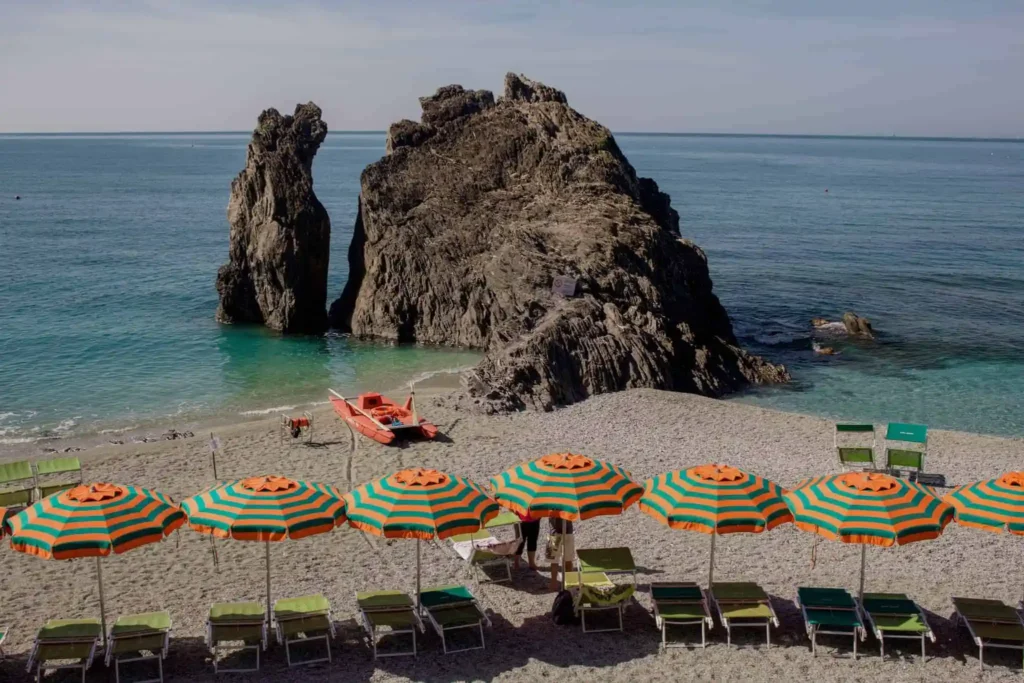
After exiting La Spezia station and boarding the Cinque Terre Express train, you’ll arrive at the northernmost settlement of these five towns within approximately 25 minutes. Monterosso presents a unique split-section layout: the new town houses the train station, while the historic old town waits beyond. I always recommend beginning here if you’re hiking-inclined, as this allows you to walk through newer development toward the only authentic sandy beach within Cinque Terre’s boundaries—a genuinely stunning stretch featuring classic Italian striped umbrellas in teal and orange that look exactly like postcard images you’ve seen. The Mediterranean views stretch endlessly, and if your schedule permits, spending an hour swimming here rejuvenates you perfectly for afternoon adventures ahead.
To access the old town’s charm, simply walk through the tunnel connecting both sections. The Aurora tower stands as an impressive landmark, while ancient castle ruins dot the hillsides, rewarding explorers with historical depth. Small streets twist through colorful buildings where locals conduct their daily lives. From this vantage point, you face a choice: either hike onward to Vernazzo via a scenic 3.3km trail requiring approximately 1.5 hours, or return to the station and board trains instead. That hiking trail is spectacular, and I cannot recommend it enough for those with even moderate fitness levels. Simply ensure your Cinque Terre Card is accessible, as staff randomly request verification before allowing trail access. If hiking feels overwhelming, the charming old town alone justifies setting aside 1-2 hours for leisurely exploration beneath those iconic umbrellas while enjoying beach snacks or early afternoon lunch at II Frantoio, where their famous focaccia satisfies both hunger and Instagram requirements.
Vernazzo
Arriving by train or completing that hike deposits you into what many consider the most genuinely picturesque village within Cinque Terre. The small harbor surrounded by vibrant colored buildings creates that exact postcard-worthy scenery your friends dream about—I’ve seen people literally speechless upon rounding corners and encountering this vista firsthand. For optimal photography, hike uphill along trails connecting to Monterosso; these elevated vantage points reveal panoramic mountain-sea-village convergences that flat harbor-level views simply cannot match. If arriving by train, definitely allocate time for climbing those hills to discover the absolute best photo locations—your Instagram followers deserve nothing less.
Walking through quaint streets here ranks among my favorite Cinque Terre moments. The narrow passages, local shops, charming cafes, and authentic atmosphere warrant slow, deliberate wandering. By this point in your day, hunger typically emerges, and Batti Batti’ Foccaceria delivers exactly what you need: delicious focaccia pizza slices that fuel your body for the challenging hike ahead toward Corniglia. The public water tap in the main square near the beach provides essential hydration—fill your bottle completely before departing, noting that taps marked “Aqua Potibile” guarantee potable quality.
This village showcases colorful houses, the medieval Doria Castle standing sentinel over the harbor, and the Church of Santa Margherita di Antiochia offering beautiful sea views from elevated positions. The famous Blue Trail hiking route connects Vernazzo directly to Monterosso, spanning roughly two miles and requiring approximately one hour 50 minutes. For dining experiences, Trattoria da Sandro specializes in seafood and local specialties while maintaining genuinely friendly service that makes you feel like locals rather than tourists. Il Pirata delle Cinque Terre offers diverse seafood preparations within a vibrant atmosphere, while Ristorante Belforte’s clifftop position delivers stunning vistas paired with menus showcasing fresh daily catches.
Corniglia
The 3.5km hiking trail from Vernazzo toward Corniglia ranks among my absolute favorite portions of this entire day trip—truly one of those moments that justified every minute of planning. The path winds gracefully through vineyards and olive groves while offering endless Mediterranean views that somehow improve with each passing kilometer. I’ve discovered little shops along this route selling lemon and orange granita—refreshingly delicious and wonderfully rejuvenating in summer conditions. The 1.5-hour journey feels shorter than expected if you maintain a leisurely pace, stopping frequently to absorb views rather than rushing toward the destination. Make absolutely certain your water bottle remains full before beginning; summer months offer virtually no shade while the sun proves relentless. Restocking at Vernazzo shops ensures you won’t arrive parched.
Here’s an insight many guide books miss: if you choose train travel instead of hiking this section, you’ll face climbing over 300 steep steps from the station to reach Corniglia, which sits perched impossibly on cliff-side terrain not easily accessible by standard routes. This geographic reality makes hiking between Vernazzo and Corniglia genuinely preferable, despite its duration. The smallest of the five villages, Corniglia warrants only a quick stroll before moving onward—it’s charming without demanding extensive exploration time.
This village stands uniquely as the only settlement not directly positioned on the sea, instead perched elevated on dramatic cliffs surrounded entirely by vineyards. Breathtaking panoramic vistas reward visitors, with narrow streets weaving through local life. The Church of San Pietro and the scenic Lardarina staircase featuring 382 steps descending toward the station represent architectural highlights. The region produces Sciacchetrà, a local wine worth sampling while absorbing panoramic views from the village center itself. Ristorante Il Gabbiano combines traditional Ligurian cuisine with fresh seafood presentations alongside remarkable sea vistas. Alberto Gelateria offers gelato variety perfect for post-meal sweet treats—stop here after dining. Trattoria da Billy emphasizes homemade pasta and seafood in a genuinely cozy atmosphere with outdoor seating inviting lingering conversations.
Manarola
This village holds legitimate claim to hosting some of Cinque Terre’s most incredible photo locations—I’ve spent hours here just capturing different lighting angles. The Punta Bonfiglio viewpoint delivers the most iconic vista of Manarola’s cascading colorful houses stacked against the water backdrop. This exact spot transforms into the prime sunset-watching location, and you’ll understand why immediately upon arrival. Beyond photography, descending toward the water rewards you with people-watching opportunities or swimming access—during summer, you’ll witness locals fearlessly jumping off rocks and plunging into crystal waters below.
From my experience, Manarola works beautifully as your dinner destination. Trattoria da Billy consistently delivers delicious food with those prized beautiful sea views you’ve been chasing all day. The oldest village within Cinque Terre, Manarola showcases stunning sunsets and picturesque scenery defined by colorful houses rising from cliff-side positions. The famous Lover’s Lane hiking trail connects Manarola directly to Riomaggiore—a roughly 20-minute scenic walk perfect for those wanting something less demanding than earlier hikes. The village maintains strong fishing heritage evident in its delicious fresh seafood preparation throughout local restaurants.
If you arrived with kids on an exceptionally hot day like I once did, you understand the challenge of maintaining enthusiasm through afternoon hours. Nessun Dorma appeared on our radar because of its fantastic reviews regarding pasta-making classes and bruschettas, but arriving to find it closed while your children grew increasingly restless forced flexibility. We settled for the nearest respectable option, endured perhaps 15 minutes of queuing—manageable compared to other wait times we’d experienced—then ordered extensively from their seafood menu. My first genuine seafood pasta materialized on that plate, and while I cannot compare it to other preparations, the flavor impressed significantly. I discovered Aperol Spritz that afternoon too, and it proved terrific for afternoon refreshment with water views. Following lunch, stopping at 5 Terre Gelateria provided delicious refreshments on that particularly hot day—gelato quality undoubtedly exceeded my expectations. For alternatives, Nessun Dorma itself delivers stunning harbor vistas perfect for casual meals or simple wine glasses. Trattoria dal Billy presents varied local dishes including fresh seafood and pasta with lovely terrace settings. Pizzeria da Antonio serves pizza lovers well with delicious variety in casual environments. Gelateria 5 Terre completes the culinary experience perfectly.
Riomaggiore
The fifth and final destination along this journey ranks among Cinque Terre’s larger villages, warranting deliberate street wandering and local shop visiting. I always descend toward the harbor, walk along the rocky waterfront until achieving perfect vantage points, then pause to absorb the full cityscape illuminated during that magical sunset hour. The breathtaking views of the entire settlement bathed in golden light justify every hiking blister you’ve accumulated throughout the day.
Restaurants abound here, and given its southernmost position, Riomaggiore carries unique characteristics. The village showcases steep terraced vineyards with vibrant buildings cascading dramatically toward the sea. Historic features include a charming harbor, the Church of San Giovanni Battista, and scenic trails connecting to other villages—making it an excellent hiking hub for those wanting additional exploration. The southernmost settlement boasts vibrant nightlife and the famous dell’Amore Lovers Lane hiking trail attracting couples specifically. A’Pie’ de Ma’ presents charming restaurant ambiance with rustic vibes, emphasizing fresh seafood and local wines. Il Pescato Cucinato specializes in fresh seafood dishes showcasing daily local catches. La Lampara offers traditional Ligurian dishes and seafood with lovely harbor views within genuinely cozy settings.
Early morning visits reveal stunning colorful landscapes and harbors less crowded than afternoon hours. I spent one full hour here during early morning, genuinely enjoying that beautiful sight before crowds arrived, discovering that timing made enormous differences in experience quality. Wandering through charming streets for entire hours, grabbing fried seafood cones (incredibly popular here with storefronts displaying them prominently), and simply observing local life creates memories exceeding any famous attraction visit. The 20-minute scenic hiking trail known as the Path of Love connects Riomaggiore toward Manarola, offering another dimension for those wanting additional physical activity after establishing themselves in this village.
Train to Either Manarola or Riomaggiore
At this critical point, you face a strategic decision affecting your sunset experience: which village will host your day’s culmination? All Cinque Terre settlements offer genuine viewpoint advantages for sunset observation, though Manarola has earned reputation as the most popular choice among photographers. During my previous visits, I’ve spent sunset hours in Riomaggiore, achieving spectacular results that justified the less-celebrated reputation—ultimately, the decision remains entirely yours based on personal preferences.
Should you prefer Manarola’s setting, a logical route involves training from Corniglia to Riomaggiore initially, then making your way back toward Manarola for sunset observation. The towns sit only minutes apart by train, meaning backtracking doesn’t genuinely inconvenience your schedule. This flexibility reveals how interconnected these villages actually are, allowing you to optimize your path based on real-time conditions and evolving preferences throughout your day.
Getting Back to Pisa from Cinque Terre
Your return journey mirrors your arrival route: board the Cinque Terre Express train back toward La Spezia, then switch trains for your Pisa-bound journey. Here’s my strategic advantage: I intentionally delay booking return tickets until day’s end, when I genuinely know my completion timeline. Using the Trenitalia app for this final booking provides flexibility—if sunset-watching extends longer than anticipated or if you discover an unexpected dinner reservation at a restaurant previously unknown, you simply adjust accordingly. This approach transforms potential frustration into genuine freedom, allowing you to maximize your remaining daylight or evening experiences without watching clocks obsessively.
Tips for Your Day Trip from Pisa to Cinque Terre
High season complications demand preparation that casual travelers often underestimate. From May through September, Cinque Terre experiences extreme overcrowding, especially along train corridors where dense passenger loads create genuinely challenging boarding situations. I’ve experienced scenarios where becoming unable to physically board an already-full train required waiting for the subsequent service—which inevitably arrived equally packed. Plan accordingly by adding buffer time into your schedule; expecting train delays and crowding removes disappointment when inevitable delays occur.
The shoulder seasons—April through May, then late September into October—deliver markedly calmer experiences without surrendering weather quality. These periods offer pleasant temperatures, adequate daylight, and substantially reduced human congestion, though spring weather remains unpredictable, occasionally introducing rain into otherwise perfect days.
Physical preparation matters more than most travelers recognize. Bring protective hat, reliable sunscreen, and refillable water bottle—days get genuinely hot with sun proving harsh. I’ve witnessed unprepared visitors struggling significantly by midday, while prepared travelers maintained enthusiasm throughout. Comfortable shoes prove absolutely essential for hiking rocky, uneven terrain throughout village exploration. While some adventurous souls hike in sandals like Birkenstocks or similar minimalist footwear, sturdy hiking-appropriate shoes provide superior support and safety—I observed someone successfully completing the entire experience in Birkenstocks, though they admitted retrospective regret.
Acquiring your Cinque Terre Card in advance eliminates station lines entirely, transforming precious minutes into actual exploration time rather than queuing frustration. The early morning strategy cannot be overstated: attempting to depart Pisa between 7-8am genuinely beats crowds while providing maximum daylight for your adventure. This single decision cascades beneficially throughout your entire experience.
Pack swimwear if visiting warm months—Monterosso’s beach and Manarola’s rock-side swimming locations warrant taking full advantage of Mediterranean access. Your entire experience improves dramatically when you’re not mentally noting missed swimming opportunities.
Restaurant reservations deserve advance attention. While grab-and-go options (pizza, sandwiches, quick provisions) exist everywhere, legitimate dine-in experiences require calling restaurants several days beforehand to secure tables. My family’s experience rushing from location to location searching for available seating reinforced this lesson permanently.
Regarding transportation philosophy: absolutely do not drive directly to Cinque Terre villages. Train travel proves faster, infinitely more convenient, eliminates parking stress entirely, and costs less when factoring in impossible-to-find parking spaces and premium rates. If you’ve driven to La Spezia area, park directly underneath the train station and utilize regional trains connecting these villages.
Hiking between villages deserves genuine consideration if your fitness level permits. The roughly two-hour hike from Monterosso toward Vernazzo, followed by the approximately 1.5-hour segment from Vernazzo to Corniglia, covers stunning territory rewarding physical effort with unobstructed views. Comfortable shoes and water hydration prove absolutely essential. Each village possesses its own charm and culinary character—sample local specialties including pesto, fresh seafood preparations, and focaccia varying subtly across communities.
Know your train schedules. While trains run frequently, understanding timetable specifics prevents long waits and optimizes your limited daylight hours. With restricted time available, scheduling specific duration within each village helps ensure missing nothing essential to your personal priorities.
Maximize your day starting as early as feasible, avoiding parking queues if driving and preventing crowded train congestion. Choose villages strategically if unable visiting all five. Monterosso al Mare, Vernazzo, Corniglia, Manarola, and Riomaggiore each merit visitation, though focusing on your personal interests—perhaps two or three that genuinely appeal to you—makes better sense than rushing through five at superficial speed.
Can you do both Pisa and Cinque Terre in the same day?
Yes, technically this works, though reality requires honest assessment. Rushed does accurately describe this approach, and comprehensive Cinque Terre exploration becomes genuinely unlikely. If you’re based in Pisa and determined to experience both destinations, allocate time for seeing the famous leaning tower structure and perhaps 2-3 Cinque Terre villages maximum. The mathematics simply don’t favor comprehensive exploration of Pisa’s attractions alongside meaningful Cinque Terre engagement—something necessarily gets sacrificed in this scenario.
What’s your opinion about going on Easter weekend 2024?
I’d genuinely recommend avoiding super-touristy Italian destinations like Cinque Terre specifically during Easter weekend periods. The overcrowding becomes truly extreme because both Italians and other Europeans observe holiday schedules simultaneously, creating peak-season conditions squared. I’ve personally witnessed Venice during Easter weekend, and the experience bordered on overwhelming—wall-to-wall crowds throughout every passage, attractions requiring hours to access, and general tourist infrastructure buckling under demand.
If Easter represents your only visitation window, go ahead and plan your visit, just genuinely expect significant crowds everywhere. Otherwise, March or April outside actual holiday weekends offer nicer experiences while avoiding holiday-driven surges. Spring weather carries unpredictability though—rain becomes quite possible during these shoulder-season months, so pack accordingly.
Can you recommend a nice hotel in Cinque Terre?
Our existing comprehensive article specifically features the best hotels throughout Cinque Terre, with detailed reviews and recommendations covering accommodation across all villages. Feel free checking out that dedicated resource for thorough hotel guidance.
What about visiting in January?
January definitely means cold temperatures—I’ve never personally visited Cinque Terre during this month, though I’ve gathered that accessing the villages presents no genuine complications. Winter visits offer remarkable quiet and peaceful atmosphere compared to summer chaos. I’d suggest basing yourself in Florence, then selecting somewhere like Siena or Lucca as your secondary headquarters, allowing you flexibility exploring multiple regions without constant relocation stress.