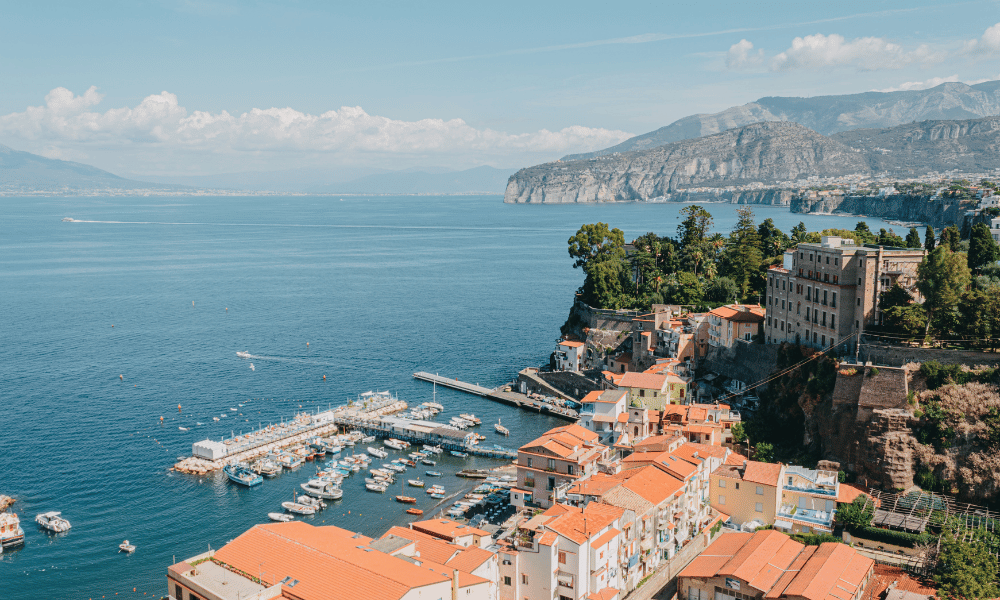
Quick Answer: Sorrento at a Glance
Best for: First-time visitors to Italy’s Amalfi Coast region who want an affordable, authentic base with easy access to everything.
Budget: €120-180/day per person for comfortable travel (30-50% cheaper than Positano/Amalfi)
Top Activities:
- Beach clubs at Marina Piccola (€15-25/sunbed)
- Boat tours to Amalfi Coast & Capri (€75-120)
- Pompeii day trip by train (30 min, €4)
- Lemon farm tours with limoncello tasting (€40-50)
- Path of the Gods hike for stunning coastal views
How Long: 4-7 days ideal (3 days minimum for highlights + 1-2 day trips)
Best Time: June or September for perfect weather without peak crowds. Avoid July-August (40-60% price premiums + overwhelming crowds).
Why Sorrento Over Positano? Same stunning views and Amalfi Coast access at half the cost, plus better variety of restaurants, accommodations, and evening entertainment. Use Sorrento as your base and day-trip to expensive towns.
Getting Around: SITA buses (€3-4), ferries (€18-28), or private drivers (€150-450) make reaching Positano, Amalfi, and Capri effortless.
Standing on that terrace overlooking the Bay of Naples, I realized Sorrento wasn’t just another stop on the typical Italian getaway—it was the kind of place that made me question why anyone would splurge hundreds of dollars staying in Positano when this gem offered everything at a fraction of the cost. My first trip here changed how I approach coastal towns entirely, and after spending time exploring the gravity-defying cliffside architecture and sapphire blue waters, I understood why this central base draws visitors from around the world.
The affordability and practicality of Sorrento became clear within hours of arrival. Unlike the tourist-driven overtourism that clogs Amalfi and Positano during peak summer months, this town felt comfortable, less congested, and authentically Italian. Sure, tourists abound here too, but there’s a better fit between local life and travel wish lists. The historical sites blend seamlessly with natural wonders, creating options for every style of travel—whether you prioritize cultural sites like museums and historical areas, or you’re more adventurous, seeking hiking trails and boating excursions.
During my 5-day stay, I discovered that balance matters. Some days called for exploring and walking until jet lag caught up with me, while others demanded nothing more than relaxing by the water or lounging by the pool. This rhythm of energy and rejuvenation became essential for the next adventure, and Sorrento accommodated both extremes perfectly. From the moment I set off each morning, whether heading to different areas along the coast or simply eating gelato shops’ offerings on charming streets, every choice felt right.
The terrain here supports an incredible citrus cultivation industry, and you’ll spot lemon trees everywhere—in groves, along side streets, even cascading over restaurant patios. It’s impossible to miss how lemons define this region’s cultural pastime, from limoncello bottles lining every shop window to the yellow fruit adorning ceramics and leather goods. Shopping became less about picking souvenirs for souvenir’s sake and more about finding useful items that brought those trip memories into everyday tasks back home.
Lemon Farm Tour
Table of Contents
ToggleWalking through local lemon farms feels like stepping into a family’s private world, where generations have perfected the grafting process and understood exactly how this climate makes their citrus stand out. Villa Beatrice and similar family-owned farms sit just outside the city center, requiring only about a 10-15 minute drive from downtown Sorrento, and most provide transportation that eliminates any hassle. The moment you arrive, kind and welcoming staff lead small groups through informative walks that go far beyond just lemon groves.
Olive trees punctuate the landscape, and guides explain how families integrate multiple crops, creating sustainable ecosystems that have been their livelihoods for decades. After exploring the groves, you’ll gather on terraces offering stunning views overlooking the entire coastline. Fresh focaccia bread and extra virgin olive oil await—simple appetizers that somehow taste better than anything you’d find in fancier restaurants along the main square.
Then comes the limoncello tasting. Here’s where the experience takes an unexpected turn: they encourage you to sample their homemade limoncello and orangecello, but the proper fashion is to sip slowly, not down the entire glass. Tours typically last 2-2.5 hours and cost between €40-50 per person as of 2025, which remains remarkably affordable compared to other lemon experiences in the region. The intimate setting creates that among-friends atmosphere rather than just another tourist checking boxes off a list.
Many farms also offer hands-on workshops where you can create your own limoncello to take home—imagine returning with a personally produced lemon liqueur that carries your Sorrento memories in every sip. Some locations like Giardini di Cataldo combine the tasting experience with artisanal products including homemade jams, biscuits, and traditional Neapolitan pastries. Their lemon gelato, enjoyed in gardens surrounded by actual lemon trees, ranks among the best you’ll try in Sorrento.
Beach and Beach Clubs in Sorrento
The first time I descended the hill toward Sorrento’s coast, I expected traditional sandy beaches but discovered something entirely different—piers extending into the crystal clear water, each marked by distinct umbrella colors and changing rooms. Peter’s Beach caught my attention immediately, recommended by a local who’d grown up spending summers there. Unlike the expensive clubs in Positano that demand hundreds of euros per person, beach clubs here charge approximately €20-25 per sunbed for 2025, plus whatever you spend on food and drinks throughout your day.
Recent visitor reports from 2025 indicate pricing has increased slightly, with some reporting €67 for a family setup (2 umbrellas and 4 chairs) or around €15-20 per individual sunbed on the platform areas. The pricing varies by season and location within the beach club—spots closer to the water or on the floating platforms typically cost more than those on the main deck. What remains consistent is the all-day access, meaning once you’ve secured your spot, it’s yours from opening until you decide to leave.
Arriving at 9am gives you that precious solitude before crowds descend around noon. By 10am, you can claim your spot and settle into that perfect rhythm: reading pages from a good book, ordering snacks or drinks from attentive servers who deliver everything directly to your chair, then taking a dip whenever the heat becomes too much. The service quality varies by location—Peter’s Beach and other established clubs maintain professional waitstaff, especially when tipping is involved (even though Europe doesn’t rely on it like the US, it significantly improves attention and service speed).
Peter’s Beach stays open until 1am most nights (except Tuesdays), transforming into a completely different vibe with live music on Wednesdays and DJ sets on Fridays or Sundays. The evening atmosphere features sunset aperitivos with expertly crafted cocktails and complimentary tapas, where sailboats and e-foil riders create that quintessential Mediterranean backdrop. Musical events require reservations due to limited capacity, but they offer unique experiences steps from the water.
Getting down there requires planning. The Sorrento Lift costs €1.10 per person and provides quick access from Villa Comunale Park down to Marina Piccola, or you can walk the gentle path that takes just a few minutes. Some hotels have their own elevators directly to the water, which proves incredibly helpful after long exploration days. Once you’ve descended, you’ll face multiple beach club choices along Marina Piccola.
The small public beach area exists but lacks amenities that make a full day comfortable. Instead, choose from established beach clubs based on available chairs, atmosphere, and staff friendliness. Since you rent your chair for the entire day, it becomes your little slice of Mediterranean heaven. Restaurants attached to each club offer sit-down dining or waitstaff service right at your spot—ordering through QR code menus has become standard at many locations as of 2025.
Pro tips: Rent an umbrella even if morning feels cool, because as the day heats up, shade becomes essential. Bring a magazine or download content to your devices for entertainment between long stretches of simply existing by the sea. The main attraction isn’t manufactured thrills but that peaceful, aesthetic Italian beach day where time slows and sapphire blue waters work their magic on stress levels. Free hot shower services at venues like Peter’s allow you to extend your visit with aperitifs and dinner after beach time.
Boat Tour of Positano, Amalfi, and the Coast
Booking a boat tour defines entire Sorrento vacations for many visitors. Water plays such an important part in experiencing coastal destinations—whether it’s viewing from a river, lake, or ocean, seeing these towns from the sea offers perspectives impossible to capture from shore. The picturesque views of the Amalfi Coast from boats create those postcard moments that justify the expense.
Research options through GetYourGuide, Viator, and local operators, weighing the main choice between shared experiences (more affordable at €60-90 per person) or private charters (€400-800+ depending on group size and duration). Shared tours typically accommodate 10-15 people and follow set itineraries, while private options let you control pace, stops, and swimming locations. Both styles have merit—shared tours create social dynamics and cost less, while private charters offer flexibility and intimate experiences.
Popular operators like La Sibilla continue receiving strong reviews in 2025. Tours departing from Praiano sometimes offer better rates than Sorrento departures, and that detour provides an unexpected coastal driving experience. Most full-day tours (7-8 hours) include complimentary drinks (prosecco, limoncello, soft drinks), snacks, and sometimes light meals. The captain or guide points out landmarks, shares local history, and ensures everyone stays comfortable and safe.
Typical routes head up the Amalfi Coast first, hugging dramatic cliffs where towns seem to defy gravity. Most boats circle Capri, offering those iconic perspectives of the Faraglioni rocks and cliff-side villas. Swimming stops at secluded coves let you dive into impossibly clear water—these moments, floating in the Tyrrhenian Sea with ancient cliffs rising around you, become vacation highlights that photos can’t quite capture.
When docking at Amalfi and Positano, expect 60-90 minutes free time per location. In Amalfi, head straight for the iconic lemon sorbet at Il Pianeta Del Gelato or explore the cathedral and narrow streets. Positano’s pastel buildings stacked up the hillside create that Instagram-perfect backdrop, though be prepared for crowds and elevated prices. One common mistake: relying on boat captains’ restaurant recommendations on Capri—these often lead to tourist-focused establishments. Research and choose your lunch spot in advance for more authentic experiences.
The journey back to Sorrento usually includes additional swimming, prosecco toasts, and opportunities to feed fish that swarm around boats. Some tours incorporate cave visits—the famous Emerald Grotto or smaller hidden caves along the coast. Tours focused solely on caves and grottos appeal to geology enthusiasts and those seeking fewer tourist-heavy stops.
For booking: Advance reservations (2-4 weeks ahead for peak season) provide peace of mind and better selection. Communication typically happens via email or WhatsApp, with payment often required the day before departure. Prices in 2025 range from €75-120 for shared group tours to €500-1000+ for private full-day charters depending on boat size and included amenities.
Visit Pompeii and Day Trip Planning
Pompeii’s name triggers immediate recognition, but standing in the actual ruins makes history tangible in ways no textbook can match. The town was famously buried under volcanic ash during Mount Vesuvius’s catastrophic eruption in AD 79, and today it stands as one of Italy’s most visited tourist attractions. What makes it a UNESCO World Heritage Site is how remarkably well-preserved everything remains—walking through feels like the ancient Roman civilization froze mid-routine, with daily life details visible in bakeries, homes, and public spaces.
The whole archaeological park is massive, and you can easily spend 4-6 hours wandering if you don’t have a plan. Knowing what you want to see in advance helps—whether that’s the amphitheaters, forums, Roman baths, theaters, bakeries, or the famous thermopoliums (fast food vendors) that prove modern life isn’t so different from thousands of years ago. The modernized city that archaeologists continue uncovering reveals drainage systems, a winery, and daily life details that become pretty fascinating once you understand the context.
Major 2025 Changes: As of November 2024, Pompeii introduced personalized tickets with visitor names and a daily admission cap of 20,000 visitors. During peak season (April 1 – October 31, 2025), time slots divide admissions: 9am-1pm allows maximum 15,000 entries, while 1pm-5:30pm allows 5,000 entries. This system aims to protect the archaeological heritage and improve visitor safety, particularly for earthquake scenarios.
Ticket Options and Pricing (2025):
- Pompeii Express (€18): Covers most excavations but NOT Villa dei Misteri area. Sufficient for many first-time visitors wanting core highlights.
- Pompeii Plus (€22): Includes Express areas plus Villa dei Misteri, Villa di Diomede, and Villa Regina in Boscoreale with Antiquarium. Shuttle service between sites included.
- Grande Pompei (€26): Adds Oplontis and Stabiae villas to the Pompeii Plus sites—ideal for archaeology enthusiasts planning multiple days.
- Youth Tickets (€2): EU citizens aged 18-24 (reduced fee must be purchased at ticket office with ID).
- Free Entry: Children under 18, first Sunday of each month for all visitors, EU citizens with disabilities plus one companion.
Online ticket purchases through official sources (TicketOne) or reputable resellers (GetYourGuide, Viator) bypass the ticket office queue but cost approximately €24-27 due to booking fees. However, reduced and free tickets must still be obtained at physical ticket offices with proper identification.
Getting to Pompeii from Sorrento remains straightforward—it’s perfectly positioned between Naples and Sorrento, making it a perfect day trip from either city. The Circumvesuviana train from Sorrento to Pompei Scavi Villa dei Misteri station takes 30-40 minutes and costs under €5. Trains run regularly throughout the day, though checking schedules via the hotel or online (Trenitalia app) helps plan departure times. The station sits just 5 minutes walking from the main Porta Marina entrance.
Alternative transportation includes taxis (€40-60 one way), private drivers, or guided tour packages that include transportation, skip-the-line entry, and expert guides. Guided tours from Sorrento typically cost €65-90 per person and last 5-7 hours total. Some comprehensive options combine Pompeii with Mount Vesuvius summit visits and pizza lunch on the volcano’s slopes—these full-day experiences run €100-140 per person but eliminate all logistical concerns.
Visiting Strategy: Summer (June-August) means extreme heat. If visiting during these months, arrive when gates open (9am) to beat both heat and crowds. Spring (April-May) and fall (September-October) offer mild weather and smaller crowds—September particularly sees fewer tour groups as European schools return to session. Winter visits (November-March) have shortest hours (9am-5pm, last entry 3:30pm) but offer near-empty ruins and comfortable temperatures.
Self-guided visitors benefit from Rick Steves’ free audio tour or the official Pompeii app, both providing historical context and suggested routes. A clever trick: bring wireless earbuds so two people can share one device via Bluetooth, each wearing one earbud while following the narrated route together. The Rick Steves tour covers major highlights in about 3 hours, though Amphitheater and outlying areas add significant walking.
Tour guides at the entrance offer services for €50-80 per group (split among your party or join others to share costs). Professional guides provide context and stories that bring ruins to life—explaining how aqueducts functioned, pointing out ancient graffiti, sharing details about excavation discoveries. For those preferring structured experiences, booking guided tours in advance ensures knowledgeable English-speaking guides and avoids entrance queue times.
Shopping and Souvenir Hunting in Sorrento
The temptation to buy everything in Positano and Amalfi hits hard when first visiting those towns, but waiting until returning to Sorrento proves wiser. Shops along these coastal communities stock similar items—leather goods, ceramics, lemon-themed products—but you’ll consistently find 20-40% better prices in Sorrento’s less touristy streets compared to Positano’s premium-priced boutiques.
Exploring charming streets and browsing souvenir shops becomes a delightful daily activity. Start your exploration at Piazza Tasso, the main square where various streets branch into the city center’s maze. From here, Corso Italia (the main shopping street) extends for one kilometer, partially pedestrianized and lined with everything from international brands to local artisan shops. Just avoid shopping immediately after limoncello tastings—that’s how kitchenware ends up shipped home at inflated prices (though unwrapping those self-sent gifts after arriving back did bring joy).
Sorrento’s identity as a tourist-driven city means souvenir shops abound, but the most authentic finds include handcrafted leather goods, hand-painted ceramics, and anything featuring those iconic lemons. The town has maintained traditional craftsmanship—you can still watch cobblers hammer custom sandals together, see ceramic painters adding intricate details to plates, and observe woodworkers creating inlaid (intarsio) pieces.
Where to Shop:
- Corso Italia: Main shopping thoroughfare with mix of international chains and local shops. Prices moderate but convenient for one-stop shopping.
- Side Streets off Corso Italia: Better prices and more authentic atmosphere. Via San Cesareo particularly dense with artisan shops.
- Via Correale: Less crowded, features boutiques and craft shops. Giardini di Cataldo located here offers limoncello products and tastings.
- Corner Market: Perfect little shop stocking various limoncello brands. Staff genuinely knowledgeable about quality differences and happy to let you sample. Villa Massa consistently ranked among top local producers.
- Balleri: Upscale shop (also on Capri) specializing in handmade leather slides and sandals. The owner/designer sometimes visits to help customers personally. Yellow lemon designs on black silk have become signature items.
What to Buy:
- Custom Sandals: Watch pieces hammered together after selecting colors and styles. Prices range €40-80 depending on complexity. These last for years and break in beautifully.
- Limoncello: Local producers offer superior quality to mass-market brands. Corner Market, Giardini di Cataldo, and I Giardini di Cataldo all stock excellent selections. Prices €15-30 per bottle.
- Ceramics: Hand-painted plates, spoon rests, serving dishes featuring blue-and-white Sorrento patterns or bright lemon designs. Prices €10-50+ depending on size and detail work.
- Intarsio (Inlaid Wood): Traditional craft using different woods to create intricate patterns. Small boxes start around €20, larger pieces (tables, frames) reach hundreds.
- Leather Goods: Bags, wallets, belts made from local leather. Quality varies significantly—look for soft, supple leather and clean stitching. Prices €30-200+.
Shopping Tips for 2025: On your first day, browse without buying to get a feel for quality levels and price ranges. Notice which shops still produce items on-site versus those reselling mass-produced goods. Family-run operations typically offer better quality and more authentic experiences, plus they’re often willing to negotiate on multiple items.
Consider practicality—items you’ll actually use integrate trip memories into daily life far better than dust-collectors. Postcards sent to yourself or loved ones cost under €2 and capture moments perfectly. Artwork should have a designated spot in mind before purchasing. The souvenirs that bring the most joy years later are those that serve functions: cooking with that ceramic serving dish, wearing those sandals, pouring that limoncello for guests.
Restaurants in the main square charge premium prices and often cater to tourist expectations over authentic cuisine. Walking just two blocks down side streets reveals trattorias where locals actually eat—lower prices, better food, more welcoming atmosphere. The same principle applies to shopping: venture beyond the obvious tourist zones for better values and authentic interactions.
Italian Cooking Classes and Culinary Adventures
Italian cuisine hits differently when you have access to fresh ingredients, wood ovens, and a local guiding you through techniques with knowledgeable instruction. You’re bound to create one of the most incredible meals of your life during hands-on cooking classes, and with so many appetizing dishes to choose from, narrowing down which experience to book requires consideration of your culinary interests.
Pasta and Tiramisu Cooking Classes (€75-95 per person, 2025): These sessions offer what many consider the holy trinity of Italian food. You’ll learn to cook pasta from scratch, forming your own dough and working with your hands until the texture feels right. Creating a classic Italian dessert like tiramisu alongside that fresh pasta makes for a complete meal, and enjoying the fruit of your labor while being served wine (which is always best when consumed in Italy) turns cooking into celebration.
Most classes last 3-4 hours and include aperitivos (appetizers), the cooking instruction itself, and the sit-down meal where you eat what you’ve prepared. Locations vary—some operate from restaurants during off-hours, others from family homes or dedicated cooking schools. Small group sizes (8-12 people) ensure individualized attention and that comfortable, intimate atmosphere.
Pizza Making Classes (€65-85 per person, 2025): Alternative options focus on pizza lessons including wine and limoncello. You’ll cook one of Italy’s most iconic dishes just an hour from where it originated in Naples. These tours typically have you create seasonal pizzas using fresh, local ingredients specific to whatever’s available that day. The sit-down dinner usually includes appetizers, vegetables, traditional desserts, and multiple rounds of wine and limoncello to toast your culinary accomplishments.
Wood-fired ovens make a dramatic difference—the high heat (800°F+) and smoke flavor transform simple dough and toppings into something transcendent. Watching your creation bubble and char at the edges while your instructor explains technique creates memorable experiences beyond just the eating.
Advanced Options (€90-120 per person): Some providers offer comprehensive experiences combining multiple dishes: gnocchi, eggplant parmigiana, mozzarella-making demonstrations, and regional specialties. These typically last 4-5 hours and involve more hands-on work. One particularly popular option includes transportation to a countryside farm where you’ll cook using ingredients grown on-site, tour the property, and enjoy your meal overlooking vineyards or lemon groves.
Booking Tips: Classes fill quickly during peak season (June-August), so booking 2-3 weeks in advance recommended. Many locations offer morning or evening sessions—evening classes have more relaxed atmospheres and pair well with sunset views. Read recent reviews to gauge instructor quality and group dynamics. Some classes attract mostly couples, others see families or solo travelers, so choose based on your preferred social environment.
Popular providers receiving consistent 2025 reviews include family-run operations advertising through GetYourGuide, Viator, and local hotel concierges. Prices range €60-120 per person depending on duration, ingredients used, and whether transportation is included. The investment proves worthwhile—you’ll return home with recipes, techniques, and memories of creating authentic Italian food with your own hands.
Path of the Gods Hiking Experience
For first-timers seeking an optional activity beyond beaches and boat tours, hiking the Path of the Gods (Sentiero degli Dei in Italian) offers breathtaking views that make every challenging step worthwhile. This stunning trail stretches from the village of Bomerano to Nocelle near Positano, and takes about 3-5 hours to complete depending on your pace and the number of photo stops you make along the way.
The trail itself is well-marked and moderately challenging, making it suitable for most hikers with reasonable fitness levels. Along the way, you’ll encounter ancient mule paths that have connected these communities for centuries, dramatic cliffside views over the Tyrrhenian Sea, and charming rural scenery dotted with wildflowers and Mediterranean vegetation. Be sure to bring plenty of water—dehydration hits fast when you’re exposed to sun for hours—and wear sturdy hiking shoes that can handle rocky, uneven terrain.
Packing snacks or a picnic lunch lets you enjoy extended breaks at scenic spots without rushing back. The trail covers approximately 7.8 kilometers (4.8 miles) with elevation changes of about 600 meters. Most hikers find the Bomerano-to-Nocelle direction easier as it’s primarily downhill, though some prefer the opposite direction for the sense of accomplishment when reaching higher elevations.
Getting There (2025): From Sorrento, take the SITA bus toward Amalfi and get off at Bomerano (about 45 minutes, €3-4). The bus runs several times daily but schedules vary seasonally—check current times through your hotel or the SITA Sud website. Returning from Nocelle, you can walk down to Positano (steep descent, 30-40 minutes) and catch ferry back to Sorrento, or take local shuttle buses when available.
For an even more enriching experience, consider joining guided hikes (€45-65 per person in 2025). Local guides share fascinating insights about the history and geology of the area, point out lesser-known sights and hidden gems that you’d walk right past otherwise, and for beginner hikers, having that expertise might make you feel more at ease with the challenging sections. Some guided options include transportation from Sorrento, eliminating the need to navigate bus schedules.
Best Times: Spring (April-May) and fall (September-October) offer ideal conditions—mild temperatures, clear skies, and blooming wildflowers in spring. Summer heat (June-August) makes the hike significantly more challenging and requires early morning starts (before 8am). Winter occasionally sees trail closures due to mudslides or dangerous conditions—check local reports before attempting.
The Path of the Gods consistently ranks among Italy’s most scenic hikes, and that popularity means you’ll rarely hike alone. Peak season sees hundreds of hikers daily, particularly in middle sections with the most dramatic views. Early morning or late afternoon hikes encounter fewer crowds and benefit from better lighting for photography.
Day Trips to Capri and Island Exploration
The island of Capri maintains its status as a popular day trip destination easily accessible from Sorrento, despite mixed reviews from visitors. Ferries from Sorrento’s Marina Piccola run regularly year-round (weather permitting), with more frequent service April-October. The journey takes 20-25 minutes and costs €20-25 round-trip in 2025. Hydrofoils run faster (15 minutes) but cost slightly more (€25-30 round-trip).
What to See on Capri:
- Piazzetta (Main Square): Heart of Capri town, lined with expensive cafes where coffee costs €8-10. More about people-watching than affordability.
- Augustus Gardens: Beautiful manicured gardens with stunning coastal views. Entry €2.
- Villa Jovis: Ancient Roman ruins of Emperor Tiberius’s palace. Spectacular views, moderate uphill walk. Entry €4.
- Blue Grotto: Famous sea cave with ethereal blue water. Entry €18 (includes rowboat transfer). Often closes due to sea conditions, and queues can exceed 90 minutes in peak season.
- Anacapri: Quieter town on the island’s upper part, reachable by bus. Monte Solaro chairlift (€12 one-way, €16 round-trip) offers panoramic views.
- Marina Piccola: Small beach area, less crowded than Capri town but still touristy. Beach club chairs €20-30.
Honest Assessment: Capri divides visitors. Some find it enchanting despite tourist crowds and elevated prices. Others feel it’s become too commercialized, with luxury boutiques replacing authentic local character. The island’s natural beauty is undeniable—dramatic cliffs, hidden coves, lush vegetation—but accessing it often means navigating crowds and paying premium prices for basic services.
Budget-conscious travelers report spending €80-120 per person for a day trip including ferry, lunch, and one or two paid attractions. Luxury-focused visitors easily spend €200-300+ when factoring in guided tours, fancy meals, and multiple activities. The question becomes whether Capri’s specific appeal (celebrity history, dramatic scenery, upscale atmosphere) justifies the cost and crowds compared to other Amalfi Coast destinations.
Alternatives to Independent Visits: Guided boat tours circling Capri (without landing) offer those iconic views of Faraglioni rocks and sea caves for €60-90 per person. Some travelers prefer this approach—seeing Capri’s most photogenic features from the water while avoiding on-island tourist infrastructure. Full-day boat tours from Sorrento often include Capri circles plus stops at Positano and Amalfi for more comprehensive experiences.
Accommodation: Florida Hostel and Hotel
In an attempt to make my trip to Italy as affordable as possible, I located an amazing hostel in Sorrento that doubles as a hotel. Known as the Florida Hostel & Hotel, this stunning property impressed me as soon as I set foot through its gates. The hostel rooms are located in a separate section from regular hotel rooms, but guests get identical access to all property benefits regardless of which accommodation type they book.
The property includes a beautiful swimming pool where lazy afternoons unfold naturally, a patio restaurant serving excellent food at reasonable prices (€12-18 for pasta dishes, €15-22 for mains in 2025), and lounge seating scattered under lemon groves creating perfect unwinding atmospheres. On Friday nights, they host pizza nights for all guests where pizzas get cooked in an outdoor wood oven. That remains one of the best pizzas encountered on my entire trip despite trying dozens throughout Italy.
The staff maintains that balance of friendly and helpful without being overbearing, and the peaceful environment exists just steps from rooms yet completely outside the main tourist congestion areas. The 25-minute walk from Piazza Tasso means either building in extra time for getting around or accepting that you’re trading central convenience for tranquility. The property easily compensates for that distance with its aesthetics and amenities—having a pool to return to after hot exploration days felt essential rather than optional.
2025 Pricing and Booking: Hostel dorm beds start around €25-35 per night depending on season and room size (4-bed, 6-bed, or 8-bed configurations). Private rooms in the hostel section run €60-90 per night. Hotel-side standard rooms cost €90-140 per night, while superior rooms with better views or larger spaces reach €120-180. All rates include breakfast—typical Italian continental spread with pastries, bread, jam, fruit, yogurt, juice, and coffee.
Free WiFi throughout, air conditioning (essential for summer), and the pool access come standard. The restaurant operates for lunch and dinner with à la carte menus, or you can walk to nearby restaurants if you prefer variety. Several grocery stores within 10 minutes provide self-catering options for budget-conscious travelers.
Booking directly through their website sometimes offers better rates than aggregator sites, particularly for longer stays (5+ nights). Peak season (July-August) requires booking 2-3 months in advance as the property fills completely. Shoulder seasons (April-May, September-October) offer more availability and often 10-20% lower rates than high season while maintaining beautiful weather.
Planning Your Sorrento Visit: Duration and Timing
Deciding how many days to spend in Sorrento can feel tricky because there’s just so much to see and do within easy reach. Most travelers find 4-7 days strikes the right balance—long enough to explore Sorrento itself thoroughly while fitting in 2-3 day trips to nearby attractions without feeling rushed. Some extend to 10-14 days, using Sorrento as a base for comprehensive Amalfi Coast and Campania region exploration.
The proximity to beautiful beaches, charming coastal towns, and numerous day trip opportunities makes Sorrento function as the perfect Italian vacation spot for those wanting options without constant hotel changes. With all the first-timer activities, a minimum of three to four days allows you to explore Sorrento’s highlights while fitting in a day trip to Pompeii’s ancient ruins, a boat excursion along the Amalfi Coast, or a visit to the island of Capri.
If you have a full week (7 days), you can relax properly and fully immerse yourself in the Sorrentine lifestyle—spending leisurely days at the beach, savoring local cuisine without rushing between restaurants, and exploring the Amalfi Coast’s hidden gems that tour groups never reach. Sample itinerary: Day 1 (arrive, explore Sorrento), Day 2 (beach day), Day 3 (Pompeii), Day 4 (boat tour Amalfi Coast), Day 5 (Path of the Gods hike or Capri), Day 6 (cooking class and shopping), Day 7 (relaxation/departure).
With more days available, you can venture to lesser-known destinations like Ravello (gorgeous gardens and panoramic views), Paestum (Greek temples south of Sorrento), Herculaneum (smaller, better-preserved than Pompeii), or spend multiple days properly exploring Naples. The key is balancing activity with rest so you don’t return home needing a vacation from your vacation.
Best Time to Visit (Updated 2025):
The best month to visit Sorrento depends on what you’re looking for in your trip, though June and September increasingly emerge as sweet spots for most travelers. These months offer that great balance of pleasant climate and manageable crowds compared to the peak summer chaos of July and August.
June (Excellent Choice): I visited in June and enjoyed amazing weather with warm temperatures (average 24-28°C/75-82°F) and plenty of sunshine. This month sees fewer crowds than July-August while maintaining full activity schedules—all boat tours operating, restaurants fully staffed, beach clubs at capacity but not overwhelming. The sea is warm enough for comfortable swimming (21-23°C/70-73°F), and Sorrento’s vibrant atmosphere hits full swing with lively outdoor cafes, weekly markets, and local festivals revealing authentic character.
September (Increasingly Popular): Many seasoned travelers now prefer September—European school holidays end, tour group numbers drop by 30-40%, and prices decrease 15-25% compared to August. Weather remains excellent (23-27°C/73-81°F), sea temperatures peak (24-25°C/75-77°F), and the frantic energy mellows into more relaxed rhythms. Restaurants and shops remain fully operational but feel less rushed and more welcoming.
April-May (Spring Shoulder Season): Beautiful blooming flowers cascade over walls and balconies, temperatures hover at comfortable 18-22°C (64-72°F), and tourist numbers remain moderate. Some beach clubs and boat tours run limited schedules early April but fully operational by May. Sea temperatures (15-19°C/59-66°F) may feel cool for extended swimming, but pool and hiking weather proves ideal.
October (Fall Shoulder Season): Mild weather (18-23°C/64-73°F), gorgeous autumn light for photography, and significantly fewer tourists. Beach clubs and some restaurants begin reducing hours or closing for the season by mid-October. Sea temperatures (20-22°C/68-72°F) remain swimmable through month end for many.
July-August (Peak Season – Avoid if Possible): Maximum prices, maximum crowds, maximum heat. Hotels charge 40-60% premiums over shoulder seasons. Beach clubs fill completely by 10am. Boat tours and restaurants require advance reservations. Temperatures regularly exceed 30°C (86°F), making midday exploration uncomfortable. Sea temperatures peak (25-26°C/77-79°F), but you’ll share the water with crowds. If these months are your only option, book everything 2-3 months in advance and budget significantly more.
November-March (Winter Low Season): Significantly reduced prices (40-50% off peak rates), empty attractions, authentic local atmosphere as tourism infrastructure scales back. Many hotels, restaurants, and tour operators close for the season or operate limited schedules. Weather becomes unpredictable—beautiful sunny days mixed with rainy periods and occasional storms. Temperatures range 10-16°C (50-61°F). Ferry services reduce frequency or suspend operations in rough seas. Best for budget travelers who prioritize affordability and authenticity over guaranteed sunshine and full activity access.
Days are long in June and September, providing ample time to explore the town in early morning light, relax on beaches during peak sun hours, and take day trips to nearby attractions like Pompeii and the Amalfi Coast without feeling rushed. The vibrant atmosphere of Sorrento remains fully operational with lively outdoor cafes, markets, and occasional festivals.
Spring (April to June) and early fall (September to October) are generally considered the best times overall by experienced travelers. These periods offer mild weather, beautiful blooming flowers (spring) or dramatic sunsets (fall), and that more relaxed pace compared to the busy summer season when everyone seems to descend simultaneously. Hotel availability improves, restaurant reservations become easier, and locals have more time for genuine interactions rather than just processing tourist transactions.
Comparing Sorrento to Amalfi and Positano
Both Sorrento and Amalfi are undeniably beautiful, but Sorrento turned out to be my favorite after visiting all three major towns along this coast. The vibrant atmosphere, convenient location, and variety of activities made it the ideal base for my Italian vacation in ways that the other towns couldn’t match despite their postcard appeal.
Sorrento is known for its lively streets that balance tourism with local life—you’ll see residents grocery shopping alongside tourists browsing leather goods, creating that authentic feeling missing from pure tourist towns. The picturesque marinas where fishing boats still operate alongside pleasure craft show working maritime culture hasn’t been completely displaced by tourism. Stunning viewpoints over the Bay of Naples with Mount Vesuvius looming in the distance provide free entertainment—sunset from Villa Comunale Park rivals any paid attraction.
The town’s central location makes it a great hub for exploring nearby attractions—Pompeii sits 30 minutes away, Capri’s ferry takes 20 minutes, and the entire Amalfi Coast spreads within 1-2 hours reach by bus or boat. Additionally, Sorrento offers a wide range of dining and shopping options at various price points. You can find €12 pizza dinners or €60 tasting menus, €15 leather wallets or €200 designer bags—the variety accommodates different budgets without forcing compromises on quality.
That relaxed, welcoming vibe makes it easy to feel at home even as a first-time visitor. Locals generally display more patience with tourists compared to Positano’s occasionally abrupt service or Amalfi’s tourist-processing efficiency. The town has adapted to tourism without losing its soul—that’s increasingly rare in popular Mediterranean destinations.
Amalfi Comparison: Amalfi presents as a smaller, more tranquil town with rich history and breathtaking coastal scenery that looks pulled from paintings. It’s perfect for day trips, allowing you to explore charming streets, visit the impressive Amalfi Cathedral (€3 entry, stunning interior), and enjoy beautiful beaches without committing to the higher accommodation costs. The town center is compact—you can see main attractions in 2-3 hours, making it ideal for boat tour stops or quick bus visits.
However, making Amalfi your base creates drawbacks. Accommodation options are limited (maybe 30-40 hotels versus 200+ in Sorrento), and prices run 30-50% higher for comparable quality. Dining costs more across the board—that €12 pizza in Sorrento costs €18-22 in Amalfi. The town lacks Sorrento’s variety of activities and evening entertainment. After seeing the cathedral, wandering the streets, and hitting the beach, you’ve largely exhausted Amalfi’s offerings. For day trips, you’re limited to destinations east (Ravello, Salerno) since going west toward Positano and Sorrento retraces the same coastal road.
Positano Comparison: Positano delivers those Instagram-perfect aesthetics—pastel buildings cascading down impossible cliffs, narrow staircases connecting vertical streets, luxury boutiques at every turn. It’s stunningly beautiful but almost aggressively expensive and crowded. Beach club sunbeds cost €40-80 per person (versus €15-25 in Sorrento). Restaurant meals run €25-40 per person for basic lunch (versus €12-20 in Sorrento). Hotels start at €200-300 per night for basic rooms (versus €80-120 in Sorrento).
The town’s vertical geography means constant stair climbing—from the main road down to the beaches involves 400+ steps. This becomes exhausting by day three, especially in summer heat. Narrow streets create bottlenecks where tourist crowds move at crawl pace. Many visitors spend more time navigating crowds and finding available restaurant seats than actually enjoying the scenery.
Positano works beautifully for 2-3 hour visits—arrive by boat, take photos, grab lunch, explore a few shops, then leave before crowds and costs wear you down. Staying there overnight provides sunset and early morning hours when the town feels magical, but that premium costs 3-4 times what Sorrento charges for similar or better accommodations.
Verdict: Everyone I spoke with during my stay was happy they chose Sorrento as their base after visiting both towns on day trips. The accessibility to various excursions, the vibrant local culture that persists despite tourism, and those stunning views made Sorrento the preferred choice for an unforgettable Italian getaway. The lively energy here never felt overwhelming like Positano’s narrow streets, and unlike Amalfi’s limited evening options, Sorrento maintains buzz late into the night without becoming a party destination.
For the same budget that gets you 3 nights in Positano or 4 nights in Amalfi, you can stay 5-7 nights in Sorrento while taking day trips to both towns—experiencing their best qualities (scenery, photo opportunities, cathedral visits) without suffering their worst (crowds, prices, limited activities). This approach maximizes value, minimizes stress, and provides the flexibility to craft experiences matching your interests rather than accepting whatever one small town offers.
Staying in Sorrento While Exploring the Amalfi Coast
Absolutely, staying in Sorrento while visiting the Amalfi Coast is not only possible but highly recommended for both budget and convenience. With excellent transport links, you can easily reach popular towns like Positano, Amalfi, and Ravello using multiple methods that suit different preferences and budgets.
SITA Bus Service: The SITA Sud bus line runs regular routes along the coast offering stunning views and easy access to each town. From Sorrento, buses depart from Circumvesuviana train station or Via degli Aranci near the center. The coastal route (SS163) ranks among the world’s most scenic drives—narrow road hugging cliffs, hairpin turns, and constant sea views.
2025 Bus Details:
- Sorrento to Positano: 50-70 minutes depending on traffic, €2.50-3 one way
- Sorrento to Amalfi: 90-110 minutes, €3.50-4 one way
- Sorrento to Ravello: 2-2.5 hours (change in Amalfi), €4-5 total
- Buses run approximately hourly April-October, less frequently November-March
- Peak season (July-August) sees buses filling completely—expect standing room and occasional skipped stops when full
- Purchase tickets at tabacchi shops, bars displaying SITA signs, or sometimes on board (cash only, exact change helpful)
The buses may get crowded during peak season and those winding coastal roads take getting used to—some travelers report motion sickness. Sitting on the right side heading toward Amalfi provides best views (left side returning). The journey itself becomes part of the experience as you hug cliffs and peer down at the sea below.
Ferry Service: From April through October, ferries operate from Sorrento’s Marina Piccola to Positano, Amalfi, Capri, and occasionally other destinations. This offers more relaxed journeys with spectacular views from the water, plus eliminates traffic and motion sickness concerns.
2025 Ferry Details:
- Sorrento to Positano: 25-30 minutes, €18-22 one way
- Sorrento to Amalfi: 50-60 minutes, €22-28 one way
- Multiple departures daily (6-8 in peak season, 2-4 in shoulder season)
- Weather-dependent—rough seas cancel services with little notice
- Tickets available at the port or online through companies like Alicost, NLG, Travelmar
- Consider round-trip tickets for slight savings, but verify last departure times (typically 5-7pm in season)
Ferry advantages include avoiding bus crowds and traffic, getting photo opportunities from the water, and arriving directly at town centers rather than upper main roads. Disadvantages: higher cost, weather cancellations, and fixed schedules requiring more planning than frequent buses.
Private Drivers/Taxis: For groups (3-4+ people), hiring private drivers for full or half days becomes cost-competitive with bus/ferry combinations while offering maximum flexibility. Drivers typically charge €150-250 for half-day Amalfi Coast tours (4-5 hours) or €300-450 for full days (8-9 hours) in 2025. They’ll wait at each stop, provide commentary, and adjust itineraries to your preferences—perfect for travelers with limited mobility, families with children, or those wanting customized experiences.
Guided Day Tours: Numerous operators offer full-day Amalfi Coast tours from Sorrento combining transportation, guide services, and sometimes lunch for €75-120 per person. These eliminate all logistical planning, provide historical context, and introduce you to viewpoints and local spots independent travelers might miss. Trade-off: fixed schedules and group dynamics versus independent exploration freedom.
In my opinion, staying in Sorrento allows you to experience the best of both worlds: the lively, convenient base with its own attractions, dining scene, and evening entertainment, plus the enchanting beauty of the Amalfi Coast’s famous towns without paying their premium accommodation prices. You get to sleep in quieter settings, enjoy Sorrento’s more affordable restaurants (saving €15-30 per meal), and still check off all those bucket-list destinations during day trips.
The flexibility proves invaluable—if weather turns poor one day, postpone the boat tour without losing deposits. If you fall in love with Positano, extend your visit without worrying about checked luggage back at the hotel. If crowds overwhelm you, retreat to Sorrento’s more spacious streets. This approach maximizes value, minimizes stress, and provides that perfect balance between structured touring and spontaneous exploration.
Budget Considerations for Sorrento
Sorrento can be pricier than some other Italian destinations, particularly compared to inland towns like Matera or southern regions like Puglia, but it’s generally much more affordable than its glamorous neighbors Positano and Amalfi. Accommodation prices vary widely, offering options to suit different budgets from luxurious hotels with pools and sea views (€200-400+ per night) to charming boutique stays in converted historic buildings (€120-200), plus more affordable hostels and vacation rentals that provide excellent value (€25-90).
Accommodation Budget Breakdown (2025):
- Budget (€30-80/night): Hostel dorm beds (€25-40), basic B&Bs or guesthouses (€60-80), Airbnb studios (€50-80)
- Mid-Range (€80-180/night): 3-star hotels (€90-140), nice B&Bs (€100-150), quality Airbnb apartments (€90-160)
- Upscale (€180-400+/night): 4-5 star hotels (€200-350), luxury B&Bs with pools (€180-280), premium villas (€300-500+)
Dining Budget (Per Person, 2025):
- Budget (€15-25/day): Breakfast at accommodation (included), pizza slice lunch (€3-5), supermarket supplies for snacks (€5-8), trattor ia dinner (€12-18)
- Mid-Range (€30-50/day): Café breakfast (€5-8), casual restaurant lunch (€12-18), nice dinner (€20-30), gelato/coffee (€5-8)
- Upscale (€60-100+/day): Hotel breakfast (included), seafood lunch with wine (€30-40), fine dining dinner (€40-60+), multiple drinks/treats (€15-20)
Dining in Sorrento caters to various budgets without forcing quality sacrifices. You’ll find plenty of upscale restaurants with stunning views and gourmet menus if that’s your style (€40-70 per person for multi-course meals), but you’ll also discover many trattorias, pizzerias, and cafes offering delicious local dishes at reasonable prices (€12-25 per person). The key is avoiding the most obvious tourist traps directly on Piazza Tasso and instead walking a few blocks to where locals actually eat.
Activity Budget (2025):
- Free Activities: Walking historic center, Villa Comunale viewpoints, window shopping, beach access (public areas), hiking local trails
- Low Cost (€5-20): Beach club sunbeds (€15-25), train to Pompeii (€4), gelato breaks (€3-5), SITA buses (€3-4)
- Mid Cost (€20-60): Pompeii entry (€18-22), ferry tickets (€20-30), cooking classes (€65-90), guided walking tours (€40-50)
- Higher Cost (€60-150+): Boat tours (€75-120), private experiences (€80-150), Path of the Gods guided hikes (€45-65), multi-site tours (€90-140)
Sample Daily Budgets (Per Person, 2025):
Shoestring (€60-90/day):
- Accommodation: €30 (hostel dorm)
- Food: €20 (supermarket + one budget meal out)
- Activities: €10-40 (mostly free, occasional paid entry)
- Allowance for one major activity every 2-3 days
Mid-Range Comfortable (€120-180/day):
- Accommodation: €70 (3-star hotel or nice B&B, split between two)
- Food: €35 (breakfast included, lunch and dinner out)
- Activities: €15-75 (mix of free and paid, one major tour/experience)
- Covers most travelers comfortably with occasional splurges
Upscale Comfort (€250-400+/day):
- Accommodation: €150 (4-star hotel or luxury B&B, split between two)
- Food: €60 (all meals at quality restaurants, wine included)
- Activities: €40-190 (private tours, premium experiences, no budget stress)
- Maximum comfort and flexibility without concern for costs
Money-Saving Tips:
- Book accommodations 2-3 months in advance for 10-20% savings
- Eat main meal at lunch (many restaurants offer identical dishes at lower “pranzo” prices than dinner)
- Shop at local markets (Corso Italia has several) for picnic supplies
- Use SITA buses instead of taxis (€3 versus €40 for similar routes)
- Book tours directly with operators rather than through hotel concierges (saves 15-25% commission)
- Visit free attractions first (Villa Comunale, historic center walks) before deciding on paid experiences
- Drink coffee at the bar standing up (€1.50) rather than sitting at tables (€4-5)
- Buy limoncello and souvenirs in Sorrento instead of Positano/Amalfi (20-40% savings)
FAQs
Q: How many days should I spend in Sorrento Italy?
A: Plan to spend 4-7 days in Sorrento for the ideal experience. A minimum of 3-4 days allows you to explore Sorrento’s highlights including beach clubs, lemon farm tours, and shopping, plus fit in 1-2 essential day trips to Pompeii (30-minute train ride) or an Amalfi Coast boat tour.
With a full week (7 days), you can truly immerse yourself in the Sorrentine lifestyle—spending leisurely beach days at venues like Peter’s Beach (€15-25 per sunbed in 2025), taking a cooking class (€65-95), hiking the Path of the Gods, visiting Capri, and exploring Positano and Amalfi without feeling rushed.
Extended stays of 10-14 days work perfectly if you want to use Sorrento as a base for comprehensive Amalfi Coast and Campania region exploration, including lesser-known destinations like Ravello, Paestum, or Herculaneum. The key is balancing active exploration days with relaxation so you don’t need a vacation from your vacation!
Q: What is the best month to visit Sorrento Italy?
A: The best months to visit Sorrento are June and September, offering the sweet spot of excellent weather with manageable crowds. June provides warm temperatures (24-28°C/75-82°F), perfect swimming conditions, and full activity schedules without the July-August peak season chaos. September is increasingly popular as European school holidays end, reducing tourists by 30-40% while maintaining beautiful weather (23-27°C/73-81°F) and peak sea temperatures (24-25°C/75-77°F).
Spring (April-May) offers comfortable temperatures (18-22°C/64-72°F), blooming flowers, and moderate tourist numbers—ideal for hiking and sightseeing. However, sea temperatures (15-19°C/59-66°F) may feel cool for extended swimming.
Fall (October) provides mild weather (18-23°C/64-73°F), gorgeous autumn light, and significantly fewer tourists, though some beach clubs and restaurants begin reducing hours mid-month.
Avoid July-August unless necessary—expect maximum prices (40-60% premiums), maximum crowds, and uncomfortable heat (30°C+/86°F+). If summer is your only option, book everything 2-3 months in advance and budget significantly more.
Winter (November-March) offers 40-50% lower prices and authentic local atmosphere, but many hotels, restaurants, and tour operators close or operate limited schedules, and weather becomes unpredictable with rainy periods.
Q: Is Sorrento better than Amalfi or Positano for a base?
A: Yes, Sorrento is the better base for most travelers compared to Amalfi or Positano, offering superior value, variety, and convenience. Here’s why:
Affordability: Sorrento costs 30-50% less than Positano and Amalfi for comparable quality. Beach club sunbeds cost €15-25 (versus €40-80 in Positano), restaurant meals run €12-25 (versus €25-40 in Positano), and hotels start at €80-120 per night (versus €200-300+ in Positano).
Central Location: Sorrento’s position makes it ideal for exploring—Pompeii sits 30 minutes away by train (€4), Capri ferry takes 20 minutes (€20-25 round-trip), and the entire Amalfi Coast is reachable within 1-2 hours by bus (€3-4) or boat (€18-28).
Variety & Activities: Sorrento offers 200+ accommodation options versus 30-40 in Amalfi, numerous beach clubs, diverse dining at all price points, lemon farm tours, cooking classes, and evening entertainment. Amalfi and Positano feel exhausted after 2-3 hours of sightseeing.
Less Crowded: While still touristy, Sorrento feels more comfortable and less congested than Positano’s narrow, packed streets or Amalfi’s tourist-processing efficiency. Sorrento maintains authentic local life alongside tourism.
Practical Tip: Stay in Sorrento and take day trips to Positano and Amalfi—experiencing their stunning scenery and photo opportunities without paying premium prices or dealing with limited evening options.
Q: How much does it cost to visit Sorrento Italy per day?
A: Daily costs in Sorrento vary significantly based on travel style:
Budget Travelers (€60-90/day per person):
- Accommodation: €30 (hostel dorm) or €40 (budget B&B split between two)
- Food: €20 (supermarket supplies + one budget meal out)
- Activities: €10-40 (mostly free activities, occasional paid entry)
- Works for backpackers using public transport, cooking some meals, and choosing free activities like beach access and walking tours
Mid-Range Comfortable (€120-180/day per person):
- Accommodation: €70 (3-star hotel or nice B&B, split between two)
- Food: €35 (breakfast included, lunch and dinner at restaurants)
- Activities: €15-75 (mix of free and paid, one major tour/experience)
- Covers most travelers wanting comfort without constant budget concerns
Upscale Comfort (€250-400+/day per person):
- Accommodation: €150 (4-star hotel or luxury B&B, split between two)
- Food: €60 (quality restaurants, wine included)
- Activities: €40-190 (private tours, premium experiences)
- Provides maximum comfort and flexibility without spending concerns
Specific 2025 Costs:
- Beach club sunbeds: €15-25
- Pompeii entry: €18-26
- Boat tours: €75-120 (shared) or €500-1000+ (private)
- Cooking classes: €65-120
- Lemon farm tours: €40-50
- Train to Pompeii: €4
- SITA buses to Amalfi Coast: €3-4
Sorrento remains 30-50% more affordable than Positano and Amalfi for comparable experiences.
Q: Can you visit the Amalfi Coast from Sorrento as a day trip?
A: Absolutely! Sorrento makes an excellent base for visiting the Amalfi Coast, with multiple transportation options:
SITA Bus (Most Affordable):
- Sorrento to Positano: 50-70 minutes, €2.50-3 one way
- Sorrento to Amalfi: 90-110 minutes, €3.50-4 one way
- Buses run hourly April-October (less frequently November-March)
- Pro: Scenic coastal route with stunning views
- Con: Crowded in peak season, potential motion sickness on winding roads
- Tip: Sit on right side heading toward Amalfi for best views
Ferry Service (Most Relaxing, April-October):
- Sorrento to Positano: 25-30 minutes, €18-22 one way
- Sorrento to Amalfi: 50-60 minutes, €22-28 one way
- Multiple daily departures (6-8 peak season, 2-4 shoulder season)
- Pro: Spectacular water views, no traffic, no motion sickness
- Con: Weather-dependent, higher cost, fixed schedules
- Departs from Marina Piccola (Sorrento Lift: €1.10)
Boat Tours (Most Comprehensive):
- Full-day tours: €75-120 per person (shared groups) or €500-1000+ (private)
- Typically include Positano, Amalfi, swimming stops, and sometimes Capri
- Includes drinks, snacks, and guide commentary
- Perfect for first-timers wanting hassle-free experience
Private Driver/Taxi (Most Flexible):
- Half-day (4-5 hours): €150-250
- Full-day (8-9 hours): €300-450
- Ideal for groups (3-4+ people), families, or limited mobility
- Customizable itinerary and timing
Best Strategy: Stay in Sorrento’s affordable accommodations (€80-140/night) and take day trips to experience Positano and Amalfi’s beauty without their premium prices. You’ll save €100-200+ per night while still accessing all major Amalfi Coast highlights.