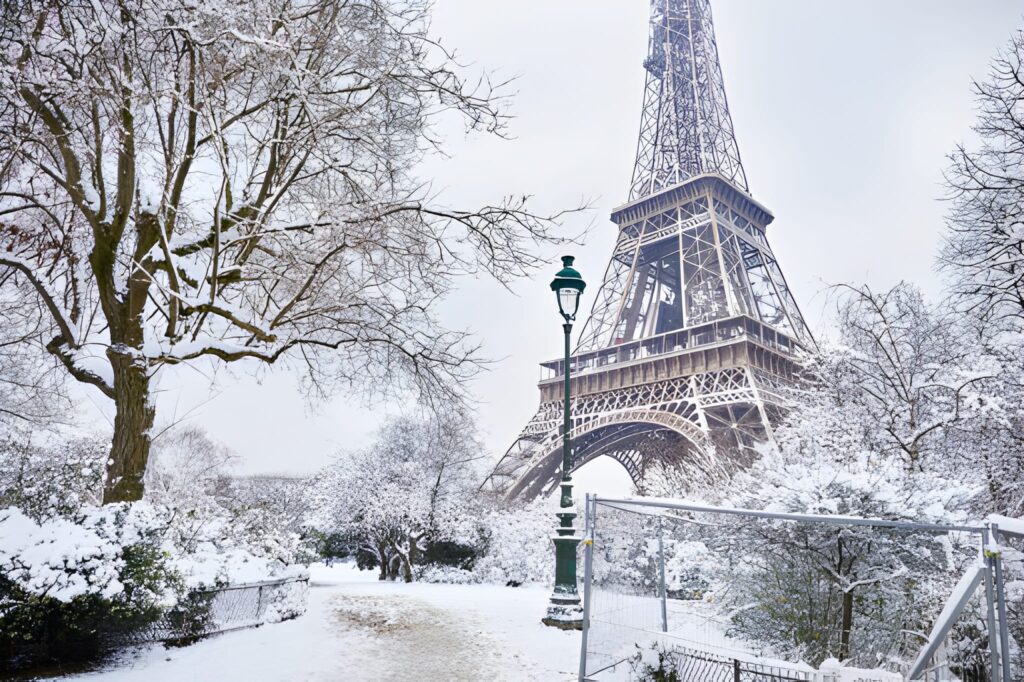
There’s something quietly transformative about experiencing Paris when frost edges the Seine and bare branches sketch delicate patterns against pearl-gray skies. The City of Lights reveals an entirely different personality during these colder months, one that locals cherish and savvy travelers increasingly seek out. While summer draws massive crowds to every iconic landmark, winter offers something far more valuable: intimacy with a city that suddenly feels less like a tourist destination and more like a place where you might actually live.
What Makes Winter the Better Time
Table of Contents
ToggleThe practical advantages alone make a compelling case. Boutique hotels that command premium rates during peak season suddenly become affordable, their rates dropping to reasonable prices that won’t devastate your budget. You’ll find rooms available at establishments that require booking weeks in advance during warmer months. The city itself breathes differently—streets that typically swarm with visitors feel manageable, restaurants accept walk-ins, and museum queues shrink to civilized lengths. This transformation creates a more local experience, one where you’re not constantly battling crowds or planning every moment with military precision.
Yes, the weather turns cooler, but here’s what travel guides often miss: Paris’s best experiences happen indoors anyway. The city built its cultural reputation on cozy cafés, world-class museums, old world restaurants, and evening performances at historic theaters. Winter doesn’t limit what you can do—it enhances the very activities that define Parisian culture. Museum hopping becomes a refuge rather than just another item on your itinerary. Getting coffee at a steaming café feels essential rather than optional. Dining takes on new significance when you’re escaping the elements, and spending evenings at the ballet or tucked into a corner brasserie represents winter travel at its finest.
Understanding the Climate Reality
Let me be direct about what awaits: Paris turns cold, wet, and occasionally dark during these months. But understanding exactly what to expect helps you prepare properly rather than arriving unprepared and disappointed.
December brings average highs around 48°F (7°C) and lows near 37°F (around 7°C in Celsius terms). It’s actually the second rainiest month of the year after May, with rainfall hitting 86mm, so that umbrella isn’t optional. Daylight shrinks to just 8 hours and 21 mins, meaning afternoons fade quickly into evening. The streets light up beautifully at night, though, and department stores make special efforts with spectacular displays. Christmas Markets appear dotted around all over the city, transforming ordinary squares into festive wonderlands. It’s a really lovely time—freezing weather, short dark days, and bare trees notwithstanding—worth getting cold for because Paris becomes so festive.
January sees highs around 45°F (maintaining that 7°C average) with lows near 35°F. Rainfall drops to 56mm, and daylight extends slightly to 8 hours and 47 mins. The festive buzz disappears—by and large, only the odd set of Christmas lights remain. Cold temperatures and grey days persist while that holiday magic evaporates. However, there’s one massive benefit: far fewer other visitors around. If you don’t like crowds, this represents a great time to visit Paris. Be warned, though—some businesses reduce their opening hours or days in January, so it’s worth checking that places you want to visit will actually be open on the days you’re there.
February offers average highs around 47°F (8°C) and lows near 35°F, with rainfall decreasing to 46mm and daylight growing to 10 hours and 16 mins. You might spot the first signs of spring leaves and flowers by the end, but it’s best to prepare for conditions that still feel quite wintery. Paris can remain pretty grey and cold throughout February. Valentine’s Day does arrive, though, so if you’re in the market for a romantic trip, the good news is there are lots of things to do in Paris for couples.
March technically bridges into spring with highs around 54°F and lows near 39°F. Historical data via timeanddate.com confirms these patterns. To summarize: Paris winter proves fairly cold, especially in December and January; a bit wet, particularly in December; and features short days, most notably during December and January. By comparison with my home city of London, Paris runs generally a degree or two colder, stays drier, and has marginally more daylight.
My own visits exposed me to very cold temperatures, wind, rain, fog, and even snow (though it doesn’t snow that often). It’s definitely coat, scarf, and gloves kind of weather—no pretending otherwise.
Dressing for Parisian Winter
We all want to arrive in Paris dressed in our chicest clothes, and winter actually provides the best season to show off your layers. Bring a long, warm coat—this isn’t negotiable. Layer underneath with a sweater or turtleneck, add a scarf and leather gloves, top it with a hat if you’re prone to cold—you’ll want it all. Don’t forget an umbrella tucked into your bag.
On a typical day exploring, I wear Doctor Marten boots because they’re comfy enough for hours of walking and good at keeping my feet dry when it rains. Jeans work perfectly well. I’ll have a t-shirt or top as a base layer, then a woolly jumper, then that thick winter coat with a hood. My scarf and leather cashmere-lined gloves complete the outfit. That mini umbrella stays in my bag constantly. This combination lets you warm up quickly when ducking into heated spaces, then bundle back up before venturing outside again.
The Museum Circuit Becomes Essential
Rainy weather creates perfect museum days, and Paris delivers some of the world’s most spectacular options. Winter represents the perfect time to visit The Louvre precisely because it’s so big, with much to explore—why would you spend all that time indoors if the weather outside was wonderful?
The Louvre remains arguably most famous for exhibiting Leonardo Da Vinci’s Mona Lisa, which some people (myself included) make a beeline for. But there’s so much more to discover. It exhibits artworks and artefacts covering 10,000 years of history and reportedly has approximately 38,000 objects exhibited over an area of 72,735 square meters. If conditions outside turn wintery, you can stay warm and dry in the Louvre for hours. Everyone needs a ticket, though they’re free for under 18s and under 26s if you’re resident in the EEC—the rest of us need to buy Louvre tickets in advance. You still need to book your timed entry slot even with a Paris Museum Pass, which covers 60 of the top museums and monuments in and around Paris. If you think you’ll visit more than one or two museums, it might be worth buying that pass.
Another great museum worth considering is the Musee D’Orsay, housed in a gorgeous building originally built as a train station. It features an incredible exhibition of art, and the fifth floor remains my favourite—it has a huge clock window through which you can see Paris, plus a wonderful collection of impressionist art. You can buy Musee D’Orsay tickets in advance or use your Museum Pass for entry.
One of my favourite museums, Musee L’Orangerie, showcases some of Monet’s waterlilies beautifully. The main exhibit features two rooms showing a series of eight paintings. This won’t keep you warm for long since it’s a relatively small museum, but it delivers a real delight. I’ve been here a couple of times and always leave satisfied. Again, buy tickets in advance or use your Museum Pass.
If you have an interest in history, you must visit Musée Carnavalet. It offers an extensive set of exhibits which cover the history of Paris from antiquity to this century. Ancient Roman remains share space with room sets made up with the elaborate décor and furniture of the 17th and 18th centuries, PLUS detailed documentation of the French Revolution and the various republics and empires that followed. There’s a lot to see and learn here, making it a great option in Paris winter, especially if the weather turns wet. I spent a good couple of hours here escaping rain once. The Carnavalet Museum sits in the heart of the Marais area, and the good news—it’s free to explore the permanent collection.
The Pompidou Centre looks rather interesting from the outside because designers chose to have all its workings on the outside rather than hidden within. If it’s cold outside, you might be more tempted by its interior, which functions as a gallery of modern art (tickets available online). I can also recommend the top floor restaurant, which provides lovely views over Paris.
A new discovery for me, perhaps more of an acquired taste and somewhat off the beaten path in Paris: the Musée Gustave Moreau exhibits the work of the French 19th Century symbolist painter Gustave Moreau. The fantastical artwork proves certainly interesting, and the building itself is also stunning, especially the spiral staircase between the 2nd and 3rd floors, which I absolutely loved.
The Bourse de Commerce presents a stunning rotunda that once served as the stock exchange. It now showcases artistic exhibitions from the Pinault Collection. I have to confess that on my visit, the architecture itself stole more of my attention than the paintings and sculptures—the central atrium and frescoes around the domed roof are spectacular. I also loved the double-spiral staircases. As well as the exhibits spread across three levels, there’s a restaurant on the top floor, so it’s definitely possible to enjoy a couple of hours here.
La Conciergerie is known for being a prison during the French Revolution. Its most famous prisoner, Marie Antoinette, was held there before her execution in 1793. However, it was built as a medieval palace under King Philip The Fair and features a lovely example of a Gothic vaulted ceiling inside, which was my favourite feature. You can buy tickets for La Conciergerie online.
Another free museum, the Petit Palais, houses an extensive exhibition of paintings and sculptures from the classical period to the early 20th century, all within a sumptuous Beaux-Arts style building. A highlight for me was the gallery of sculptures and the pretty central courtyard.
For a modern perspective, the Louis Vuitton Foundation could be a good option. It’s a bit of a trek over to this striking landmark in Bois de Boulogne, but if you like contemporary architecture, it could be worth it. The deconstructivist structure was designed by Frank Gehry, and inside there’s gallery space showing changing art exhibitions. Tickets are available in advance.
For me, what makes the Paris art scene really special are the smaller museums. Some of my favorites include Victor Hugo’s home on Place des Vosges, the artist ateliers at Musée Zadkine and Musée Bourdelle, and a glimpse into medieval Paris at the Musée de Cluny. These intimate spaces let you appreciate art and history without fighting crowds, even during busier periods.
Head to the Louvre to see the Mona Lisa with fewer crowds than usual. Stroll through the Musée d’Orsay for a more intimate look at the Impressionist greats. Step into an early spring at L’Orangerie, where Monet’s water lilies line the walls. Don’t miss the emotive sculptures at the Musée Rodin. This classic indoor activity will give you shelter from the elements while immersing you in world-class culture.
Beyond Traditional Museums
If you’re a book lover and seek a little peace during your trip to Paris, consider a visit to the Bibliothèque nationale de France, specifically the Salle Ovale. It’s a grand, gorgeous oval reading room with a high ceiling and stunning skylights. Come early to get a seat at one of the desks with the pretty green lamps, as it does get busy here. You don’t need to be a member of the library to visit, and there’s no charge, but there are bag checks at the entrance. Oh, and of course, you need to be very quiet in there—it’s a working library, not a tourist attraction.
The Grand Palais, the bigger and bolder of the pair of palaces facing each other on Avenue Winston Churchill, could be a good thing to do in Paris in winter, depending on whether its current exhibition suits your tastes. The vast iron and glass-roofed space gets used for exhibitions which vary from art to ice skating, so the best thing to do is check the schedule for your dates and see what’s on. I went recently to see a photography exhibition, but I thought the architecture was the most fascinating thing on display.
Exploring Sacred Spaces
If you’re visiting Paris in winter, there are certain sights and attractions I’d recommend you avoid, and at the top of that list sits climbing the Eiffel Tower (unless it’s your first time in Paris, in which case you might not be able to resist). Having been to the top of the Eiffel Tower in mid-February (it was Valentine’s Day), I can attest to the extreme chill and brutal wind you can experience there on a winter’s day. However, some indoor attractions will not be quite so bracing, including many attractive and historic churches.
Recently re-opened after a long period of renovation, the iconic and much-loved Notre-Dame stands as one of the best examples of French Gothic architecture. You can go in for free, but you do need to reserve a place, which you can do on their website. I haven’t been inside since the renovation, but people seem to love the new look interior—I’m hoping to visit in 2025.
Not far from Notre Dame sits another magnificent church: Sainte-Chapelle, a Gothic chapel that dates from the 13th century and was built to house the holy relic of Christ’s Crown of Thorns. This place really took me by surprise—I was blown away by the spectacular interior with huge multi-coloured stained glass windows and an inky ceiling strewn with stars. If there’s one church you visit in Paris, make it this one. Buy Sainte-Chapelle tickets in advance, or if you want to visit both Sainte-Chapelle and Conciergerie, you can save money with a combined ticket.
You can visit the most visible of churches in Paris during winter. The white domes of Sacré-Cœur sit provocatively atop the butte of Montmartre, overlooking the whole of Paris. It’s possible to climb the 300 steps up into the dome for a stunning view of the city, but it might be too chilly for that in winter. Instead, you might want to simply explore the interior of the basilica.
Hôtel des Invalides (Les Invalides) dates from 1676 and includes a museum and a hospital for war veterans. It’s the tallest church in Paris and is recognisable for its Baroque chapel, Dôme des Invalides, topped with a gold dome and spire. Since 1840, the chapel’s crypt has contained the sarcophagus and remains of Napoleon Bonaparte, which you can get tickets to visit.
The Church Of Saint-Germain-des-Prés originated in the 6th Century, though the current structure dates from the 11th century. It sits in the heart of Saint-Germain, the area known for being the centre of intellectual and philosophical Paris in the 1950s and 60s. The church was once the burial place of the dynasty of Merovingian Kings and now contains the tomb of René Descartes, a 17th century philosopher, scientist and mathematician. Unlike some of the other historic churches in Paris, this one is free to enter.
The Panthéon’s dome is another one that punctures the relatively flat skyline of Paris, and it’s possible to explore the interior of this 18th-century church, which serves as the final resting place of Victor Hugo. You can take self-guided tours at the Panthéon.
Just south of Saint-Germain, there’s another church of note: Église Saint-Sulpice. As the third largest church in Paris, its size impresses immediately, and as you look at it, you’ll notice its two towers are uneven—different sizes and designs. This is one of those churches that was built and rebuilt a number of times over the centuries. As I understand it, the left tower previously looked like the right one, and both were intended to be redone. However, only one was finished due to the French Revolution interrupting work.
The Café Culture Experience
The café scene in Paris is thriving, offering everything from Arabica, a Kyoto-based coffee brand, to Café de Flore, an iconic spot where popular artists and writers hung out in the early 1900s. As a local to the Marais neighborhood, a couple of my go-to spots are Tanat and Recto Verso—they both make an excellent cup of coffee.
Café Verlet is a lovely spot for tea and pastries near Palais Royal, and Café Lapérouse offers a high-end option at Place de la Concorde. I highly recommend visiting Hôtel de la Marine, a beautiful house museum that shares the same courtyard as the café. For the classic Parisian café experience, there’s Café de Flore, Les Deux Magots, and Café de la Paix. These are all fancier, so expect to pay more here.
Parisian cafes are so attractive with their bright colours and neon signs. A good toasted sandwich sets you up well for a day exploring the streets of Paris. It’s nice to be sat inside one of these, all cosy, when it’s cold outside. They’re all over the city, but La Comète is one I tried recently. I really enjoyed my Croque Madame (toasted ham and cheese sandwich topped with a fried egg) here.
The Hot Chocolate Ritual
There are two spots in Paris famous for hot chocolate: Carette and Angelina. If you’re choosing just one, I’d go to Angelina. It’s been around for over a century, the pastries are excellent, and the hot chocolate is as rich and indulgent as it gets. Make sure to order the Mont Blanc, their signature pastry made with chestnut cream.
Carette’s hot chocolate is also delicious. Head to their Place des Vosges location underneath the porticoes that surround the park and order it with a generous scoop of Chantilly cream. This ritual transforms from simple refreshment into a warming experience that defines winter afternoons in Paris.
Shopping Under Glass
Escape the cold by wandering through one of Paris’s charming covered passages. There are 21 across the city, many dating back to the 1800s. These glass-roofed arcades are lined with boutique shops, cafés, bookstores, and antique stores.
In the late 18th and 19th centuries, covered passages popped up all over Paris. These covered pedestrian streets stay shielded from the elements by attractive iron and glass ceilings. Some of them are quite run-down these days, but others have been well-maintained, retain their original features, and remain filled with interesting independent shops and cafes.
Passage de Choiseul presents a smart passage, rather pretty, with a mix of shops and places to eat. It’s long, so there’s plenty to discover here. Passage du Grand Cerf has a quirky personality—it seems to specialise in craft shops, fabric and nik naks, and a red carpet runs through its length. Passage Verdeau is where I found lots of books and art in this handsome passage, which also has some eateries. Passage Jouffroy is directly opposite Passage Verdeau, so you can easily go from one to the other. This one is also attractive and also has books and art, plus posters.
Passage des Panoramas is possibly my favourite. Opposite Jouffroy, you may as well take a look at all three passages together. Passage des Panoramas is not as smart as Jouffroy and Verdeau, but its mismatch of tiled flooring and fixtures gives it more personality. It has a couple of specialist stamps shops and plenty of cafes. If you like the idea of having a guided tour of some covered passages, check out this ‘Secret Passages’ guided tour.
The Department Store Experience
Paris has some of the best shopping in the world. Head to the Champs-Élysées and Avenue Montaigne to shop at designer flagships like Louis Vuitton and Dior. Browse the city’s department stores—Galeries Lafayette, La Samaritaine, and Le Bon Marché (my personal favorite for its selection of independent and curated brands). The Marais has a great mix of vintage and secondhand shops, plus smaller independent designers.
All around the city you’ll stumble upon artisan shops, from the beautiful stationery at Mélodies Graphiques to art supplies at Magasin Sennelier, ceramics at Astier de Villatte, and stunning coffee-table books at Taschen.
I’m not much of a shopper, but Paris is renowned for being a shopping destination—fashion and something, it’s really not my thing. But I do appreciate some pretty architectural design, and Paris has several department stores and many covered passages that contain both stylish goods and also stunning architecture. Even if you’re not in the market to buy anything, they can be a fascinating place to see this fashionable side of Paris in winter.
La Samaritaine is one of the five Grands Magasins, or grand department stores, of Paris. It’s in the first arrondissement, very near Pont Neuf on the River Seine. Its Art Nouveau building is famous for its large atrium with crisscrossed escalators, and it sells super-stylish luxury goods. There’s a lovely brasserie on the top floor which gets flooded with light from the skylight above.
Printemps is another department store, unmistakable for its ornate blue and gold domes. It has several locations, but the most iconic are the buildings along Haussmann Boulevard. The buildings are linked at various levels and together provide 44,000 sqm of retail space for fashion, home and beauty. For me, though, the view from the rooftop terrace on the 9th floor of the menswear building was the highlight—if it’s really cold, you can just pop out there for a few minutes to enjoy the view of the domes.
The king of Paris department stores has to be Galeries Lafayette. This Paris landmark has all the fancy brands and the fanciest of interiors. The central atrium is ringed with gorgeous galleries, and the ceiling is an intricate stained-glass dome. It’s one of the most instagrammable places in Paris. In fact, I feel a little sorry for the brands that occupy the ground floor beneath the dome because the ceiling is such an impressive distraction.
The left bank has its own grand magasin, Le Bon Marché Rive Gauche. This store has designer luxury goods and a fancy atrium, like the others. However, what sets Le Bon Marché apart for me is the adjoining food hall, La Grande Épicerie de Paris. This place is a foodie’s heaven, with a huge range of delicacies and indulgent goodies. I’ve never seen so much caviar in one location.
December’s Festive Magic
December proves a magical time in Paris. The city lights up for the holidays, with Christmas markets, festive decorations, and seasonal celebrations happening all over town. Go ice skating beneath the stunning glass dome of the Grand Palais. Wander through Christmas markets near Notre-Dame, Saint-Germain-des-Prés, the Tuileries, and the Eiffel Tower to shop for artisan gifts and taste mulled wine. Don’t miss the dazzling light displays along the Champs-Élysées and at Place Vendôme, along with the elaborate decorations inside Galeries Lafayette.
There are some stunning examples of Christmas decorations in Paris, with none better than Galeries Lafayette, which adorns its already splendid dome with extravagant decorations at Christmas time. It really is worth a look, though be prepared for it to be crowded with people admiring the spectacle.
I think the streets of Paris are wonderful all year round, but they’re especially gorgeous at Christmastime. You can also find some magical light displays dotted around Paris, including the Avenue des Champs-Élysées, which has lights in all the trees that line the boulevard. Other streets that are good for Christmas lights in Paris include Avenue Montaigne, Rue du Faubourg Saint-Honoré, Rue Royale, and Boulevard Haussmann. However, I think the most spectacular ones I saw are at Place Vendôme, where there were large Christmas trees and light displays on the buildings.
There are a few Christmas Markets in Paris, the most central one being in Tuileries Gardens near the Louvre: La Magie De Noël Aux Tuilleries. There are LOTS of rides here, but what I loved about this Christmas market was how food-oriented it was. There weren’t just food stalls—there were dozens and dozens of food stalls offering a huge variety of tasty things to eat, including raclette (which smelled amazing), sausages, snails, omelette, pretzels, paella, waffles, onion soup and crepes. There was of course beer and plenty of vin chaud (mulled wine)—but unlike any other Christmas market I’ve been to, this one also had a champagne bar.
The most magical-feeling Christmas Market in Paris, though, has to be at Hôtel de Ville. It’s much smaller than Tuileries, with an old-fashioned carousel, several food stalls and some really amazing lights. Overall, I personally think Paris has one of the best Christmas markets in Europe.
I’ve been to Paris in December several times and I really love it. Even with short dark days, bare trees and freezing weather, Paris is so festive that it’s worth getting cold for. The streets light up at night, the department stores make a special effort with some spectacular displays, and Christmas Markets appear dotted around all over the city. It’s a really lovely time—I highly recommend Paris in December.
Learning to Cook Like the French
Visiting Paris in winter provides the perfect excuse to book a French cooking or baking class. Spend a morning learning to fold and bake your own croissants, or an evening with a chef mastering a classic French dish. Classes are held all around the city, including at the legendary school, Le Cordon Bleu.
If you feel like trying one of the more unique things to do in Paris in winter, consider taking a cooking lesson. You’ll be indoors, which is great, and you can both learn a new skill and enjoy the product of your labours afterwards. I took a macaron making lesson held at Galeries Lafayette. It was pitched just right for me, someone who isn’t a very advanced cook: the difficult parts of mixing the macaronage were done for the class, more like a demonstration. We then got to pipe the mixture in little round blobs, ready for baking. Then we mixed the fillings and assembled the macarons. The best bit was, of course, taking home the macarons we made and enjoying eating them.
Other than macarons, cooking classes are available for many types of foods, including french pastries, or even a three-course dinner that comes complete with a market visit and wine tasting. Check out these cooking class options for your trip.
High Tea in Luxury Settings
Treat yourself to high tea in one of Paris’s luxury hotels. Taste pastries crafted by some of the world’s most renowned pastry chefs, like Cédric Grolet’s fruit creations at Restaurant Le Dalí inside Le Meurice, or enjoy an elegant afternoon in the Salon Proust at the Ritz. Mariage Frères, a historic tea house and tea purveyor since 1854, also offers a high tea menu at their locations around the city. This indulgence becomes even more appealing when temperatures drop outside.
Evening Entertainment Options
For a memorable winter evening out, the Palais Garnier has a wonderful selection of opera and ballet performances. The historic setting, paired with world-class productions, makes for a truly magical Paris experience. Find the performance schedule online and book well in advance.
If you’re looking for indoor entertainment when in Paris in winter, the theatre could be a good option. One of the famous theatres in Paris is Moulin Rouge, home of the Can Can and inspiration for the spectacular Baz Luhrmann movie Moulin Rouge from 2001. The theatre is in operation and you can attend a cabaret or a behind the scenes tour. I haven’t been to either, so I can’t share any experience of it. But from the street, it definitely doesn’t look as glamourous and romantic as the movie. And it’s worth noting that the area where the Moulin Rouge is located is pretty seedy—it has lots of sex shops and strip bars and is a bit run down.
A more high-cultured option could be to go to the Ballet or Opera. The modern opera house Opera Bastille specialises in opera, while Palais Garnier shows a mix of opera, ballets, concerts and recitals. Palais Garnier is astoundingly ornate. It was built by Charles Garnier for Napoleon III and opened in 1875. It was also the setting for Gaston Leroux’s novel, the Phantom of the Opera, making it arguably the most famous opera house in the world. The interior is opulent and decadently decorative, with a mix of ornate styles including baroque and renaissance. The grand staircase is stunning, but the gold-leaf-heavy Grand Foyer will stop you in your tracks.
Even if you don’t go to see a performance, I highly recommend a visit to Palais Garnier anyway, just to explore its exquisite interior. You can arrange a guided tour or simply buy a self-guided ticket and explore it at your own pace, which is what I did. It was a great thing to do in Paris in winter.
Cinema as Winter Refuge
If the theatre is not your thing, a visit to a cinema might be a better form of evening entertainment when in Paris in winter. France has long loved the cinema. In fact, the first presentation of projected moving images to a paying audience was by the Lumiere Brothers in Paris in 1895, using a machine they made, called the Cinematographe.
If you’re reading this, I can assume you speak English, so you might be wondering whether you need to speak French to enjoy a film in a French cinema. The answer is, happily, no. There’s a long history of French national cinema, but non-French films are also widely played. And they’re often shown with subtitles in French rather than dubbed into French. Angloinfo.com has listings of all the movies you can see in English in Paris.
However, you might notice many of these cinemas are chains, and these cinemas can be fairly unexciting buildings. If you want a cinema experience with some charm and personality, consider one of the old independent art-house cinemas in Paris.
Studio 28—the first avant-garde cinema on the right bank—opened in Montmartre in 1928. When I was looking at the listings displayed in its windows, an old man passed by and told me it was the best cinema in Paris. It was featured in the movie Amelie. They play a mix of movies, including some in English, and while the design of the building retains its old Art Deco style, the sound and film system is new. You can find their listings online—just look out for the English or American movies.
Le Champo was featured in Netflix’s Emily in Paris (but don’t let that put you off). It’s not just an Instagram-friendly spot; it’s a bonafide arthouse cinema which shows a mix of movies, including some English language films. I saw The Servant from 1963, which is an unnerving British drama starring Dirk Bogarde and James Fox. You can find Le Champo’s listings online as well.
Jazz Bars and Night Music
Jazz first made its way to Paris around the 1920s and has since been a part of the city’s musical identity. From a 1940s swing bar to intimate modern venues, here are a few storied jazz bars to check out for a cool winter night out on the town. These venues offer the perfect atmosphere when darkness falls early and you want to settle into something atmospheric.
The Restaurant Scene
I will not pretend to know all the best places to eat in Paris because I imagine only locals have extensive enough experience to have tried them all. However, I have eaten at some great places over my last few trips, so here are a few I tried myself and loved recently.
Moulin de la Galette is a restaurant in an old windmill in Montmartre. It serves classic French cuisine, and after wandering the streets in the cold for a few hours, I enjoyed every bite of my onion soup and steak frites. Café Des Anges is a popular brassiere in the buzzy Bastille area, in the 11th arrondissement. There is traditional French food on the menu, but also some more international items including burgers, which are served with amazing fries. The overall feel is like a young, modern update of a traditional brasserie.
Les Philosophes in Le Marais is a classic French bistro where I enjoyed the crème brulee for dessert. Le Progrès in Montmartre is a very attractive Art Nouveau-style café with a pretty exterior and interior. I had a messy but delicious French onion soup here. Le Pure Café in Sainte Marguerite was featured in Before Sunset, one of the many movies set in Paris. It’s very attractive-looking and quaint, and the burger was good.
For hearty, warming food specifically suited to winter, you can’t beat traditional options. Bistrot Paul Bert specializes in pepper steak. Bistrot des Tournelles serves excellent chicken cordon bleu. Fric Frac makes an excellent croque monsieur. Au Bourguignon du Marais delivers exceptional boeuf bourguignon and French onion soup.
Heated Terraces for the Brave
If you’re visiting Paris in winter, you might think you’ll miss out on that most Parisian of experiences: a drink on the street terrace of a café. Surely it would be unpleasant to sit outside on those cute wicker chairs in the dead of winter?
Well, you might be surprised how many cafes have outdoor heaters and windbreakers. I guess it enables people to have a cigarette in relative comfort—and it also means you won’t miss out on the ability to people-watch. I won’t pretend you’ll be toasty-warm on these terraces—even with the heaters on it will be chilly and you’ll need to be wrapped up warm. But a cup of vin chaud or hot chocolate will help make it bearable. You’ll find these heated terraces all over Paris, so don’t worry about where to go for them.
Dining with Views
As I mentioned earlier, it can be very cold at the top of the Eiffel Tower in winter, and other outdoor viewpoints will be similarly chilly, as they often don’t offer much shelter from the wind or rain. But there are many restaurants that have amazing views of Paris that you can enjoy from the warm interior. In my experience, these restaurants do tend to be pricier, but if you consider you’re getting a view plus good food, it could be worth it. And if you’re in Paris with a loved one, having dinner in a nice Paris restaurant is one of the many romantic things to do in Paris for couples.
Here are a few I’ve been to and recommend: La Tour D’Argent is a very fancy Michelin-starred restaurant on the left bank of the Seine. It’s famous for its roast duck breast (which I had) and is quite formal—silver cutlery and suited waiters and everything. The best bit is the stunning view overlooking Île de la Cité and the Cathedral de Notre Dame Le Georges sits on the top floor of the Pompidou Centre. The restaurant has an outdoor terrace which might be too chilly in winter, but there’s also plenty of space inside. The restaurant looks southward over Saint-Jacques Tower, but from the escalator and viewing corridors, you can also get great views of the Eiffel Tower and Sacré-Cœur.
L’Oiseau Blanc—this restaurant in the Peninsula Hotel has a lovely dining room with a view of the Eiffel Tower. The prices are high, but the food is amazing and the service is perfect.
Gout Le Poisson par La Reine Mer and Gout La Viande par Regain are two restaurants on the 9th floor of the menswear building in Printemps. One is a fish restaurant and the other specialises in meat. In summer you can sit outside on the terrace, but in winter you’ll be more comfortable inside, so come early to get a table by the window, which has views over Haussmann Boulevard toward the Eiffel Tower and also the back of Palais Garnier. I really enjoyed some roast salmon at Gout Le Poisson.
Terrass Hotel—many Paris hotels have rooftop terraces and restaurants, and I recently stayed at the Terrass Hotel, which has a view over Montmartre Cemetery, with the Eiffel Tower in the distance. The food was great, too. Bear in mind, though, that the air can be dense with moisture in winter, which can obscure the view of the Eiffel Tower on foggy overcast days.
Wine and Spirits
On my most recent trip to Paris in winter, I did a wine-tasting experience—and it was great. There are different kinds of wine experiences available in Paris, but I chose a simple one which involved tasting 3-4 wines, learning about how to assess wines (visually, but also the aroma and taste), the different French regions and grapes and such. I felt like it had the perfect balance of learning without overwhelming me with information. Plus I got to taste nice wines and eat cheese, which was right up my street.
It took place in a small wine shop at a table in their shop window, so I was inside learning about wine and also watching passers-by on the street. I was also feeling a little smug that I was all warm and dry while it was cold and wet outside. If you’re interested, the one I did is available on Get Your Guide as Paris: Wine & Cheese Tasting.
You could also do a champagne tour. Reims and Épernay are in the Champagne Wine Region and both are amongst the best day trips from Paris by train.
Apéro is a French tradition of a drink and light bites before the evening meal. And the sun sets early in Paris in winter, so you might feel like you want to hole up somewhere cosy by late afternoon, so an apéro could be the perfect thing for you. Maybe consider one of the many bars that offer happy hour deals on drinks from late afternoon until early evening. You can often find lower prices on beer or cocktails, and many places that do happy hour are traditional bars, which makes the whole experience feel quintessentially Parisian.
And there’s a chain of bars in Paris called 17:45, which is perfect for pre-dinner apéro. They serve wine and cheese and charcuterie boards where you can select the items you want to customise your board.
Cocktail Culture
I don’t think of Paris as being a place where you’d go out for cocktails—to me, it doesn’t have that association, unlike London’s high end hotel bars or Barcelona’s innovative bar scene. I suspect that’s because I think of Paris, and France in general, as being more wine oriented.
But I have found some good cocktail bars in Paris, so here are my top four so far: Little Red Door was placed number 5 on the list of the World’s Best Bars in 2022. It’s a dark, intimate place in Le Marais that sometimes has a queue, so if you want to avoid that, come early. They take their mixology and their ingredients seriously, but the staff are very friendly.
Cambridge Public House, also in Le Marais, has the look and feel of an English pub (which was strange for me, being British, but in Paris for the French things). However, it’s not all pints and fights—the cocktail menu and service style are both very smart and they have some good mocktails, too.
Bluebird, in the young, hip Bastille area, has an overly-complicated approach to the menu, but the cocktails are good.
La Villa Batignolles—this was the best place I tried in a neighbourhood with many cocktail bars. The place has a nice vibe and I really enjoyed my tequila and chartreuse cocktail.
Danico is a speakeasy-style bar found at the back of Daroco restaurant next to Galerie Vivienne.
Where to Rest Your Head
Paris can be cold and dark in winter, and even if you’re doing lots of indoor things as I’ve suggested above, you can’t escape the elements entirely. At the end of a day of exploring, you will want to retreat to a warm, comfortable room. Therefore, if there’s ever a time to splash out on a luxury hotel, it is in winter.
As well as the luxurious comfort you get when you stay in a fancy hotel, there’s another benefit, which is you get to experience a little of old-world Paris. Paris has plenty of luxurious 5-star hotels, many of which have been around for more than a century and retain their original architecture, style and impeccable service.
On a solo trip in Paris in winter, I stayed at the 122-year old Hotel Regina Louvre, which is located on Rue de Rivoli, just opposite the Louvre. I arrived in a taxi, wearing—let’s say—very casual clothes and trainers, with a rain jacket on. I certainly did not look chic like their other guests. But I was immediately treated with seamless service: someone came out to pick up my suitcase and they pushed the Art Nouveau revolving door for me to enter the lobby. Once inside, the check-in was smooth and helpful, my room was amazing—and I even had a view of the Eiffel tower.
I did a lot of exploring while I was in Paris on that trip, and it was really lovely to be able to come back to such a gorgeous, comfortable space afterwards. I was only in Paris for one night, so a fancy hotel didn’t feel like too extravagant an expenditure.
It’s the dream, isn’t it? A room with a view of the Eiffel Tower or some other iconic Paris landmark. When it’s cold outside, the ability to see something wonderful from the inside is even greater. On one visit to Paris in January, I stayed at the Terrass Hotel, which is a very comfortable 4-star hotel in Montmartre. I was especially looking forward to my stay here because I splurged on a room with a view of the Eiffel Tower.
If you’re visiting Paris in winter (or any other time, for that matter), here are some options for Paris hotels I’ve stayed at myself recently and happily recommend: The grandiose Hotel Regina Louvre is very luxurious and stylish, a real treat to stay in. Terrass Hotel in Montmartre is great because it combines a viewpoint over Paris with a comfortable place to stay, plus the food is really good. Hôtel Diva Opéra is a boutique hotel in Fauberg-Montmartre, close to several of the best covered passages in Paris and also Boulevard Haussman. La Finca Hôtel & Spa is close to the trendy Bastille area and has small but comfortable rooms and a simple breakfast is available.
For broader recommendations: Hôtel Plaza Athénée stands as the iconic right bank luxury hotel. Hotel Balzac offers a gorgeous modern boutique hotel experience. Hotel Des Grandes Ecoles provides a charming hotel in the Latin Quarter. Le Grand Mazarin is a beautiful design hotel in Paris’s Marais neighborhood.
January’s Quiet Appeal
There might be the odd set of Christmas lights that remain in Paris in January. But by and large, the festive buzz is gone while the cold temperatures and grey days remain. However, there is one massive benefit to visiting Paris in January, which is that there are far fewer other visitors around. If you don’t like crowds, this is a great time to visit Paris. Be warned that some businesses reduce their opening hours or days in January, so it’s worth checking the places you want to visit are open on the days you’re there.
As I said earlier, January is a quiet month—it feels like there’s less going on in Paris than in December, and there are fewer visitors around. If it’s a clear day, take a wander around some of the places that get especially crowded in peak season in Paris, such as Montmartre.
This charming hilltop village can get a bit overrun during Summer—and is also quite busy during Autumn and Springtime in Paris. It’s so pretty and popular that it attracts crowds of visitors most of the year. In January, though, there will be very few of them, so you have the best chance to wander in peace.
Take a self-guided walking tour of Montmartre to explore the cobbled streets, pretty cafes and viewpoints in this area. Along the way, visit some of the restaurants and bars where artists like Monet, Renoir, Toulouse-Lautrec and Picasso used to hang out.
Navigating the City
Here’s a map of my recommended things to do in Paris in winter. How to use this map: Click the tab in the top left-hand corner of the map to view the layers. If you click the icons on the map, you can get more information about each one. If you click the star next to the map’s title, it will be added to your Google Maps account. To view it on your phone or computer, open Google Maps, click the menu, go to Your Places or Saved, then click Maps and you will see this map in your list.