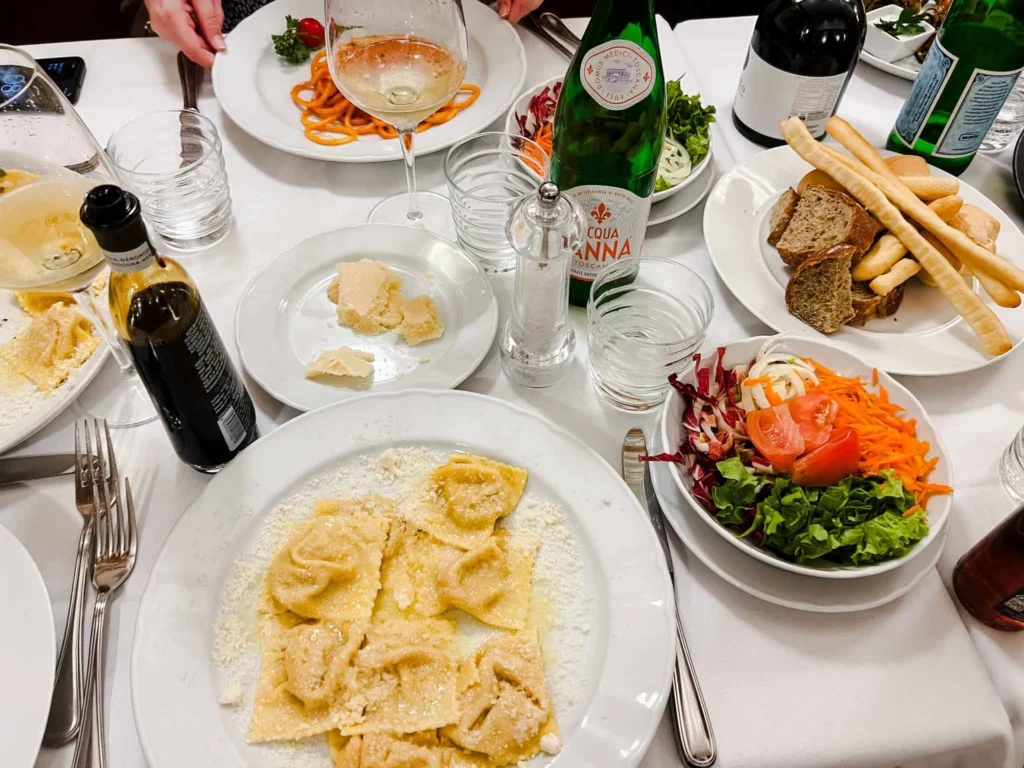
Parma isn’t Bologna. It doesn’t have Florence’s flash or Milan’s buzz. What it has is something more intimidating for food travelers: uncompromising standards.
This is the city that gave the world Parmigiano-Reggiano and Prosciutto di Parma. Where nonna’s still roll tortelli by hand every morning, and where serving mediocre pasta isn’t just bad business—it’s a personal insult.
After three extended visits to Parma and countless meals ranging from €6 sandwiches to €60 tasting menus, I’ve learned that eating well here isn’t obvious. The best restaurants don’t have English menus or Instagram-worthy interiors. Some of the most famous spots in guidebooks now churn out tourist food. And the places locals actually eat? They’re tucked on side streets you’d walk past without a second glance.
This guide won’t just list restaurants. It’ll teach you how to eat like someone who actually lives here.
Why Eating Well in Parma Is Harder Than You Think
Table of Contents
ToggleHere’s the uncomfortable truth most Parma food guides won’t tell you: location matters more than you’d expect.
Elizabeth Minchilli, the Rome-based food expert who’s been covering Italian food for decades, puts it bluntly: “Eating well is not always easy or obvious. The better restaurants tend to be outside of Parma itself, which is maybe ok for lunch, but for dinner it’s nice to be able to walk somewhere, right?”
The center of Parma—specifically the area around Piazza Duomo—is packed with restaurants. Many have been around since the early 1900s. Some still have frescoed ceilings and appear in every guidebook published since 1985.
And according to multiple local sources, several of them are now coasting on reputation while serving subpar food to tourists who don’t know better.
The Tourist Trap Problem
Two names keep coming up in warnings from locals and food experts: Trattoria Corrieri and Trattoria del Tribunale.
Both are centrally located. Both are famous. Both show up in outdated guides. And both, according to Minchilli, are “pretty bad. They may have been good at one point, but now they just churn out food for tourists.”
This isn’t isolated opinion. When you dig through Italian forums and fresh 2024-2025 reviews, you see the pattern: These places fill tables with guidebook-carrying visitors while locals avoid them entirely.
The lesson? In Parma, central location + fame in guidebooks ≠ good food.
Parma Restaurants Price Guide 2025
Real costs from actual dining experiences
[table id=4 /]
Understanding Parma’s Food Culture First
Before we get to specific restaurants, you need to understand what you’re walking into.
The Dishes That Matter
Parma has a short list of signature dishes, and locals judge restaurants by how well they execute them:
Anolini in Brodo – Tiny pasta pockets stuffed with Parmigiano and meat, served in a special chicken-beef broth. This is winter comfort food and a Sunday staple.
Tortelli di Erbetta – Delicate pasta parcels filled with ricotta and spinach. The late chef Gualtiero Marchesi called this his favorite dish. The pasta should be thin enough to see through.
Tortelli di Zucca – Pumpkin-filled pasta, slightly sweet. Seasonal favorite in fall/winter.
Cavallo (Horse Meat) – Yes, horse. Often served as tartare (“pesto di cavallo” or “cavall písst”). If you eat meat and the restaurant serves it, locals will judge you if you skip it out of squeamishness.
Culatello di Zibello – The most prized cured meat in the region, aged in the Po River fog. More delicate and expensive than prosciutto.
Torta Fritta/Gnocco Fritto – Fried dough served with cured meats. Not diet food. Absolutely essential.
The Meal Timing Reality
This trips up visitors constantly:
Lunch: 12:30pm – 3:00pm (last orders around 2:30pm) Dinner: 7:30pm – 11:00pm (but locals eat at 8:30pm or later)
Show up at 6pm for dinner? You’ll be eating alone or the restaurant will be closed.
Many restaurants close entirely on Sunday and Monday. Some close just Monday. Always check before making plans.
The Price Reality Check
Based on current 2024-2025 pricing:
- Primi (pasta): €8-14
- Secondi (meat/fish): €14-24
- Full meal with wine: €25-40 per person (mid-range)
- Fine dining experience: €50-80 per person
One local food blogger documented a full dinner for two at Osteria dello Zingaro: €35 total, including wine. That’s achievable at traditional trattorias if you’re strategic.
Coffee at a bar costs €1.20-1.70. Pay €4 near major monuments and you’re getting tourist-priced.
The Best Restaurants in Parma (Actually Vetted)
These recommendations come from cross-referencing local food bloggers who live in Parma, Italian food critics at Gambero Rosso, foreign food experts with repeat visits, and patterns in recent (2024-2025) reviews.
For Classic Parma Cuisine Done Right
Ristorante Cocchi
Location: Just outside center (10-15 min walk) What locals say: “My happy place” (Elizabeth Minchilli) Why it works: Family-run since 1925, now third generation. This is where you go when you want everything done correctly—the cured meat selection, the anolini, the tortelli.
Must-order: Bollito Misto (mixed boiled meats—sounds underwhelming, tastes extraordinary). If you can’t decide on pasta, get the Tris: three different stuffed pastas on one plate.
The catch: It’s located in an anonymous hotel outside the center. Looks like nothing from outside. Inside, it’s a temple to Parmesan tradition.
Viale Antonio Gramsci, 16/A | Reservations strongly recommended
Trattoria Ai Due Platani
Location: Coloreto (5-10 min drive from center) What locals say: Consistently appears on “best in Parma” lists from Italian food critics Why it works: Founded 1920s, taken over by three partners in 2005 who maintained the tradition. Surrounded by plane trees (hence the name), this is where locals come for special occasions.
Must-order: The homemade ice cream trolley at dessert. Not joking—people mention this in reviews repeatedly. Also the fresh pasta selection and the cured meat board.
The catch: Reservations are famously difficult. One food expert noted it’s “very difficult to reserve.” Try calling weeks ahead for dinner. Lunch might be easier.
The reality check: Some recent reviews mention inconsistent service or attitude toward tourists. One reviewer said they felt unwelcome despite the excellent food. Your experience may vary.
Strada Budellungo, 104/a, Coloreto | Reservations essential
Osteria dello Zingaro
Location: Near the cathedral, city center What locals say: “Popular with locals” (2FoodTripper) Why it works: Cheerful decor, approachable prices, traditional menu done well. This is where you go when you want solid food without pretension.
Must-order: Tortelli (pumpkin or spinach), the cured meat plate (sliced to order), and if you’re adventurous, the cavallo tartare.
The price advantage: That €35 dinner for two including wine? That’s the kind of value you get here. Not fancy, but authentic.
Borgo del Correggio, 5/B | Walk-ins possible for lunch; reserve for dinner
Angiol d’Or
Location: Right next to Piazza del Duomo What locals say: One of the few tourist-area restaurants that maintains quality Why it works: Despite prime location, locals still recommend it. They offer both traditional dishes and some creative modern interpretations.
Must-order: Anolini in brodo (locals’ top pick for this dish), white polenta pudding with roasted beets and gorgonzola (if available), torta fritta with cured meats.
The catch: Because of the location, it attracts tourists. But unlike its neighbors, it hasn’t compromised quality for volume.
Via Scutellari, 1 | Reservations recommended for dinner
For Modern Takes on Tradition
Borgo20
Location: City center, near Via Farini What locals say: Appears on Gambero Rosso’s 2024 top 10 Parma restaurants Why it works: Contemporary bistro that respects tradition while adding technique and creativity. Young, informal service. Good craft beer selection.
Must-order: 30-month aged Parma ham, potato gnocchi with nettles and snails, “cavall písst” (horse tartare with Dijon mustard and capers).
The price advantage: Traditional menu at €28 for three courses.
Borgo XX Marzo, 14
Osteria Virgilio
Location: Across the river in Oltretorrente neighborhood What locals say: “Hidden gem” mentioned repeatedly in 2024-2025 guides Why it works: Tiny spot, limited tables, fantastic menu. The kind of place where you can’t order badly.
Must-order: Any pasta (they’re all excellent), prosciutto to start, poached pear with Greek yogurt for dessert.
The catch: Small space means reservations are crucial. Also slightly off the beaten path—which is exactly why locals like it.
Strada Giovanni Inzani, 3 | Call or email ahead
Officina Alimentare Dedicata
Location: City center What locals say: “Ranks among the best local restaurants in Parma” (The Travel Folk), recommended by multiple Parma-based foodies Why it works: Run by three women, menu changes constantly, chef experiments with seasonal flavors while staying rooted in tradition.
Must-order: Cured meat selection (ask staff for guidance—the options are overwhelming), torta fritta, whatever pasta special they’re running that day.
Via Ferdinando Maestri, 11/A | Reservations needed
For Something Different
La Forchetta
Location: City center What stands out: Fish-forward menu unusual for Parma. Mediterranean-Emilian fusion. When to go: When you need a break from cured meat and pasta, but still want quality.
Must-order: Ravioli with prawns, spaghetti with sardines, seafood-focused secondi.
Address varies—multiple locations referenced | Check current address and reserve
For Budget-Friendly Authentic Eats
Pepèn
Location: City center (Borgo Sant’ambrogio, 2) What it is: Sandwich shop, not a restaurant Why it matters: This is where locals grab lunch. Famous for the “Spaccaballe Roast” (roast pork, mayo, ketchup, lettuce, tomato, chili).
Price: €6 for a massive sandwich Hours: 8:30am-7:30pm | Closed Sunday and Monday
Da Carré
Location: Borgo Palmia, 2 What it is: Over 100 types of sandwiches Price: €4-6 Why it works: Always somewhere to sit, consistent quality, beloved by students and locals.
Where NOT to Eat in Parma
Let’s be direct.
Trattoria Corrieri and Trattoria del Tribunale – Already covered. They’re famous, they’re central, and multiple sources warn they’re now tourist traps.
Restaurants with laminated multi-language menus with photos – If the menu looks like a travel brochure, leave. Real trattorias trust you know what you want or are willing to ask.
Anywhere someone tries to wave you in from the street – Quality restaurants in Parma don’t need hawkers. If they’re desperate to fill tables, there’s a reason.
Restaurants directly facing major monuments – The view costs money. The food quality usually suffers. Walk two blocks away and you’ll eat better for less.
Any place offering “fixed menu tourist special” – Instant red flag. These are designed for bus groups on tight schedules.
The One Exception to Location Rules
Not every restaurant in the tourist center is bad. Angiol d’Or proves this. But you need to look for:
- Tables filled with Italians
- Handwritten or very simple menus
- Staff too busy serving food to chase passersby
- Prices that seem normal, not inflated
How to Eat Like a Local in Parma
Start Your Day Right
Forget big breakfasts. Locals do coffee and cornetto (Italian croissant) at a bar, standing up, for under €3.
Best cafés mentioned by locals:
- Gran Caffè Cavour (near Cathedral, classic atmosphere)
- Lino’s Coffee (cozy, larger coffee selection)
- Magnolia Café (views of Baptistery)
The Aperitivo Strategy
Before dinner (around 6-7pm), hit Via Farini area for aperitivo. Order a spritz (€6-8), get free snacks. This is social ritual, not just drinking.
Enoteca Tabarro is the local favorite—natural wines, charming owner Diego Sorba. Tiny space, big personality.
Order Smart at Dinner
Don’t: Order both primo and secondo unless you’re genuinely hungry. Portions in Emilia-Romagna are generous.
Do: Start with a cured meat board and torta fritta. Then pick either pasta or meat. Leave room for dessert—or skip it and get gelato later.
Wine strategy: House Lambrusco is often excellent and costs €8-12 for a carafe. Don’t overthink it.
The cheese question: Never ask for Parmesan to put on your pasta unless they offer it. Some pasta dishes don’t get cheese. Trust the chef.
The Tipping Reality
Service charge (coperto) is usually €2-3 per person. Already included.
Tipping is optional. Locals round up or leave €5-10 for exceptional service, but 15-20% American-style tipping isn’t expected.
Reservation Wisdom
For famous places (Ai Due Platani, Ristorante Cocchi, Officina Alimentare Dedicata): Reserve minimum 1-2 weeks ahead, more for weekends.
For neighborhood trattorias: Try calling 2-3 days ahead, or show up at opening time (12:30pm lunch, 7:30pm dinner).
Walk-ins work for: Lunch on weekdays at less-famous spots, anywhere that isn’t packed with locals already.
Practical Restaurant Intel
What to Know About Sunday/Monday
Most restaurants close Sunday and/or Monday. This is standard across Italy, but it ruins meal plans if you don’t know ahead.
Open Sundays (verify before going):
- Some hotel restaurants
- Casual places near train station
- Tourist-oriented spots (though quality suffers)
Your best bet: Plan serious dining for Tuesday-Saturday.
The Neighborhood Breakdown
Centro Storico (Historic Center): Highest concentration of restaurants. Mix of good and touristy. Best for: Angiol d’Or, Borgo20, Officina Alimentare Dedicata.
Oltretorrente (Across the River): More residential, fewer tourists. Best for: Osteria Virgilio.
Outside City Center: Where some of the best restaurants actually are. Best for: Ristorante Cocchi, Trattoria Ai Due Platani (requires drive/taxi).
Getting There Without a Car
From the train station to center: 15-minute walk, or buses #6, #7, #8, #9.
To restaurants outside center: Taxi costs €10-15 from center. Worth it for places like Ristorante Cocchi.
Walking within center: Everything in the historic center is walkable (10-15 min max).
The Dishes You Must Try
Not suggestions. Requirements.
Tortelli di Erbetta
This is Parma’s signature pasta. Ricotta and spinach (or chard) wrapped in pasta so thin you can nearly see through it, served with butter and Parmigiano.
If it arrives and the pasta is thick or gummy, you’re in the wrong restaurant.
Best versions according to reviews: Ristorante Cocchi, Osteria Virgilio, Angiol d’Or.
Anolini in Brodo
Tiny stuffed pasta in clear meat broth. Served as primo, especially Sunday lunch and holidays.
The broth should be rich and complex (takes 12+ hours to make properly). The anolini should be delicate.
Best versions: Angiol d’Or gets specific mentions, Osteria dello Zingaro, Ristorante Cocchi.
Culatello di Zibello
The most prized cured meat in the region. Made from the same cut as prosciutto but aged in the humid Po River fog, creating different flavors.
More delicate, more expensive, more local than prosciutto. If you see it on a menu, order it.
Horse Meat (If You’re Open to It)
Usually served as tartare called “pesto di cavallo” or “cavall písst” (horse pesto). Mixed with Dijon mustard, capers, lemon, olive oil.
Locals eat it. It’s a tradition. If you pass on it purely because it’s horse (not dietary/ethical reasons), you’re missing a genuine part of Parma food culture.
Places that do it well: Borgo20, Osteria dello Zingaro, Officina Alimentare Dedicata.
Parmigiano-Reggiano (The Real Stuff)
Every restaurant will have it. But quality varies.
Look for: “36 months” or “40 months” aged. Should be crumbly, complex, intense. Not rubbery.
Ask about: The caseificio (dairy) it came from. Good restaurants know and care.
The Gelato Strategy
Skip gelato at restaurants. Go to specialists.
Ciacco Lab/Ciacco Gelato: Mentioned in multiple sources as not just the best in Parma, but “one of the best in Italy” (Elizabeth Minchilli). They use innovative ingredients—red bell pepper gelato gets specific praise—alongside classic flavors.
Original flavors plus quality classics: Look for seasonal offerings, fresh ricotta flavors, unusual combinations.
Price: €2-4 for a cone with 2-3 flavors.
Beyond Restaurants: Food Experiences Worth Your Time
Parmigiano-Reggiano Dairy Tours
If you’re in Parma for food, tour a dairy. This is where Parmigiano-Reggiano is actually made.
Latteria Santo Stefano (Via Parma, 78/Ter, Basilicagoiano): Tour the facility, taste cheese aged 12, 24, and 36 months, understand why it costs what it costs.
Tours: Usually morning (production happens early). Book ahead.
Prosciutto Factory Tours
Several producers near Parma offer tours in Langhirano (the prosciutto-making town 20km south).
Best with a car or organized tour. Worth it if you have time.
Food Tours with Locals
Multiple sources recommend Alice Rossi for Parma food tours. She introduces local specialties and takes you to spots you wouldn’t find alone.
When to do this: Early in your visit. You’ll learn what to look for when eating on your own later.
The Ultimate Parma Dining Strategy
Day 1 – Get Oriented:
- Morning: Coffee and cornetto at Gran Caffè Cavour
- Lunch: Sandwich at Pepèn (€6, learn the vibe)
- Dinner: Angiol d’Or (central, safe choice for first night)
Day 2 – Go Deeper:
- Morning: Parmigiano-Reggiano dairy tour
- Lunch: Osteria dello Zingaro (traditional, affordable)
- Evening: Aperitivo at Enoteca Tabarro, then dinner at Ristorante Cocchi (taxi needed, worth it)
Day 3 – Explore Beyond Center:
- Lunch: Try for a reservation at Ai Due Platani (or Osteria Virgilio if Platani is booked)
- Afternoon: Walk off lunch in Parco Ducale
- Dinner: Borgo20 or Officina Alimentare Dedicata (modern takes on tradition)
Every Day:
- Gelato at Ciacco at least once
- Lambrusco with most meals
- Say yes to torta fritta whenever offered
The Final Reality Check
Parma rewards preparation and punishes assumptions.
You cannot show up without reservations on a Saturday night and eat well. You cannot skip the horse meat and claim you “experienced Parma food culture.” You cannot eat only in the tourist center and understand what makes this city special.
But if you’re willing to walk 10 extra minutes, make reservations a week ahead, eat dinner at 9pm like locals do, and order dishes you’ve never heard of—Parma will give you some of the best meals of your life.
The restaurants above aren’t just “good for Italy” or “authentic enough.” They’re the places where Parmesan families bring grandma for her birthday, where chefs eat on their nights off, where the couple at the next table is celebrating their 40th anniversary because “this is the only place that does tortelli the right way.”
That’s the standard. That’s Parma.
Now go eat.
Quick Reference: Restaurants by Category
Best Traditional (Old School Done Right)
- Ristorante Cocchi – Outside center, since 1925
- Trattoria Ai Due Platani – Coloreto, since 1920s
- Osteria dello Zingaro – Center, local favorite
- Angiol d’Or – Near Duomo, quality despite location
Best Modern/Creative
- Borgo20 – Contemporary bistro, fair prices
- Officina Alimentare Dedicata – Evolving menu
- Osteria Virgilio – Hidden gem, tiny, excellent
Best Budget Options
- Pepèn – Sandwiches, €6
- Da Carré – 100+ sandwich types, €4-6
- Osteria dello Zingaro – Full meal for two under €40
Best for Special Occasions
- Ristorante Cocchi – Classic choice
- Trattoria Ai Due Platani – Formal tradition
- La Forchetta – Elegant, seafood-focused
Avoid These
- Trattoria Corrieri (tourist trap)
- Trattoria del Tribunale (tourist trap)
- Restaurants with photo menus
- Anywhere with street hawkers
Map Reference: Most addresses are walkable in centro storico. Cocchi and Ai Due Platani require taxi (€10-15 from center).
Closing Days: Most close Sunday and/or Monday. Call ahead.
Reservation Times: Lunch 12:30-2:30pm | Dinner 7:30pm-10pm (locals eat 8:30pm+)
Budget: €25-40 per person mid-range with wine | €6-15 for budget sandwiches/casual | €50-80 for fine dining
Buon appetito.