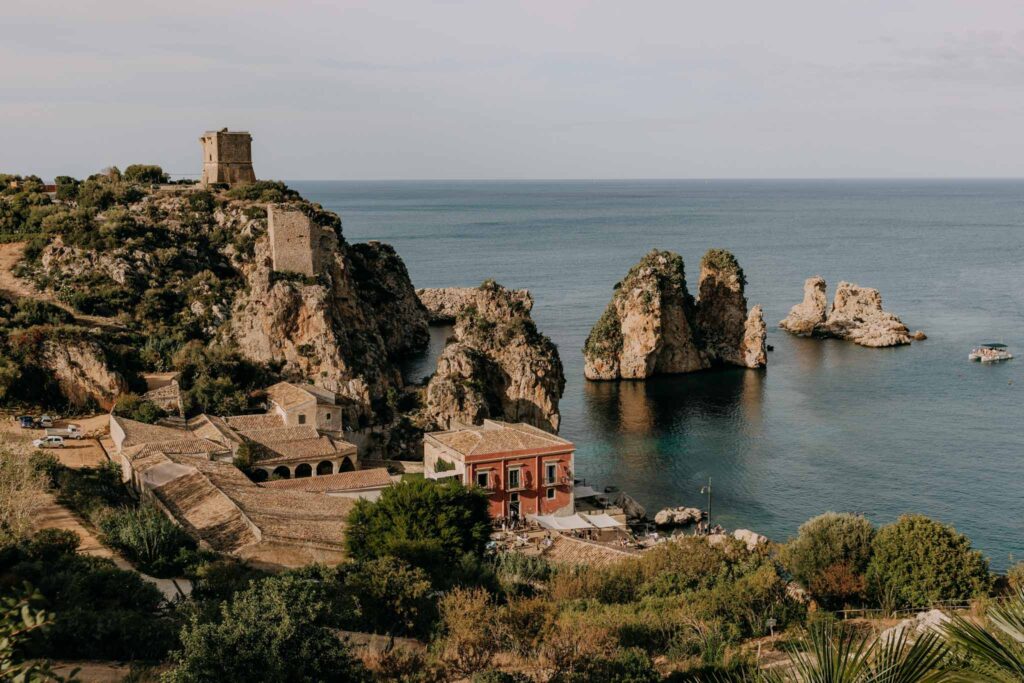
Standing at the edge of Sicily’s northwestern coastline, roughly positioned halfway between the bustling energy of Palermo and the coastal charm of Trapani, I discovered what can only be described as a sun-soaked gem that had lingered on my wishlist for years. This small village, with its limited accommodations spread across just a few blocks wide, creates an atmosphere so calm and intimate that you’ll find yourself genuinely grateful for the evenings when day trippers finally depart, leaving behind nothing but the sound of waves and distant laughter from the main square.
My recent trip to this absolutely beautiful township of Italy revealed something extraordinary about its touristic status—it’s almost entirely built around one iconic location. The historical tuna fishery, now transformed into a wedding venue and paid public beach, draws visitors from across the globe. Yet somehow, this tiny mountainous seaside town maintains its authentic character despite the attention.
The coastline surrounding this area ranks among the most pristine and unspoiled stretches I’ve encountered anywhere in Sicily. Minutes away lies a protected area known for its bright, clear water lapping against white-pebble beaches, all connected by scenic hiking trails that wind through landscapes photographers dream about. The nature reserve further down the road offers housing options and local beach access, though where you ultimately stay depends entirely on your mobility, needs, and interests.
Getting here requires some planning. A 40-60 minutes drive from Palermo remains the best way, given the limited public transport options. Most visitors opt for a hire car, which I strongly recommend despite the occasional stress of navigating big cities. The local township concentrates all restaurants and hotels in one walkable area, while air bnbs closer to the reserve suit those prioritizing beach time over sipping espresso in the main square each morning.
I spent two full days walking the trails, lounging on the beach, and genuinely absorbing what makes this place special. The village feels manageable without being restrictive—there’s enough to fill your time without overwhelming your senses. What struck me most was how the stone buildings and cobblestone streets create this almost theatrical backdrop for everyday life, especially in the afternoons when locals and tourists alike grab coffee or an aperitivo before dinner begins.
Things to do in Scopello, Sicily
Table of Contents
ToggleThe reserve dominates most visitors’ itineraries, and rightfully so. Spending your day among gorgeous little coves perfect for swimming should top anyone’s list. You can organise a boat trip to experience the water from a different perspective, though I found equal joy in simply alternating between the ocean and a comfortable lounger after grabbing a sunbed at the famous historical fishery.
For those seeking elevation and panoramic rewards, hiking up to the Bennistra tower delivers views that overlook the entire township. The tower stands as a sentinel, offering that perfect Instagram moment locals probably roll their eyes at by now. Down at Cala Mazzo Di Sciacca, the beach experience takes on a more rugged character, requiring a bit more effort but rewarding you with relative solitude.
A long boozy lunch—or a not boozy one if that’s your preference—at one of the restaurants scattered around the square provides its own form of entertainment. People-watching here rivals any European capital, except everyone’s more relaxed, sun-kissed, and probably holding a glass of local wine. The 5-10 minute drive to Guidaloca beach offers yet another option when you need a change of scenery, though honestly, I found myself returning to the same spots repeatedly, drawn back by familiarity and genuine affection.
Tonnara di Scopello
This old tuna fishing factory turned village represents everything romantic about Italian charm and Mediterranean views. The transformation into one of Sicily’s most sought after boutique hotels wasn’t accidental—the direct beach access, stunning waterfront setting, and those impossibly rustic, Pinterest-worthy rooms complete with red striped curtains make it irresistible. I had my heart set on staying here, but reality intervened when I checked availability and pricing.
By the time I looked, every room was booked for my dates, and even if space existed, my nightly budget wouldn’t have stretched that far. The steep price tag reflects demand, not gouging—this place genuinely offers something special. Fortunately, a clever workaround exists for those of us operating on more modest budgets.
Booking a day pass for €15 grants access to the private beach, includes a beach chair, and allows you to visit the small museum tucked inside the hotel. The on-site café serves sandwiches, drinks, and light snacks suitable for lunch, letting you experience the essence of the place without committing to the full overnight rate. Depending on what’s happening, the day pass remains available from 10:30 AM until 7:00 PM, though if they’re hosting an event that evening, access ends at 3:30 PM instead.
Tickets go on sale 15 days in advance, and you absolutely must book ahead. I watched them turn away visitors without tickets at the gate, and passes regularly sell out during peak season. The purchase process is straightforward through their website, but procrastination will cost you this experience. The clad pink exterior decorated with those distinctive red striped curtains photographs beautifully, and the waterfront setting creates memories that justify the advance planning required.
Zingaro Nature Reserve
Just a five-minute drive separates the village from this long stretch of protected coastline celebrated for pristine beaches and crystal-clear waters. I spent a little over half a day here initially, though I wish I’d planned to stay the entire day to enjoy the beaches more fully. The trails offer three main options, and I picked the easiest—the Sentiero Costiero, a 7 km coastal trail providing access to different beaches along the way.
We hiked all the way to Cala dell’Uzzo, roughly 6 km from the parking lot at Ingresso Sud, the south entrance. The journey took around two hours because we stopped often to take in the views, which seemed to improve with every turn. Tickets to enter the reserve cost €5 per person, a bargain considering what awaits inside.
The trail proves quite rocky, making closed-toe shoes essential. Bring a walking stick if you need extra support—several sections challenged even confident hikers. I thought Cala dell’Uzzo ranked as the most beautiful of the beaches, definitely worth the hike if you can make it. The bright, clear water and relative isolation create an almost private paradise feeling, assuming you arrive early enough to beat the rush.
Bring sunscreen religiously. While a few shaded spots exist along the trail, they’re not many, and the Mediterranean sun shows no mercy during summer. The reserve opens at 7:00 AM during peak season, and starting around 9:00 AM helped us avoid the worst heat while still securing good beach spots. We got lucky with a cloudy day, but it can get very hot very quickly.
Pack water and food—we picked up sandwiches in town and brought our own lunch. No facilities line the trail, so carry everything you need or go without. The toilets at the entrance represent your last civilized amenities. Beyond that point, you’ll have to get creative, either swimming in the sea or finding a discreet spot as we did.
From April through September, the reserve stays open from 7:00 AM to 7:00 PM. From October to March, hours shift to 8:00 AM until 4:00 PM. If you want easier and quicker access to Cala dell’Uzzo specifically, you can also enter the nature reserve from the north entrance near San Vito Lo Capo, though that approach sacrifices the graduated scenic build-up of the southern route.
Tips for your stay in Scopello
Don’t make the mistake I did by driving straight through the centre of town just because the person in front of you did. The Scopello town centre operates as a ZTL, meaning cars are prohibited. Sometimes this applies only during certain times of day, sometimes it’s permanent, but either way, you’ll get a fine if you drive through a ZTL. Just don’t do it.
To get into Scopello the right way, turn right after driving past Scopello Market rather than following GPS instructions to go straight ahead. Loop around past the Tonnara, then turn left and park your car at the paid parking if your accommodation doesn’t provide parking. We did have parking included, which eliminated daily stress about finding spots.
Scopello is genuinely small. Don’t arrive thinking you’ll encounter the amenities of Palermo—this is a small township with a handful of restaurants serving a tight-knit community and seasonal tourists. If you’re bringing a hire car, make absolutely sure you get parking with your accommodation. No free parking exists within the township, and daily rates can add up faster than you’d expect.
Scopello amenities
A handful of restaurants operate here, some attached to the handful of hotels, others standing independently. The gelateria and coffee shop serve as social hubs, particularly during the evening passeggiata. The pasticceria functions as coffee central and aperitif headquarters—we grabbed espresso here every morning and returned for spritz every evening, establishing a routine that felt both indulgent and perfectly normal.
A couple of shops dot the main area. I think one specialized in jewelry while another focused on ceramics, the latter becoming my favorite browsing destination. An ATM provides cash access, crucial since some smaller establishments still prefer physical currency. The police station maintains a presence, though I never needed their services during my stay.
The deli and sandwich shop offers takeaway wine, sandwiches, and deli ingredients, but you can also sit and eat or drink in their gorgeous backyard, which feels like stumbling into someone’s private garden party. Scopello Market, positioned just outside town, operates as a great little supermarket with an attached cafe serving great gelato. A produce store occupies the same little group of shops, and I even saw electronics like cables for sale, making it your go-to place for tech issues or forgotten chargers.
Where to get coffee in Scopello
Essentially, two coffee shops dominate the scene unless you’re staying at a hotel with breakfast service. Bar Pasticceria became our daily spot for espressos and later transformed into our aperitif headquarters each evening. They maintain plenty of lounge chairs arranged around the square, creating this lovely environment for people-watching while nursing a drink and contemplating dinner options.
The other coffee shop, Bar La Palma, earned our loyalty for evening gelato runs. They offered delicious flavours that changed daily, and the staff demonstrated genuine warmth rather than tourist-transaction efficiency. Having only two real options might sound limiting, but it actually fostered a comforting familiarity—we became regulars within days, recognized and welcomed each time we appeared.
Where to get drinks in Scopello
Aside from the aforementioned Bar Pasticceria, we frequented Bellevue Lounge bar very regularly, drawn by views rather than cocktail innovation. I won’t say the cocktails were life-changing, but the view and ambiance proved pretty unparalleled, especially during sunset when the light painted everything in warm, forgiving tones.
If you’re after something more simple like a beer or a glass—or realistically, a bottle—of wine, Gusto Di Sicilia on the corner was an absolutely stunning spot. You sit in the garden surrounded by plants and ocean views, taking in the serenity while the wine works its magic. The deli also served the most delicious antipasto plate we shared for dinner one evening, huge and loaded with everything from olives to cured meats and fishes. Highly recommend spending a slow afternoon here, letting time dissolve into conversation and tastes.
Where to Eat in Scopello
This small town offers just a handful of restaurants, and I didn’t get the chance to visit all of them during my stay, but what I experienced and heard about paints a positive picture. Made n’ Sicilia in the square served solid food with lots of gluten free options, important for travelers with dietary restrictions who often struggle in traditional Italian settings.
I heard that Bar Nettuno, also in the square, is equally nice, though I can’t personally verify. What I can say is we basically found it hard to find awful or even average food anywhere in Italy unless it was surgelato—frozen and microwaved, the telltale sign of a tourist trap phoning it in.
Ristorante La Tavernetta delivered pasta and fish dishes we genuinely enjoyed, particularly when dining on the outdoor patio as evening temperatures dropped to comfortable levels. Hotel Ristorante Torre Bennistra provided one of the nicest meals we experienced, paired with the most spectacular views. The terrace overlooks the coastline in a way that makes food taste better, and the staff proved so genuinely nice that I don’t think they market themselves aggressively enough. The food was simply great, executed with care rather than formula.
La Terrazza offered yummy food and lovely views as well, with the added bonus of resident cats during summer months, which for me personally enhanced rather than detracted from the experience. La Bottega di Beppe functions primarily as a small deli in town that makes delicious sandwiches—we picked up a few to take with us before heading to the reserve, and they held up perfectly for trail lunch.
Panifico Di Stabile e Anselmo, the local bakery, became a morning ritual. I loved the pannelle, those chickpea flour fritters that taste like clouds of savory satisfaction. My dad loved everything baked, particularly the cassatelle and sfincione, traditional items that connected us to generations of Sicilian breakfast tradition.
Where to Stay in Scopello
Where you stay in Scopello really depends on what interests lie at the heart of your trip. If you plan to spend all your days in the nature reserve, getting an air bnb near that area makes practical sense. I walked down to the local beach from the township once, and the return trip proved a sweaty experience I didn’t care to repeat. The reserve sits even further down the road, so staying nearby eliminates daily commute stress.
If you’re visiting Scopello Sicily specifically to experience the Tonnara, try to stay at the Tonnara hotel itself. It’s often closed to day trippers and shuts down by 6-7pm every night. Some days it fills up very quickly in the morning, and you won’t be allowed in without advance booking. To minimize that risk if this is your main focus, stay there—though I should mention it ain’t cheap. The famous seaside hotel, clad in pink and decorated with those red striped curtains, requires booking months in advance, six months or more for high season, as it fills up quickly.
Hotel Torre Bennistra sits in the center of Scopello village, where we stayed for a couple of nights. It carries that old Italian vibe—not ancient, just authentically weathered—but it was clean, and the breakfast proved fantastic. If you book early enough, try securing a room with a sea view. You’ll look down over the Tonnara, and the sunsets from those rooms are genuinely spectacular, worth the extra cost if available.
We also stayed in town at Casa De Brigida, a cheap and cheerful accommodation positioned right across from the gorgeous deli. The accommodation was basic but very central, and it came with a coveted car park, critically important when you have a hire car. Our only issue involved some sort of water pump or air con that rhythmically vibrated overnight, keeping me up despite my usual ability to sleep through anything. Other than that, it was a great spot offering everything we needed for a reasonable price.
Thumbs down for Hotel Baglio Di Scopello, where I booked a room to escape my dad’s snoring. They stuck me in a boiling hot room with air con that was getting hotter and hotter—reading 27C when I finally left. When I asked to change rooms, they said I couldn’t. When I decided to leave entirely, they kept all my money. So, yeah, avoid that situation.
Hotel La Tavernetta looked very cute with a great pool area overlooking the ocean, though I never stayed there personally. La Tonnara comes with caveats—no air con, super busy with tourists during the day, and no restaurant—but the experience might outweigh those limitations depending on priorities.
Aside from the buzzing noise issue and no dividing wall to encapsulate my dad’s impressive snoring, Casa De Brigida had everything needed and was so central to everything. The car park represented a mega perk we didn’t fully appreciate until seeing other tourists circling for spaces. I saw a glimpse of the inside of Bed and Breakfast Maria on the main square, and it looked very cute, though the only downside would be noise at night given its location directly on the main square where evening activity continues late.
If you’re mobile and happy to walk into town or drive when needed, any number of air bnbs would work great. One with a pool and beach access would be ideal during the summer months when temperatures push you toward water constantly.
Guidaloca Beach
This pebbly beach sits just a 10-minute drive from the village center, offering clear water and wide, open views of the coast that stretch toward the horizon. We drove past it several times during our stay and stopped to enjoy it for a few moments, assessing whether it deserved our main beach day commitment. Ultimately we chose to spend our primary beach time elsewhere, but that doesn’t diminish its appeal.
If you aren’t able to get into Tonnara di Scopello for the day—and many people aren’t due to capacity limits—Guidaloca serves as a great alternative that doesn’t feel like settling. The beach attracts families and couples seeking a mellower vibe than the more famous locations, and the parking situation, while not free, proves less complicated than other areas.
Explore Scopello Village
This village is small but genuinely full of charm, with stone buildings creating architectural interest and cobblestone streets adding that tactile, old-world quality that modern pavement can’t replicate. A handful of restaurants, cafés, and shops invite exploration, though you can cover the entire town in under an hour if you’re moving with purpose.
I preferred the afternoons when we’d wander back into town without agenda, grab a coffee or aperitivo before dinner, and browse the little shops that stay open during siesta when common sense suggests they should close. Just down the street from our hotel, I found a small ceramic shop that I absolutely loved. I stopped in and chatted with the owner for nearly an hour, learning about her passion for ceramics and crocheting—two crafts that require patience I admire but don’t possess.
I ended up buying a beautiful crocheted top from her, one of my favorite souvenirs from the entire trip. It wasn’t the top itself but the conversation, the connection, the feeling that I’d stepped briefly into someone’s creative world and been welcomed. That’s what village exploration offers that checking boxes on an itinerary never will.
How to Get to Scopello
The best way to get to this village is by car—there’s really no viable alternative given the limited public transport. We rented a car for our 2.5-week road trip through Sicily, and I drove the entire time, which was occasionally stressful driving in the big cities like Palermo but otherwise found the roads pretty calm, even pleasant once you adjust to Italian driving philosophy.
Most hotels in Scopello maintain their own designated parking lots, so make sure to reach out to them before arriving for specific instructions on where to leave your car. This isn’t standardized—each property has its own system, and showing up without instructions can cost you valuable vacation time circling and cursing.
If you’re visiting for the day rather than staying overnight, several parking lots exist just outside of town, positioned closer to the center for easy walking access. There isn’t any designated parking for the Tonnara unless you’re staying there as a guest, which created challenges for us. We ended up finding a spot along the SP63 road after driving around for twenty minutes, but that uncertainty adds stress you don’t need on vacation.
When to Visit Scopello
We stayed at the end of September, and I think it’s one of the best times to visit based on weather and crowd levels. The summer rush has slowed down significantly, and the weather remains still beautiful—warm but not unbearably hot like the peak August weeks when locals flee their own hometowns.
Anytime from the end of April to mid-October generally represents a great time to visit, assuming you’re comfortable with seasonal weather variations. Just keep in mind that during the peak summer months, the crowds can be overwhelming, and prices spike accordingly. Hotels that seem reasonable in May or October suddenly double their rates in July, and restaurants get packed to the point where spontaneous dining becomes difficult.
How Many Days in Scopello, Sicily?
I recommend spending two days here, which is exactly what we did—two days and two nights split between one day at Tonnara di Scopello and another exploring the nature reserve. I could have easily added an extra day to relax at another beach without feeling like I was just killing time, but two days was enough to explore the area at an enjoyable, unhurried pace.
Some people blow through in a single day, treating it as a photo stop en route to somewhere else. That seems like a waste to me. Others base themselves here for a week, using it as a home base for daily adventures. That works if you’re comfortable with the limited dining options and entertainment, but might feel constraining for travelers who need more variety.
Day Trips from Scopello
Erice stands out as an enchanting hilltop town worth spending a day exploring its narrow streets and visiting beautiful churches that date back centuries. It’s about a 50-minute drive, or you can reach it via a 36km/50 minute route from different directions. This historic hillside town offers the option to catch a cable car up from Trapani, and while other routes exist, why not take the scenic one that turns transportation into experience?
Favignana requires driving to Trapani and then taking a ferry or joining a boat tour around the island for the day. This island, part of the Egadi Islands off Sicily’s western coast, is known for clear blue waters that make the Mediterranean’s reputation for clarity seem undersold. We booked a boat tour from Trapani and spent the day swimming at various beaches around the islands, though honestly, we did this day trip in a bit of an ambitious way that left us with an insufficient amount of time on the island itself. I’d recommend staying overnight, at least on Favignana, and then again on Levanzo if you can swing it—but that’s a point for another time.
San Vito Lo Capo ranks among the most famous and picturesque beaches in Sicily, positioned about a 55-minute drive or 43km away depending on your route. It looks INCREDIBLE in every photograph I’ve seen, and we didn’t go, something I sorely wish we’d prioritized differently. I tried to fit it into our schedule but didn’t have enough time, a common travel regret.
Castellammare del Golfo offers a pretty Mediterranean coastal town experience with sandy-hued buildings and golden beaches nearby. It’s only a 20-minute drive or 10km away, making it the easiest day trip option. The gorgeous seaside town comes with restaurants, a beach, and a lovely main street to wander up and down, perfect for a half-day excursion when you need a change of scenery but don’t want to commit to a full day away.
All these suggestions are based on having a hire car, which honestly isn’t that bad for driving in Sicily—I promise. Trapani, positioned 38km away as a 55 minute drive, functions as a gorgeous seaside town or small city, really, with a port that ferries people to Favignana and Levanzo islands. The roughly equal distance from here to San Vito Lo Capo versus Trapani to San Vito Capo means you’re not losing geographic advantage by basing elsewhere, though the roads look less windy from the other direction.
Should I base myself in Scopello?
I asked this question on Instagram before my trip, so I want to pay it forward now with my experience and honest answer: it depends on what kind of traveler you are.
When we arrived, I did wonder how we would fill the 4 days we had allocated. It’s beautiful but small, and I’d just come from Palermo, which has a lot more happening in terms of restaurants, nightlife, and cultural attractions. Over our stay, however, I became increasingly fond of the little town and the simplicity that small places offer. We developed routines around where we had coffee and breakfast, which was lovely in a way that constant novelty-seeking prevents.
If you’re the type of tourist who loves reading a book on the beach or by the pool, just taking it easy and letting vacation mean actual rest, you would be very happy in Scopello, particularly in summer when heat makes ambition seem foolish. Similarly, if you love nature, hiking, or boating, this could be a great base offering daily access to activities without requiring you to pack up and relocate constantly.
If you’re the sort of person who needs to fill every day with sightseeing and checking off landmark lists, I think it could be more practical to stay in Trapani with a planned day trip to Scopello. You’d have access to the ferry port for Favignana and Levanzo, the cable car for Erice, and you’d be in easy reach of Marsala for wine tasting and historical sites.
I don’t really know why, but Scopello just doesn’t feel like the place you roll back into at 8:30pm after a day-long adventure elsewhere. It’s more like the place where you’re established in the town square with a spritz at 5pm on the dot, watching life happen around you rather than chasing it down. That rhythm either appeals to you or it doesn’t—there’s no wrong answer, just different travel philosophies.