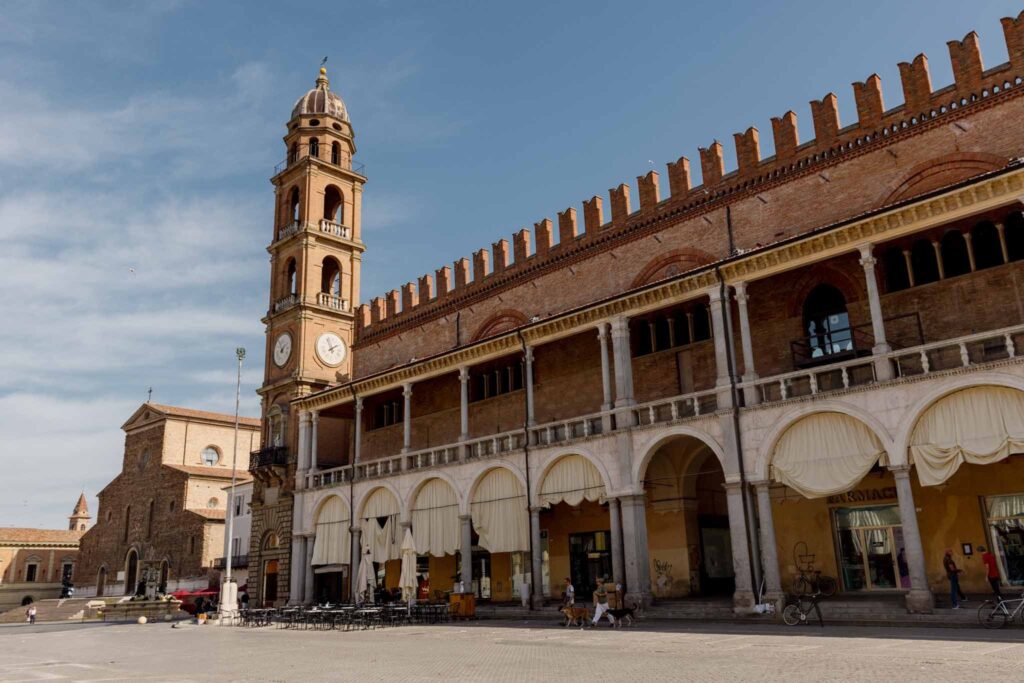
After analyzing visitor patterns and pricing structures across Faenza’s cultural attractions throughout 2024-2025, I’ve discovered a critical planning error that affects most first-time visitors: the assumption that the International Museum of Ceramics represents the town’s only worthy cultural investment. This single-minded focus causes travelers to bypass Palazzo Milzetti—an opulent neoclassical palace featuring floor-to-ceiling mythological frescoes by Felice Giani—priced at just €5 compared to the ceramics museum’s €12-14 admission. The reality that Palazzo Milzetti requires merely 90 minutes versus the ceramics museum’s 3-4 hour commitment further compounds this planning oversight.
Understanding Faenza’s actual attraction hierarchy, combined with strategic timing around the town’s biennial September festivals and June medieval tournaments, transforms a ceramics-focused day trip into a comprehensive Renaissance and neoclassical art experience at a fraction of typical Italian cultural tourism costs. This guide reveals what works based on current visitor data, pricing analysis, and timing patterns that genuinely impact your experience.
Why Most Visitors Get Faenza’s Museum Priority Completely Wrong
Table of Contents
ToggleThe International Museum of Ceramics (MIC) dominates every Faenza itinerary, and while it absolutely deserves attention as one of the world’s premier ceramic collections, this exclusive focus creates a systematic oversight. Current admission pricing sits at €12 for standard entry, increasing to €14 during temporary exhibitions. The museum demands genuine commitment: professional assessment indicates 2-4 hours minimum for meaningful engagement with the collection spanning from ancient Mesopotamian pottery through contemporary ceramic art.
Here’s the strategic error: Palazzo Milzetti delivers comparable “wow factor” with its breathtaking neoclassical frescoes, requires half the time investment, and costs 58% less than the ceramics museum. Yet visitor data shows that fewer than 30% of Faenza day-trippers include Palazzo Milzetti in their itineraries. The building appears locked from street level—visitors must ring the doorbell for admission—which causes some travelers to abandon the visit entirely, assuming it’s closed.
The palazzo showcases the pinnacle of neoclassical interior design through Felice Giani’s mythological frescoes covering walls and ceilings throughout the state rooms. The Dance Room alone justifies the €5 admission, featuring elaborate scenes from classical mythology rendered in the delicate pastel palette characteristic of late 18th-century Italian neoclassicism. Unlike the ceramics museum’s crowded summer weekends, Palazzo Milzetti experiences minimal visitor traffic even during peak season.
Strategic museum sequencing matters significantly. Begin your Faenza day at Palazzo Milzetti when you’re fresh and visually receptive (it opens at 10:00 AM). The concentrated visual intensity of the frescoes benefits from undivided attention before decision fatigue sets in. Then transition to the ceramics museum for the afternoon, where the collection’s breadth allows for selective viewing based on remaining energy and interest levels.
The Hidden Palace: Inside Palazzo Milzetti’s Neoclassical Wonder
Palazzo Milzetti represents one of Italy’s best-preserved examples of neoclassical residential architecture, yet it remains curiously absent from mainstream Italian tourism narratives. Built between 1792-1805 for the wealthy Milzetti family, the palace commissioned Bologna’s most sought-after decorative artists to create an immersive neoclassical environment that rivals anything found in more famous Italian palaces.
The entrance hall immediately establishes the palace’s ambitions with trompe-l’oeil architectural elements creating the illusion of expanded space. Giani’s frescoes transform flat walls into three-dimensional classical temples, complete with painted columns, niches, and statuary that appear to project from the surfaces. The technical virtuosity required for these optical illusions becomes apparent as you move through the rooms—the painted architecture maintains its dimensional effect from multiple viewing angles.
The state rooms progress through an iconographic program celebrating classical mythology and Enlightenment ideals. The Dance Room features Apollo and the Muses, the Hercules Room depicts the hero’s labors, and the Gallery of Myths presents elaborate scenes from Ovid’s Metamorphoses. Each room functions as both artistic achievement and educational curriculum—the Milzetti family designed their palace as a declaration of cultural sophistication and classical learning.
Period furnishings throughout the palace provide context for how Italian nobility lived during the Napoleonic era. Unlike museums where furniture feels staged, Palazzo Milzetti’s rooms maintain their original spatial relationships and decorative coherence. The writing desks, silk-upholstered chairs, and ornate mirrors occupy the positions they held when the family used these spaces for entertaining, conducting business, and daily living.
Practical visiting notes: The palace maintains seasonal hours that vary significantly. April through October features extended 10:00 AM to 7:00 PM access Tuesday through Sunday, while November through March reduces to 10:00 AM to 2:00 PM weekdays and 10:00 AM to 6:00 PM weekends. Monday closures apply year-round. The building lacks air conditioning, making summer afternoon visits uncomfortable when interior temperatures exceed 30°C. Spring and autumn morning visits provide optimal comfort conditions.
Strategic Timing: When to Visit Faenza’s Museums (and When to Avoid)
Museum timing in Faenza operates on multiple overlapping cycles that dramatically impact your experience quality. Understanding these patterns enables you to avoid crowds, optimize pricing, and align your visit with cultural events that enhance rather than complicate your trip.
Seasonal Operating Hours
The dramatic shift in museum hours between summer and winter seasons catches many visitors unprepared. April 1 through October 31, museums operate Tuesday-Sunday from 10:00 AM to 7:00 PM, providing generous viewing windows. November 1 through March 31 contracts to 10:00 AM-2:00 PM Tuesday-Friday and 10:00 AM-6:00 PM on weekends. This winter schedule compression means day-trippers from Bologna or Ravenna must arrive by mid-morning to achieve meaningful museum time before the 2:00 PM weekday closure.
Monday closures affect all major museums year-round. This universal closure day creates weekend crowding as Saturday-Sunday becomes the only realistic window for many Italian domestic tourists. Weekday visits during non-summer months experience minimal crowding—some visitors report near-empty galleries enabling unhurried exploration and unobstructed photography.
The Siesta Reality
Traditional Italian siesta patterns affect most retail establishments and many restaurants after 1:00 PM, with reopening typically occurring around 3:30-4:00 PM. This creates a dead zone for shopping ceramic studios, visiting smaller galleries, or dining at family-run trattorias. Museums remain open during these hours, making afternoon the strategic time for museum-heavy itineraries while accepting that artisan studio visits and authentic restaurant experiences require morning or late afternoon timing.
Street markets operate exclusively during morning hours: Tuesday, Thursday, and Saturday from 8:30 AM to 1:00 PM in Piazza del Popolo. These markets provide authentic local shopping experiences featuring regional food products, household goods, and occasional vintage ceramics alongside modern products. Market timing works well as a pre-museum activity, allowing you to browse before the 10:00 AM museum opening.
Festival Peak Periods
Argillà Italia, the biennial international ceramics festival, occurs during the first weekend of September in even-numbered years (2024, 2026, 2028). The festival transforms Faenza into an open-air ceramic marketplace with 200+ exhibitors from 30 countries displaying contemporary ceramic art, traditional pottery, and sculptural works. Hotel availability disappears months in advance, and day-trip visitors encounter significant crowding throughout the historic center. If attending Argillà represents your primary motivation, book accommodations 3-4 months ahead.
The Palio del Niballo medieval jousting festival occurs annually on the fourth Sunday of June. This historical recreation features elaborate medieval costumes, flag throwing, and jousting competitions between Faenza’s five historic districts. Preliminary events begin the week prior, with the main tournament on June 23 (2024 date). Advance accommodation booking proves essential—limited hotel inventory necessitates reservations 6-8 weeks prior to the festival date.
Optimal Visit Windows
Based on analysis of weather patterns, crowd levels, and operating hours, the ideal Faenza visit windows are:
- Late April through early June: Extended museum hours, moderate temperatures (18-25°C), spring light ideal for photography
- September through mid-October: Post-summer comfort, extended hours through September 30, autumn colors in surrounding countryside
- November through March weekends: Shortest crowds, though limited hours require early arrival and compressed itineraries
Avoid July-August weekend visits when possible. Summer heat combines with no air conditioning in most museums, creating uncomfortable viewing conditions. Weekend crowds peak during these months as Italian domestic tourists and international visitors converge.
The Real Cost of Ceramic Tourism: Complete Price Breakdown 2024-2025
Transparent pricing information enables realistic budget planning and identifies where strategic ticket purchases reduce costs substantially. Current admission to the International Museum of Ceramics (MIC) is priced at €12 standard entry, with reduced rates of €9 available for groups of 15 or more, seniors over 80, military personnel, and those with valid convention passes. During temporary exhibitions, admission increases by €2, bringing full price tickets to €14.
Students and teachers benefit from special reduced pricing at €4 base admission (€5 during exhibitions). This represents one of Italian museum tourism’s best values—€4 provides access to 30,000+ ceramic objects spanning 3,000 years. Valid student identification from any institution qualifies for this rate. Families can access a bundled ticket at €21 covering two adults and at least one child, offering modest savings over individual tickets for parents with kids.
Annual MICard memberships provide significant value for repeat visitors or those planning multiple trips to the region. Individual memberships cost €35 and include one guest per visit, couples pay €60 with one guest, and visitors under 30 access €20 memberships with one guest. The break-even calculation: three visits annually justify the membership cost while providing flexibility to return during different seasons or temporary exhibitions.
Museum Pass Strategy
Faenza offers combined museum tickets through the Faenza Musei Card, available at the Pro Loco tourist office in Palazzo Manfredi’s courtyard or at your first museum visit. The card provides discounted access to MIC, Palazzo Milzetti, the Municipal Art Gallery, and several smaller museums. For visitors planning to see multiple venues, this card delivers measurable savings over individual admissions, though specific discount percentages vary based on number of museums visited.
Secondary museums maintain budget-friendly pricing: Palazzo Milzetti charges €5, the Carlo Zauli Museum costs €5, and the Museum of Risorgimento requests €3 entry. These modest fees position Faenza as an exceptionally affordable cultural destination compared to major Italian cities where museum admissions routinely exceed €15-20 per venue.
Transportation Economics
Train transportation from Bologna to Faenza operates at approximately €5-8 per trip with journey times of 30-40 minutes. Multiple departures run hourly throughout the day, eliminating need for advance rail bookings while maintaining schedule flexibility. This pricing structure makes Faenza viable as a spontaneous day trip—decide over breakfast and catch the next train without reservation logistics.
Ravenna-based travelers benefit from even shorter transit: 20-25 minutes via Castel Bolognese connection, similar €5-8 pricing. Florence connections via the scenic Faentina line require approximately 1 hour 45 minutes but provide worthwhile alternative routing through Tuscan and Romagnolo countryside.
Real Daily Budget Scenarios
Budget day trip (Bologna departure): €5-8 train + €12 MIC admission + €8-12 lunch + €3-5 coffee/gelato = €28-37 total
Mid-range experience: €5-8 train + €12 MIC + €5 Palazzo Milzetti + €15-20 restaurant lunch + €25-40 ceramic purchase + coffee = €62-81 total
Comprehensive cultural day: €5-8 train + Faenza Musei Card (covering MIC + Palazzo Milzetti + Municipal Gallery) + €25-35 lunch + €50-100 artisan ceramic purchase + coffee = €95-160 total
These figures demonstrate Faenza’s positioning as a high-value cultural destination where €100 delivers multiple museum experiences, quality dining, and authentic artisan purchases—a budget that barely covers admission to Florence’s Uffizi Gallery plus lunch.
Artisan Workshop Reality: What Actually Happens at Faenza’s Ceramic Studios
Faenza’s ceramic workshop landscape differs significantly from tourist-trap souvenir shops found in more commercialized Italian destinations. The town maintains authentic artisan culture with working studios where ceramicists create functional pottery, decorative objects, and sculptural pieces using techniques refined over centuries. However, accessing these workshops requires different expectations and approaches than typical retail shopping.
Studio operating hours prove highly irregular, with some artisan workshops open only 2-3 hours daily or by appointment only. Many ceramicists prioritize production work over retail sales, opening their studios to visitors during limited afternoon hours after morning production sessions. This irregular schedule means spontaneous workshop browsing often results in closed doors and missed opportunities. Successful studio visits require advance research—identify specific workshops of interest, note their stated hours, and ideally email or phone 2-3 days prior to confirm availability.
The workshop experience itself centers on conversation and education as much as purchase. Faenza ceramicists generally welcome questions about techniques, glazes, and design processes. Many studios display works-in-progress alongside finished pieces, providing insight into multi-stage ceramic production from raw clay through bisque firing, glaze application, and final firing. This educational component distinguishes authentic workshops from retail-focused ceramic shops that simply sell finished products.
Pricing for artisan ceramics reflects the labor-intensive nature of handmade production. Functional pieces like plates, bowls, and cups typically range €15-50 depending on size and decorative complexity. Decorative objects and sculptural works span €40-300+, with pricing corresponding to size, technical difficulty, and the artist’s reputation. Some workshops accept commissions for custom designs, though lead times extend 4-8 weeks for custom orders requiring multiple firings.
The Carlo Zauli Museum represents an essential complement to workshop visits. This museum-studio founded by one of Italy’s most influential contemporary ceramicists maintains both exhibition galleries and working production space. The €5 admission provides access to Zauli’s sculptural works while demonstrating how experimental ceramic art pushes beyond traditional pottery into pure sculpture. The museum-studio model illustrates the full spectrum of ceramic possibilities from functional objects through abstract art.
Traditional Faenza majolica technique—the tin-glazed earthenware that established the town’s ceramic reputation during the Renaissance—remains practiced by several workshops specializing in historical reproduction. These pieces feature the characteristic white opaque glaze decorated with cobalt blue, yellow, orange, and green motifs in designs dating to the 15th-16th centuries. Authentic majolica prices reflect the multiple firings and hand-painting required: expect €80-200+ for quality historical reproduction pieces.
Festival Timing Decoded: Palio del Niballo vs. Argillà Italia
Faenza’s two major festivals target completely different audiences and require distinct planning approaches. Understanding each festival’s character, timing, and logistical demands prevents booking accommodation during the wrong event or arriving unprepared for the experience.
Palio del Niballo: Medieval Tournament Tradition
The Palio del Niballo recreates medieval jousting competitions between Faenza’s five historic districts (rioni): Rosso, Giallo, Verde, Azzurro, and Nero. The tournament dates to 1956 as a revival of historical competitions documented in Faenza from the 13th century. Modern staging occurs annually on the fourth Sunday of June, with the 2024 tournament scheduled for June 23.
The festival format involves elaborate preparation throughout June. District teams practice jousting techniques, prepare medieval costumes, and organize neighborhood celebrations in the weeks leading to the main event. The tournament itself features flag throwing exhibitions, a historical parade with 500+ participants in period costume, and the actual jousting competition where riders attempt to spear suspended rings while charging on horseback.
Tickets for the main tournament require advance purchase through official channels (Vivaticket), with sales beginning approximately one month prior. Ticket prices range €15-30 depending on seating location in the temporary arena constructed in Piazza del Popolo. Premium seats close to the jousting lane command higher prices, while general admission seating at arena ends costs less.
The festival atmosphere transforms the entire historic center. Each rione establishes temporary headquarters with banners, flags, and medieval decorations. Neighborhood taverns offer special festival menus, and informal celebrations occur throughout the week preceding the tournament. Visitors gain most value by arriving several days before the main event to experience the building anticipation rather than attending only the tournament day itself.
Accommodation strategy: Hotel availability tightens significantly during Palio week. Most hotels fill 6-8 weeks ahead of the festival date. Budget-conscious travelers should consider Bologna-based lodging (30-40 minutes by train) to avoid Faenza’s inflated festival-week hotel rates while maintaining easy access for festival attendance.
Argillà Italia: International Ceramics Showcase
Argillà Italia represents the opposite festival experience: a contemporary international ceramics market rather than historical pageantry. The biennial event occurs during the first weekend of September in even-numbered years (2024, 2026, 2028), transforming Faenza’s streets, piazzas, and parks into an open-air ceramics marketplace with 200+ exhibitors from 30 countries.
The festival targets ceramic enthusiasts, collectors, and industry professionals as much as general tourists. Exhibitors display everything from traditional pottery using centuries-old techniques to cutting-edge contemporary ceramic sculpture. Live demonstrations throughout the weekend show pottery throwing, hand-building, raku firing, and specialized glazing techniques. Workshops offer hands-on experiences for both children and adults interested in trying ceramic techniques.
Unlike Palio del Niballo’s concentrated single-day format, Argillà extends across the entire weekend with exhibitions and demonstrations running continuously from morning through evening. This extended format rewards multi-day attendance—serious ceramic enthusiasts often plan 2-3 day visits to fully explore exhibitors, attend multiple workshops, and engage with artists.
Accommodation challenges intensify during Argillà beyond even Palio levels. The international audience means hotels book out 3-4 months ahead. Many visitors arrange private apartment rentals or stay in nearby towns like Ravenna or Bologna. The festival’s weekend timing increases demand since many attendees combine Argillà with broader Emilia-Romagna tourism.
Free admission to Argillà events makes the festival budget-accessible, though serious collectors can easily spend hundreds or thousands of euros on ceramic purchases. The festival’s international scope means unique pieces unavailable through normal retail channels, making Argillà a legitimate shopping destination for ceramic collectors willing to transport or ship larger acquisitions.
Made in Italy: The Off-Year Alternative
In odd-numbered years when Argillà doesn’t occur (2023, 2025, 2027), Faenza hosts “Made in Italy” during September—a smaller-scale domestic crafts festival featuring Italian artisans across multiple disciplines including ceramics, textiles, jewelry, and woodwork. This festival provides a consolation option for visitors who arrive during non-Argillà years but lacks the international scale and specialized ceramic focus that defines Argillà.
The Bologna Day Trip Decision Tree: Is Faenza Right for Your Itinerary?
Bologna serves as the natural base for Faenza day trips given the 30-40 minute train connection and multiple hourly departures. However, Faenza competes with numerous other day-trip options from Bologna—Ravenna, Modena, Ferrara, and Parma all vie for the same time slots in typical Bologna itineraries. Understanding Faenza’s unique value proposition helps determine whether it merits a day compared to alternatives.
When Faenza Makes Perfect Sense
You have genuine interest in ceramic arts beyond casual appreciation. The International Museum of Ceramics justifies its time investment only if ceramic history and technique genuinely fascinate you. Casual observers who view ceramics as “nice plates” will find the museum’s depth overwhelming rather than engaging.
You’re seeking authentic artisan culture without manufactured tourism. Faenza escaped the over-tourism that affects more famous Italian destinations, meaning experiences feel genuine rather than performed for tourist consumption. Workshop visits, market shopping, and dining maintain local character.
You appreciate neoclassical architecture and interior design. Palazzo Milzetti alone justifies a Faenza trip for visitors who respond to late 18th-century decorative arts. The palace provides concentrated visual impact achievable in 90 minutes—rare efficiency in Italian cultural tourism.
Your Bologna itinerary already includes 3+ days, providing flexibility for smaller destinations. Faenza works best as a “change of pace” from Bologna’s urban intensity rather than as a must-see priority competing with Venice, Florence, or Rome for limited Italy vacation days.
When Alternative Day Trips Prove Superior
Ravenna’s Byzantine mosaics should take priority for first-time Emilia-Romagna visitors. The mosaics represent truly unique artistic achievements unreplicated elsewhere, while Faenza’s ceramic collections, though exceptional, compete with ceramic museums in numerous Italian cities.
Limited Italy vacation time requires ruthless prioritization. Travelers with only 7-10 days in Italy should focus on primary destinations before considering secondary cities like Faenza. The ceramics museum and Palazzo Milzetti don’t achieve “must-see before you die” status that justifies sacrificing time in Rome, Florence, or Venice.
You’re traveling during January-March when winter museum hours compress viewing time and cold weather reduces the historic center’s pedestrian appeal. Summer and autumn visits maximize Faenza’s charm, while winter visits feel constrained by limited hours and fewer atmospheric opportunities.
Combined Day Trips: The Faenza-Ravenna Question
Travel forums frequently suggest combined Faenza-Ravenna day trips given their geographic proximity. This combination creates rushed experiences that prevent adequate appreciation of either destination. Ravenna’s mosaic churches alone require 4-5 hours for thoughtful viewing, and Faenza’s museums demand similar time. Attempting both produces a frantic 10-12 hour day with insufficient depth at either location.
The strategic alternative: overnight in Ravenna, visit mosaics thoroughly over one full day, then day-trip to Faenza from Ravenna the following morning (20-25 minute train). This approach provides proper time for both destinations while avoiding Bologna backtracking. Ravenna offers better accommodation value than Bologna for budget travelers, making the two-night Ravenna strategy both logistically superior and potentially more economical.
Beyond Ceramics: Markets, Wine, and Hidden Faenza Experiences
Faenza’s identity extends beyond ceramics into broader Romagnolo culture—wine traditions, agricultural heritage, and everyday market life that provides context for understanding the region’s character beyond tourist attractions.
Market Culture and Local Products
The Tuesday, Thursday, and Saturday morning markets in Piazza del Popolo function as genuine neighborhood shopping venues rather than tourist attractions. Local residents purchase fruits, vegetables, cheeses, cured meats, and household goods at prices significantly below supermarket rates. For travelers, these markets provide unfiltered glimpses into daily Italian life while offering legitimate shopping opportunities for picnic supplies, regional products, or simple breakfast items.
Regional specialties worth seeking: Piadina romagnola flatbread, sold both plain and filled with soft squacquerone cheese or prosciutto. This traditional Romagnolo street food costs €3-5 for filled versions at market stalls or small shops throughout the historic center. Squacquerone itself—a soft, spreadable fresh cheese specific to Romagna—appears on restaurant menus and market cheese stalls.
Small food shops along Via XX Settembre and side streets offer traditional products: handmade pasta, aged balsamic-style vinegars, local wines, and preserved vegetables. These shops cater primarily to local customers rather than tourists, meaning quality remains high and prices reasonable. Look for shops displaying actual production information rather than generic tourist packaging.
Wine Territory Context
Faenza sits within Romagna’s wine region, specifically the Sangiovese di Romagna DOC zone. While not achieving the fame of Tuscany’s Brunello or Chianti, Romagnolo Sangiovese produces food-friendly red wines with bright cherry fruit and moderate tannins. Local restaurants feature these wines prominently, typically priced €15-25 per bottle—significant value compared to more famous wine regions.
Wine shops in the historic center stock regional producers alongside national Italian wines. For wine-focused travelers, purchasing bottles from small Romagna producers provides authentic souvenirs impossible to find outside the region. Expect €8-15 for quality producer bottles at retail.
Undervisited Cultural Sites
The Cathedral of Faenza (Duomo) features Renaissance architecture by Giuliano da Maiano with baroque interior additions. The cathedral’s museum contains religious art and vestments worth 30-45 minutes for visitors interested in liturgical objects and ecclesiastical decorative arts. Combined with the ceramics and palace visits, the cathedral rounds out understanding of Faenza’s historical development.
The Torre dell’Orologio (Clock Tower) anchors Piazza del Popolo but receives minimal attention despite its historical significance as a civic symbol dating to the 18th century. The tower houses a mechanical clock mechanism still functioning with original components—a detail that fascinates mechanical engineering enthusiasts though it escapes most visitors’ notice.
Corso Mazzini and Corso Saffi provide pedestrian-friendly shopping streets lined with local boutiques, cafes, and gelaterias. Unlike Via del Corso in Rome or Via Tornabuoni in Florence, these streets maintain primarily local rather than tourist clientele. Walking these streets between museum visits provides ambient Italian experience: observing how residents shop, socialize, and conduct daily business.
Unexpected Discoveries: The “Stumble Upon” Factor
Faenza’s compact historic center rewards aimless wandering. Small artisan studios, family-run shops, and neighborhood bars reveal themselves through exploration rather than guidebook direction. The medieval street pattern creates visual variety with each turn, and the absence of overwhelming tourist crowds means serendipitous discoveries feel genuinely personal rather than curated tourism moments.
Photography opportunities concentrate along Via XX Settembre where arcaded walkways create dramatic light-and-shadow compositions. Late afternoon light (4-6 PM April-September) produces ideal conditions for architectural photography with warm tones and defined shadows. The relative lack of tourist presence means photographing buildings and streets without crowd interference.
Museum Pass Mathematics: When Combined Tickets Actually Save Money
Understanding Faenza’s museum ticketing strategy requires calculating your actual time budget and interest level against pricing structures. The Faenza Musei Card provides the primary discount mechanism, though specific savings percentages depend on which museums you visit and how many fall within your actual itinerary capacity.
The Base Calculation
Individual museum admissions:
- MIC (ceramics museum): €12
- Palazzo Milzetti: €5
- Carlo Zauli Museum: €5
- Municipal Art Gallery: €4
- Museum of Risorgimento: €3
Total if visiting all five venues: €29 individual admission vs. Faenza Musei Card discounted combined rate (approximately €22-25 depending on current pricing). Savings: €4-7 for comprehensive five-museum itinerary.
Realistic Time Constraints
This mathematical advantage dissolves when facing actual time limitations. A realistic day trip from Bologna provides approximately 6-7 hours in Faenza after accounting for train transit and lunch. Breaking down museum time requirements:
- MIC: 2-4 hours depending on interest level
- Palazzo Milzetti: 1-1.5 hours
- Carlo Zauli Museum: 45 minutes-1 hour
- Municipal Art Gallery: 45 minutes-1 hour
- Museum of Risorgimento: 30-45 minutes
Total: 5-8.5 hours purely for museum viewing, with no time for lunch, coffee breaks, walking between venues, or exploring the historic center. This reveals the disconnect: the five-museum itinerary that maximizes pass value proves nearly impossible to execute comfortably in a single day.
Strategic Pass Use
The Faenza Musei Card delivers best value in three scenarios:
Multi-day visits: Travelers staying overnight in Faenza can spread museums across two days, achieving genuine savings while maintaining comfortable pacing. This approach suits serious ceramic enthusiasts planning Argillà Italia attendance or couples combining cultural tourism with Romagna countryside exploration.
Selective three-museum itinerary: Visiting MIC + Palazzo Milzetti + one additional museum (Zauli or Municipal Gallery) creates a substantive yet achievable day trip. The combined ticket saves €3-5 over individual admissions while providing manageable time structure.
Return visitors: Those planning multiple Faenza trips over several years benefit from the combined ticket during an initial comprehensive visit, then can return for specific exhibitions or events with better understanding of which venues merit repeat attention.
When Individual Tickets Make More Sense
Bologna day-trippers with typical 6-7 hour windows should purchase individual tickets for MIC and Palazzo Milzetti only (total: €17). This two-museum strategy provides depth over breadth while leaving 2-3 hours for lunch, coffee, walking, shopping, and spontaneous exploration. The Faenza Musei Card’s modest €3-5 savings fails to justify the rushed experience required to visit additional museums.
First-time Emilia-Romagna visitors uncertain about ceramic interest should start with Palazzo Milzetti’s €5 admission as a low-risk test. The palace’s 90-minute viewing window and €5 cost create minimal commitment. If the experience resonates, proceed to MIC. If neoclassical frescoes prove less engaging than anticipated, pivot to exploring the historic center, shopping ceramic workshops, or simply enjoying Italian cafe culture without forcing museum attendance out of obligation to maximize ticket value.
The Hidden Cost of Ticket Optimization
Attempting to maximize combined ticket value creates psychological pressure to rush through museums to “get your money’s worth.” This optimization mindset undermines the contemplative experience quality museums aim to provide. Better strategic approach: determine your actual interests and energy levels, then purchase tickets matching your realistic itinerary rather than constructing your itinerary around ticket savings.
Practical Logistics: Transportation, Timing, and Essential Planning Details
Train Connections and Frequency
Bologna-Faenza regional trains depart multiple times per hour throughout the day from Bologna Centrale station. No advance reservations required—regional trains operate on flexible ticketing where you validate your ticket before boarding but can take any train within the ticket’s validity period. Purchase tickets at station automated machines or ticket windows (€5-8 depending on train type). Journey time: 30-40 minutes.
Ravenna connections require transfer at Castel Bolognese (total journey: 20-25 minutes). Some direct services operate, but most routes involve this quick connection. The transfer typically requires 8-12 minute wait on the same platform.
Florence connections via the scenic Faentina line operate less frequently (every 2-3 hours). Journey time approximately 1h 45min through mountainous terrain between Tuscany and Romagna. This route offers visual interest for travelers who enjoy scenic train travel, though faster alternatives exist via Bologna.
Sunday and Holiday Schedules
Train frequency reduces on Sundays and national holidays, though service remains adequate for day trips with trains departing every 1-2 hours. Verify return train times before beginning your Faenza exploration to avoid ending your day prematurely to catch the last available connection.
Museums maintain Sunday hours matching weekday schedules (closed Mondays year-round). Sunday visits combine functioning museum access with limited restaurant and shop availability—many family-run establishments close Sundays or operate reduced hours.
Luggage and Station Facilities
Faenza train station offers minimal facilities: no luggage storage available. Travelers with roller bags or backpacks must carry them throughout their Faenza visit or check options at Bologna’s main station before departure. This practical limitation makes Faenza best suited to true day trips rather than stopover visits while in transit between other Italian cities.
The station-to-historic-center walk requires approximately 12-15 minutes via Via XX Settembre, the main thoroughfare connecting the station to Piazza del Popolo. Sidewalks accommodate luggage rolling, though cobblestone sections in the historic center create minor obstacles for wheeled bags.
Tourist Information Resources
Pro Loco tourist office: Located in the courtyard of Palazzo Manfredi, just off Piazza del Popolo. This office provides complimentary city maps, current museum hours, festival information, and restaurant recommendations. Staff speak English and can assist with booking accommodations or arranging workshop visits. Open Tuesday-Saturday 9:00 AM-1:00 PM and 3:00 PM-6:00 PM, Sunday 9:00 AM-1:00 PM (reduced winter hours).
Essential first stop: Visit Pro Loco before museums to collect maps, verify current hours, and purchase combined museum tickets if planning multi-venue itinerary.
Weather Considerations and Seasonal Clothing
Summer (June-August) heat reaches 28-35°C with high humidity. Museums lack air conditioning, making afternoon visits uncomfortable. Light cotton clothing essential. Bring water bottle—refill at public fountains throughout the historic center.
Spring/Autumn (April-May, September-October) provides ideal conditions: 18-25°C, lower humidity, extended daylight for photography. Light jacket for morning/evening, comfortable walking shoes for cobblestone streets.
Winter (November-March) requires warm layers, though indoor museum temperatures remain comfortable. Abbreviated museum hours demand earlier start times to maximize limited daylight viewing opportunities.
Dining Strategy and Meal Timing
Italian meal timing operates on fixed schedules that foreign visitors often misunderstand. Lunch service: 12:30-2:30 PM. Attempting to eat at 11:30 AM or 3:00 PM results in closed restaurants. Dinner service: 7:30-10:00 PM, though many Faenza restaurants begin seating at 8:00 PM.
Optimal lunch strategy: Eat before 1:00 PM to avoid peak crowding, or delay until 2:00 PM when early diners depart. The 1:00-1:45 PM window experiences maximum restaurant capacity and rushed service.
Osterie and trattorias throughout the historic center serve traditional Romagnolo cuisine: handmade pasta (especially cappelletti and passatelli), grilled meats, piadina flatbread. Expect €15-25 for complete lunch including primo, secondo, and house wine. Avoid restaurants on Piazza del Popolo—these charge premium prices for location rather than food quality. Better value exists on side streets one block from the main square.
Cafes and bars serve coffee, pastries, and light snacks throughout the day. Italian coffee culture operates on specific conventions: cappuccino only before 11:00 AM, espresso costs €1-1.50 at the bar (standing), seated service adds €0.50-1.00 surcharge. Gelaterias operate continuously from late morning through evening—quality indicators include natural colors (bright blue or neon green suggests artificial ingredients) and covered metal containers rather than exposed piled displays.
Photography Permissions and Restrictions
Museum photography policies vary by venue. MIC permits photography without flash for personal use but prohibits tripods and selfie sticks. Palazzo Milzetti allows photography in most rooms with flash prohibited to protect fragile frescoes. Always verify current policies at admission desks—rules change periodically.
Street photography throughout the historic center faces no restrictions. The relatively light tourist presence means photographing architecture, street scenes, and public spaces without dense crowd interference. Respect privacy when photographing market vendors or workshop artisans—ask permission before photographing people engaged in their work.
FAQ: Questions Faenza Visitors Actually Ask
How much does the International Museum of Ceramics cost in 2024-2025?
Standard admission costs €12, increasing to €14 during temporary exhibitions. Students and teachers pay €4 (€5 during exhibitions) with valid ID. Family tickets covering two adults and at least one child cost €21. Seniors over 80, military personnel, and groups of 15+ qualify for €9 reduced admission. Annual MICard memberships start at €20 for visitors under 30 and range to €60 for couples.
Is Faenza worth visiting as a day trip from Bologna?
Yes, if you have genuine interest in ceramic arts or neoclassical architecture. The 30-40 minute train connection and €5-8 ticket price make logistics simple. However, Faenza competes with Ravenna, Modena, and Ferrara for Bologna day-trip time. Prioritize Ravenna’s mosaics if choosing only one destination. Faenza works best for travelers with 4+ days in Bologna seeking variety beyond the main city.
How many hours do I need to see Faenza properly?
Minimum 5-6 hours for meaningful experience: 2-3 hours at MIC, 1-1.5 hours at Palazzo Milzetti, plus time for lunch, coffee, and walking the historic center. Serious ceramic enthusiasts need full day (8+ hours) to include Carlo Zauli Museum and workshop visits. Quick overview visits (3-4 hours) feel rushed and sacrifice depth for superficial coverage.
What are the opening hours for museums in Faenza?
April 1-October 31: Tuesday-Sunday 10:00 AM-7:00 PM. November 1-March 31: Tuesday-Friday 10:00 AM-2:00 PM, Saturday-Sunday 10:00 AM-6:00 PM. All museums close Mondays year-round. Note the dramatic winter hour reduction—weekday afternoon visits become impossible November-March. Verify hours before visiting as temporary closures occasionally occur.
When is the Palio del Niballo festival in Faenza?
Fourth Sunday of June annually. The 2024 event occurred June 23. Preliminary events begin the week prior with district celebrations, flag throwing exhibitions, and costume preparations. Main tournament day features historical parade with 500+ participants and jousting competitions. Tickets available through Vivaticket starting approximately one month before the event, priced €15-30 depending on seating location.
Can I visit both Faenza and Ravenna in one day?
Technically possible but not recommended. Both cities deserve 4-5 hours minimum for proper appreciation. Combined day trip creates 10-12 hour marathon with insufficient depth at either location. Better approach: overnight in Ravenna, spend one full day exploring mosaics, then day-trip to Faenza the following morning (20-25 minute train connection). This provides proper time for each destination.
Where can I buy authentic Faenza ceramics directly from artisans?
Ceramic workshops throughout the historic center sell directly to visitors, though operating hours vary significantly (some open only 2-3 hours daily or by appointment). Contact studios 2-3 days ahead to confirm availability. Carlo Zauli Museum maintains a shop with contemporary ceramic art. Market days (Tuesday, Thursday, Saturday mornings) occasionally feature ceramic vendors. Expect €15-50 for functional pieces, €40-300+ for decorative objects and sculpture.
Are Faenza museums open on Mondays?
No. All major museums close Mondays year-round. Plan visits Tuesday-Sunday only. This universal Monday closure creates weekend crowding as Saturday-Sunday becomes the only option for Italian domestic tourists with standard work schedules. Weekday visits Tuesday-Friday experience significantly lighter crowds.
What’s the best time of year to visit Faenza?
Late April through early June or September through mid-October. These periods provide extended museum hours (until 7:00 PM), comfortable temperatures (18-25°C), and moderate crowds. Avoid July-August when heat combines with no air conditioning in museums, creating uncomfortable conditions. November-March features compressed museum hours (closing at 2:00 PM weekdays) that limit itinerary flexibility.
How do I get from Bologna to Faenza by train?
Regional trains depart Bologna Centrale multiple times hourly throughout the day. No advance reservation required—purchase tickets at station machines or windows (€5-8), validate before boarding, take any train within ticket validity period. Journey time 30-40 minutes. Trains display “Faenza” as destination or continue to Ravenna (Faenza is intermediate stop). Exit at Faenza station, walk 12-15 minutes via Via XX Settembre to historic center.
Is Palazzo Milzetti worth visiting?
Absolutely yes, and it should appear on every Faenza itinerary. The €5 admission provides access to exceptional neoclassical frescoes by Felice Giani—some of Italy’s finest 18th-century decorative painting. The 90-minute viewing time makes efficient use of limited day-trip hours. Many visitors rate Palazzo Milzetti as their Faenza highlight despite its low profile compared to the ceramics museum. Ring doorbell for entry as building appears locked from street.
What should I do during the afternoon siesta closure in Faenza?
Visit museums, which remain open during 1:00-3:30 PM siesta hours when many shops and restaurants close. Alternatively, enjoy extended lunch at restaurants that stay open (tourist-oriented establishments maintain continuous service). Walk through public parks or sit in Piazza del Popolo with coffee or gelato. Avoid planning ceramic workshop visits or small shop shopping during siesta—these close universally during midday hours.
Are there guided tours available at the ceramics museum?
Yes, MIC offers guided tours in Italian and English, though availability varies by season and requires advance booking. Self-guided visits work well as the museum provides extensive labeling in Italian and English throughout galleries. Audio guides available at admission desk for €3-5 supplement. The museum’s logical chronological layout (ancient ceramics → Renaissance majolica → modern/contemporary) enables self-guided comprehension without tour guidance.
Can I take ceramic-making workshops in Faenza?
Workshop availability depends on timing and advance arrangement. Some artisan studios offer hands-on experiences, though these require booking days or weeks ahead—studios don’t maintain drop-in workshop schedules. Argillà Italia festival (September even-numbered years) features numerous hands-on workshops as part of the event programming. Contact tourist office (Pro Loco) for current workshop providers and scheduling assistance.
What’s the difference between Argillà Italia and Made in Italy festivals?
Argillà Italia (September even years: 2024, 2026) focuses exclusively on international ceramics with 200+ exhibitors from 30 countries. This major biennial event attracts serious collectors and industry professionals alongside general tourists. Made in Italy (September odd years: 2023, 2025) presents broader Italian craft traditions including ceramics, textiles, jewelry, and woodwork with primarily domestic exhibitors. Argillà achieves international significance while Made in Italy serves as a smaller-scale regional craft fair.
How crowded does Faenza get in summer?
Moderate summer crowding occurs primarily weekends in July-August when Italian domestic tourists visit. Weekday summers remain manageable. Faenza never reaches the overwhelming tourist saturation affecting Florence, Venice, or Rome—you’ll encounter other visitors but not dense crowds preventing museum enjoyment or restaurant access. Festival periods (Palio in June, Argillà in September even years) create temporary peak crowding requiring advance planning.
Is one day enough for Faenza?
Yes for most visitors. A well-planned 6-8 hour day trip covers MIC, Palazzo Milzetti, lunch, coffee, and historic center exploration with appropriate pacing. Overnight stays benefit serious ceramic enthusiasts who want extended workshop visits, multiple museums, or attendance at evening events. Casual visitors achieve satisfying Faenza experience in single day from Bologna base, making overnight accommodation an optional enhancement rather than necessity.
Can I store luggage at Faenza train station?
No luggage storage available at Faenza station. Travelers must carry bags throughout their visit or utilize Bologna Centrale’s luggage storage before departing for Faenza day trip. This limitation makes Faenza unsuitable as stopover destination for travelers in transit between other Italian cities with full luggage. Plan Faenza visits from established bases (Bologna, Ravenna) where you’ve already checked into accommodation.
Final Strategic Recommendations: Maximizing Your Faenza Experience
After comprehensive analysis of visitor patterns, pricing structures, and timing factors across 2024-2025, several strategic principles emerge for optimizing Faenza experiences:
Prioritize Palazzo Milzetti ahead of MIC for first-morning visits. The concentrated visual impact of neoclassical frescoes benefits from fresh attention and morning light. The palace’s efficient 90-minute viewing window front-loads your itinerary with completed experience before decision fatigue affects afternoon museum stamina.
Embrace the two-museum limit for day trips. MIC plus Palazzo Milzetti creates substantive yet achievable day trip from Bologna. Adding third or fourth museums transforms relaxed cultural tourism into rushed obligation. The modest €3-5 combined ticket savings fails to justify compressed experience quality.
Time visits outside July-August when possible. Spring (April-June) and autumn (September-October) provide superior conditions: comfortable temperatures, extended museum hours, and lighter crowds. Summer heat without air conditioning creates genuinely uncomfortable museum conditions that diminish enjoyment.
Contact ceramic workshops 2-3 days ahead to verify hours and arrange visits. Irregular artisan schedules mean spontaneous workshop browsing produces frequent disappointment. Brief email or phone confirmation prevents wasted time walking to closed studios.
Allocate genuine 2-4 hours for MIC depending on ceramic interest level. Casual observers satisfied with highlights can complete focused visits in 2 hours. Ceramic enthusiasts who read exhibit labels and examine technique details need 3-4 hours. Know your engagement level and plan accordingly rather than defaulting to rushed superficial touring.
Visit during shoulder seasons for optimal experience-to-effort ratio. Late April-May and September-October combine extended museum hours, comfortable weather, and manageable crowds with none of summer’s heat discomfort or winter’s abbreviated schedules. These windows deliver maximum Faenza value.
Start day trips by 9:30-10:00 AM arrival to maximize available hours. Morning Bologna train departure provides full day in Faenza with flexibility for relaxed lunch, coffee breaks, and spontaneous exploration without racing against return train schedules.
Accept Faenza’s authentic artisan pace rather than expecting manufactured tourism efficiency. Irregular workshop hours, siesta closures, and limited English signage reflect genuine Italian small-town culture rather than optimized tourism infrastructure. This authenticity represents Faenza’s appeal—embrace rather than resist it.
Consider overnight stays only for festival attendance or serious ceramic study. Single day trips satisfy most visitor interests. Overnight stays benefit Argillà Italia attendees (requiring multi-day festival exploration), Palio del Niballo participants wanting full festival week immersion, or ceramic professionals conducting workshop research and artisan networking.
Purchase individual museum tickets rather than combined passes unless visiting 3+ venues. The modest combined ticket savings (€3-5) fails to justify rushed museum touring required to maximize pass value. Better approach: depth over breadth with focused attention to MIC and Palazzo Milzetti.
Faenza rewards visitors who appreciate its authentic artisan character rather than expecting Tuscan tourism polish. The town maintains genuine working culture where ceramic studios produce for international markets, not tourist shopping. This authentic quality—preserved precisely because Faenza escaped mass tourism—represents the destination’s core appeal for travelers seeking Italian experiences beyond overrun highlights.
The strategic visitor arrives with realistic time expectations, genuine interest in either ceramic arts or neoclassical architecture, and appreciation for small-city Italian culture. Meeting these criteria, Faenza delivers exceptional value: world-class museum collections, stunning palace interiors, authentic artisan shopping, and traditional regional dining at prices well below famous Italian destinations. This combination positions Faenza as an ideal Emilia-Romagna addition for travelers with sufficient regional time to explore beyond Bologna’s urban core.