Standing at the café counter in 2018, I saved a single pin on my map—a small pastry shop called Caffè Sicilia nestled in Noto, somewhere on Sicily’s southern tip that I’d honestly never heard of before. The island itself barely registered in my travel thoughts back then, yet this one café promising almond granita somehow planted Sicily firmly in my mind. Six years would pass before I’d finally make that 2.5-week road trip happen, knowing we absolutely had to spend at least a day, maybe two nights, chasing that granita dream.
We ended up at this dreamy olive farm nearby that became our favorite hotel of the entire trip. Safe to say, the whole Noto experience delivered everything I’d hoped for and more. What makes this place fascinating is how it’s essentially a reimagined version built in the 1700s after the devastating 1693 earthquake leveled the original city completely. The area got rebuilt in that golden Sicilian Baroque style that defines the region today.
The original settlement—now called Noto Antica—dates back to the 9th century, with ruins still visible on Mount Alveria about a 20-minute drive from modern Noto. Ancient tombs carved directly into rock tell stories of civilizations that thrived here long before the Baroque masters arrived. As a UNESCO World Heritage Site, even an afternoon visit proves worthwhile, since most activities revolve around strolling streets, eating incredible food, and visiting a few churches. You really don’t need more than a few hours to see the main sights, though I’d argue for staying longer to truly absorb the atmosphere.
This guide shares the best things to do, where to eat, where to stay, and how to get there to help plan your visit effectively. Whether planning a day trip to this beautiful Baroque town or wanting to spend a few days exploring, everything you need to know about favourite places to eat and drink, plus tips for making the most of your time, appears in the following sections. Updated through May 2024, this information reflects recent changes and seasonal considerations.
To speak of good coming from a natural disaster may seem perverse, perhaps in bad taste, yet the earthquake of 11th January 1693 obliterated lives, livelihoods, and towns across the south-east corner of Sicily in ways that paradoxically created what makes this particular part of the island so magical for tourists and locals alike today. That devastating moment provided a blank canvas upon which Sicilian architects like the great Vincenzo Sinatra—many trained by Baroque masters in Rome—could paint their dreams.
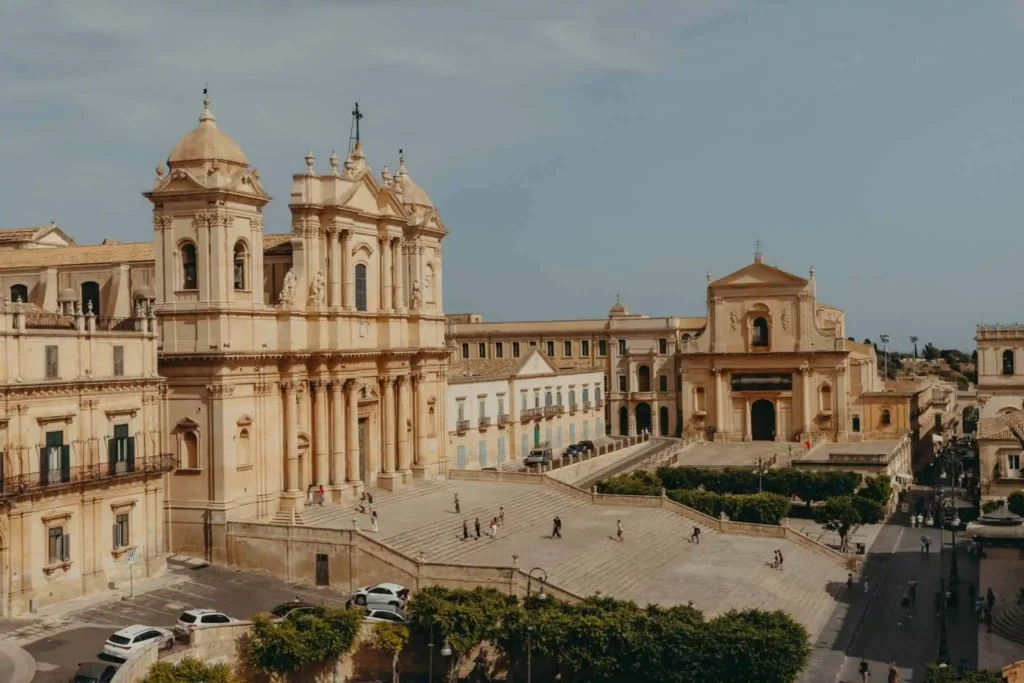
And paint they did. Palaces, churches, cathedrals, entire cities and towns weren’t simply rebuilt but genuinely reborn, with none emerging more beautiful than Noto, the undisputed jewel in the Val di Noto crown. Epitomising the definition of Sicilian Baroque architecture so perfectly, so elegantly in its historical centre, it’s somewhat easy to forget this remains a thriving town rather than some museum or eerily accurate film set—a feeling that can be accentuated if you choose to roam its streets under bright midday sun.
Instead, this is a town to explore as the sun begins to fall, when sandstone walls of these 18th century masterpieces glow ochre and Noto comes alive. The steps of Rosario Gagliardi’s cathedral transform from a way to get closer to God into a meeting point for the young, while plazas become resting places for the old, and all around you the air fills with rapid and heavily accented Italian conversations. Noto is meant to be enjoyed in the late afternoon glow, over cups of icy granita and cones of famous ice cream. That’s why it’s also such a perfect base from which to explore this truly unique region in south-eastern Sicily—it’s ideally situated to visit the area’s best sand beaches as well as a number of other stunning Baroque towns, so you can be out and about exploring during the day and then be back in time to enjoy Noto at its finest.
In this guide you’ll find all you need to plan the perfect trip to this noto-riously beautiful place (sorry, couldn’t resist). The sites and architectural wonders you can’t miss, the best day trips, where to eat, where to stay, and the very best things to do in Noto all appear throughout these pages.
Explore the Churches / Noto Cathedral / Fall in Love With Baroque Architecture
Table of Contents
ToggleWhat really sets the city of Noto apart from many other places in Sicily is its stunning architecture—literally the reason it’s a UNESCO heritage site. You can begin your wanderings at any point, of course, but the first time you set out to explore, I’d recommend beginning at Porto Reale, the gateway to the historic centre, before heading along Corso Vittorio Emanuele, a wide and beautifully elegant walkway flanked by iconic Baroque plazas and churches. Stop to gaze up in wonder, photograph everything, and enter whatever takes your fancy, providing they’re open.
The Cathedral of San Nicolò stands as the largest church in the heart of Piazza del Duomo, its sheer size alone making it stand out among the sea of golden Baroque buildings surrounding it. Originally completed in 1703, it’s gone through several changes over the centuries since then. The interior feels quite minimal and modern, still worth a quick walk-through, though the real beauty reveals itself when you’re seeing it from the staircase out front. We’ve seen a lot of churches, cathedrals, monasteries and chapels throughout Italy, but Noto Cathedral is almost certainly one of the most impressive in both size and design.
Built almost immediately following the devastation of Noto Antica, it required significant restoration in the early part of this century following a further earthquake. Very much part of the town’s active landscape, it’s particularly beautiful at night when artfully placed lighting brings its limestone walls to life and the steps become a social meeting point for groups of friends and families gathering in the evening air.
The Church of San Domenica presents a fantastic example of Sicilian Baroque architecture. Built in the 18th century, it sits just across from the gardens at Villetta d’Ercole, making it easy to spot during your wanderings. The Basilica and Nunnery of San Salvatore, right next to the cathedral, served as a former Benedictine convent and ranks among the largest nunneries in the city. Its position on Piazza del Duomo makes it easy to visit while exploring the area without going out of your way.
The Church of San Francesco d’Assisi all’Immacolata, an impressive Baroque church located right next to the Duomo, was designed by Rosario Gagliardi, the architect behind many of the buildings constructed after the 1693 earthquake. His influence appears throughout Noto in ways both subtle and dramatic.
Several truly impressive Baroque churches punctuate Noto’s landscape, and whilst we didn’t enter them all during our stay, they’re worthy of punctuating your wanderings of Corso Vittorio Emanuele and along its many off-shoots. The ones to save in your Google Map include: Chiesa di San Carlo Borromeo, Cheese di San Domenico, Chiesa di San Francesco d’Assisi all’Immacolata, Chiesa di Santa Chiara, and Chiesa di Santissimo Salvatore. Each offers something unique, whether architectural details, historical significance, or simply peaceful moments away from the main thoroughfares.
Views from Church of San Carlo al Corso / Head Up Il Campanile di San Carlo
As wonderful as it is exploring streets upon two feet, to really get a sense of a place it helps to head high—and in Noto that means scaling the bell tower of Chiesa di San Carlo al Corso. Located along Corso Vittorio Emanuele, the highlight here is absolutely the climb to the top of the bell tower for beautiful views that stretch across the entire historic district.
From the top, you can see all the way down the street to the cathedral in a perspective that photographs simply can’t capture from ground level. Opening times run from 10 am to 10 pm during July and August, 10 am to 8pm in May, June and September, with reduced hours the remainder of the year. Entry costs €2.50 per person, and as you need to pass through the church itself, modest dress is required for entry, as is common across Sicily.
Do note that the stairs are not suitable for those with poor mobility—they’re steep, narrow, and require a certain level of fitness to navigate comfortably. But if you can manage the climb, the reward of seeing Noto spread out below you, with its golden buildings catching the light, makes every step worthwhile. Tickets cost €2.50 per person, a small price for one of the best vantage points in town.
Tina di Lorenzo Theatre / Teatro Tina Di Lorenzo
This beautiful neoclassical theater faces the Church of San Domenica in a stunning architectural dialogue between two very different building styles. It can seat up to 308 people and features intricate stucco work on the ceiling that deserves close examination if you get the chance to see inside. Performances still happen here from time to time, though not on a regular schedule, so check ahead if you’re hoping to catch a show.
As mentioned above, Noto’s impressive Baroque theatre is part of a combo ticket alongside Palazzo Ducezio, which makes visiting both more economical if you’re planning to see multiple sites. We were unfortunately unable to make it here during our visit, but others say the guided tour is very much worth your time, especially for understanding the theater’s role in Noto’s cultural life over the centuries. Find the Theatre location and you’ll discover it sits in a perfect position for incorporating into your walking route through the historic centre.
Ducezio Palace / Palazzo Ducezio
This 18th-century palace sits directly across from the cathedral, inspired by French palaces in ways that make it stand out even among Noto’s impressive architectural collection. Inside, there’s a Hall of Mirrors and a rooftop terrace with views of the cathedral that rival those from the bell tower, offering a different perspective on the same iconic vista. It was closed during our visit, so I can’t say if it’s worth going in personally, but it’s a beautiful building to admire from the outside regardless.
Directly opposite the cathedral stands the stunning Palazzo Ducezio, now functioning as Noto’s Town Hall. Inspired by the palaces of 17th century France, the upper level offers a chance for visitors to enjoy a panoramic view at eye-level with the cathedral—especially beautiful during the later part of the day when golden hour transforms the entire square. It costs €3 to enter the palazzo, or alternatively you can purchase a combination ticket also allowing entry into Sala degli Specchi (the ‘Salon of Mirrors’ on the ground floor), the nearby Teatro Tina Di Lorenzo, and Palazzo Ducezio as discussed below in more detail.
Nicolaci Palace / Palazzo Nicolaci di Villadorata
Built in 1765 by Rosario Gagliardi, this palace was home to the wealthy Nicolaci family for generations. The façade is spectacular, with carved balconies and wrought iron railings that serve as a great example of Baroque excess in the best possible way. Even if you don’t go inside, the exterior alone is worth a stop to photograph and admire the craftsmanship.
Located on Via Corrado Nicolaci, this beautiful 18th century palace boasts the prettiest balconies you’ll see in Noto, built as a residence for the Nicolaci family (hence the name) and considered one of the best examples of Sicilian Baroque architecture in Noto. Open daily from 10 am to 8 pm, it costs €4 per person, or you can buy the above mentioned combined ticket for €7, which represents better value if you’re planning to visit multiple sites.
Infiorata di Noto / Experience Infiorata di Noto
Every third Sunday in May, Via Nicolaci transforms into a carpet of flowers for Noto’s famous flower festival. The Infiorata stands as one of the most vibrant events of the year, and I’m genuinely tempted to plan my next trip to Sicily around this event after seeing photos and hearing stories from locals.
Every May for a period of three days, Noto gets transformed into a festival of flowers that’s been held here for nearly 40 years now. Created after an encounter between flower artists of Noto and Genzano (a province of Rome) in 1980, this annual festival turns the entire 700 metre stretch of Via Nicolaci into a tapestry of colour that draws crowds from across Sicily and beyond.
Depicting various religious, folkloristic and mythological designs based around a specific theme, each artist is given their own section upon which to work their magic. The artists begin their work on a Friday, and by Saturday the ‘carpet of flowers’ is ready to be seen and enjoyed by the crowds who pour into town for the spectacle.
However, the displays are not restricted solely to Via Nicolaci—the entire town of Noto becomes part of the festival with various individual decorative displays and sideshows dotted around the historic centre, creating an immersive experience throughout the old town. The festival almost always takes place on the third weekend of May, but details can be confirmed on the official website.
Not visiting for the festival? You can still see elements of modern art dotted around Noto throughout the year in the form of painted public stairways. When you’re on them they don’t seem that special, but once you look upon them from a distant step, you’ll be amazed at the intricate murals climbing up from top to bottom in clever visual effects.
Eat a Granita / Cafe Sicilia
Now for the important stuff—the reason I first saved Noto on my map all those years ago. We stayed in Noto for two nights and managed to order three granitas per person, all from Caffè Sicilia. The almond granita is an absolute must, and the coffee flavor is also great if you want to try multiple varieties.
Make sure to order it with a dollop of whipped cream and a brioche on the side—this is the traditional Sicilian way to enjoy granita for breakfast, and trust me, it’s revelatory. Tables can be hard to come by during peak hours, but if you go early or during an off-hour, you’ll likely find one without too much trouble.
This family run, multi-generational café has, over the course of its 127 year existence, developed a reputation for its gelato, with many claiming it produces the best on all of the island. So of course, we went several times during our stay—it would have been wrong not to. Be sure to try their almond granita too, which is also exceptionally good and lives up to every bit of hype you might have heard.
Where to Eat in Noto
Sabbinirica A Putìa d’Ercole serves as a great lunch spot where we loved the sandwich and salad offerings—simple, fresh, and perfectly executed. Ristorante Crocifisso ranks as one of the top-rated fine dining spots in town if you’re looking to splurge on a memorable meal.
Manna, immaculately designed with modern flair in what used to be the Prince’s wine cellar, is widely recognised as one of—if not the—best restaurants in Noto. Simple, classic Sicilian food with a contemporary flare comes at really quite reasonable prices considering the quality. As you would expect, fish features quite heavily on the menu, but when we visited there were a handful of vegetarian options that looked equally appealing.
If you’re looking for an early snack platter or a chunky Italian sandwich, I’d highly recommend Il Brillo Parlante. This relatively new wine bar is run by a young couple who know their stuff, serving up fresh local cheeses, meats, salads and breads alongside excellently selected glasses of wine. The atmosphere strikes that perfect balance between casual and sophisticated.
Anche Gli Angeli presents a curious blend of lounge bar, restaurant, concept store and book store, all located in an old church that’s been beautifully converted. The food is amazing, but even if you don’t plan on staying for dinner, Anche Gli Angeli is an absolute must visit during your time in Noto just to see the space and soak in the unique atmosphere.
If you’re a seafood lover after a quick lunch, Puttia del Copo, this little street food spot, was always heaving when we passed by. Offering up cones of fried fish and vegetables, the calamari is incredibly highly rated by those that have tried it, though we didn’t manage to stop there ourselves during our packed itinerary.
There are a few pizza places in town, but after reading some reassuring reviews online we opted for Pizzeria Orto Di Santa Chiara and were not disappointed. A variety of topping options at an excellent price made it perfect for a casual dinner when we wanted something simple but satisfying.
We developed quite the sfincione obsession whilst in Sicily, and whilst none will ever beat the deliciousness we had from a tiny bakery on a nondescript street in downtown Palermo, that on offer at Panificio Maidda came pretty damn close. Sold by weight, they have a variety of baked goods all cooked to a secret family recipe that’s been passed down through generations.
A reader also highly recommended Naché, which unfortunately we didn’t get to try, but it’s worth adding to your list based on multiple positive mentions.
Fancy a drink in the evening? Unfortunately our very favourite negroni spot—The Mug—appears to have closed down (please let us know in the comments if it springs to life again), but if you’re looking for a 6 pm aperitivo, I’d recommend Emily’s Wine for, well, an excellent glass of wine, or Il Libertyno for an Aperol Spritz. If you’re all about the people watching, just pick somewhere along Corso Vittoria Emmanuelle—the drinks are a little pricier than you’ll find on many of the nearby backstreets, but given its location you’re in prime passeggiata territory watching the evening parade of locals.
Where to Park in Noto / Parking in Noto
Parking in Noto can be a bit chaotic, I’ll be honest. On our first visit, we ended up parking along the SP15 as we drove into town, finding a spot that worked well enough but felt somewhat random. The other two times, we paid to park at this lot that’s a short walk into the center—just a heads-up, you’ll need coins as the machine didn’t take bills reliably during our visit.
If you’re staying in some of the super centrally located hotels, you may have a few problems with being able to park nearby, as street parking fills up quickly in the historic centre. Our Airbnb in the historic centre had free parking within less than a minute’s walk, which proved invaluable for exploring at our own pace.
Do note that, as with all Italian historic centres, there are multiple streets known as ZTLs where you will receive a pretty hefty fine for driving down, so it’s super important to have your parking planned out in advance before you arrive. The fines can be significant and take months to arrive, by which time you’ve forgotten all about the incident. For more information, be sure to check out guides to driving in Sicily that explain the ZTL system in detail.
How to Get to Noto / How To Get To Noto / Public Transport to/from Noto / Noto From Catania Airport
You can reach Noto by both car and train, giving you flexibility depending on your travel style. From Catania, it’s about a 2 to 2.5-hour train ride, while from Siracusa it’s only about 30 minutes, making day trips from either city quite feasible. Book your train tickets online at Trenitalia.com for the best prices and to secure seats during busy periods.
Personally, I recommend renting a car in Sicily—you’ll be able to explore more places on your own schedule, and often the drive is faster than the train when you factor in wait times and connections. The drive from Catania to Noto takes 1 hour 15 minutes, and 30-40 minutes from Siracusa, which gives you much more flexibility for exploring the surrounding region. We rented our car through Discover Cars and had a great experience.
For most people, the nearest airport is Catania, located 93 km away (about a 1.5 hour drive), although there are a handful of national and international flights into Comiso airport, a few kilometres outside of Ragusa that might work better depending on your origin point.
To get from the airport to Noto, you have a few options worth considering. You can arrange a private transfer—this one is reasonably priced and takes the stress out of navigation. Jump in a taxi, although expect to pay up to €150, which might be worthwhile if you’re traveling as a group and can split the cost.
Take one of the regular intercity buses that pass through the airport, which takes around 1.5 hours and costs €5-8, representing the most economical option if you’re traveling light. Hop on a train—there are multiple departures every day, but due to the three changes required it becomes a three hour journey costing €9 per person, which might test your patience.
Hire a car if you’re planning on doing a few day trips or visiting as part of a bigger Sicily road trip—this is obviously the option I recommend most strongly. You can find all the essential information on rentals and driving on the island in detailed posts about driving in Sicily. Note that I always search for rates, compare options and book car rentals via AutoEurope or RentalCars, which consistently offer competitive prices.
Noto is well-connected to much of Sicily by train—you can find the train station in the newer part of town, away from the historic centre. Check times and prices as well as book via the Trenitalia website for official schedules. Alternatively, Omio will allow you to compare trains with potential bus options to find the best combination for your journey.
Popular Day Trips from Noto / Take a Noto Day Trip to Modica & Ragusa
Ragusa presents a charming town with a thriving fine dining scene that punches well above its weight. If you’re hoping to eat at Michelin-starred restaurants like Locanda Don Serafino (1 star) or Duomo (2 stars), book well in advance as tables fill up months ahead. You only need an afternoon there to see the main sights, though food lovers could easily spend longer.
Modica, Sicily’s beloved chocolate town, captured our hearts completely. We spent a couple of nights there and absolutely loved it—scenic and worth an afternoon visit at minimum, though staying overnight lets you experience the evening atmosphere when day trippers have departed. Read our Guide to Modica for detailed recommendations.
Scicli offered a quieter experience where we spent just a few hours one morning, wandering through town and checking out the main sights before heading back to Palermo. It’s less touristy than other Val di Noto towns, which gives it an authentic feel.
Siracusa and Ortigia, founded by the Greeks in 734 BC, comes absolutely packed with history as a UNESCO World Heritage Site in its own right. You’ll need at least one day there to do it justice, possibly two if you want to see everything without rushing.
Vendicari Nature Reserve protects a beautiful coastal reserve filled with walking trails and beaches that offer a different side of Sicily. We only had time for one beach, so we chose the best and easiest to get to: Spiaggia di Calamosche, which proved absolutely worth the walk through the reserve.
Noto is just one of the collective of towns and cities which make up the Val di Noto (Noto Valley), which was recognised as a Unesco World Heritage site in 2002 for its remarkable concentration of Baroque architecture. The others are: Caltagirone, Militello Val di Catania, Catania, Modica, Palazzolo, Ragusa, and Scicli—each with its own character and highlights.
We chose to base ourselves primarily in Noto to explore these towns and the region with our rental car, something I highly recommend for maximum flexibility. If you’re also planning on using it as a base, then Modica and Ragusa are relatively close to each other and easily explored on a single day trip from Noto without feeling rushed.
We’ve written short guides to these towns, so head over there for full details on everything to do, see and eat, plus some recommendations on where to stay if you’d prefer to explore them a little more slowly at your own pace. Keep reading through our Guide to Modica and our Guide to Ragusa for comprehensive information.
Where to Stay in Noto / Guesthouses, B&Bs and Hotels in Noto / Airbnbs in Noto
We stayed two nights at an olive farm just five minutes outside the city called IUTA Farm and loved everything about it. You can choose between indoor rooms or a glamping-style tent in the olive grove—we went for the tent and found it surprisingly comfortable even in warm weather. The pool area is lovely, the restaurant serves delicious meals using ingredients from the farm, and yes, you get to drive around in a golf cart, which adds a fun element to the stay.
I’ve said it a few times already, but Noto makes an incredible base for your south-eastern Sicily adventures—all you’ve got to do is pick the right accommodation for your budget and travel style. Thankfully, I’ve done the hard work and selected top picks covering small B&Bs, boutique hotels and Airbnbs across different price points.
B&B Novecento Siciliano appeals to anyone who loves beautiful accommodation with quirky vintage details—this B&B has them in boatloads. It’s also extremely good value and excellently located just a stone’s throw from the cathedral. Oh, and it’s pet friendly too if that’s something you need for traveling with furry companions. If the above sounds like your sort of place, I’d highly recommend checking out Room 55 too, which offers similar vintage charm.
Filinona B&B is simply stunning in every way. With the feel of a boutique hotel, every single element has been carefully curated, and its contemporary design, large bright and airy rooms, great location and exceptional breakfast make this one of my absolute top picks in Noto for mid-range travelers.
Welcome Garden offers a little hideaway in the centre of Noto that features a wonderful guest garden, which is uncommon amongst accommodations in the town where outdoor space comes at a premium. Add in really quite splendid rooms that have been sensitively restored to high standard throughout (and which are also bigger than most on this list), and it’s clear why Welcome Garden ranks as one of the highest rated hotels in Noto consistently.
Gagliardi Boutique Hotel represents my most expensive recommendation in the centre of Noto, with rooms starting from €190, but this boutique hotel couldn’t possibly be left off the list for serious consideration. Sumptuous furnishings in keeping with the Baroque building within which the hotel is housed combine with a large terrace from which to enjoy golden hour views over Noto that rival any in town.
IUTA Glamping & Farm works perfectly if you’re not fussed about staying right in the centre of Noto and love when your accommodations come with a wonderful ‘experiential’ factor. Consider this amazing agriturismo glamping spot that offers seriously stunning accommodation—it sort of reminds me of those luxury safari lodges you see in Africa—replete with swimming pool, landscaping-light surroundings and, by all accounts, fantastic hosts who make every guest feel special.
A couple of alternatives to this—especially if glamping isn’t your thing but you love the idea of being surrounded by olive groves in a high-standard of accommodation—are Terre di Romanello with beautiful views out over Noto stretching to the horizon, or Battimandorlo, which blends Sicilian charm with contemporary luxury in a country guest house setting.
If your priority is good value accommodation without too many frills in the historic centre, then Ostello della Gioventù, La Casa del Barocco, B&B Vinci and La Perla Di Noto all have rooms for around €55 a night or less, making them excellent budget options.
First things first—there’s a HUGE number of Airbnbs in Noto, more even than when we visited a couple years ago. So how do you pick the one that’s right for you without opening up a gazillion tabs on your browser and reading and re-reading way too many listings and reviews over several evenings? You take a look at comprehensive guides with picks of the very best Airbnbs in Noto that do the filtering for you.
To give you an idea of the sort of place that makes the cut, below are just a handful of the type of thing I think you should take a look at based on different priorities.
Casa di Gio appeals to lovers of simple, clean lines, contemporary design and light—oh so much light flooding through large windows. I absolutely adore this Airbnb aesthetically. Set over two floors, it has a large communal living space with an excellent kitchen, two bedrooms (one with three single beds making this Airbnb perfect for a family setup), a small patio and good sized terrace with all the views across the rooftops.
Casa Vacanze Lori is where we stayed for our five nights in Noto, and honestly, I couldn’t fault it in any way. The hosts rank as some of the most wonderful we’ve ever encountered on our travels, and they put more food in the fridge than we could actually eat during our stay. It’s furnished well, super comfortable and absolutely massive by Italian apartment standards. It’s also exceptionally well located and has super close and free parking, which proved invaluable for our explorations.
Don Cirillo makes me absolutely adore the design aesthetic—this stunning central apartment is decorated in a contemporary manner but highlighted with exquisite antiques and works of art that create visual interest. Also benefits from two balconies and an outside terrace perfect for breakfast while planning your day.
Kalimera offers a large, super modern apartment that has recently been renovated to high standards. Very clean, bright and airy space with a neutral colour palette (albeit the styling feels a little too minimalistic and bare for my personal taste, but that’s subjective). Not one but three balconies from which to enjoy the view provide outdoor space. Also comes with free on-street parking, which is quite a rarity in the historic centre and shouldn’t be underestimated.
When to Visit Noto
We visited Noto at the end of September, and it turned out to be the perfect time for our preferences. The weather was warm, sometimes borderline hot during the middle of the day, but it never felt unbearable or oppressively humid. We even managed a couple of beach days, which wasn’t something we’d necessarily planned for.
It also felt like the tail end of peak season—still lively with enough tourists to create atmosphere but not crowded to the point of frustration. Early October and May are also great times to visit, especially if you want to avoid the heat and crowds of summer when temperatures soar and every restaurant requires reservations days in advance.
Palazzo Castelluccio
For a palace with an interesting backstory, definitely pay a visit to Palazzo Castelluccio during your time in Noto. Abandoned in the 1980s, it lay empty and deteriorating until 2011 when a Frenchman, inspired by Giuseppe Tomasi di Lampedusa’s 1958 novel The Leopard, purchased the property and began bringing it back to life through careful restoration.
Decorated with period-style flourishes, plush fabrics, bold colours, original frescos that were uncovered during renovation, and exquisite antiques sourced from across Sicily, this is a palace very much returned to its golden age glory. Admission runs from 11 am to 7 pm, but I recommend confirming and planning your visit as the times are liable to change seasonally. Entrance costs €12 per adult (children are free), or you can take a guided tour upon arrival for €25 per person that provides much more context and historical detail.
Sample The Local Tipple
Noto, and the small communes surrounding it, have a long history of producing wine—particularly Nero d’Avola (considered to be the most important red wine grape in Sicily) and Moscato Bianco (previously known as Moscato di Noto before denomination rules changed). You will naturally encounter local wines in every bar and restaurant within the area—even the cheap house reds are likely produced nearby, which guarantees a certain level of quality.
But if you’re keen to sample some of the Val di Noto’s premier tipples, you may well consider visiting one of the several nearby wineries that welcome visitors for tours and tastings.
Tenuta Palmeri was set up by two established Swiss viticulturists in 2005, and they’ve been producing excellent sustainable and organic wines for the last 14 years using biodynamic principles. They offer a variety of tasting options from €15 to €50 per person, all of which take place on a gorgeous raised deck overlooking the vines with views that stretch across the countryside. Tastings can be accompanied by a variety of platters featuring local produce.
Zisola Azienda Vinicola represents centuries of winemaking tradition—the Mazzei family has been producing Italian wine for generations, and in the early 2000’s they expanded into Sicily, creating the Zisola Vineyard on this stunning property within acres of beautiful land. They produce predominantly red wines that showcase the terroir, and offer a variety of wine tasting tours costing between €25 and €90 per person depending on the level of detail and food pairings included. Reservations can be made in advance via their website.
Alternatively, if you don’t have your own vehicle or would like to enjoy your tastings without worrying about who’ll be the designated driver, there’s a highly rated and popular tour to a beautiful Val di Noto winery that includes a vineyard and cellar tour alongside four tastings that covers the basics comprehensively.
If you don’t have the time to make it out to a winery or join a tour during your stay, I recommend heading to Il Brillo Parlante, a relatively new wine bar in the heart of Noto. Run by a young couple who know their stuff about regional wines, they serve up fresh local cheeses, meats, salads and breads alongside excellently selected glasses of wine that represent good value.
Escape To The Vendicari Nature Reserve
As I alluded to in the introduction, one of the many reasons that Noto makes such a wonderful place to base yourself in south-east Sicily is its proximity to a number of truly fantastic beaches that range from wild and natural to fully-equipped lidos.
Whilst the west of the island is home to many of our favourite bathing spots where rocky outcrops or pebbles are the norm (like Favigana, which we loved), closer to Noto you’ll find stretches of sandy beach perfect for a lazy day of sunbathing and swimming in crystalline water.
For those of you that prefer nature over lidos with rows of umbrellas, you’ll want to make your way to the spectacular Riserva Vendicari, a 7 km stretch of protected coastline that offers three beautiful beaches for those willing to make that little extra effort to walk through the reserve.
Spiaggia Marianellii (and Eloro) presents an isolated stretch of golden sand flanked by almond trees and soft dunes that feel wonderfully undeveloped. Just south of Eloro Beach in the northern part of the reserve, this is a relatively quiet retreat even in the summer months—and it’s become a popular spot for naturists, so be prepared for that if you’re planning a family visit. To reach it, park at the designated area and follow the trail through the reserve, which takes about 15-20 minutes depending on your pace.
Spiaggia di Calamosche is Vendicari’s most popular beach, and my goodness was it busy when we visited on a Saturday in late September. Thankfully—as is common across Sicily and Italy—a sea of colourful parasols only adds to the ambience on a beach here rather than detracting from the natural beauty. To reach it you’ll need to park in the carpark and then walk through the reserve. It’s an easy-ish 20 minute walk through scrubland punctuated by quintessential Sicilian flora and fauna, with informational signs explaining the ecosystem.
As you would expect, there are no formal facilities at the beaches within Vendicari (besides a few beach vendors who will offer you drinks, sarongs and trinkets throughout your stay), therefore if visiting for more than an hour or two you’ll definitely need to come prepared with water, snacks, and sun protection. And given the lack of available natural shade at most spots, that includes bringing a parasol too if you burn easily.
Then Hit Up The Other Beaches Near Noto / San Lorenzo / Fontane Bianche / Isola delle Correnti / Sampieri / Avola Beach
If you’re based in Noto for more than a couple of days and the weather is giving serious beach-day vibes, the town sits in relatively close proximity to a number of other excellent beaches that offer different experiences from the Vendicari reserve.
We happened to celebrate Andrew’s birthday when we were in Noto, and chose to head to San Lorenzo to splurge on a super fancy beach club as a special treat. Unfortunately this also happened to coincide with the only day of rain we had during that entire month in Sicily, but such is life when you’re traveling. We opted for Agua Beach Club and paid €32 for first row deluxe sunbeds with parasol, but there are cheaper options nearby if you’re watching your budget. We chose to eat at the club, but if you plan your visit for the morning or afternoon only, it would be worth visiting the super-stylish small town of Marzememi for lunch—it’s just 10 minutes away by car and has excellent seafood restaurants.
Fontane Bianche takes its name from the numerous freshwater springs which arise from its seabed, creating interesting temperature variations as you swim. This is another wonderful stretch of pale golden sand just over 1km long with clear shallow water that makes it a great option for families with young children. The availability of lidos, restaurants and general amenities mean it has everything you could need for a full day at the beach without having to pack supplies.
Fontane Bianche sits around 25 minutes away from Noto by car (find it on Google Maps for exact directions), or if you’d prefer to use public transport, there are frequent trains leaving from Noto train station in the newer part of town. Journey time runs around 20 minutes and costs approximately €2 per person, making it an economical option.
If you prefer your beaches a little more wild and rugged, then I recommend checking out the sandy beach opposite Isola Delle Correnti, about 30 km south of Noto (around a 35 minute drive down coastal roads). As the southernmost point of Sicily, it’s also where the Mediterranean and Ionian seas meet, creating a strong current—hence the name, which translates to “Island of Currents.”
These strong currents mean it’s a popular spot for surfers and windsurfers who come for the reliable conditions, but it’s not ideal for children or those that aren’t terribly strong swimmers. For those feeling a little adventurous, during low tide it’s possible to walk across to the small island where you’ll find various ruins and native wildlife, including migratory birds that use the area as a rest stop.
Sampieri is considered a bit of a locals-only secret (and hence why we found out about it too late to visit during our trip), but it’s supposed to be a world away from the busy beach-club beaches popular with tourists. Located at the edge of a quintessential little fishing village, it has fine golden sand beach and pristine crystal clear water that’s perfect for snorkeling. We will not be missing this one when we make it back to this part of Sicily on our next visit.
This beach may be a little too far away from Noto for some visitors—it can take up to an hour to drive there depending on traffic—but given its relative proximity to Modica and Ragusa, it would be an ideal stop on a full-day trip out west exploring those towns.
Avola Beach, located in Avola town, is a super popular beach in the summer months, absolutely packed with Italian families on weekends. But given its proximity to Noto (just 10 to 15 minutes by car), it’s a good choice if you don’t have much time or fancy a couple of sunny afternoon hours after a day of exploring Noto’s churches and palaces.
There is paid parking nearby in designated lots, but we managed to find a free spot in a residential street a little back from the beach after circling for about ten minutes. It was very very busy though, even on a weekday in late September, so manage your expectations accordingly.
Top Tip: If you’d like to explore this section of the coast from a different vantage point and escape the worst of the crowds on shore, consider joining a five hour boat trip which passes Avola, Calabernardo, Noto, Vendicari Nature Reserve, San Lorenzo, Marzamemi and Portopalo in a comprehensive tour. Time is allowed for snorkelling and swimming at the best spots, and the price includes an aperitivo, making it good value for a full experience.
Step Back in Time at Noto Antica
Although old Noto (‘Noto Antica’) was devastated by the earthquake of 1693, around 8km outside of its Baroque reincarnation there still remain some fairly impressive ruins within the walls of the city’s original site, stretching back across centuries all the way to the early Bronze Age when the first settlements appeared.
And whilst many of the older buildings are buried beneath the Medieval town that fell during the earthquake, it’s still possible to explore the ruins of a Capuchin convent, various ancient cemeteries, Byzantine tombs, Christian catacombs, and a more than 2000 year old gymnasium that speaks to the site’s importance in antiquity. Visiting Noto Antica is said to be like passing through time, with different layers of civilization visible as you explore the archaeological area.
Only accessible by car up a winding mountain road, it’s certainly possible to visit independently if you’re comfortable with driving in Sicily, but in order to fully appreciate the surroundings, history and story behind what you’re seeing, it’s generally advisable to join an organised tour from town that includes a knowledgeable guide. The site is also a popular spot for mountain-biking, with trails that wind through the ruins and surrounding countryside offering a more active way to explore.
FAQ – Is Noto Worth Visiting?
Absolutely—Noto stands as a beautiful town worth adding to your Sicily itinerary without question. The concentration of Baroque architecture, the quality of the food scene, and its position as a base for exploring the wider Val di Noto region all combine to make it somewhere special. Even if you only have a few hours, the main sights can be covered, though staying longer allows you to really soak in the atmosphere and enjoy the evening passeggiata when the town comes alive.
FAQ – How much time in Noto?
You only need a few hours to see the whole town’s main attractions if you’re pressed for time—most of the key churches, palaces and photo spots cluster along or near Corso Vittorio Emanuele. However, spending 2-4 nights is worth it if your schedule allows, as Noto is centrally located within the Val di Noto, making it easy to take day trips to both the beach and other UNESCO World Heritage Towns in the valley. This approach lets you explore the region at a relaxed pace while returning each evening to familiar accommodation rather than constantly packing and moving hotels.