Between the cities of Nantes and Orléans, a magnificent 300-kilometer corridor unfolds across central France, where Renaissance palaces punctuate rolling countryside, vineyard-covered hillsides cascade toward meandering waterways, and villages frozen in medieval time await discovery. This is the Loire Valley, and during those glorious months of spring transitioning into early summer, you’ll understand exactly why locals call it “The Garden of France.” Pastel-hued roses climb ancient stone walls, golden wheat fields ripple in the breeze, and château gardens explode with color in ways that must be seen to be believed.
Most travelers arrive with one primary mission: château hopping. With roughly 300 castles scattered throughout the region, you’re spoiled for choice. While powerhouses like Chambord and Chenonceau rightfully attract crowds with their magnificent architecture, limiting yourself to just the famous names would mean missing the valley’s deeper magic. Beyond those iconic silhouettes reflected in still waters, you’ll find experiences that reveal the region’s soul in unexpected ways.
Picture yourself pedaling along quiet vineyard trails, the morning sun warming your shoulders as you navigate paths between orderly rows of Cabernet Franc. Imagine wandering through riverside villages where time moves differently, where locals gather at corner cafés and conversations flow as gently as the Loire itself. Consider sipping the region’s sparkling Crémant while overlooking patchwork fields that stretch to the horizon. These moments between the grand monuments are where the Loire Valley truly reveals itself.
The Château Circuit: Where Renaissance Dreams Took Form
Table of Contents
ToggleLet’s address the obvious attraction first: you cannot come to the Loire Valley without experiencing several châteaux. With over 3,000 castles in the region (though many remain privately owned), selecting which ones deserve your limited time requires strategy. The variety is remarkable—medieval fortresses with defensive towers, Renaissance masterpieces adorned with sculptural details, properties surrounded by world-class gardens, and family-friendly estates designed to captivate younger imaginations.
Villandry: Where Gardens Steal the Show
The gardens at Château de Villandry rank among France’s most spectacular horticultural achievements. Sculpted hedges form geometric patterns with mathematical precision, while checkerboard vegetable beds showcase lettuces in shades ranging from deep burgundy to bright lime green. Fountains provide musical accompaniment to your wanderings, and tree-lined paths invite leisurely exploration around the estate’s perimeter.
Many visitors purchase tickets exclusively for the gardens, content to admire the château’s exterior from various vantage points. However, I’d strongly encourage getting the combined admission. The interiors feature tastefully decorated rooms with pastel-colored wallpaper that feels simultaneously elegant and welcoming, floral fabrics that echo the gardens outside, and lovely antique pieces that tell stories of centuries past. The château complements rather than competes with its famous surroundings.
Chenonceau: The Ladies’ Castle
Set across the Cher River in what may be the most picturesque location in the entire valley, this 16th-century marvel earned its nickname as the “Ladies’ Castle” due to the influential women who shaped its history. Inside, fresh flower arrangements fill every room—a tradition maintained throughout the year. Walls display intricate tapestries while detailed paneling features vibrant painted patterns that have retained their colors across centuries.
The Long Gallery spanning the river deserves special mention. Its black and white checkerboard floor creates striking visual rhythm, while a few strategically placed wooden benches allow you to pause and appreciate the architectural genius of building across water. What I most appreciate about Chenonceau is its restraint—it feels classy without being overdone, grand without being gaudy.
Don’t rush past the gardens, and make time for the Orangery where Catherine de’ Medici established an apothecary that speaks to Renaissance approaches to medicine and botany. These details distinguish Chenonceau from other Loire châteaux.
Chambord: The Renaissance Architectural Marvel
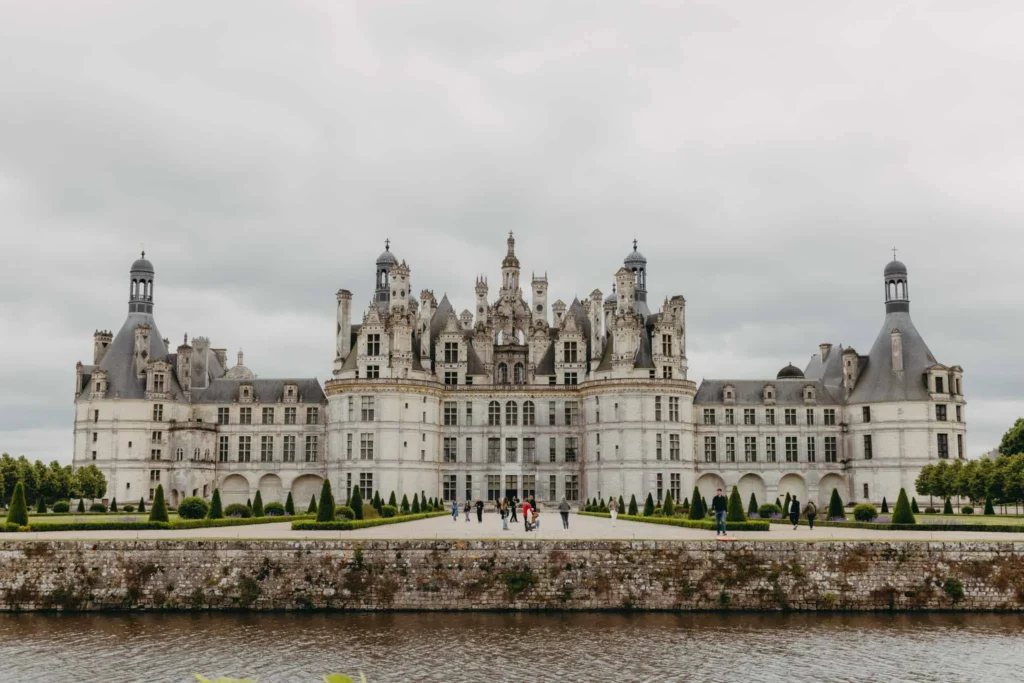
As the most famous castle in the Loire Valley and one of France’s great Renaissance landmarks, Chambord commands attention with its whimsical rooftop bristling with spires, chimneys, and sculptural elements that transform the skyline into something from a fantasy novel.
While the interiors remain mostly empty (a stark contrast to Chenonceau’s furnished rooms), the architecture itself provides ample reason to purchase admission. The double-spiral staircase, often attributed to Leonardo da Vinci’s genius design, allows people ascending and descending to see each other through interior windows without ever crossing paths. The rooftop terrace offers beautiful views across the surrounding forest and countryside.
Budget-conscious travelers should note that you can walk around the exterior and explore surrounding paths without paying admission—only the parking fee applies. This option works well if you’re château-hopping on a tight schedule or budget.
Amboise: Royal Residence with River Views
Once a favored residence of French monarchy, the Château Royal d’Amboise delivers some of the best views in the entire Loire Valley. Gardens overlook the charming town below and the Loire River as it curves through the landscape. Inside, a few rooms display period furniture and tapestries that evoke Renaissance life, though the château suffered significant demolition over the centuries, leaving only a fraction of its original grandeur.
The Saint-Hubert Chapel holds particular significance as Leonardo da Vinci’s burial site. The artist spent his final years at nearby Clos Lucé after King Francis I invited him to France in 1516, and he was laid to rest here in the spring of 1519.
Blois: Four Architectural Styles Under One Roof
The Château de Blois offers something unique: a fascinating mix of Gothic, Renaissance, Classical, and medieval architectural styles combined in one striking complex. As home to several kings and queens, including Catherine de’ Medici and François I, it provides vivid glimpses into evolving French royal tastes across different eras.
Inside, you can wander through decorated royal apartments and explore the Museum of Fine Arts, which houses paintings and sculptures spanning centuries. The famous François I staircase showcases Renaissance sculptural decoration at its finest, while other wings demonstrate how subsequent monarchs imposed their own architectural visions on the structure.
Azay-le-Rideau: Riverside Renaissance Gem
This idyllic 16th-century Renaissance castle sits along the peaceful banks of the Indre River, creating postcard-perfect reflections in calm water. It’s smaller and more intimate than many of the valley’s grander châteaux, but that becomes part of its charm. The lovely surrounding village makes exploration feel like stepping into another century.
Wandering the grounds, exploring the cozy interiors with their carefully curated furnishings, and stopping for afternoon tea at the on-site café creates an afternoon well spent. The combination of architecture, setting, and village atmosphere makes Azay-le-Rideau worth prioritizing despite its smaller scale.
Urban Exploration: Towns That Shaped French History
The towns along the Loire River have witnessed centuries of French royal history, and their architecture reflects the wealth and power that once flowed through these strategic locations. While the countryside proves particularly attractive, taking time to explore one or two towns reveals different facets of the region’s character.
Tours: The Gateway City
As a university city, Tours pulses with young, lively energy that distinguishes it from quieter Loire Valley destinations. The old town showcases beautiful half-timbered houses alongside pubs and trendy cafés, creating atmosphere that makes it an appealing trip starting point.
The train station provides convenient car rental access for travelers arriving from Paris, and Tours’ central location offers strategic advantages for château hopping. However, the city itself, while pleasant, doesn’t capture that quintessential Loire Valley charm you’ll find in smaller towns and villages. Consider using it as a practical base rather than your primary destination.
Amboise: Compact Historical Center
This town makes an excellent starting point for Loire Valley exploration, positioned close to major attractions like Chenonceau and Chambord while maintaining its own historical appeal. Half a day suffices to see the main sights: the Château d’Amboise perched above town and Clos Lucé where Leonardo da Vinci spent his final three years.
The town’s compact size and proximity to multiple châteaux make it convenient for travelers who prefer staying in one location rather than moving hotels every night. Small shops, cafés, and restaurants line streets that slope up from the river, creating a pleasant atmosphere for evening strolls after day trips.
Blois: Royal City Legacy
Serving as the principal seat of France’s monarchy during the 15th and 16th centuries, starting with King Louis XII, Blois centers around its château and the playful mechanical dragon clock positioned just across from it—a quirky modern addition that entertains visitors throughout the day.
The town itself, while nice, doesn’t demand extensive time. You can walk up the colorful Denis Papin Staircase (a photogenic spot with painted risers), browse a few shops, and grab a coffee, but you really don’t need more than an hour or two beyond your château visit.
Chinon: Wine Country Charm
Chinon and its surrounding area represent a popular wine-producing region, making it essential for wine enthusiasts. The town’s charm registers immediately, from medieval streets to the fortress ruins looming above. It would make a lovely base, especially for travelers focused on the western side of the valley and châteaux like Azay-le-Rideau and Château d’Ussé.
Local Cabernet Franc wines have earned Chinon recognition among French wine regions, and numerous tasting opportunities await in town and throughout nearby vineyards.
Angers: Historic Western Gateway
This historic city marks the Loire Valley’s western edge, known for its impressive Château d’Angers housing the extraordinary Apocalypse Tapestry—one of the oldest and largest medieval tapestries in the world, stretching an astonishing length and depicting biblical scenes with remarkable detail and preservation.
Angers also provides perfect introduction to the Anjou wine region, positioned between the Loire and Maine rivers. The city offers a gentle way of life and remarkable heritage as a landmark in the history of the powerful County of Anjou. Its location makes it ideal for travelers planning to explore the valley from west to east.
Saumur: Riverside Elegance
Lying on the Loire River’s banks, Saumur has built its reputation on wine (especially sparkling Crémant de Loire) and its unique troglodyte cave heritage. In town, you can visit the Château de Saumur with its distinctive profile, explore Puygirault gardens, sample local wines, and stroll streets in the small pedestrianized town center that proves particularly pleasant during mild weather.
The town maintains traditional character under its castle’s protection, and its position makes it an excellent base for exploring both château attractions and the region’s fascinating cave dwellings carved into soft limestone cliffs.
Village Discoveries: Small Places, Big Impressions
The Loire Valley’s picturesque villages showcase different styles—medieval villages with cobblestone streets and defensive walls, garden villages bursting with flowers, villages surrounded by water creating natural moats, and wine villages where viticulture defines daily life. Some villages also feature small castles or fortress ruins, providing variety that prevents boredom.
Chédigny: France’s Rose Village
Known officially as “France’s Village of Roses,” Chédigny holds the distinction of being the only village in the country awarded the prestigious Jardin Remarquable designation—an honor usually reserved for exceptional gardens rather than entire villages.
With essentially one main street lined with pink, yellow, and red climbing roses cascading from every available surface, an hour suffices to walk the length, admire the floral displays, and perhaps stop at a café. If you’re visiting in May, check dates for the Fête des Roses, an annual festival where growers from across the region showcase and sell their most exquisite blooms. The festival transforms this already beautiful village into an even more spectacular celebration of roses in every conceivable variety.
Saint-Dyé-sur-Loire: Chambord’s Historic Port
Just 10 minutes from Château de Chambord, this tiny village once served as the port where building materials arrived for the château’s construction. Today it features a church, a vintage shop, and a couple of restaurants—that’s essentially the complete inventory.
Walking along the riverfront walkway, pausing in the main square, and admiring weathered stone buildings draped in ivy and flowers creates a peaceful interlude between château visits. The village’s small scale and rich history make it memorable despite (or perhaps because of) its size. It ranked among my favorite Loire Valley discoveries.
Montrésor: Fairytale Reflections
Not far from Chenonceau, Montrésor has earned listing among France’s “Most Beautiful Villages”—a competitive designation that recognizes exceptional historical preservation and charm. Visit the 15th and 16th-century château, then walk along the Balcons de l’Indrois for the best views of the village and its fairytale silhouette reflected in the river below.
The village rewards slow exploration, with details revealing themselves as you wander: a carved doorway here, a flower box there, stone textures weathered by centuries into subtle variations of color and pattern.
Loches and Beaulieu-lès-Loches: Medieval Pair
Once a royal city, medieval Loches and its neighboring village Beaulieu-lès-Loches make perfect afternoon visit destinations. In Loches, the public garden provides views over the Indre River, and you can walk from Loches through the Prairies du Roy to Beaulieu, experiencing how these connected communities functioned historically.
The medieval architecture remains remarkably intact, offering insights into defensive town planning and daily life during the Middle Ages.
Candes-Saint-Martin: Where Rivers Meet
At the confluence of the Loire and Vienne rivers, Candes-Saint-Martin represents another of France’s “Most Beautiful Villages.” Narrow, flower-filled lanes wind between pale tuffeau stone houses (the region’s distinctive limestone), creating atmospheric walks around nearly every corner.
Visit the impressive collegiate church, then climb to the viewpoint above town for beautiful views over both rivers and the surrounding countryside. The elevated perspective reveals how the village’s strategic position at this river junction influenced its historical importance.
Béhuard: Island Village
Hidden on a small island between two arms of the Loire River, Béhuard offers something different: a village completely surrounded by water, accessible by causeway. The island setting creates unique atmosphere, and exploring the narrow streets feels like discovering a secret.
Lavardin: Ruins and Surprises
Lavardin combines castle ruins perched above the village with a surprising church featuring remarkable interior frescoes. The combination of medieval defensive architecture and religious art provides interesting contrast, and the village itself maintains authentic character without feeling overly touristy.
Pedaling Paradise: The Loire by Bike
During our road trip, we encountered countless cyclists—some on casual day rides, others loaded with panniers for multi-day bikepacking adventures through the region. Cycling here ranks among the best ways to experience the Loire Valley’s landscape, allowing you to move at a pace where you actually notice details: vineyard workers tending vines, architectural elements on village buildings, changing light on the river.
The main Loire by Bike route stretches 900 kilometers, running from Nevers all the way to the Atlantic Ocean. It passes through major towns including Blois, Amboise, Tours, and Angers, with additional trails branching off toward châteaux and smaller villages. The route follows mostly flat terrain along the river and on dedicated bike paths separated from vehicle traffic, making it accessible for various fitness levels.
Particularly recommended sections include the stretch from Blois to Amboise (with a detour to Chaumont-sur-Loire and Chenonceau), the hillsides around Sancerre offering views over vineyards and the Loire Valley, and the section from Saumur to Tours passing the confluence of the Vienne River at Candes-Saint-Martin.
Even if you’re not planning a full cycling vacation, numerous companies offer guided bike tours around Loire castles, typically lasting a day or half-day and including bike rental, route planning, and sometimes wine tastings or château admissions.
Wine Territory: From Sancerre to the Atlantic
The Loire Valley ranks among France’s top winemaking regions, producing remarkable diversity across its 70,000 hectares of vineyards and 80 different appellations. From Sauvignon Blancs in Sancerre to Cabernet Francs in Chinon and Saumur, from Chenin Blanc wines in Vouvray (ranging from bone-dry to lusciously sweet), to Crémant de Loire sparkling wines, the valley offers wines for every preference.
Vineyards line the river throughout the valley, making spontaneous tasting stops easy and encouraged. You can stroll through fields of vines extending to the horizon, sometimes with château views adding drama to the landscape. The region produces excellent white, red, and rosé wines—Sancerre en Rouge and Savennières en Blanc deserve particular mention.
Loire sparkling wines prove that France produces world-class bubbles beyond Champagne. Don’t miss Crémant de Loire, which offers remarkable quality at more accessible prices than its famous cousin to the north.
Unique experiences await in troglodyte cellars like Ackerman in Saumur or Domaine Filliatreau, where wine ages in caves carved into limestone cliffs centuries ago. The constant cool temperatures and humidity create ideal aging conditions, and tasting wine inside these ancient caves adds atmospheric dimension to the experience.
Aerial Perspectives: Hot Air Ballooning
For adventure seekers wanting completely different perspectives, hot air balloon rides over the Loire Valley countryside create unforgettable memories. From above, you’ll see the patchwork vineyards, quiet villages, winding rivers, and château silhouettes in ways impossible from ground level.
Sunrise flights prove particularly popular, when morning light paints the landscape in golden hues and morning mist sometimes clings to the Loire’s surface. Flights over Chenonceau castle allow you to appreciate how the château spans the Cher River and how its gardens relate to the surrounding landscape.
Departures from Amboise offer views of river landscapes and multiple châteaux including Chenonceau and Villandry, while flights over Saumur showcase that magnificent château and the distinctive troglodyte cave areas carved into surrounding cliffs.
Leonardo’s French Legacy: Clos Lucé
In 1516, Leonardo da Vinci accepted King Francis I’s invitation to France. The king, deeply inspired by Italian Renaissance achievements and fascinated by Leonardo’s genius as inventor, artist, and thinker, offered the aging master a home at Clos Lucé just outside Amboise.
Leonardo settled into this manor house, continuing to work on new ideas and designs until his death in spring 1519. Surrounded by gardens and provided comfortable quarters, he left lasting marks on French art and architecture that influenced generations of French artists and craftsmen.
Today you can visit Château du Clos Lucé, beautifully preserved and furnished with Renaissance-era pieces. Explore Leonardo’s bedroom and his various workshops, including spaces where he painted, sculpted, and sketched. The basement displays life-size models of his inventions—flying machines, military devices, engineering solutions—constructed from his drawings.
The gardens feature a café, a restaurant, picnic tables, and tree-lined paths where you can examine more of da Vinci’s life-size models positioned in outdoor settings. The property provides engaging experiences for adults and children alike, making it particularly good for families traveling with younger visitors.
Leonardo’s burial site can be visited at the Chapel of Saint-Hubert within the Château d’Amboise, completing the story of his French years.
Garden Artistry: Chaumont’s Annual Festival
Every year from spring to fall, the Domaine Chaumont-sur-Loire hosts the International Garden Festival, transforming its grounds into an experimental landscape design showcase.
Landscape designers and artists from around the world receive invitations to create gardens based on a chosen theme. Each space becomes its own creative universe, using plants, sculptures, and unexpected materials to bring abstract concepts into physical form. Walking through these installations feels like moving between different artistic visions of how gardens can communicate ideas beyond mere decoration.
The domain also maintains 13 permanent gardens preserving horticultural heritage and contemporary design excellence. If you love gardens, art, or simply spending days outdoors surrounded by imaginative design and thoughtful plant combinations, the Garden Festival at Chaumont-sur-Loire deserves priority during your Loire Valley visit.
The festival’s official website provides theme information, opening dates, and ticket details.
Garden Treasures Beyond Chaumont
Nicknamed the “Garden of France,” the Loire Valley’s reputation for verdant landscapes extends well beyond Chaumont. Sumptuous gardens nestled along the Loire and its tributaries offer enchanting spectacles: French formal gardens with romantic landscape elements, English gardens emphasizing naturalistic plantings, or parks with century-old trees creating cathedral-like spaces.
The Gardens of Château de Villandry create unforgettable experiences with French formal gardens displaying shimmering colors and perfect geometric precision. Different garden rooms showcase vegetables as decorative elements, ornamental flowers in elaborate patterns, and water features providing focal points and sound.
Jardin du Château du Rivau presents 15 remarkable gardens with dreamlike worlds, preserving Loire Valley horticultural heritage through conservatories for perfumed roses and gourds. The gardens blend medieval inspiration with contemporary planting design, creating magical atmospheres that stimulate imagination.
Gastronomic Excellence: Michelin Stars and Local Flavors
As of 2025, the Loire Valley region boasts 21 Michelin-starred restaurants, reflecting the culinary excellence that defines this fertile region where the royal river’s abundance translates into exceptional local ingredients.
Le Favori, located at the sleek, design-forward hotel Les Sources de Cheverny, offers refined, contemporary dining experiences where each course demonstrates technical mastery and artistic presentation.
Restaurant Christophe Hay, the region’s only two-star establishment, occupies the center of Blois and serves artfully plated, locally sourced tasting menus available in five or seven courses. The restaurant showcases how Loire Valley ingredients can achieve haute cuisine heights.
Auberge du XIIème Siècle, found in the quiet village of Saché, provides intimate atmosphere, warm rustic experience, and more approachable price points without sacrificing creativity or quality. It demonstrates that Michelin recognition comes in different styles and price ranges.
Beyond Michelin-starred establishments, numerous lesser-known chefs offer inventive dishes full of flavor. Restaurant Manoir de la Regate in Nantes, Restaurant La Breche in Amboise, Restaurant Maga in Orléans, Restaurant L’essentiel in Saumur, and Restaurant Au rendez-vous des pêcheurs in Blois all deliver memorable meals highlighting regional products and culinary creativity.
The Loire Valley ranks among France’s best regions for gastronomic exploration, where every meal becomes a celebration of local flavors and the abundance of fertile land bordering the royal river.
Troglodyte Heritage: Cave Dwellings and Underground Experiences
The region harbors astonishing troglodyte heritage, with dwellings and caves carved into soft limestone rock creating unique architectural and cultural landscapes. You’ll find concentrations between Saumur and Tours, where geology and history combined to create these remarkable spaces.
Over 1,500 years ago, inhabitants excavated the soft rock, using caves as shelters from weather and threats. Most troglodyte dwellings date to the 15th century onward, initially serving as quarries where tuffeau stone was extracted for château construction, then converted into habitations, wine cellars, and workshops.
The troglodyte village of Rochemenier preserves underground farm buildings and living quarters, demonstrating how families lived and worked in these carved spaces.
Pierres et Lumières in Saumur offers sculpture experiences where entire Loire Valley châteaux have been recreated in miniature within cave galleries, illuminated dramatically to highlight architectural details.
Saumur’s many wine cellars, including the Ackerman winery in town and Domaine Filliatreau (combining home, show spaces, and cellar), demonstrate how constant cool temperatures and humidity make troglodyte caves ideal for wine production and aging.
The Château de Brézé features a troglodyte network running 4 kilometers through moats beneath the château—essentially an underground defensive and service complex that rivals the above-ground structure in scale and complexity.
You can even sleep in magnificent troglodyte hotels. Hôtel Demeure de la Vignole, with its swimming pool carved into rock, offers luxury accommodations in thoroughly modern comfort within ancient stone.
Unique Attractions: Elephants and Botanical Parks
The region offers imaginary worlds extending beyond castles, with cities developing unique attractions delighting children and adults alike.
The Machines of Nantes
Les Machines de l’île in Nantes creates a steampunk fantasy world inspired by Jules Verne’s writings and Nantes’ industrial maritime heritage. The complete experience unfolds in three stages:
The Galerie des Machines de l’île presents a plant-filled world inhabited by mechanical animals unlike anything in nature. Discover backstage areas with workshop visits showing how these creatures are designed and maintained.
The Great Elephant of Nantes offers daily outings through the park of the former shipyard. Choose between rides inside its mechanical entrails or alongside its body—doing both is recommended as perspectives differ dramatically. Watching this 12-meter-tall mechanical marvel lumber through public spaces while spraying water from its trunk creates surreal, delightful experiences.
Carrousel des Mondes Marins invites you to rediscover childlike wonder on a crazy ride diving into 20,000 leagues under the sea. This incredible multi-level carousel features mechanical sea creatures at different depths, creating immersive underwater atmospheres.
The Nantes citypass provides access to over 40 monuments, museums, and activities plus buses and tramways, making it economical for visitors planning extensive city exploration.
Terra Botanica in Angers
Terra Botanica creates fascinating destinations for botany lovers, nature enthusiasts, and adventure seekers. The experience transports you to different worlds through sensory trails combining plants from across the globe with unique, magical settings.
The park offers surprising attractions including virtual reality experiences, a giants’ course where you experience landscapes from miniature perspectives, and tree walk adventures suspended in the canopy. Educational elements blend seamlessly with entertainment, making learning about plant diversity and ecology engaging for all ages.
Family-Friendly Châteaux and Attractions
Discovering the region with children requires selecting châteaux and experiences designed to captivate younger imaginations while maintaining interest for adults.
Château d’Ussé, which inspired Sleeping Beauty’s castle, features scenes from the fairy tale arranged throughout rooms, bringing the story to life through period costumes and settings.
The Fortress of Chinon offers immersive tours teaching about the Middle Ages through interactive elements and reconstructed medieval life demonstrations.
Château de Rivau creates dreamlike ambience stimulating imagination through its 15 remarkable gardens featuring fairy-tale themes, conservatories, and whimsical design elements.
The Montbazon Fortress provides workshops on medieval skills like calligraphy, archery, and crafts, plus short shows bringing history to life through reenactment.
Le Parc des Mini-Châteaux displays reproductions of the finest Loire châteaux at 1:25 scale, creating experiences where visitors feel like giants among miniature architectural masterpieces. The detail in these models helps children (and adults) appreciate architectural elements they might overlook at full-scale châteaux.
Religious Architecture: Abbeys and Cathedrals
Immerse yourself in history and spirituality exploring abbeys and cathedrals lining the serene Loire banks. These architectural treasures witness the region’s rich religious past, offering captivating experiences combining Gothic elegance, Romanesque solidity, and timeless serenity.
Saint-Maurice Cathedral in Angers showcases Gothic architecture with remarkable stained glass windows flooding interiors with colored light.
Saint-Gatien Cathedral in Tours demonstrates Gothic elegance at its finest, with elaborate facade sculptures and soaring interior vaults.
Fleury Abbey preserves Romanesque architecture and centuries of monastic tradition in a setting that invites quiet contemplation.
Fontevraud Abbey, one of Europe’s largest monastic complexes, houses tombs of Plantagenet royalty and demonstrates the power and wealth of medieval religious institutions.
Orléans Cathedral connects to Joan of Arc’s story, as she attended Mass here after liberating the city from English siege.
The list extends considerably beyond these highlights. Note that Chartres Cathedral, while geographically located in a valley, sits further from the Loire River proper.
Museum Richness: Art, History, and More
Towns and châteaux throughout the Loire Valley house numerous museums covering art, history, traditional know-how, and scientific experiments. Whether passionate about art, history, science, or literature, these museums promise enriching immersion in past and present.
The Musée des Beaux-Arts de Nantes occupies an exceptional venue with varied collections spanning European art history from medieval to contemporary periods.
Les Tapisseries d’Angers displays extraordinary tapestries both in the château and in the Musée Jean Lurçat, showcasing this medieval art form at its finest.
The magnificent Château de Blois museum occupies palace rooms, providing context for understanding royal life and court culture.
Château de Montosoreau showcases contemporary art in a Renaissance setting, creating thought-provoking dialogues between historical architecture and modern artistic expression.
The David d’Angers Gallery celebrates the sculptor’s works in specially designed top-lit galleries.
The Jeu de Paume museum occupies what remains of the Château de Tours, preserving local history and artifacts.
The Musée des Blindés in Saumur appeals to modern military history enthusiasts with its extensive armored vehicle collection.
River Journeys: Boat Tours on the Loire
The Loire’s navigable waters offer peaceful, picturesque perspectives on sparkling surfaces reflecting castles, villages, and changing skies. Whether you choose leisurely cruises aboard traditional toue cabanée (flat-bottomed Loire boats) or kayak excursions allowing more active exploration, boat tours provide unique viewpoints on the enchanting landscape and fascinating history.
Traditional boat trips in Saumur provide views of the château from water level, revealing how the fortress dominated river traffic and commerce.
Navibus crossings from Nantes to the village of Trentemoult (included in the Nantes citypass) demonstrate how the Loire functioned as highway and border.
Traditional boat trips around Tours reveal how the city developed along the river, with explanations of historical port facilities and trade.
Accommodation Strategies: Where to Base Yourself
Choosing accommodation requires balancing convenience for château hopping with authentic Loire Valley atmosphere. The region offers attractions distributed across considerable distance, making your base location significant for daily logistics.
Staying in the same hotel for two or more nights simplifies things considerably—no daily packing, checking out, and settling into new rooms. This approach allows you to establish temporary routines and explore your immediate area more thoroughly.
Bléré, close to Chenonceau and reasonably near Amboise, offers pretty central positioning for exploring the region. This area or near Amboise provides convenient access to major châteaux while maintaining small-town charm.
While larger cities like Tours or Blois offer more services and nightlife, they sacrifice the Loire Valley countryside’s incredible charm. Staying in small towns or villages provides the best way to experience the region’s authentic character—morning walks past vineyards, conversations with locals at the bakery, evening light painting stone buildings in warm hues.
La Maison Leonard in Bléré represents the characterful hotel experience: a 5-bedroom guesthouse run by passionate owners, cozy atmosphere, homemade breakfast, and perfect location minutes from Chenonceau, an hour from Chambord, and 30 minutes from Villandry.
Other recommended options include Le Manoir de Saint Thomas in Amboise for intimate luxury, Chateau des Grotteaux Près Chambord for proximity to the famous castle, Les Sources de Cheverny for contemporary design sensibility, and Hôtel Grand Monarque in Azay-le-Rideau for traditional comfort.
Saumur offers variety in activities and highly rated accommodations. Amboise positions you close to the most famous châteaux. Tours provides the most central location for reaching different valley areas.
The Château Hotel Experience
Sleeping in a Loire Valley château creates beautiful experiences connecting you to centuries-old stone palaces in indefinable ways. You feel simultaneously respect for builders’ genius, humility before places that will outlive us, and recognition for their contribution to the world’s beauty.
Hotels and B&Bs occupy different château styles. Particularly memorable experiences await in the stables of Château du Rivau with views of the main castle, in the enchanting world of Château de Chissay offering full château ambiance, and in the time-travel atmosphere of Château de Ternay where history surrounds you.
These accommodations range from luxurious to comfortable, from full-service hotels to intimate B&Bs, but all share that special quality of sleeping within walls that have witnessed centuries of history.
Transportation: Getting Around and Getting There
Car Travel: The Practical Choice
The best way to explore the Loire Valley remains by car. Unless you book guided tours, visiting all the places described here using public transportation in reasonable timeframes proves nearly impossible. Bus services between smaller villages and châteaux are limited or nonexistent.
Parking is free at most châteaux and easy to find in towns. The region’s rural character means light traffic and scenic drives through countryside where you’ll want to pull over for photos of vineyard views, village silhouettes, or château glimpses through trees.
Car rental from major companies operates in Tours, Paris, Nantes, Orléans, and Angers, with Tours offering particularly convenient access if you’re arriving by train from Paris. Rental through aggregators like Discover Cars often provides better rates than booking directly with rental companies.
Arriving by Train
Taking the train to Saint-Pierre-des-Corps station in Tours provides the most centrally located starting point for Loire Valley exploration. From there, rental car pickup is straightforward, and you’re 30-60 minutes from most main sights.
You can also take trains to Angers or Orléans and rent cars from those cities, depending on where you plan beginning your itinerary. All three stations maintain good connections to Paris and other major French cities.
Arriving by Plane
Nantes Atlantique Airport marks the closest major airport to the Loire Valley, about a two-hour drive from Villandry. This makes it convenient for travelers planning to rent cars and begin trips immediately upon arrival.
Major Paris airports provide your next best option. From Paris, either rent a car and drive to the Loire Valley, or take trains to nearby stations (Saint-Pierre-des-Corps, Angers, or Orléans) and pick up rental cars there.
Time and Timing: Duration and Seasons
How Long to Stay
Three days minimum allows you to see major châteaux and sample the region’s other attractions, though you’ll feel rushed and leave many villages unexplored. Mapping everything you want to see reveals that you could easily spend a full week and still not experience it all.
After three days of château-hopping, some travelers experience burnout—as magical as these monuments are, craving variety is natural. Adding an extra day for towns, villages, and countryside exploration without château visits provides welcome balance.
To catch glimpses of iconic sites, allow 3 days. To visit a little of each attraction type, book a week. To immerse yourself in the region properly, consider 2 to 3 weeks. The region’s richness justifies extended stays for travelers who