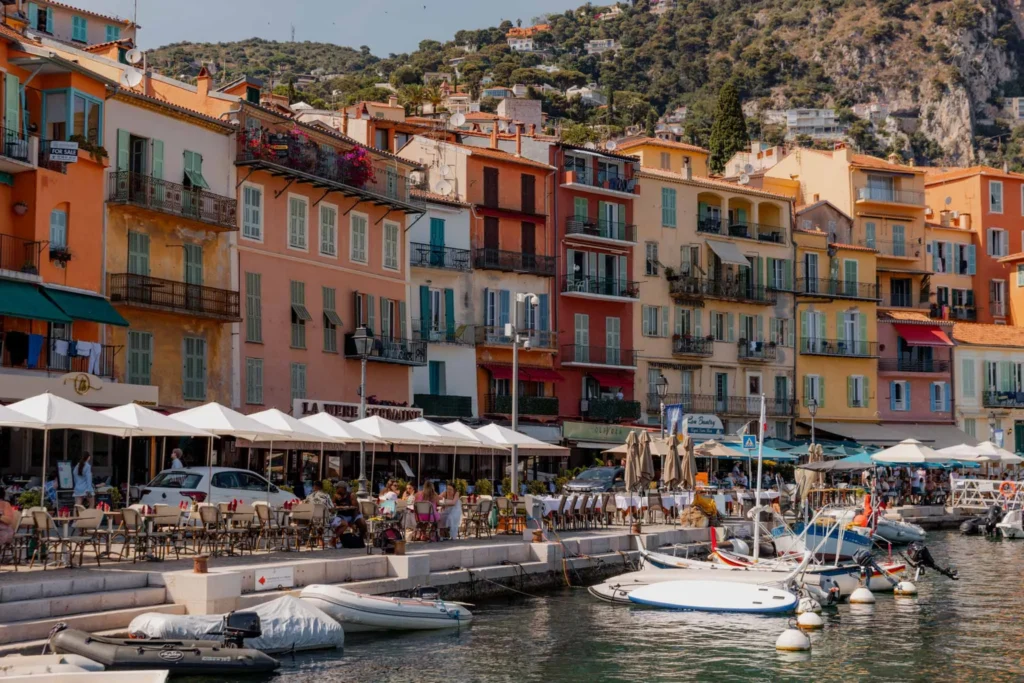
There’s something almost dreamlike about stumbling upon a place that feels like it exists outside of time, where sunset-colored buildings cascade down hillsides toward crystalline waters. Villefranche-sur-Mer is precisely that kind of discovery—a fishing village that has somehow managed to preserve its soul while becoming one of the French Riviera’s most beloved destinations.
I remember my first visit here, arriving via the regional train from Nice, watching as the landscape transformed from urban bustle to something far more intimate. The journey takes barely 7 minutes, yet it feels like crossing into another world entirely. What strikes you immediately isn’t just the beauty—though the vista around the bay toward Villa Rothschild and beyond is nothing short of spectacular—but the sense that this place has stories embedded in every weathered shutter and ancient stone.
The Heart of the Village: Where History Lives in Every Corner
Table of Contents
ToggleWalking through le vieux village feels like stepping into an imagined Mediterranean sunset dream, though it’s absolutely real. The pedestrian old town reveals itself as a maze of narrow streets, where quiet walkways lead to hidden streets lined with ancient houses. These buildings wear their age gracefully, painted in yellows, oranges, and pinks, their chalky paint and old shutters speaking to centuries of coastal living. Bright green shutters frame windows where laundry still hangs from balconies—a reminder that this isn’t a museum piece but a living, breathing community.
The Boulevard Napoléan III marks your arrival point if you catch a bus from Nice (the 100 or 81 will get you here in about 15 minutes), and from there, it’s a short stroll down into the heart of things. But be prepared—this is hillside country, down to the water, and you’ll quickly understand why packing light isn’t just advice but necessity. They don’t call it lugg-age for no reason, and you’ll really feel the weight as you navigate either up or down these charming but steep pathways.
Rue d’Eglise offers some of the most picturesque views you’ll encounter, particularly of Saint-Michel’s yellow bell tower rising against the azure sky. If the church is open, step inside—these moments of quiet contemplation away from the afternoon heat are worth savoring. Meanwhile, Rue du Poilu presents a good selection of stores, cafés, and restaurants where you can treat yourself to a couple scoops of gelato from Glacier Feracci Vielle Ville. Trust me on this one—few things beat that cool, sweet relief when the Mediterranean sun is at its peak.
But perhaps the most fascinating covered street you’ll encounter is Rue Obscure, the aptly named “hidden street” built along the first ramparts of the harbour, dating back to 1260. Originally designed to protect villagers from bombardment, it came to be very useful for storing wine—bien sûr! This interesting walk underneath and behind some of the village buildings and restaurants is quite unique, rich in atmosphere. Make sure you walk all the way to the far end; it definitely feels quite mysterious along there, and you’ll want to experience every meter of this 13th-century marvel.
The old village itself is not large—you only need a couple of hours to see the entire village if you’re simply wandering. Yet despite its compact size, it’s a gastronomique delight. Restaurants of all styles line les petites rues, offering everything from traditional French bistro fare to refined seafood. This is where the beauty of Villefranche reveals itself: it’s small and quaint enough to feel intimate, yet sophisticated enough to satisfy even discerning palates.
Where Water Meets Wonder: The Magnificent Harbour
At the water’s edge, Villefranche Harbour is truly breathtaking. This is where luxury yachts float alongside simple local boats in perfect harmony, where fine restaurants line the wide promenade with tables positioned right at the water’s edge. The occasional sportscar shares the Quai de l’Amiral Courbet with happy visitors and locals alike, creating a scene that’s both glamorous and genuinely welcoming.
What many don’t realize is that this is one of the deepest harbours in the Mediterranean. That’s why cruise ships come in here, why passengers disembark and immediately fall under the spell of this village that captures hearts—including my own. The spectacular coastline stretches from your vantage point all the way to Villa Kerylos, creating a vista that seems almost too perfect to be real.
Many accommodation venues take full advantage of these views of the bay and township. The area is truly breathtaking whether you’re staying here or just passing through. There’s something about watching the light change across this water, seeing how the Mediterranean transforms from brilliant blue to deeper indigo as evening approaches, that makes you understand why this place forever has people’s hearts.
Coastal Treasures: Beaches That Redefine Riviera Beauty
In the afternoon, when you’ve had your fill of wandering cobblestoned lanes, head to Plage des Marinieres. This long stretch of sand is a rare find in a region where many beaches are rocky, making it one of the most beautiful beaches along the French Riviera. It’s an easy walk from town along the Promenade des Marinieres—that same promenade where you might swim in the beloved Mediterranean Sea, feeling the salt on your skin and the sun on your shoulders.
For those seeking a more secluded spot, Plage de la Darse offers another great option. This smaller, rockier beach provides lovely views of Saint-Jean-Cap-Ferrat while its calm, crystal-clear waters prove perfect for swimming and snorkeling. The clarity here is remarkable; you can watch small fish dart between rocks, see your toes on the sandy bottom even in deeper water.
If you want to spend time at the beach, plan for a full day. This isn’t a place to rush. Bring a book, pack some goods you’ve picked up from the market, and settle in. The rare sandy beaches in the Mediterranean, just minutes from the center, offer something increasingly precious: time that moves differently, space to breathe.
Local Rhythms: Markets and Culinary Discoveries
On Wednesdays and Saturday mornings, you’ll find a lovely fresh food market on Place de l’Octroi, near Jardin François Binon. Stop by to experience a local tradition in Villefranche-sur-Mer that connects you to the rhythm of coastal life. Weekly brocante markets also appear, where you can discover charming architecture reflected in vintage finds, worn shutters repurposed as art, wrought-ironwork that tells stories of craftsmanship.
The terrific variety of beautiful restaurants and bistros makes relaxing for a week—or even a month—in this place an absolute joy. Bakaro serves great smoothies and iced tea, with decent sandwiches ideal for a quick lunch stop or takeaway. When you’re craving something more substantial, La Mère Germaine stands out as a refined seafood spot along the waterfront, while Les Garçons delivers traditional French bistro excellence. Each establishment adds to the gastronomique delight of the village, ensuring you’ll never run out of new flavors to discover.
Colour is everywhere in this town—not just in the painted houses but on plates, in market stalls overflowing with produce, in the vibrant umbrellas shading sidewalk bistros where you can sit relaxing and watching local life unfold.
Artistic Soul: A Chapel Transformed
One of the highlights of any visit to Villefranche-sur-Mer must include the Chapelle Saint-Pierre. This small chapel was brought back to life in the 1950s by French artist and poet Jean Cocteau, who covered the entire interior with his expressive drawings. These works depict scenes from the life of Saint Peter alongside glimpses of local life, creating something intimate, unique, and absolutely essential for any fan of modern art.
Tickets are €4 and must be paid in cash—no cards accepted. No photos are allowed inside, which initially might feel restrictive but ultimately enhances the experience. Without the distraction of trying to capture the perfect image, you’re forced to simply be present, to let Cocteau’s vision wash over you in real time. It’s a small space, but one that leaves an outsized impression.
Venturing Beyond: The Riviera as Your Playground
Villefranche-sur-Mer is a marvellous spot from which to explore the marvellous French Riviera. Its location in the first bay east of Nice makes it an ideal location for savouring this special part of the world. It’s truly a one-stop, unpack-your-bags-and-relax style of destination, yet with outbound day trips to beautiful locations and beautiful walking tours of the area readily available.
Eze, Monaco, and Italy lie a short distance to the east. To the west, you’ll find Nice, Antibes, Juan les Pins, Cannes, and beyond. Each represents a different facet of Riviera life, easily accessible yet distinct enough to feel like separate adventures.
A ritzy peninsula known for its Belle Époque villas and dreamy beaches, Saint-Jean-Cap-Ferrat beckons just a short distance away. You can get here by bus or car from Villefranche-sur-Mer—don’t miss the coastal walk and a visit to Villa Ephrussi de Rothschild. The villa and its gardens are nothing short of magnificent, a window into a world of privilege and beauty that once defined this coastline.
Èze, a hilltop village just a short bus ride away, deserves its own morning or afternoon. Make sure to visit the Exotic Garden for the views—they’re absolutely worth the climb. You can catch the bus along the spectacular Moyenne Corniche to get there, ideally before the shops open and the tourists arrive in force. There’s something magical about being among the first visitors, when the village still feels like it belongs to itself.
Monaco requires no introduction, though it’s worth noting that it’s not all luxury and casinos—although if you want to spot fancy cars or splurge on fine dining, this is certainly the place. Tour the royal palace, visit one of the many museums, and wander the cliffside paths above the sea. The trip from Villefranche takes only about 15 minutes by train, making it an easy escape.
Right on the border with Italy, Menton offers yet another variation on the Riviera theme. You can see the old town in a morning, but plan to stay for the day. The beaches are fantastic and often less crowded than Nice, and there’s a relaxed quality to the place that makes it perfect for lazy brocante Sundays or simply time-out to eat, read, relax, and feel like a local.
If you prefer structure, you can book a full-day guided tour to Monaco and Eze from Villefranche, though I’ve always found that getting around by public transport allows for more spontaneity. Departures are several times an hour on most routes, and the ride itself becomes part of the experience, watching the Mediterranean unfold through train windows.
Nice deserves special mention since it’s so close—a mere 5-minute train ride away. Spend the day at the beach, stroll through the flower market in the old town, and take in the views from Colline du Château. It’s worth touring local villages like La Turbie as well, drinking French wine at sunset, imagining what life must have been like centuries ago when these were remote outposts rather than tourist destinations.
Making Villefranche Your Base: Practical Wisdom
Looking for a place in the Riviera outside of Nice that has a more laid-back vibe? Villefranche is a great place to base yourself for the trip. What strikes me most about choosing to stay here rather than in larger cities is how it changes your entire experience. You’re not a tourist passing through but someone who temporarily belongs, someone who gets to know the beautiful historic village and its people over days rather than hours.
The Welcome Hotel offers simple, clean rooms with amazing sea views right at the foot of town. Many of the rooms and suites have balconies with spectacular views of Cap Ferrat and the Mediterranean laid out before you. If you have the resources, it’s right on the waterfront—you literally step out of the lobby onto the promenade. Hotel de la Darse provides another option: a relaxed seaside hotel with beautiful views of the harbor, just a short walk from the center of Villefranche.
For something more affordable compared to other accommodation venues in the region, Hotel Provencale sits up between the harbour and the Moyenne Corniche, about a 4-minute walk from the village. Worn shutters and charming architecture define these properties, each offering that perfect blend of comfort and authenticity.
Driving or taking the train represent the easiest ways to get to Villefranche-sur-Mer. Based on my experience, renting a car for your French Riviera trip is the best way to get around if you want maximum flexibility. We parked at Parking Wilson, a paid outdoor lot that’s just a short walk from the center of town. However, the regional train is a great option if you prefer getting around by public transport—you can reach Villefranche and most other towns along the coast this way. Book your train tickets at SNCF to secure the best rates.
The railway station is located above the beach, and it takes about 5 minutes to walk into the old town from there. If you arrive by bus on the Blvd Napolean lll, it’s a downhill walk to the old town—easy going in, though you’ll be climbing when you leave. Be prepared to climb either up or down; that’s simply the nature of this terrain.
The Deeper Experience: Language and Immersion
While you’re here, consider taking an immersion course at the Institut de Francais and really learn the language. I can highly recommend it for so many reasons that extend far beyond simply improving your French. The Institut came highly recommended to me before my own month-long immersion French language experience, and it exceeded every expectation.
Learning French all day, then practicing during your downhill walk to fabulous restaurants or at sidewalk bistros, accelerates your grasp of the language in ways that classroom-only study simply cannot match. The prospect of staying in Villefranche for 4 weeks+ while studying creates a unique opportunity to become truly connected with this place. You get to practice your French language skills in real situations, to journey alone to France not as a tourist but as a temporary resident.
I truly feel that my grasp of the language continues to grow, years on from that one month of study. It was the best gift I ever gave myself, and I certainly plan to do it again one day. There’s something transformative about the combination—high on the hillside above the harbour in beautiful Villefranche-sur-Mer, wrestling with verb conjugations in the morning, then descending to swim in the Mediterranean by afternoon.
Imagine touring local villages like Antibes, Saint-Paul-de-Vence, and Tourrettes-sur-Loup while drinking French wine and speaking the language with growing confidence. Picture languishing on the beach at Beaulieu sur Mer, visiting Villa Kerylos, or swanning around like a Baroness at the Villa Ephrussi—all while your French improves daily. It’s plenty of time to explore the French Riviera and fall in love with the language simultaneously.
To live like a Frenchwoman, however briefly, and become truly connected with this special part of the world that forever has your heart—that’s what an extended stay here offers. You move from being someone passing through to someone who gets to appreciate the location on deeper levels, who experiences the opportunity to see beyond the surface beauty into the rhythms that define daily life.
The Essential Character: Why Villefranche Endures
This village captures hearts for reasons that transcend its obvious physical beauty. Yes, the spectacular coastline and one of the deepest harbours in the Mediterranean matter. The fact that it’s situated on the wonderful French Riviera with an international airport just 25 minutes away certainly helps. But what makes people return, what makes them yearn for that sense of belonging even after they’ve left, runs deeper.
It’s the way bright green shutters frame real lives being lived, the way laundry on balconies reminds you this isn’t a stage set. It’s discovering that the Rue Obscure, dating back to the 13th century, now shelters couples stealing kisses in its mysterious shadows. It’s the juxtaposition of luxury yachts and simple local boats sharing the same harbour, the way passengers from cruise ships and lifetime residents share the same narrow streets without friction.
The pedestrian old town creates an atmosphere where you must slow down, where cars can’t rush you along, where the pace returns to something more human. The seaside views frame church towers that have marked time for centuries, indifferent to whether you visit for a few hours or settle in for a few days. The rare sandy beaches invite the kind of relaxation that’s increasingly difficult to find—genuine rest without agenda.
Many beaches along the coast are rocky, making Villefranche’s sandy stretches all the more precious. The calm, crystal-clear waters offer perfect conditions for swimming and snorkeling, but also for simply floating, feeling the salt hold you up while the sun warms your face. These are the moments that stick with you long after you’ve left, the sense memories that call you back.
From my beautiful self-contained apartment in the heart of Villefranche-sur-Mer for that whole month, I watched the seasons begin to turn. I saw how locals moved through their days, how the light changed, how the village breathed differently at dawn than at dusk. I came to know the wonderful French Riviera not as a series of Instagram moments but as a place with texture and depth.
Close links to Nice and Italy meant I was never isolated, yet I never felt the need to escape either. La Turbie, those hilltop villages in the distance, the prospect of distant adventures—they could wait. What I discovered was that sometimes the best travel happens when you stop moving, when you give yourself permission to truly arrive rather than constantly departing.
This is what Villefranche-sur-Mer offers: the chance to escape the city for a more relaxed Mediterranean getaway, yes, but more importantly, the opportunity to remember what drew you to travel in the first place. Not the collection of destinations but the transformation that happens when you open yourself to a place, when you let it teach you its rhythms, when you accept its invitation to slow down and really see.
Whether you’re a Francophile discovering your heart’s desired destination, someone learning French and needing immersion, or simply a traveler seeking beauty without pretense—Villefranche welcomes you. It’s a favorite day trip from Nice for good reason, but I’d argue that treating it as merely a day trip misses the point. This is a place to settle in, even if only for a while, to unpack not just your bags but your expectations.
The township reveals itself slowly, rewarding those who stay long enough to move beyond first impressions. What appears quaint becomes complex; what seems simple proves profound. The Mediterranean sunset dream painted on building facades mirrors actual sunsets you’ll watch from the promenade, and somehow the reality exceeds even the colorful promise.
In an era when authentic experiences feel increasingly rare, when every corner of the world has been photographed and hashtagged into familiarity, Villefranche-sur-Mer somehow maintains its magic. It remains a place where you can get to know not just the sights but the spirit, where exploring feels more like discovering than checking boxes.
For those looking for a place that balances access with intimacy, sophistication with authenticity, beauty with soul—this perfect place awaits. Just minutes from larger cities yet worlds apart in temperament, positioned for exploring the marvellous French Riviera yet compelling enough to make you want to stay put, Villefranche-sur-Mer represents something increasingly precious: a destination that hasn’t lost itself in becoming popular.
So come for the sunset-colored buildings and rare sandy beaches, for the covered street dating back centuries and the chapel transformed by artistic vision. Stay for the way the village makes you feel, for the sense that here, finally, you’ve found what you were looking for—even if you didn’t quite know you were searching. This small fishing village on the French Riviera has a way of becoming home away from home, of creating that sense of belonging that makes leaving difficult and returning inevitable.