Between Orléans and Angers, the Loire River winds through what feels like a fairytale region of France. This enchanting valley holds over 300 châteaux scattered across its length, making it one of the most remarkable destinations for château-hopping. While you could easily spend a week exploring these historic homes, a long weekend trip offers the perfect amount of time to experience the must-sees without feeling rushed. Whether you’re adding this to your France itinerary or planning a weekend getaway from Paris, dedicating a couple of days to the Loire Valley proves absolutely rewarding.
I’ve put together this guide based on my experiences visiting the region, and everything here reflects choices I made while paying my own bills—completely independent, with no sponsored stays or tours. The photos throughout this article capture moments from my journey through this sublime region, where refinement and art blend with ancient Italian influences. Over two days, I found myself charmed by each castle’s story and the breathtaking panoramas that unfold around every bend.
This condensed itinerary focuses on practical tips for those with just 2 days to spare. Whether you’re a history buff or architecture enthusiast, these optimized routes will help you discover the beautiful châteaux and gardens that make this valley legendary. From the Loire Valley’s journey through the ages to its full bloom in spring, prepare for an immersive experience in one of France’s most scenic regions.
Planning Your Visit: Timing and Seasons
Table of Contents
ToggleI visited during the second-to-last weekend of May, which turned out to be perfect timing. The roses were in full bloom, and the château gardens were absolutely overflowing with color. Based on what I observed, late April through early May represents wonderful times to visit—the wisteria and early spring flowers create stunning displays while the weather remains mild without excessive rain.
Summer and early fall present great options too, offering longer days and abundant sunshine when the gardens reach their peak. However, June and July mark the busiest months for tourism, meaning you’ll encounter crowds and hot weather at popular sites. The best times to visit the Châteaux de la Loire really come down to what matters most: spring and autumn bring smaller crowds compared to summer, though summer does guarantee gardens in full bloom plus long days and various festivities at the castles.
Fall brings beautiful changing colors as the leaves turn, with fewer crowds allowing you to better appreciate the beauty and history of these iconic monuments. Winter sees a few châteaux close their doors, though the larger ones remain open. The villages and towns throughout the region—Tours, Angers, Amboise, Saumur, Nantes, Blois, and Orléans—make great places to visit during winter months too.
Should you choose to discover the Châteaux de la Loire at the end of the year, you’ll experience the magic of chateau life with Christmas enchantment at places like the Châteaux de Chambord and Chenonceau.
Transportation: Getting Around Castle Country
The best way to get around the Loire Valley is by car—or if you prefer, book a guided tour. It’s nearly impossible to visit the places on this itinerary using public transportation in the same amount of time. Parking stays free at most châteaux and remains easy to find in the towns. Since the region spreads out fairly rural, traffic stays light and the drives prove incredibly scenic.
I visited the Loire Valley as a weekend trip from Paris, taking the train to Saint-Pierre-des-Corps station just outside Tours, where I rented a car through Sixt (I usually compare prices on Discover Cars). From Tours, you’re only 30 to 60 minutes from the Loire Valley’s main sights. If you’re arriving from Paris, I strongly recommend you rent a car rather than dealing with trains between castles. You could also start from Nantes, Orléans, or Angers depending on your itinerary.
For those determined to visit the Châteaux de la Loire without a car, your choice of castles inevitably becomes more limited. These structures were built over three centuries before the development of railroads, so they weren’t designed with train access in mind. A number of buses operate mainly from Tours, and you could attempt a train tour, but your choices will be restricted. If you have good legs, you might take advantage of the Loire bike trails, though this requires excellent fitness and careful planning.
Arriving in the Loire Valley
Arriving by train remains my preferred method. I recommend taking the train to Saint-Pierre-des-Corps station in Tours—it’s the most centrally located station for exploring the Loire Valley, where you can easily pick up a rental car and start your trip. Alternatively, trains run to Angers and Orléans where you can also rent a car if you plan to begin your itinerary from these cities. All three options stay well connected to Paris and other major cities throughout France.
Arriving by plane means flying into Nantes Atlantique Airport, the closest major airport to the Loire Valley. It’s about a two-hour drive from Nantes to Villandry, making it a convenient starting point if you plan to rent a car and begin your trip from the western edge. The major airports near Paris represent the next best option—from Paris, you can either rent a car and drive to the Loire Valley, or take a train to a nearby station like Saint-Pierre-des-Corps, Angers, or Orléans to pick up your rental car.
By train, a number of options remain available as several towns in the region connect to train lines. Book your tickets in advance for better rates. Once at the train stations in the Loire, you’re positioned to pick up your rental car and reach the Route des Châteaux de la Loire.
By car, in my opinion, offers the most practical way to freely move around and explore the nooks and crannies of this beautiful region. You can rent a car in Tours, Angers, Nantes, or at Paris-Orly and Paris-CDG airports.
Organized tours can make life easier for your trip if you don’t want to drive. Choose from organized excursions along the Loire Châteaux Route, with options like 2-day tours from Paris or Tours through Amboise and surrounding areas.
Where to Base Yourself
I stayed in the town of Bléré, which sits close to Chenonceau and not too far from Amboise—pretty central and a convenient base for exploring the region. I strongly recommend staying in the area near Amboise rather than the larger cities like Tours or Blois. The Loire Valley countryside feels incredibly charming, and staying in a small town or village provides the best way to experience the authentic atmosphere.
Where we stayed: La Maison Leonard in Bléré proved to be a characterful hotel run by Fabrice and his partner. This cozy 5-bedroom guesthouse offers homemade breakfast (a real highlight), and the location couldn’t be better—just minutes from Chenonceau, about an hour from Chambord, and 30 minutes to Villandry.
Other hotel recommendations worth considering: In Amboise, try Le Manoir de Saint Thomas. Near Chambord, the Chateau des Grotteaux Près Chambord offers proximity to that famous castle. By Cheverny, Les Sources de Cheverny provides luxury accommodations.
Sleeping in a castle represents many people’s dream when visiting the Loire Valley—living the life of a château resident, even for just one night. You can truly immerse yourself in these unique historic buildings steeped in history for a timeless interlude. I’ve tried out some unusual places to sleep near châteaux in the Loire Valley, and they’ve created excellent memories.
In my opinion, the best locations to stay near the castles include Amboise (a charming little town near Chenonceau with top-rated available accommodations) and Saumur (another charming little town with troglodyte attractions nearby). I’d look at the selection of best hotels in these areas. While I love Tours, Angers, Blois, and Nantes as cities, staying closer to the castles enhances the experience.
You’ll find best rated accommodations near Château de Chenonceau, near Château de Chambord, near Château d’Azay-le-Rideau, near Forteresse Royale de Chinon, and near Château de Montrésor throughout the valley.
Tickets and Advanced Planning
When I visited the Loire Valley at the end of May, right at the start of peak season, I had no issues purchasing tickets upon arrival. That said, it’s always a good idea to double check the official website of any château you’re visiting during high season (roughly June through September). For instance, Château de Chenonceau and Château de Clos Lucé get very popular during busy periods, sometimes creating long lines to get tickets. Purchasing a timed-entry ticket in advance helps you avoid long wait times at these marquee attractions.
Other tips to keep in mind that help organize your getaway: I recommend you plan well in advance. The Châteaux de la Loire represent a popular destination, and the surrounding area—including hotels, restaurants, wine cellars, and museums—can become overcrowded during peak summer periods. Opt for special tickets when available (I’ll provide links throughout), and adopt solutions that save you precious time while finding the right rhythm for your days.
Avoid over-densifying your program. The rich architecture and furnishings inside the châteaux deserve attention, and there’s a long way to go when you explore the gardens and buildings—the larger ones really take time. My word of advice: don’t plan to see everything or you’ll face frustration. Ideally, aim for one castle a day, maybe two if they’re small. The Loire offers plenty of villages and towns with rich heritage to explore, which will keep you busy between château visits.
Château de Chenonceau
From Villandry, it’s about a 40-minute drive to Chenonceau. The Château de Chenonceau ranks as the most beautiful château in the Loire Valley—I think many would agree. Built during the 16th century, this château stretches gracefully across the Cher River, creating one of the most unique and picturesque settings in the entire region.
A long, tree-lined path leads you toward the château. Inside, you’ll explore beautifully appointed interiors and formal Renaissance gardens. Chenonceau’s beauty gets credited to Katherine Briçonnet, wife of Thomas Bohier (the king’s Chief Financial Advisor), who oversaw the initial design and construction. The château’s most famous resident, Catherine de’ Medici, later added touches inspired by her Italian heritage.
During your visit, check out the fascinating apothecary and the Orangery. My favorite rooms throughout the château showcase intricate wood paneling, rich tapestries, and antique furniture. Nearly every space features beautifully decorated rooms with fresh flower arrangements—my advice is to take your time and see it all properly.
For the best view, walk to the far end of the gallery and step outside onto the terrace. You’ll find the perfect vantage point overlooking both the château and the river below. You could easily spend half a day here—I stayed three hours but would have happily spent more time just strolling around the grounds.
For information about opening hours and tickets, check the official website. There’s a large, free parking lot right at the entrance to the property.
Duration of visit: Budget 3-4 hours to start your day exploring Château de Chenonceau properly.
Towering above the Cher river with medieval origins, this château showcases Renaissance architecture that earned it UNESCO World Heritage status. You’ll be fascinated by the rich collection of paintings and rare 16th-century Flanders tapestries, among more treasures. The estate gets visited by almost 900,000 people every year and boasts sublime gardens, a wine cellar, and many other places to discover. Book your ticket in advance to round off your experience, and consider a themed tour as you stroll through the grounds.
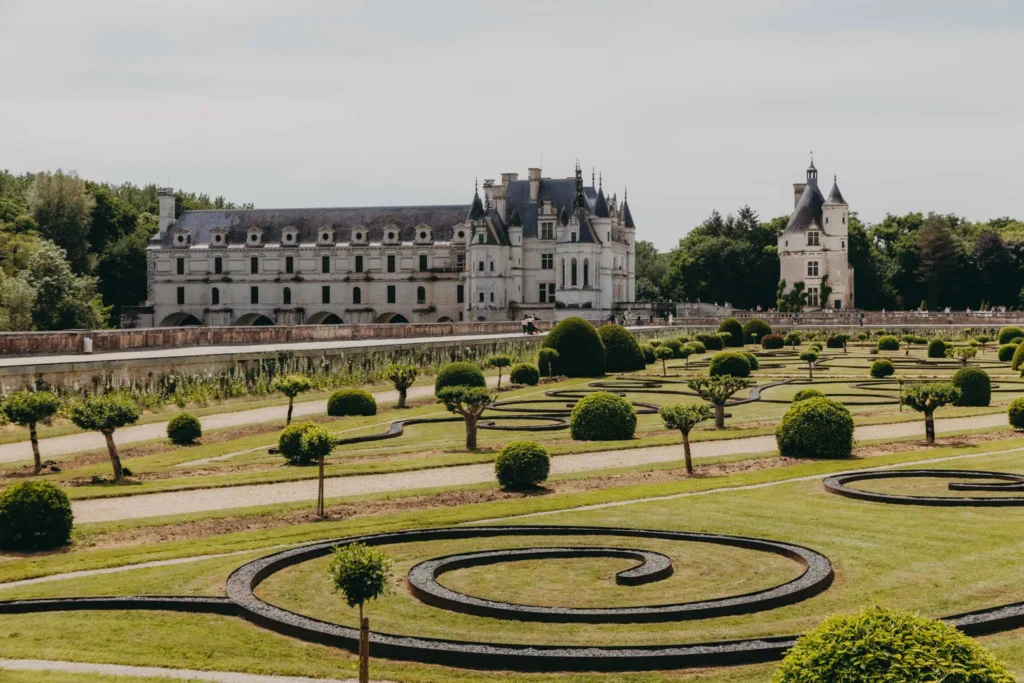
The Château de Chenonceau’s Renaissance gardens, based on an Italian model, feature a fountain at the center of the Jardin Diane de Poitiers. Back then, splendid green carpets formed a harmonious blend of flowers, vegetables, and fruit trees. Today, this 12,000-hectare garden divides into 2 perpendicular and 2 diagonal paths, forming 8 triangles of lawn decorated with plant scrolls—a composition designed by 19th-century landscape architect Achille Duchêne. In spring and autumn, you’ll see a wide variety of flowers; during summer, a hundred hibiscus stalks come into bloom. From the garden, you can admire the magnificent view of the castle’s east facade. Don’t forget to reserve your ticket online.
Château de Villandry
I’ve visited many beautiful gardens throughout France, but in my opinion, none compare to the gardens at Château de Villandry. When visiting, choose between a ticket for just the gardens or a combined ticket that includes both the château and gardens. I highly recommend opting for the combined ticket—while the gardens remain undoubtedly the main attraction, Villandry’s interiors ended up being among my favorite of all the châteaux we visited.
The rooms feel bright and welcoming, tastefully decorated with floral fabrics in soft colors. The rooftop terrace offers the best view over the gardens. Speaking of those gardens—they’re absolutely spectacular. You’ll find vibrant flower beds at every turn, a fragrant herb garden, a playful maze, beautifully designed ornamental gardens, and a lush kitchen garden that’s still functional today. Plan to spend a few hours taking it all in.
For information about opening hours and ticket prices, visit the official website.
Duration of visit: Allow around 3 hours. Parking is available across the street from the château, free of charge.
Château de Villandry ranks as a must-see for garden enthusiasts. In my opinion, the magic of Villandry lies in the balance between inside and outside—the architecture and gardens match each other beautifully. Wherever you are on the property, the view proves exceptional and worth a detour. The château’s uncluttered appearance feels unique in the region as the last Renaissance château built in the Loire Valley.
History buffs will be delighted to see how the space has evolved through the ages. Discover the unusual decoration in various rooms, then (as you’ve probably guessed) marvel at what are arguably the finest gardens in the Loire.
Château du Clos Lucé
In 1516, Leonardo da Vinci was invited to France by King Francis I. He spent the last three years of his life living just outside Amboise at Clos Lucé, until his death in spring 1519. The château remains well preserved and furnished with Renaissance-era pieces.
You can visit Leonardo da Vinci’s bedroom and various workshops, including spaces where he painted, sculpted, and sketched. The library and study are also open to explore. One of the most fascinating parts of the visit is the model room, which showcases 40 different machines designed by Da Vinci and brought to life through working models. It’s impressive to see the range of his inventions—including an early lifebuoy, several flying machines, and a version of the modern-day car jack. He was truly a man ahead of his time.
Around the château grounds, you’ll come across several of Leonardo’s inventions recreated in life-size form. There’s also a peaceful terrace café with a fountain, grassy fields, and shaded picnic tables if you plan to bring lunch.
Overall, I really enjoyed visiting this château. While not as grand as others in the Loire Valley, getting a glimpse into Leonardo da Vinci’s world made it one of the most memorable stops on the trip.
For opening hours and ticket information, check the official website.
Duration of visit: Plan for 2.5-3.5 hours.
Where to park: I parked at Parking Des Tanneurs, a short walk to Clos Lucé and near the center of Amboise.
If you’re interested in Leonardo da Vinci—the Italian painter, architect, scientist, and engineer born in 1452—then Château du Clos Lucé becomes a must-see. Long a summer residence for the kings of France, this building became home to the Renaissance genius for his final three years before he died in 1519. The château, garden, and grounds showcase Leonardo da Vinci’s work in architecture and painting. Don’t wait—reserve your ticket ahead of time.
Château de Chambord
Château de Chambord stands as by far the most famous castle in the Loire Valley and one of the most remarkable Renaissance buildings in all of France. It took 150 years to build, starting in 1519. The château is enormous and striking to see from outside, though the interior feels quite bare—only a handful of rooms are furnished, and you’ll spend most of your visit wandering through large, empty spaces.
Still, there are a few highlights that make it worth visiting, especially the grand double-spiral staircase and the rooftop views. The staircase is actually quite fun to experience—you can see another person on one of the two separate staircases as they wind their way up through the center of the château, overlapping but never crossing paths. If someone is climbing on the opposite side, you’ll never actually see them on the same steps. This design often gets attributed to Leonardo da Vinci, though it’s never been officially confirmed.
I personally prefer to see this château from outside. You can pay to park and walk the paths surrounding the castle for free. If you want to enter the formal gardens or explore the interior more thoroughly, you’ll need to purchase a ticket.
For info about opening hours and tickets, visit the official website.
Duration of visit: Budget about 3 hours.
Parking: There’s a paid parking lot that costs €6 per car.
If you go to the Loire, visiting Château de Chambord is a must-have on your schedule. This world-famous structure showcases revolutionary architecture with its double staircases and decorative fireplaces. As the largest of the Loire Châteaux, it was built within the largest enclosed forest in France. Imagined by the young king François I as a symbol of power, this 16th-century edifice still impresses visitors with its proportions. Once you know about the immense site, you’ll understand why it became home to other illustrious figures like Louis XIV. Book your ticket in advance.
Château Royal d’Amboise
A second option takes you in the footsteps of Leonardo da Vinci once more—this time to Château Royal d’Amboise, where the Italian genius was buried after his death in 1519, having spent his last years of life at the nearby Château du Clos Lucé. Leonardo da Vinci was buried on the grounds of Château d’Amboise at the request of François I, King of France.
The architecture of this place proves remarkable. The interiors take you on a captivating journey through time, where the richness of the decoration reveals the craftsmanship of the Renaissance period. From sculpted vaulted ceilings to monumental fireplaces and finely carved wooden furniture, you’ll be ready to push open every door and marvel at what’s inside. Don’t forget to reserve your ticket ahead of time to avoid any wait.
Château de Cheverny
Immerse yourself in the friendly atmosphere at Château de Cheverny, one of the finest Châteaux in the Loire Valley and an important stop along the wine route. Just a few kilometers from Blois, this estate offers a history full of surprises.
You’ll discover this elegant 17th-century edifice served as inspiration for the fictional château Moulinsart, making your visit a veritable immersion into the famous Tintin comic strip. I was charmed by the beautiful park with its 6 superb gardens—you’ll be sure to be won over by the magnificence of the entire Cheverny estate.
Château d’Azay-le-Rideau
Just 15 minutes from Villandry, you’ll find Château d’Azay-le-Rideau, another of my favorite Loire castles. It has a poetic, romantic atmosphere despite being modest in size rather than grandiose in decoration. Surrounded by a moat still filled with water and set within a beautiful English-style park, it represents one of the jewels of the region.
You should know that this majestic building has inspired many artists, including the writer Honoré de Balzac and sculptor Auguste Rodin. When I discovered the château, I spontaneously thought of Lamartine’s verse about its beauty. The English-style park features 2 water mirrors and exotic trees including sequoia, cedar, ginkgo, and bald cypress planted around 1850. Don’t forget to reserve your ticket.
Château de Chaumont-sur-Loire
Continue your romantic, bucolic tour at Château de Chaumont-sur-Loire on your second day—the area surrounding this castle definitely proves worth exploring. I fell in love with this 15th-century château (commonly known simply as Château de Chaumont), which will captivate you with its prestige. Travel back in time to meet members of France’s nobility and famous intellectuals.
The historic park, and above all the perennial and temporary gardens, transport you to a world of daring artistic innovation. Don’t miss this jewel of the Loire. If you want to spend the night nearby to extend your experience, book your ticket and look for accommodations in the area.
Château d’Ussé
Do you know which castle inspired Sleeping Beauty? We’re talking about Château d’Ussé, which conjures up the imaginary world of fairy tales. You’ll be fascinated by the multi-faceted architecture—the fruit of three centuries of construction (XV-XVIIIth centuries) that blends medieval and Gothic inspiration with Renaissance style. The result creates an exciting patchwork of stones waiting for you to decipher.
You won’t be able to resist the gardens designed by Le Nôtre, gardener to the Sun King Louis XIV (who also designed the gardens at Versailles). Be seduced by the harmony and the landscape’s geometry. This proves an ideal place for children to discover castle life through historical reconstructions scattered throughout the property.
Royal Fortress of Chinon
Plunge into the heart of French history at the Royal Fortress of Chinon, one of the few medieval fortified castles in the Loire Valley. This ranks among the most beautiful fortresses you can visit in the Loire Valley, especially if you’re traveling with children.
Nestling on the banks of the Vienne river, this fortress stands as one of the most important historic monuments from the Middle Ages in France. During my visit, it offered a captivating journey through time—the site is very well designed for young and old alike. You can observe scenes on an augmented reality tablet, solve riddles, and follow the character Bertille as she takes you on a tour of the premises. You’ll discover emblematic figures who left their mark on history while you admire the surrounding landscape from this UNESCO-listed fortress. Book your tickets online.
Fortress of Montbazon
On your second day, immerse your family in the exciting life of the Middle Ages by bringing history and archaeology to life at the Montbazon Fortress site. Put yourself in the shoes of an onlooker from that time as you wander among costumed figurants discovering trades in this authentic medieval setting. You’ll be captivated by the beauty of the keep that dominates the surrounding area with its noble stature. It’s one of the best activities to experience along the Châteaux de la Loire circuit.
Château du Rivau
For your next step with little ones, enjoy an enchanted interlude at Château du Rivau for an unforgettable experience. This feudal castle of modest dimensions sits in a remarkable agricultural and botanical setting. The current owners bring together the best of contemporary design with Renaissance elements—the château’s logis and its 15 remarkable gardens create a dreamlike world.
The fairytale gardens serve as the source of motivation and interest here. Contrary to popular belief, children are often very receptive to contemporary art, which makes this visit especially enjoyable. The château’s staff offer a range of activities for children all year round, including treasure hunts and game books designed for different age groups. Get ready for a fun-filled afternoon.
Dining Throughout Your Journey
Near Villandry and Chenonceau: At Villandry, there’s a small café at the château where you can pick up baguette sandwiches and light snacks. A bakery just a short walk away sells simple sandwiches too, though they’re pretty basic—don’t expect too much. You’ll find a couple of great options for dining near Château de Chenonceau: either dine at L’Orangerie on the castle grounds, or head to the nearby town to eat at Edith, a restaurant that comes highly recommended.
Chédigny – France’s Village of Roses: My last stop of the day took me to a small village about 20 minutes from Chenonceau, known as France’s Village of Roses. Chédigny is the only village in the country to hold the prestigious Jardin Remarquable designation—an honor usually reserved for exceptional gardens. I happened to visit during the annual Fête des Roses when the entire town transforms into a living garden. Flower growers line the main street showcasing their best rose varieties, and people from all over the region come to shop for summer plants. A live band played, locals made crêpes, and wine and beer flowed freely. Though busy, it felt wonderfully festive. If you’re visiting in May, I definitely recommend checking the festival dates—it’s a fun experience. You only need about an hour to stroll through the village, but it’s a must-see if you’re visiting during rose season.
Dinner near Bléré: I stayed in the town of Bléré, not too far from Chenonceau, and asked my B&B host for a dinner recommendation. We ended up at Au Tableau. The food was fine—nothing to write home about—but it proved a convenient option. Another option would be to head to Loches (I didn’t have time to make it there, but it looks like a beautiful town and could be a great place to stop for dinner if time allows).
If you’re looking for something a bit more elevated, Restaurant Ardent, Restaurant Le Favori, and Les Sources de Cheverny represent a list of high-end spots, though these need to be reserved well in advance.
Lunch in Amboise: From Château du Clos Lucé, follow Rue Victor Hugo toward the center of Amboise—it’s only a 10-minute walk. I recommend stopping in Amboise for lunch. The town feels really lovely, though it definitely leans toward the touristy side. Since I wanted to get back on the road fairly quickly, I just grabbed some salads at Paul, a popular bakery chain throughout France that also serves baguette sandwiches.
After lunch, you have the option to visit Château Royal d’Amboise, or head straight to your next stop at Château de Chambord (about an hour and a half away).
Evening in Saint-Dyé-sur-Loire: After my visit to Château de Chambord, I needed dinner. I’d spotted a little town on my map and decided to stop by. It turned out to be one of the most charming villages on the entire trip. Saint-Dyé-sur-Loire, just a 10-minute drive from Chambord, was hosting a local fête when I happened to visit. The town square was full of locals enjoying live music and sipping wine. I grabbed a couple of chocolate crêpes and strolled through the village. The town sits right along the Loire River with a lovely church and a peaceful riverside walk. You only need about an hour here, but it’s definitely worth the stop.
Domus Restaurant: I booked dinner at Domus Restaurant that evening—it turned into one of the best meals of the trip. Listed in the Michelin Guide, it offers a reasonably priced set menu (I paid €45 per person without wine). The experience proved excellent: the food came well presented, flavorful, and inventive. Overall, you really get your money’s worth. I highly recommend it for dinner near Chambord.
Near Chenonceau (from Amboise): When you visit the imposing Château de Chenonceau (about a 20-minute drive from Amboise), delight your taste buds with the gastronomic delights found in this charming Loire town, which boasts a fine range of restaurants. I’ve tested a few myself: Restaurant Les Arpents serves refined local cuisine and was awarded a Bib Gourmand, with a fine selection of wines. Restaurant La Breche offers a top-flight gourmet meal served in a warm, bourgeois setting.
To round off your first day full of sensory experiences and beautiful images, change your perspective and get some height—take to the skies in a hot-air balloon to admire the Châteaux of the Loire at sunset. See how the colors in the sky sublimate the beauty of these giants scattered throughout the Loire Valley. Let yourself be tempted by this magical experience in the air.
Near Cheverny: After heading to the Domaine de Cheverny (about a 25-minute drive from Chambord), you might like to enjoy a light lunch when visiting the place that inspired the famous Château de Moulinsart from the Tintin comic strip. Grab a bite to eat at Café de l’Orangerie—the decor is fun, making for a delicious break. The site also offers picnic areas ideally placed near the canal if it’s time for a gourmet break.
Château de Villandry: At Château de Villandry, there’s a charming table at the entrance called Restaurant La Doulce Terrasse. I was pleasantly surprised—you can enjoy seasonal cuisine based on regional produce. I tried the tartine du potager (generous and tasty) plus a gourmet coffee. There’s also a picnic area about 100m from the château entrance, behind the Villandry Tourist Office, at your disposal if you have a ticket valid all day. You can choose to have lunch outside and come back to continue exploring.
Around Chaumont: For good places to eat near Chaumont, options are available in the surrounding area. If you want to continue your day on the estate, several food and beverage outlets serve visitors: Café des Savoirs et des Saveurs offers a gourmet break with hot and cold drinks plus sweet and savoury snacks nestled in the middle of the books. Restaurant Comptoir des Tilleuls serves cuisine that revisits local products with an eco-responsible approach. Restaurant Grand Chaume at Hôtel Au Bois des Chambres delivers original gourmet flavours in an atypical setting.
In Chinon: Head to Chinon for a gourmet family break on your next visit. You’ll find plenty of places to eat and drink—for example, Café-restaurant Le Lysandre sits inside the fortress facing the Tour de l’Horloge, ideal for a gourmet break on its terrace and garden in the shade of hazelnut trees. Restaurant La Cave des Silènes, on the outskirts of the estate opposite the Forteresse parking lot, operates as a wine cellar offering a selection of Chinon wines. There’s also a snack bar nestled in the heart of the fortress site.
Montbazon area: Restaurant La Taverne welcomes guests to feast there (open all day). This traditional restaurant will enliven your taste buds with fresh local produce and an extensive Loire wine list. In the village of Montbazon, you’ll find something for the whole family.
Extending Your Stay
If you’re planning to stay more than 2 days, be sure to read my 3 Days in the Loire Valley Guide. Otherwise, here are a few additional sights you can add to your itinerary:
Additional Châteaux: Château de Cheverny, Château d’Azay-le-Rideau, Château de Chaumont-sur-Loire, Château Royal d’Amboise, and the Royal Château of Blois all make worthy additions.
Towns and Villages: Consider visiting Montrésor, Saumur, Loches, Beaulieu-lès-Loches, Saint-Aignan, and Candes-Saint-Martin—each offers its own character and charm.
Day Trips and Tours: If you’re looking to take a day trip from Paris to the Loire Valley, you can book wine tasting experiences or look into these tour options:
- Loire Valley Castles Day Trip from Paris with Wine Tasting
- Day trip from Tours: Loire Valley Day Tour including Chambord and Chenonceau, plus Lunch
- Private Castle experiences
- Hot Air Balloon Flight over Chenonceau with wine tasting
- Loire Valley Wine Tour with Food Pairing in Vouvray
Visiting by Train
Visiting the Châteaux de la Loire by train is ambitious—it’s not the easiest way to explore. However, I’ve devised 3 possible day itineraries to discover must-see places in the region. Let yourself be tempted and choose the 2 days that most inspire you from these 3 tours:
Option A – 1-day train trip to Château de Chambord and Blois: For a day’s visit to the Châteaux de la Loire by train from Paris or Tours, opt for arrival at Blois railway station. Take the shuttle bus to Château de Chambord (average duration: 35min). Allow 2h30 to 3h for the length of your visit covering the estate, château, and wine house. Then return by bus to Blois to visit other must-see sites if time allows. Book your Chambord ticket in advance.
Option B – 1-day train trip to Château de Chenonceau from Tours: If you’d like to spend your day at the most beautiful château in the Loire Valley, take the train to Tours, then visit Château de Chenonceau following these directions. Upon arrival at Chenonceaux railway station, you’re just a 5-minute walk from the château. Spend a full morning at Château de Chenonceau exploring the gardens and the Cave des Dômes. Head back to Tours afterward, where gastronomy, heritage, and nature merge happily. Spend your afternoon touring Tours. For tips on the best things to do there, book a guided tour ticket for Château de Chenonceau.
Option C – 1 day by train in Amboise visiting Royal Château and Clos Lucé: Take a 1-day train ride from Tours into the heart of the beautiful town of Amboise. This promises you’ll be seeing 2 castles in 1 day. If you want to visit both castles the same day, it’s possible by doing one in the morning and the other in the afternoon. Be aware this makes for a dense day—I’d suggest a more reasonable program with just 1 day focusing on one château properly.
For 1 day with arrival at Amboise railway station, dedicate your morning to Château du Clos-Lucé (Leonardo da Vinci’s last home), then enjoy lunch and a stroll around Amboise. Book your ticket for Château du Clos Lucé ahead of time.
Alternatively, for 1 day with arrival at Amboise railway station, visit Château Royal d’Amboise—this jewel of the Renaissance period serves as the burial place of Leonardo da Vinci. Follow with lunch and a stroll in Amboise. Book a guided tour ticket for Château Royal d’Amboise in advance.
Additional Resources
For a map showing the locations of the most beautiful castles in the Loire Valley, you can reference materials available in the original article. If you need more advice about how to choose between Châteaux like Chenonceau and Chambord when you’re hesitating, I’ve put together some unusual weekend itineraries for the Loire that should give you a unique experience in this sublime region.
For wine enthusiasts or those simply curious about the process, you might include wine tasting in your itinerary with visits to cellars and vineyards throughout the area—there’s an entire article dedicated to this aspect of Loire Valley travel.
Finally, if you want to find out more about my favorite itineraries for visiting the Châteaux de la Loire over 3 days, 4 days, 5 days, or even 7 days, look for those expanded guides. More Loire Valley articles with links to additional information I’ve mentioned can help you dive deeper into planning, though not all content could be included in this full guide.
The Loire Valley region between Amboise and Tours particularly stands out for its concentration of magnificent estates. Each château tells a different chapter of French history, from medieval fortresses to Renaissance masterpieces. The refinement you’ll witness in the architecture reflects centuries of Italian influences, especially visible in the garden designs and interior decorations. Many of these historic homes feature antique furniture, intricate tapestries, and elaborate wood paneling that transport you to another era.
The valley offers much more than just castles. The charming villages tucked between the major attractions provide authentic glimpses into Loire life. Small towns maintain their medieval layouts with narrow streets, local bakeries, and weekly markets. The countryside remains fairly rural despite the tourism, preserving its agricultural heritage with vineyards, orchards, and working farms scattered throughout.
When exploring by car, you’ll appreciate how the scenic drives become part of the experience itself. The roads wind through forests, along the river, and past fields in bloom during spring and summer. Traffic stays light outside the main tourist season, allowing you to set your own pace. Free parking at most châteaux eliminates one common travel headache, and the lots are usually easy to find right near the entrances.
The Loire River itself deserves attention—this majestic waterway shaped the entire region’s development. Many châteaux were positioned strategically along its banks for defense and transportation. Today, peaceful riverside walks offer different perspectives on the castles, and the bike trails that follow the river provide an alternative way to travel between sites if you’re athletically inclined.
For photography enthusiasts, the valley delivers at every turn. The long tree-lined paths leading to château entrances create natural frames for your shots. Gardens reach their peak in late spring when roses, wisteria, and early blooms create explosions of color against stone facades. The interiors, with their fresh flower arrangements and period furnishings, offer equally compelling subjects.
Understanding the historical context enhances any visit. The châteaux weren’t built all at once—they represent three centuries of French history, from medieval fortifications to Renaissance pleasure palaces. Kings, queens, nobles, and famous residents like Catherine de’ Medici and Leonardo da Vinci left their marks on these properties. Each château has its own story, its own architectural quirks, and its own role in France’s past.
The gardens merit as much attention as the buildings themselves. From formal Renaissance designs to English-style parks, from kitchen gardens growing vegetables to elaborate ornamental displays, the landscapes showcase evolution in garden design across centuries. Some gardens, like those at Villandry, require separate tickets and deserve hours of exploration. Others, like the grounds at Chambord, can be enjoyed freely from the exterior.
Practical considerations matter when planning your days. Summer brings long daylight hours but also heat and crowds. The gardens look spectacular but you’ll share the experience with many others. Spring and autumn offer more comfortable weather and smaller groups, though some facilities may have reduced hours. Winter sees several châteaux close entirely, but the major ones stay open and the lack of crowds means you can explore at leisure.
Food becomes part of your Loire Valley story. From simple baguette sandwiches grabbed at village bakeries to elaborate multi-course meals at Michelin-rated restaurants, the region offers dining for every budget and preference. Local produce appears on menus—Loire Valley wines, fresh vegetables from market gardens, river fish, and regional specialties. Even a casual picnic on château grounds with supplies from local shops creates memorable moments.
The apothecaries, libraries, and workshops within various châteaux reveal how these weren’t just showplaces but functioning residences. You’ll see kitchens, storage areas, servants’ quarters, and workspaces alongside the grand reception halls. This complete picture helps you understand château life beyond the glamorous surface.
For families traveling with children, several châteaux have adapted their presentations. Augmented reality displays, treasure hunts, game books, and costumed interpreters make history accessible to younger visitors. The mix of indoor exploration and outdoor gardens keeps kids engaged, while picnic areas and cafés provide breaks when energy flags.
The Cher and Vienne rivers, tributaries of the Loire, add variety to the landscape. Château de Chenonceau’s position spanning the Cher creates its unique appearance, while the Royal Fortress of Chinon overlooks the Vienne. These waterways shaped the valley’s development as much as the main Loire channel.
Contemporary touches appear throughout the region. Modern art installations, temporary garden displays, and updated exhibition spaces show that the châteaux aren’t frozen museums but living cultural sites. The blend of Renaissance elements with current design trends keeps the properties relevant to modern visitors while respecting their heritage.
Transportation choices significantly impact your experience. Independent travel by car offers maximum flexibility and freedom. Organized tours eliminate driving stress and often include skip-the-line access. Train travel limits your castle choices but reduces costs and environmental impact. Cycling appeals to active travelers willing to cover limited daily distances. Each approach has merit depending on your priorities, fitness level, and time constraints.
The UNESCO World Heritage status protecting much of the Loire Valley ensures preservation standards remain high. Ongoing restoration work maintains the châteaux while archaeological research continues to reveal new information about their construction and use. Your ticket purchases directly support this conservation work.