Standing on the arched bridge of Chenonceau, watching the Cher River flow beneath Renaissance walls, I realized why this region captivates visitors from around the world. The Loire Valley isn’t just about ticking off a château bucket list—though with over 300 scattered across the countryside, you could certainly try. This central France destination along the longest river in the country offers something more: a chance to immerse yourself in French culture at a slower, more enjoyable pace than the frenetic energy of the French capital.
My own explorations began as a whirlwind weekend trip from Paris that sparked a desire to return for a longer visit. Years down the line, I finally made it happen, spending three days château-hopping through vineyards, stopping in charming villages, and soaking up regional produce. The experience was captivating—though I’ll admit, by the end, I started to feel a bit burnt out on castles, magical as they are. That’s when you find yourself craving something different.
Whether you’re planning your first visit or have no idea what you’re missing out in France’s famous regions outside of Paris, this itinerary recreates the route I took, including where I stayed, ate, and all the practical tips about parking and opening hours you’ll need. The Loire Valley sits in close proximity to major cities, making it perfect for an ambitious day trip or a proper long weekend stay. But honestly? The treasures dotted throughout this region deserve at least a week to do them justice. Still, if three days is what you’ve got, you won’t regret the extra time spent here.
The Reputation for Gastronomy and Wine
Table of Contents
ToggleBefore diving into specific château visits, let’s talk about why food lovers and wine enthusiasts consider this the right location for an incredible trip. The Loire Valley has earned its reputation for producing some of France’s best goat’s cheese—a personal favourite among French cheeses. The cuisine here rivals any region in the country.
Then there are the wines. Dry white varieties dominate: Sancerre, Pouilly-Fumé, and Chenin Blanc are standouts. If you’re a wine lover, the foodie scene alone makes this worth going out of your way to visit. Towns like Chinon sit surrounded by vineyards producing the region’s famous Chinon wine, while Vouvray offers its own distinctive tastings.
How Many Châteaux Can You Actually Visit?
Here’s the obvious question: with so many chateaus open to public visitors, and plenty more privately owned by wealthy families or the state, which ones are actually worth visiting and which should you miss? I visited seven during my stay, and while considering the sheer size and grand proportions of some, others felt lifeless despite their impressive Renaissance buildings.
Many famous châteaux are sparsely furnished—owned by the French state, which explains why you’ll pay for parking (€6 at Chambord, for instance) and entrance fees. Some family-owned properties that remain someone’s home feel warmer and more lived-in. Read on for my firsthand experiences that will help influence your planning.
Château de Cheverny: The Family Residence
If you wanted to visit a château specifically for its interiors, Cheverny delivers. While famous châteaux in the Loire Valley that are state-owned can feel empty and uninspiring, this one has been owned by the same family for six centuries and permanently serves as their residence. It feels like a home where someone actually lives.
My opinion? The exceptional dining room steals the show with its stunning hand-painted ceiling and detailed wall paneling. The panels tell the story of the Spanish novel Don Quixote, painted by Jean Monier in the 17th century. The tour leads through several other rooms including the king’s bedchamber, the arms room, and the grand salon.
It’s one of the few chateaus where the family lives inside, and the gardens are a highlight. The Orangerie opens during summer months when little boats make their way across the lake—a lovely way to lap up the summer sun. For current opening hours, check the château’s official website.
Duration of visit: 2 hours
Parking: Free parking available in the château’s parking lot
Château de Villandry: Garden Paradise
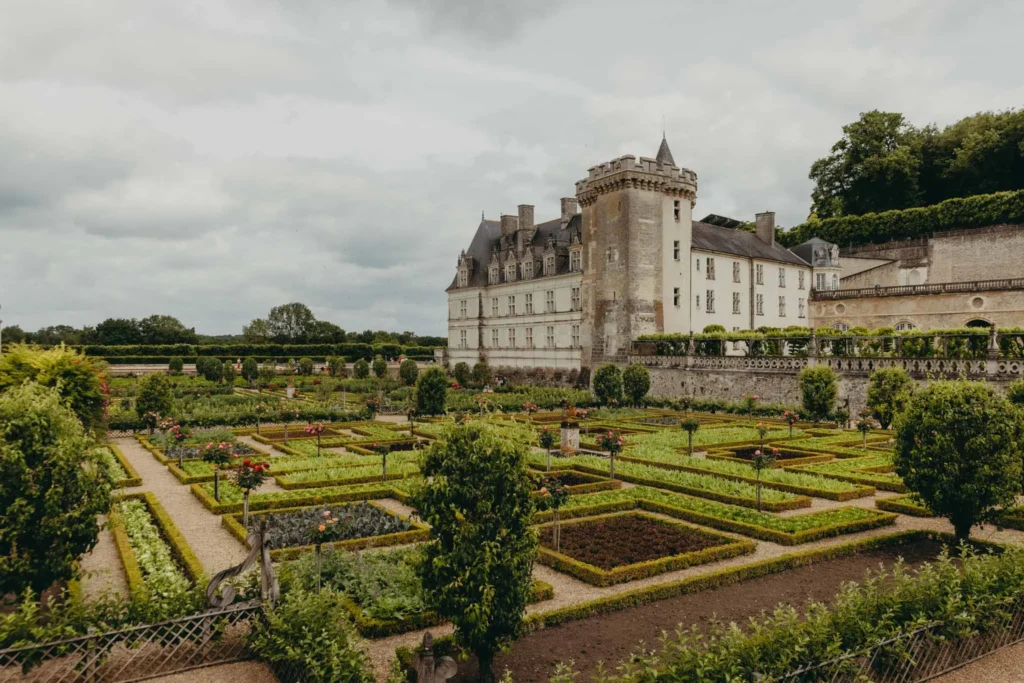
I’ve visited many beautiful gardens in France, but in my opinion, none compare to the gardens at Château de Villandry. When you visit, you’ll have the option to choose between a ticket for just the gardens or a combined ticket for both château and gardens. I recommend the combined ticket—while the gardens are the real star of the show, Villandry’s interiors ended up being my favorite among all the châteaux I visited.
The rooms are bright and tastefully decorated with floral fabrics and soft colors. From the rooftop, you get the best view of the gardens below, which are absolutely stunning with colorful flowers everywhere you look. The herb garden, maze, ornamental gardens, and kitchen garden all deserve attention. Plan a few hours to take your time wandering around.
The château is known for gardens that spring to life during the warmer months, making this particular chateau worth going out of your way for, even though it’s farther from Paris than others. For information on opening hours and ticket prices, check the official website.
Duration of visit: 3 hours
Parking: Available across the street from the château, free of charge
Château de Chambord: The Most Famous Castle
Chateau de Chambord is by far the most famous castle in the Loire Valley and one of the most impressive Renaissance buildings in France. Construction took 150 years, beginning in 1519. The château is enormous and impressive from outside, though the interior feels bare with only a handful of rooms furnished.
I spent most of my visit wandering through large, empty spaces. The highlights worth a visit include the grand double-spiral staircase and rooftop views. The staircase is cool—picture two separate staircases that wind their way up through the center of the château, overlapping but never crossing paths. If someone’s climbing on the opposite side, you’ll never see them. This design is attributed to Leonardo da Vinci, though never officially confirmed.
Honestly, I prefer to see this château from outside. You can pay to park and walk the paths surrounding the castle for free, enter the formal gardens, and explore without purchasing a ticket for the interior. For info on opening hours and tickets, visit the official website.
Duration of visit: 3 hours
Parking: Paid parking lot, €6 per car
This was surprisingly my least favourite castle to visit, mostly due to the sheer crowds. Even in winter, it certainly feels grand outside, but inside the castle feels lifeless. If you visit the grounds around the castle, you might skip the interior altogether.
Château de Chenonceau: The Ladies Castle
A 15-minute drive from Amboise brings you to Chenonceau, home to Château de Chenonceau—what many agree is the most beautiful château in the Loire Valley. This 16th century château spans the Cher River in one of the most unique and picturesque settings in the region.
The long, tree-lined path leading to the château sets the stage. Once you explore the interior and surrounding gardens, the beauty becomes clear. This vision is credited to Katherine Briçonnet, wife of Thomas Bohier, Chief Financial Advisor to the monarchy, who oversaw the early design and construction. Another notable resident, Catherine de’ Medici, added touches of her Italian heritage.
During your visit, don’t miss the fascinating apothecary. The Orangery ranked among my favorite rooms. My advice: take your time to see it all. The rooms are well decorated with fresh flowers in nearly every space, detailed wood paneling, tapestries, and stunning furniture throughout.
My favorite part of the visit was the long gallery with its black and white checkered floors—an elegant simplicity that feels refreshingly modern despite the Renaissance-era splendor. For the best view, walk to the far end of the gallery and step outside for a perfect vantage point. You’ll get a great look at how the château bridges the river.
You could easily spend half a day here. I stayed three hours, though if you want to wander through the gardens longer, it’s absolutely worth giving yourself that time to enjoy everything.
Dubbed the “Ladies Castle” due to its history of female owners, this is the most famous chateau in the region—highly recognisable by its arched bridge and one of the most photographed chateaus around. Inside, the chateau remains largely intact with great history available through guided tours. For info on opening hours and tickets, visit the official website.
Duration of visit: 3-4 hours
Parking: Large, free parking lot at the entrance to the property
This was my favourite chateau in the Loire Valley.
Getting Around: Transportation Tips
The best way to get around the Loire Valley is by car—or book a guided tour. It’s nearly impossible to visit the places on this itinerary using public transportation in the same amount of time. Parking is free at most châteaux and easy to find in towns throughout the region. The area is spread out and fairly rural, so traffic remains light and the drives scenic.
I visited the Loire Valley on a weekend trip from Paris. We took the train to Saint-Pierre-des-Corps station just outside Tours, then rented a car from Sixt (I found it through Discover Cars). From Tours, you’re 30-60 minutes from the Loire Valley’s main sights.
Arriving by Train: If you’re arriving by train, I recommend taking it to Saint-Pierre-des-Corps station near Tours where you can easily pick up a rental car and start your trip. This centrally located station is ideal for exploring the Loire Valley. You could also take the train to Angers or Orléans and rent a car in those cities depending on where you plan to begin your itinerary. All three options are well connected to Paris and other major cities in France.
Arriving by Plane: Nantes Atlantique Airport is the closest major airport to the Loire Valley, about a two-hour drive from Nantes to Villandry, making it a convenient starting point if you plan to rent a car and begin your trip right away. The major airports in Paris are your next best option. From Paris, you can rent a car and drive into the Loire Valley, or take a train to a nearby station like Saint-Pierre-des-Corps, Angers, or Orléans, then pick up a rental car there.
We flew to France via Singapore Airlines, flying from Brisbane through Singapore to Paris, then rented a car at Charles de Gaulle airport for three nights and four days in the Loire Valley.
Where to Stay: Accommodation Strategy
For La Maison Leonard, I chose to stay at the same hotel for both nights of the trip, and I recommend doing the same. It simplifies things—you don’t have to pack up and check in and out each day. With a packed itinerary, the less you have to worry about, the better.
I stayed in the town of Bléré, close to Chenonceau and not far from Amboise. It’s pretty central and makes a convenient base for exploring the region. I’d recommend staying in this area near Amboise. While you could stay in larger cities like Tours or Blois, the Loire Valley countryside is incredibly charming, and staying in a small town or village is the best way to experience it.
La Maison Leonard in Bléré is a characterful hotel run by Fabrice and his partner. The 5-bedroom guesthouse felt cozy, and the homemade breakfast was a highlight. The location couldn’t be better—just minutes from Chenonceau, about an hour to Chambord, and 30 minutes to Villandry.
Other hotel recommendations:
- Amboise: Le Manoir de Saint Thomas
- Chambord: Chateau des Grotteaux Près Chambord
- Cheverny: Les Sources de Cheverny
- Azay-le-Rideau: Hôtel Grand Monarque
Stay the night recommendations:
- Orléans: Escale Oceania Orléans
- Blois: La Perluette Bed and Breakfast
- Tours: Ferdinand Hotel Tours
Details to book:
- La Perluette B&B has rooms with rates around €134 per room per night
- Les Sources de Cheverny offers rooms at rates of €224 per room per night
- Chateau du Rivau features room rates of €220 per room per night
Timing Your Visit: Seasons and Crowds
I visited the Loire Valley on the second to last weekend in May—perfect time to go. The roses were in full bloom, and the château gardens looked absolutely stunning. Late April and early May are beautiful if you want to see wisteria and early spring flowers. The weather is usually mild, though you may get some rain.
Summer and early fall are great times to visit with longer days and plenty of sunshine when gardens are in full bloom. Keep in mind that June and July are peak tourist months when things get busier.
Château Tickets: Advance Purchase?
When I visited the Loire Valley at the end of May, right at the start of peak season, I had no issues purchasing tickets upon arrival. That said, it’s a good idea to double check the official website of each château you’re visiting, especially during high season from June through September.
For instance, Château de Chenonceau and Château de Clos Lucé are very popular during busy periods and can have long lines to get tickets. Purchasing a timed-entry ticket in advance can help avoid those long wait times. All tickets for the chateaus can be purchased upon arrival, but during summer months, it’s a smart way to pre-order tickets and avoid unnecessary queuing.
Day 1: Leonardo’s Legacy and Rose Festival
In 1516, Leonardo da Vinci was invited to France by King Francis I. He spent the last three years of his life living just outside Amboise at Clos Lucé until his death in spring 1519. The château has been beautifully preserved and furnished with Renaissance-era pieces. You can visit Leonardo da Vinci’s bedroom, various workshops where he painted, sculpted, and sketched, plus his library and study, all open to explore.
One of the most fascinating parts of the visit is the model room, which showcases 40 different machines designed by Da Vinci and brought to life. It’s neat to learn about his inventions—from the lifebuoy to early flying machines to his version of a modern-day car jack. The man was ahead of his time.
In the château grounds, you’ll come across several of Leonardo’s inventions recreated in life-size form, perfect for photos. There’s a peaceful terrace café by a fountain with grassy fields and shaded picnic tables if you’re planning to bring your own lunch.
Overall, I really enjoyed visiting this château. While not as grand as others in the Loire Valley, this glimpse into Leonardo da Vinci’s world made it one of the most memorable stops of the trip. For opening hours and ticket information, check the official website.
Duration of visit: 2.5-3.5 hours
Parking: We parked at Parking Des Tanneurs, a short walk from Clos Lucé in the center of Amboise
Château du Clos Lucé sits right off Rue Victor Hugo in the center of Amboise, about a 10-minute walk from town. I recommend stopping in Amboise for lunch—the town is really lovely, though it definitely leans toward the touristy side.
We wanted to get back on the road fairly quickly, so we grabbed salads at Paul, a popular bakery chain in France that makes excellent baguette sandwiches. If you’re hoping for a sit-down option, there are highly-rated options around town for lunch.
Another option is to visit Château Royal d’Amboise before heading straight to the next stop: Château de Chenonceau.
Chédigny: France’s Village of Roses
The last stop of the day took us to this small village about 20 minutes from Chenonceau. Chédigny is known as France’s Village of Roses—the only village in the country to hold the prestigious Jardin Remarquable designation, typically reserved for exceptional gardens.
We happened to visit during the annual Fête des Roses when the entire town turns into a living garden. Flower growers set up along the main street to showcase their best rose varieties. People from all over the region come to shop for summer plants. There was a live band playing, locals making crêpes, and wine and beer flowing. It was busy and festive.
If you’re visiting in May, I definitely recommend checking the festival dates—it’s a fun experience. You only need about an hour to walk through the village, but it’s a must-see if you’re visiting during rose season.
We stayed in the town of Bléré, not far from Chédigny. When we asked our hotel owner for a dinner recommendation, we ended up at Au Tableau. The food was fine, nothing to write home about, but it was a convenient option.
Another option is to head to Loches—we didn’t have time to make it, but it looks like a beautiful town and a great place to stop for dinner if time allows. If you’re looking for something more elevated, Restaurant Ardent, Restaurant Le Favori, or Les Sources de Cheverny are on my list of high-end spots, though these need to be reserved well in advance.
Day 2: Chambord and a Village Fête
After spending an hour and a half at Château de Chambord, we wanted dinner but hadn’t saved any little town to our map. We decided to stop by the first charming place we saw, and it turned out to be one of the most charming villages of the trip.
Saint-Dyé-sur-Loire, just a 10-minute drive from Chambord, became an unexpected highlight. We happened to visit during a local fête—the town square was full of locals enjoying live music and drinking wine. We grabbed a couple of chocolate crêpes and strolled around the village.
The town sits right along the Loire River with a beautiful church and a nice riverside walk. You’d only need an hour here, but it was a delightful discovery.
We had booked dinner at Domus Restaurant that evening—one of the best meals of the trip. Listed in the Michelin Guide, it offers a reasonably priced set menu. We paid €45 per person without wine, and the experience was excellent. The food was beautifully presented, flavorful, and inventive. Overall, you get your money’s worth. I highly recommend dinner here if you’re near Chambord.
Day 3: Renaissance Castles and Fairy Tales
A 15-minute drive from Villandry brings you to Château d’Azay-le-Rideau, a 16th century Renaissance castle set in an idyllic setting on the banks of the Indre River. I really enjoyed walking around the grounds and taking a quick tour inside the château.
It’s much smaller than many of the others we visited, but the setting and the town make it worth visiting. There’s a nice café in the outbuildings where we stopped for afternoon tea and lunch. Several restaurants in town are worth choosing from. We picked up sandwiches and quiche from a nearby bakery called Au Faim Palais—a great option if you’re looking for something quick and cheap.
Duration of visit: 2 hours
Parking: Paid parking is available, though we parked for free just across the river
Château d’Ussé: Sleeping Beauty’s Inspiration
For the final château of the weekend, we visited Château d’Ussé. Our hotel host recommended it, and we decided to squeeze in one more stop. The history of this château dates back two thousand years, though it’s been privately owned by the Duras family since the 1800s.
According to local legend, Château d’Ussé inspired Charles Perrault to write the fairytale Sleeping Beauty. Inside, you can walk through a recreation of the story in the oldest towers of the château.
To be honest, I thought this château was just okay—it was my least favorite of the seven we visited. I don’t think it’s worth going out of your way to see. That said, the setting is beautiful, and if you happen to be nearby, it’s a nice stop to see from outside.
A nearby option is Château d’Islette, which I did not visit but is close by and worth checking out if you’re looking for another château to explore.
Duration of visit: 1.5-2 hours
Parking: Free parking across the street from the château
Chinon: Wine Country Dinner Stop
Chinon is a small town that sits along the Vienne River, surrounded by the vineyards that produce the region’s famous wine. It’s a great place to stop for dinner. We had planned to eat in town but ended up needing to leave early to catch our train back to Paris. From what we saw, there were plenty of cozy restaurants and wine bars to choose from. If you have the time, I definitely recommend spending an evening here.
Planning Your Time: How Many Days?
I recommend spending at least three days in the Loire Valley. I mapped out the places I wanted to visit ahead of time and managed to see all my top château picks, though I didn’t get to nearly as many towns and villages on my list. You could easily spend a full week here and still not see everything.
I’ll admit that after three days of château-hopping, I started to feel burnt out. As magical as each one is, at some point you find yourself craving something different. If you have more time, add on one more day to see a few more towns instead of rushing between castles.
If You Have More Time: Additional Sights
We didn’t make it to several towns and châteaux on our list. If you have an extra day or two, here are a few other sights to add to your itinerary:
Châteaux:
- Château de Chaumont-sur-Loire
- Château Royal d’Amboise
- Royal Château of Blois
- Château de Valençay
Towns & Villages:
- Montrésor
- Saumur
- Loches
- Beaulieu-lès-Loches
- Saint-Aignan
- Candes-Saint-Martin
Tour Options for Different Travelers
If you’re looking to take a day trip from Paris to the Loire Valley or want to book a wine tasting experience, here are a few tour options to look into:
Day Trip from Paris:
Loire Valley Castles Day Trip from Paris with Wine Tasting
Day Trip from Tours:
Loire Valley Day Tour: Chambord and Chenonceau plus Lunch at a Private Castle
Hot Air Balloon Ride:
Hot Air Balloon Flight over Chenonceau
Wine Tasting:
Loire Valley Wine Tour & Food Pairing in Vouvray
Standout Châteaux Worth Your Time
Like famous monuments around the world, declaring which chateaus are “best” is really subjective—beauty is in the eye of the beholder. That said, there are clear standouts, while others I wouldn’t recommend taking the time to visit.
Château Sully-sur-Loire (also called Château de Sully-sur-Loire) is a castle of grand proportions that, to this day, feels like you’ve stepped inside a fairytale.
The Royal Château de Amboise is another worth mentioning. If you find yourself visiting Amboise anyway, it makes perfect sense to add Château Royal d’Amboise to your itinerary since it’s located in the heart of the city. I had the pleasure of visiting it a few years ago during a whirlwind weekend from Paris—that trip sparked my desire to return for a longer trip years down the line.
Exploring Towns and Cities Beyond the Châteaux
There’s much more to the Loire Valley than racing around ticking off every chateau on your bucket list. While there’s nothing wrong with doing exactly that, the small towns and charming cities along the Loire River are well worth a visit. Make sure to consider adding stopover cities and towns to your journey—they help break up the regality of the chateaus and bring you back down to earth.
Orléans
From Paris, the drive should take around 2 hours to reach the city of Orléans. At least, that’s what I was told before departing from Paris Charles de Gaulle airport. The truth? We ran into quite a few traffic delays getting out of Paris and through the morning traffic. It almost took us double the time.
When we did finally reach Orléans, it was worth the wait. It’s a great first port of call when you make your way into the Loire Valley. If you’re looking to make a pit stop for lunch, there’s a bunch of great cafes and restaurants around town, best explored on foot. Afterwards, you could take a boat ride on the Loire River, weather permitting, or rent a bicycle to discover the paths leading out of the city.
Blois
We found Blois by chance, and oh, am I so glad we did! If you ask me for the most charming city in the Loire Valley, this is it. The city is built on a steeply rising hill overlooking the Loire River, meaning you get great views from high up where you can watch the sun setting in peace.
If you get the chance, visit the local farmer’s market on Saturday morning. I highly recommend dining at Petit Honfleur for a delicious meal featuring seasonal, local produce.
Tours
Tours is a university town, meaning you’ll surely find plenty of liveliness on weekends and even on weekdays after dark. It’s a beautiful city to wander around once you discover Vieux Tours—the medieval part of town that captures the essence of old France.