Standing at the edge of the Roman Forum at dawn, watching golden light spill across ancient temples and crumbled basilicas, I understood why people call this the Eternal City. Rome isn’t just another European destination—it’s a living museum where remnants of Ancient Rome blend seamlessly with modern times. After multiple return trips spanning from spring 2024 through 2025, including a ten days exploration and a weeklong trip with my family, I’ve learned that discovering Rome requires more than just hitting the must-visit attractions. It demands savoring the dolce vita, the atmosphere that makes Italy so special.
For Americans planning their longest trip to Europe, understanding the logistics matters. A tourist visa allows three months throughout Europe, giving plenty of time for this adventure. Rome became part of the sovereign nation of Italy in the mid 19th Century, ending nearly two millennia as an independent power. Today, it’s the beating heart of a country that took centuries to unify.
My first time visiting, I made the rookie mistake of trying to see everything in just two days. Exhausted and overwhelmed, I vowed to return—and I did, armed with better planning and realistic expectations. Barcelona and other Spanish cities where Romans left their mark pale in comparison to what you’ll experience here. This amazing trip through Rome’s historic center, from the Trevi Fountain packed with people jostling for a photo to hidden gems known only to locals, changed how I approach travel entirely.
Discovering How Much Time You Really Need
Table of Contents
ToggleThe absolute minimum for Rome is 4 days, though even that requires running around from sight to sight without much breathing room. After my six months living near the Vatican while in college, staying in the residential part of Prati neighborhood, I learned that Rome rewards those who slow down. Four days lets you comfortably fit in the Vatican, Colosseum, and Borghese Gallery while still enjoying magnificent views, pizza, pasta, wine, and exploring favorite neighborhoods.
Trying to tackle a major sight like the Vatican, Colosseum, or Borghese Gallery in the same day will leave you with zero energy and an exhausted, less enjoyable experience. Three days in Rome is doable if you’re selective, but you’ll be making tough choices. The main itinerary I’ve crafted assumes you have the full four days to play with—adjust accordingly if you’re spending less time.
Finding Your Perfect Home Base
After staying in big European cities like Paris and London, I’ve noticed tourist attractions in Rome are concentrated in a relatively small slice of the city. This is great if you play your cards right and listen to my advice: staying within walking distance of Centro Storico (Rome’s historic center) means spending less time in transit. Early morning and late evening strolls through this part of the city reveal its quietest, most magical moments.
Choosing where to stay in Rome as first timers requires keeping mind the detail. Here’s the summary—the short version of my overall recommendation: find a charming hotel or guesthouse in or near the historic center. While Trastevere, with its cobblestone streets, energetic piazzas, and some of the best bars and restaurants in Rome, is worth considering, it’s a bit far away from the major sights for a first visit.
I recently stayed at Horti 14, a beautiful hotel in a quiet part of Trastevere that’s still walkable to both the Vatican and Centro Storico. For a first time in Rome, though, you can’t go wrong with Centro Storico itself, particularly the area closer to Piazza Navona and Campo de’ Fiori.
Consider these options across different budgets:
Luxury Hotels: Palazzo Talia offers refined elegance right in the action.
Boutique Hotels: Boutique Hotel Atelier ‘800 provides character and charm without the corporate feel.
Mid-Range: Palazzo Olivia or 59 Steps Trevi deliver excellent value and location.
Apartments: The Old Town Inn gives you more space and a kitchen for longer stays.
I’d also stay at CitizenM Isola Tiberina—I love CitizenM Hotels for their modern efficiency. Casa Pietra is another charming guesthouse with helpful, friendly staff and a great location. If you’re looking for an apartment with more space and a kitchen, check out the options around Piazza Navona where I spent five days on a recent trip.
For a slightly different experience, look at Monti, the hip part of Rome near the Colosseum and Forum. It’s packed full of bars, restaurants, cafes, and more. Matt stayed here on his last trip to Rome and found it a pretty perfect location to use as a home base. The good central location generally feels much younger than Centro Storico. Salotto Monti offers a great combination of stylish and affordable—exactly where Matt stayed when traveling with family.
If you want something a little more quiet and low-key, consider Prati. This good location sits right next to Vatican City and is walkable to Trastevere and Centro Storico while being more residential, especially as you get further from the Vatican. Worth noting: Alysha lived here for six months during college. The charming Hotel Rovere has a great location, though it’s slightly outside Prati’s main center.
Essential Planning Tips and Tricks Before Departure
Reserve Everything Weeks in Advance
Book tickets for the Colosseum, Roman Forum, Vatican Museums, and Borghese Gallery several weeks in advance. Time slots at these popular attractions book up quickly, making it almost impossible to get same-day tickets. If you have a specific restaurant in mind, call ahead and reserve 2-3 weeks in advance—good places fill up fast.
Get Started Early to Beat the Crowds
Getting ahead of crowds means booking the earliest time slots available at the Colosseum and Vatican Museums. The difference in your experience will be night and day.
Double-Check Opening Hours Obsessively
The Vatican Museums are closed on Sundays (except the last Sunday of each month). St. Peter’s Basilica closes Wednesday mornings for Papal audience. The Borghese Gallery is closed on Monday. Make sure to avoid these days when planning your itinerary, and always double-check opening times right before your visit—things change.
Day One: Ancient Power and Modern Pleasures
The Colosseum at First Light
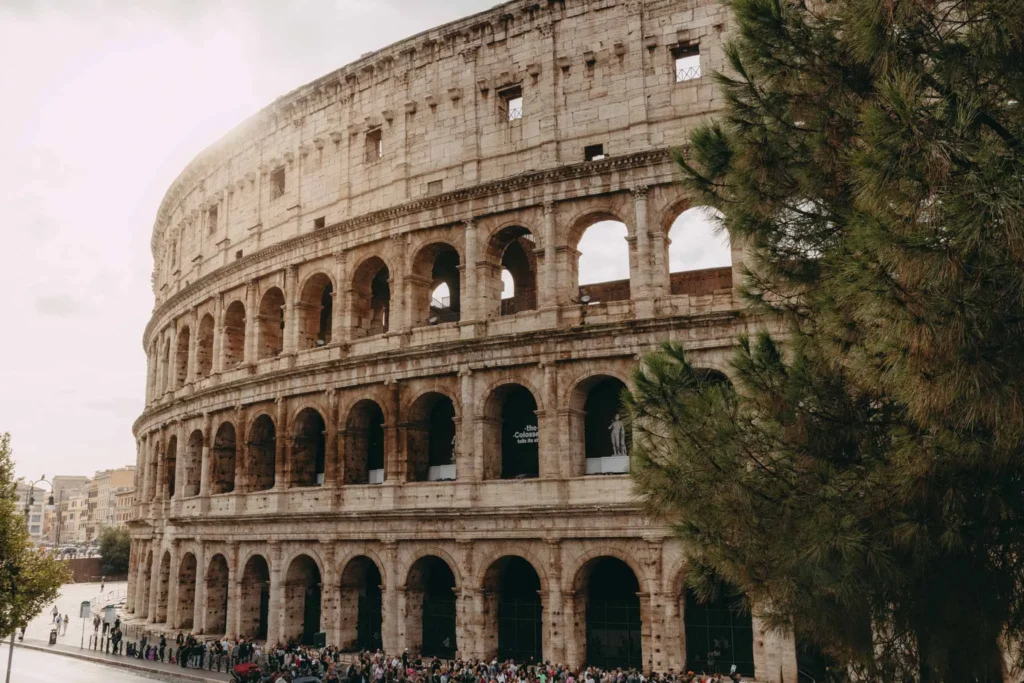
Hit the Colosseum first thing in the morning with a self-guided tour. I suggest booking the earliest time slot at 8:30 AM. Plan on spending 1.5-2 hours here. As Italy’s most famous landmark and one of the New Seven Wonders of the World, completed in 80 AD, this nearly 2,000-year-old amphitheater held between 50,000 and 80,000 spectators—the largest stadium of its time.
People gathered here to watch gladiator battles, wild animal hunts, and other spectacles. You have two main options for visiting:
Self-Guided Visit: If you prefer to explore at your own pace, book an early morning entry slot at 8:30 AM to avoid the rush. For a few euros more, upgrade your ticket to include access to the arena and underground levels where gladiators prepared for battle. I highly recommend this upgrade.
Guided Tour: This is a great way to dive deeper into the Colosseum’s history. Many tours are available—I suggest booking one that includes access to the underground levels and arena. Alternatively, book a combined guided tour that includes both the Colosseum and Roman Forum.
Don’t miss the Arch of Constantine, located right next to the Colosseum. This impressive triumphal arch was built to commemorate Emperor Constantine’s victory at the Battle of the Milvian Bridge in 312 AD.
Ticket Information: You must purchase tickets several weeks in advance. Buy them online through the official website or Tiqets. Basic tickets cost €18 and include access to Palatine Hill and the Roman Forum. Tickets that include access to the arena and underground levels cost €24.
This massive Roman amphitheater remains the most well-known and biggest such structure in the world. It was commissioned by Emperor Vespasian in 72 C.E. on an area that had been used as a private palace by the infamous, unpopular Emperor Nero—a kind of gesture showing the people that the ruling class hadn’t forgotten them.
Unfortunately, Vespasian didn’t live to see it completed. Instead, it was finished by his son Titus in 80 C.E., taking eight years to build—insane when you consider some churches took several centuries. Most likely, the building underwent some expansions and renovations over the years. It could fit somewhere between 40,000 and 50,000 spectators, though you’ll still hear numbers as high as 80,000 thrown around. Most historians agree that’s a little aggressive.
Another misconception about the Colosseum, mostly perpetuated by media, movies, and TV shows, involves the gladiatorial games. While brutal, bloody, and murderous is true to an extent, our guide reminded us that at the end of the day, gladiators were highly skilled professionals and property of rich people who most definitely didn’t want their expensive assets killed off. It’s more likely that gladiatorial battles were similar to modern-day boxing matches rather than the bloodbaths we’ve seen Russell Crowe participate in.
I’ve done the Colosseum four different times now, and each time my jaw hits the floor when I emerge onto the platform at the edge of the arena. You can see the reconstructed part of the wooden floor covering the arena, and below, the intricate series of cages, tunnels, and staging areas where gladiators and exotic animals were kept and brought up to stage using an innovative elevator system. It’s a massive, incredible feat of human ingenuity.
As mentioned above, I’ve done the Colosseum and Forum four different times—twice on a guided tour and twice on my own. I can say without a doubt that the Colosseum and Roman Forum are best experienced on a guided tour. Specifically, a guided tour with someone who really knows what they’re talking about.
That’s exactly what you’re going to get with Walks of Italy. We did a Walks of Italy tour on our most recent trips to Rome and were blown away by the knowledge and richness of detail our guide Dario brought to the experience. He busted all sorts of myths we’d fully believed were true and was able to weave together a cohesive story throughout the three hour tour that kept us engaged the entire time. Keep in mind, we were both experienced and had already been there more than once.
I highly recommend booking a guided tour of the Colosseum and Forum. If you only have time for one guided tour in Rome, this should be the one. Especially the Forum, which really is just a bunch of crumbled buildings on the surface. You need the history and context a guide provides to really kick your imagination into overdrive and envision what the area might have looked like as the beating heart of the Roman Empire.
Of course, you can visit independently. I’d suggest purchasing an audio guide or downloading Rick Steves’ audio guide ahead of your visit. It’s not going to be as interactive and interesting as a tour, but it’ll give you some context for what you’re looking at.
Buy your tickets as far in advance as possible. If you’re coming to Rome in summer, book even earlier. For more information on how to buy tickets, go to the official website. I’m not giving exact hours or ticket prices here because they do change—it’s better to just go to the official site and check in real time.
You’re going to need at least three to four hours to do both justice. Even in late September, exploring the Roman Forum was HOT. In summertime, it’s borderline unbearable with very limited opportunities for shade or brief respite from the sun. Bring plenty of water and sunscreen—you’ll need both.
An Underground Secret: Basilica of San Clemente
This 12th-century basilica is one of Rome’s hidden gems. At first glance, it may seem like any other church, but beneath it lies a fascinating layered history. Underneath the basilica sit two levels of excavations. The first level holds a 4th-century church decorated with frescoes. The lower level unveils a 1st-century Mithraic temple, offering a rare look into the mysterious cult of Mithras.
The basilica is only a 7-minute walk from the Colosseum, so I highly recommend making this stop. Tickets to the basilica are free if you just visit the church level. To see the underground excavations, tickets cost €10. Pre-book online through their official website.
Walking Through the Heart of Ancient Power
The Roman Forum served as the political, religious, and social heart of ancient Rome for over a thousand years. This historic area was once filled with grand temples, basilicas, and arches, visited by everyone from emperors and senators to merchants and peasants. While much of it now lies in ruins, several structures remain remarkably well-preserved, including the Arch of Titus, the Temple of Antoninus Pius and Faustina, and the Arch of Septimius Severus.
Plan on spending about an hour in the Roman Forum (known in Italian as Foro Romano). It’s a little different from the Colosseum. Unlike the Colosseum, which stands tall and relatively intact after being rebuilt and renovated over the years, the Roman Forum consists mostly of ruins. This makes it hard to understand what you’re looking at without a guide to help decipher the difference between a Senate building and the Temple of the Vestal Virgins.
Palatine Hill, one of the seven hills of Rome, sits just to the southwest and is accessible within the same complex. You’ll find one of the best views of Rome from a viewpoint at the top. The majority of the most important buildings in Ancient Rome are within walking distance of this historic meeting place.
Contrary to popular belief, while there is a temple dedicated to Julius Caesar in the Forum, he actually wasn’t killed here. That happened over near Largo di Torre Argentina. Before or after your tour, you can get an excellent view of the Roman Forum from OUTSIDE its boundaries. It’s well worth heading up and over the hill to Piazza del Campidoglio, where you’ll find a replica of a famous Michelangelo statue in the middle. Nearby, Piazza Venezia houses the Altar of the Fatherland, dedicated to Italy’s first king after unification, Vittorio Emanuele II.
Just above the Roman Forum and Colosseum sits Palatine Hill, historically the city’s most prestigious address where emperors and aristocrats built their palaces and mansions. It provided a peaceful escape from the busy, dusty city below. Today you can explore the remains of these opulent villas, including the home of Emperor Augustus and the massive palace built by Emperor Domitian. Plan on spending about one hour here.
Purchase tickets online through the official website or Tiqets well in advance. Basic tickets cost €18 and include access to the Roman Forum, Palatine Hill, and Colosseum. Tickets that also include access to the arena and underground levels of the Colosseum cost €24.
Lunch and an Afternoon Break
The area around the Colosseum is quite touristy, so don’t expect the most authentic Italian food for lunch. That said, there are a couple of highly rated sit-down pizza places nearby that make good options. Afterwards, take a well-earned break, grab lunch, and head back to your hotel to relax before getting ready for a late afternoon walk to one of the best viewpoints in Rome.
Capitoline Hill: Where Gods and Politics Met
Capitoline Hill is the most famous of Rome’s seven hills and once served as the city’s political center. It was also home to several temples, some dating back to the 5th century BC. At the top of the hill, you’ll find Piazza del Campidoglio, a beautiful square designed by Michelangelo featuring a large statue of Marcus Aurelius (the original statue is actually inside the Capitoline Museums).
For one of the best views in Rome, walk past the piazza to the very back. There you’ll find two balconies with an incredible view overlooking the Roman Forum.
The Capitoline Museums
These museums contain an incredible collection of sculptures and artworks from ancient Rome. One of the highlights is the famous Lupa Capitolina, a life-sized sculpture of a she-wolf suckling Romulus and Remus, the legendary founders of Rome. In my opinion, these museums are some of the best in the city and well worth a visit.
A ticket to the museums costs €14 at full price when purchased online in advance.
Altar of the Fatherland: Rome’s Controversial Monument
This stop is completely optional, but if you have the time, it’s worth it for the view alone. In my opinion, the view from this terrace is the best in Rome. The monument was completed in 1935 to honor King Vittorio Emanuele II, Italy’s first king after unification.
It’s free to walk up the steps to the café on the first-level terrace. If you want the best view, ride the elevator to the very top. The views of the Colosseum and the ancient city below are unparalleled—one of the best things to do in Rome in 2024. The elevator ride costs $17, which is a bit steep, but absolutely worth it.
Optional Activities for Extra Time
If your day feels pretty packed but you find some extra time in the late afternoon, here are a few optional activities to add to your itinerary:
- Galleria Doria Pamphilj: A privately owned art gallery featuring works by Bernini, Titian, and Raphael amongst beautiful decor. One of my favorite museums in Rome.
- Chiesa di Sant’Ignazio di Loyola: A 17th-century church with a gorgeous frescoed ceiling.
- Basilica of Saint Mary of Minerva: A medieval church with beautiful frescoes and the tomb of Florentine artist Fra Angelico, plus a marble statue by Michelangelo.
- Largo di Torre Argentina: The infamous site of Julius Caesar’s assassination in 44 BC.
Orange Garden and the Secret Keyhole
Post-nap, it’s time to get back out and explore a bit more. This time, head to the Orange Garden, perched on a hill with great views of Rome and the Vatican. Another worthwhile stop a few hundred feet away is the keyhole—a now-Insta-famous spot where you can look through, well, a keyhole to see the dome of the Vatican perfectly framed.
That said, when I say Insta-famous, be warned: during peak season in the afternoon, you’re likely going to have to wait in line for the privilege of looking through said keyhole. An alternative would be to do this part of the itinerary in the morning before the Colosseum for a vastly different experience. Instead of kids and tourists coming up to watch the sunset, the area will be packed full of locals walking their dogs. When we went early, there wasn’t a single person waiting to look through the keyhole—it was just us.
Your First Aperitivo Experience
Aperitivo is the period during the late afternoon and early evening between getting off work and dinner time (which comes later than you’d expect in Rome). People go out for drinks, and with those drinks comes a selection of small bites like bruschetta, olives, and things like that. To an American or Canadian, it’s a little like happy hour, except the food is complimentary with your drinks.
While the days of full-on aperitivo buffets are behind us (at least in most of Rome), the idea behind aperitivo is still one of my favorite parts of spending time in Rome. During aperitivo, the drink of choice you’ll see many people drinking is an Aperol Spritz—a light cocktail perfect for a summer day, made with sparkling water, sparkling wine (all the bubbles, please), and Aperol, an orange-colored bitter aperitif.
A spritz usually runs 4-5 Euros. You definitely shouldn’t pay more than 6 Euros for one. It’s the quintessential aperitivo beverage. I made the mistake of ordering a Campari Spritz instead once—just to try it—and I won’t be doing that again. It was fine, totally drinkable if you’re into bitter liqueurs, but Campari wasn’t nearly as refreshing.
Anyway, after the orange garden, you’re in perfect position to head to my favorite aperitivo spot in Rome: Zerosettantacinque, near Circus Maximus (a huge chariot racing track that used to exist—fits perfectly with the Ancient Rome theme today). The location is great, the drinks are good, and they bring out a little selection of bites to go with your drinks. If you want a bigger menu of food and are still hungry, they’ve got you covered.
Dinner: Roman Pasta Perfection
Rome is known for four classic pasta dishes. You have to try at least a couple (if not all) before you leave:
- Carbonara: Made with eggs, pecorino, guanciale, and black pepper
- Cacio e Pepe: A simple, delicious mix of pecorino cheese and black pepper
- Amatriciana: Tomato-based pasta with guanciale and pecorino
- Pasta alla Gricia: Made with pecorino, guanciale, and black pepper—sort of like carbonara without the eggs
For dinner, I suggest making a reservation at La Matriciana, one of my top 3 restaurants in Rome. They’re known for their Amatriciana pasta, but you can’t go wrong with anything here. If you’re visiting during fall or winter, make sure to order the fresh porcini mushroom pasta.
Evening in Monti: Where Romans Hang Out
After a spritz or two, head into nearby Monti, the hip neighborhood on the northern side of the Colosseum for dinner. When I say hip, I mean multiple record shops, vintage clothing stores lining one of the main streets—a clear sign that this is where the kids hang out. (And by kids, I’m referring to 20-somethings wearing bell bottom light wash jeans and those glasses with thin wire frames and big lenses that look like Harry Potter’s glasses.)
I’ve walked through here a couple of times at various times of day. After dark is by far the most lively time to be here. Grab dinner at either Cimarra Pizza and Cocktails or Al Vino Al Vino, then indulge in your first gelato of the trip at Fatamorgana, one of my favorite gelato shops in Rome with rotating seasonal flavors made from fresh ingredients.
Day Two: Divine Art and Historic Wanderings
Coffee First: A Pre-Vatican Ritual
Before your trip to the Vatican, head to Pergamino Caffè for some of the best coffee in Rome. If you’re a coffee lover, you’ll particularly appreciate that you get to choose which coffee is used to make your drink. It’s the perfect place for coffee roasters from all over Europe (heavily focused on Italian roasters) to prepare a cup of great coffee, whether you’re into lattes or filter coffee.
It’s on the south side of the Vatican, just around the corner from the main entrance to the Museums, which makes it a perfect spot for your pre-Vatican ritual. Another great option if you’re willing to walk a little bit further is LOVE Specialty Coffee and Croissants—a favorite discovery from my latest trip to Rome. The coffee uses some of my favorite roasters from around Europe and is excellent.
Vatican Museums: Nine Miles of Masterpieces
The Vatican Museums house one of the finest art collections in the world, featuring everything from Egyptian mummies and ancient Greek and Roman sculptures to Renaissance masterpieces. With an estimated nine miles of art in the collection, it can feel overwhelming—but don’t worry, you can see the highlights in just a few hours.
Some pieces you shouldn’t miss include Giuseppe Momo’s spiral staircase, Caravaggio’s Deposition in the Pinacoteca, and of course, the Sistine Chapel painted by Michelangelo.
The Best Way to Experience It
In my experience, the best way to explore the Vatican Museums is by booking a guided tour. Large museums can be overwhelming, and it’s easy to feel like you’re missing something important. A guide will take you directly to the must-sees, making the experience far more enjoyable. Many tours also include access to St. Peter’s Basilica, allowing you to skip the long entry line—another huge perk.
I highly recommend booking an early morning tour that starts around 7:30 or 7:45 AM to beat the crowds and get a head start on your day. If you opt to book a self-guided ticket instead, then try to get the earliest entry time at 8:00 AM. Otherwise, you might want to head to St. Peter’s Basilica first, then head to the Vatican museums afterwards around 9:30 or 10:00 AM.
Tickets and Practical Information
A full price ticket that includes the Vatican Museums and Sistine Chapel costs €20. Children aged 7-18 years old can get a ticket at a reduced fee of €8. There are also add-ons available at ticket purchase, including an audio guide for €7.
Note that all tickets are timed and no re-entry is allowed. Book fast track tickets in advance online to avoid long wait times.
Dress Code
Make sure to wear appropriate clothing or you won’t be allowed inside. The Vatican has a strict dress code, which means shoulders must be covered (no sleeveless tops or dresses), no shorts or skirts above the knee, and no flip-flops or beachwear.
Arguably the most famous museum in the world, it makes its home in the collections of the Vatican, showing off a whopping 20,000 pieces of art that culminate in the legendary Sistine Chapel, whose ceiling frescos bear the work of Michelangelo.
One contradiction that always pops up in the back of my mind when visiting these huge, ornate churches has to do with the role of the church. Why, you might ask, does an organization that preaches from a Bible that unequivocally condemns rich people who do not give away their wealth have such an ornate, over-the-top display of wealth?
Great question. You should ask the Pope if you run into him (or her, in case you’re reading this from a time when we’ve finally gotten a female pope). When visiting a religious site like the Vatican or St. Peter’s Basilica, put those questions aside for a second and just consider the collection of art. It’s a pretty incredible display featuring a who’s who of Italian art history.
Essentially, the two pieces of the Vatican Museums include the Sistine Chapel and St. Peter’s Basilica (which you should visit both of). You should try to be at either the first or last entry slot of the day—obviously from the way this is written, we would have you here for the first one of the day.
I’ve done the Vatican Museums and St. Peter’s three separate times, and each time has been slightly different. The first time, I did it independently. The second time, independently with an audio guide. The last time, I decided I wanted a guided tour to get a better understanding of the art I was looking at and the context around it. So we went on the Pristine Sistine tour with Walks of Italy, my favorite tour company in Italy.
It was a great tour, though it’s important to know that there’s no scenario where you’re going to be in the Sistine Chapel without crowds, tour or not.
A Few Tips for Your Visit
- You must cover your knees and shoulders inside St. Peter’s Basilica—it’s a Catholic church, after all. Leave the short shorts and tank tops at home for the day, or they will not allow you to enter.
- No photos or video are allowed inside the Sistine Chapel. Yes, there will be guards. No, you shouldn’t try to sneak a photo. Be respectful.
- Book tickets well in advance and get the earliest entry possible—they do sell out.
- There’s a lot of walking, including stairs. I clocked about 10,000 steps along the way, including several sets of stairs. If you have mobility restrictions, this might be a lot of moving around.
Visiting on a Guided Tour
One of the most important lessons I’ve learned over the past few years of traveling is to always opt for a guided tour when it comes to big art museums with sprawling collections. This certainly means the Vatican Museums. We did the Pristine Sistine tour with Walks of Italy on a recent trip and enjoyed it, though I’d still say the tour of the Colosseum and Forum should take precedent if you can only do one.
A guide will give you all the context and history you need to actually understand what you’re looking at and help you figure out what to see and what to skip in an order that helps tell the story. We’re not huge art buffs and often had the experience of walking into a museum, wandering around a bit, reading some signs, and then walking out having learned almost nothing and wondering if we were the problem.
After a perspective-changing tour at the Uffizi Gallery in Florence a few years ago (which came on the heels of a similar tour experience at the Colosseum with Walks of Italy), we realized we can be art people—we just need the added context and story behind the art to help us understand exactly what we’re looking at. Now, we generally opt to visit one museum per city, go deep with a guided tour, and get the most out of the visit.
Visiting Independently
If a tour isn’t in your budget or you would prefer to go at your own pace, I have some thoughts on how to maximize your time seeing the two main attractions at the Vatican.
First of all, you need to buy entry tickets for the Vatican Museums, while St. Peter’s Basilica is free to enter. Both have security lines you’ll have to wait in (sometimes long ones).
Buy tickets for the Vatican Museums early—toggle the site to English using the language selector at the top right. You should book tickets as soon as possible. The 8am and 8:30am entry slots go on sale 60 days in advance and sell out within an hour during peak season if you want those early entry times for the best experience.
I recommend either picking tickets that include an audio guide or, even better, booking a guided tour that includes a live guide. If it’s sold out, the first thing I would do before booking a tour is look at online resellers—they generally have more availability than going direct, though it’s not unlimited availability. If the first entry of the day is sold out, I would also consider the 4pm entry slot, which is another relatively quiet time to be in the museums (especially midweek).
Second of all, I would consider doing the Vatican Museums and St. Peter’s Basilica on different days. Alternatively, do St. Peter’s in the morning and the Vatican Museums in the later afternoon. The reason is that by the time you’re done with the Vatican Museums and Sistine Chapel, it will be around noon (maybe even later depending on your pace). That means you’re going to be waiting in the security line for St. Peter’s at its busiest time.
I would recommend that if you have time, get to St. Peter’s Basilica at opening (currently 7:30am) on a different day for a much more relaxing experience. In fact, the light will be better if you choose to climb the Dome, plus there will be fewer people in the narrow passageways. If this sounds interesting, just move St. Peter’s to first thing in the morning on the fourth day of the itinerary.
St. Peter’s Basilica: The World’s Largest Church
St. Peter’s Basilica is the largest church in the world. It took 120 years to build, and its impressive dome was designed by Michelangelo. Inside the church, you’ll find masterpieces like Bernini’s Baldacchino and Michelangelo’s Pieta.
Admission to the basilica is free.
Papal Audience
If you hope to see the Pope, papal audiences are held in St. Peter’s Square on Wednesday mornings starting around 9:00 AM. For a good seat with a view, arrive early. Note that the square and basilica are closed for regular visits on Wednesday mornings during this event. For more details, check the Vatican’s official site.
Climbing the Dome
For one of the best views in Rome, I recommend climbing the dome. To get to the dome, wait in line to enter St. Peter’s basilica, then follow the signs to the cupola. You can either:
- Take the elevator + stairs combo (€10): This lets you skip part of the climb—you’ll only have to climb 320 steps.
- Climb all the stairs (€8): A more budget-friendly option but more strenuous at 551 steps.
I think the extra €2 for the elevator is worth it.
Lunch Options Near the Vatican and Beyond
You have a couple of options for lunch. You can either find a place to eat near Vatican City or eat somewhere in the historic center.
Near the Vatican: I recommend L’Archetto for sit-down pizza or Sprizza for pizza al taglio (pizza by the slice).
In the Historic Center: Make your way to Campo de’ Fiori and get a slice of pizza from one of my favorite bakeries in Rome, Forno Campo de ‘Fiori. My favorite is the spicy margherita. Across the street from the bakery, they also have another shop that sells sandwiches.
Lunch in Prati: A Local’s Neighborhood
After the Vatican and St Peter’s Basilica, head into Prati, the neighborhood immediately adjacent to the Vatican, for lunch. This part of Rome is where Alysha called home for six months during college (albeit in a more residential part of the neighborhood, some ways away from the Vatican).
It’s a little bit more upscale and family oriented than other parts of the city center. However, despite being so close to a major tourist attraction (usually a bad sign in terms of food quality and value), there are some truly outstanding places to eat here.
If you’re looking for the best pizza-by-the-slice in Rome, go to Bonci Pizzarium. It’s a tiny hole-in-the-wall where you’ll find a daily selection of rectangular pizzas served in rectangular slices (different from what you might get in the US). Pizza toppings rotate all the time.
If you’re sick of Italian food (really, on day two?), I LOVED El Maiz, a Venezuelan restaurant serving arepas, cachapas, and tostones. I love Venezuelan arepas and was pleasantly surprised to find them in Rome. The tostones (fried green plantains) with toppings were spectacular—among the best things I ate in Rome. Although the queso cachapa (a kind of sweet corn crepe stuffed with about a pound of cheese) was delicious too.
Castel Sant’Angelo: Fortress on the Tiber
After lunch, make your way towards the river to Castel Sant’Angelo. This is a place I ordinarily would have skipped, but I found myself here on day 8 or 9 of a trip with plenty of time to fit it in.
Built by Roman Emperor Hadrian as a mausoleum, the Catholic Church later grabbed it and turned it into a fortress. Today it’s part art museum, part abandoned castle, with some cool art installations inside. It’s a bit expensive to get in (14 Euros at the time of writing), but I enjoyed it. The best part by far is the terrace at the top with its lovely view of the Vatican.
Buy tickets in advance if you can—we didn’t and ended up waiting a bit since our preferred time slot at the beginning of the day had sold out. The view from the other side of the bridge directly in front of Castel Sant’Angelo is also spectacular. If you decide not to go inside, definitely make sure to head to the other end of the bridge. Give a firm “no grazie” to all the people trying to sell you various things as you cross. (The bridge picture you see was taken at 8:00am before the bulk of tourists showed up.)
Our Favorite Wine Bar in Rome
When in Rome, drink good wine. My favorite wine spot in Rome came to be Enoteca Il Piccolo, a charming little wine bar in Centro Storico known for its rotating selection of natural wines from local producers. Not only was the wine great (specifically the pet-nat, a lightly bubbly white wine), but the experience was unique too. They have a nice little terrace outside—a great place for a glass of wine on a warm afternoon. They also sell wine by the bottle if you want to get one to enjoy later.
Piazza Navona: Baroque Beauty
Piazza Navona is one of Rome’s most picturesque squares, lined with restaurants and colorful Baroque buildings. The square is unique because of its long, oval shape—a remnant of the ancient Stadium of Domition upon which the modern square was built. At the center stands the Fountain of the Four Rivers, designed by Bernini in the 1600s.
It’s a great spot to grab a cocktail during aperitivo. However, I don’t recommend eating here—there are far better restaurants elsewhere in the city.
This vast square was built atop an ancient stadium (hence its shape). It’s a pandemonium affair of trattorias and wine bars spilling onto the uneven cobblestones. The Fontana dei Quattro Fiumi by Gian Lorenzo Bernini (no less) looks especially wonderful at night, as does the Fontana di Nettuno at the north end of the square.
Pantheon: Engineering Marvel of the Ancients
Originally built as a temple and later converted into a Christian church in 609 AD, the Pantheon is one of the most well-preserved buildings from ancient Rome. Inside, take a moment to admire the massive dome—the largest unsupported dome in the world and a remarkable engineering feat considering it’s around 2,000 years old. The only source of natural light comes from the oculus, a circular opening at the dome’s apex.
Tickets: Entry to the Pantheon used to be free, but tickets are now required. Reserve a time slot online in advance through Musei Italiani to avoid long waits. Full price tickets cost €5.
Once a Roman temple and now a Catholic church, the Pantheon shows off its mighty imperial façade (rebuilt in the 2nd century AD) and the great rotunda inside with a hole in the roof that lets in a solitary beam of sunlight, sometimes illuminating the tomb of revered artist Raphael. There can be huge lines to get in later in the day—another reason to get up early.
Trevi Fountain: Coins and Crowds
This baroque, 18th century fountain is the largest and most famous in Rome. You can’t leave without tossing a coin (or three) into the water. According to legend, one coin will ensure your return to Rome. Two coins will help you find love. Three coins will lead to marriage.
The Trevi Fountain is always crowded, and getting close to the fountain can feel like an impossible task with all the people taking selfies. To avoid the worst crowds, your best bet is to visit later in the evening or early in the morning.
Tip: Just steps from the Trevi Fountain, you’ll find Galleria Sciarra, one of Rome’s hidden gems. This stunning courtyard was built in the late 1800s and is covered with intricate Art Nouveau-style frescoes painted by Gabriele Cellini.
They say if you want to return to Rome, you should throw a coin into the Trevi Fountain. Good luck getting close enough to do that—this spot is always packed with crowds, even in the early morning. Still, it’s an iconic sight, famed for appearing in films like La Dolce Vita. Whatever you do, don’t eat nearby unless you want to pay 50% more for 100% worse food.
Spanish Steps: Elegance and Restrictions
The Spanish Steps have long been a meeting point for both locals and visitors. From the top, you get a lovely view overlooking Piazza di Spagna.
Important Note: Sitting on the Spanish Steps is now prohibited. If you’re caught, you could face a fine of up to €400.
These 135 steps of pure elegance await you. They’re an icon of Rome that link the Borghese Gardens and Piazza di Spagna, where a gorgeous Baroque fountain by Pietro Bernini decorates the flagstones.
Campo de’ Fiori: Morning Market, Evening Hub
Campo de’ Fiori hosts a flower and produce market during the day. It also has some of the most tasteless souvenirs imaginable (don’t buy souvenirs here). But it’s a perfect spot to start your exploration of Rome’s city center.
Piazza del Popolo: Your Final Stop
At this final stop, you’ll find the city’s oldest obelisk—a narrow tower in the middle of the square inspired by the Egyptians. This was the former northern gate to the city of Rome. However, the square itself isn’t nearly as old—it was actually designed in the 19th Century.
Head up to Terrazza del Pincio for an incredible view of the square and St. Peter’s Basilica in the distance.
Dinner in the Centro Storico
For dinner, I recommend Rocco Ristorante or Da Gina Al Parlamento. Both are great options, but reservations are a must.
After you’ve enjoyed some Italian wine, it’s time to dive into the best part of Rome: the food. Centro Storico has got a lot of options, though they generally get worse the closer you get to popular places like the Trevi Fountain or Campo de’ Fiori. I recommend picking a place that’s around a few blocks from those main spots.
If you can, it’s worth checking out Pantha Rei, a restaurant tucked away in an alley near the Pantheon. They have both gluten free and gluten-full options, and you can see the Pantheon from their outdoor terrace.
Roscioli Salumeria con Cucina is one of the most highly rated restaurants in Rome. Make a reservation if you want to eat here—it’s a top pick based on recommendations from locals. Though for gluten reasons, we didn’t eat here ourselves, so we weren’t able to get a table to verify personally.
Post-dinner, get gelato at either Grom (one of my favorite gelato spots in Rome and the rest of Italy) or Fatamorgana (another favorite that’s also all gluten free, after a thorough investigation on our latest trip).
Day Three: Art, Markets, and the Soul of Rome
Coffee First: The Italian Bar Experience
If you’re someone who likes fancy pour over coffee at home, I have a major soft spot for the experience of drinking espresso (un caffe) at a bar in Italy. Picture this: you walk into a small, skinny space packed with people standing shoulder-to-shoulder at the bar, talking amongst themselves, bantering in Italian with the barista who’s complaining about something (usually). They’re generally wearing a white collared shirt, tie, and apron. It’s loud and a little chaotic but quick. Most people are in and out within a couple of minutes, partially because they charge extra to sit at a table versus standing at the bar.
It’s different and absolutely one of my favorite things to experience in Italy. Is it the best coffee? Probably not. Is it worth seeking out the experience? Absolutely yes.
One other thing to keep in mind: Italians LOVE crema—that thick layer of lighter foam (not actually foam, but that’s the best word I can find to describe it) that sits on top of a shot of espresso. If you’re not into espresso, you should try it at least once, or you can order a cappuccino or macchiato. Keep in mind, Italians only really drink those in the morning—you will get funny looks if you order one in the afternoon.
Two places in Centro Storico, specifically near the Pantheon, that I think are worth a stop during your early morning stroll for a taste of the Italian coffee experience:
Tazza d’Oro: A classic Italian roaster with a bar in the piazza next to the Pantheon. It’s almost always packed between the hours of 10am and 7pm.
Sant’Eustachio: Another spot just off the piazza where you’ll find the Pantheon. Walk past the tables outside (which are ridiculously expensive to sit at in terms of the price you pay for coffee) and head directly inside to order your coffee. One thing I like about Sant’Eustachio is they serve their flagship Gran Caffe in an interesting way—it’s almost frothy, though I don’t think I’ve seen the barista use a frother of any kind. It’s a closely guarded secret in terms of what exactly they do.
Early Morning Self-Guided Walk of the Centro Storico
As mentioned above, you want to get out and start this walk before 9:00am at the very latest. Otherwise, the entire route will just be packed wall-to-wall with people at basically any other time of day.
Follow a route that moves roughly northeast from Campo de’ Fiori to the Spanish Steps, ending at Piazza del Popolo.
Borghese Gallery: Bernini’s Masterworks
Located in the Villa Borghese Gardens on Pincian Hill, the Borghese Gallery is one of Rome’s must-see museums. The villa itself is beautiful, with frescoes covering the walls and ceilings. Inside you’ll find sculptural masterpieces by Bernini and paintings by renowned Italian artists like Raphael, Titian, and Giovanni Bellini.
The highlight of the gallery is Bernini’s Apollo and Daphne—a breathtaking sculpture that left me completely awestruck. It captures the exact moment Daphne begins transforming from a nymph into a laurel tree. The details are unbelievable.
Visits are timed and limited to 2 hours. Be sure to arrive 30 minutes before your time slot to allow time for checking bags and picking up tickets.
Tour or Self-Guided?
If you’re debating between a guided or self-guided tour, I’d go with the guided option. I recently took a guided tour here, and it was one of my favorite museum experiences. The detailed explanations of the sculptures added so much to the visit.
Tickets: A full price ticket to the museum is €13. Book tickets or tours online through the official website several weeks before your visit.
You can spend the afternoon exploring the best green space in the city at Villa Borghese after experiencing what I consider the only art museum worth deep-diving into on this itinerary (unless you count the Vatican Museums, I suppose).
Getting Tickets
Borghese Gallery tickets are notoriously hard to get because of the extreme limits on how many people are allowed inside at any given time. Book your visit as early as possible. Only 360 people are permitted in this exclusive art gallery every day, so I recommend you pre-book tickets as soon as humanly possible if you have any chance of experiencing what I think is the most interesting museum in Rome (sorry, Vatican).
Alternatively, if you’re interested in taking a deeper dive, grab a spot on the excellent Borghese Gallery Tour with Walks of Italy. We did this on our latest visit. It might seem expensive, but to get the full experience of the masterpieces by Italian masters like Barberini, Caravaggio, and Raphael with all the context and details you’d want to truly appreciate what you’re looking at is worth it.
However, if you only have budget for one tour, I’d still do the Colosseum and Forum first—they benefit most from added context and history—followed by the Vatican Museums and St. Peter’s.
We always do tours at art museums now after some great experiences at the Prado Museum in Madrid and the Uffizi Gallery in Florence. I highly recommend them. Even if you’re not really an art gallery kind of person, the stories behind the artists and paintings that an expert brings to the table can really give you a deeper, richer experience and help you focus on the important things in a huge museum full of amazing art.
We’re suckers for good sculptures and all the craft and care that goes into getting every fold, crease, and bit of skin just right. And really, the Borghese Gallery shines in that department. The gallery holds a vast collection of some of the best paintings and sculptures by Italian masters like Barberini, Carvaggio, and Rapheal, all accumulated by the Borghese family after they moved to Rome from Siena and became one of the city’s most prestigious families (not to mention wealthiest). This led to them commissioning and purchasing all sorts of art.
The gallery is relatively small but PACKED full of beautiful pieces. One thing to note: bags at the museum need to be checked in a safe. Either plan on checking your bag or leave your bag at home for this part of the day.
After the museum, you can choose to spend some time walking through Villa Borghese, a pretty magnificent green space in the heart of Rome.
Pincio Terrace: A Panoramic Pause
From the Borghese Gallery, take a leisurely walk through the Borghese Gardens to Terrazza del Pincio, a scenic overlook with a great view of Piazza del Popolo. Afterward, head to Flaminio metro stop and ride to Piramide stop to get to Testaccio. Use Google Maps to find the best route.
Testaccio Market: A Local Food Adventure
From the Piramide metro stop, it’s a 15-minute walk to Testaccio Market, located in the Testaccio neighborhood. This market is one of the best indoor food markets in Rome and a bit of a hidden gem—you won’t find too many tourists here.
Eat your way through the market, trying bites from different stalls. I highly recommend grabbing pizza al taglio from Casa Manco—some of the best pizza by the slice in Rome. Just a heads-up: they close at 3 PM, so make sure to arrive with plenty of time to spare.
After lunch, wander through Testaccio, a very local, authentic Roman neighborhood, then cross the river and make your way to Trastevere.
Exploring Testaccio: Rome’s Foodie District
In contrast to Trastevere and the rest of Rome’s historical center, the first thing I noticed about Testaccio is it feels like real people actually live there. This neighborhood, even 20 years ago (or even less), was really full of warehouses. Today it’s one of the best neighborhoods for foodies in Rome.
To get to Testaccio, grab a regional train from Roma San Pietro to Roma Ostiense. It should only take about 20 minutes and leaves every few minutes. Walking into the heart of the neighborhood costs a couple of Euros per person. Buy tickets at the machines in the station and be sure to validate them before boarding the train.
The first thing to know about Testaccio is it’s a great food neighborhood. The food scene is centered around Mercato Testaccio, a big food market where roughly half the stands sell produce, meat, and cheese, while the other half sell ready-to-eat food, plus some other stands selling random knick knacks and shoes. This is where you should have lunch. It’s not overrun with tourists and not wildly overpriced—it’s a place where locals go to shop and eat.
Other places to check out in Testaccio:
Tram Depot: A lovely outdoor spot to grab coffee or a pastry or two in the Italian sun. This former tram depot has now been refurbished and is serving up good coffee, mostly to locals. We were the only tourists there as far as I could tell.
Non-Catholic Cemetery: When Rome was still a devout Catholic city, the remains of protestant foreigners weren’t permitted to be buried in regular cemeteries alongside Catholic citizens. Instead, a few non-Catholic cemeteries sprung up to accommodate them. The one in Testaccio is one of the most famous. The remains of Percy Shelley and John Keates can be found buried here. You’ll also get some great views of the Piramide di Caio Cestio, an Egyptian-style pyramid in the middle of Rome that was commissioned by a rich Roman guy in the 1st Century B.C.E. and still stands today.
Volpetti Salumeria: A popular market selling all manner of meats, cheeses, preserves, baked goods, and wine. Open everyday, it’s perfect for grabbing picnic food to enjoy while exploring Rome. Mingle with locals as they go about their daily shopping and purchase ingredients used in real Italian cooking.
Trastevere: Cobblestones and Character
Although it’s become more popular in recent years, Trastevere is still one of my favorite quieter neighborhoods to explore in Rome. Wandering the cobblestone streets and hidden alleyways, you’ll find greenery draping over buildings, colorful facades, and quaint trattorias—it’s quintessentially Italian.
Some favorite spots in the neighborhood include the Basilica of Santa Maria in Trastevere, Ponte Fabricio, Villa Farnesina, and the Orto Botanico (Botanical Garden of Rome).
For a local treat, stop by Biscottificio Artigiano Innocenti to pick up a selection of Italian biscotti from this family-run bakery now in its third generation. It’s as authentic as it gets—the owner speaks only Italian, and the cookies are absolutely delicious.
If you’re in the mood for gelato, head to Otaleg, one of the best gelato shops in Rome.
Evening in Trastevere: Where Magic Happens
For your last evening in Rome, return to where we started the day: Trastevere. You’ll want to explore this neighborhood at its best, which is undoubtedly when the sun starts to set over the Tiber.
I don’t have much of an agenda here—I think the best thing to do is wander the streets and soak in the atmosphere. Did I mention I LOVE Trastevere? I think it’s the coolest place to stay in Rome. I did? Oh, okay, cool.
While I don’t have a strict agenda, I DO have some recommendations to start your exploration:
Don’t miss Basilica Santa Maria, a beautiful church in the center of the neighborhood filled with gold mosaics by Cavallini. It’s one of the prettiest and most underrated churches in Rome, though you wouldn’t really know it from the façade. It’s a must see in the area. The square in front is a meeting place of sorts and an amazing place to sit and people watch by the fountain.
The other thing you should know about Trastevere: it has amazing nightlife. Trastevere is one of the liveliest neighborhoods in Rome, packed with little bars and trattorias that stay open until the early hours. There are no clubs, but there are plenty of small wine bars where you can sip craft beer until the first light of dawn. In summer, the bars and restaurants spill out into the streets with tables and chairs outside to enjoy the long sunlight hours.
Janiculum Hill: The Eighth Hill’s View
One of my favorite views in Rome can be found if you make your way through Trastevere and up the stairs to Janiculum Hill. Surprisingly, this hill isn’t one of Rome’s original seven hills—technically, it sits outside the boundaries of the original ancient city. However, some now refer to it as the eighth hill of modern-day Rome.
Make your way to the terrace at Piazza Giuseppe Garibaldi near the Giuseppe Garibaldi Monument. From here you’ll have a beautiful view of the ancient city spread out below you.
Morning Walk Above Trastevere (Optional Alternative)
I think Trastevere is best as an afternoon and evening activity when it spills out onto the cobblestone streets and charming piazzas. However, there’s a great market at Piazza di S. Cosimato where you can find fresh produce, meats, cheeses, and other products. It’s perfect for people who have a place with a kitchen and are looking to do some cooking.
The real reason to head to Trastevere in the morning? To tackle one of my favorite walks in Rome. I sort of accidentally discovered this on one of the last days of Rome on my latest trip.
The walk takes you up the hill behind Trastevere to Belvedere del Gianicolo, where you’ll find a great view over the city, then back down the other side. Along the way, there are some really good explanatory panels that describe the historical importance of the area during Italy’s struggle for independence in the mid-19th Century.
Giuseppe Garibaldi was an Italian general during the period immediately before the unification of Italy. He’s considered to be one of the most important figures in modern Italian history. The battle on the hill above Trastevere was key to establishing Italy’s independence, though it should be said the Italian Republic he fought to establish was short-lived and came back under a new name and brand a decade or so later—which is what has remained to this day. There’s a statue of him in the middle of the plaza at Belvedere del Gianicolo.
Fontana dell’Acqua Paola: As you walk up Janiculum Hill, you’ll pass this beautiful 17th-century fountain designed by Giavanni Fontana and constructed from white marble repurposed from the ruins of a Roman Temple of Minerva. The fountain originally provided local residents with clean drinking water.
Dinner in Trastevere: The Best Meal of Your Trip
Trastevere is packed full of fantastic places to eat. With so many great restaurants, choosing just one place is tough. But if I had to pick, I’d go to Da Enzo al 29. Order the carbonara and the meatballs in red sauce—that carbonara is still the best I’ve ever had.
They don’t take reservations, so I recommend arriving 15-30 minutes before they open to get a spot in line.
Other excellent options:
- Ai Marmi: Good spot for Roman-style pizza
- Trattoria Da Teo: Another good choice for traditional Roman pasta dishes
- Mama Eat: Great if you have gluten free needs
Freni e Frizioni was recommended by both a friend and our hotel host, though I found it expensive and full of tourists. That said, the spritz was good and the location is great.
Les Vignerons: An amazing little wine and beer store run by a very passionate man. It’s perfect for picking up a bottle of wine or beer (or, surprise, cider). Highly recommend it if you’re looking for a place to buy wine or beer to enjoy.
Choose Your Own Foodie Adventure
Diving into the food culture of the places we’re visiting is one of my favorite aspects of traveling. I try to include either a food tour, cooking class, or market tour in most places I visit.
I have some options below, and I’m split between food tours and cooking classes. My bias? I’d do a cooking class—I LOVE to cook. But I also enjoy a good food tour.
Option 1: Learn to Cook Italian Food
Pasta-Making Class: Cook, Dine, and Drink Wine with a Local Chef. Hosted by Walks of Italy, you’ll get the full rundown on handmade pasta along with aperitivi and prosecco beforehand, plus gelato for dessert. The class takes place in Trastevere. Vegetarians welcome.
Handmade Pasta and Roman Sauces with Riccardo: Join Riccardo, who was born and raised in Rome, at his family home to make handmade pasta and classic sauces like carbonara and cacio e pepe (two of my favorites). You get to connect with Rome’s food culture in a really special way. Plus, wine. Obviously—it’s Italy. Vegetarians welcome.
Handmade Pasta with Grandma: Every culture has the phenomenon where grandma cooks best, with classic family recipes passed down from nonna to nonna. Unsurprisingly, Italy is no different. Make ravioli, fettuccine, and farfalle all from scratch in a family home.
Option 2: Dive into Rome’s Food Culture with a Food Tour
Hidden Rome Food Tour in Trastevere: Dinner and Wine while you explore Trastevere, my favorite neighborhood in Rome, through the eyes of a local foodie.
Twilight Local Food and Hidden Places: A local who was born and raised in Rome, Selene and her team, will take you on a tour-de-Rome’s best food.
Taste the Best of Rome Evening Tour: This tour covers Prati, the neighborhood north of the Vatican, and includes tastings of meats, cheeses, and the best pizza al taglio in Rome—25 tastings over four hours. You’ll want to show up hungry.
Day Four: Ancient Roads and Hidden Corners
Appian Way: Walking Where Emperors Walked
One of the coolest things you can experience in Rome is the Appian Way. Built around 312 BC, it’s one of the oldest Roman roads and once stretched from Rome all the way to Puglia. Travelers, traders, and emperors all walked this very path. Parts of the original road still exist today.
Getting There: From the city center, take a combination of metro and bus to reach the Appian Way. I used Google Maps to find the best route. Just be sure to have a bus ticket ready—you can buy a day pass that covers both bus and metro, get a single-ride ticket at any metro stop, or pay via Tap & Go on the bus using Apple Pay or a contactless credit or debit card. Taxis are also an option if you prefer a more direct route.
Exploring by Bike: The best way to explore Parco dell’Appia Antica is by bike. We rented bikes from Eco Bike Roma. Be sure to reserve online in advance, especially if you want an e-bike. We waited until we arrived and there weren’t any e-bikes available. The bike rental shop will provide a map with all the sights, including key landmarks to visit along the road. Refer to the park’s official website for more details about your visit.
We arrived at the bike rental shop around 9:00 AM and practically had the park to ourselves before the crowds arrived. I recommend doing the same.
The Catacombs: Underground Rome
A couple of highlights along the Appian Way include the Catacombs of San Callisto and San Sebastiano—both are worth a visit. In hindsight, I wish we’d booked a tour. It would have been nice to have someone explain more about the history of the catacombs and other sights along the Appian Way.
Double check the opening hours before you visit: San Sebastiano Catacombs are closed Monday, and San Callisto Catacombs are closed Wednesday. Online reservations are highly recommended since space is limited.
Lunch on the Appian Way
Lunch is a bit tricky today since you’re not really close to many food options. I suggest packing your own lunch—a sandwich and snacks work well. Otherwise, eat at Appia Antica Caffè inside the park, which you’ll pass during your bike ride. It’s a quick, convenient stop.
Baths of Caracalla: Roman Luxury Preserved
From the Appian Way, it’s a 30-minute bus ride to the Baths of Caracalla. Built around 212 AD, this was the second-largest bath complex in Rome (after the Baths of Diocletian, which came a few hundred years later).
After several centuries, the baths fell into disuse and were slowly buried under layers of construction over time. Excavations in the late 19th century brought them back to light. Many treasures found during those excavations are on display elsewhere, but you can still see spectacular mosaic floors in place along with other decorative pieces scattered around. The outer shell of the building remains well intact, making this one of the most complete examples of ancient Roman bath complexes.
During your visit, walk through the cold rooms, hot rooms, and the open-air swimming pool. Try to imagine the baths in their prime, covered with brightly colored mosaics, frescoed walls, and elegant marble slabs.
Circus Maximus: Where Chariots Raced
From the Baths of Caracalla, slowly make your way back to the historic center with a few stops along the way. Circus Maximus was once ancient Rome’s largest stadium, hosting chariot races for over 150,000 people. Today, most of the original structure is gone, but it’s cool to be there and experience the sheer size of what the stadium once was. It’s free to walk around the perimeter of the stadium.
Mouth of Truth: Test Your Honesty
The Bocca della Verità is located in the Santa Maria in Cosmedin church, just a 3-minute walk from Circus Maximus. The Mouth of Truth is a legendary marble mask. According to myth, the mask will bite off the hand of any liar who dares to place their hand in its mouth.
Made famous by Audrey Hepburn in Roman Holiday, it was originally used as a sewage cover during Roman times. The church is free to visit, though donations are appreciated.
Teatro di Marcello and Portico of Octavia
The Theatre of Marcellus is an open-air amphitheater completed around 13 BC—100 years before the Colosseum. Commissioned by Julius Caesar (though completed after his death), it held 20,000 people, making it the largest amphitheater in Rome at the time. The ruins are free to visit, alongside others in the area.
Nearby the theater, you’ll also find the Portico di Octavio, an ancient gate built around 24 BC by Augustus. Surprisingly, this area is never too busy, even though I think it’s one of the most unique spots in the city.
Jewish Ghetto: History and Resilience
Rome’s Jewish Ghetto was established in 1555 by a decree from Pope Paul IV, confining the city’s Jewish population to live under oppressive conditions. They were restricted to certain jobs and forced to reside within the ghetto’s boundaries, among other limitations. The ghetto persisted until the late 19th century, when the Jewish community was finally granted freedom.
Tragically, during the Nazi Occupation, 1,000 Jews from the Jewish Quarter were deported to Auschwitz. There were only a few survivors.
Today, the area (now more aptly referred to as the Jewish Quarter) is a vibrant neighborhood filled with restaurants and shops. It’s also become one of Rome’s most expensive districts due to its central location.
Dinner: A Lemon-Kissed Finale
For dinner, head to Al Pompiere, one of my favorite restaurants in the Jewish Quarter. Order the Tagliolini al Limone—a creamy pasta dish with a hint of lemon that perfectly captures Roman culinary finesse.
Getting Around Rome: Logistics Made Simple
Overall, Rome is a very walkable city with many attractions within walking distance of each other. However, you will need to use the metro or bus to get to some places on this itinerary. I suggest buying a weekly transportation pass that gives you unlimited access to buses, trams, and the metro each day. If you’re only planning to use the metro a couple of times, you can simply tap your credit card or use Apple Pay at the turnstiles instead of buying a physical ticket.
Single Ride Ticket: €1.50, valid for 100 minutes including transfers Weekly Pass: €24 for unlimited rides over 7 days
Tickets can be purchased at any metro station. For taxis, download a taxi app to easily book rides across the city.
When to Visit: Timing Your Roman Holiday
If you’re looking for nice weather and al fresco dining, then spring and fall are the ideal seasons to visit Rome. September and October are my favorite months to visit. January and February are the city’s quietest and chilliest months—a great time to go if you want to avoid crowds.
Overall, April, May, October, and November are the best months to visit.
Getting to Rome: All Roads Lead Here
By Train
If you’re already traveling in Italy, the best way to get to Rome is by train. The city’s main station is called Roma Termini. From the station, catch the metro or a taxi to your accommodation.
A few train tips:
- Book tickets through Trenitalia.com, the official train site
- High-speed trains (Frecciarossa and Italo) should be booked at least three weeks in advance for the best prices
- Local trains are more flexible and typically purchased the day of travel at the same price
Popular train routes:
- Venice to Rome: 4-4.5 hours via high-speed train
- Milan to Rome: 3-3.5 hours via high-speed train
- Florence to Rome: 1.5 hours via high-speed train
- Naples to Rome: 1 hour via high-speed train
- Bari to Rome: 4 hours via high-speed train
By Plane
Rome has two main airports: Fiumicino (FCO) and Ciampino (CIA).
From Fiumicino Airport (FCO)
Rome’s primary airport—you’ll likely land here if arriving by air.
Taxi from FCO: A taxi ride from FCO to Rome’s center takes between 30 minutes and 1.5 hours depending on traffic. In 2025, there’s a €55 flat rate for taxis to the historic center. Note that rates may vary depending on your exact destination within the city.
Train from FCO: The Leonardo Express offers convenient direct train service from Fiumicino Airport (FCO) to Termini Station. The journey takes just 32 minutes and costs €14 each way. Trains depart every 15 minutes.
From Ciampino Airport (CIA)
Taxi from CIA: A taxi to the center of Rome costs around €31 euros from CIA airport to the city center.
Bus from CIA: From Ciampino Airport, catch an airport bus that departs every 1-2 hours. The journey to city center takes about 35 minutes. It costs €6 for a one-way ticket or €11 for a round trip.
By Car: Don’t Do It
Do not rent a car for Rome. Although I’ve driven all over Italy (including Sicily), navigating Rome by car is a whole different challenge. The parking situation is chaotic, the driving behavior is reckless (it often seems as though traffic rules are merely suggestions), plus the roads are narrow.
From personal experience, save yourself the stress and consider renting a car only after you’ve finished exploring Rome.
On one of my trips, I stayed outside the city and attempted to drive into Rome for the day. I also do not recommend this. However, if you do this, park at a train station on the outskirts, then either take a bus or local train into the center. That’s my best advice if you do have a car.
What to Do With Less Time in Rome
What to Do with One Day
If you only have one day in Rome, I hope you’re ready for a whirlwind. If you’re coming to Rome for the first time, you’re going to want to see the Colosseum, the Vatican, and Centro Storico. Fitting all three of those sights into a single day is going to be exhausting—and it’s not exactly the kind of travel I don’t usually recommend (just running from place to place without time to truly experience a place). But if you’re exploring and only have one day in Rome, here’s how I would spend it:
First, do a morning tour of the Colosseum and Roman Forum. Afterwards, have lunch in Centro Storico. I recommend Antico Forno Roscioli, then get gelato at either Fatamorgana or Grom. Also try to fit in an authentic Italian espresso-at-the-counter experience at Tazza d’Oro too.
After lunch, do the walk from Campo de’ Fiori to the Spanish Steps, passing by the Trevi Fountain and Pantheon along the way. In the late afternoon or early evening, hit the Vatican at closing time when it’s much more peaceful. End with dinner in Prati or Trastevere.
What to Do with 2 Days
If you have two days in Rome, spend them on four main things: the Colosseum and Forum, the Vatican, a walk through Centro Storico, and an evening in Trastevere.
Spend the first morning taking a guided tour of the Colosseum and Roman Forum—this will give you a richer experience and help you understand the context behind what you’re looking at. Have lunch in Monti before heading to Centro Storico, walking from Campo de’ Fiori to the Spanish Steps and ending at Piazza del Popolo.
On the second day, do an early morning tour of the Vatican, head up to admire the view from the top of Castel Sant’Angelo, then head to Trastevere for aperitivo, dinner, and drinks.
What to Do with 3 Days
With 3 Days in Rome, follow the full itinerary above as written with one change: Cut day four and spend the evening of day one in Trastevere instead of Monti.
What to Do with More Time in Rome
If you have more than four days in Rome, there’s still plenty to do and see in the Eternal City. Between my last two trips to Rome, I spent more than two weeks in the Eternal City and was still finding new things to do and see on the last day.
One thing I would NOT recommend is a day trip to Pompeii—it’s just way too far to go in a day. You’d need to travel about six hours all said and done, and you need at least 1-2 days there (preferably staying in Napoli).
Additional Activities:
Catacombs: Take a tour of the Capuchin Crypts to get into the dark history that lies under Rome’s streets.
Pasta and Wine in Frascati: Get out of the city for an evening and head out to nearby Frascati, a well-known wine region in Lazio, for a cooking class and wine tasting extravaganza.
Wine tasting near Rome: One thing I loved about my trip to Italy was trying alllll the different Italian grape varietals. In Rome, Frascati is the place to go for wine tasting, and it makes a fantastic day trip.
Your 4-Day Rome Itinerary at a Glance
Day 1: The Colosseum → Basilica of San Clemente → Roman Forum → Palatine Hill → Lunch → Capitoline Hill and Museums → Altar of the Fatherland → Orange Garden and Keyhole → Your First Aperitivo → Dinner in Monti
Day 2: Coffee First → Vatican Museums → St. Peter’s Basilica → Lunch (Vatican or Historic Center) → Castel Sant’Angelo → Wine Bar → Piazza Navona → Pantheon → Trevi Fountain → Spanish Steps → Campo de’ Fiori → Piazza del Popolo → Dinner in Centro Storico
Day 3: Coffee First → Early Morning Centro Storico Walk → Borghese Gallery → Pincio Terrace → Testaccio Market → Exploring Testaccio → Trastevere → Janiculum Hill → Dinner in Trastevere (Optional: Cooking Class or Food Tour)
Day 4: Appian Way → Catacombs → Lunch → Baths of Caracalla → Circus Maximus → Mouth of Truth → Teatro di Marcello → Jewish Ghetto → Dinner
This guide reflects discoveries made through multiple return trips, tips shared by locals, and tricks learned from both tourist traps and truly amazing experiences. From the well-known empire that shaped human history to the modern Italian nation born in the mid 19th Century, Rome offers important details at every turn. Whether it’s your first time or tenth visit to this incredible city, may your four days be filled with helpful planning, useful tips, and new exciting moments that make you fall in love with the Eternal City just as I have.