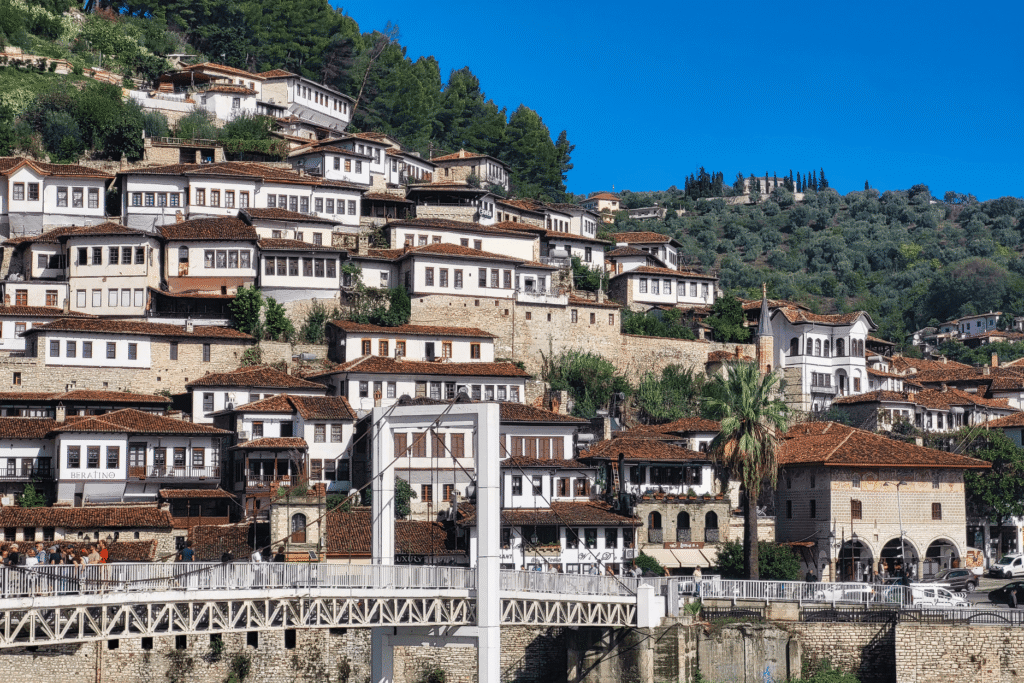
Standing at the crossroads of ancient civilizations, Berat emerges as one of Albania’s most treasured destinations, beckoning travelers with its iconic white facades cascading down dramatic hillsides. My 3 days spent wandering through this UNESCO World Heritage Site revealed why locals affectionately call it the City of a Thousand Windows—each Ottoman-style house seeming to peer out across centuries of history. Located in central Albania, this medieval town sits less than 2 hours south of Tirana, making it accessible yet blissfully removed from the bustling streets of the capital.
Planning your visit requires understanding what makes this underrated city genuinely special. While many tourists rush along the long pristine coastline toward the Albanian Riviera, those who venture inland discover cultural heritage woven into every cobblestone and archway. After seeing some lesser sights elsewhere in the country, I’ll admit I arrived skeptical, yet Berat’s beauty and interesting history completely surprised me. The stunning nature surrounding this small, underrated city offers everything from wine tasting among rolling vineyards to rafting adventures through the dramatic Osum canyon, where centuries old ruins whisper tales of Byzantine and Ottoman periods.
This complete travel guide emerged from genuine exploration—not just checking boxes on a tourist itinerary. From must-see attractions to hidden restaurants where locals gather, from boutique accommodations tucked into historic quarters to essential travel tips that make navigation seamless, I’m sharing the authentic experience of someone who quickly came to love what felt like Albania’s best-kept secret. Whether you’re considering a day trip or, as I’d strongly suggest, planning a minimum of 2 nights to truly absorb the atmosphere, this guide will help you discover why Berat became one of my favorite cities across an entire month spent traveling around Albania.
A Brief History of Berat
Table of Contents
ToggleTracing Berat’s history back over 2,400 years reveals layers of civilization that few European cities can match. The ancient Illyrians first recognized this strategic position, establishing settlements that would eventually attract Romans who understood the value of controlling this vital passageway through Albania’s mountainous interior. What began as the Greek settlement of Antipatrea in the 4th century BC evolved through countless invasions and cultural shifts, each leaving indelible marks on the city’s character.
The Byzantine era brought the city its flourishing period, when the hilltop fortress Kalaja was fortified into the heart of life that still pulses within those ancient walls today. Within this key stronghold, homes, churches, and markets created a self-contained world where vibrant frescoes revealed the community’s deep religious and artistic roots. The Citadel became more than military architecture—it embodied the resilience of a people determined to preserve their identity despite numerous rulers coveting their strategic position.
When the 15th century ushered in Ottoman rule, significant transformation reshaped Berat’s architectural beauty in ways that define its iconic appearance today. Islamic schools and mosques appeared alongside the existing Byzantine churches, while characteristic houses with their distinctive tiered, white homes began cascading down the hillside like a frozen waterfall. This blending of Ottoman houses with Byzantine structures created the harmonious past that earned the historic city center its UNESCO World Heritage Site status in 2008—recognition that underscores not just architectural merit but the city’s remarkable ability to harmoniously blend eastern and western cultural influences.
Perhaps the most noteworthy aspect of this layered history involves Berat’s longstanding tradition of religious harmony. Walking through diverse historical influences today, you’ll encounter Orthodox churches, several historic mosques, and even a few Catholic places of worship—all coexisting peacefully as symbols of the city’s cultural diversity. The two main neighborhoods, Mangalem as the former Muslim quarter and Gorica as the Christian quarter, sit on opposite sides of the Osum River, mirroring one another in what feels like a physical manifestation of coexistence. Despite the challenges of the 20th century, including political upheavals and communist rule, Berat retained its historical charm, standing today as a testament to Albania’s complex and beautiful heritage.
Visit/Wander Through Berat Castle
Perched dramatically atop a hill overlooking the valley below, Berat Castle—locally known as Kala—immediately establishes itself as one of the largest and most important castles in Albania. My absolute favorite activity during the entire visit involved wandering these ancient walls, where the panoramic views alone justify the 15-minutes steep, cobblestoned street climb from the city center along Rruga Mihal Komnena. Yet what truly sets this 13th century fortress apart as uniquely alive goes far beyond its amazing views or fascinating history.
Unlike castles across the world that stand empty as museum pieces, Berat Castle remains one of the few inhabited castles where locals continue to reside within ancient walls that have witnessed modifications and expansions under Byzantine, Bulgarian, and Ottoman rulers. Wandering through stone-paved alleys here means experiencing a genuine blend of history and contemporary life—locals going about their daily business, homes filled with the sounds and smells of life, shops selling local goods, and even cars somehow navigating the narrow passages. I must say, it’s really surprising, like discovering a second old town hidden within fortress walls, complete with houses, churches, mosques, shops, restaurants, hotels, and so much more.
Within the citadel, several must-see sights demand attention. The Red Mosque stands as the oldest Islamic structure in Berat, its red brick construction dating to near the end of the 15th century, though experts debate the actual date. Not far away, you’ll find the White Mosque, built during a similar time before being destroyed during Ottoman invasions—its ruins still worth visiting today. The Holy Trinity Church offers wonderful views of the mountains, Osum River, and valley, while the Onufri Museum houses its renowned collection of Byzantine icons. Don’t miss the Water Cistern either, or the viewing platform on the south side where sunset transforms the landscape into something magical.
Getting to the castle requires a bit of a hike—about 20 minutes following the main street from Mangalem that brings you straight to the front gate. The entrance fee officially costs 300 Lek (€3 per person), with opening hours listed as 9AM to 6PM, though because residents live inside the castle walls, it’s technically open 24-hours per day. This gives you great options to visit early in the morning or at night as well, avoiding crowds while getting great views of Berat in different lights. When I visited, the ticket booth was closed, so you may not have to pay—though I also took a lesser known route up following Rruga Shkembi and didn’t see any place to collect fees anyway. We spent over 5 hours exploring this place, simply because the atmosphere was incredible and there was so much to be explored. Trust me, it’s worth every step of that steep climb, and this special place felt truly unique amongst my long list of visited Balkan fortresses.
Explore Mangalem
The historic Mangalem quarter forms the iconic City of a Thousand Windows skyline that makes Berat one of the most photographed spots in Albania. Those famous cascading white 18th and 19th century Ottoman-style houses dotting the hillside create a picturesque scene that somehow improves with every viewing angle. What initially appears as simple aesthetic beauty reveals itself as a living neighborhood where history breathes through narrow cobbled streets that wind past mosques, shops, and beautiful restaurants.
Historically, Mangalem evolved as the predominantly Muslim quarter during the Ottoman era, though today the city as a whole represents a genuine blend of cultures and religions rather than maintaining distinct sectarian boundaries. Many of the city’s popular sights are located on this side, including the Ethnographic museum and the pathway up to Berat Castle. As you wander your way through these narrow streets, you’ll pass several mosques including the Lead Mosque and King’s Mosque—a notable example of Ottoman architecture. Every evening, the call to prayer echoes through the town, creating a truly unique cultural experience that connects present-day life with centuries of tradition.
Amazing things to do in Mangalem extend beyond architecture appreciation. I suggest stopping by the shop called Qendistari Berati, a craft shop owned by local women who sell handmade wool rugs and lace—I bought a beautiful wool rug that the grandmother had woven by hand, and it remains one of my most cherished souvenirs. The King Mosque deserves a proper visit, while the peaceful atmosphere of the Halveti Tekke offers moments of quiet contemplation. Don’t just rush through; instead, explore the narrow, cobbled streets at a pace that allows you to experience the peaceful atmosphere and observe daily rhythms.
Strolling along the Osum River provides scenic views, particularly when approaching the historic Gorica Bridge, which offers a different perspective of the city’s cascading architecture. And it’s simply a must to sit down in one of the beautiful restaurants for some delicious Berati Steak—I chose Friendly House and the food was incredible. In fact, I loved Berati steak so much that later the same day I sat down in Restaurant Ansel to taste this delicious Cordon-Bleu-like steak again. Sometimes the best travel experiences involve embracing repetition when you’ve discovered something genuinely wonderful.
Explore/Get Lost in the Gorica Neighborhood
Across the Osum River from the bustling Mangalem quarter, Gorica presents itself as the city’s less-touristy neighborhood—a place where you won’t find busy hotels or bustling streets, but rather a quiet, authentic glimpse into local Albanian life. This picturesque neighborhood completely stole my heart, reflecting the City of a Thousand Windows idea from the opposite perspective while maintaining its own distinct character.
Back in the day, Gorica developed as the primarily Christian counterpart to Mangalem during times when religious communities in Berat often lived in distinct neighborhoods. Hence you’ll find several Orthodox churches, including St. Spiridon Church, scattered throughout this cozy part of town. The side of the river here is filled with stone homes, many narrow, cobblestone alleys, and a few restaurants hidden here and there like secrets waiting to be discovered. I enjoyed walking around Gorica for hours, getting a genuine taste of daily life without the self-conscious performance that sometimes emerges in heavily touristed areas.
My favorite restaurant in particular deserves special mention: Lorenc Secret Garden Bar & Restaurant. To get to this restaurant, you first need to walk up some hidden stairs, then go through a house, and finally you’ll arrive in this hidden gem where great food meets live music (sometimes) in a great atmosphere perfect for a traditional meal. The experience felt like being welcomed into a local family’s private celebration rather than just another tourist transaction.
But don’t stop at restaurants—climbing up the steep cobblestone street behind Hotel Muzaka will get you all the way to the top of Gorica Hill, where you can admire spectacular views of the city, Berat Castle, and the mountains in the backdrop. This viewpoint is definitely a must, offering one of the best panoramic sunset views available anywhere in the area. The hike only takes a maximum of 30-minutes and proves absolutely worth it for the views. To find yourself truly immersed in Gorica means accepting invitations to get lost among the hidden guesthouses and narrow alleys, embracing the cozy part of Berat that reveals itself slowly to those willing to wander without strict itinerary constraints.
Visit the Church of St. Spiridon
Located in the heart of the historic Gorica district, the Church of Saint Spiridon stands as a reminder of the city’s rich Christian heritage. This small yet significant religious site dates back to the 18th-19th century, dedicated to St. Spiridon—a revered saint in the Eastern Orthodox tradition known for his miracles and devotion. While not as spectacular as other churches scattered throughout Berat, this Orthodox church offers an intimate and authentic glimpse into the town’s religious heritage that larger, more ornate structures sometimes sacrifice for grandeur.
Inside, you’ll find frescoes and ornate details that, though aged and somewhat faded, still communicate the careful artistry of their creation. It’s small and takes just a few minutes to visit, but those minutes offer a quiet, spiritual stop for anyone exploring the rich cultural layers of this historic city. The church isn’t always open to visitors, but if you get a chance, make sure to stop and peek inside.
What really makes the visit worth coordinating involves the fantastic views across the river from the top of the hill where the church sits. From this vantage point, you can enjoy sweeping panoramas of Mangalem’s cascading houses while appreciating how the two neighborhoods mirror each other across the Osum River. The perspective helps contextualize Berat’s unique geography and the historical separation—and ultimate coexistence—of the Christian and Muslim quarters that define the city’s cultural identity.
Enjoy Views from/Cross the New Bridge of Berat
For the most breathtaking panoramas of the Ottoman-style houses in Mangalem, crossing the New Bridge of Berat delivers the best viewpoint available from ground level. This modern bridge, just a quick walk from most hotels in the city, offers spectacular views of the City of a Thousand Windows without requiring any strenuous hiking or navigation through confusing streets.
From the Mangalem Quarters, you’ll find this beautiful bridge (the new bridge) that will give you the best views of those iconic white facades climbing the hillside. The perspective here captures what makes Berat visually extraordinary—the sheer density of traditional architecture cascading upward, each house with its distinctive large windows that seem to multiply as your eyes travel up the slope. After crossing the bridge, you’ll find yourself in Gorica, perfectly positioned to make your way to the Gorica Bridge (the old bridge) and continue your exploration.
The best time of day for photographs here is right before sunset, when the city lights up in beautiful golden hues that transform the white walls into warm, glowing surfaces. The modern bridge provides excellent vantage points of both Gorica and Mangalem, making it a great spot to get close up views of the city during sunset hour without the crowds that sometimes gather at more famous viewpoints. I found myself returning to this bridge multiple times during my stay, as the scene never quite looked the same twice—morning light, afternoon clouds, evening glow, each moment offering its own unique interpretation of Berat’s timeless beauty.
Cross the Gorica Bridge (Old Bridge)
Constructed in the late 18th century, the Gorica Bridge—also known as the Old Bridge—stands as an incredible sight to see and a physical connection between Berat’s two historic hearts. This stone bridge connects the Mangalem and Gorica neighborhoods with its elegant stone arches, demonstrating engineering and aesthetic sensibilities that have withstood the test of time for over two centuries.
With its elegant arches and historical significance, the Gorica Bridge represents one of the top things to do in Berat, not merely as a functional crossing but as a monument to the city’s past. For generations, this structure acted as a vital passageway where merchants, locals, and travelers crossed its path throughout the ages, conducting business, visiting family, or simply moving between the Muslim and Christian quarters in their daily routines. Today, it’s a symbol of Berat’s harmonious past and worthy of a visit both for its architectural beauty and what it represents about coexistence and connection.
Walking across the old bridge offers a tangibly different experience than using the modern crossing. The worn stones beneath your feet have supported countless footsteps, and the narrower passage forces you to slow down, to notice details, to feel the weight of history in a way that contemporary construction simply cannot replicate. The purpose of connecting these two distinct neighborhoods remains as relevant today as when the bridge was first built—Gorica and Mangalem still retain their individual characters even as the city has evolved into a more integrated whole. Standing on this bridge at the right moment, watching light play across the Osum River while traditional houses rise on both banks, you understand why Berat earned its UNESCO designation and why it’s definitely worth making this crossing part of your exploration.
Visit the Red Mosque & White Mosque
Within the stone walls of Berat Castle, you’ll find two significant and historic mosques that offer windows into the Islamic heritage woven through the fortress’s history. The Red Mosque stands as the oldest Islamic structure in Berat, and experts believe it was constructed near the end of the 15th century, although the actual date remains up for debate among historians. Made of red brick that gives the structure its name, it once featured a complete prayer hall that served the castle’s Muslim residents.
Not far from the Red Mosque, the White Mosque presents a more fragmentary story. Built during a similar time in the 15th century, this mosque was destroyed during later Ottoman invasions—a reminder that even periods of Islamic rule were not monolithic or peaceful. Yet you can still visit its ruins today, and these remnants communicate their own kind of eloquence about the passage of time and the impermanence of even religious structures.
Both mosques deserve attention not just as architectural specimens but as evidence of the religious diversity that characterized life within the castle walls. The fact that residents maintained multiple mosques even within the relatively confined space of the fortress speaks to the importance of Islamic practice in the community’s daily life. Today, these structures (or their remains) offer quiet spaces for contemplation, away from the busier areas of the castle where tourists congregate around more intact buildings. I found something particularly moving about the White Mosque’s ruins—the way nature has begun reclaiming the space, vines growing through what were once walls, creating an accidental garden within what was designed as sacred architecture.
Onufri Iconographic Museum
Also located within the fortress of Berat Castle, the Onufri Iconographic Museum—sometimes called simply the Onufri Museum—houses itself in the former Church of the Dormition of St. Mary, creating a perfect marriage of sacred space and artistic celebration. This treasure trove of religious art features hundreds of religious artworks and icons dating from the 14th to 20th centuries, showcasing an impressive collection of Byzantine and post-Byzantine icons alongside liturgical objects that illuminate centuries of Albanian religious practice.
Named after the renowned 16th-century icon painter Onufri, the museum pays homage to his legacy and the broader tradition of Albanian iconography. This famous Albanian icon painter was celebrated for his distinctive use of a bright red hue—now called “Onufri’s Red”—and elaborate artistic techniques that set his work apart, particularly through his mastery of vibrant colors, expressive features, and intricate details. His use of this unique red hue became so distinctive that art historians can often identify his work from color alone.
Inside the museum, you’ll discover many of Onufri’s works alongside artworks by other master iconographers, including Nikolla, who was Onufri’s son and carried forward his father’s techniques while developing his own style. In addition to the icons themselves, you can admire beautifully preserved wood-carved iconostases, embroidered textiles that once adorned churches throughout the region, and ancient manuscripts that reveal the intersection of artistic and literary traditions. The museum’s highlight remains those distinctive icons, recognized for their ability to communicate religious narratives through visual means that transcend language barriers.
The museum costs 400 Lek ($4 or €4) per person for entrance, and you can also rent an audio guide for an additional 100 Lek ($1 or €1)—I highly recommend getting the English audio guide, as it provides context that transforms viewing from simple appreciation to genuine understanding. The museum opens at different hours depending on the season; you can visit the official museum website for up-to-date seasonal hours, but generally from May 1 to September 30, hours run 9 AM to 6 PM, while from November 1 to April 30, they close earlier at 4 PM, with Sundays operating from 10 AM to 3 PM. Plan your Berat Castle visit to include sufficient time here—this isn’t a space to rush through.
Church of the Holy Trinity
Located within the fortress of Berat, the Church of the Holy Trinity offers wonderful views of the mountains, Osum River, and the valley below that make the visit worthwhile even before you consider the structure’s historical and architectural significance. This 13th century church stands as one of the best examples of Byzantine architecture in Berat, demonstrating construction techniques and aesthetic principles that have survived centuries with remarkable integrity.
The interior of the church isn’t always open for visitors, as preservation concerns sometimes necessitate limiting access. But if you get a chance, take a peek inside to witness the church’s most significant features: interior frescoes depicting scenes from the Bible. Although some have faded or been damaged over time, these paintings remain a testament to the intricate artistry of medieval Albania, showing how religious instruction and artistic expression intertwined in ways that served both spiritual and cultural purposes.
What makes this church particularly special involves its position within the castle complex. Unlike isolated rural churches, the Holy Trinity sits within a fortified community, suggesting that religious life formed an integral part of the castle’s defensive identity—not just a spiritual addition but a core component of what made the fortress a complete, self-sustaining settlement. The wonderful views from this location weren’t accidental; Byzantine builders understood the power of positioning religious structures where the surrounding landscape could inspire contemplation and reinforce the sense of divine presence in the natural world.
Ethnographic Museum
Located in the Mangalem quarter, the Ethnographic Museum establishes itself as one of the best things to do in Berat for anyone interested in understanding how people actually lived within these historic structures. Housed in a beautifully preserved 18th-century dwelling, the museum offers a fascinating glimpse into Berat’s heritage and traditions over the centuries, replicating a typical Ottoman-style Berat residence complete with authentic furniture, household items, and intricate interior details.
The museum’s architecture alone—with its wooden ceilings and stone floors—adds significant charm, making visitors feel transported backward in time to when these spaces hummed with daily domestic activity. Walking through the various rooms, each designed to reflect different aspects of Albanian life from the kitchen and living quarters to workshops and storage areas, you gain appreciation for how families navigated their daily existence within spaces that served multiple overlapping functions. This wasn’t how modern homes work, with specialized rooms for narrow purposes, but rather fluid spaces adapted to whatever the moment required.
The museum also pays homage to the craft traditions of Berat, showcasing hand-woven textiles, intricate embroidery, traditional costumes, and artisanal tools that reveal the sophistication of local production. A wide collection of artifacts includes traditional clothing, household items, and tools used in everyday life—in total, over 1,300 objects on display, each contributing to a comprehensive picture of how Berati families lived, worked, celebrated, and endured across generations. This makes the museum a must-visit for those interested in Berat’s cultural heritage beyond just architectural exteriors.
The museum costs 300 Lek ($3 or €3) per person for entrance. Opening hours differ depending on the season—you can visit the official museum website for up-to-date seasonal hours, but generally from May 1 to September 30, the museum operates from 9 AM to 6 PM, while from November 1 to April 30, hours shift to 9 AM to 4 PM, with Sundays running from 10 AM to 3 PM. The relatively modest entrance fee represents extraordinary value considering the depth of insight the museum provides. I found myself returning to certain rooms multiple times, noticing new details with each pass—the way light fell through traditional windows, the worn patches on carpets that indicated where generations of feet had walked, the careful repairs visible in embroidery that someone valued enough to preserve rather than discard.
Join the Locals on Boulevard Republika
Boulevard Republika, located in the modern part of Berat where the historic old town transitions into contemporary Albanian life, presents a lively street bustling with locals and tourists alike who come to see and be seen during the evening promenade. This special place connects the old part to the new part of the city and is lined with the cutest cafés and restaurants, mini-markets, and local shops that serve both visiting travelers and resident families going about their daily business.
One of my favorite cafes to wind down after a busy day exploring the castle and museums is Shtëpia e Kafes Gimi—seriously, this café appeared on the Boulevard like an answer to exhausted prayers. They serve everything from coffee and ice cream to crepes, local cakes, sweets, pancakes, and much more. I recommend trying one of the cakes; my favorite was the orange cake soaked in syrup, though honestly every kind of coffee and sweet I sampled proved delicious. I highly recommend taking a sweet break here when your feet are protesting and your mind needs a pause from processing historical information.
In the evening, you can join in the age-old tradition of “xhiro,” where local families and friends come together to enjoy a leisurely evening promenade, chatting and soaking in the evening air as they stroll back and forth along the Boulevard. This represents one of the best ways to get a peek into daily life in Berat beyond the tourist experience—watching young couples walking hand in hand, older residents greeting neighbors they’ve known for decades, children running ahead of patient parents, everyone participating in this shared ritual that costs nothing but brings communities together through simple presence and movement.
The atmosphere along Boulevard Republika shifts throughout the day. Mornings bring a quieter energy, with cafés serving breakfast to people preparing for work or school. Afternoons see a mix of shoppers and those taking coffee breaks. But evening is when the Boulevard truly comes alive, transformed into something between social club and outdoor theater, where the performance is simply life itself happening in public view. Even if you’re staying in the historic quarters, make sure to venture down to join the locals on Boulevard Republika at least one evening—it will ground your visit in contemporary Albanian culture rather than leaving you with only historical perspectives.
Watch the Sunset Over the Historic City
Experiencing golden hour in Berat ranks among the most rewarding things to do during your visit—the city is a spectacle in itself, but adding the sunset transforms the experience into something genuinely magical. One of the most rewarding experiences involves watching the sun go down on the city, when the wonderful time of day creates perfect conditions for photographs or simply sitting down to enjoy a delicious glass of wine while the light performs its daily show.
The three best locations to watch the sunset offer different perspectives on Berat’s beauty. First, Berat Castle (Kala) provides options—head to the platform on the far end of the fortress or the viewing platform on the south side for unparalleled views of Gorica, the Osum River, and the mountains in the distance. Plan to coordinate your visit to the castle a few hours before sunset so you don’t have to walk up that steep hill twice. I made that mistake on my first day and deeply regretted it by the second climb.
The New Bridge offers a second excellent option, with this modern bridge providing excellent vantage points of both Gorica and Mangalem. It’s a great spot to get close up views of the city during sunset hour without any hiking required—perfect if you’ve already exhausted yourself climbing to the castle earlier in the day. The position allows you to watch how the changing light affects both sides of the river simultaneously, creating a dynamic show as shadows lengthen and colors deepen.
For the best panoramic sunset views, hike up to the top of Gorica Hill, where you’ll get amazing views of Mangalem and the valley below. The hike only takes a maximum of 30-minutes and is absolutely worth it for the views. To find the route, I suggest downloading the app Maps.Me and searching for “viewpoint”—the trail isn’t always obvious from ground level, but the app will guide you correctly. On a good day, you simply must enjoy the sunset in Berat from at least one of these locations.
And then after the sun has set, make sure to explore the city in the dark. There are many places you can sit down for a nice refreshing drink while discovering spooky back alleys that take on completely different characters once evening shadows claim them. The play between lit windows and dark streets creates atmospheric scenes that photographers love and that anyone with a sense of drama will appreciate. Night reveals a different Berat—quieter, more intimate, with sounds carrying differently through the narrow streets and the City of a Thousand Windows becoming quite literally illuminated from within.
Take a Day Trip to Osum Canyon
Located 1.5 hours southeast of Berat (about 60 kilometers, depending on which route you follow), Osum Canyon stands as one of Albania’s most breathtaking natural wonders and the country’s largest and most stunning canyon. Stretching over 26 kilometers, this geological marvel features dramatic rock formations, steep cliffs, cascading waterfalls, and crystal-clear waters that create one of the most unique and stunning places in Albania—a perfect day trip from Berat that offers a fantastic way to experience Albania’s natural beauty beyond historic architecture.
To get there, you can drive yourself if you’ve rented a car or join a guided tour that handles transportation logistics. The trip takes around 1.5 hours by car, following the SH72 road towards Çorovodë, on roads that range from well-paved to somewhat challenging depending on exactly where you’re going. Tours often include transportation, lunch, and guided exploration of the canyon, which can prove valuable if you’re uncertain about navigation or want expert commentary. I was bit chilly when I visited in May, so I opted to drive to the canyon, stop at all the viewpoints, and visit some of the highlights along the way rather than committing to a full rafting adventure.
If you’re visiting between February and June (or March to June, with exact timing depending on rainfall), you can go on a full-day rafting adventure through the canyon. The tours depart from Berat and take you through rapids and under waterfalls as the river cuts through the canyon, creating a thrilling whitewater experience that gets your adrenaline pumping. During the summer, when water levels are high enough for white water rafting in early season but drop later, the river becomes low enough that you can walk through the river at certain points and go swimming in the water to cool off from the heat.
Once there, whether you’re rafting or not, you can hike along the canyon’s edge to take in breathtaking views of the dramatic cliffs towering above. Other highlights include the “Bride’s Hole” and “Love Waterfall,” both offering spectacular photo opportunities and chances to cool off in natural pools. Alternatively, if you’re visiting during the cooler months when rafting isn’t available seasonally, you can opt to go hiking around the canyon or simply visit some of the viewpoints like I did—which proved absolutely worth the drive.
Make sure to pack your own lunch, as there aren’t many facilities available in the area—this isn’t a developed tourist site with restaurants and shops but rather a natural landscape where infrastructure remains minimal. Pack comfortable shoes, water, and snacks for the trip. Don’t forget a swimsuit if you’re rafting or want to cool off in the river during summer visits. Don’t have a car but want to visit Osum Canyon? Check out the full-day Osum Canyon & waterfall tour from Berat, or book your tours locally or in advance on GetYourGuide, where options include various combinations of canyon exploration, waterfall visits, and even connections to other regional attractions.
Go Wine Tasting
The region surrounding Berat is known as one of the best wine regions in Albania, blessed with Mediterranean climate, rich soil, and generations of expertise passed down through families who’ve cultivated grapes on these hills for centuries. This creates a prime spot for wine tasting that shouldn’t be considered optional—with 3 popular wineries around the city of Berat, going wine tasting here is essentially non-negotiable for anyone who appreciates good wine or wants to understand Albanian agricultural traditions.
Several local wineries located within 15-30 minutes of Berat prove noteworthy: Çobo Winery, Nurrellari Winery, and Alpeta Winery all offer distinct experiences. During your visit, you can enjoy a guided tour of facilities with tastings at the end of the tour, learning about production methods while sampling the results. I suggest visiting 1, 2, or all of these wineries depending on your time and interest level—though pace yourself if you plan to drive afterward.
I personally chose to go to Çobo Winery because it was on our way to the next destination, and we loved it! At Çobo Winery you can choose between a small tasting and a big tasting. The small tasting includes 1 white wine, 2 red wines, and a delicious dark Raki, costing €25 (in 2024)—a reasonable price for the quality and quantity. The big tasting includes completely different wines: also 1 white wine, 2 red wines, plus a sparkling wine, wine brandy, and some more snacks than the small tasting. The big tasting serves more expensive and prize-winning wines, therefore costing €45 (in 2024).
Because we’re curious as monkeys, we did one small and one big tasting together, tasting pretty much every wine between the two of us. Luckily there was a camping next door, because driving afterward was a complete no-go—responsible planning that I’d recommend to anyone. Believe me when I say every single wine was charmingly delicious in its own unique way. We even left with plenty of bottles to enjoy another time, carefully packed in our luggage to transport home these liquid memories of Berat’s surrounding countryside. I loved Çobo Winery and highly recommend doing a tasting there, though I’m sure the other wineries offer equally wonderful experiences for those who make the time to visit them.
Eat Delicious Albanian Cuisine
Berat is one of the best places to try traditional Albanian cuisine—the restaurants are top-notch, and everything I ate was fantastic throughout my stay. In fact, out of an entire month spent traveling around Albania, some of the best local food I encountered appeared on plates in Berat restaurants, where family recipes and fresh local ingredients combined to create memorable meals.
Here are some local dishes you should not miss when visiting: Tavë Kosi, often referred to as the national dish of Albania, is a baked dish made of lamb and rice, covered with a yogurt and egg sauce that creates a creamy, tangy, and hearty meal unlike anything else. Fërgesë—one of my favorite Albanian dishes—presents a spicy blend of peppers and tomatoes baked with cottage cheese, often seasoned with chillies and eaten with bread to create a rich dish that offers a delicious burst of flavors. Qofte are spiced meatballs, usually made from minced lamb or beef, seasoned with herbs and then fried to perfection—crispy on the outside and tender within, they’re a popular meal throughout northern and central Albania. Speca të Mbushura, a tasty dish made up of baked peppers stuffed with rice and vegetables, appears as a classic you’ll find on most menus.
For those with a sweet tooth, Kadaif is a must-try dessert consisting of thin noodle-like pastry soaked in sugar-based syrup, often layered with nuts for textural contrast. Byrek, a popular dish throughout Albania, is a pie made with layers of dough that can be filled with cheese, vegetables, or meat—crispy, flavorful, and a go-to for any meal from breakfast through dinner.
I suggest trying a sampling of dishes at a couple of restaurants in Berat to get a proper taste of Albania. Most portion sizes are small enough that you can order 3-4 dishes for two people to share, allowing you to experience variety rather than committing to a single large entrée. This approach transforms dining into exploration, letting you discover which flavors resonate most with your palate while ensuring you don’t miss regional specialties that might not appear on menus elsewhere in the country.
Map of Things to do in Berat
To help you navigate your way around Berat city, I’ve compiled a map of all the sights and restaurants listed in this itinerary—though I should note that getting slightly lost in Berat sometimes leads to the best discoveries, so don’t let navigation tools prevent spontaneous wandering. To save the map to Google Maps on your phone or computer, click the star next to the title. Once you do this, you’ll be able to find the map in your “saved maps” list on your phone, accessible even when you’re walking through areas with spotty cellular coverage.
To see a list of all the items on the map, click the box with arrow on the left side of the screen. This expands a sidebar showing every pinned location with brief descriptions that help you identify what each marker represents. To enlarge the map for better viewing or more detailed planning, click the box on the right that opens the full-screen version. I found this particularly useful when sitting in a café with coffee, planning the next day’s route while my feet recovered from the previous day’s adventures through Mangalem’s steep streets and castle climbs.
How Long to Spend in Berat: 1 & 2-Day Berat Itinerary
Many people visit Berat on a day trip from Tirana, squeezing the highlights into a rushed few hours before returning to the capital. While seeing Berat in one day is definitely doable—you can hit the main sights with efficient planning—I suggest spending a minimum of 2 days and 2 nights in Berat to make the most out of your time here. Visiting Berat is like stepping into the past and deserves not to be rushed through as just another checkbox on a Balkan itinerary.
I spent a total of 3 nights and 2.5 days in Berat, with one day being dedicated to a day trip to Osum Canyon. It felt like just the right amount of time to take it slow in the city, see some of the surrounding area, and still feel like I’d genuinely experienced the place rather than just photographed it. The extra time allowed for those unplanned moments—a conversation with a shopkeeper, an unscheduled second dessert at a café, the luxury of returning to a viewpoint at a different time of day to see how changed light transformed the scene.
Here’s a practical 1-day & 2-day Berat Itinerary that covers the essential experiences:
Day 1 in Berat begins with a morning exploring the Gorica Bridge, wandering through the Gorica neighborhood to get a feel for the quieter side of the river, visiting the Church of St. Spiridon for its intimate religious atmosphere and views, then heading to the Ethnographic museum to understand how families lived in these historic structures. The afternoon should include an Albanian lunch at one of the traditional restaurants—don’t rush this meal—followed by the climb to Berat castle where you’ll explore the Red & White Mosque, spend substantial time in the Onufri Iconography museum with that audio guide, and visit the Holy Trinity Church. Evening brings sunset at either the Berat castle viewpoint or from Gorica Hill, then dinner at a local restaurant where you can recover from all that uphill walking.
Day 2 in Berat takes you beyond the city itself. Morning means driving to Osum Canyon to visit the viewpoints and experience Albania’s dramatic natural landscape. The afternoon continues at the canyon with either hiking or swimming depending on the season and your energy level, plus either a visit to Bogove waterfall or a stop at a winery on the way back to Berat—I chose the winery option and have zero regrets. Evening brings dinner either in Berat proper or at a winery if you’ve arranged for transportation that allows you to enjoy wine without driving concerns.
This itinerary provides structure while leaving room for spontaneity. If a restaurant seems particularly appealing, linger longer. If a viewpoint captures your imagination, return at a different time of day. The framework exists to prevent you from missing essentials, not to regiment every moment into scheduled efficiency that drains travel of its pleasure.
How to Get to Berat
Whether you’re planning to travel to Berat by rental car, public transportation, or by joining a group tour, multiple options exist to reach this inland gem. The closest airport to Berat is Tirana International Airport (TIA), which sits 1 hour and 45 minutes drive away—close enough for a day trip, though I’d argue against limiting yourself to just one day here.
The easiest option to get to Berat involves renting a car from the airport, as this provides the most flexibility for exploring not just Berat but the surrounding wine regions and natural areas like Osum Canyon. The second best option is to travel by bus, which departs several times throughout the day from the bus station in Tirana, though this limits your ability to visit outlying attractions without joining tours.
Bus to Berat from Tirana operates from the main Tirana bus station, where many direct routes go to Berat daily between 5:40am and 5:30pm. The cost for this route runs around 500 Lek ($5) each way and must be paid in cash to the driver—bring small bills. The journey takes 2 hours and 15 minutes under normal traffic conditions. If you’re arriving from Tirana International Airport, you’ll have to first get a bus from the airport to the main bus station, which costs 400 Lek ($4) and takes 30 minutes. Add this connection time to your total travel calculation.
From Sarande to Berat, only a couple of direct routes operate between Saranda and Berat each day. The bus ride takes 4 hours in total and departs at 8:00 AM and 2:30 PM from Saranda. The cost for a one-way bus ticket is 1,400 Lek ($14) and must be paid in cash to the driver. For updated bus timetables and routes, check out the Gjirafa Travel website, as schedules can shift seasonally or without much advance notice. Minimal information about these buses appears online, so I recommend buying your ticket at the counter, where staff will also give you information on which bus to take and current times.
Note that the Berat Bus Terminal is located outside of the city center. It’s either a 30-minute walk to Berat old town—manageable if you’re traveling light but challenging with heavy luggage, especially in summer heat—or you can take a taxi or hop on a local bus to the center. Clarify the local bus route before assuming you understand where it goes, as signage isn’t always obvious to non-Albanian speakers.
Driving to Berat represents what I highly suggest for anyone spending a few days in Albania. The road from Tirana to Berat is well-paved, wide, and easy to drive on—I was on the fence about renting a car in Albania because of all the horror stories I’d heard from other travelers about aggressive driving and poor road conditions. In the end, I rented a car for a month in Albania and was so happy that I did. To my delight, I found that the roads were all well-paved and not as busy as I was expecting, at least on the Tirana-Berat route.
The drive takes 1 hour and 45 minutes without traffic to get to Berat from Tirana. From the coastal city of Vlore, it’s only a 1.5-hour drive, while from Saranda it’s 3 hours—all on decent roads that don’t require specialized driving skills. At only 120 kilometers from the capital city Tirana, you can easily reach Berat by car in under 2 hours under normal conditions.
Parking in Berat is quite easy, with Gorica parking garage in the middle of town and camper parking Berat as a good alternative for those traveling in larger vehicles, though parking can be a bit tricky in the historic quarters themselves. You’ll have to park on the main road, Rruga Antipatrea, and the spots fill up pretty quickly during peak tourist season. Since the city is built on a hill, there’s no parking available next to most hotels—this isn’t like parking in a flat modern city. I suggest reaching out to your hotel in advance and asking if they can reserve a spot for you or provide guidance on the nearest reliable parking.
I rented my car through Discover Cars for the month-long road trip through Albania and was 100% satisfied with the customer service and care they provided. It’s my go-to site for car rentals in Europe now, as I’ve only had positive experiences. If you choose to rent, make sure to check out Discovercars for the best prices and coverage options that protect you without unnecessary upselling.
Tour to Berat makes sense if you have limited time in Albania and are looking to do a day trip from Tirana. Then booking a group tour is the best way to go, handling all transportation and providing expert guide commentary. I suggest booking a full-day Tirana to Berat tour if you’re truly constrained by time. On the tour, you’ll visit some of the most significant sights in Berat with an expert guide who can provide historical context and answer questions. It’s also possible to book a tour to Berat from Tirana if you’re not too keen on renting a car—I personally think that Berat is perfect for spending a couple of days, but a day trip from Tirana could be a good alternative for those with inflexible schedules.
You can also reach Berat from Tirana’s South and North Bus Terminal, where buses leave every hour during the day. Book your highly-rated tour in advance through platforms like GetYourGuide to ensure availability during peak season.
Where to Eat in Berat
The restaurants in Berat are fantastic—this isn’t hyperbole but genuine assessment based on extensive sampling. In fact, some of the best local food I ate during an entire month spent traveling around Albania appeared on tables in Berat establishments. From traditional dishes prepared using generations-old recipes to home-cooked meals that taste like someone’s grandmother made them with love, here are a few of the best restaurants in Berat.
Homemade Food Lili stands as the top-rated restaurant in Berat, and for good reason. The restaurant is owned by Lili and his wife—Lili serves as the host while his wife is the cook, a division of labor that creates seamless hospitality. The food is some of the freshest and tastiest food in all of Albania, with ingredients that taste like they came from a garden that morning. I highly recommend making a reservation in advance via the phone number on Google Maps; you can either call or message via WhatsApp. During peak season, showing up without a reservation often means disappointment, as word has spread about this place.
Eni Traditional Food Berat offers another popular option, located near the Gorica bridge with a wonderful view looking over the river that enhances every meal with scenery. They serve classic Albanian food, and you really can’t go wrong with any dishes on their menu—I tried several across multiple visits and never encountered anything less than delicious. The portions are generous without being overwhelming, sized perfectly for sharing multiple dishes.
Friendly House, located in the busy center of Mangalem, serves everything from fresh salads to hearty Albanian food in an atmosphere that balances tourist-friendly with authentic local character. This is where I first tried Berati steak and immediately understood why everyone raves about it.
Since I had to work from laptops during the trip to Berat, I sat and ate in a lot of restaurants, giving me perhaps more dining experience than typical tourists rushing through. These were my favorites overall: Lorenc Secret Garden (that hidden gem in Gorica with the stairs through a house), Hotel & Traditional Food Ansel (where I returned specifically for more Berati steak), Solidarity Shop (which combines shopping with tasting), Shtëpia e Kafes Gimi (perfect for coffee and sweets), Ballkoni Gorices (great views), and Te Zalua inside the castle (convenient when you’re spending hours up there).
I recommend trying stuffed peppers, meatballs, and Fergese while in Berat—these dishes represent Albanian cuisine at its best, showcasing local ingredients and traditional preparation methods that have survived because they simply work. Don’t limit yourself to one restaurant, as each establishment brings slightly different interpretations to classic dishes, and part of the joy involves discovering which version speaks most clearly to your palate.
Where to Stay in Berat
Berat has many charming boutique hotels to choose from, with lots (and I mean LOTS) of charming traditional hotels and guesthouses scattered throughout both the historic quarters and more modern areas. Finding the right one for you is easy given the range of options across price points and location preferences.
I stayed at Beratino Hotel, which became one of my favorite places I stayed during the entire trip through Albania. The breakfast was delicious—not just continental basics but thoughtfully prepared dishes using local ingredients. The hotel staff was extremely kind and helpful, offering recommendations that led to some of my best discoveries in the city. I would highly recommend staying at Beratino Hotel during your stay in Berat, as the combination of location, comfort, and hospitality created the perfect base for exploration.
Hotel Ansel represents another top-rated boutique hotel in Berat that features traditional Ottoman style decoration and also comes with free breakfast. The building itself functions as a kind of living museum, showing how historic structures can be adapted to modern hospitality without sacrificing authentic character.
When I was in Berat researching accommodations, I stayed at Riverside Camping with a campervan, but one night I did a lot of research for a “romantic getaway” in Berat and found some of the most beautiful hotels that deserve mention: For the most romantic option, Ador Boutique Hotel offers an intimate atmosphere perfect for couples. For the most romantic experience in the castle itself, Berati Castle Hotel lets you wake up within those ancient walls, experiencing sunrise over the valley from your window. For budget-conscious travelers, Villa Park Berat provides quality accommodation without breaking the bank. For luxury seekers, Vista Boutique Hotel delivers premium experiences with all expected amenities.
With such charming traditional hotels and guesthouses available, spending a minimum of 2 nights here makes sense—you’ll want comfortable accommodations that feel like a refuge after days spent climbing hills and exploring museums. The hotels in Berat generally understand what travelers need, offering that balance of historic atmosphere and modern comfort that makes you want to linger rather than just crash and leave.
How Do You Get Around Berat?
The historical center of Berat is small enough that you can walk everywhere within the old town quarters. The only thing to be aware of: since the city is built on two hills, you will have to walk uphill to access some of the main sights—this is unavoidable given the geography that makes Berat visually spectacular in the first place.
For example, the Berat Castle is a 15-minute walk from the center up a steep hill that gets your heart pumping and your calves burning. You can always rent a taxi if needed, particularly if you’re traveling with elderly companions or anyone with mobility limitations. Local taxis are relatively inexpensive and drivers generally know the limited vehicle access points within the historic areas.
If you plan to take some day trips to places like Osum Canyon or the surrounding wineries, then the best option involves renting a car or joining a group tour to get around. I rented my car through Discover Cars in Albania, and it was extremely convenient for accessing some of the hard-to-get-to destinations that public transportation doesn’t serve well or at all. Having a car opened up possibilities for spontaneous stops at viewpoints, unscheduled winery visits, and the freedom to linger or leave according to my own schedule rather than bus timetables.
Within the city itself, though, your feet provide the best transportation. Walking forces you to notice details—architectural features, overheard conversations, the smell of bread baking—that you’d miss speeding past in a vehicle. The pace of walking matches the pace at which Berat reveals itself: slowly, layer by layer, with rewards for patient attention.
When is the Best Time to Visit Berat?
The best time to visit Berat falls during the spring and fall months, when weather is mild during this time of the year and crowds are much less overwhelming than during the summer peak season. Spring brings wildflowers and green landscapes still fresh from winter rains, while fall offers harvest season atmosphere and comfortable temperatures perfect for all-day exploration.
If you plan to go rafting in Osum Canyon, then you will need to visit between February and early June, as this is when water levels are high enough for white water rafting. Outside this window, the river drops too low for safe rafting, though it becomes perfect for swimming and wading. Plan accordingly based on which experience appeals more to you.
For those interested in winery visits and wine tastings, then the early fall months represent a great time to visit when the vineyards are at their height and the harvest has begun. You might even witness or participate in harvest activities, depending on exact timing and the winery’s openness to visitor involvement. The atmosphere during harvest season carries an energy that’s absent during other times of year, as the culmination of a year’s work arrives and the next year’s wine begins its journey from grape to bottle.
Summer brings heat that can make midday castle climbs more exhausting than enjoyable, plus crowds that sometimes overwhelm the narrow streets of Mangalem and Gorica. Winter, while quieter, brings shorter days that limit how much you can pack into daylight hours, plus some attractions operate on reduced seasonal hours from November 1 to April 30, as noted in museum schedules. The shoulder seasons of spring and fall offer the sweet spot of favorable conditions across multiple variables.
What is the Cost to Visit Berat?
Berat is a very affordable city to visit, especially compared to other destinations in Europe where similar historic atmosphere and UNESCO designation would command premium prices. Of course, the time of year you visit will greatly affect costs, with summer being more expensive than the shoulder season—you may want to consider this when choosing when to travel to Albania, as budget flexibility can sometimes determine whether a trip happens at all.
Here’s a breakdown of some of the costs to help give you an idea of the prices in Berat based on 2024 rates:
Accommodation: On average, you can find a hotel room for $50-$80 per night in quality boutique properties. Budget options like Villa Park Berat fall on the lower end, while luxury options like Vista Boutique Hotel push toward or above the upper range. This represents extraordinary value compared to similar quality accommodations in Western Europe.
Transportation: $25-$40 per day for a rental car, depending on the season and vehicle type. Local buses cost about $2.50 for a short ride within or between neighborhoods. Taxis charge reasonable rates by European standards. The bus from Tirana to Berat costs around 500 Lek ($5), making public transportation remarkably affordable for budget travelers.
Food: A meal costs anywhere between $5-$15 per person on average, with this range covering everything from casual lunches to nice dinners at the best restaurants. You can eat very well in Berat without straining your budget, and the small portion sizes mean you can order 3-4 dishes for two people to share, experiencing variety without overspending or overeating.
Attractions: Museum entrance fees typically run 300-400 Lek ($3-$4), representing minimal expense for the cultural value provided. Berat Castle costs 300 Lek, though the ticket booth may be closed. Wine tastings at places like Çobo Winery cost €25-€45 depending on which package you choose.
Overall, a comfortable day in Berat including hotel, meals, and attractions might cost $75-$120 per person, less if you’re budget-conscious and more if you’re indulging in luxury options and extensive wine tastings. This affordability means you can extend your stay without financial stress, choosing to linger an extra day or two when Berat captures your heart—which it almost certainly will.
Currency and Language
In Albania they pay with the Albanian Lek (ALL), but in many places the Euro is accepted too, particularly in tourist-oriented businesses that have adapted to international visitors who may not have exchanged currency. The exchange rate follows this pattern: 1 ALL equals approximately 0.01 Euro, meaning 100 ALL equals 1 Euro. This makes mental math relatively straightforward when comparing prices or converting between currencies.
The spoken language in Albania is Albanian, which sounds utterly unlike any other European language most travelers know—it’s part of its own distinct branch of Indo-European languages. English is often spoken by younger people who learned it in school or through exposure to international media, though fluency varies widely. I did experience that people in Albania are so kind they will go out of their way to communicate with you when there’s a language barrier, using hand gestures, drawing pictures, pulling up translation apps on phones, or finding someone nearby who speaks better English.
Don’t let language concerns prevent you from visiting. The warmth and helpfulness of Berati residents bridge communication gaps that might prove more frustrating in less welcoming destinations. A few basic Albanian phrases—”faleminderit” (thank you), “ju lutem” (please), “mirëdita” (good day)—earn appreciative smiles and demonstrate respect for local culture, even if your pronunciation makes native speakers wince.
How to Get to Berat
Getting to Berat isn’t difficult at all, particularly compared to more remote Albanian destinations that require navigating mountain passes or coastal routes. At only 120 kilometers from the capital city Tirana, you can easily reach Berat by car in under 2 hours on well-maintained roads. From the coastal city of Vlore, it’s only a 1.5-hour drive through changing landscapes. From Saranda, the journey extends to 3 hours but remains entirely manageable.
I do recommend renting a car in Albania, as it’s good to have the freedom to explore hidden gems like Berat at your own pace, stopping when something catches your eye rather than adhering to bus schedules. If you choose to rent, make sure to check out Discovercars for the best prices and coverage that protects you without unnecessary complexity.
Parking in Berat is quite easy, with Gorica parking garage in the middle of town providing reliable access, plus camper parking Berat serving as a good alternative for those traveling in vans or RVs. If you’re not too keen on renting a car, it’s also possible to book a tour to Berat from Tirana—I personally think that Berat is perfect for spending a couple of days rather than rushing through on a tour, but a day trip from Tirana could be a good alternative if your schedule simply doesn’t allow overnight stays.
You can also reach Berat from Tirana’s South and North Bus Terminal, where buses leave every hour during the day. There is minimal information about these buses online, frustratingly, so I recommend buying your ticket at the counter where staff will also give you information on which bus to take and current times. This personal interaction sometimes yields helpful tips about travel conditions or upcoming schedule changes that wouldn’t appear in any online resource.
How Many Days in Berat?
We originally wanted to stay in Berat for 2 nights, a plan that seemed generous compared to the day-trippers rushing through. But being flexible, we decided to stay 1 night more to explore more hidden gems the city offers—a decision I never regretted. Because there is so much to be explored here, I recommend having at least 2 full days in Berat to experience the place properly rather than just photographing it.
That extra day allowed for slower mornings, longer lunches, repeated visits to favorite spots at different times of day, and the mental space to let experiences settle rather than constantly rushing toward the next attraction. Stick around to the end of your planned visit and you’ll likely find yourself, as I did, considering whether you can somehow extend just one more night, one more morning of waking to those thousand windows catching light.
Explore Some of Berat’s Byzantine Churches
Aside from the big churches you’ll come across in the castle and main neighborhoods, Berat also holds quite a few historical Byzantine Churches worth checking out if you’re interested in ancient religion and architectural development. Some of these churches include St Mary of Blachernae Church, Church of the Holy Trinity (already discussed above), Vlacherna Church, and Church of St. Michael—each representing different periods and styles within the Byzantine tradition.
I recommend visiting at least one of these churches to get some incredible insights into ancient religion and how Christian practice evolved in this region over centuries. These aren’t massive cathedral structures but rather intimate spaces designed for smaller congregations, reflecting the scale of medieval Berat’s Christian communities. The frescoes, where they survive, show artistic techniques and iconographic traditions that connect Berat to the broader Byzantine world stretching from Constantinople to the Adriatic.
Climb Up to Picturesque St. Michael’s Church
Mentioned above in the list, St. Michael’s Church deserves its own discussion because this one is truly special among Berat’s Byzantine churches. The St. Michael’s Church is perched on the cliff below the castle, occupying a dramatic position that requires a short but steep hike to reach. It takes some effort to get there, but if you do, the views are incredible—both of the church itself and from the church looking out across the landscape.
Inside you’ll be able to admire the remnants of frescoes and religious icons from this 13th century orthodox church, though time and weather have taken their toll on the paintings that once covered more of the interior. In my opinion, you simply have to check it out, if only for the experience of standing in a sacred space that has occupied this improbable location for eight centuries, surviving earthquakes, wars, and neglect through some combination of sturdy construction and good fortune.
The hike to St. Michael’s isn’t well-marked, so download offline maps or ask locals for directions—gesturing toward the cliff and saying “St. Michael’s Church” usually prompts helpful pointing toward the correct trail. Wear proper shoes, as the path can be slippery, especially after rain. But the sense of discovery when you round a bend and suddenly see the church clinging to stone makes every careful step worthwhile.
Shop for Local Products at Solidarity Shop
One of my personal favorite activities in Berat involves visiting the Solidarity Shop, a place that manages to combine commerce with cultural education in ways that never feel exploitative or touristy. Not only can you find some amazing local and handmade products here, but you also get to taste whatever you want before committing to purchase—a generous policy that demonstrates confidence in product quality.
On their menu you can find the most delicious local wines, olive oils with distinct flavor profiles reflecting different growing regions, teas blended from herbs gathered in Albanian mountains, Gliko (a traditional fruit confiture that Albanians serve to welcome guests), and so much more. You can even do full tastings for a very cheap price that makes the experience accessible even for budget travelers. Because I had a wine tasting planned later the same day at Çobo Winery, I just sat down for an olive oil tasting, some tea, and just one wine—I just can’t say no to a good wine, even when trying to pace myself.
I loved every part of the Solidarity Shop experience and even left with some unique souvenirs that now sit in my kitchen, reminding me of Berat every time I drizzle that olive oil or brew that mountain tea. This is such a hidden gem in Berat that you simply don’t want to miss out on—it combines shopping, tasting, learning, and supporting local producers in a single stop that never feels rushed or pressured. The staff genuinely wants you to discover products you’ll love rather than just maximizing sales, creating an atmosphere more like visiting a knowledgeable friend than entering a retail transaction.
Where to Stay in Berat
(This section was already covered earlier under “Where to Stay in Berat” – see above for full content)
Where to Eat in Berat
(This section was already covered earlier under “Where to Eat in Berat” – see above for full content)
Is Berat Albania worth visiting?
Yes, Berat is absolutely a must-visit destination in Albania—this isn’t travel blogger hyperbole but genuine conviction based on extensive experience. It was one of the top 3 places I went to during a month-long trip through Albania, competing with coastal beauty and mountain drama and holding its own through sheer historic atmosphere and cultural depth. I’d go back in a heartbeat, and I’m already planning a return visit to explore areas I missed and revisit favorites that made such strong impressions the first time.
Is one day in Berat enough?
Yes, one day in Berat provides enough time to see all the main sights and eat at a delicious traditional restaurant if you’re efficient and start early. However, I highly recommend spending a minimum of 2 nights in Berat to truly experience the place rather than just checking boxes. One day gives you the highlights; two days give you the soul of the place, allowing time for those unplanned moments that often become the most memorable parts of any trip.
What is special about Berat?
Berat’s UNESCO World Heritage Status, earned in 2008, recognizes both architectural significance and cultural importance. Along with its stunning hillside dotted with traditional Ottoman houses that create the City of a Thousand Windows effect, Berat makes itself one of the most unique places to visit in Albania. Not to mention the Berat Castle, which is one of the largest in the country and remains uniquely inhabited. Berat should, without doubt, be added to everyone’s Albania itinerary, whether you’re prioritizing history, architecture, food, wine, or simply seeking places that feel authentically themselves rather than performing for tourists.
Is it safe to go to Berat?
Speaking from personal experience, yes, it is absolutely safe to go to Berat. All the locals I encountered were incredibly helpful, chatty, and kind—approaching strangers to offer directions when they noticed me looking confused, recommending their favorite restaurants with genuine enthusiasm, sharing stories about the city’s history without expecting payment. I always felt safe walking through any neighborhood at any time of day or evening, and I knew I could ask for help if needed. Albania has moved far beyond outdated stereotypes about Balkan danger, and Berat specifically radiates welcoming energy that puts visitors at ease almost immediately.