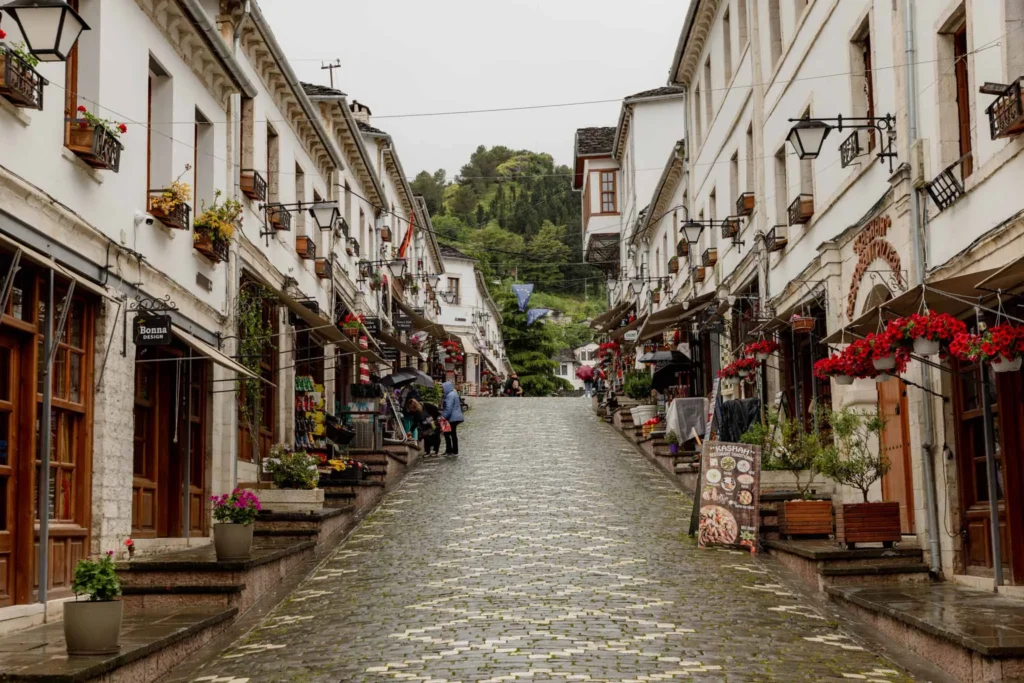
Standing at the edge of what locals call Albania’s stone city, I couldn’t help but feel transported back centuries. The gray slate roofs cascading down the mountainside, the cobblestoned streets winding through Ottoman-style architecture—Gjirokaster hit differently than any destination I’d explored before. This wasn’t your typical touristy junk-filled stopover; it was a living museum where history breathed through every corner.
My month-long Albania road trip brought me here somewhat skeptically. I’d read conflicting accounts—some travel blogs raved about spending days browsing cute carpet and ceramic shops, while others dismissed it as nothing special. The truth? It’s a hidden gem that deserves your attention, but maybe not the extended stay some suggest. Whether you’re planning a day trip from Saranda or incorporating it into your Albania itinerary, understanding what makes this UNESCO World Heritage Site tick matters more than blindly following flawed advice.
A Brief History Worth Knowing
Table of Contents
ToggleThe 13th century origins of this beautiful city reveal layers of cultural events and political shifts that shaped not just Gjirokaster, but Albania itself. Walking these streets means witnessing the Byzantine influence bleeding into Ottoman eras, then crashing headfirst into the communist era that left scars and stories everywhere.
What struck me most was learning about Enver Hoxha, the communist dictator who ruled for 40 years and happened to be born right here. His childhood home—now the Ethnographic museum—provides this fascinating glimpse into traditional Albanian life before and during the communist regime’s impact on the region. The birthplace of such a controversial figure somehow adds weight to every stone you pass.
The National Folklore Festival celebrates different regions and cultures across the country, bringing performers from neighboring countries every 5 years. The most recent being in 2023, this event showcases Albanian folk music, dance, and costumes in ways that make the gray slate roofs and cobblestoned streets feel alive with tradition. UNESCO recognized this stunning Ottoman architecture for good reason—it’s not just about buildings, it’s about preserving stories that could easily fade.
The Castle That Dominates Everything
Gjirokaster Castle isn’t just another fortress on a hill—it’s one of the largest castles in the entire region, and the skyline feels incomplete without it. Built across the 12th and 13th centuries, this impressive fortress experienced everything from Byzantine control through Ottoman eras, eventually becoming something darker during the 20th century.
From the 1930s during World War II through Enver Hoxha’s brutal reign, the castle grounds were repurposed into a notorious prison. Walking through those dungeons where political prisoners were held sent chills down my spine. The prison was closed in the 1960s and made into the Arms Museum, but you can still feel the weight of suffering that happened within those walls.
Inside the castle, you’ll find the Gjirokaster museum displaying information about the region dating all the way back to pre-historic times. There’s this incongruous American spy plane forced down in 1957 sitting among the heavy artillery captured from German and Italian forces in the 2nd world war. No descriptions for the items on display, which somehow makes wandering through the vaults even more mysterious.
The tomb of two important Bektashi figures from the 16th and 17th centuries—Baba Sulltan and Baba Kapllan—commemorates this Islamic faith known for being more liberal and tolerant of other religions. Destroyed during the communist years but eventually rebuilt, it represents resilience against ideological erasure.
What can be seen of Gjirokaster castle dates back to 1811, though layers of history pile upon each other. Above the vaults, there’s a clock tower offering those amazing views of the Drinos Valley below. I spent a little over an hour exploring, though 45 minutes would suffice if you’re pressed for time. The steep climb up proves worth it when you’re overlooking the entire city.
The entrance fee is 400 LEK (about Eur 4) per person. Summer hours run from 09.00 to 18.00, while April to September opens 9:00AM to 7:00PM, and October to March shortens to 9:00AM to 5:00PM. Book an affordable 3-hour Gjirokaster walking tour with a local guide covering the castle and other main sights if you want deeper context. Museums located at Gjirokaster castle require admission extra—the Museum of Armaments and Museum of Gjirokaster—though I skipped them to maximize time elsewhere.
Where Language Found Its Voice
Perched on a hill overlooking the entire city, the Gjirokaster Obelisk celebrates something more profound than military victories—it honors the Albanian language itself. During the Ottoman era, there was this ban on speaking Albanian in schools, a cultural suppression that could have erased identity entirely.
The monument sits next to where the first school in Gjirokaster opened in 1908, finally allowing locals to learn and use the Albanian language freely. Built to celebrate this linguistic freedom, it’s located strategically where everything from the Gjirokaster castle to the Bazaar Mosque spreads across the beautiful cityscape below.
The views from the Obelisk are spectacular—arguably better for photography than the castle itself because you capture the fortress within the broader context of gray slate roofs tumbling down the mountainside. Morning light hits differently up here, worth planning your itinerary around if you’re chasing those perfect shots.
Ottoman Homes That Tell Stories
The Skenduli house exceeded all of my expectations, standing as one of the best examples of a typical 19th century Ottoman-style house in Gjirokaster. Originally built in the early 18th century, what you see today mainly dates from 1823 when the Skenduli family—one of the wealthiest families in the area—expanded it into the architectural gem it remains.
What’s remarkable is the same family still owns the house today. You might even be welcomed or shown around by a member of the family themselves, which transforms the visit from museum-gazing into something intimate and personal. Upon arrival, they’ll offer you the option to take either a guided tour or visit on your own—I recommend the guided experience.
Inside the house, you’ll discover a turkish bath, a wedding room with traditional fireplaces, beautiful wooden carved ceilings that make you wonder about the artisans who created them, and colorful textiles draped throughout. Visiting the traditional houses in Gjirokaster was the thing I was most looking forward to, and this particular home delivered beyond measure.
Ticket prices weren’t listed anywhere prominently, but I paid 300 LEK per person. The Skenduli house opens year-round from 9:00AM to 7:00PM, though hours may vary depending on the season and family availability.
The Zekate house provides another window into this important architectural period in the history of Albania, though it requires a bit of a hike up steep cobbled streets to reach. Built between 1811 and 1812, the home features twin towers that immediately distinguish it from surrounding structures.
It was a gift to the owner Beqir Zeko from Ali Pasha, the Albanian ruler during the Ottoman era—imagine receiving an entire mansion as a present. The ceremony room features stunning murals of fruit and flower baskets painted on the walls, while the wooden ceiling is engraved with beautiful craftsmanship that’s simultaneously painted in colors that shouldn’t work together but somehow do.
Since the home is located up on the mountainside, the views from the balcony are amazing, offering perspectives on the city that ground-level wandering can’t match. Out of all the traditional houses in Gjirokaster, I’d suggest visiting both the Zekate house and Skenduli house if time allows.
The entrance fee for the Zekate house is 300 LEK per person, and the house opens daily from 8:00AM to 5:00PM, though hours may vary. Worth it for the hike alone, but the interior rewards the effort tenfold.
A Writer’s World Preserved
Ismail Kadare ranks among Albania’s most celebrated literary figures, and his home transformed into this museum opened to the public in 2018. Best known internationally as the author of The General of the Dead Army, he was born in Gjirokaster and his childhood spaces now welcome curious visitors.
Today you can tour the home where he grew up and wrote some of his famous works, which feels oddly voyeuristic but enlightening. Inside, you’ll learn about the history of the writer through curated displays, explore some of his writings in their original context, and see some of the family’s belongings that shaped his perspective.
I visited this house not knowing much about Ismail Kadare beforehand, but thoroughly enjoyed learning about his fascinating past. He moved to France in the 90s to escape the Albanian government’s tightening grip on intellectuals, and getting to experience his Albanian home while understanding his eventual exile added layers to the narrative.
The entrance fee for Ismail Kadare’s house is 500 LEK per person, and the home opens year-round from 9:00AM to 3:00PM, though hours may vary. It’s not essential if you’re cramming everything into a short visit, but literature enthusiasts will find value here.
The Ethnographic Window
The Ethnographic Museum of Gjirokaster offers this window into Albanian life during the 19th and 20th centuries that feels both intimate and educational. Housed in the building that was once the birthplace of Enver Hoxha, the communist leader of Albania, the space carries ironic weight.
Although today nothing remains of his family within the museum, nor is the museum about Hoxha’s life directly. Instead, the focus shifted to showcasing a beautifully preserved example of 19th century Ottoman architecture stripped of its controversial occupant’s story.
The rooms are adorned with authentic furnishings and household items that transport you to daily life before modernization swept through. Cultural artifacts like folk costumes hang carefully displayed, each piece representing regional variations that might otherwise be forgotten.
Tickets cost 500 LEK per person, and the Ethnographic museum opens year-round from 9:00AM to 4:00PM. Hours may vary during high season and low season, so checking locally before planning your day makes sense.
Underground Paranoia Made Real
During the communist era, Albania’s dictator leader Enver Hoxha grew paranoid about being invaded after breaking off from the Soviet Union in the early 1960s. His response? Building thousands of bunkers all over Albania—some are small cement blocks you’ll see everywhere scattered like concrete mushrooms, while others are massive underground complexes designed for extended occupation.
The Cold War Tunnel was built in the 1970s as a secret shelter for important government officials in case of a nuclear attack. Inside, you’ll find an 800 meter tunnel that breaks off into 59 rooms, each with a specific function that reveals the depth of planning that went into this paranoid project.
You’ll discover a kitchen designed to feed dozens, a decontamination room for chemical or biological threats, sleep quarters arranged in military efficiency, an air filtration room with equipment that still looks ominous, and many more specialized spaces. After the communist regime fell in 1990, many of the objects and furniture inside were stolen from the bunker, though you’ll still find some remaining original objects that were too heavy or too embedded to remove.
The shelter obviously never had to be used, which feels both fortunate and wasteful simultaneously. Wandering through, it does feel a bit eery and dark, but it’s still worth a visit in my opinion because it contextualizes the psychological landscape of communist-era Albania better than any textbook could.
You must request a guided tour with one of the local guides at the Gjirokaster Tourist Information center—the bunker cannot be accessed without a guide for safety and preservation reasons. The price to visit the museum is 200 LEK per person, and it’s open from April to October 9:00AM to 6:00PM, then November to March 8:00AM to 2:00PM.
The Bazaar’s Complex Identity
Lower down on the hill below Gjirokaster castle, the bazaar spreads across about 5 streets packed with tourist shops, cafes and restaurants. Located in the historic center of Gjirokaster old town, the Old Bazaar ranks among the top highlights of this beautiful city despite its touristy veneer.
Tracing its origins back to the 17th century, this bazaar was the epicenter of life and commerce during the Ottoman era when merchants traded goods that traveled from the Adriatic to Constantinople. Unfortunately, there was this devastating fire in the second half of the 19th century that wiped out a large part of the original structures.
It was rebuilt to look the same as before, though the buildings only date back to the early 20th century now—the old buildings were destroyed in that fire. This area is very vibrant and interesting to see, bringing together local artisans where you’ll find a plethora of goods and crafts hung outside of the shops.
Traditional rugs, slippers, table linens, and wood crafts create this visual marketplace that feels authentically chaotic. A word of advice though—many rugs hanging outside the shops are actually factory made with cotton or synthetic yarn. Ask the shop owner if they have any handmade or vintage wool rugs inside of the shop if you want the “real stuff.”
Find the shop called Artistic Handmade Mona for traditional rugs that are handmade. These are more expensive than the factory made rugs; however, they are very affordable compared to any handmade rug you’ll find in Western Europe or the United States. It was very tempting to buy another suitcase and take home a bag full of rugs, and I still regret not doing exactly that.
Walking through the bazaar feels as if you’re stepping back into history, and I just soaked it all in despite the tourist-oriented modifications. The bazaar only spans a couple of blocks, so you don’t need much time to see it all—maybe 30 minutes of leisurely wandering covers it.
Learn to make your own piece of art during a wood crafting experience with a local if you want to take home something more personal than mass-produced souvenirs. It adds dimension to your understanding of the craftsmanship that goes into the items casually displayed in shop windows.
The Mosque at the Market’s Heart
The Bazaar Mosque is located in the heart of Gjirokaster, dating back to the 17th century as an important historical sight that showcases Islamic architecture during the Ottoman period. If you’re interested in taking a peek inside, the mosque opens daily for visitors and it’s free to visit.
I always find it fascinating to learn about other religions while traveling, and this provides a great way to experience the Islamic culture in Albania without feeling intrusive. The mosque is free to visit and opens from Monday to Friday 9:00AM to 4:30PM, though prayer times may affect access.
Stone Houses on the Hillside
On the hill leading up to the bazaar and castle, you’ll notice stone houses with grey slate roofs that define Gjirokaster’s visual identity. Most of them date from the first half of the 19th century, representing that unique architectural period that earned the city its UNESCO designation.
A few of them have been turned into museums with entrance fees around the equivalent of Eur 5, though honestly, there aren’t enough of these houses concentrated in one area to be collectively impressive. The standouts like Skenduli and Zekate houses deserve your attention, but randomly wandering hoping to stumble upon amazing examples proved less rewarding than I’d hoped.
The Manalat Quarter’s Steep Streets
The Manalat Quarter is the steep and hilly part of the city that overlooks Gjirokaster castle from an entirely different perspective. If you’re hiking to Ali Pasha’s bridge, you’ll walk through this area anyway, so plan accordingly.
Escape the busy center and explore the streets of this historic neighborhood where locals still live their daily lives mostly unbothered by tourism. Make sure to enjoy the beautiful views overlooking the city from angles you won’t get anywhere else.
If you’re in the mood for a bite to eat or need a rest from all of the uphill walking, try some local Albanian cuisine from Taverna Tradicionale in Manalat. The restaurant serves everything from traditional dishes to wonderful salads, making it a perfect place to stop on your way to or from Ali Pasha bridge.
The Bridge That Connects Past to Present
Ali Pasha bridge is a 19th century stone bridge located in a gorge above the city, actually a remnant of a once grand aqueduct that used to carry water from a spring 10km away. Unfortunately, most of the aqueduct was dismantled in the 1930s since the stones were used as building material in Gjirokaster during a construction boom.
One of the best things to do in Gjirokaster is hiking to the bridge from the city center. The hike to the bridge takes about 30-45 minutes from Gjirokaster castle, and you’ll follow the city roads until you reach a dirt path that will lead you up the gorge through increasingly rural landscape.
I suggest downloading the route on Maps.Me before heading out, or following Google Maps with downloaded offline maps because cell service gets spotty. The trail is rough, so bringing sturdy walking shoes isn’t optional—it’s necessary for safe passage over uneven terrain.
Food That Surprises and Delights
To my surprise, I loved the local food in Albania. I didn’t really know what to expect, but it’s this mix of mediterranean food and hearty dishes that fills you without weighing you down. From fresh salads to fried meatballs and other delicious foods, these are some recommendations for traditional dishes to try from Gjirokaster and the surrounding region.
Qifqi are unique to Gjirokaster—rice balls seasoned with mint, dill, and other herbs, then fried and usually served as a starter or side dish. I recommend ordering a yogurt sauce to dip them in, which cuts through the richness perfectly. This is the dish that locals claim you can’t get anywhere else properly, and after trying versions elsewhere, they’re right.
Pasha Qofte is a soup made with tender meatballs immersed in a creamy broth. It’s a perfect dish if you’re visiting on a cooler day when the mountain air has bite. The meatballs practically dissolve on your tongue while the broth warms from the inside out.
Shapkat is a savory pie made with cornmeal and layers of spinach. While I think it’s still worth trying for the cultural experience, this wasn’t my favorite dish as it’s a bit dense and dry—especially if you get a slice that’s been sitting. Fresh from the oven changes the equation significantly.
Japrak is a traditional dish that consists of grape leaves wrapped around a filling of minced meat, rice, and herbs. It’s slowly cooked to let the flavors soak in and come together into something that tastes like summer gardens and careful preparation.
Tave Kosi is this typical Albanian dish—a hearty and savory casserole made from lamb and rice, baked with a layer of yogurt and eggs on top. It’s a bit tangy and rich at the same time, and definitely worth a try even if the combination sounds odd on paper.
Fergese is probably my favorite traditional dish in Albania. Made with a blend of peppers, tomatoes, onions, and cottage cheese, it is packed with flavor in ways that feel both comforting and exciting. I liked to eat this with some bread to soak up every last bit of sauce.
Byrek is something you can’t leave Albania without trying—the most popular food in the country. Byrek is a savory, flaky pastry made of filo dough and stuffed with a variety of cheese, spinach, or meats. Every bakery makes it slightly differently, and comparing versions becomes this delicious ongoing experiment.
Mountain tea showed up with almost every meal I ordered. This herbal hot drink is made up of a variety of plants found on the hillside and brewed into a delicious tea that tastes like the mountains themselves. It’s caffeine-free but somehow energizing, and I found myself craving it weeks after leaving.
Where to Eat Well
Gjirokaster is one of the best places in Albania to try traditional Albanian cuisine authentically prepared. I always make sure to scope out the best spots beforehand, and Gjirokaster did not disappoint in delivering memorable meals.
Vojsava Restaurant was recommended to me by the owner of my hotel, and it turned out to be the best place I ate in the city. I suggest ordering a mix of their small plates to try a variety of dishes. Qifqi and Tave Kosi are a couple of dishes worth trying here specifically, as their versions set the standard others try to match.
Snack Bar Simple shouldn’t fool you with the name. This little shop is owned by the most adorable local family who serve delicious soups, salads, and other traditional dishes like stuffed peppers. Since I’d been eating heavy Albanian food for a couple of weeks at this point, their salads really hit the spot for lunch—fresh vegetables prepared simply but with care.
Te Kubé is a neat cafe located underneath the Bazaar Mosque where you can grab a coffee or one of their fresh fruit juices. I tried the strawberry juice, which tasted like actual strawberries rather than sugar with artificial flavoring.
Restaurant Tradicional Odaja is another restaurant that came recommended though I didn’t have time to make it there. They also serve all the classic dishes and it’s worth going to if Vojsava is full or you want to compare interpretations of traditional recipes.
Taverna Tradicionale KARDHASHI is this popular restaurant located in the Manalat Quarter that serves everything from traditional dishes to wonderful salads. It’s a perfect place to stop on your way to or from Ali Pasha bridge, with outdoor seating that lets you watch the city spread below.
Finding Your Bed for the Night
Gjirokaster has some of the coolest hotels in Albania, many located in traditional buildings and decorated in the Ottoman style that makes you feel like you’ve stepped back in time. I had such a hard time choosing where to stay because there were so many compelling options.
Make sure to book a few months in advance in order to stay at the hotel of your choice. I booked my stay 2 months ahead of my trip and still missed out on my top choice, which had sold out to a tour group.
Boutique Hotel Musée is the most beautiful hotel in Gjirokaster, with rooms decorated as a traditional Ottoman house complete with period-appropriate furnishings. Try to book the deluxe suite if budget allows, as it’s worth the splurge for the full experience.
Hotel SS Kekezi is where I ended up staying, and I loved it despite it being my backup option. It’s located right off the Old Bazaar, and the family who runs it is extremely helpful and kind. The breakfast is delicious too, with homemade options that change based on what’s fresh.
Hotel Kalemi 2 provides a budget-friendly pick that features beautiful wooden carved ceilings, lovely balcony views, and even has free private parking—which is huge plus in Gjirokaster where parking can be challenging.
Rose Garden Hotel is the luxury hotel pick with wonderful views of the mountains, featuring a swimming pool that’s perfect after a day of uphill walking, and spacious rooms that actually have space to spread out. There is also free private parking, which eliminates one major headache.
Hotel Kalemi is best for views, located up on the hill near the Zekate house with some of the most gorgeous perspectives on the city. There is a garden to eat breakfast surrounded by the sounds of the city waking up, plus free private parking.
A little tip on booking hotels in Albania—make sure to double check if the property takes credit or debit cards. I had to pay for a few of my hotels in cash, and usually they either send a message beforehand or it’s noted on the hotel information page. Always have LEK on hand just in case.
I also stayed in a very good value and spacious apartment costing Eur 38 per night near the stadium in Gjirokaster during another visit. The details of the apartment are listed in travel blogs as number 6 if you search for budget accommodations—basic but comfortable.
Modern Gjirokaster’s Reality
The new city centre of Gjirokaster was, honestly, a bit scruffy and not very special. This is where the bus drops you if you’re arriving via public transport, and it represents the functional side of a town that preserved its historic quarter while letting the newer areas develop without much architectural consideration.
It’s not worth spending time here except as a passthrough to reach the old town up the hill. The contrast actually makes the historic center more impressive by comparison.
Planning Your Time
To see everything on this list, you’ll need to spend at least 1.5 to 2 days in Gjirokaster, Albania. However, I felt like one day in Gjirokaster is plenty of time to experience the highlights of this UNESCO city. I spent 24 hours in the city, and it was just the right amount of time without feeling rushed or bored.
If you only have one day in Gjirokaster, here’s my recommended itinerary based on actual experience: Enjoy the morning views from the Gjirokaster Obelisk when the light is soft, then walk up to the Zekate House before crowds arrive. Visit the Skenduli House next, then wander around the Old Bazaar and visit the mosque before lunch at Snack Bar Simple.
After lunch, hike up to Ali Pasha bridge to walk off the meal, then visit the castle in the afternoon when the sun illuminates the valley differently. Finish with dinner at Vojsava Restaurant to celebrate a well-planned day.
If you have more time in your day, then the Cold War Tunnel museum can be added into your itinerary, or a visit to Ismail Kadare’s house for literary context. For those visiting on a day trip from Saranda or as a day stop on your road trip, then out of all the sights on this list, make sure to see the castle, the Skenduli house, and the Old Bazaar. In my opinion, those are the top 3 can’t-miss things to do in Gjirokaster that capture the essence completely.
Getting Around Town
Gjirokaster is a small town where everything is within walking distance. And by walking distance, I mean most of the sights are 5-15 minutes from each other if you’re moving at a reasonable tourist pace.
The furthest activity on this list is Ali Pasha bridge, which is a 45-minute walk from the old town and castle. For this, I suggest bringing sturdy walking shoes as the trail is rough and unforgiving on inadequate footwear.
It’s important to note that many of the cobblestone streets are uneven, worn smooth by centuries of foot traffic. You’ll also want to wear good walking shoes while visiting the old town center, not just for hiking but for navigating the historic streets safely without twisted ankles.
Arriving in Stone City
Gjirokaster can easily be reached by public bus or car. Of course, renting a car is the most convenient option, but taking the bus is simple enough and affordable if you’re traveling on a tighter budget.
When traveling by bus in Albania, make sure to bring cash to pay the bus driver directly—cards aren’t accepted. To check bus schedules online, I recommend going to the Gjirafa website where they list all of the bus routes and times, though accuracy varies.
Always double check the bus times locally with your hotel or at the bus station to ensure you have the most up-to-date schedule, as online information can be outdated or seasonally inaccurate.
Buses from Saranda leave the main bus station frequently between 5:30am to 11:00am. The journey takes 1 hour and costs around 300 LEK, making it the easiest connection if you’re coming from the Albanian riviera.
There are a few direct buses that leave Tirana everyday from noon to 8:30pm for Gjirokaster. The bus ride takes 4 hours and costs around 1,200 LEK, which is reasonable considering the distance covered.
A couple of direct buses leave Berat around 1:15pm and 2:00pm. This route takes 3-4 hours depending on road conditions and driver speed. If you want more options, there are a few indirect buses that depart throughout the morning and early afternoon taking 3.5 hours. Tickets from Berat cost around 1,000 LEK regardless of route.
The bus stop in Gjirokaster drops you off at the bottom of the hill in the newer part of town. You can find the approximate bus stop location on Google Maps if you search for Gjirokastër bus stop from Saranda.
To get to the old town from here, you can either take a taxi or walk. The taxi should only cost a few dollars (200-500 LEK) depending on your negotiation skills and time of day. Alternatively, the walk takes around 30 minutes, but it is uphill and strenuous with luggage. If you have a lot of luggage, I recommend taking a taxi without hesitation.
I drove to Gjirokaster from Saranda and the road was well paved and easy to drive. To my surprise, I thought driving in Albania was completely fine. I’d heard “horror stories” from other bloggers about dangerous roads and aggressive drivers, but the roads, especially down south, were uncrowded and well marked.
Parking in Gjirokaster was a bit of a challenge though. My hotel was located next to the Old Bazaar, so I had to park elsewhere around the city. I had planned on parking at the public lot, but all of the spots were full when I arrived mid-morning.
If you are unlucky like I was, then plan to spend an extra 15 minutes driving around finding a spot. In the end, I found a good spot near my hotel on a side street. Most of the parking is street parking without formal markings, which feels chaotic but somehow works.
I recommend renting a car in Albania through Discover Cars, which is my go-to rental agency. I rented my car here on my month-long road trip and it was very affordable compared to European averages. Having a car gives you the flexibility to explore at your own pace without being constrained by bus schedules.
The Map You Need
To help you best navigate your way around, having a map of all of the best things to do in Gjirokaster and restaurants listed in this itinerary makes everything smoother. To save the map to Google Maps on your phone or computer, click on the star next to the title. Once you do this, you’ll be able to find the map in your “saved maps” list on your phone.
To see a list of all the items on the map, click the box with arrow on the left. To enlarge the map, click the box on the right. Having everything marked beforehand saved me probably an hour of wandering confused through winding streets.
Timing Your Visit Right
Based on my experience, the best time to visit Gjirokaster is in the spring or fall when temperatures cooperate and crowds thin. I visited in mid-May, and while it was rainy, the temperature was perfect for walking around and the crowds were slim compared to summer chaos.
During the spring, you can expect temperatures between 60°F-75°F (15°C-24°C) and of course some wet weather. Bring layers and a light rain jacket that packs small.
A visit during the fall means you have better chances at nicer weather, although the temperatures average about the same as spring. The difference is rainfall—fall tends to be drier, making outdoor activities more reliable.
Gjirokaster is busiest during the months of June, July, and August since this is the nicest time of year to visit weather-wise. Prices are also more expensive for hotels at this time, although compared to the rest of Europe, they are still affordable by any reasonable standard.
If you visit during the summer, plan for crowds, which means packed buses and a harder time finding parking. The historic sites also feel more congested, diminishing the atmosphere somewhat.
Beyond the Stone City
I stopped in Gjirokaster for a night on my road trip from southern Albania to northern Albania. My route took me from Ksamil to the Blue Eye to Gjirokaster and finally up to Berat before making my way up to Theth in the very north of the country.
I recommend these three spots as either a day trip from Gjirokaster or as the next stop on your road trip, depending on your itinerary structure.
The Blue Eye, also known as Syri I Kalter, is located only 35km south of Gjirokaster. The drive takes around 50 minutes in total through scenic mountain roads. I stopped at the Blue Eye between my drive from Saranda to Gjirokaster and spent a couple of hours exploring this beautiful natural wonder.
So what is the Blue Eye exactly? It’s a natural spring that is known for its incredibly clear blue waters surrounded by stunning scenery. The spring itself is 50 meters deep, and when lit up by the sun, it makes it look like a blue eye staring up from the earth. In my opinion, this is one of the best natural sights to visit in southern Albania—don’t miss it if you’re in the region.
The Albanian riviera is a stunning stretch of coastline along the Ionian Sea that boasts pristine beaches, crystal-clear waters, and charming villages untouched by mass tourism. This picturesque region is a blend of natural Mediterranean landscapes and cultural richness, making it a rapidly growing destination for travelers seeking alternatives to Greece’s overcrowded islands.
I spent two weeks exploring this part of southern Albania and fell in love with its authenticity. Key spots not to miss are Ksamil, just 68km south of Gjirokaster and an hour and twenty minutes by car. Ksamil is renowned for its idyllic beaches and turquoise waters, making it the perfect spot to relax and take it slow after cultural immersion.
My favorite town in the Albanian riviera is Himare. It’s a quieter area compared to Ksamil, and the beaches in Himare are spectacular without the crowds that plague other coastal destinations. I recommend spending at least 5 days in this part of Albania if beach relaxation factors into your plans.
Berat, also known as the city of a thousand windows, is the most unique and fascinating city in Albania. It’s located 2.5 hours north of Gjirokaster and is a great stopover on your way to Tirana, Shkoder, or Theth if you’re continuing northward.
The city is famous for its picturesque collection of white Ottoman houses climbing up the hill to the Berat castle in layers that create this stunning visual effect. The castle is an ancient fotress that is still inhabited today—residents actually live within the castle walls, and you can even eat at a restaurant there. The views from here are some of the best in Albania.
I spent three days in Berat, although one day is enough time to see the main sights if you’re moving efficiently. More time lets you absorb the atmosphere without rushing, which changes the experience quality significantly.
Questions Everyone Asks
Is Gjirokaster safe to visit?
Yes, I felt completely safe traveling in Gjirokaster. In fact, I found the locals to be extremely warm and friendly once you break through initial reserve. Although most people did not speak English fluently, I found it was okay to communicate through gestures and smiles.
In my experience, Albanian people seemed intimidating at first—there’s this cultural reserve that can feel cold. But once you start talking with them, they open up quickly and become incredibly helpful. Remember to be patient and respectful, as it can take a minute to understand how to engage with a new culture that values directness differently than Western cultures you might be familiar with.
Is Gjirokaster worth visiting?
Yes, Gjirokaster is definitely worth visiting at least for one day, contrary to some dismissive opinions I’d read before arriving. From the historical sights to the food and the beautiful houses, it’s one of Europe’s best hidden gems that hasn’t been completely overrun yet. The combination of Ottoman architecture, communist history, and living culture creates something you won’t find replicated elsewhere. Whether it deserves multiple days depends on your travel pace and depth of interest, but writing it off entirely would be a mistake.
What is better Berat or Gjirokaster?
To be honest, although both cities are known for their Ottoman-style architecture and UNESCO designations, they feel very different from each other in ways that statistics can’t capture. Berat has this ethereal quality with white houses stacked impossibly up hillsides, while Gjirokaster feels heavier, more grounded with those gray slate roofs and stone construction. I recommend visiting both cities for one day each to form your own opinion rather than choosing based on someone else’s preferences. They complement each other rather than compete.
Essential Travel Planning
Getting travel insurance for Albania is something I never skip. YES, I always get travel insurance before all of my trips for peace of mind, even in relatively safe destinations. Travel Insurance Master helps find the best plan for your specific needs and trip duration. The cost is minimal compared to potential medical expenses or trip disruptions, especially in a country where your domestic health coverage likely doesn’t apply.
Is it safe to rent a car in Albania? Yes, absolutely. I rented a car in Albania for one month and it is the best way to see the country beyond major cities. The freedom to stop at roadside viewpoints, explore villages without bus connections, and carry luggage comfortably changes everything. I rented my car through Discover Cars, my go-to rental agency, which helps you find the best rates no matter where you are traveling by comparing multiple providers simultaneously.
If your phone plan does not offer free coverage in Albania, then I suggest getting an eSIM to avoid astronomical roaming charges. I used Airalo during my trip to Albania, and I had fantastic coverage the entire time across different regions. I even had to rely on it for data to get some work done remotely, and it worked great without the frustration of hunting for WiFi constantly.
Wondering where to book your accommodations for Albania? I booked all of my hotels through Booking, which has become my default platform. All of the hotels were responsive through the messaging tool when I had questions, and there are endless options to choose from across all price ranges. Note that some hotels in Albania require you to pay in cash rather than card. Make sure to message the hotel in advance to be prepared with the correct form of payment—this isn’t about being difficult, just how some family-run places operate.
Wondering if you can drink the tap water in Albania? I was advised to not drink the water by multiple hotels during my stay, so I ended up buying bottled water instead throughout my trip. The infrastructure varies by region, and while some claim it’s safe, the general consensus leans toward bottled water for tourists to avoid any stomach issues that could derail your itinerary. It’s inexpensive enough that the cost doesn’t add up to anything significant.