Standing at the edge of this historic Albanian town, you’ll immediately sense why Kruja has captivated travelers for centuries. The dramatic backdrop of rugged mountains frames an imposing castle that seems lifted straight from Game of Thrones, while the valley stretches endlessly below. This small town, tucked strategically between Tirana and the Albanian Alps, offers something remarkably different from Albania’s more celebrated destinations like Berat, Gjirokaster, or Theth.
My first visit to Krujë happened during a month-long road trip through Albania, and honestly, I wasn’t expecting much. Many travelers skip this place entirely, rushing toward larger cities or the pristine beaches down south. But spending even a half-day here revealed layers of Albanian history and local craftsmanship that you simply won’t find condensed anywhere else. The town sits atop a hilltop position, its lush green valley views reminding you why conquerors from the Romans to the Byzantines fought over this strategic vantage point for ages.
What strikes you immediately isn’t just the picturesque setting—it’s the palpable sense of Albania’s resilience and defiant spirit. This isn’t some manufactured tourist experience. Walking through the historic city center feels like being transported back to medieval periods, where every cobblestone and fortress wall tells stories spanning centuries. Whether you’re making your way north to Shkoder or heading south toward the city of Tirana, Kruja deserves more than just a passing glance from your car window.
The beauty of visiting this charming little town is its simplicity. You won’t need elaborate planning or days of itinerary shuffling. A few hours here can pack more authentic Albanian culture than a week spent in more touristy spots. From the moment you arrive—whether by rental car, local bus, or guided day trip from Tirana—you’ll understand why this place holds such importance in Albania’s rich history.
A Brief History of Kruja
Table of Contents
ToggleBefore diving into what makes Kruja worth visiting today, understanding its defining chapter in the 15th century adds incredible depth to your experience. This town isn’t just another pretty stop on an Albania itinerary—it’s literally where the nation’s symbol of European defiance made his stand against one of history’s most powerful empires.
Gjergj Kastrioti, known universally as Skanderbeg, transformed from an Ottoman commander into Albania’s national hero through events that unfolded right here. In 1443, he deserted his command and returned to lead a legendary rebellion that would span 25 years. Using Kruja as his headquarters, this larger-than-life figure united Albanian regions in ways that still resonate through the nation today.
Imagine the fortress walls you’ll walk past serving as the base for this almost mythical resistance. The strength required to hold off the Ottoman Empire for over two decades from this hilltop position is staggering. Skanderbeg’s legacy permeates everything here—from statues to museums to the pride locals take in recounting his badass exploits. Honestly, after learning about him, I kept thinking someone needs to make a movie about this guy. If this were Game of Thrones, Skanderbeg would absolutely be Khal Drogo.
Ten years after Skanderbeg’s death in 1478, Ottoman rule finally claimed Kruja, where it remained for centuries. But that crucial period of defiance left an indelible mark. Today’s visitors walk through history that represents not just one man’s rebellion, but an entire nation’s refusal to submit. The Illyrian times, Byzantine period, and various conquerors all add layers, but it’s that 15th-century siege and resistance that defines Kruja’s soul.
Visit Kruja Castle
The majestic hilltop castle dominates Kruja’s skyline—and for good reason. This remains the top thing to see in town, hands down. While Albania seems to have a castle on a hill in almost every historic village, Kruja’s ranks among my absolute favorites, right up there with those in Gjirokaster, Berat, and even Rozafa Castle in Shkoder.
Here’s what surprised me: the castle grounds are free to enter. No entrance fee whatsoever to wander these fortress walls and explore the ruins. Today, it’s mostly in ruins, true—a tower intact here, walls standing there, various sights scattered about. But that raw, unpolished quality makes it feel authentic rather than like some overly-restored tourist trap.
The real draw, beyond the structure itself, lies in what’s housed within these ancient walls. The Skanderbeg museum and Ethnographic museum both sit inside the fortress, each requiring separate admission. But even if museums aren’t your thing, just being here is worth it. The panoramic viewpoints offer stunning views across the Albanian countryside, with mountains towering over Kruja in the distance and that gorgeous valley spreading below.
Walking through the castle grounds, you’re treading where the Albanian resistance under Skanderbeg made their stand. This wasn’t just an important fortress for one empire—it served various ages and rulers, each leaving their mark. The site lets you wander freely, finding quiet corners to take photos or simply absorb the atmosphere of medieval Albania without crowds pushing you along.
What makes this different from other castle visits is the combination of historical weight and natural beauty. Yes, you’ll want to visit the museums on site (more on those next), but take time to just exist here. Find a spot along the walls as afternoon light hits the valley. Watch how the rugged mountains frame everything. Feel how this hilltop position commands the surrounding landscape. That’s when you truly understand why control of Kruja mattered so profoundly throughout history.
Visit the Skanderbeg Museum
Once inside the fortress walls, the Skanderbeg museum demands attention—and not just because of its striking architecture. This tribute to Gjergj Kastrioti takes you through an incredible journey from Illyrian times through the Ottoman siege, offering the best crash course in Albania’s past you could ask for.
The entrance fee sits at 500 Lek per person, and it’s open daily from 9:00 AM to 6:00 PM. Check the official website for any updated information, though honestly, when I visited, just showing up worked perfectly fine. The museum itself proves surprisingly entertaining, especially if you’re into swords, relics, and depictions of war (guilty as charged).
What impressed me most was the collection of artifacts—pottery, jewelry, and various relics that bring centuries to life. But it’s the artworks depicting the Ottoman resistance that really capture your imagination. These aren’t boring historical placards; they’re dynamic representations showing Skanderbeg as the badass he truly was. Every statue, every piece of art reinforces why this hometown hero became Albania’s national symbol.
Spending about an hour here feels right—enough time to absorb the history without feeling rushed. The museum does an excellent job connecting Kruja’s story to broader Albanian identity. You’ll leave understanding not just what happened during that legendary rebellion, but why it still matters to the nation today. If learning about Skanderbeg and this defining chapter interests you at all, the museum is absolutely worth the visit and the modest entrance fee.
One local friend described visiting here as understanding Albania’s defiant spirit in concentrated form—and he’s spot on. The castle’s museum transforms historical facts into something visceral and real. You’re not just reading about the 15th century; you’re standing where it happened, seeing the swords that were swung, understanding the stakes involved in that 25-year resistance against the Ottoman Empire.
Ethnographic Museum
Also located inside the Kruja fortress, the Ethnographic museum offers something completely different yet equally valuable. This traditional Ottoman-style house museum provides a window into culture and daily life during the 18th century that you simply can’t get from battlements and swords.
The entrance fee is 400 Lek per person, slightly less than the Skanderbeg museum, and it maintains the same daily hours—9:00 AM to 6:00 PM. What you’ll find here is intimate rather than grandiose: 15 rooms ranging from the kitchen to family rooms, each decorated with Ottoman-style rugs and fabrics that showcase incredible craftsmanship.
I’m a bit obsessed with these Ethnographic museums throughout Albania, and Kruja’s ranks among the finest. The beautiful woodwork on the ceilings alone deserves your attention—intricate patterns and carvings that represent art in itself. Add in the paintings adorning the walls and those gorgeous Ottoman-style decorations, and you’ve got a space that feels both lived-in and museum-worthy.
Walking through these homes shows you how daily life unfolded centuries ago. Not the grand battles or sweeping historical moments, but the everyday existence of actual people. The traditional Ottoman-style house museum format preserves this beautifully. Each room tells its own story through fabric, furniture, and those stunning rugs that you’ll later see being made in the bazaar.
What strikes you isn’t just the aesthetic beauty—though that Ottoman-style certainly appeals—it’s the level of skill involved in creating these living spaces. The craftsmanship inside these homes elevates functional items to art. From the ceilings to the walls to the textiles adorning every surface, you’re surrounded by handiwork that took enormous time and talent to produce.
For anyone interested in textile traditions, decorative arts, or simply understanding how Albanians lived in past centuries, this museum is essential. It complements the Skanderbeg museum perfectly: one shows you the grand historical narrative, the other reveals the human details of daily life. Check the official website for any special exhibitions, though the permanent collection alone justifies the visit.
Walk Through the Old Bazaar
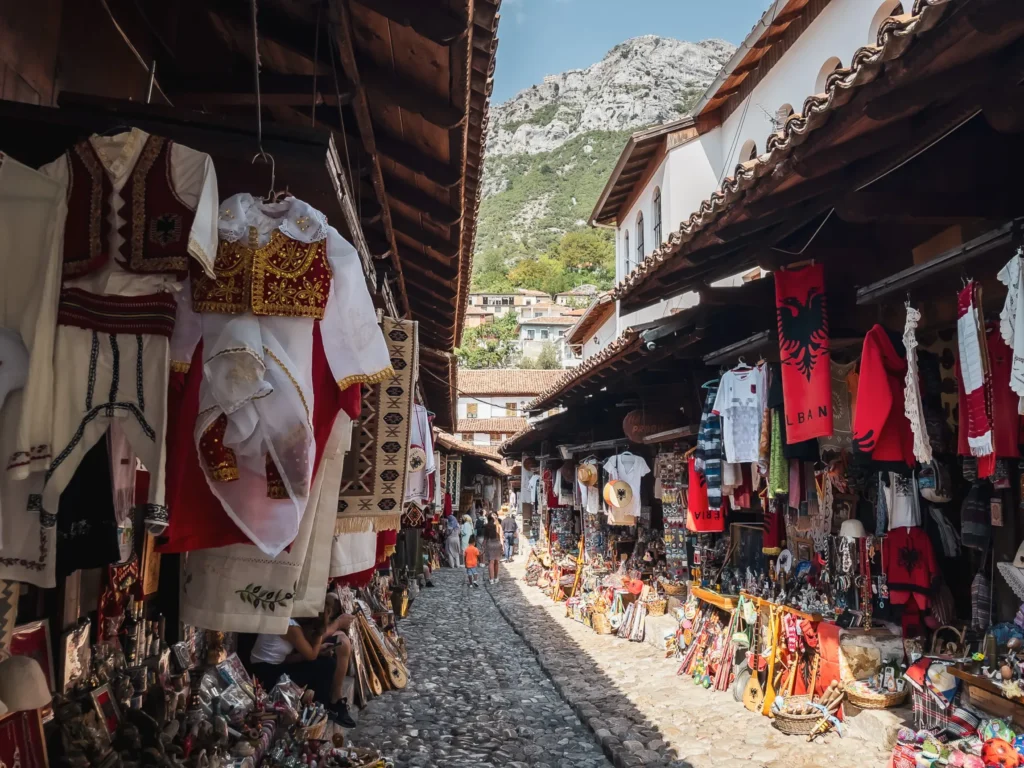
You’ll inevitably pass through Kruja’s Old Bazaar regardless of your plans—it connects the town to the castle, making it unavoidable. But trust me, you’ll want to linger here far longer than just walking through requires.
This historic shopping street dates back to the 15th century, built under Skanderbeg’s leadership when Kruja served as a thriving center of trade. Artisans and craftsmen from various regions would gather here, buying and selling goods in what became one of Albania’s best examples of medieval commerce. Today, that tradition continues, though admittedly the market mostly caters to tourists now with typical Albanian souvenirs and knickknacks.
But here’s what makes the Old Bazaar truly vibrant and unique: it’s incredibly photogenic while remaining functionally authentic. Yes, you’ll find embroidered slippers and wooden crafts designed for visitors. Antique pots, candlesticks, and all manner of colorful local crafts line the small market stalls. However, if you look closer—if you actually step inside certain shops rather than just browsing the hanging displays—you’ll discover the real treasures.
The bazaar proved surprisingly worthwhile for actual shopping. I spent a good couple of hours wandering and visiting various shops, eventually buying handwoven rugs to take home. The key is being selective. Some vendors can be quite pushy, trying aggressively to pull you into their shop. A polite “no thank you” works fine; just keep walking if you’re not interested.
Scout out shops that look more high-quality rather than just touristy. Make sure to bring cash—almost all vendors only take Albanian Lek, with no card options available. This isn’t a massive sprawling bazaar, but you’ll be surprised how many incredible shops pack into the relatively small space. From handmade rugs to locally crafted items, there’s substance beneath the surface-level tourist goods.
The atmosphere itself transports you back to medieval periods. Cobblestone paths, traditional architecture, craftsmen working their trades—it truly has that feel of being somewhere timeless. Even if shopping isn’t your priority, the Old Bazaar serves as a great place to take photos and experience a slice of historic Albania that’s increasingly rare. Just wandering here, watching artisans work, soaking in the vibe of this centuries-old market—that alone makes Kruja worth visiting.
See How Traditional Rugs Are Made
Walking along the Old Bazaar, you’ll notice many shops selling handmade rugs. But here’s what most tourists miss: step inside one of these shops and you might witness a woman weaving a rug by hand, threading every single yarn into the loom, one by one.
As someone who loves textiles, watching this process was genuinely special. The technique is arduous—no question about that. Hours upon hours of meticulous work go into creating each piece. Yet the final product emerges as a true art piece, worth every second of that effort.
What shocked me most was the price of handmade rugs in Kruja—remarkably reasonable given the craftsmanship involved. For the amount of time required to weave one rug, it would cost a fortune elsewhere in Europe or the United States. The value here is exceptional, though you’ll need to be smart about what you’re buying.
Here’s critical insider information: most rugs hanging outside the shops are factory made. They look decent at first glance, but they’re not the real thing you came for. To find authentic handmade wool rugs or antique rugs, you need to ask specifically and go into the backroom where high-quality rugs are stored. Shop owners keep these protected from rain and sun, preserving them in stacks away from the elements.
The difference between handmade and factory-made rugs is huge once you know what to look for. Handmade versions use wool with a tighter weave, giving them that authentic feel and look that machine-made items simply can’t replicate. Factory-made rugs typically use cotton and polyester, lacking the weight, texture, and quality of their handcrafted counterparts.
If you’re thinking about getting one—and you should—bring an extra suitcase. These are big and heavy, especially the truly handmade pieces. But carrying that weight is worth it for owning something made with such incredible skill. There’s usually a pile of them in the backroom of better shops; don’t be shy about asking to see them.
This tradition of rug-making connects directly to the Ottoman-style craftsmanship you see in the Ethnographic museum. It’s living history, continuing practices that date back centuries. Watching someone work at the loom, you understand why these items were once so valuable they served as currency. The textile enthusiast in me could watch this process for hours, honestly.
The Shrine of Sari Salltik
Beyond the castle and bazaar, Kruja offers hiking opportunities that many visitors overlook entirely. The most popular trail leads to Sari Salltik’s Shrine, perched in the mountains above town with stunning views that’ll make your legs forgive you for the climb.
You’ve got two options for reaching the shrine. One involves taking a taxi to the top, skipping the effort while still getting all the views. The other puts your legs to the test with a proper hike that rewards effort with increasingly spectacular vistas.
The trail starts from a specific point you can easily locate, and fair warning—this hike is steep. We’re talking about 700 meters of elevation gain over roughly two hours. It’s pretty much nonstop climbing, so come prepared with water and reasonable fitness levels. However, those views make every burning quad muscle worthwhile.
As you ascend through the rugged mountains surrounding Kruja, the Albanian countryside unfolds beneath you in layers. The valley you glimpsed from the castle reveals itself fully from this elevated perspective. On clear days, the dramatic backdrop extends for miles, showcasing why this region holds such strategic and aesthetic value.
The shrine itself provides a destination, but honestly, the hike is the real reward. If you plan on tackling this trail, consider arriving in Kruja early or even spending the night in one of the reasonably-priced hotels in town. Combining the castle visit, bazaar wandering, and this mountain hike requires more than a quick morning trip—it’s a full day’s adventure that deserves proper time.
This hiking opportunity sets Kruja apart from other historic Albanian towns. While places like Berat and Gjirokaster offer village vibes and castle views, Kruja adds this outdoor dimension that appeals to travelers wanting to stretch their legs beyond cobblestone streets. The shrine itself has cultural and religious significance, but even non-pilgrims will find the journey rewarding for the pure physical experience and those incredible panoramic viewpoints.
How to Get to Kruja
Getting to Kruja from Tirana is refreshingly simple—a fact that makes it perfect for either a day trip or a stopover on journeys between Tirana and Shkoder. You’ve got several options depending on your travel style and budget.
Renting a car provides the quickest and most convenient way to reach Kruja. The drive from Tirana takes just over an hour along roads that are busy but well-paved and easy to follow. During my month-long road trip through Albania, I rented from Discover Cars at the Tirana airport—the same service I use throughout Europe for rental cars. Having your own vehicle gives you flexibility to explore at your own pace without worrying about bus schedules.
If you’re driving, parking becomes your main concern. My hotel, the Hotel Panorama, included parking in their garage, which solved that issue entirely. For those just visiting a few hours, there’s a parking lot near Kruja castle that’s conveniently located for getting around town. Just make sure to have cash on hand for the parking fees.
Public transport via bus works perfectly fine as another option. Here’s where Albania’s approach to transportation gets charmingly informal. From Tirana, head to the makeshift bus station where all the buses and minivans hang out. Look for the one with “Kruje” displayed in the window and wait for it to fill up—that’s how timetables work here.
The Tirana bus station has buses leaving to Kruja every hour between 7am and 4pm, with the bus ride taking just under an hour. Note that the station sits outside the city center, so you’ll need a local bus or taxi to reach it from central Tirana. Bus tickets cost 200 Lek, making this an inexpensive option. Check Gjirafa Travel website for updated timetables, though in my experience, the “wait until it fills up” method proves more reliable than any official schedule.
I paid 400 lek for a roundtrip journey when I took the van method—incredibly affordable considering it’s about an hour away from Tirana. The van doesn’t stop in the historic part of Kruja; it’ll drop you off somewhere along the main highway. From there, it’s a short walk to the historic city center. Keep in mind where exactly you were dropped off, as you’ll need to return there to catch a ride back to Tirana.
For travel between Shkoder and Kruja, options become more limited. Only one bus runs daily between these cities, taking 1.5 hours and costing 300 Lek. The best approach is treating Kruja as a day trip from Tirana, or spending the night before heading north to Shkoder. This makes Kruja a great stopover on your journey rather than a standalone destination requiring complex logistics.
Albania’s simplicity in getting around extends to Kruja perfectly. Whether you prefer the independence of rental cars, the affordability of public transport, or even a guided day trip from Tirana that handles everything for you, reaching this historic town poses no significant challenges. That ease of access makes the question less about “can I get there” and more about “do I have time to include it”—which brings us to practical planning questions.
Where to Stay in Kruja
Kruja is a small town, which means limited hotel options—but the ones available range from decent to quite charming depending on your expectations and budget.
I stayed at the Hotel Panorama and honestly had a wonderful view overlooking both the castle and the valley beyond. The hotel met Albanian standards pretty well—which means it’s not luxury European accommodation, but it’s clean, functional, and the location is unbeatable. For one night, I’d definitely recommend it, especially since parking was included in their garage.
Another option worth considering is the Kruja Albergo Diffuso, located actually inside the walls of the Kruja castle itself. They’ve created newly renovated Ottoman-style rooms that lean into the historic atmosphere. Imagine stepping out of your accommodation directly into fortress grounds—pretty unique experience that appeals if you want maximum immersion in the medieval vibe.
The charming little town nature means you won’t find major hotel chains or countless options to compare. But that’s part of Kruja’s appeal. A night or two here provides a genuine change of pace from the city of Tirana’s bustle. Even travelers initially planning just a half-day visit sometimes find themselves tempted to stay, extending their time to tackle that hike to the shrine or simply slow down and absorb the atmosphere.
There are a few reasonably-priced hotels scattered around if neither of those main options suits you. Most cluster near the castle for obvious reasons—that’s where you’ll spend your time anyway. Booking through standard platforms works fine, though I’d recommend messaging properties in advance. Some Albanian hotels require cash payment, so confirming accepted payment methods ahead of your stay prevents any awkward surprises at checkout.
Where to Eat in Kruja
Several restaurants cluster near the Kruja castle, offering everything from traditional Albanian food to pizza for when you need a break from local cuisine (no judgment—after three weeks of Albanian food, I absolutely needed that break).
Restaurant KROI became my dinner spot during my day in Kruja. The food is decent with a wide variety covering traditional Albanian dishes plus pizza options. I ended up ordering pizza specifically because I’d spent so much time eating Albanian food and honestly just wanted something different for one meal. The pizza was quite good actually, perfect if you’re looking to change up your food choices without straying far from your hotel.
Bar Restorant Bardhi Agroturizem sits inside the fortress walls with what I’m told is a gorgeous view overlooking the valley. I didn’t get to eat there myself, but a local Albanian friend swears by it as his go-to restaurant in Kruja. They serve delicious Albanian food in what sounds like an ideal setting for soaking in the atmosphere while refueling after exploring the castle and museums.
There are plenty of other restaurants located near the Kruja castle if neither of those appeals. Most cater somewhat to tourists—which means the food can be a little overpriced and not always memorable compared to meals elsewhere in Albania. But you’ll find decent options if you’re not too picky and just need fuel between sightseeing.
My advice: don’t come to Kruja specifically for culinary adventures. The castle, museums, bazaar, and overall atmosphere are what matter here. Grab a meal at whichever restaurant seems pleasant and well-located, then get back to exploring. Save your serious food experiences for cities with more diverse dining scenes.
Is Kruja worth visiting?
This question deserves an honest answer that depends entirely on your Albania itinerary length and priorities. Let me break down different scenarios.
If you’re rushing through Albania with only a few days total, then honestly, cities like Berat, Gjirokaster, and Theth offer more interesting experiences overall. Those destinations provide that village vibe Kruja has, but with more to explore and longer-lasting impressions. I visited Kruja on my second trip to Albania precisely because I’d prioritized those other towns first—and I think that was the right call.
However, if you’ve got a day to spare—and this is key—a day spent in Kruja absolutely beats a day spent in Tirana. The capital has its merits, but if you’re choosing between an extra day in Tirana versus a day trip to Kruja, choose Kruja without hesitation. It’s fairly easy to visit, offers genuine historical and cultural substance, and provides that medieval scenery impossible to find in modern cities.
For travelers interested in shopping for local Albanian goods and genuinely love learning about history, Kruja is absolutely worth a visit. The combination of the castle, Skanderbeg’s story, the ethnographic insights, and especially that Old Bazaar with its handmade rugs creates value you won’t find concentrated elsewhere. It’s beautiful in ways beyond just scenery—there’s substance here.
I would absolutely visit Kruja as a day trip from Tirana, though I wouldn’t prioritize it on a fast-paced Albania itinerary where every day counts. It occupies that sweet spot of being worthwhile if you have time flexibility, but not essential if you’re cramming highlights into limited vacation days. Both perspectives have validity depending on your specific travel situation.
The town itself is charming with that imposing castle and dramatic backdrop making it feel like you’ve stepped into another era. If medieval Albania interests you, if you appreciate craftsmanship and historic bazaars, if you want to understand Skanderbeg’s importance to Albanian identity—then yes, Kruja is worth visiting. Just be realistic about where it ranks against Albania’s other incredible destinations.
How long to spend in Kruja?
You only need a half-day to experience the main sights in Kruja if you’re efficient and focused purely on the castle, museums, and bazaar. This makes it a great stopover on your journey between Tirana and Shkoder—stop mid-route, spend a few hours, then continue to your next destination.
That said, it doesn’t take long to visit Kruja’s main attractions, but there’s appeal in not rushing. If you’re short on time, arriving in the morning and heading back in the late afternoon works perfectly. Hit the castle grounds, tour both museums, wander the bazaar, grab lunch, and you’re done with all the essential experiences.
However, some travelers might be tempted to stay a night or two, and that temptation makes sense. This charming little town offers a genuine change of pace from city energy. Spending the night lets you experience Kruja without the mental pressure of catching a bus or making it to your next destination. You can linger longer in that rug shop, take more time with the museum exhibits, maybe enjoy dinner with that gorgeous valley view.
The hiking opportunities in the area also influence timing decisions. That popular trail to the shrine in the mountains isn’t something you can casually squeeze in alongside the castle visit. If you plan on doing that hike, you might want to consider arriving in Kruja early and spending the night. Two hours climbing plus time at the shrine, then descending—that’s a significant physical commitment requiring proper planning.
There are reasonably-priced hotels in town that make overnight stays affordable and comfortable. The main attractions can certainly be visited in half a day, but there’s no harm in taking your time. Albania rewards slower travel, and Kruja particularly benefits from not treating it as a checkbox to quickly mark off.
My recommendation: plan for half a day minimum, but build flexibility into your Albania itinerary to potentially extend that if Kruja captures you more than expected. It’s a great stopover rather than a standalone multi-day destination, but even stopovers deserve adequate time to properly appreciate what they offer.
What is Kruja known for?
Kruja is known primarily for its historic castle that served as headquarters for Skanderbeg’s rebellion against the Ottoman Empire during the 15th century. That defining chapter in Albanian history created the town’s identity and lasting importance.
Today, visitors come specifically to visit the Kruja castle and the Skanderbeg museum located inside the fortress. These sites represent not just local history but national significance—understanding Albania means understanding what happened here centuries ago during that legendary 25-year resistance.
Beyond Skanderbeg, Kruja has become known for its Old Bazaar and traditional craftsmanship, particularly those handmade rugs that continue Ottoman-style textile traditions. The combination of history and living culture makes Kruja unique among Albania’s historic villages.