Quick Answer: Venice at a Glance
Best For: First-time visitors seeking authentic Venice beyond the tourist crowds—if you know where to look and when to go.
The Brutal Truth: Timing changes everything. Visit St. Mark’s Square before 9am or after 7pm. Between 10am-7pm, you’re navigating wall-to-wall crowds in the Rialto-San Marco corridor.
Budget: €100-150/day per person for comfortable mid-range travel
Top Experiences:
- St. Mark’s Basilica (€3-6) – Most stunning of Italy’s major churches
- Gondola ride (€80/30min daytime) in San Polo or Dorsoduro neighborhoods (avoid Rialto/San Marco)
- Vaporetto Line 1 down Grand Canal (€9.50 single, €25/24h pass)
- Get lost in Cannaregio & Dorsoduro – where locals actually live
- Cicchetti crawl at bacari (Venetian tapas bars) with Aperol spritzes
How Long: 3-4 days ideal (2 days minimum for highlights + 1-2 for islands/neighborhoods)
Best Time: March-May or September-November for fewer crowds. Avoid June-August peak season and February Carnival.
Skip the Tourist Traps: 90% of visitors stay in the train station → Rialto → San Marco corridor. Walk 5 minutes into any other sestiere (district) and you’ll find peaceful canals, authentic food, and no crowds.
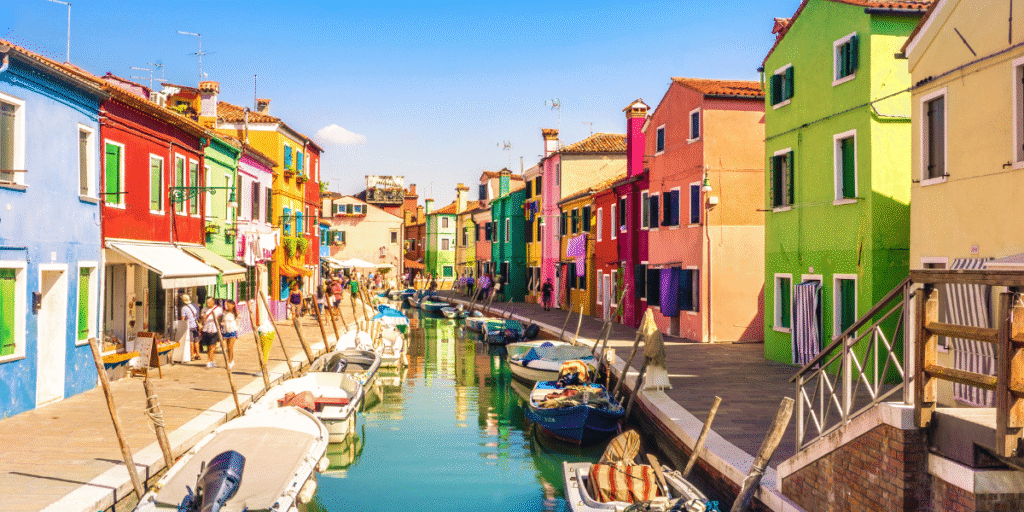
Islands: Choose Burano (colorful houses, 45min ferry) over Murano if you only have time for one. Go early (8-9am) before cruise ship crowds arrive.
Money-Saving Tips: Buy multi-day vaporetto passes, eat cicchetti instead of sit-down meals, visit free churches, explore Cannaregio for local prices.
Standing at the edge of the Grand Canal for the first time, watching gondolas glide beneath the Rialto Bridge while the morning light painted everything gold, I understood why people either fall completely in love with Venice or dismiss it as overrated.
There’s no middle ground with this floating city.
The S-shaped waterway cuts through the heart of everything, and without the chaos of vehicles cluttering up views like in any normal city, you discover picture-perfect moments around virtually every corner.
Timing is Everything
Table of Contents
ToggleLet me be straight with you about something crucial: timing changes everything here.
The corridor between Rialto Bridge and Piazza San Marco transforms into two completely different cities depending on when you visit. Between 10am and 7pm, you’re dealing with narrow streets packed wall to wall with crowds, stores selling either souvenirs or designer bags without much in between.
But outside those peak hours, that same corridor becomes calm, romantic, and genuinely gorgeous.
I’m talking before 9am when you can have the main square mostly to yourself, or late evening when the cruise ship day trippers have departed.
Exploring the Grand Canal and Venetian Waterways
The maritime heritage of this place means seeing the city from water offers a unique and beautiful perspective.
I wasn’t a huge fan of taking boat rides until an early morning canal cruise in Amsterdam last year changed my thinking. Venice deserves the same treatment because its canals are such a big piece of its history and culture.
Taking the Vaporetti (Water Buses)
You’ve got two main ways to get out on the water. The vaporetti are water buses that serve as the primary form of public transportation in the city.
The only alternative to cover larger distances, other than expensive private water taxis, is walking.
Key Route: Line 1 from the train station to Piazza San Marco traverses the entire Grand Canal, passing under Rialto Bridge on its way to San Marco. It’s also the busiest route, so lines can be long.
Pricing:
- Single ticket: €9.50 (valid for 75 minutes from validation)
- 24-hour pass: €25
- 48-hour pass: €35
- 72-hour pass: €45
- 7-day pass: €65
Pro tip: Make sure to validate your ticket as you board the boat.
My Recommended Route
Here’s my recommendation: take route 1 from Stazione Santa Lucia all the way to Giardini “B”, which is just past San Marco, then walk back from there.
If you’re craving more, hop on either route 5.1, which takes you around the north end of the city to Fondamente Nova, or route 5.2, which retraces your steps a bit but then takes you along the southern end of islands.
The official ACTV website has information on routes and pricing, and there’s a useful map you can toggle to English to make planning easier.
Private Gondola Rides
Now, if part of your Venice vision includes a romantic gondola ride that can take you to smaller canals and see parts of the city from water that most tourists miss, then a private gondola is the better option.
Official Regulated Prices:
- Daytime (9am-7pm): €80 for 30 minutes
- Evening (7pm-3am): €100 for 35 minutes
DO NOT PAY MORE THAN THESE REGULATED PRICES. It’s illegal to charge more for the specific durations and times of day.
That price is per boat, not per person, with a maximum of five passengers per boat.
There’s no expectation of a tip at the end of the ride, though if you feel like you had an amazing experience, you can certainly tip your gondolier for their work.
Where to Take Your Gondola Ride
Avoid: Rialto Bridge or Piazza San Marco areas
Best areas: San Polo, Dorsoduro, or Cannaregio
By starting in one of those less-traveled parts of the city, you’ll get to see quieter side canals that most people aren’t going to visit. You’re also far more likely to have a worse experience or get scammed when you’re closer to those big tourist magnets.
How it works:
- Find one of many gondola stands along the city’s canals
- Talk to the gondoliers
- Agree to the price before you get on the boat
- Go on the ride
- Give them the fare at the end
Vaporetti vs. Gondola: Which Should You Choose?
The vaporetti stick to big canals for obvious reasons, which means you’re missing the inner rings of canals that tend to be quieter and more charming from the water if you choose that option.
It’s a good budget option for seeing Venice from water, though you’re definitely making some concessions in terms of how much of the more romantic part of the canals you’re actually seeing.
Basilica di San Marco and the Doge’s Palace Complex
On my recent trip that brought me back to Venice for the first time in almost a decade, I also spent time in Rome and Florence.
I got to see St. Peter’s Basilica and the Duomo di Firenze along with the Basilica di San Marco, which are all magnificent pieces of art and architecture.
Of the three, the Basilica di San Marco in Venice was my favorite.
Visit Early for the Best Experience
I was there early in the morning, before 7am, and had Piazza San Marco almost to myself.
I HIGHLY recommend visiting early to have the place mostly to yourself.
You’ll understand why if you return during the heat of day when it’s crowded and far less majestic.
As soon as I turned a corner and saw the marble covering the side of the cathedral, I let out an audible “whoa.” The golden mosaics covering every inch of the ceiling and domes made me understand why this was worth the visit.
The Architecture and History
Imagine the hours that went into cutting and placing each individual piece of the gorgeous mosaics. It’s wild.
The whole thing is a bit of a mashup of different architectural styles, mostly because it took them roughly six hundred years to complete the decoration, though the brick structure that you can still see traces of under slabs of marble was built in about 30 years.
The church as we know it today was built starting in the 11th Century, and the design is based on the Church of the Holy Apostles that stood in Constantinople.
The Hilarious Origin Story
The story of this basilica and the establishment of Venice as a major player on the Italian peninsula and in the Adriatic Sea is, quite frankly, hilarious to me.
After relocating to the lagoon to escape the Germanic tribes making more frequent incursions on the mainland, the merchants who called what we now know as Venice home were looking to establish themselves as a center of power.
Which, of course, means they needed their own religious institutions.
In order to have a basilica, though, you needed to have a religious relic of an acceptable level.
Venice had all the wealth and resources to build a basilica, but what they didn’t have was a relic to get it consecrated.
So what did they do? They stole one.
They went down to Egypt, which was now under Muslim rule, and stole the body of Saint Mark from Alexandria and brought it back to Venice. Much of the wealth inside the cathedral came from Venice’s participation in the Crusades, which allowed them to once again “repossess” artifacts from the Muslim world to display at St. Mark’s.
Tickets and Pricing
Unlike St. Peter’s Basilica in Rome, you do need to pay to enter the Basilica di San Marco now.
Pricing:
- Basic entry at the basilica: €3
- Online booking (recommended): €6 (includes €3 reservation fee)
- Pala d’Oro: €5
- Loggia di Cavalli (Museum): €7
- Campanile bell tower: €10-12
Two ways to get tickets:
- Book online in advance (recommended)
- Wait in the usually long ticket lines on the day of
It’s definitely worth booking in advance through the official ticket office to avoid long lines and save an hour or two of your precious vacation time.
What to See
The site offers a variety of combinations of the various pieces of the complex:
- The basilica itself
- The Pala d’Oro
- The Loggia di Cavalli (the Horse Lodge, which is also the Museum)
- The Campanile bell tower
If you’re taking my advice and seeing the Basilica and Loggia di Cavalli, you’ll want the combined ticket that includes the museum.
You’ll choose an entry time, which means you’re not going to be as flexible, but you also won’t have to wait in long lines.
Skip the Bell Tower?
The bell tower has some nice views out over St. Mark’s Square and the Venetian Lagoon, but I don’t know if it’s really worth the extra cost if you’ve already seen the view of Piazza San Marco from the Loggia di Cavalli.
The Loggia di Cavalli is the terrace of the basilica where you’ll find the original versions of the horses that sit above the doors of the basilica.
With limited time, just focus on the Basilica and Loggia di Cavalli and spend the rest of your time elsewhere, ideally far away from Piazza San Marco, which is the most crowded part of Venice.
Free Audio Tours
There are free audio tours available that work as a substitute for paying extra for an audio guide or guided tour.
The easiest way to access them is to download a travel audio guide app and download the guides you want in advance so you can access them without internet.
The Palazzo Ducale (Doge’s Palace)
The Palazzo Ducale makes up the other half of the political and religious power center that is the area around Piazza San Marco, with the economic center being closer to Rialto Bridge along the Grand Canal.
Basilica or Palace: Which One?
In our humble opinions, if you’re either short on time or short on energy and only want to do one of the big attractions on Piazza San Marco, we would pick the basilica, and it’s not particularly close.
The best parts of Venice to us are far away from Piazza San Marco, and we can totally see the argument for choosing between the basilica and palazzo with limited time.
Especially if you’re all “palace-d and church-d out” after spending time in other Italian cities.
I did it on my recent trip and found it interesting, but I’m not sure I would feel the same way without the guided tour I was on.
What Makes It Unique
The interior is a lot of beautiful art with religious themes and ridiculous over-the-top gold accents, which is obviously beautiful, but is not particularly unique.
What is interesting and unique is the political aspects of the Venetian Republic.
The Palazzo Ducale is the proverbial “room where it happens” of that realm. The Senate chamber alone rivals the interior of St. Mark’s Basilica in a way, with its storytelling frescoes, high ceilings, and sequential portraits of all the doges.
Understanding the Palace
The first thing to know about the Doge’s Palace is that it’s sort of like the White House and Congress combined.
Three main parts:
- Residence for the Doge (something like a duke or mayor)
- Government offices
- Prison (original building served as jail, later expanded to adjacent building connected via Bridge of Sighs)
The interior is incredibly ornate, especially in the senate and council chambers, with dark wood, plenty of gold, and the trademark colorful frescoes that you’ll find all over Venice.
The Venetian painters LOVE their bright colors and textured fabrics, painted by legends like Tintoretto and Titian.
The building has changed significantly over the years, partially due to expansion with the needs of Venice and its growing empire necessitating larger buildings, partially due to the fact that it has burnt down and been rebuilt several times over its history, getting grander and more opulent with each subsequent effort to rebuild.
Tickets and Timing
Pricing:
- Standard admission: €30
- Reduced tickets: €20 (children 6-14, students 15-25, seniors over 65)
Book in advance: Purchase tickets through the official MUVE website.
Pro tip: The public opening hours on Friday and Saturday are extended to 11pm between May 1st and the end of September (peak season), and it is generally much less crowded in the evening hours.
Bonus Museums Included
Your ticket is good for entry to the other museums on Piazza San Marco over the course of a single day:
- Museo Correr
- Museo Archeologico Nazionale
- Monumental Rooms of the Biblioteca Nazionale Marciana
Secret Itineraries Tour
There’s an extra experience worth considering: the “Secret Itineraries” tour, which includes a guided tour that covers the history and governmental institutions of the Venetian Republic.
It’s just a few Euros more than the entry ticket and is a great option if you want to gain more insight into Venice’s history and culture without paying the premium for a guided tour through a private company.
The Bridge of Sighs and Campanile di San Marco
Bridge of Sighs (Ponte dei Sospiri)
The Ponte dei Sospiri is an enclosed white limestone bridge connecting the Palazzo Ducale with the prisons across the canal.
The legend: Prisoners crossing the bridge to meet their dooms sighed as they peered out the windows, catching a final glimpse of freedom.
While you can and should view the bridge’s exterior for free from around the corner of the Doge’s Palace, you’ll have to book the Doge’s Palace Secret Itineraries Tour to walk through the inside of the Bridge of Sighs and see that sigh-worthy view prisoners walked by.
How It Got Its Name
This bridge connects a former prison with upper-floor interrogation rooms in the Doge’s Palace and purportedly got its name from prisoners sighing as they got their last glimpse of Venice through the tiny windows in the bridge as they were led to their prison cells.
Best Viewing Spots
The Bridge of Sighs can best be seen from the bridges on either side of it:
- Ponte della Paglia
- Ponte de Canonica
Important: You’re not supposed to stop while on the bridge because it’s narrow and you might create a bottleneck that throws off the whole flow of visitors.
Campanile di San Marco (Bell Tower)
The iconic bell tower sits across from the Basilica San Marco.
It is not free to enter, but I think its quintessential 360 degree views over Venice are well worth the cost to take the elevator up. Book ahead online for a small additional fee.
Fun fact: Galileo actually used the Campanile di San Marco as an observatory to study the skies, and it was where he demonstrated his telescope invention back in 1609.
Why Visit
The campanile is the tallest building in Venice, and you won’t want to miss the fantastic views from the top.
You won’t even have to work for them because unlike a lot of church towers in Italy, St. Mark’s campanile has an elevator.
The process:
- Pay your entrance fee
- Wait in line if necessary (arrive at opening to avoid the line)
- Zip right to the top
From the top, you can admire the views of the square, the rooftops of Venice, outlying islands like San Giorgio Maggiore, and much more.
Rialto Bridge, Market, and San Polo District
Make your way through San Marco to the world-famous Rialto Bridge.
Ideally, you’re here early enough to admire the bridge in all its glory without the hundreds of people milling around it.
About the Bridge
This bridge is the oldest bridge in Venice that crosses over the Grand Canal—there are only four of them—and has been the center of economic activity in the city for centuries.
Originally it was a wooden bridge, but that version of the bridge either collapsed or caught on fire several times before they decided to use stone instead, and that’s what you see here today.
There are excellent views in both directions, but we like the view down the Grand Canal to the southwest best, and it’s also the part of the bridge that gets the most packed.
What to Expect
The beautiful and iconic bridge is lined with shops on both sides of its middle, similarly to the Ponte Vecchio in Florence.
Between the shopping and selfie-taking on the bridge, the water taxis and gondolas underneath the bridge, and the restaurants on either side of the bridge, this area can be more-than-a-little hectic.
Pro tip: Consider passing by Rialto Bridge in the morning or evening if you can’t stand tourist crowds.
Mercato di Rialto (Rialto Market)
Cross the bridge from San Marco into San Polo and follow the street straight ahead, where you’ll find yourself at the Mercato di Rialto.
The open-air market is full of fresh vegetables—including multiple different varieties of artichokes grown in the lagoon in the spring—and fresh fish.
Best time to visit: Morning, when it’s at its peak
At this market near the overwhelmingly popular Rialto Bridge, Venetians buy and sell fish, produce, spices, and much more.
If you’ve selected lodging with a kitchen, get in on the action and buy some groceries for dinner. Get up early in the morning and head over to Mercato di Rialto for a peek at how some Venetians shop, giving you insight into local life.
Exploring San Polo District
When it comes to the six sestieri of Venice, San Polo is the eye of the storm while the other five radiate around it.
This is where I stayed, and it’s a nice mix of main sights like Rialto Bridge and Mercato Rialto and quieter alleys and canals.
Once you’ve seen the bridge and the market, which are two of the busiest spots in the city and are teeming with visitors, make your way southwest through the rest of San Polo where you’ll find more charm and more Italian being spoken the further southwest you go.
Where to Get Coffee
Caffè del Doge is located on a quiet side street half a block from the Grand Canal near Rialto Bridge.
This was my favorite place to grab coffee in Venice. Very friendly staff, even with my shoddy Italian, and the coffee is rich and chocolatey, which is what I’m craving when I go for espresso in Italy.
Mostly locals here, which was surprising to me given the location.
Hidden Gems in San Polo
Of all the beautiful canal pictures I took in Venice, Ponte Bernardo was my favorite, mostly because it’s relatively quiet and there’s a nice view of the tower of the Frari Church down the canal to the southwest.
Campo San Polo is one of my favorite squares in the city with lots of activity here at all times of day:
- Morning: people with their dogs mill around in the center
- Afternoon and evening: people walk through or enjoy a spritz at the tables for the restaurants on the southeastern side
Basilica di Santa Maria Gloriosa dei Frari
The Basilica di Santa Maria Gloriosa dei Frari is my second favorite church in Venice. I would say it is definitely worth the cost of entry.
It’s a massive brick building that seemingly comes out of nowhere if you’re approaching it from the east, when you’ll turn a corner, cross a bridge, and BAM there’s a huge brick basilica.
What you’ll see:
- Good sculptures and art on display by Donatello and Titian
- Impressive structure
- Beautiful tombs
- Soaring ceiling
I really enjoyed spending 30 minutes walking through and seeing everything.
Dorsoduro: The Coolest Part of the City
Dorsoduro is the coolest part of the city, I think.
It’s charming, lively in parts and quiet in others, and has one of the better cicchetti scenes in the city with tons of bacari lining the side canals with people standing outside with a spritz and a cicchetti in the afternoon.
The Heart of the Neighborhood
The beating heart of the neighborhood is the university, the Università Ca’ Foscari, which is at the northern edge of the neighborhood adjacent to San Polo.
If you walk through during school hours, it’s a steady stream of people who will have you questioning whether students have gotten younger or you’re just getting older.
The connection point to San Marco, the Ponte dell’Accademia, is worth visiting in the later afternoon too. It’s a beautiful wooden bridge that is full of people watching the boats pass underneath along the Grand Canal as the sun dips.
Ponte dell’Accademia (My Favorite Bridge)
While not as famous as Rialto, the Ponte dell’Accademia is hands down my favorite bridge in Venice.
The bridge itself is nothing to write home about, but I simply love the view it boasts of the Basilica di Santa Maria della Salute, especially during sunset.
This basic wooden bridge crosses the Grand Canal and is nothing special to look at, but the view from the bridge is fabulous.
The View
Looking south from Ponte dell’Accademia, the last bridge on the Grand Canal, you can see the end of the canal where many kinds of boats—from narrow gondolas to large vaporetti and more—stream in and out of the canal, with the domes of Santa Maria della Salute presiding over the scene.
At sunset, the view is particularly beautiful with the church glowing warmly in the golden hour light.
The southernmost bridge on the Grand Canal has a perfect view of the boats flooding in and out of the Grand Canal.
My Recommended Afternoon Walk
I recommend an afternoon walk through Dorsoduro that features one of the two museums and a visit to the basilica broken up by some drinks and snacks.
Which museum you opt for between the Accademia and the Peggy Guggenheim Collection depends mostly on your interests: classic art vs. modern art.
Campo Santa Margherita
Campo Santa Margherita is a fitting place to start your journey because the liveliness here is emblematic of the rest of the neighborhood with a significantly younger vibe than most of Venice.
There are a bunch of places to eat and drink lining the square, and on nice days the middle is full of tables of people enjoying their coffee or spritz in the sun.
Campo San Barnaba
Campo San Barnaba is another great campo just a short walk from the last one.
I ended up here multiple times because there’s a gelato location here that offers great gluten free options. I like the view of the campo from the other side of the small canal right before you cross the bridge from north to south.
Gallerie dell’Accademia
The Gallerie dell’Accademia is the best art museum in Venice if you’re interested in Venetian masters like Tintoretto and Titian and their bright colors and lifelike depictions of fabrics.
I love the focus on the texture of the fabrics they are depicting.
It’s a relatively small museum as art museums in Italy go, and it will take you somewhere around two hours to see it all.
Special offer: They have a nice option called “arteritivo” for people 26-35 years old that is valid Fridays from 5:15pm to 7pm.
Pro tip: No need to buy tickets in advance here.
Collezione Peggy Guggenheim
The Collezione Peggy Guggenheim is a modern art museum which are a little hit or miss for us, especially without a guide to help us interpret them.
It’s very popular and features art from famed modern art stars like Jackson Pollock, Picasso, and Dalí among many others.
Important: You should buy tickets in advance for this one because it’s popular and does sell out.
Why the Guggenheim is Underappreciated
Speaking of the Guggenheim, I think it’s one of the underappreciated spots in Venice.
No, it’s certainly not unknown—if you visit, you’ll be far from the only tourist there. But compared to world-famous sights like St. Mark’s Square, the Guggenheim gets far less attention.
The Peggy Guggenheim Collection is an art museum in the former home of Peggy Guggenheim, an heiress and socialite who devoted much of her life and her fortune to collecting art and supporting the careers and development of many artists whose work is revered today, such as Jackson Pollock and Max Ernst.
The Best Part: The Terrace
With all due respect to the art, my favorite part of the Guggenheim doesn’t look toward the art at all: it’s the back terrace which is perched right on the Grand Canal.
This simple stone terrace is the perfect place to sit and watch the world float, or chug, or zip by.
On my first visit to the Guggenheim, I sat and watched the rhythms of the Grand Canal and its many boats for no less than an hour. An art museum with an austere but perfectly located terrace right along the Grand Canal.
Rio di San Trovaso: Time to Eat and Drink
With your museum stop complete, it’s time to eat and drink.
Rio di San Trovaso—this particular stretch running south to the end of the city was recommended to me and I’ve seen it featured in “where to eat” guides.
It’s a great place to grab a spritz or glass of wine, a couple of cicchetti to sample, and move on to the next place that looks interesting.
Best Spots for Cicchetti
Osteria Al Squero: The spot that always gets recommended by food people I trust. You’ll likely see a big crowd of people out front with plastic glasses of wine and small plates piled with cicchetti.
Cantine del Vino già Schiavi: A place that I stopped for a glass of wine, and I was JEALOUS of the cicchetti that people standing next to me were eating. There are no seats—standing room only, which is fun.
Basilica Santa Maria della Salute
From there, round the corner and walk along the water, which is the southern edge of the historic city.
The Basilica Santa Maria della Salute, depending on the time of day you’re here, might be closed to entry. But the cupola of the church here, which was built in the 16th Century to commemorate the survival of the city after a particularly bad plague, has an excellent view of the city.
You’ll also find frescoes by Titian and Tintoretto in the sacristy.
Pricing:
- Entry: Free
- Cupola: €8
- Sacristy: €3
My advice: If you’re doing the museums and one of the bell towers in Venice, skip it.
This multi-domed church sits at the southern end of the Grand Canal, and you can climb its main dome for a great view over the city.
Cannaregio and the Jewish Ghetto
This is the part of the city where I was wandering around at 2pm on a weekday and realizing that there really are multiple sides to Venice, and most visitors only get a chance to see one side on their trip.
Generally speaking, the further north you go, and thus the further from Piazza San Marco, the more interesting things get.
How to Plan Your Visit
Pair Cannaregio with the islands of Murano and Burano because as you’re coming back from the islands, you’ll be arriving at Fondamente Nove, which is basically the northeast corner of the neighborhood.
Start there and make your way southwest, ending at the train station.
Basilica dei Santi Giovanni e Paolo
The Basilica dei Santi Giovanni e Paolo is my third favorite church in Venice.
It’s more austere than the other two but is worth poking your head in to see the final resting place of 25 Venetian Doges and the soaring ceiling done by Veronese along with a bunch of other beautiful art.
The square it’s on is also really nice and full of people sipping either coffee or spritzes depending on the time of day. Very lively, very fun.
The Liveliest Spots in Cannaregio
Campo Santi Apostoli: The most lively square I saw in Venice with lots of al fresco bars and restaurants, street performers, and nonnas sitting on the benches soaking up the sun.
Fondamenta de la Misericordia: My single favorite stretch of the city. This canalside walkway is full of places to eat and drink and is a great place to have cicchetti and a spritz or three.
One wine bar in particular was recommended to me by two different Venetians when I asked where to eat and drink in the city.
The Jewish Ghetto
There are truly an endless number of places to eat here, and I’d follow it to Ponte de Gheto Novo, the entry point to one of the three former Jewish ghettos in Venice.
Similar to many places in Europe, at one point Venice has a complicated, less-than-savory history when it comes to its Jewish inhabitants.
The History
In 1516, the ruler of Venice, the doge, ordered the city’s small Jewish population to live in their own segregated area: the Ghetto.
The segregation of the Venetian Ghetto was strict, with the residents having a curfew and quite literally being locked into the neighborhood at night.
To add insult to injury, the Jewish residents were themselves billed for surveillance of the Ghetto’s gates.
Where the Word “Ghetto” Comes From
Venice’s Ghetto is located in the city’s Cannaregio district.
In the 16th century when the segregation began, the word “ghetto” didn’t have the same connotations it has today in English because the English language got the word “ghetto” from Venice’s Ghetto.
In other words, we now use the word “ghetto” for areas where minority groups are concentrated because Venice once concentrated its Jewish population into a neighborhood called the Ghetto.
A Complicated Past
At one point they were welcomed. Then they were forced to live in specific areas—there are three former Jewish ghettos in Venice, all in this general vicinity, and they are the oldest in the world—and then they were expelled completely to the mainland as the Catholic Church began to flex its muscles and exert power over Venice.
It’s a sad story.
Today’s Ghetto
Today, of course, Venice’s Jewish population is no longer segregated, but the Ghetto remains an important and thriving area for the community, not least because it holds several very historic and beautiful synagogues.
During your visit to Venice, you can take an official tour of these synagogues and the Ghetto in general with either a guided tour or self-guided audio tour.
I did the audio tour and found it really informative and interesting.
What to See
Walk through the area to the other entry gate, which was one of the main gates to enter the ghetto, stopping at the Museo Ebraico di Venezia for a guided tour and a lesson in Venice’s Jewish history and a visit to the synagogue upstairs.
Why Cannaregio is Special
While Venice’s Cannaregio district is no longer the hidden secret it once was, it’s still far enough removed from the city’s main tourist destinations that a lot of visitors never make it that far north.
And thank goodness for that because it means there’s still at least one part of Venice where you can feel like not every person around you is a fellow tourist.
Yes, I understand the irony inherent to this desire.
Food Scene in Cannaregio
Since it’s less touristy and more local, Cannaregio is a particularly great area to explore the food scene.
For expert advice about which restaurants, bars, and cafes are worth your time and money, I recommend a food tour.
You’ll try portions of Venetian specialties at a number of local spots before sitting down for a full meal, and you’ll top it all off with gelato.
Islands in the Venetian Lagoon
One of the unique aspects of the lagoon that Venice calls home is the fact that there are a bunch of small islands dotting it outside of the historic city center.
They even grow all sorts of things out on the lagoon, including artichokes and grapes, which was something I didn’t know until this latest trip in the spring in the heart of artichoke season.
Which Islands to Visit
Of the many options, the two islands I think you should focus on are Murano and Burano.
Murano: The closer of the two and also most well known and most visited. Known for its glass (Murano glass). Great place to pick up gifts to bring home and visit workshops and showrooms full of colorful pieces that are made in the lagoon.
Burano: A little further out, around 45 minutes from the vaporetto stop in Cannaregio to the island. Known for its lace. The higher barrier to entry in terms of time means that it sees far fewer visitors, though it is equally as beautiful as Murano.
Planning Your Island Visit
Spend the morning—the time of day is important because they get CROWDED the later into the afternoon you get—heading out to one of the islands.
Choose the island based on your interests and stay there through lunch.
You could theoretically do both, but it will take the better part of the day and you may have to move things around to fit them.
How Much Time You Need
With three days: I’d choose one island to focus on to maximize your time in Venice itself
Less than three days: I’d skip them altogether
Want to see both? Head out early (like leave Venice at 8-9am early) to beat most of the crowds out to Burano first, then hit Murano on the way back towards Venice.
Adding More Islands
If you find yourself with more time, more than four days, then it makes sense to add another island, maybe even two.
Torcello: Has the oldest church in Venice and sees far fewer tourists than the other two—it’s a significant vibe shift with more greenery.
Best order for three islands in one day: Burano, Torcello, Murano
The reason is that Burano is much more pleasant before the crowds arrive, and the serenity of the small island is a lot lower when it’s packed full of people.
Murano: The Glass Island
Murano is the significantly easier trip of the two.
It takes about ten minutes to get from the vaporetto stop at Fondamente Nove out to the stop on the southern tip of the island. It’s also a pretty big area with multiple smaller islands to explore, including a big park at the northern end.
What to Focus On
There are a couple of things to focus on for your morning out on Murano:
- The glass
- A walk
- The two churches
The Glass (Most Important Part)
Let’s start with the glass, which is the most enticing part of Murano.
Unfortunately, the reality is that the industry is not doing great, and the traditional art of glassmaking has mostly died out, especially as younger generations see the rising cost of living and realize that the math of being an artisan isn’t working.
However, there are a couple of places where you can see the artisans in action, and which you choose kind of depends on what kind of experience you’re looking for.
Glass Experiences: Three Options
Option 1: Basic Demonstration At the most basic level, you have the glassblowing demonstration at the Glass Cathedral, which is in a renovated church and is about as bare bones as it gets in terms of explanations and interaction with the visitors.
It’s one of the most popular, right off of the vaporetto, and they have a demonstration every 45 minutes all day long, which means a lot of people come through here.
Option 2: Small Group Tour For a more in-depth and personal tour that will give you more insight into the techniques and processes they use to make Murano glass, a small group tour is a better option because it’s at a factory that sees far fewer visitors and you’ll get more explanation of what exactly you’re seeing.
Option 3: Hands-On Experience Finally, if part of your vision includes actually making some glass, that same factory does a glassmaking experience that will take you even deeper and have you actually making something to take home with you.
It’s expensive, but it’s about as experiential as you can get and on par price-wise with doing a similar experience at home.
The Two Churches
Duomo Basilica dei Santi Maria e Donato: The more impressive of the two with its brick facade and gorgeous Byzantine mosaic floors. Costs €3.50 to visit (cash only).
Chiesa di San Pietro Martire: Has some nice works by Tintoretto and Paolo Veronese, two of Venice’s most famous artists. Free to visit.
The Duomo is also known for allegedly housing the bones of the dragon slain by St. Donatus, which is kind of funny.
They’re relatively close to each other, so if old churches with art from centuries ago are something you’re into, it’s worth visiting both.
The Walk
In terms of a walk, do a nice little loop that starts and ends at the vaporetto, cross over Ponte Longo Lino Toffolo to the middle island and over to the first church if you’re interested, and then back to the vaporetto stop.
Burano: The Colorful Island
If we’re being honest, I’d probably just skip Burano with limited time because, yes, the colorful houses are beautiful, but it’s also a big time investment—an hour and a half on the boat there and back—if you have a relatively short time in Venice.
However, a lot of people see the pictures of the colorful buildings and they want to see them with their own eyes.
What Makes Burano Special
Burano has a lot less going on in terms of things to do (the population is less than 3,000) but is arguably more beautiful with its colorful houses and canals.
You’ve almost certainly seen pictures of the photogenic colorful buildings, which some people think are in Venice itself but are actually on an island 45 minutes away.
Getting There
Burano is harder to get to—the water bus ride is closer to 45 minutes, and it stops in Murano, which is how you’d combine them if you wanted to do both—but that also means you’ll find fewer people making the journey.
It should be noted that “fewer” does not mean that you’ll be the only visitor.
The Reality of Island Life
The island is in a little bit of a tough spot these days for many of the same reasons that smaller Italian towns (and American and Canadian—it’s a universal problem) are seeing shrinking populations.
Younger generations are seeing the rising cost of living along with fewer job opportunities outside of urban centers and opting to relocate to cities like Milan rather than stay.
However, it’s also true that Burano is a little less “Disneyland-ified” than Murano, and the result is a more dynamic food scene.
My Recommended Burano Itinerary
My advice here would be to:
- Take an early vaporetto
- Arrive and grab a coffee and a pastry for breakfast
- Wander around a bit
- Visit the Lace Museum (Museo del Merletto) to learn about the art of making lace, which has been a hallmark of Burano for centuries
- Finish circumnavigating the island
- Stop at Chiesa di San Martino to see the leaning bell tower
- Find a place to have lunch before catching the vaporetto back to Venice for the afternoon
Where to Eat
Burano is, at its core, a fishing village, and you’re going to get seafood that is as fresh as it gets on the island.
If you want fresh seafood, Trattoria al Gatto Nero is a spot that was recommended to me by someone in Venice.
Bonus: Isola Mazzorbo
If you’re up for a longer walk (Burano is tiny, so you’re not going to need much time to circumnavigate it), you can extend your walk by crossing the footbridge over to Isola Mazzorbo, an island known for its vineyards—an unexpected thing to find in a lagoon.
DIY Island Hopping
Historically known for its lace making, the insanely-colorful island of Burano seems to have usurped nearby glass-making island of Murano as Venice’s original must-do day trip.
Luckily for visitors, it’s super easy to DIY a half-day trip to both these islands, plus historical Torcello if it’s of interest to you.
Doing it yourself costs just as much as the cheapest tour packages, but you have the added benefit of being on your own schedule.
This tiny island, just a 45-minute ferry ride from Venice, is famous (and rightly so) for its brightly colored buildings and storied history of handmade lace-making.
Murano, a slightly larger island between Venice and Burano, is also worth a stop if you have the time and interest, and it’s on the same ferry line as Burano, so it’s totally possible to visit both islands in one day.
Murano is famous for its glassmaking artistry and is the perfect place to snag a glass souvenir from your time in Italy.
San Giorgio Maggiore and Panoramic Views
By now you’ve seen Venice from every possible angle within, but what about that classic “skyline” view I mentioned earlier, that iconic one of the Doge’s Palace and the Campanile?
Well, for that you’ll need to head to Chiesa di San Giorgio Maggiore right across the way.
How to Get There
Ride a vaporetto on Line 2 from either Piazzale Roma or Ferrovia. Get off at the Isola di San Giorgio stop where you can disembark onto the little island.
Enjoy the view from sea level or ride the elevator up to the bell tower.
The View from the Bell Tower
I didn’t get a chance to do this myself, but the view from the bell tower at San Giorgio Maggiore—an abbey out in the middle of the lagoon that you’ll have to take a boat to—is supposed to be one of the greatest views of the city.
To get there you can take the 2 from the Grand Canal just east of Piazza San Marco (from San Zaccaria), and it’s a quick one stop ride to the island.
Pricing:
- Church entry: Free
- Bell tower: €8-10 (includes elevator access)
Pro tip: It’s not a huge draw for tourists, so lines aren’t that long.
Why You Should Visit
Speaking of San Giorgio Maggiore, I strongly recommend heading over there for a visit.
San Giorgio Maggiore is a small island just south of St. Mark’s Square. To reach it, you’ll need to take the #2 vaporetto line from the San Marco vaporetto stop.
When you disembark, head inside the beautiful church, which is the main thing to see on the island.
The Best Views
Be sure to head to the top of the bell tower, which has some of my favorite views of Venice—in particular, the very best view (in my opinion) of St. Mark’s campanile.
I also love the views of the Basilica of Santa Maria della Salute, which sits at the end of the Grand Canal.
Visit the top of the bell tower of this island across the way for some of the best overhead views of the city.
Why Venice is So Photogenic
If you ask me, Venice is one of the most picturesque cities in the world with beautiful views around virtually every single corner.
I know that’s a thing people say about a lot of cities, but with Venice it’s literal, not figurative.
I chalk it up to the absence of cars first and foremost. While unsightly vehicles tend to clutter up street views in a normal city, Venice doesn’t have that issue.
Sure, there are plenty of boats, but I think they’re much more picturesque than cars.
What Makes Venice Beautiful
Without cars to get in the way, it’s easy to see all the ways that Venice shows off:
- The warm brown roofs seen overhead from church towers
- The picturesque little bridges over narrow canals with flowers hanging from the sides
- The ornate architecture lining the Grand Canal
- The vastness of St. Mark’s Square
- The twisty little streets with streams of sunlight perfectly illuminating them
- And so much more
Fondaco dei Tedeschi (Free Rooftop Views)
This glamorous shopping center at Fondaco dei Tedeschi offers lovely rooftop views over the Rialto Bridge and central Grand Canal, as well as unique views over the rest of Venice.
The best part? It’s free.
But you’ll need to book your time slot in advance. I recommend doing so at least a day or two prior to get your ideal time slot.
Fondaco dei Tedeschi is located right at the edge of the Rialto Bridge on Calle del Fontego. Once inside, take the elevator or climb the steps up to the top level.
Getting Lost and Wandering Without Purpose
Ninety percent of tourists spend all of their time in the corridor that leads from the train station to Rialto Bridge to Piazza San Marco, never straying from that well-worn path.
It’s no wonder that people view Venice as crowded and inauthentic.
My Experience Finding Peace
I had multiple experiences throughout my few days in Venice on this most recent trip where I found myself in Venice’s other neighborhoods walking several blocks, crossing canals, and not seeing another soul.
All it took was wandering a few blocks off of the main street in the area to find that peace and quiet.
Understanding the Sestieri
Venice is broken up into six sestieri, which can be roughly translated to “districts,” and the vast majority of people spend their time exclusively in San Marco.
Of the six, there are three that I found myself drawn to, and they form a spine down the center of the city:
- Cannaregio: The northern end of the city
- San Polo: The eye of the storm in the center of the city
- Dorsoduro: The southern end of the city
My Favorite Thing to Do in Venice
Yes, that’s right: my very favorite thing to do in Venice—more than seeing world-famous churches and bridges, or cruising down the Grand Canal, or whatever—is simply to wander without a destination or map.
If you’re only in Venice for a short time, I understand the urge to dash from place to place, seeking out St. Mark’s Square and Rialto Bridge and all those other incredibly famous sights.
The Real Joy of Venice
But for me, the real joy of Venice is found in the quiet corners.
It’s hearing a gondolier sing as you cross a picturesque little bridge you know you’ll never be able to find again.
It’s winding up in a twisty little area that confuses even Google Maps.
It’s stumbling upon a string quartet rehearsing in a church, or a couple decked out for a night at the opera, or rows of laundry drying on clotheslines over a little-known canal.
My Advice
Resist the urge to know where you are at every moment in Venice. It’s a small city—you’ll always be able to find your way eventually.
Until then, get lost on purpose and enjoy it.
Venice’s 400+ Bridges
By all accounts, there are more than 400 bridges in Venice—no surprise for a city that has canals instead of roads.
Indeed, it’s impossible to walk around Venice without crossing plenty of bridges. Some are small, some are huge, many are beautiful.
Hidden gem: For lesser-known bridges, my favorite is Ponte Chiodo—the last remaining bridge in Venice with no railings or other safety measures.
Churches, Museums, and Cultural Attractions
Though when it comes to Venetian churches, St. Mark’s tends to grab most of the attention, there are plenty of other lovely churches that are worth a visit.
Personally, I tend to pop into most churches that I pass while traveling in Europe, and I found that the churches in Venice were:
- A lovely respite from the early September heat
- Largely quite quiet and empty, which was a nice break from the crowds I encountered in most other places
Notable Churches Beyond St. Mark’s
Santa Maria della Salute: As discussed above, this is the multi-domed church that sits at the southern end of the Grand Canal. You can climb its main dome for a great view over the city.
San Zaccaria: Another beautiful building that contains a flooded crypt with the tombs of many of Venice’s doges.
Santa Maria dei Miracoli: Stop by here to admire the beautiful colored marble both inside and outside the building.
Museo Correr
Museo Correr, which occupies portions of the buildings around the edges of St. Mark’s Square, contains art and exhibits about the history of Venice.
There’s a particular focus on the time of the Republic of Venice, when Venice was ruled by doges.
Parts of the building itself, which includes former residences of royals and important civic authorities in the Republic of Venice, are also especially beautiful. Don’t miss the ballroom or royal apartments.
Best View of St. Mark’s Square
In addition to its exhibits, Museo Correr has, in my opinion, the best view of St. Mark’s Square and its basilica.
For this view, head to the museum cafe, which is just outside the entrance to the museum, and try to snag a table at a window where you can see the basilica and the base of the campanile at the other end of the square.
La Fenice Theater
Okay, it’s not really cursed, I think.
Actually, you tell me: what would you call a theater named La Fenice—The Phoenix—that’s burned to the ground twice? It’s not a great omen anyway.
But despite its checkered history, La Fenice is well worth a visit. The rows of blue box seats with ornate golden decor and lighting all around are really something to see.
Plus, it’s far less overwhelmed by tourists than many of Venice’s other destinations, so it’s a bit of a hidden gem.
How to Visit
I recommend touring La Fenice with the self-guided audio tour, which directs you around the theater and tells you about the history and meaning of the space.
You even get to sit in the royal box and admire the perfect view from that place of honor.
Libreria Acqua Alta (The Floating Bookstore)
The best-known bookstore in Venice, Libreria Acqua Alta—named after the seasonal high tides that routinely flood the city—has become Instagram-famous for its picturesque stacks of used books which fill gondolas and bathtubs and other vessels that protect the books from flooding.
I’m a huge fan of buying books when I travel and recommend that you pop into Acqua Alta for more than a photo.
In addition to books, they have cards, art, and other great souvenirs.
Venetian Food Culture and Dining
I can’t tell you how many times I have heard some version of “the food in Venice sucks.”
And if we’re being honest, I have said that exact thing myself about the gluten free food scene in Venice when compared to other cities in Italy.
However, as soon as you start to ask questions and dig one layer deeper, you realize that the person who uttered that phrase ate pizza and lasagna—two very un-Venetian things that you’ll likely only get at restaurants geared towards tourists—or, like me, isn’t jazzed about seafood.
Different Doesn’t Mean Bad
While I wouldn’t use “bad” to describe the food scene in Venice, one word I would use is “different.”
And as we like to say, different does not mean worse or bad, and different is generally a good thing to experience—it’s part of why we believe in the transformative power of travel.
Again, a big part of the reason we enjoy Italy is the regional diversity you find moving around the country, and the Venetian food scene (really, all things Venice) is a beautiful encapsulation of that idea.
A Note About My Perspective
I want to start this section about food in Venice by saying that I have a somewhat unique (another word might be useless) perspective on the food scene in Venice for two reasons:
First: I have Celiac Disease, and while Italy is generally a great country to visit if you need to eat gluten free, Venice is constrained by both geography and cost, so the gluten free food scene is mediocre.
An added implication of my inability to digest gluten is the fact that it makes it very hard for me to experience what I think is the most unique aspect of Venice’s food culture: the cicchetti, which are like little bite-sized appetizers served alongside spritzes before dinner—like aperitivo but with a Venetian flair.
Second: I’m not a huge seafood person, so the non-cicchetti part of Venetian cuisine, which as you might expect revolves around seafood thanks to its location, isn’t particularly appealing to me either.
That being said, I had three seafood dishes on my list to try while I was in Venice, and I did try all of them made safely gluten free, which I was excited about.
Three Venetian Dishes You Must Try
Before my trip, I was doing some reading about what to eat in Venice to create my list, which I would then try to find made safely gluten free, and there were three dishes in particular that stood out to me.
1. Sarde in Saor
Fried sardines mixed with soft onions in a sour sauce, which is vinegar-based with a hint of added sweetener.
I’m always hesitant to order sardines, partially because I never know where the “don’t eat the bones” cut off is in terms of how big the fish are.
My verdict: Worth trying for sure, but I don’t know if I’d order them again.
2. Spaghetti alla Busara
Pasta with a slightly spicy red sauce and some sort of squid or cuttlefish.
This is my ideal version of seafood, I think (read: drenched in sauce), and it did not disappoint.
3. Seppie al Nero
The most interesting of the bunch.
I was so perplexed by the flavor of the black sauce that is the star of this show that I had a five minute impromptu conversation with the server and then one of the chefs (half in broken Italian, the other half in broken English) about how to make the sauce.
Turns out it’s basically a sofrito (onion, garlic, tomato stir fry) with the squid ink—the thing that gives it the black color—added near the very end. If you add it too early, it gets bitter.
Seppie are a type of cuttlefish that are plentiful in the lagoon, and it’s traditionally served with polenta, one of the grains of choice in northern Italy versus wheat-based pasta in central and southern Italy.
More Seafood Options
Though, of course, you can find all sorts of grilled fish of the day and fried squid on menus across the city.
Venice is an excellent place to indulge in fresh seafood.
Cicchetti: Venice’s Tapas
The second part is the cicchetti, which are mostly consumed in the afternoon between lunch and dinner and come in several forms, kind of like tapas and pintxos in Spain.
Sometimes it’s a bite-sized portion of a dish that would usually be served in a bigger format; other times it’s basically a slice of bread topped with some sort of cheese, meat, or seafood.
They’re meant to be eaten in one bite, maybe two, and are usually consumed alongside either a glass of wine or a spritz—a delightful combination of bitter liqueur, sparkling wine, and sparkling water.
Understanding the Spritz
When it comes to the liqueurs involved, they’re a balance between sweet and bitter:
- Aperol: Orange-hued, the one you see most often, the sweetest
- Campari: Red-hued, leans more bitter
- Select: Local’s favorite, somewhere in between
How to Pronounce Cicchetti
For a true Venetian specialty, be sure to try some cicchetti—Venice’s version of tapas or pintxos.
Pronounced “chi-KET-ee,” these small finger foods often take the form of a spread and fishy topping on a piece of bread, but you’ll find a variety of forms and flavors.
If you’d like a little expert guidance in finding the best cicchetti, consider taking a food tour.
Cooling Down with Spritzes and Granita
Particularly if you’re visiting Venice during those hot summer months of the peak tourist season, you’ll need some treats to cool you down.
My favorite is actually a lemon granita (basically a slushie), but don’t leave Venice without trying a spritz or two (or more).
The spritz originated in Italy, and you can find them for just a few euros all throughout Venice, often at easy takeaway windows.
Spritz Variations
Many are made with Aperol, but you can also get them with Campari, Select, or other liqueurs.
A traditional Venetian spritz is made with Select, or try a “mezzo e mezzo” spritz for a half-Aperol, half-Campari version that’s popular with those who think Aperol is too sweet and Campari is too bitter.
Historic Establishments
Cafe Florian: The oldest cafe in Venice
Harry’s Bar: Where the Bellini cocktail drink was invented
Both are located in the Piazza San Marco area, though you should expect to pay tourist prices at these historic establishments.
Food Tours and Cooking Experiences
Diving into the food culture in places we’re visiting is one of our favorite aspects of traveling, and we try to include a food tour, cooking class, or market tour in most places we visit.
Seeing a place through the food that they eat offers a different perspective, similar to the idea of seeing Venice from the water.
Our bias is to do a cooking class because we LOVE to cook, but we also enjoy a good food tour.
Why I Couldn’t Do a Food Tour
Unfortunately, the reality is that because I have Celiac Disease and can’t have even a speck of gluten without being sick for days, a food tour or cooking class wasn’t in the cards for us on this particular trip.
HOWEVER, that does NOT mean it shouldn’t be for you.
We’d highly recommend it because it gives you a local’s perspective on the city’s food scene—what and where to eat and drink—and you get to connect with fellow travelers and try some amazing food.
Recommended Food Tours
Here are some options for you that we’ve gone through and selected out of the many food tours available in Venice:
A Venetian Evening – Wine Tasting & Cicchetti
A journey through Dorsoduro, the neighborhood along the southern end of the city (where multiple guides I met in Venice live, which tells you it’s a place where people actually live versus San Marco) and San Polo and its many bacari.
A good balance between walking and eating with plenty of wine along the way.
Venice Offbeat Food & Drinks Tour
This tour is with a company that has received excellent reviews from travelers around Europe.
The thing I like about this tour is that it covers tramezzino (a triangular sandwich specific to Venice), cicchetti, and seafood mains—all of the things I think you should try in Venice.
This tour is focused on Cannaregio, which is where I was told by multiple people to focus on if you want the best food in Venice, Dorsoduro being the close second.
Venice Bacaro Tour – Eat and Drink like a Venetian
A small group is essential for an enjoyable food tour, and this tour has a max of 10 people, which is perfect.
This tour is also focused on a relatively small slice of Cannaregio and includes at least four stops along the journey.
They have an afternoon and evening tour to choose from, which makes it fairly easy to fit into your itinerary.
Why You Should Take a Cooking Class
We’ve done all sorts of cooking classes around the world, and while the gluten-filled nature of Italian food made it nearly impossible to do one in Venice, that doesn’t mean you shouldn’t.
Cooking classes are a fantastic way to:
- Experience the local food culture
- Meet like-minded travelers
- Add a few new recipes to your repertoire at home that will remind you of your time traveling whenever you make them
What to Look For in a Cooking Class
If we were doing a cooking class in Venice, our number one choice would be a cooking class with a local chef which includes a visit to the market AND focuses on specifically Venetian recipes versus generic pastas and lasagna, which we saw several focusing on.
The market tour in particular is something we always enjoy because you get so much more out of visiting a market with someone who actually knows the vendors and what the different types of produce/meat/fish are and where they come from than just wandering through alone.
Walking Tours and Day Trip to Verona
Walking tours are our favorite way to get oriented in a new city for a few reasons:
- You get a crash course in history and culture, which is a valuable baseline that will make the rest of your trip more enjoyable
- You get to spend a few hours with a local who will give you all sorts of tips about what to eat, drink (and see), and specifically where to find the best version of said things
- You’ll discover places that you definitely would never have found on your own
My Walking Tour Experience
We always do a walking tour on our first day in a city, and Venice was supposed to be no different.
I chose a walking tour, but unfortunately they cancelled on the morning of the tour and the timing didn’t work for a different day. So while I can’t speak to how the tour actually is, I can tell you that I liked the concept enough to book it for myself.
It’s also worth noting that I did a tour covering the Jewish history of Venice with a local guide named Lucia, who also has an introductory walking tour that I would recommend mostly because Lucia, a Venetian, is a great storyteller and full of great recommendations that will inform the rest of your trip.
Day Trip to Verona
If you have an extra day in Venice and you’re looking for a different side of northern Italy, we can’t recommend Verona more highly.
It was one of our favorite discoveries on our six week Italian adventure a few years ago, and we’ve been talking about returning ever since.
What Makes Verona Special
Verona is a beautiful riverfront city that we absolutely love, as long as you skip Juliet’s House, which is the worst tourist attraction we’ve ever personally done.
What to see in Verona:
- A huge Roman arena
- Several excellent viewpoints
- A couple of nice churches
- A museum or two that are worth your time
Overall, a very enjoyable place, and we ended up spending three days there a few years ago.
Getting to Verona
Best of all, it’s a quick and easy hour and fifteen minute high speed train ride from Venice.
Pro tip: Book in advance for cheaper fares.
FAQ
Q: How many days do you need in Venice, Italy?
A: You need at least 2-3 days in Venice to see the main attractions like St. Mark’s Basilica, Doge’s Palace, and Rialto Bridge, plus explore quieter neighborhoods like Dorsoduro and Cannaregio. For a more relaxed pace with day trips to Murano and Burano islands, plan for 4-5 days. If you only have 1 day, focus on the Grand Canal, St. Mark’s Square, and an early morning or evening visit to avoid crowds.
Why it ranks:
- Addresses top “how long to stay” query
- Includes key landmarks naturally
- Provides tiered recommendations
- 75+ words for featured snippet potential
Q: How much does a gondola ride cost in Venice 2025?
A: The official regulated price for a gondola ride in Venice is €80 for 30 minutes during the day (9am-7pm) and €100 for 35 minutes in the evening (7pm-3am). These rates are per gondola (not per person) and can accommodate up to 5 passengers. Never pay more than these official prices—overcharging is illegal. Book gondolas in quieter areas like San Polo or Dorsoduro rather than near Rialto Bridge or St. Mark’s Square for a better experience.
Why it ranks:
- Targets high-volume pricing query
- Includes current year
- Provides specific, actionable numbers
- Warns against scams
- Includes location recommendations
Q: What is the best time to visit Venice to avoid crowds?
A: The best time to visit Venice to avoid crowds is early morning (before 9am) or late evening (after 7pm), when cruise ship tourists have departed. Season-wise, visit during shoulder seasons: March-May or September-November. Winter months (October-January) see fewer tourists but may experience acqua alta (flooding). Avoid peak summer (June-August) and Venice Carnival in February when crowds are at their worst. Visit St. Mark’s Square before 7am for the most peaceful experience.
Why it ranks:
- Addresses major traveler pain point
- Includes specific times and months
- Mentions acqua alta (semantic relevance)
- Provides practical morning strategy
- Natural keyword inclusion
Q: Is Venice expensive to visit in 2025?
A: Yes, Venice is one of Italy’s most expensive cities. Budget €100-150 per person daily for mid-range travel. Key costs include: St. Mark’s Basilica (€3-6), Doge’s Palace (€30), vaporetto day pass (€25), gondola rides (€80-100), and meals (€15-25 for lunch, €30-50 for dinner). Save money by: buying vaporetto passes instead of single tickets, eating cicchetti at bacari instead of sit-down restaurants, visiting free churches, and exploring neighborhoods like Cannaregio where prices are lower than around St. Mark’s Square.
Why it ranks:
- High-intent commercial query
- Specific price breakdown
- Updated for 2025
- Includes money-saving tips
- Covers major attractions naturally
Q: How do you get around Venice without a car?
A: Venice has no cars—you get around by walking or taking vaporetti (water buses). Vaporetti tickets cost €9.50 for 75 minutes, or buy multi-day passes (24h: €25, 48h: €35, 72h: €45). Line 1 travels the Grand Canal from the train station to St. Mark’s Square, passing under Rialto Bridge. Water taxis are expensive (€60-100+). For a budget option, try traghetti (€2 standing gondola crossings). Venice is small enough to walk everywhere—expect 10,000+ steps daily. Bring comfortable shoes and note that luggage with wheels is challenging on bridges and stairs.
Why it ranks:
- Addresses practical traveler concern
- Includes specific routes and prices
- Mentions all transport options
- Provides money-saving alternative
- Anticipates luggage concern